


4378 Résultats
Classification:
livres
livres
Actions:
Prix:
$52.00
(disponible sur commande)
Résumé:
Known for their in-depth research and innovative, inventive, and meticulously constructed architecture, KieranTimberlake Assoicates put its ideas about streamlining the making of architecture to the test. The results took the form of a fully modular and award-winning house, featuring an active and adjustable double-skin facade so advanced that no client would consider it.(...)
Sujet:
Architecture, monographies
Architecture, monographies
Publication:
juin 2008, New York
juin 2008, New York
Titre:
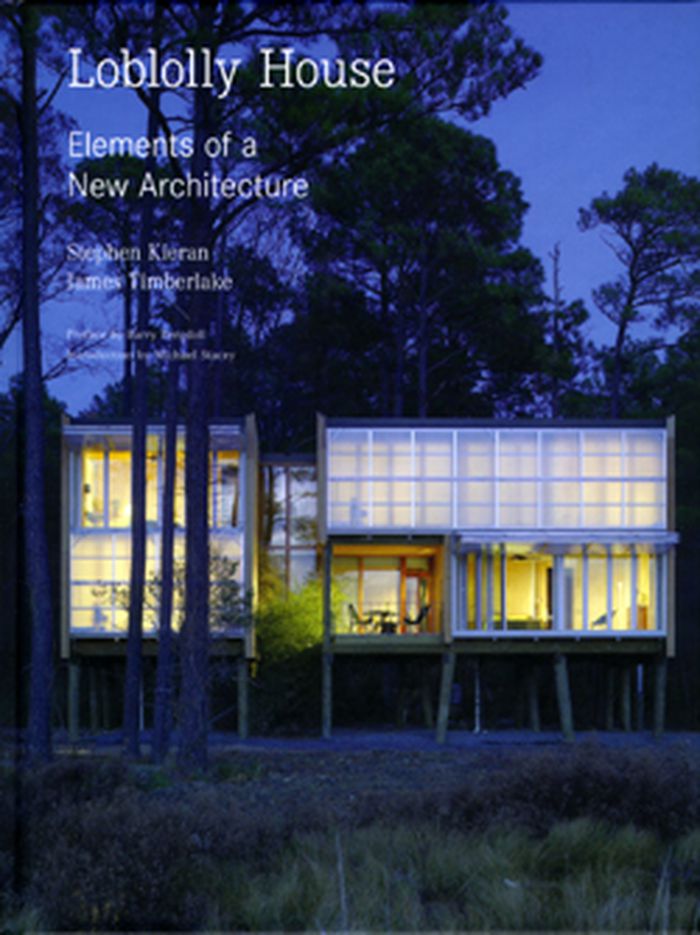
Loblolly House: elements of a new architecture
Actions:
Prix:
$52.00
(disponible sur commande)
Résumé:
Known for their in-depth research and innovative, inventive, and meticulously constructed architecture, KieranTimberlake Assoicates put its ideas about streamlining the making of architecture to the test. The results took the form of a fully modular and award-winning house, featuring an active and adjustable double-skin facade so advanced that no client would consider it. KieranTimberlake Assoicates boldly took the project upon themselves, using partner Stephen Kieran's own summer house as a laboratory. Situated on idyllic Taylors Island, off the coast of Maryland's Chesapeake Bay, Loblolly House inaugurates a truly new, more efficient way of building. Through the use of state-of-the-art building information modeling (BIM), the architects were able to streamline the design-build process. Thousands of parts were collapsed and integrated into a few dozen panels and blocks that slid into an aluminum frame set on wooden pylons. Consisting of 70 percent prefabricated components, the kit-of-parts house was assembled (mostly with a wrench) and lifted into place on-site in less than six weeks. Unlike most houses, even those built with sustainability in mind, Loblolly disassembles as easily as it assembles, making it an ecologically sound structure with a manageable environmental footprint. Focusing on a single built project and illustrated with extensive photographic documentation and numerous detailed drawings, Loblolly House is the manual for componentized prefab. The book includes a DVD of the film "A House in the Trees" by producers Rick Deppe and Kathleen Blake, a real-time documentary of the design, fabrication, and assembly of Loblolly House.
Classification:
livres
livres
Publication:
juin 2008, New York
juin 2008, New York
Sujet:
Architecture, monographies
Architecture, monographies
Classification:
livres
livres
Prix:
$49.50
(disponible sur commande)
Résumé:
Beginning with agoraphobia and claustrophobia in the late nineteenth century, followed by shell shock and panic fear after World War I, phobias and anxiety came to be seen as the mental condition of modern life. They became incorporated into the media and arts, in particular the (...)
Titre:
Warped space : art, architecture, and anxiety in modern culture
Actions:
Prix:
$49.50
(disponible sur commande)
Résumé:
Beginning with agoraphobia and claustrophobia in the late nineteenth century, followed by shell shock and panic fear after World War I, phobias and anxiety came to be seen as the mental condition of modern life. They became incorporated into the media and arts, in particular the spatial arts of architecture, urbanism, and film. This "spatial warping" is now being reshaped by digitalization and virtual reality. Anthony Vidler is concerned with two forms of warped space. The first, a psychological space, is the repository of neuroses and phobias. This space is not empty but full of disturbing forms, including those of architecture and the city. The second kind of warping is produced when artists break the boundaries of genre to depict space in new ways. Vidler traces the emergence of a psychological idea of space from Pascal and Freud to the identification of agoraphobia and claustrophobia in the nineteenth century to twentieth-century theories of spatial alienation and estrangement in the writings of Georg Simmel, Siegfried Kracauer, and Walter Benjamin. Focusing on current conditions of displacement and placelessness, he examines ways in which contemporary artists and architects have produced new forms of spatial warping. The discussion ranges from theorists such as Jacques Lacan and Gilles Deleuze to artists such as Vito Acconci, Mike Kelley, Martha Rosler, and Rachel Whiteread. Finally, Vidler looks at the architectural experiments of Frank Gehry, Coop Himmelblau, Daniel Libeskind, Greg Lynn, Morphosis, and Eric Owen Moss in the light of new digital techniques that, while relying on traditional perspective, have radically transformed the composition, production, and experience of architecture.
Classification:
livres
livres
Publication:
juin 2000, Cambridge, Mass.
juin 2000, Cambridge, Mass.
Sujet:
Théorie de l’architecture
Théorie de l’architecture
Classification:
livres
livres
Prix:
$75.95
(disponible sur commande)
Résumé:
More than one hundred exhibitions of Frank Lloyd Wright's work were mounted between 1894 and his death in 1959. Wright organized the majority of these exhibitions himself and viewed them as crucial to his self-presentation as his extensive writings. He used them to promote his designs, appeal to new viewers, and persuade his detractors. Wright on Exhibit presents the(...)
Titre:
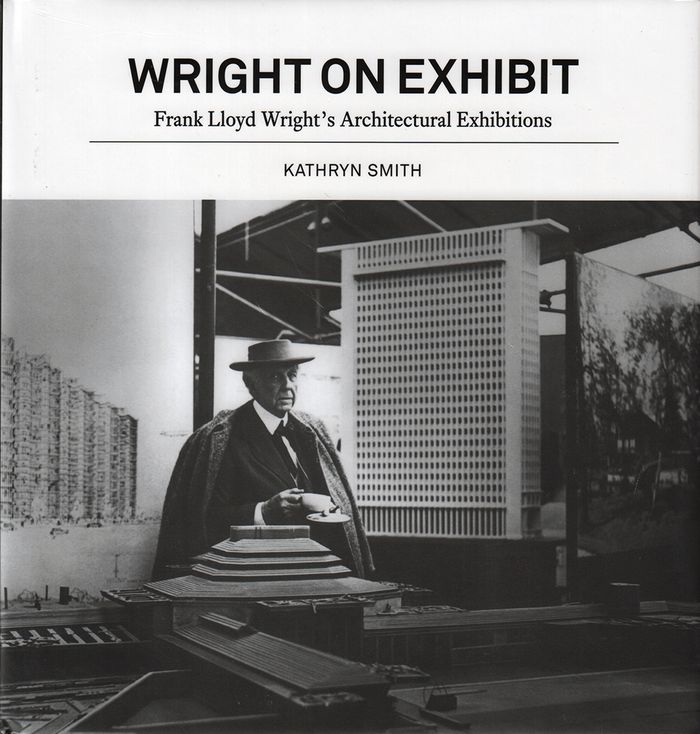
Wright on exhibit: Frank Lloyd Wright's architectural exhibitions
Actions:
Prix:
$75.95
(disponible sur commande)
Résumé:
More than one hundred exhibitions of Frank Lloyd Wright's work were mounted between 1894 and his death in 1959. Wright organized the majority of these exhibitions himself and viewed them as crucial to his self-presentation as his extensive writings. He used them to promote his designs, appeal to new viewers, and persuade his detractors. Wright on Exhibit presents the first history of this neglected aspect of the architect’s influential career. Drawing extensively from Wright’s unpublished correspondence, Kathryn Smith challenges the preconceived notion of Wright as a self-promoter who displayed his work in search of money, clients, and fame. She shows how he was an artist-architect projecting an avant-garde program, an innovator who expanded the palette of installation design as technology evolved, and a social activist driven to revolutionize society through design. While Wright’s earliest exhibitions were largely for other architects, by the 1930s he was creating public installations intended to inspire debate and change public perceptions about architecture. The nature of his exhibitions expanded with the times beyond models, drawings, and photographs to include more immersive tools such as slides, film, and even a full-scale structure built especially for his 1953 retrospective at the Guggenheim Museum. Placing Wright’s exhibitions side by side with his writings, Smith shows how integral these exhibitions were to his vision and sheds light on the broader discourse concerning architecture and modernism during the first half of the twentieth century. Wright on Exhibit features color renderings, photos, and plans, as well as a checklist of exhibitions and an illustrated catalog of extant and lost models made under Wright’s supervision.
Classification:
livres
livres
Publication:
mai 2017
mai 2017
Sujet:
Architecture, monographies
Architecture, monographies
Classification:
livres
livres
Prix:
$43.95
(disponible sur commande)
Résumé:
Pioneering conceptual artist Vito Acconci began his career as a poet. In the 1960s, before beginning his work in performance and video art, Acconci studied at the Iowa Writers Workshop and published poems in journals and chapbooks. Almost all of this work remains unknown; much of it appeared in the self-produced magazines of the Lower East Side's mimeo revolution, and(...)
Publication:
mars 2006, Cambridge, Mass.
mars 2006, Cambridge, Mass.
Titre:
Languages to cover a page : the early writings of Vito Acconci
Actions:
Prix:
$43.95
(disponible sur commande)
Résumé:
Pioneering conceptual artist Vito Acconci began his career as a poet. In the 1960s, before beginning his work in performance and video art, Acconci studied at the Iowa Writers Workshop and published poems in journals and chapbooks. Almost all of this work remains unknown; much of it appeared in the self-produced magazines of the Lower East Side's mimeo revolution, and many other pieces were never published. Language to Cover a Page collects these writings for the first time and not only shows Acconci to be an important experimental writer of the period, but demonstrates the continuity of his early writing with his later work in film, video, and performance. "Language to cover a page" documents a key moment in the unprecedented intersection of artists and poets in the late 1960s - as seen in the Dwan Gallery's series of "Language" shows (1967-1970) and in Acconci's own journal 0 to 9. Indeed, as Acconci moved from the poetry scene to the art world, his poetry became increasingly performative while his artwork was often structured and motivated by linguistic play. Acconci's early writing recalls the work of Samuel Beckett, the deadpan voice of the nouveau roman, and the jump cuts and fraught permutations of the nouvelle vague. Poems in "Language to cover a page" explore the materiality of language ("language as matter and not ideas," as Robert Smithson put it), the physical space of the page, and the physicality of source texts (phonebooks, thesauruses, dictionaries). Other poems take the space of the page as an analogue to performance space or implicate the poem in a network of activity (as in his "Dial-a-Poem" pieces).
Classification:
livres
livres
Publication:
mars 2006, Cambridge, Mass.
mars 2006, Cambridge, Mass.
Classification:
livres
livres
Actions:
Prix:
$90.00
(disponible sur commande)
Résumé:
Gordon Matta-Clark, scion and rebel, died at 35 in 1978 and has since become a cult figure of late-twentieth-century art. Born in New York and trained in architecture at Cornell, he went on to question the field's conventions in vivid projects that excised holes into existing buildings or assembled deeds to New York City alleys and curbs. As the son of the Chilean-born(...)
Titre:
Gordon Matta-Clark: works and collected writings
Actions:
Prix:
$90.00
(disponible sur commande)
Résumé:
Gordon Matta-Clark, scion and rebel, died at 35 in 1978 and has since become a cult figure of late-twentieth-century art. Born in New York and trained in architecture at Cornell, he went on to question the field's conventions in vivid projects that excised holes into existing buildings or assembled deeds to New York City alleys and curbs. As the son of the Chilean-born Surrealist painter Roberto Matta and Anne Clark, and godson of Marcel Duchamp, with whom he played a regular game of chess in the Village, Matta-Clark had grown up inside the art world, also working an as assistant to mavericks like Dennis Oppenheim and Robert Smithson. His work and words, while sophisticated enough to make him an "artist's artist," and colossal and outgoing enough to draw public attention and affection, were always also grounded in social or political convictions. He addressed not only space and real estate (in other words, housing), but the ultimate in necessity and nourishment, food. His "Pig Roast" under the Brooklyn Bridge offered passersby 500 pork sandwiches, and Food, the artist-staffed restaurant that he opened with dancer Caroline Goodden in SoHo, became a headquarters for that nascent neighborhood in the early 70s. He consistently broke the boundaries between sculpture and architecture, photography and film, performance and installation, and above all the permanent and the transitory. Once in a while he also broke the law. This book, published in celebration of the gradual opening of Matta-Clark's archives at the Canadian Centre for Architecture in Montreal, collects previously unavailable writings, including notecards and notebooks, along with interviews and more than 100 illustrations.
Classification:
livres
livres
Publication:
octobre 2006
octobre 2006
Classification:
périodiques
périodiques
Titre:
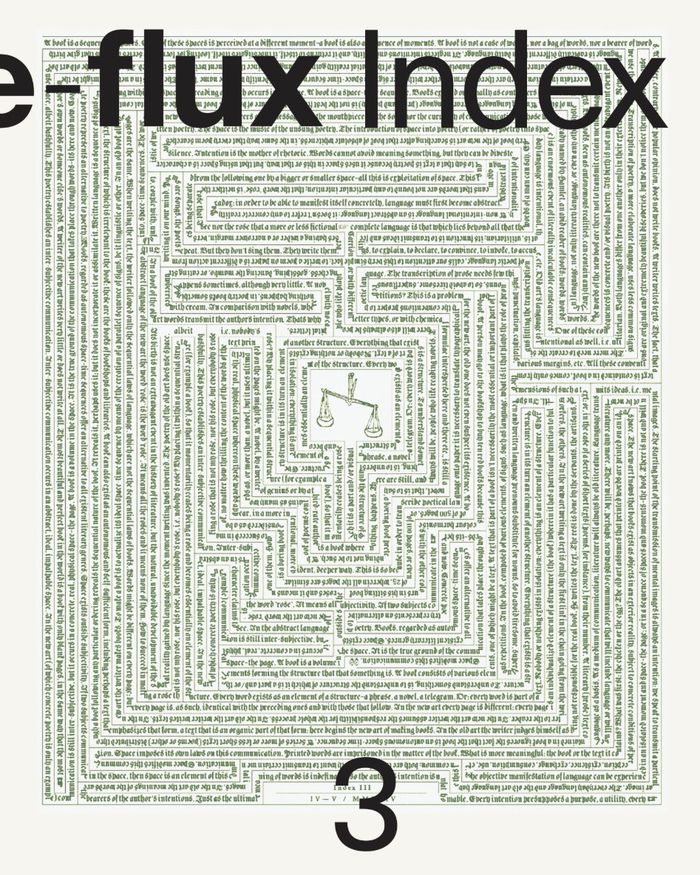
e-flux index #3
e-flux index #3
Actions:
Prix:
$65.00
(disponible en magasin)
Résumé:
Today we are accustomed to the apophatic gesture of free-speech fundamentalists and far-right demagogues, who use the flimsy legal cover of “just asking questions” to broadcast ever more widely the most violent and reactionary forms of hate speech. In resisting this enclosure of thought, art and theory continue to be instructive, if not essential activities. The late(...)
Titre:
e-flux index #3
Actions:
Prix:
$65.00
(disponible en magasin)
Résumé:
Today we are accustomed to the apophatic gesture of free-speech fundamentalists and far-right demagogues, who use the flimsy legal cover of “just asking questions” to broadcast ever more widely the most violent and reactionary forms of hate speech. In resisting this enclosure of thought, art and theory continue to be instructive, if not essential activities. The late Lawrence Weiner memorably declared that “the purpose of art is to ask questions… it doesn’t answer anybody’s question but gives them the means to answer a particular question at a particular moment.” All the better when those questions can provoke a certain illuminating friction with the contradictions of one’s environment and disrupt the automaticity of one’s learned responses, remaining themselves ambiguous or unanswered—because unanswerable. This third issue of e-flux Index, bringing together all the content commissioned and published by e-flux between April and May 2024, contains many such unexpected and unanswered (or unanswerable) questions across its 76 contributions, each of which cut across and reach beyond existing disciplines and borders: “Who is willing to care?”; “Who is the addressee at the end of the regulated pipelines of the English language?”; “Yes, but is it edible?”; “Why does everyone hate college students?”; “Is some form of suffering the condition for the emergence of an organic type of intelligence?”; “What does it mean to make a film today, in 2024, when most of our image consumption has been transferred to other (smaller) screens and other media?; “How to represent history?”; “Whose lives are worth remembering—or even, living?”; “How is it possible to speak the language of imperial renaissance and decolonization in the same breath?”; “Today is which day of the revolution?”—“Are these all just notes for a poem?”
Classification:
périodiques
périodiques
Publication:
décembre 2024
décembre 2024
Sujet:
Revues
Revues
Classification:
livres
livres
Actions:
Prix:
$33.95
(disponible sur commande)
Résumé:
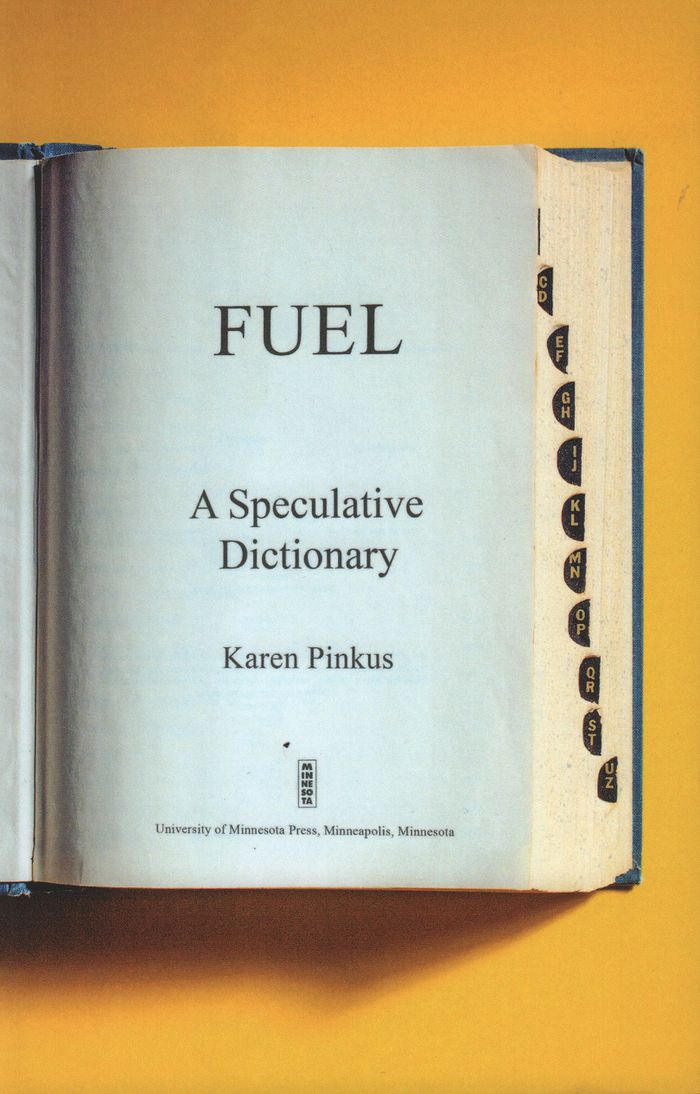
"Fuel" is an idiosyncratic, speculative dictionary of fuels, real and imagined, historical and futuristic, hopeless and utopian. Drawing on literature, film, and scientific treatises--most produced long before "climate change" was in circulation--"Fuel" argues for a distinction between energy (a system of power) and fuel (a substance, which can be thought of as(...)
Titre:
Fuel : a speculative dictionary
Actions:
Prix:
$33.95
(disponible sur commande)
Résumé:
"Fuel" is an idiosyncratic, speculative dictionary of fuels, real and imagined, historical and futuristic, hopeless and utopian. Drawing on literature, film, and scientific treatises--most produced long before "climate change" was in circulation--"Fuel" argues for a distinction between energy (a system of power) and fuel (a substance, which can be thought of as "potentiality") as it endeavors to undo the dream that we can simply switch to renewables and all will be golden. From "Air" to "Zyklon B," entries in this unusual "dictionary" include Algae, Clathrates, Dilithium, Fleece, Goats, Theology, Whale Oil, and many, many more. The tone of the entries ranges as widely as the topics: from historical anecdotes (the Ford Fiesta "boozemobile") to eccentric readings of the classics of "energy lit" ( Germinal and Oil! ); from literary observations (a high octane Odyssey ?) to excursions into literary theory. The dictionary draws from an eccentric canon, including works by Jules Verne, George Eliot's Silas Marner , Paolo Bacigalupi's Windup Girl , and the Tom Cruise vehicle Oblivion , among others. A message from this ambitious project is that energy can be understood as a heterogeneous set of self-mystifying systems or machines that block access to thought as they fascinate us. Fuels emerge as more primal elements that the audience can grasp at various points along the way to consumption/combustion. This dictionary can help scramble our thinking about fuel--not in order to demonize energy and not in order to create a new hierarchy in which certain renewables take over from fossil fuels but instead to open up potential ways of interacting with real and imaginary substances, by wrenching them out of narrative and placing them into an idiosyncratic dictionary to be applied by readers into new narratives.
Classification:
livres
livres
Publication:
novembre 2016
novembre 2016
Classification:
livres
livres
Actions:
Prix:
$22.99
(disponible sur commande)
Résumé:
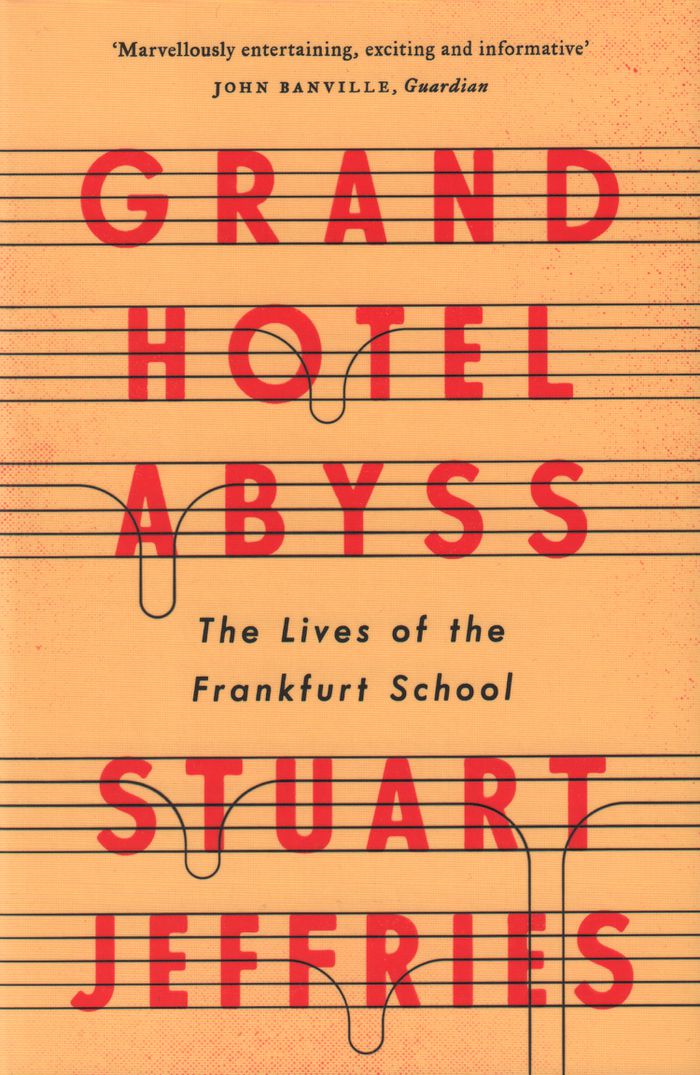
In 1923, a group of young radical German thinkers and intellectuals came together to at Victoria Alle 7, Frankfurt, determined to explain the workings of the modern world. Among the most prominent members of what became the Frankfurt School were the philosophers Walter Benjamin, Theodor Adorno, Max Horkheimer, and Herbert Marcuse. Not only would they change the way we(...)
Titre:
Grand Hotel Abyss: the lives of the Frankfurt school
Actions:
Prix:
$22.99
(disponible sur commande)
Résumé:
In 1923, a group of young radical German thinkers and intellectuals came together to at Victoria Alle 7, Frankfurt, determined to explain the workings of the modern world. Among the most prominent members of what became the Frankfurt School were the philosophers Walter Benjamin, Theodor Adorno, Max Horkheimer, and Herbert Marcuse. Not only would they change the way we think, but also the subjects we deem worthy of intellectual investigation. Their lives, like their ideas, profoundly, sometimes tragically, reflected and shaped the shattering events of the twentieth century. "Grand Hotel Abyss" combines biography, philosophy, and storytelling to reveal how the Frankfurt thinkers gathered in hopes of understanding the politics of culture during the rise of fascism. Some of them, forced to escape the horrors of Nazi Germany, later found exile in the United States. Benjamin, with his last great work—the incomplete Arcades Project—in his suitcase, was arrested in Spain and committed suicide when threatened with deportation to Nazi-occupied France. On the other side of the Atlantic, Adorno failed in his bid to become a Hollywood screenwriter, denounced jazz, and even met Charlie Chaplin in Malibu. After the war, there was a resurgence of interest in the School. From the relative comfort of sun-drenched California, Herbert Marcuse wrote the classic One Dimensional Man, which influenced the 1960s counterculture and thinkers such as Angela Davis; while in a tragic coda, Adorno died from a heart attack following confrontations with student radicals in Berlin. By taking popular culture seriously as an object of study—whether it was film, music, ideas, or consumerism—the Frankfurt School elaborated upon the nature and crisis of our mass-produced, mechanised society. Grand Hotel Abyss shows how much these ideas still tell us about our age of social media and runaway consumption.
Classification:
livres
livres
Publication:
septembre 2017
septembre 2017
Sujet:
Théorie/ philosophie
Théorie/ philosophie
Classification:
livres
livres
Actions:
Prix:
$71.95
(disponible sur commande)
Résumé:
Although many people view virtual reality as a totally new phenomenon, it has its foundations in an unrecognized history of immersive images. Indeed, the search for illusionary visual space can be traced back to antiquity. In this book Oliver Grau shows how virtual art fits into the art history of illusion and immersion. He describes the metamorphosis of the concepts of(...)
Titre:
Virtual art from illusion to immersion
Actions:
Prix:
$71.95
(disponible sur commande)
Résumé:
Although many people view virtual reality as a totally new phenomenon, it has its foundations in an unrecognized history of immersive images. Indeed, the search for illusionary visual space can be traced back to antiquity. In this book Oliver Grau shows how virtual art fits into the art history of illusion and immersion. He describes the metamorphosis of the concepts of art and the image and relates those concepts to interactive art, interface design, agents, telepresence, and image evolution. Grau retells art history as media history, helping us to understand the phenomenon of virtual reality beyond the hype. Grau shows how each epoch used the technical means available to produce maximum illusion. He discusses frescoes such as those in the Villa dei Misteri in Pompeii and the gardens of the Villa Livia near Primaporta, Renaissance and Baroque illusion spaces, and panoramas, which were the most developed form of illusion achieved through traditional methods of painting and the mass image medium before film. Through a detailed analysis of perhaps the most important German panorama, Anton von Werner's 1883 The Battle of Sedan, Grau shows how immersion produced emotional responses. He traces immersive cinema through Cinerama, Sensorama, Expanded Cinema, 3-D, Omnimax and IMAX, and the head mounted display with its military origins. He also examines those characteristics of virtual reality that distinguish it from earlier forms of illusionary art. His analysis draws on the work of contemporary artists and groups ART+COM, Maurice Benayoun, Charlotte Davies, Monika Fleischmann, Ken Goldberg, Agnes Hegedues, Eduardo Kac, Knowbotic Research, Laurent Mignonneau, Michael Naimark, Simon Penny, Daniela Plewe, Paul Sermon, Jeffrey Shaw, Karl Sims, Christa Sommerer, and Wolfgang Strauss. Grau offers not just a history of illusionary space but also a theoretical framework for analyzing its phenomenologies, functions, and strategies throughout history and into the future.
Classification:
livres
livres
Publication:
janvier 1900, Cambridge, Mass.
janvier 1900, Cambridge, Mass.
Sujet:
Épistémologie et réseau
Épistémologie et réseau
Classification:
livres
livres
Prix:
$24.95
(disponible sur commande)
Résumé:
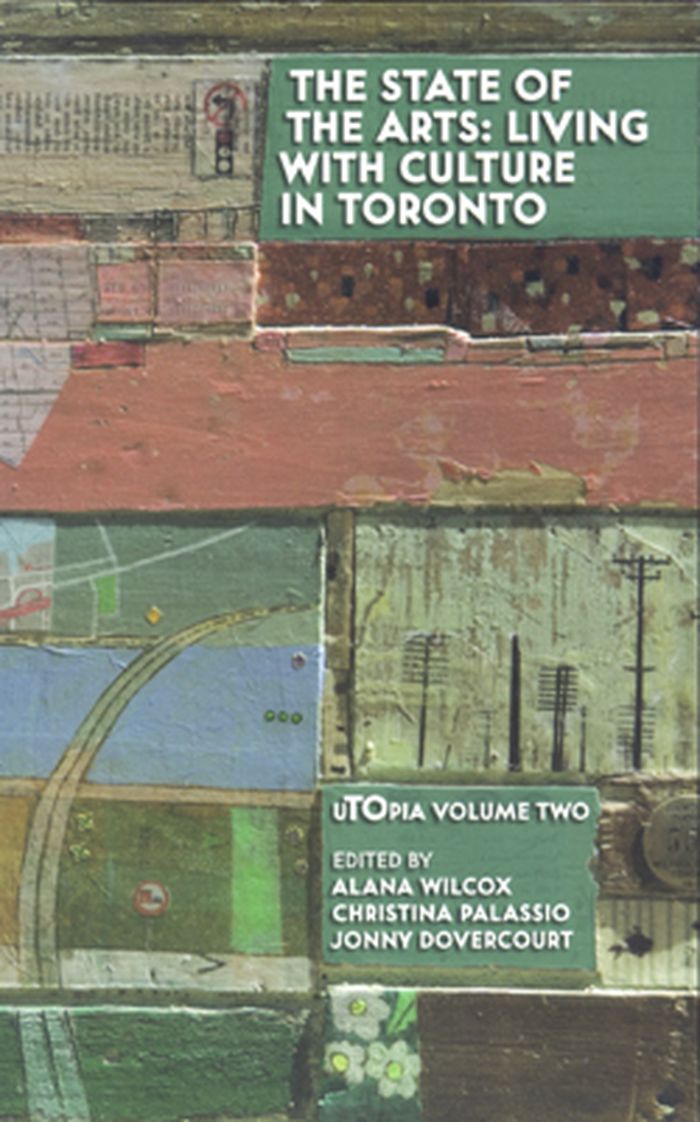
Freakier rich people. More suburban art. A venue for new music. Better staplers. An infrastructure for hip-hop. Laneway art. More wi-fi. A more understanding marriage between art and business. Affordable live-work spaces. What would make Toronto a better place for the arts? City Hall proclaimed 2006 the Year of Creativity. ‘Live With Culture’ banners flap over the city.(...)
Sujet:
Architecture du Canada
Architecture du Canada
Publication:
novembre 2006, Toronto
novembre 2006, Toronto
Titre:
The state of the arts: living with culture in Toronto
Actions:
Prix:
$24.95
(disponible sur commande)
Résumé:
Freakier rich people. More suburban art. A venue for new music. Better staplers. An infrastructure for hip-hop. Laneway art. More wi-fi. A more understanding marriage between art and business. Affordable live-work spaces. What would make Toronto a better place for the arts? City Hall proclaimed 2006 the Year of Creativity. ‘Live With Culture’ banners flap over the city. And across the city, donors are ponying up millions for the ROM and the AGO. Culture’s never had it so good. Right? The State of the Arts explores the Toronto culture scene from every angle, applauding, assailing and arguing about art in our fair burg. The essays consider the big-ticket and the ticket-free, from the CNE to unintentional art. In between, you'll find thoughts on the ’creative city’ and photobloggers, Toronto on film and the fine line between part and art. Taken together the thoughts of these writers, artists and city-builders create a snapshot of culture in T.O. as it grows from ’Toronto the Good’ to ’Toronto the Could’ to ’Toronto the Can-Do.’ Includes sixteen colour pages of eye-level Toronto, and cover art by Susan Szenes. With essays by Sandra Alland, Jason Anderson, Anna Bowness, Stephen Cain, Kate Carraway, Hanna Cho, Brendan Cormier, Natalie De Vito, Liz Forsberg, Mark Fram, Marc Glassman, Katarina Gligorijevic-Collins, Brenda Goldstein, Amy Lavender Harris, Karen Hines, Sarah B. Hood, Christopher Hume, Sam Javanrouh, Dory Kornfeld, Adam Krawesky, More Or Les, John Lorinc, James MacNevin, Claudia McKoy, Brian McLachlan, Ryan McLaren, Shawn Micallef, Jill Murray, Matt O'Sullivan, Christopher Pandolfi, Michael Redhill, Dylan Reid, Damian Rogers, Stuart Ross, Lisa Rundle, Dana Samuel, Nadja Sayej, Susan Szenes, Kevin Temple, Pablo Torres, Gayla Trail, Rannie Turingan, Jason van Eyk, Adam Vaughan, RM Vaughan, Stéphanie Verge, Lisa Whittington-Hill and Carl Wilson.
Classification:
livres
livres
Publication:
novembre 2006, Toronto
novembre 2006, Toronto
Sujet:
Architecture du Canada
Architecture du Canada


