


4375 Résultats
Classification:
livres
livres
Prix:
$100.00
(disponible sur commande)
Résumé:
The architecture firm Bohlin Cywinski Jackson believes that "the sensuality of place, the emotive qualities of materials, and the ability to give pleasure and insight, to comfort and to transport can produce humane and spirited architecture." Whether designing corporate headquarters for Pixar Animation Studios, the Software Engineering Institute for Carnegie Mellon(...)
$100.00
(disponible sur commande)
Résumé:
The architecture firm Bohlin Cywinski Jackson believes that "the sensuality of place, the emotive qualities of materials, and the ability to give pleasure and insight, to comfort and to transport can produce humane and spirited architecture." Whether designing corporate headquarters for Pixar Animation Studios, the Software Engineering Institute for Carnegie Mellon(...)
Publication:
mai 2005, New York
mai 2005, New York
Titre:
Arcadian architecture : Bohlin Cywinski Jackson - 12 houses
Actions:
Prix:
$100.00
(disponible sur commande)
Résumé:
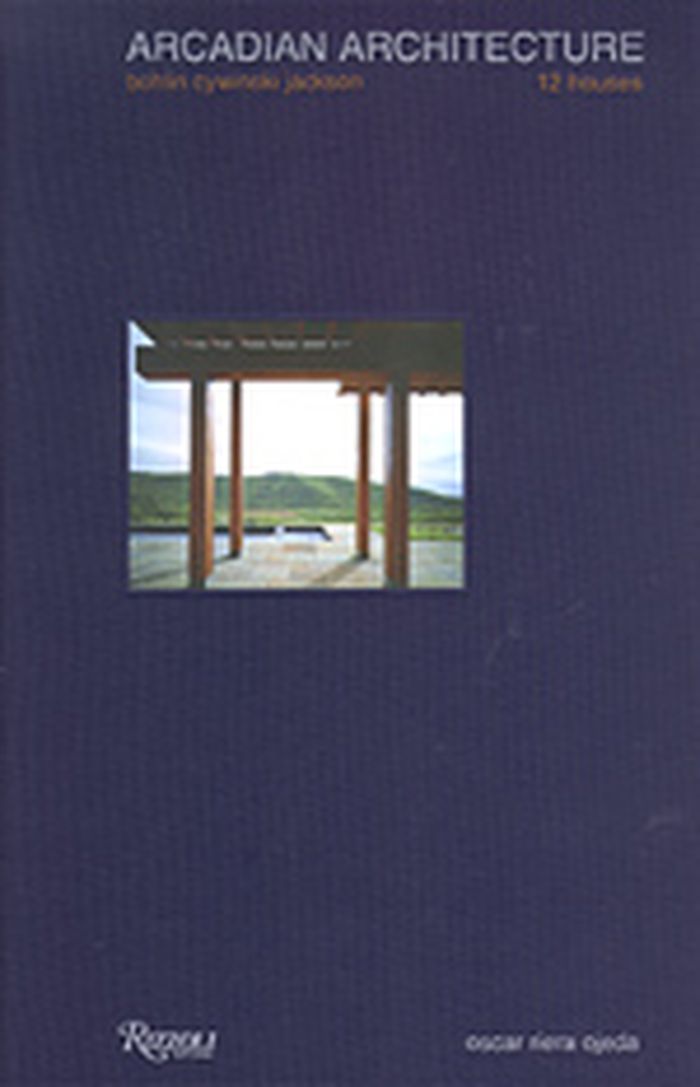
The architecture firm Bohlin Cywinski Jackson believes that "the sensuality of place, the emotive qualities of materials, and the ability to give pleasure and insight, to comfort and to transport can produce humane and spirited architecture." Whether designing corporate headquarters for Pixar Animation Studios, the Software Engineering Institute for Carnegie Mellon University, the new Apple Stores in New York, Chicago, and Tokyo, or the twelve wooded retreats shown in this book, the firm’s architecture is alive to the subtleties of place, man-made or natural, and to the rich possibilities of materials and the means of construction. The houses in "Arcadian Architecture" are exquisitely crafted of wood and stone and other natural materials, and are all sited within beautiful wooded, mountainous, or lakeside locales, from New York State to Washington State, and from the woods of Connecticut to the mountains of Montana. One of the highlights of this book is that it publishes, for the first time, the extraordinary, huge, extremely private and secluded, residential complex in Washington State that was built for Bill and Melinda Gates. Each house is presented on at least thirty pages, and is depicted by sumptuous new colour photography, richly detailed conceptual sketches, presentation drawings, and construction documents.
Arcadian architecture : Bohlin Cywinski Jackson - 12 houses
Actions:
Prix:
$100.00
(disponible sur commande)
Résumé:
The architecture firm Bohlin Cywinski Jackson believes that "the sensuality of place, the emotive qualities of materials, and the ability to give pleasure and insight, to comfort and to transport can produce humane and spirited architecture." Whether designing corporate headquarters for Pixar Animation Studios, the Software Engineering Institute for Carnegie Mellon University, the new Apple Stores in New York, Chicago, and Tokyo, or the twelve wooded retreats shown in this book, the firm’s architecture is alive to the subtleties of place, man-made or natural, and to the rich possibilities of materials and the means of construction. The houses in "Arcadian Architecture" are exquisitely crafted of wood and stone and other natural materials, and are all sited within beautiful wooded, mountainous, or lakeside locales, from New York State to Washington State, and from the woods of Connecticut to the mountains of Montana. One of the highlights of this book is that it publishes, for the first time, the extraordinary, huge, extremely private and secluded, residential complex in Washington State that was built for Bill and Melinda Gates. Each house is presented on at least thirty pages, and is depicted by sumptuous new colour photography, richly detailed conceptual sketches, presentation drawings, and construction documents.
Classification:
livres
livres
Publication:
mai 2005, New York
mai 2005, New York
Classification:
livres
livres
Actions:
Prix:
$69.95
(disponible sur commande)
Résumé:
''On intricacy'' is perhaps unusual in that it’s not a monograph, nor is it a hagiography. John Meunier is still alive. ''On intricacy'' celebrates and proselytises the ideas that John has articulated throughout his career. ''On intricacy'' is not a book about him as such, nor simply a book by him, but a book with him, and it reflects his life’s work as an architect and(...)
$69.95
(disponible sur commande)
Résumé:
''On intricacy'' is perhaps unusual in that it’s not a monograph, nor is it a hagiography. John Meunier is still alive. ''On intricacy'' celebrates and proselytises the ideas that John has articulated throughout his career. ''On intricacy'' is not a book about him as such, nor simply a book by him, but a book with him, and it reflects his life’s work as an architect and(...)
Titre:
On intricacy: The work of John Meunier Architect
Actions:
Prix:
$69.95
(disponible sur commande)
Résumé:
''On intricacy'' is perhaps unusual in that it’s not a monograph, nor is it a hagiography. John Meunier is still alive. ''On intricacy'' celebrates and proselytises the ideas that John has articulated throughout his career. ''On intricacy'' is not a book about him as such, nor simply a book by him, but a book with him, and it reflects his life’s work as an architect and teacher, in the UK and USA. ''On intricacy'' continues conversations between John Meunier and Patrick Lynch that first appeared in Issue 2 of the Journal of Civic Architecture. It also includes essays by Meunier, Lynch and the architect Simon Henley, as well as new photography of The Meunier House at Cambridge by David Grandorge. Intricacy is not so much an aesthetic term, although it is a sign of quality in artistic work, as something intrinsic to human situations. Intricacy is something that architecture does or doesn’t reflect, and when it does, it tends to be life-like, vital, and therefore good. ''On intricacy'' is a visual and written polemic reflecting the hard-won wisdom of a practical life. ''On intricacy'' is also a biography of sorts of a man born into a relatively recent, but also a very different age. It tells an inspiring story from a period of hope and opportunity in the 20th century. ''On intricacy'' will be welcomed by students, historians and practising architects, and by anyone concerned with the deep reciprocity of ethics and aesthetics in human ecology and culture.
On intricacy: The work of John Meunier Architect
Actions:
Prix:
$69.95
(disponible sur commande)
Résumé:
''On intricacy'' is perhaps unusual in that it’s not a monograph, nor is it a hagiography. John Meunier is still alive. ''On intricacy'' celebrates and proselytises the ideas that John has articulated throughout his career. ''On intricacy'' is not a book about him as such, nor simply a book by him, but a book with him, and it reflects his life’s work as an architect and teacher, in the UK and USA. ''On intricacy'' continues conversations between John Meunier and Patrick Lynch that first appeared in Issue 2 of the Journal of Civic Architecture. It also includes essays by Meunier, Lynch and the architect Simon Henley, as well as new photography of The Meunier House at Cambridge by David Grandorge. Intricacy is not so much an aesthetic term, although it is a sign of quality in artistic work, as something intrinsic to human situations. Intricacy is something that architecture does or doesn’t reflect, and when it does, it tends to be life-like, vital, and therefore good. ''On intricacy'' is a visual and written polemic reflecting the hard-won wisdom of a practical life. ''On intricacy'' is also a biography of sorts of a man born into a relatively recent, but also a very different age. It tells an inspiring story from a period of hope and opportunity in the 20th century. ''On intricacy'' will be welcomed by students, historians and practising architects, and by anyone concerned with the deep reciprocity of ethics and aesthetics in human ecology and culture.
Classification:
livres
livres
Publication:
janvier 2020
janvier 2020
Sujet:
Architecture, monographies
Architecture, monographies
Classification:
livres
livres
Actions:
Prix:
$49.95
(disponible en magasin)
Résumé:
Point Saint-Charles, a historically white working-class neighbourhood with a strong Irish and French presence, and Little Burgundy, a multiracial neighbourhood that is home to the city’s English-speaking Black community, face each other across Montreal’s Lachine Canal, once an artery around which work and industry in Montreal were clustered and by which these two(...)
$49.95
(disponible en magasin)
Résumé:
Point Saint-Charles, a historically white working-class neighbourhood with a strong Irish and French presence, and Little Burgundy, a multiracial neighbourhood that is home to the city’s English-speaking Black community, face each other across Montreal’s Lachine Canal, once an artery around which work and industry in Montreal were clustered and by which these two(...)
Titre:
Deindustrializing Montreal: entangled histories of race, residence, and class
Actions:
Prix:
$49.95
(disponible en magasin)
Résumé:
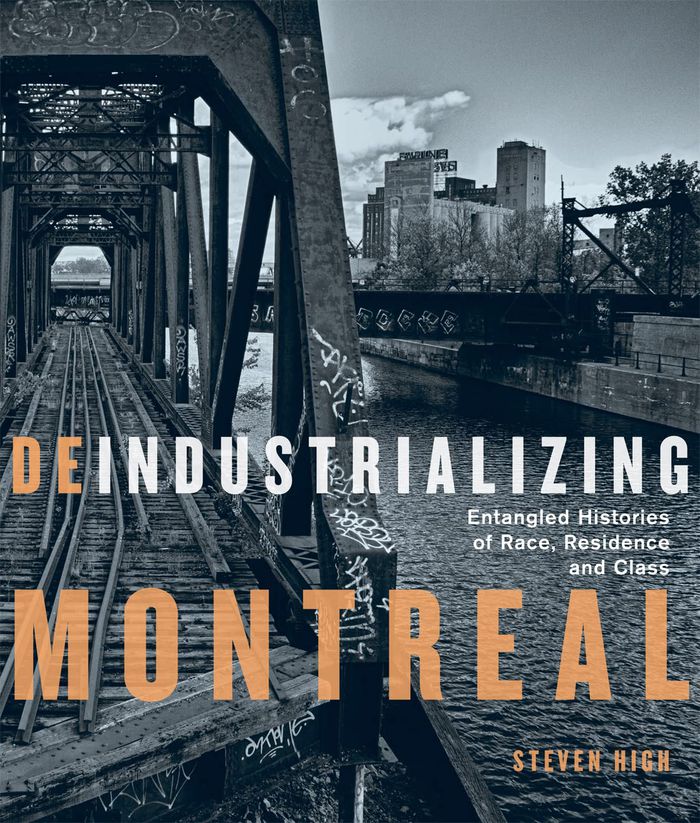
Point Saint-Charles, a historically white working-class neighbourhood with a strong Irish and French presence, and Little Burgundy, a multiracial neighbourhood that is home to the city’s English-speaking Black community, face each other across Montreal’s Lachine Canal, once an artery around which work and industry in Montreal were clustered and by which these two communities were formed and divided. ''Deindustrializing Montreal'' challenges the deepening divergence of class and race analysis by recognizing the intimate relationship between capitalism, class struggles, and racial inequality. Fundamentally, deindustrialization is a process of physical and social ruination as well as part of a wider political project that leaves working-class communities impoverished and demoralized. The structural violence of capitalism occurs gradually and out of sight, but it doesn’t play out the same for everyone. Point Saint-Charles was left to rot until it was revalorized by gentrification, whereas Little Burgundy was torn apart by urban renewal and highway construction. This historical divergence had profound consequences in how urban change has been experienced, understood, and remembered. Drawing extensive interviews, a massive and varied archive of imagery, and original photography by David Lewis into a complex chorus, Steven High brings these communities to life, tracing their history from their earliest years to their decline and their current reality. He extends the analysis of deindustrialization, often focused on single-industry towns, to cities that have seemingly made the post-industrial transition.
Deindustrializing Montreal: entangled histories of race, residence, and class
Actions:
Prix:
$49.95
(disponible en magasin)
Résumé:
Point Saint-Charles, a historically white working-class neighbourhood with a strong Irish and French presence, and Little Burgundy, a multiracial neighbourhood that is home to the city’s English-speaking Black community, face each other across Montreal’s Lachine Canal, once an artery around which work and industry in Montreal were clustered and by which these two communities were formed and divided. ''Deindustrializing Montreal'' challenges the deepening divergence of class and race analysis by recognizing the intimate relationship between capitalism, class struggles, and racial inequality. Fundamentally, deindustrialization is a process of physical and social ruination as well as part of a wider political project that leaves working-class communities impoverished and demoralized. The structural violence of capitalism occurs gradually and out of sight, but it doesn’t play out the same for everyone. Point Saint-Charles was left to rot until it was revalorized by gentrification, whereas Little Burgundy was torn apart by urban renewal and highway construction. This historical divergence had profound consequences in how urban change has been experienced, understood, and remembered. Drawing extensive interviews, a massive and varied archive of imagery, and original photography by David Lewis into a complex chorus, Steven High brings these communities to life, tracing their history from their earliest years to their decline and their current reality. He extends the analysis of deindustrialization, often focused on single-industry towns, to cities that have seemingly made the post-industrial transition.
Classification:
livres
livres
Publication:
mai 2022
mai 2022
Sujet:
Architecture de Montréal
Architecture de Montréal
Classification:
livres
livres
Actions:
Prix:
$29.99
(disponible sur commande)
Résumé:
Architect Stanley Saitowitz, based in San Francisco, is known for a practice that unites the qualities of early modern architecture with the construction techniques, materials, and urban and social attributes of the twenty-first century. Recurring themes in his work include the careful connection to time and place; the construction of spaces that allow fields of(...)
$29.99
(disponible sur commande)
Résumé:
Architect Stanley Saitowitz, based in San Francisco, is known for a practice that unites the qualities of early modern architecture with the construction techniques, materials, and urban and social attributes of the twenty-first century. Recurring themes in his work include the careful connection to time and place; the construction of spaces that allow fields of(...)
Publication:
octobre 2005, New York
octobre 2005, New York
Titre:
Stanley Saitowitz : buildings and projects
Actions:
Prix:
$29.99
(disponible sur commande)
Résumé:
Architect Stanley Saitowitz, based in San Francisco, is known for a practice that unites the qualities of early modern architecture with the construction techniques, materials, and urban and social attributes of the twenty-first century. Recurring themes in his work include the careful connection to time and place; the construction of spaces that allow fields of opportunity; the use of generative systems; the role of architecture as a support for human activity; and the visible trace of building techniques. This monograph, the first on Stanley Saitowitz office, presents fifty projects from more than thirty years of practice. The projects, divided by building type, are accompanied by a personal text in which Saitowitz plainly discusses his influences and interests. Landscape houses, often built on spectacular sites in Marin, Napa, and Sonoma, have evolved to include the noted "bar houses." Urban houses, while compact and dense, incorporate a sense of volume; similarly, multifamily housing provides indeterminate space to allow for personalization. Buildings for schools range from the riverside campus of the Oxbow School in Napa to the structurally innovative Building 23B at UCSF Mission Bay. Among the public landscapes is Mill Race Park in Columbus, Indiana, an assemblage of constructions specific to both place and function. Finally, Saitowitz has developed a series of designs that explore the formation of a Jewish architecture, notably synagogues in San Francisco and La Jolla and the Holocaust Memorial in Boston. Principal photography by Richard Barnes and Tim Griffith.
Stanley Saitowitz : buildings and projects
Actions:
Prix:
$29.99
(disponible sur commande)
Résumé:
Architect Stanley Saitowitz, based in San Francisco, is known for a practice that unites the qualities of early modern architecture with the construction techniques, materials, and urban and social attributes of the twenty-first century. Recurring themes in his work include the careful connection to time and place; the construction of spaces that allow fields of opportunity; the use of generative systems; the role of architecture as a support for human activity; and the visible trace of building techniques. This monograph, the first on Stanley Saitowitz office, presents fifty projects from more than thirty years of practice. The projects, divided by building type, are accompanied by a personal text in which Saitowitz plainly discusses his influences and interests. Landscape houses, often built on spectacular sites in Marin, Napa, and Sonoma, have evolved to include the noted "bar houses." Urban houses, while compact and dense, incorporate a sense of volume; similarly, multifamily housing provides indeterminate space to allow for personalization. Buildings for schools range from the riverside campus of the Oxbow School in Napa to the structurally innovative Building 23B at UCSF Mission Bay. Among the public landscapes is Mill Race Park in Columbus, Indiana, an assemblage of constructions specific to both place and function. Finally, Saitowitz has developed a series of designs that explore the formation of a Jewish architecture, notably synagogues in San Francisco and La Jolla and the Holocaust Memorial in Boston. Principal photography by Richard Barnes and Tim Griffith.
Classification:
livres
livres
Publication:
octobre 2005, New York
octobre 2005, New York
Classification:
livres
livres
Titre:
Tu n'as rien vu à Hiroshima
Tu n'as rien vu à Hiroshima
Actions:
Prix:
$49.50
(disponible sur commande)
Résumé:
Le 28 juillet 1958, le cinéaste Alain Resnais partait au Japon tourner l'essentiel de ce qui allait devenir un film mythique de l'histoire du cinéma : Hiroshima mon amour. C'est son premier long-métrage et le premier scénario de l'écrivain Marguerite Duras. Le cinquantième anniversaire de ce tournage historique est l'occasion de proposer un regard nouveau sur ce film à(...)
$49.50
(disponible sur commande)
Résumé:
Le 28 juillet 1958, le cinéaste Alain Resnais partait au Japon tourner l'essentiel de ce qui allait devenir un film mythique de l'histoire du cinéma : Hiroshima mon amour. C'est son premier long-métrage et le premier scénario de l'écrivain Marguerite Duras. Le cinquantième anniversaire de ce tournage historique est l'occasion de proposer un regard nouveau sur ce film à(...)
Publication:
août 2009
août 2009
Titre:
Tu n'as rien vu à Hiroshima
Actions:
Prix:
$49.50
(disponible sur commande)
Résumé:
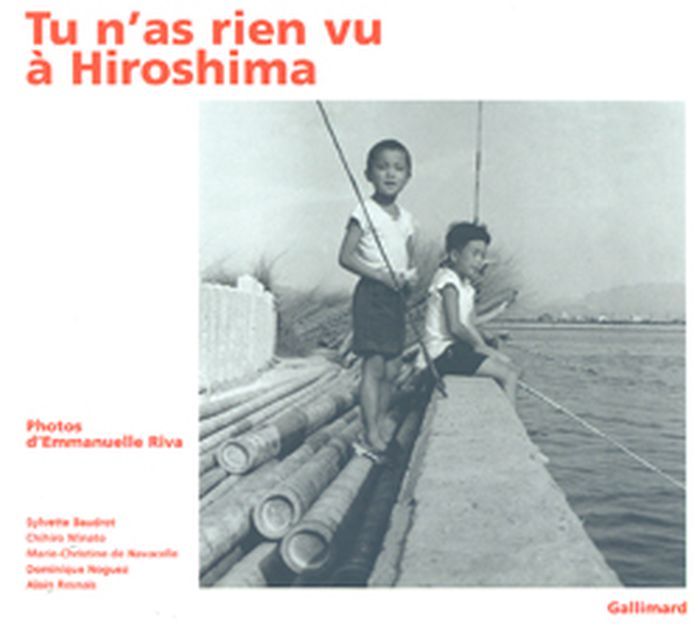
Le 28 juillet 1958, le cinéaste Alain Resnais partait au Japon tourner l'essentiel de ce qui allait devenir un film mythique de l'histoire du cinéma : Hiroshima mon amour. C'est son premier long-métrage et le premier scénario de l'écrivain Marguerite Duras. Le cinquantième anniversaire de ce tournage historique est l'occasion de proposer un regard nouveau sur ce film à travers des textes de Chihiro Minato, Marie-Christine de Navacelle, Dominique Noguez, et aussi d'un entretien avec Emmanuelle Riva. Un remarquable ensemble de photographies, qu'elle a prises avant le tournage, de la ville d'Hiroshima, de ses habitants et surtout de ses enfants, est présenté pour la première fois. Ces images exceptionnelles éclairent le film comme elles éclairent la résurrection, treize ans après le drame du 6 août 1945, de la première ville frappée par la bombe atomique.
Tu n'as rien vu à Hiroshima
Actions:
Prix:
$49.50
(disponible sur commande)
Résumé:
Le 28 juillet 1958, le cinéaste Alain Resnais partait au Japon tourner l'essentiel de ce qui allait devenir un film mythique de l'histoire du cinéma : Hiroshima mon amour. C'est son premier long-métrage et le premier scénario de l'écrivain Marguerite Duras. Le cinquantième anniversaire de ce tournage historique est l'occasion de proposer un regard nouveau sur ce film à travers des textes de Chihiro Minato, Marie-Christine de Navacelle, Dominique Noguez, et aussi d'un entretien avec Emmanuelle Riva. Un remarquable ensemble de photographies, qu'elle a prises avant le tournage, de la ville d'Hiroshima, de ses habitants et surtout de ses enfants, est présenté pour la première fois. Ces images exceptionnelles éclairent le film comme elles éclairent la résurrection, treize ans après le drame du 6 août 1945, de la première ville frappée par la bombe atomique.
Classification:
livres
livres
Publication:
août 2009
août 2009


