


5088 Résultats
Classification:
livres
livres
Titre:
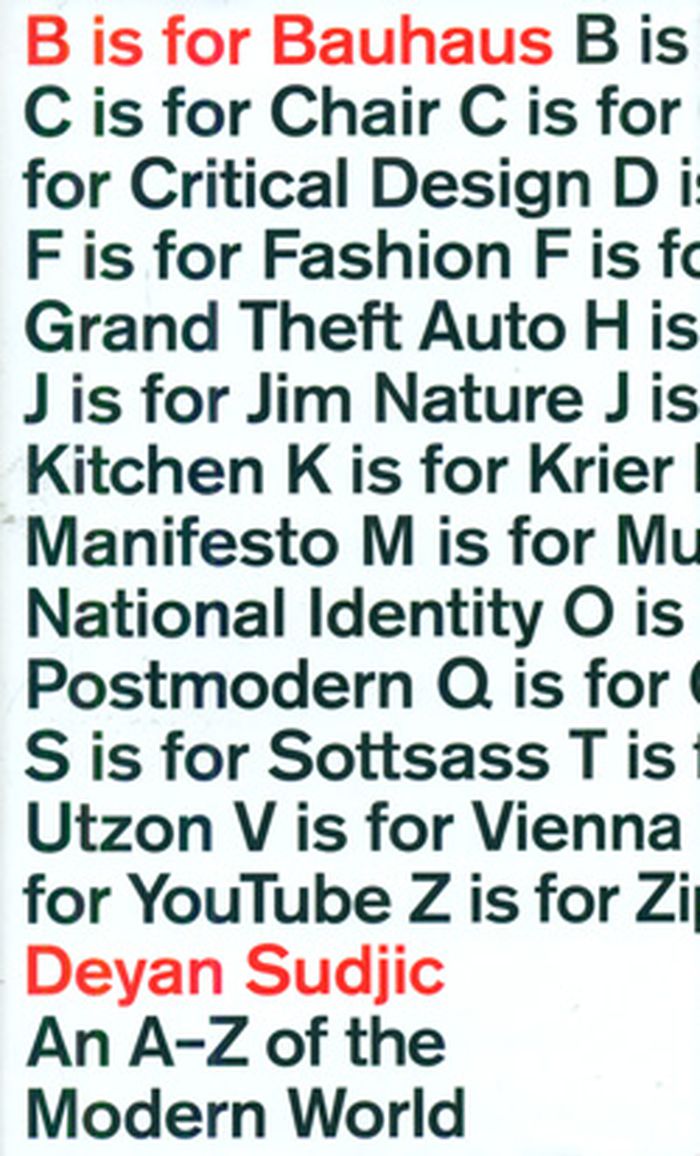
B is for Bauhaus
B is for Bauhaus
Actions:
Prix:
$40.00
(disponible sur commande)
Résumé:
This book is not a dictionary, though it tells you all you need know about everything from Authenticity to Zips. It's not an autobiography, though it does offer a revealing and highly personal inside view of contemporary culture. It's an essential tool kit for understanding the world around us. It's about what makes a Warhol a genuine fake; the creation of national(...)
Titre:
B is for Bauhaus
Actions:
Prix:
$40.00
(disponible sur commande)
Résumé:
This book is not a dictionary, though it tells you all you need know about everything from Authenticity to Zips. It's not an autobiography, though it does offer a revealing and highly personal inside view of contemporary culture. It's an essential tool kit for understanding the world around us. It's about what makes a Warhol a genuine fake; the creation of national identities; the mania to collect. It's also about the city as seen from the rear view mirror of Grand Theft Auto V; digital ornament and why we value imperfection. It's about drinking a bruisingly dry martini in Adolf Loo's American bar in Vienna, and about Hitchcock's film sets. It's about the modern world of fashion, technology, design and art.
Classification:
livres
livres
Publication:
juin 2014
juin 2014
Classification:
livres
livres

Titre:
Andrew Moore: Dirt Meridian
Andrew Moore: Dirt Meridian
Actions:
Prix:
$60.00
(disponible sur commande)
Résumé:
In Dirt Meridian, Andrew Moore takes to the air to document the High Plains of North Dakota, South Dakota and Nebraska in a series of large-format photographs. The "meridian" of the title refers to the 100th meridian, the longitude that neatly bisects the US and has long been considered the dividing line between the East and West. Much of the meridian traverses America's(...)
Titre:
Andrew Moore: Dirt Meridian
Actions:
Prix:
$60.00
(disponible sur commande)
Résumé:
In Dirt Meridian, Andrew Moore takes to the air to document the High Plains of North Dakota, South Dakota and Nebraska in a series of large-format photographs. The "meridian" of the title refers to the 100th meridian, the longitude that neatly bisects the US and has long been considered the dividing line between the East and West. Much of the meridian traverses America's so-called flyover country, those sparsely populated landscapes between the urban centers on either coast. Other parts of the meridian cross contentious zones such as the heavily fracked Bakken formation in North Dakota. Dirt Meridian interweaves two stories: the myths and history of the vast, severe American High Plains alongside portraits of the people who live there today.
Classification:
livres
livres
Publication:
septembre 2015
septembre 2015
Sujet:
Monographies photo
Monographies photo
Classification:
livres
livres
Titre:
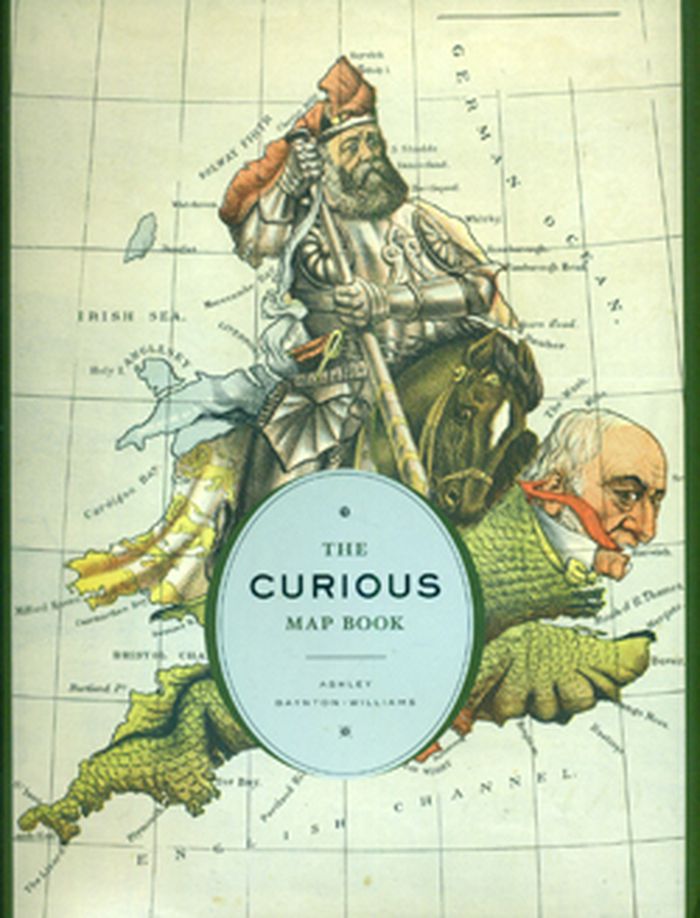
The Curious Map Book
The Curious Map Book
Actions:
Prix:
$54.95
(disponible sur commande)
Résumé:
Over the centuries, maps have served many varied purposes; far from mere guides for reaching a destination, they are unique artistic forms, aides in planning commercial routes, literary devices for illuminating a story. Accuracy—or inaccuracy—of maps has been the make-or-break factor in countless military battles throughout history. They have graced the walls of homes,(...)
Publication:
octobre 2015
octobre 2015
Titre:
The Curious Map Book
Actions:
Prix:
$54.95
(disponible sur commande)
Résumé:
Over the centuries, maps have served many varied purposes; far from mere guides for reaching a destination, they are unique artistic forms, aides in planning commercial routes, literary devices for illuminating a story. Accuracy—or inaccuracy—of maps has been the make-or-break factor in countless military battles throughout history. They have graced the walls of homes, bringing prestige and elegance to their owners. They track the mountains, oceans, and stars of our existence. Maps help us make sense of our worlds both real and imaginary—they bring order to the seeming chaos of our surroundings. With The Curious Map Book, Ashley Baynton-Williams gathers a chronologically ordered variety of cartographic gems, mainly from the vast collection of the British Library
Classification:
livres
livres
Publication:
octobre 2015
octobre 2015
Classification:
livres
livres
Prix:
$49.00
(disponible sur commande)
Résumé:
Buildings are more like us than we realize. They can be born into wealth or poverty, enjoying every privilege or struggling to make ends meet. They have parents - gods, kings and emperors, governments, visionaries and madmen - as well as friends and enemies. They have duties and responsibilities. They can endure crises of faith and purpose. They can succeed or fail. They(...)
Titre:
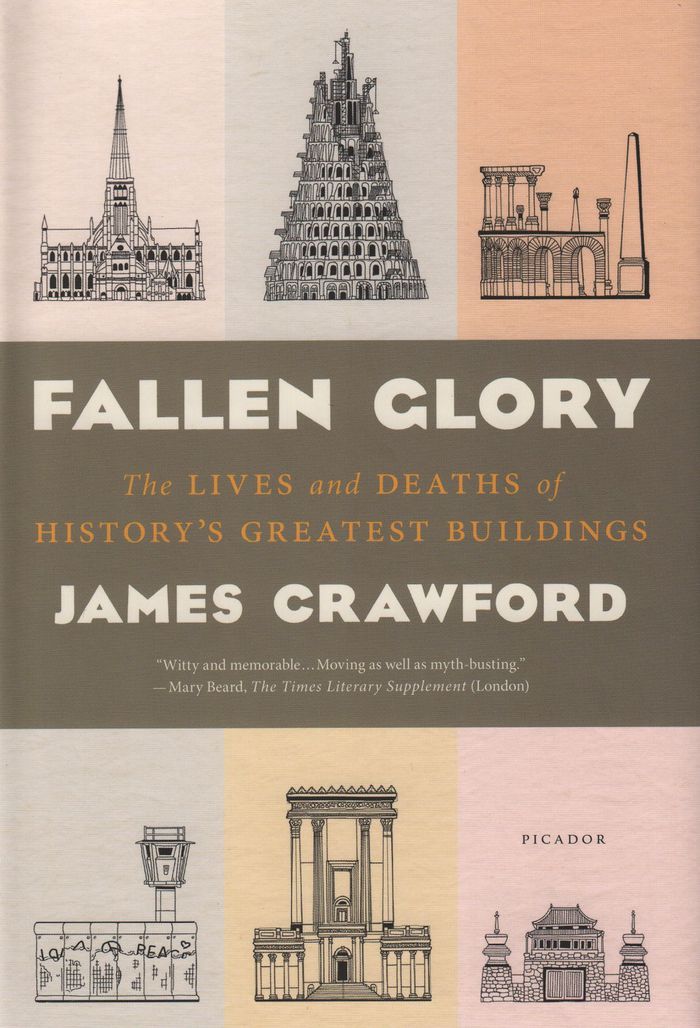
Fallen glory: the lives and deaths of history's greatest buildings
Actions:
Prix:
$49.00
(disponible sur commande)
Résumé:
Buildings are more like us than we realize. They can be born into wealth or poverty, enjoying every privilege or struggling to make ends meet. They have parents - gods, kings and emperors, governments, visionaries and madmen - as well as friends and enemies. They have duties and responsibilities. They can endure crises of faith and purpose. They can succeed or fail. They can live. And, sooner or later, they die. In "Fallen glory", James Crawford uncovers the biographies of some of the world's most fascinating lost and ruined buildings, from the dawn of civilization to the cyber era. The lives of these iconic structures are packed with drama and intrigue. Soap operas on the grandest scale, they feature war and religion, politics and art, love and betrayal, catastrophe and hope. Frequently their afterlives have been no less dramatic - their memories used and abused down the millennia for purposes both sacred and profane. They provide the stage for a startling array of characters, including Gilgamesh, the Cretan Minotaur, Agamemnon, Nefertiti, Genghis Khan, Henry VIII, Catherine the Great, Adolf Hitler, and even Bruce Springsteen. The twenty-one structures Crawford focuses on include The Tower of Babel, The Temple of Jerusalem, The Library of Alexandria, The Bastille, Kowloon Walled City, the Berlin Wall, and the Twin Towers of the World Trade Center. Ranging from the deserts of Iraq, the banks of the Nile and the cloud forests of Peru, to the great cities of Jerusalem, Istanbul, Paris, Rome, London and New York, Fallen Glory is a unique guide to a world of vanished architecture. And, by picking through the fragments of our past, it asks what history's scattered ruins can tell us about our own future.
Classification:
livres
livres
Publication:
mars 2017
mars 2017
Sujet:
Théorie de l’architecture
Théorie de l’architecture
Classification:
livres
livres
Prix:
$25.95
(disponible sur commande)
Résumé:
Finally, we are learning that simplicity equals sanity. We're rebelling against technology that's too complicated, DVD players with too many menus, and software accompanied by 75-megabyte "read me" manuals. The iPod's clean gadgetry has made simplicity hip. But sometimes we find ourselves caught up in the simplicity paradox: we want something that's simple and easy to(...)
Titre:
The laws of simplicity : design, technology, business, life
Actions:
Prix:
$25.95
(disponible sur commande)
Résumé:
Finally, we are learning that simplicity equals sanity. We're rebelling against technology that's too complicated, DVD players with too many menus, and software accompanied by 75-megabyte "read me" manuals. The iPod's clean gadgetry has made simplicity hip. But sometimes we find ourselves caught up in the simplicity paradox: we want something that's simple and easy to use, but also does all the complex things we might ever want it to do. In "The laws of simplicity", John Maeda offers ten laws for balancing simplicity and complexity in business, technology, and design -guidelines for needing less and actually getting more. Maeda - a professor in MIT's Media Lab and a world-renowned graphic designer - explores the question of how we can redefine the notion of "improved" so that it doesn't always mean something more, something added on. Maeda's first law of simplicity is "Reduce." It's not necessarily beneficial to add technology features just because we can. And the features that we do have must be organized (Law 2) in a sensible hierarchy so users aren't distracted by features and functions they don't need. But simplicity is not less just for the sake of less. Skip ahead to Law 9: "Failure : accept the fact that some things can never be made simple." Maeda's concise guide to simplicity in the digital age shows us how this idea can be a cornerstone of organizations and their products -how it can drive both business and technology. We can learn to simplify without sacrificing comfort and meaning, and we can achieve the balance described in Law 10. This law, which Maeda calls "The One," tells us: "Simplicity is about subtracting the obvious, and adding the meaningful."
Classification:
livres
livres
Publication:
septembre 2006, Cambridge (MA)
septembre 2006, Cambridge (MA)
Sujet:
Théorie du design
Théorie du design
Classification:
livres
livres
Titre:
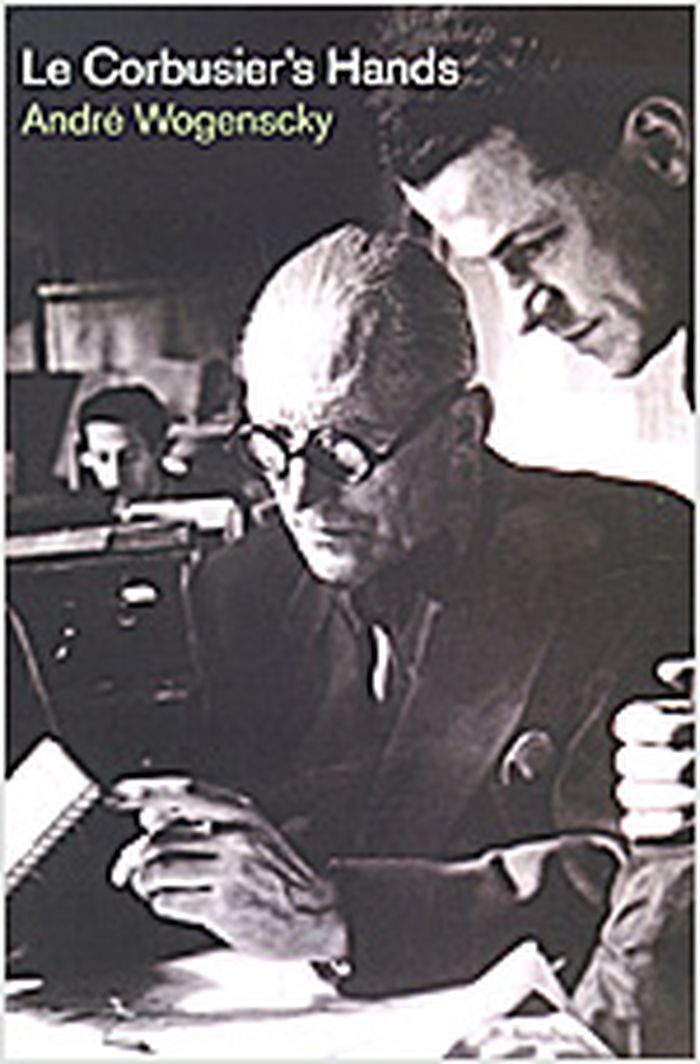
Le Corbusier's hands
Le Corbusier's hands
Actions:
Prix:
$18.95
(disponible sur commande)
Résumé:
"Le Corbusier's Hands" offers a poetic and personal portrait of Le Corbusier-a nuanced portrayal that is in contrast to the popular image of Le Corbusier the aloof modernist. The author knew Le Corbusier intimately for thirty years, first as his draftsman and main assistant, later as his colleague and personal friend. In this book, written in the mid-1980s, Wogenscky(...)
Sujet:
Architecture, monographies
Architecture, monographies
Publication:
janvier 1900, Cambridge, Mass.
janvier 1900, Cambridge, Mass.
Titre:
Le Corbusier's hands
Actions:
Prix:
$18.95
(disponible sur commande)
Résumé:
"Le Corbusier's Hands" offers a poetic and personal portrait of Le Corbusier-a nuanced portrayal that is in contrast to the popular image of Le Corbusier the aloof modernist. The author knew Le Corbusier intimately for thirty years, first as his draftsman and main assistant, later as his colleague and personal friend. In this book, written in the mid-1980s, Wogenscky remembers his mentor in a series of revealing personal statements and evocative reflections unlike anything that exists in the vast literature on Le Corbusier. Wogenscky draws a portrait in swift, deft strokes-50 short chapters, one leading to the next, one memory of Le Corbusier opening into another. Appearing and reappearing like a leitmotif are Le Corbusier's hands-touching, taking, drawing, offering, closing, opening, grasping, releasing: "It was his hands that revealed him. . . . They spoke all his feelings, all the vibrations of his inner life that his face tried to conceal." Wogenscky writes about Le Corbusier's work, including the famous design of the chapel at Ronchamp, his ideas for high-density Unités d'Habitation linked to the center of a "Radiant City," and his "Modulor" system for defining proportions-which Wogenscky compares to a piano tuner's finding the exact relation between sounds. He remembers the day Picasso spent with Le Corbusier at the Marseilles building site-"All day long they outdid one another in a show of modesty," he observes in amazement. He adds, speaking for himself and the others present, "We were inside a double energy field." And Wogenscky writes about Le Corbusier more personally. "I have spent years trying to understand what went on in his mind and in his hand," he tells us. With "Le Corbusier's hands", Wogenscky gives us a unique record of an enigmatic genius.
Classification:
livres
livres
Publication:
janvier 1900, Cambridge, Mass.
janvier 1900, Cambridge, Mass.
Sujet:
Architecture, monographies
Architecture, monographies
Classification:
livres
livres
Actions:
Prix:
$23.00
(disponible en magasin)
Résumé:
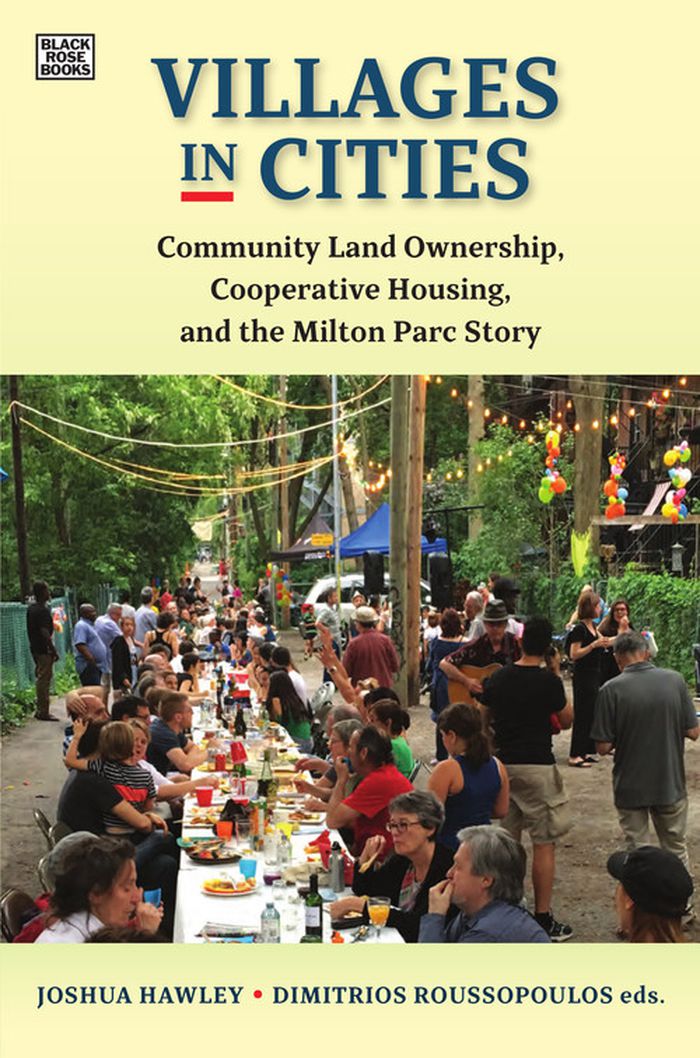
As gentrification threatens to uproot neighbourhoods across the world, the flame of co-operative housing has been reignited while the concept of community landownership has the potential to turn the tide and put the destiny of our cities into the hands of residents.Villages in Cities takes us across North America to Montreal, Boston, Vermont, and Mississippi,(...)
Publication:
janvier 2019
janvier 2019
Titre:
Villages in cities: community land ownership, cooperative housing, and the Milton Parc story
Actions:
Prix:
$23.00
(disponible en magasin)
Résumé:
As gentrification threatens to uproot neighbourhoods across the world, the flame of co-operative housing has been reignited while the concept of community landownership has the potential to turn the tide and put the destiny of our cities into the hands of residents.Villages in Cities takes us across North America to Montreal, Boston, Vermont, and Mississippi, presentingconcrete examples of citizens taking back the land and claiming their right to secure housing. It also acts as a guidebook to contemporary urban struggles through fertile archival material from the Milton Parc struggle, which is as relevant today as it was 50 years ago.Villages in Cities presents a succinct portrait of the problems facing the ownership of urban land, the challenge of contesting the State’s presupposed legitimacy in determining our urban future, and the contradictions these elements imply. n Montreal in 1968, speculators announced their ‘urban renewal’ plan to demolish six blocks of the downtown heritage neighborhood of Milton Parc in order to build enormous high-rise condos, hotels, office buildings, and shopping malls. The local community viewed this as a declaration of war. What followed was a remarkable struggle that not only saved the heritage architecture from destruction but also protected local residents from gentrification through the creation of the largest nonprofit cooperative housing project on an urban community land trust in North America. And Milton Parc is not unique. Villages in Cities takes us across North America—to New York, Boston, Burlington, Oakland, Jackson, Montreal, Toronto, Ottawa, and Vancouver—to show concrete examples of citizens taking back the land and claiming their right to secure housing. The book draws connections among these projects, examines their underlying causes, and connects them with a holistic “Right to the City” movement that is emerging internationally.
Classification:
livres
livres
Publication:
janvier 2019
janvier 2019
Classification:
périodiques
périodiques
Actions:
Prix:
$16.95
(disponible en magasin)
Résumé:
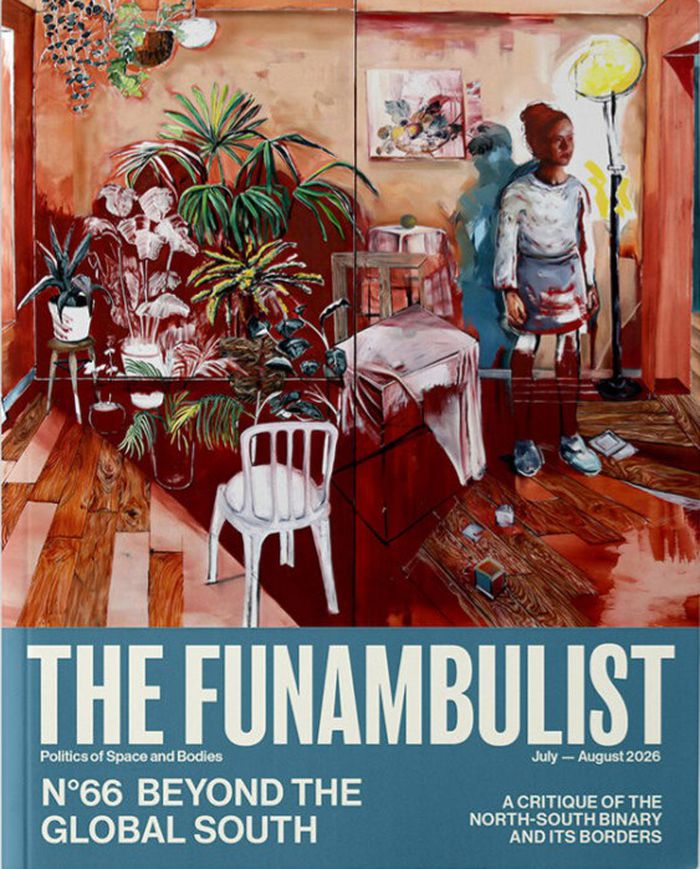
With this issue, the funambulist offers a critique of their own framework of knowledge production. The concept of “Global South” has been turned into a handy word to lazily designate two-thirds of the world’s earthly area and 90% of its population, thus flattening the millions of specificities that characterize this grouping. It also often embodies an entity that only(...)
Titre:
The Funambulist 66: Beyond the global South
Actions:
Prix:
$16.95
(disponible en magasin)
Résumé:
With this issue, the funambulist offers a critique of their own framework of knowledge production. The concept of “Global South” has been turned into a handy word to lazily designate two-thirds of the world’s earthly area and 90% of its population, thus flattening the millions of specificities that characterize this grouping. It also often embodies an entity that only exists dependent on its alter ego, the Global North. As such, it denies any form of agency to the peoples designated as “the South” independently from their relationship to the “North,” as we examine in the case of the war in the eastern Congo (Josaphat Musamba). The South/North binary also designates borders as lines (rather than as regimes operating on both sides of these lines) and essentializes the difference between sides. Can Blackness and Indigeneity in Abya Yala be read without a fundamental split at the settler colonial line that separates North and Central-South Americas (Ashley Ngozi Agbasoga)? Can 20th century Korea’s history show us that the line that currently separates the north (usually presented as part of the Global South) and the south (usually presented as part of the Global North) particularly illustrates the North/South framework’s lack of complexity (Lina Eunji Chang and Andrei-Sergei Kim)? What kind of colonial violence the Non-Aligned Movement invisibilizes in West Papua (Quito Swan), in Kashmir (Choakkeladd) or Western Sahara (Buhari Lehbib) and, in contrast, what kind of solidarities it allowed from Yugoslavia (Dubravka Sekulic and Sanja Horvatincic)? And, crucially, how can we honor the complexity of politics by being able to hold two contradictory truths together as Micol Meghnagi reminds us in the context of Gaddafi’s Libya and Pan-Arabism.
Classification:
périodiques
périodiques
Publication:
juillet 2026
juillet 2026
Sujet:
Revues
Revues
Classification:
livres
livres
Actions:
Prix:
$19.95
(disponible en magasin)
Résumé:
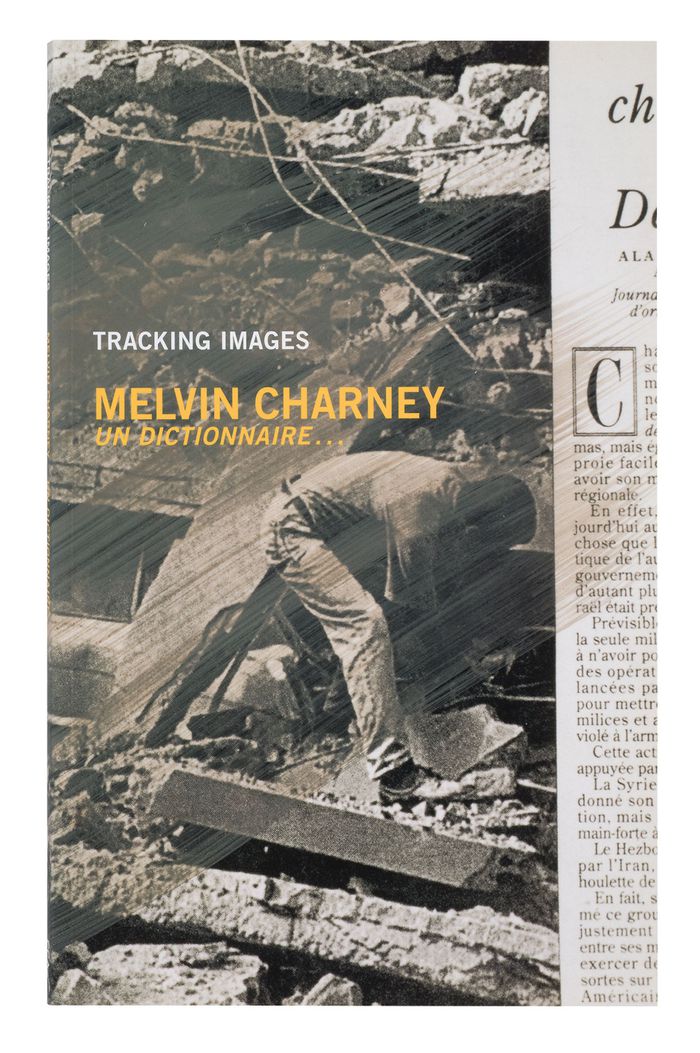
Ce Dictionnaire de l’artiste architecte et urbaniste Melvin Charney se pre´sente comme une collection de de´coupages d’articles de presse illustre´s d’une photographie, classe´s par se´ries the´matiques. Ces de´coupages, ou` compte surtout l’image, sont partiellement couverts de le´gers traits de peinture qui accentuent la valeur d’exposition de l’ensemble; le(...)
Sujet:
Publications du CCA
Publications du CCA
Publication:
juin 2000, Montréal
juin 2000, Montréal
Titre:
Tracking images : Melvin Charney, un dictionnaire...
Actions:
Prix:
$19.95
(disponible en magasin)
Résumé:
Ce Dictionnaire de l’artiste architecte et urbaniste Melvin Charney se pre´sente comme une collection de de´coupages d’articles de presse illustre´s d’une photographie, classe´s par se´ries the´matiques. Ces de´coupages, ou` compte surtout l’image, sont partiellement couverts de le´gers traits de peinture qui accentuent la valeur d’exposition de l’ensemble; le de´placement de la page imprime´e a` l’espace de la galerie ou du muse´e. Ce dictionnaire est une forme composite qui re´sulte d’une activite´ a` re´sonances multiples dans l’histoire des relations entre art et information, dans l’histoire de la critique architec- turale et dans celle de l’architecture critique. Les e´ve´nements fortuits que transmettent ces images collige´es par Charney nous forcent a` voir l’architecture dans un cadre qui n’est plus celui de sa repre´sentation comme construction monumentale isole´e. Cette publication accompagnait la participation canadienne a` la 7e Exposition internationale d’architecture de la Biennale de Venise, dont le the`me e´tait « La ville : moins d’esthe´tique, plus d’e´thique ». The Montre´al-based Canadian artist and architect Melvin Charney describes the history of modern architecture as a series of significant monuments that have been reproduced and documented. Here, the unexpected events transmitted by wire-service news photographs—selected, classified into various thematic areas, and collated by Charney—confront us with the shock or recognition that allows us to see architecture from outside its presentation as an isolated monument. The choices made by Charney from the ideas enclosed in the pre-packaged “news” images order them into a “dictionary,” and show the built and inhabited world as it appears through journalistic information. This publication accompanied the Canadian entry to the Venice Biennale’s 7th International Architecture Exhibition, whose theme was “The City: Less Aesthetics, More Ethics.”
Classification:
livres
livres
Publication:
juin 2000, Montréal
juin 2000, Montréal
Sujet:
Publications du CCA
Publications du CCA
Classification:
livres
livres

Titre:
Dorothea Lange: Day sleeper
Dorothea Lange: Day sleeper
Actions:
Prix:
$45.00
(disponible sur commande)
Résumé:
In this book Sam Contis presents a new window onto the work of the iconic American photographer Dorothea Lange. Drawing from Lange’s extensive archive, Contis constructs a fragmented, unfamiliar world centred around the figure of the day sleeper – at once a symbol of respite and oblivion. The book shows us one artist through the eyes of another, with Contis responding to(...)
Titre:
Dorothea Lange: Day sleeper
Actions:
Prix:
$45.00
(disponible sur commande)
Résumé:
In this book Sam Contis presents a new window onto the work of the iconic American photographer Dorothea Lange. Drawing from Lange’s extensive archive, Contis constructs a fragmented, unfamiliar world centred around the figure of the day sleeper – at once a symbol of respite and oblivion. The book shows us one artist through the eyes of another, with Contis responding to resonances between her and Lange’s ways of seeing. It reveals a largely unknown side of Lange, and includes previously unseen photographs of her family, portraiture from her studio, and pictures made in the streets of San Francisco and the East Bay. 'Day Sleeper' will be featured alongside other works of Contis’ in the exhibition Dorothea Lange: Words & Pictures at the Museum of Modern Art, February–May 2020.
Classification:
livres
livres
Publication:
février 2020
février 2020
Sujet:
Monographies photo
Monographies photo


