


450 Résultats
Classification:
livres
livres
Actions:
Prix:
$54.00
(disponible en magasin)
Résumé:
To think through soil is to engage with some of the most critical issues of our time. In addition to its agricultural role in feeding eight billion people, soil has become the primary agent of carbon storage in global climate models, and it is crucial for biodiversity, flood control, and freshwater resources. Perhaps no other material is asked to do so much for the human(...)
$54.00
(disponible en magasin)
Résumé:
To think through soil is to engage with some of the most critical issues of our time. In addition to its agricultural role in feeding eight billion people, soil has become the primary agent of carbon storage in global climate models, and it is crucial for biodiversity, flood control, and freshwater resources. Perhaps no other material is asked to do so much for the human(...)
Sujet:
L'écologie de l'architecure
L'écologie de l'architecure
Publication:
juin 2025
juin 2025
Titre:
Thinking through soil: Wastewater agriculture in the Mezquital Valley
Actions:
Prix:
$54.00
(disponible en magasin)
Résumé:
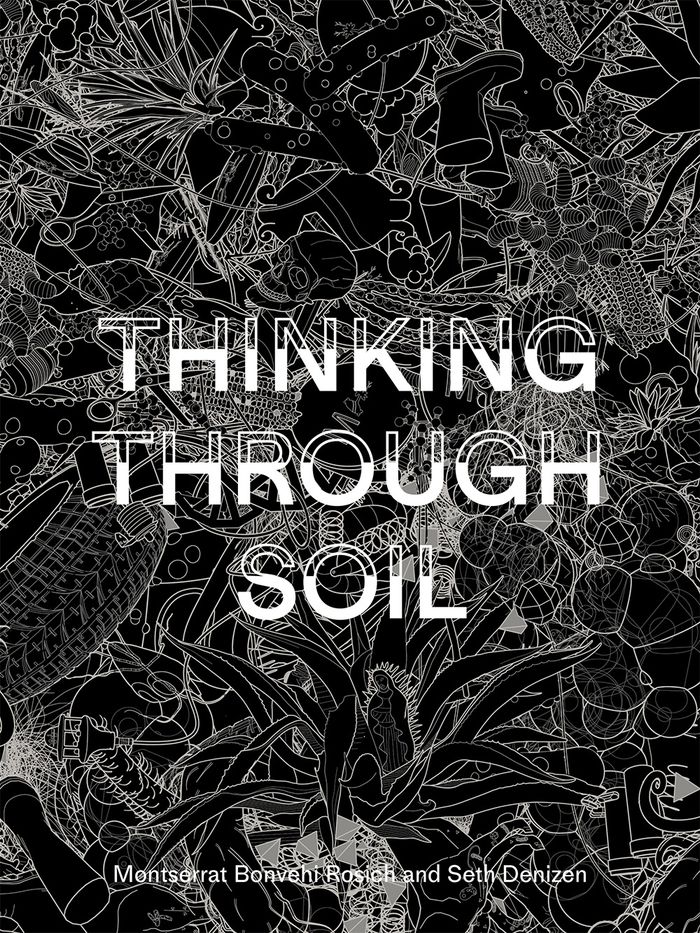
To think through soil is to engage with some of the most critical issues of our time. In addition to its agricultural role in feeding eight billion people, soil has become the primary agent of carbon storage in global climate models, and it is crucial for biodiversity, flood control, and freshwater resources. Perhaps no other material is asked to do so much for the human environment, and yet our basic conceptual model of what soil is and how it works remains surprisingly vague. In cities, soil occupies a blurry category whose boundaries are both empirically uncertain and politically contested. Soil functions as a nexus for environmental processes through which the planet’s most fundamental material transformations occur, but conjuring what it actually is serves as a useful exercise in reframing environmental thought, design thinking, and city and regional planning toward a healthier, more ethical, and more sustainable future. Through a sustained analysis of the world’s largest wastewater agricultural system, located in the Mexico City–Mezquital hydrological region, ''Thinking Through Soil'' imagines what a better environmental future might look like in central Mexico. More broadly, this case study offers a new image of soil that captures its shifting identity, explains its profound importance to rural and urban life, and argues for its capacity to save our planet.
Thinking through soil: Wastewater agriculture in the Mezquital Valley
Actions:
Prix:
$54.00
(disponible en magasin)
Résumé:
To think through soil is to engage with some of the most critical issues of our time. In addition to its agricultural role in feeding eight billion people, soil has become the primary agent of carbon storage in global climate models, and it is crucial for biodiversity, flood control, and freshwater resources. Perhaps no other material is asked to do so much for the human environment, and yet our basic conceptual model of what soil is and how it works remains surprisingly vague. In cities, soil occupies a blurry category whose boundaries are both empirically uncertain and politically contested. Soil functions as a nexus for environmental processes through which the planet’s most fundamental material transformations occur, but conjuring what it actually is serves as a useful exercise in reframing environmental thought, design thinking, and city and regional planning toward a healthier, more ethical, and more sustainable future. Through a sustained analysis of the world’s largest wastewater agricultural system, located in the Mexico City–Mezquital hydrological region, ''Thinking Through Soil'' imagines what a better environmental future might look like in central Mexico. More broadly, this case study offers a new image of soil that captures its shifting identity, explains its profound importance to rural and urban life, and argues for its capacity to save our planet.
Classification:
livres
livres
Publication:
juin 2025
juin 2025
Sujet:
L'écologie de l'architecure
L'écologie de l'architecure
Classification:
livres
livres
Actions:
Prix:
$85.00
(disponible sur commande)
Résumé:
With "Atacama", Jamey Stillings again shares his distinctive aerial perspective to examine dramatic large-scale renewable energy projects, the visual dynamic of enormous mining operations and the stark beauty of the Atacama Desert, so often scarred by human activity. Chile produces a third of the world’s copper and has the largest known lithium reserves, and we utilize(...)
$85.00
(disponible sur commande)
Résumé:
With "Atacama", Jamey Stillings again shares his distinctive aerial perspective to examine dramatic large-scale renewable energy projects, the visual dynamic of enormous mining operations and the stark beauty of the Atacama Desert, so often scarred by human activity. Chile produces a third of the world’s copper and has the largest known lithium reserves, and we utilize(...)
Titre:
Jamey Stillings: Atacama, renewable energy and mining in the high desert of Chile
Actions:
Prix:
$85.00
(disponible sur commande)
Résumé:
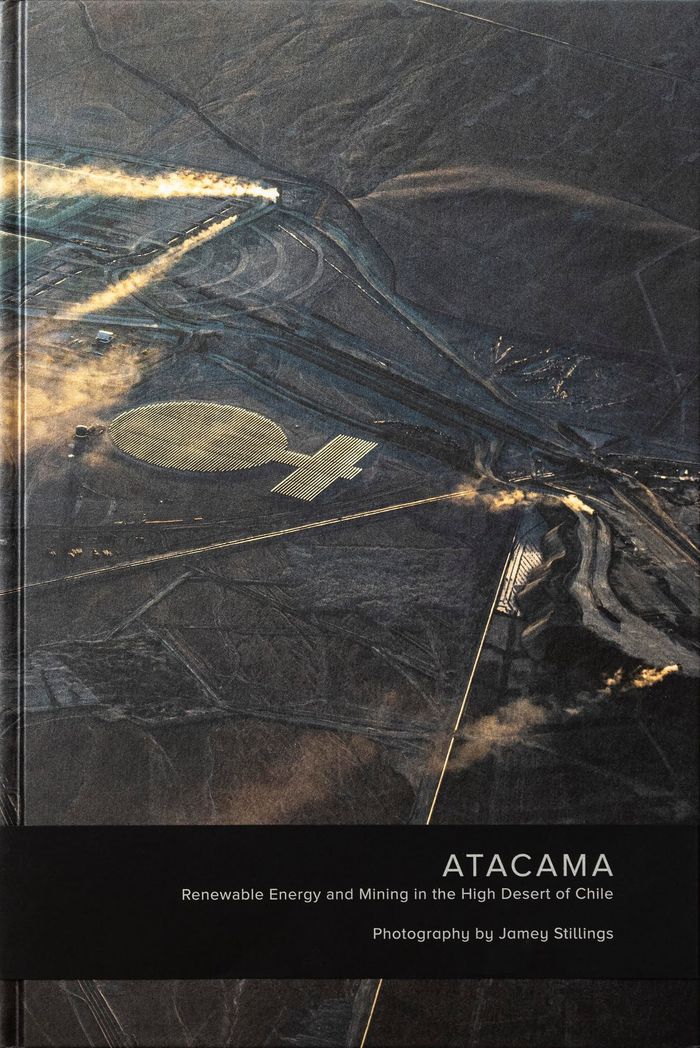
With "Atacama", Jamey Stillings again shares his distinctive aerial perspective to examine dramatic large-scale renewable energy projects, the visual dynamic of enormous mining operations and the stark beauty of the Atacama Desert, so often scarred by human activity. Chile produces a third of the world’s copper and has the largest known lithium reserves, and we utilize these resources daily in our cars, computers and smartphones. The country’s mining industry has traditionally been dependent on imported coal, diesel and natural gas for its energy. Yet the Atacama Desert has excellent solar and wind potential: new renewable energy projects there now supply significant electricity to the northern grid, transmit power to population centers in the south, and are reducing mining’s dependence on fossil fuel. Stillings’ aesthetic interest in the human-altered landscape and concerns for environmental sustainability are principal pillars of his work. His photography elicits a critical dialogue about meeting our needs and desires while seeking equilibrium between nature and human activity. "Atacama," the latest chapter in his ongoing project "Changing perspectives," shows how photography can concurrently be a source of inspiration, motivation and information, and reminds us that a carbon-constrained future is crucial to a responsible approach to life on earth.
Jamey Stillings: Atacama, renewable energy and mining in the high desert of Chile
Actions:
Prix:
$85.00
(disponible sur commande)
Résumé:
With "Atacama", Jamey Stillings again shares his distinctive aerial perspective to examine dramatic large-scale renewable energy projects, the visual dynamic of enormous mining operations and the stark beauty of the Atacama Desert, so often scarred by human activity. Chile produces a third of the world’s copper and has the largest known lithium reserves, and we utilize these resources daily in our cars, computers and smartphones. The country’s mining industry has traditionally been dependent on imported coal, diesel and natural gas for its energy. Yet the Atacama Desert has excellent solar and wind potential: new renewable energy projects there now supply significant electricity to the northern grid, transmit power to population centers in the south, and are reducing mining’s dependence on fossil fuel. Stillings’ aesthetic interest in the human-altered landscape and concerns for environmental sustainability are principal pillars of his work. His photography elicits a critical dialogue about meeting our needs and desires while seeking equilibrium between nature and human activity. "Atacama," the latest chapter in his ongoing project "Changing perspectives," shows how photography can concurrently be a source of inspiration, motivation and information, and reminds us that a carbon-constrained future is crucial to a responsible approach to life on earth.
Classification:
livres
livres
Publication:
juin 2020
juin 2020
Sujet:
Monographies photo
Monographies photo
Classification:
livres
livres
Actions:
Exemplaires:
Description:
142 pages, 10 unnumbered pages : illustrations (some color) ; 22 cm
Description:
142 pages, 10 unnumbered pages : illustrations (some color) ; 22 cm
Auteur:
Sujet:
Publication:
[New York, N.Y.] : CLOG, [2015], ©2015
[New York, N.Y.] : CLOG, [2015], ©2015
Titre:
Landmark / Kyle May (editor-in-chief), Julia van den Hout (editor), Jacob Reidel (editor), Jeffrey Franklin (editor & designer), Archie Lee Coates IV (editor & designer), Stephanie Lee (assistant editor), Thomas Lozada (assistant editor), Dorin Baul (research assistant), Adam Feldman (research assistant), Patrick Sarmiento (distribution manager), Lukas Debiasi (special projects).
Actions:
Exemplaires:
Description:
142 pages, 10 unnumbered pages : illustrations (some color) ; 22 cm
Landmark / Kyle May (editor-in-chief), Julia van den Hout (editor), Jacob Reidel (editor), Jeffrey Franklin (editor & designer), Archie Lee Coates IV (editor & designer), Stephanie Lee (assistant editor), Thomas Lozada (assistant editor), Dorin Baul (research assistant), Adam Feldman (research assistant), Patrick Sarmiento (distribution manager), Lukas Debiasi (special projects).
Actions:
Exemplaires:
Description:
142 pages, 10 unnumbered pages : illustrations (some color) ; 22 cm
Classification:
livres
livres
Publication:
[New York, N.Y.] : CLOG, [2015], ©2015
[New York, N.Y.] : CLOG, [2015], ©2015
Auteur:
Sujet:
Classification:
livres
livres
Prix:
$41.99
(disponible en magasin)
Résumé:
Americans spend, on average, 90 percent of their lives indoors, with two-thirds of that time spent in their homes. Globally, the construction and maintenance of residential buildings account for a staggering portion of carbon emissions. In this timely and fascinating work, architect and urban-planning scholar Stefan Al deftly weaves together archaeology, engineering,(...)
$41.99
(disponible en magasin)
Résumé:
Americans spend, on average, 90 percent of their lives indoors, with two-thirds of that time spent in their homes. Globally, the construction and maintenance of residential buildings account for a staggering portion of carbon emissions. In this timely and fascinating work, architect and urban-planning scholar Stefan Al deftly weaves together archaeology, engineering,(...)
Titre:
Dwelling on Earth: the past and future of the places we call home
Actions:
Prix:
$41.99
(disponible en magasin)
Résumé:
Americans spend, on average, 90 percent of their lives indoors, with two-thirds of that time spent in their homes. Globally, the construction and maintenance of residential buildings account for a staggering portion of carbon emissions. In this timely and fascinating work, architect and urban-planning scholar Stefan Al deftly weaves together archaeology, engineering, social history, and environmental science to explain how our homes have developed through the ages and in turn shaped civilization and the planet itself. From tiny pit-houses in the Levant and Mesoamerica thousands of years ago to soaring skyscrapers in Dubai, New York, and Shanghai today, ''Dwelling on Earth'' takes readers on a swift and absorbing tour of the evolution of human habitation. Whisking readers from ancient Pompeii to contemporary Hong Kong, industrial-age Liverpool to postwar Levittown, Al shows how our choices in housing have both reflected and affected ideas about gender roles, privacy, and comfort. Discover how seemingly mundane elements—like door-knockers and corridors—have altered everyday interactions, and how material choices have remade the planet's surface. He also confronts the darker side of domesticity, exposing the unintended consequences of our architectural choices across millennia, including smoke-filled Neolithic dwellings, deadly fires in crowded Roman apartment buildings, and worsening social isolation in car-dependent suburbs. Finally, he examines the myths and reality of future housing, including 3D-printed homes and space architecture built by robots.
Dwelling on Earth: the past and future of the places we call home
Actions:
Prix:
$41.99
(disponible en magasin)
Résumé:
Americans spend, on average, 90 percent of their lives indoors, with two-thirds of that time spent in their homes. Globally, the construction and maintenance of residential buildings account for a staggering portion of carbon emissions. In this timely and fascinating work, architect and urban-planning scholar Stefan Al deftly weaves together archaeology, engineering, social history, and environmental science to explain how our homes have developed through the ages and in turn shaped civilization and the planet itself. From tiny pit-houses in the Levant and Mesoamerica thousands of years ago to soaring skyscrapers in Dubai, New York, and Shanghai today, ''Dwelling on Earth'' takes readers on a swift and absorbing tour of the evolution of human habitation. Whisking readers from ancient Pompeii to contemporary Hong Kong, industrial-age Liverpool to postwar Levittown, Al shows how our choices in housing have both reflected and affected ideas about gender roles, privacy, and comfort. Discover how seemingly mundane elements—like door-knockers and corridors—have altered everyday interactions, and how material choices have remade the planet's surface. He also confronts the darker side of domesticity, exposing the unintended consequences of our architectural choices across millennia, including smoke-filled Neolithic dwellings, deadly fires in crowded Roman apartment buildings, and worsening social isolation in car-dependent suburbs. Finally, he examines the myths and reality of future housing, including 3D-printed homes and space architecture built by robots.
Classification:
livres
livres
Publication:
avril 2026
avril 2026
Sujet:
Social
Social
Classification:
vidéo
vidéo
Description:
1 online resource (1 video file (22 minutes)) : sound, color
Auteur:
Sujet:
Publication:
London, England : Pidgeon Digital, 1999.
London, England : Pidgeon Digital, 1999.
Titre:
Restoring Modern 1930s Houses / [presented by] John Winter.
Actions:
Description:
1 online resource (1 video file (22 minutes)) : sound, color
Restoring Modern 1930s Houses / [presented by] John Winter.
Actions:
Description:
1 online resource (1 video file (22 minutes)) : sound, color
Classification:
vidéo
vidéo
Publication:
London, England : Pidgeon Digital, 1999.
London, England : Pidgeon Digital, 1999.
Auteur:
Sujet:
Classification:
livres
livres
Actions:
Exemplaires:
Description:
747 pages : illustrations principalement en couleur ; 31 cm.
Description:
747 pages : illustrations principalement en couleur ; 31 cm.
Auteur:
Sujet:
Publication:
Lausanne : Presses polytechniques et universitaires romandes, [2017].
Lausanne : Presses polytechniques et universitaires romandes, [2017].
Titre:
Manuel de réhabilitation avec l'acier / Pierre Engel ; préface de Rem Koolhas.
Actions:
Exemplaires:
Description:
747 pages : illustrations principalement en couleur ; 31 cm.
Manuel de réhabilitation avec l'acier / Pierre Engel ; préface de Rem Koolhas.
Actions:
Exemplaires:
Description:
747 pages : illustrations principalement en couleur ; 31 cm.
Classification:
livres
livres
Publication:
Lausanne : Presses polytechniques et universitaires romandes, [2017].
Lausanne : Presses polytechniques et universitaires romandes, [2017].
Auteur:
Sujet:
Classification:
livres
livres
Titre:
Architecture goes wild
Architecture goes wild
Actions:
Prix:
$29.95
(disponible sur commande)
Résumé:
In his writings, architect Kas Oosterhuis bridges the gap between theory and practice. His observations are based on the principle of concrete science fiction. He is convinced that every construct - hardware or software - that can be formulated as a consistent set of rules is realizable within the social constraints of our present-day culture. In his essay(...)
$29.95
(disponible sur commande)
Résumé:
In his writings, architect Kas Oosterhuis bridges the gap between theory and practice. His observations are based on the principle of concrete science fiction. He is convinced that every construct - hardware or software - that can be formulated as a consistent set of rules is realizable within the social constraints of our present-day culture. In his essay(...)
Titre:
Architecture goes wild
Actions:
Prix:
$29.95
(disponible sur commande)
Résumé:
In his writings, architect Kas Oosterhuis bridges the gap between theory and practice. His observations are based on the principle of concrete science fiction. He is convinced that every construct - hardware or software - that can be formulated as a consistent set of rules is realizable within the social constraints of our present-day culture. In his essay 'Space_Time_Volume' Kas Oosterhuis places himself in the local and temporary delamination point between the micro- and macroworlds. He speculates on a seamless continuity of these worlds where the instrumental human position is only one of many possible positions. Our perception of the universe is based on observations made by instruments. Language is seen as such an instrument. In 'Wild Bodies' Oosterhuis asserts that all true architecture inevitably will be programmed to perform in real time. This point of view is based on the observation that traditional fixed and static architecture is a highly unlikely state among all possible ones. An architectural construct is regarded as a body with real-time behaviour that is always in motion. Computer programs speak the new instrumental language in which potential new worlds are described. 'Automotive Styling' declares the human driver of the automobile to be the voluntary prisoner of the physical car-road communications network. In 'Vectorial Bodies' the human driver is nothing less than fuzzy software programming the car to lead it to his destinations. There is no place for romantic ideas such as freedom of movement, but there is the overwhelming desire of carbon-based life forms to exchange data with industrial and digital life forms.
Architecture goes wild
Actions:
Prix:
$29.95
(disponible sur commande)
Résumé:
In his writings, architect Kas Oosterhuis bridges the gap between theory and practice. His observations are based on the principle of concrete science fiction. He is convinced that every construct - hardware or software - that can be formulated as a consistent set of rules is realizable within the social constraints of our present-day culture. In his essay 'Space_Time_Volume' Kas Oosterhuis places himself in the local and temporary delamination point between the micro- and macroworlds. He speculates on a seamless continuity of these worlds where the instrumental human position is only one of many possible positions. Our perception of the universe is based on observations made by instruments. Language is seen as such an instrument. In 'Wild Bodies' Oosterhuis asserts that all true architecture inevitably will be programmed to perform in real time. This point of view is based on the observation that traditional fixed and static architecture is a highly unlikely state among all possible ones. An architectural construct is regarded as a body with real-time behaviour that is always in motion. Computer programs speak the new instrumental language in which potential new worlds are described. 'Automotive Styling' declares the human driver of the automobile to be the voluntary prisoner of the physical car-road communications network. In 'Vectorial Bodies' the human driver is nothing less than fuzzy software programming the car to lead it to his destinations. There is no place for romantic ideas such as freedom of movement, but there is the overwhelming desire of carbon-based life forms to exchange data with industrial and digital life forms.
Classification:
livres
livres
Publication:
mars 2001, Rotterdam
mars 2001, Rotterdam
Sujet:
Théorie de l’architecture
Théorie de l’architecture
Classification:
livres
livres
Actions:
Prix:
$44.95
(disponible en magasin)
Résumé:
Une exploration pionnière de l'évolution des fonctions fondamentales des écrans dans l'histoire (du corps comme proto-écran aux dispositifs portables d'aujourd'hui), de leurs implications anthropologiques et philosophiques, et de leur impact profond sur la culture humaine, offrant un récit éloquent sur notre réalité médiatisée. Les écrans ne se limitent pas à montrer(...)
$44.95
(disponible en magasin)
Résumé:
Une exploration pionnière de l'évolution des fonctions fondamentales des écrans dans l'histoire (du corps comme proto-écran aux dispositifs portables d'aujourd'hui), de leurs implications anthropologiques et philosophiques, et de leur impact profond sur la culture humaine, offrant un récit éloquent sur notre réalité médiatisée. Les écrans ne se limitent pas à montrer(...)
Titre:
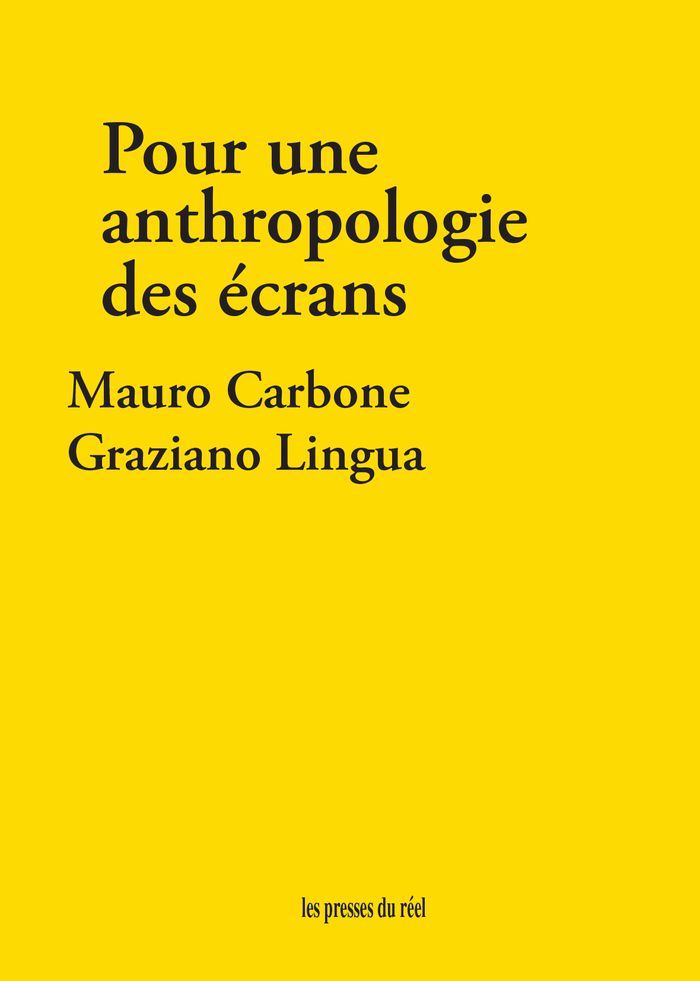
Pour une anthropologie des écrans: Montrer et cacher, exposer et protéger
Actions:
Prix:
$44.95
(disponible en magasin)
Résumé:
Une exploration pionnière de l'évolution des fonctions fondamentales des écrans dans l'histoire (du corps comme proto-écran aux dispositifs portables d'aujourd'hui), de leurs implications anthropologiques et philosophiques, et de leur impact profond sur la culture humaine, offrant un récit éloquent sur notre réalité médiatisée. Les écrans ne se limitent pas à montrer ou cacher : depuis la préhistoire, ils servent d'intermédiaires dans notre relation au monde en protégeant autant qu'en exposant nos corps. À travers une enquête historico-généalogique et une analyse aussi bien des technologies présentes que du futur proche, les auteurs déconstruisent l'idée selon laquelle les écrans seraient inséparables des images, que celles-ci s'opposeraient aux mots, ainsi que ce qu'ils nomment idéologie de la « Transparence 2.0 », à savoir la prétention de pouvoir éliminer toute médiation tant en communication qu'en politique. Ils montrent également que les technologies portables ne nous rapprochent nullement d'une supposée disparition des écrans, mais semblent plutôt dessiner un quasi-retour à l'utilisation de notre corps, cette fois-ci « augmenté », comme écran. Cela soulève de nouvelles questions relationnelles, éthiques et politiques, que le livre contribue à éclairer.
Pour une anthropologie des écrans: Montrer et cacher, exposer et protéger
Actions:
Prix:
$44.95
(disponible en magasin)
Résumé:
Une exploration pionnière de l'évolution des fonctions fondamentales des écrans dans l'histoire (du corps comme proto-écran aux dispositifs portables d'aujourd'hui), de leurs implications anthropologiques et philosophiques, et de leur impact profond sur la culture humaine, offrant un récit éloquent sur notre réalité médiatisée. Les écrans ne se limitent pas à montrer ou cacher : depuis la préhistoire, ils servent d'intermédiaires dans notre relation au monde en protégeant autant qu'en exposant nos corps. À travers une enquête historico-généalogique et une analyse aussi bien des technologies présentes que du futur proche, les auteurs déconstruisent l'idée selon laquelle les écrans seraient inséparables des images, que celles-ci s'opposeraient aux mots, ainsi que ce qu'ils nomment idéologie de la « Transparence 2.0 », à savoir la prétention de pouvoir éliminer toute médiation tant en communication qu'en politique. Ils montrent également que les technologies portables ne nous rapprochent nullement d'une supposée disparition des écrans, mais semblent plutôt dessiner un quasi-retour à l'utilisation de notre corps, cette fois-ci « augmenté », comme écran. Cela soulève de nouvelles questions relationnelles, éthiques et politiques, que le livre contribue à éclairer.
Classification:
livres
livres
Publication:
février 2026
février 2026
Sujet:
Théorie de l’art
Théorie de l’art
Classification:
livres
livres
Actions:
Exemplaires:
Description:
ix, 230 pages : illustrations (some color), plans (some color) ; 26 cm
Description:
ix, 230 pages : illustrations (some color), plans (some color) ; 26 cm
Auteur:
Sujet:
Publication:
London : RIBA Publishing, [2022], Exeter : Printed and bound by Short Run Press, ©2022
London : RIBA Publishing, [2022], Exeter : Printed and bound by Short Run Press, ©2022
Titre:
Revaluing modern architecture : changing conservation culture / John Allan.
Actions:
Exemplaires:
Description:
ix, 230 pages : illustrations (some color), plans (some color) ; 26 cm
Revaluing modern architecture : changing conservation culture / John Allan.
Actions:
Exemplaires:
Description:
ix, 230 pages : illustrations (some color), plans (some color) ; 26 cm
Classification:
livres
livres
Publication:
London : RIBA Publishing, [2022], Exeter : Printed and bound by Short Run Press, ©2022
London : RIBA Publishing, [2022], Exeter : Printed and bound by Short Run Press, ©2022
Auteur:
Sujet:
Classification:
livres
livres
Titre:
Peaux arctiques / Artic Skins : Les origines des panneaux composites de Guy Gérin-Lajoie (1968-1974)
Peaux arctiques / Artic Skins : Les origines des panneaux composites de Guy Gérin-Lajoie (1968-1974)
Actions:
Prix:
$50.00
(disponible en magasin)
Résumé:
L'ouvrage « Peaux arctiques » souligne l’apport à la recherche d’une architecture préfabriquée adaptée au climat arctique de l’architecte Guy Gérin-Lajoie (1928-2015) de 1968 à 1974. Par l’entremise d’un retour sur les archives de l’architecte, le recueil présenté, chapeauté par Carlo Carbone et produit avec l’aide de Provencher_Roy, documente cinq édifices significatifs.(...)
$50.00
(disponible en magasin)
Résumé:
L'ouvrage « Peaux arctiques » souligne l’apport à la recherche d’une architecture préfabriquée adaptée au climat arctique de l’architecte Guy Gérin-Lajoie (1928-2015) de 1968 à 1974. Par l’entremise d’un retour sur les archives de l’architecte, le recueil présenté, chapeauté par Carlo Carbone et produit avec l’aide de Provencher_Roy, documente cinq édifices significatifs.(...)
Publication:
avril 2026
avril 2026
Titre:
Peaux arctiques / Artic Skins : Les origines des panneaux composites de Guy Gérin-Lajoie (1968-1974)
Actions:
Prix:
$50.00
(disponible en magasin)
Résumé:
L'ouvrage « Peaux arctiques » souligne l’apport à la recherche d’une architecture préfabriquée adaptée au climat arctique de l’architecte Guy Gérin-Lajoie (1928-2015) de 1968 à 1974. Par l’entremise d’un retour sur les archives de l’architecte, le recueil présenté, chapeauté par Carlo Carbone et produit avec l’aide de Provencher_Roy, documente cinq édifices significatifs. // The book "Arctic Skins" highlights architect Guy Gérin-Lajoie’s (1928–2015) contributions to research on prefabricated architecture adapted to the Arctic climate from 1968 to 1974. Drawing on the architect’s archives, this collection—edited by Carlo Carbone and produced with the assistance of Provencher_Roy—documents five significant buildings.
Peaux arctiques / Artic Skins : Les origines des panneaux composites de Guy Gérin-Lajoie (1968-1974)
Actions:
Prix:
$50.00
(disponible en magasin)
Résumé:
L'ouvrage « Peaux arctiques » souligne l’apport à la recherche d’une architecture préfabriquée adaptée au climat arctique de l’architecte Guy Gérin-Lajoie (1928-2015) de 1968 à 1974. Par l’entremise d’un retour sur les archives de l’architecte, le recueil présenté, chapeauté par Carlo Carbone et produit avec l’aide de Provencher_Roy, documente cinq édifices significatifs. // The book "Arctic Skins" highlights architect Guy Gérin-Lajoie’s (1928–2015) contributions to research on prefabricated architecture adapted to the Arctic climate from 1968 to 1974. Drawing on the architect’s archives, this collection—edited by Carlo Carbone and produced with the assistance of Provencher_Roy—documents five significant buildings.
Classification:
livres
livres
Publication:
avril 2026
avril 2026


