


453 Résultats
Classification:
livres
livres
Actions:
Prix:
$150.00
(disponible sur commande)
Résumé:
Large-size working drawings are the foundation of any architectural process and 'key' to practical construction of a building, yet very little has been written and published about the architect's quintessential tool. This new book bridges this gap, as it draws on a vast collection of working drawings from many centuries, held by the Department of Architecture at ETH(...)
$150.00
(disponible sur commande)
Résumé:
Large-size working drawings are the foundation of any architectural process and 'key' to practical construction of a building, yet very little has been written and published about the architect's quintessential tool. This new book bridges this gap, as it draws on a vast collection of working drawings from many centuries, held by the Department of Architecture at ETH(...)
Titre:
The working drawing: the architect's tool
Actions:
Prix:
$150.00
(disponible sur commande)
Résumé:
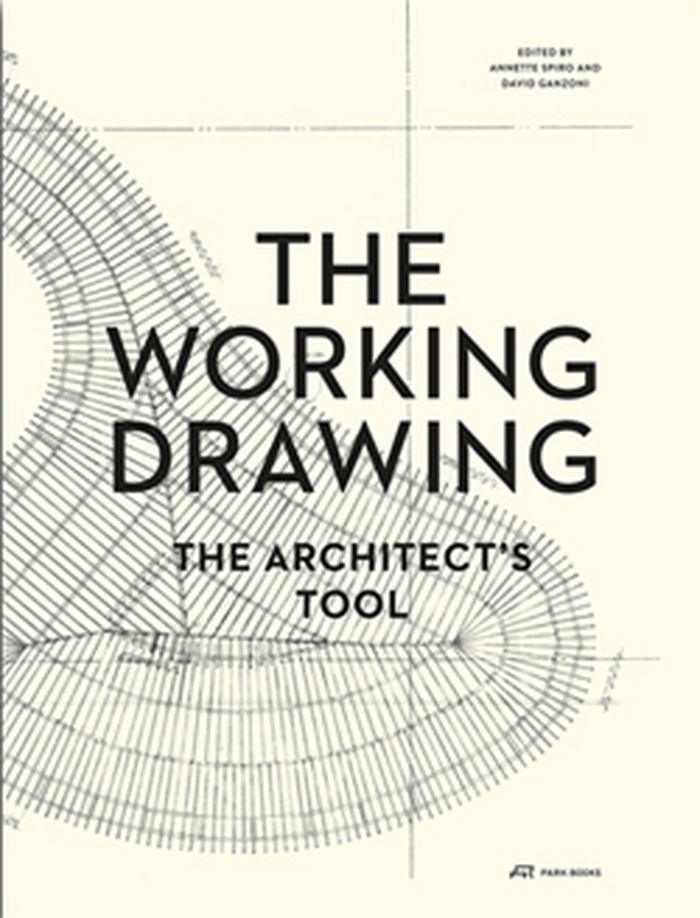
Large-size working drawings are the foundation of any architectural process and 'key' to practical construction of a building, yet very little has been written and published about the architect's quintessential tool. This new book bridges this gap, as it draws on a vast collection of working drawings from many centuries, held by the Department of Architecture at ETH Zurich. This is a collection of plans for a wide range of architectural projects and features many representational techniques. Providing a comprehensive record, around a hundred of the collection's highlights through five centuries, are arranged by category allowing for direct comparison. All plans are depicted entirely in colour on large-size spreads and fold-outs. Full catalogue details are provided for each drawing. Various topics are covered in essays by expert authors, which compliment the images. Featured architects include respected names such as Francesco Borromini, Gottfried Semper, Ludwig Mies van der Rohe, Le Corbusier, Eero Saarinen, Jorn Utzon, Alvaro Siza, Rafael Moneo, Herzog & de Meuron, Peter Zumthor, Diller Scofidio or Caruso St. John.
The working drawing: the architect's tool
Actions:
Prix:
$150.00
(disponible sur commande)
Résumé:
Large-size working drawings are the foundation of any architectural process and 'key' to practical construction of a building, yet very little has been written and published about the architect's quintessential tool. This new book bridges this gap, as it draws on a vast collection of working drawings from many centuries, held by the Department of Architecture at ETH Zurich. This is a collection of plans for a wide range of architectural projects and features many representational techniques. Providing a comprehensive record, around a hundred of the collection's highlights through five centuries, are arranged by category allowing for direct comparison. All plans are depicted entirely in colour on large-size spreads and fold-outs. Full catalogue details are provided for each drawing. Various topics are covered in essays by expert authors, which compliment the images. Featured architects include respected names such as Francesco Borromini, Gottfried Semper, Ludwig Mies van der Rohe, Le Corbusier, Eero Saarinen, Jorn Utzon, Alvaro Siza, Rafael Moneo, Herzog & de Meuron, Peter Zumthor, Diller Scofidio or Caruso St. John.
Classification:
livres
livres
Publication:
février 2014
février 2014
Sujet:
Dessin d’architecture
Dessin d’architecture
Classification:
périodiques
périodiques
Prix:
$43.95
(disponible sur commande)
Résumé:
In the next decade or so, the widespread adoption of robotics is set to transform the construction industry: building techniques will become increasingly automated both on- and off-site, dispensing with manual labour and enabling greater cost and operational efficiencies. What unique opportunities, however, does robotics afford beyond operational effectiveness explicitly(...)
$43.95
(disponible sur commande)
Résumé:
In the next decade or so, the widespread adoption of robotics is set to transform the construction industry: building techniques will become increasingly automated both on- and off-site, dispensing with manual labour and enabling greater cost and operational efficiencies. What unique opportunities, however, does robotics afford beyond operational effectiveness explicitly(...)
Titre:
AD 84:3 Made by robots: challenging architecture at a larger scale
Actions:
Prix:
$43.95
(disponible sur commande)
Résumé:
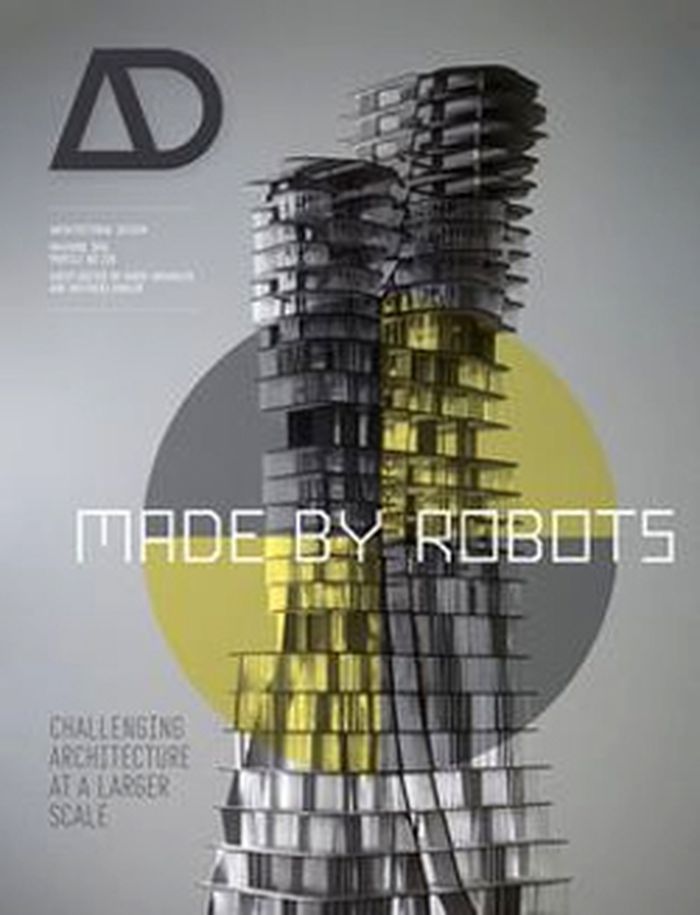
In the next decade or so, the widespread adoption of robotics is set to transform the construction industry: building techniques will become increasingly automated both on- and off-site, dispensing with manual labour and enabling greater cost and operational efficiencies. What unique opportunities, however, does robotics afford beyond operational effectiveness explicitly for the practice of architecture? What is the potential for the serial production of non-standard elements as well as for varied construction processes? In order to scale up and advance the application of robotics, for both prefabrication and on-site construction, there needs to be an understanding of the different capabilities, and these should be considered right from the start of the design and planning process. This issue of "AD" showcases the findings of the Architecture and Digital Fabrication research module at the ETH Zurich Future Cities Laboratory in Singapore, directed by Fabio Gramazio and Matthias Kohler, which explores the possibilities of robotic construction processes for architecture and their large-scale application to the design and construction of high-rise buildings.
AD 84:3 Made by robots: challenging architecture at a larger scale
Actions:
Prix:
$43.95
(disponible sur commande)
Résumé:
In the next decade or so, the widespread adoption of robotics is set to transform the construction industry: building techniques will become increasingly automated both on- and off-site, dispensing with manual labour and enabling greater cost and operational efficiencies. What unique opportunities, however, does robotics afford beyond operational effectiveness explicitly for the practice of architecture? What is the potential for the serial production of non-standard elements as well as for varied construction processes? In order to scale up and advance the application of robotics, for both prefabrication and on-site construction, there needs to be an understanding of the different capabilities, and these should be considered right from the start of the design and planning process. This issue of "AD" showcases the findings of the Architecture and Digital Fabrication research module at the ETH Zurich Future Cities Laboratory in Singapore, directed by Fabio Gramazio and Matthias Kohler, which explores the possibilities of robotic construction processes for architecture and their large-scale application to the design and construction of high-rise buildings.
Classification:
périodiques
périodiques
Publication:
mai 2014
mai 2014
Classification:
livres
livres
Actions:
Prix:
$79.95
(disponible sur commande)
Résumé:
Edited by Professor Maia Engeli and with a contribution by Professor Gerhard Schmitt, both of the Swiss Federal Institute of Technology (ETH Zürich), this book presents 33 exciting new(...)
$79.95
(disponible sur commande)
Résumé:
Edited by Professor Maia Engeli and with a contribution by Professor Gerhard Schmitt, both of the Swiss Federal Institute of Technology (ETH Zürich), this book presents 33 exciting new(...)
Titre:
Bits and spaces : architecture and computing for physical, virtual, hybrid realms
Actions:
Prix:
$79.95
(disponible sur commande)
Résumé:
Edited by Professor Maia Engeli and with a contribution by Professor Gerhard Schmitt, both of the Swiss Federal Institute of Technology (ETH Zürich), this book presents 33 exciting new projects which demonstrate the growing significance of CAAD for today's architects. Divided into 5 main chapters: Design in Space and Time; Learning and Creative Collaboration; Virtual Environments; IT and Practice; and Blurring Boundaries, the projects illustrate how computers can be used innovatively and creatively in designing physical, virtual and hybrid architecture. Particular emphasis is placed on the interaction between man and computer, and also on the aesthetic aspects. The book is accompanied by a CD-Rom which documents the design processes through animation sequences, demonstrating the dynamic features of the projects. Whilst these tools, installations and multi-media projects have arisen out of the field of architecture, they exceed the narrow confines of this discipline to touch upon areas such as interior design, graphic design and information technology. The designs presented are colourful and complex, seeking to fire the imagination in creating a fitting environment for today's society.
Bits and spaces : architecture and computing for physical, virtual, hybrid realms
Actions:
Prix:
$79.95
(disponible sur commande)
Résumé:
Edited by Professor Maia Engeli and with a contribution by Professor Gerhard Schmitt, both of the Swiss Federal Institute of Technology (ETH Zürich), this book presents 33 exciting new projects which demonstrate the growing significance of CAAD for today's architects. Divided into 5 main chapters: Design in Space and Time; Learning and Creative Collaboration; Virtual Environments; IT and Practice; and Blurring Boundaries, the projects illustrate how computers can be used innovatively and creatively in designing physical, virtual and hybrid architecture. Particular emphasis is placed on the interaction between man and computer, and also on the aesthetic aspects. The book is accompanied by a CD-Rom which documents the design processes through animation sequences, demonstrating the dynamic features of the projects. Whilst these tools, installations and multi-media projects have arisen out of the field of architecture, they exceed the narrow confines of this discipline to touch upon areas such as interior design, graphic design and information technology. The designs presented are colourful and complex, seeking to fire the imagination in creating a fitting environment for today's society.
Classification:
livres
livres
Publication:
mars 2001, Basel
mars 2001, Basel
Sujet:
Théorie de l’architecture
Théorie de l’architecture
Classification:
livres
livres
Actions:
Prix:
$45.00
(disponible sur commande)
Résumé:
Josep Lluís Mateo is one of Spain’s leading architects and one of Europe’s most influential architectural intellectuals. He runs a firm called mateoarquitectura in Barcelona, which has designed buildings in many countries across Europe. Alongside his work as guest lecturer, Mateo was professor of design at the Federal Institute of Technology (ETH) Zürich from 2002 to(...)
$45.00
(disponible sur commande)
Résumé:
Josep Lluís Mateo is one of Spain’s leading architects and one of Europe’s most influential architectural intellectuals. He runs a firm called mateoarquitectura in Barcelona, which has designed buildings in many countries across Europe. Alongside his work as guest lecturer, Mateo was professor of design at the Federal Institute of Technology (ETH) Zürich from 2002 to(...)
Titre:
Footprints: Writings 2005-2020
Actions:
Prix:
$45.00
(disponible sur commande)
Résumé:
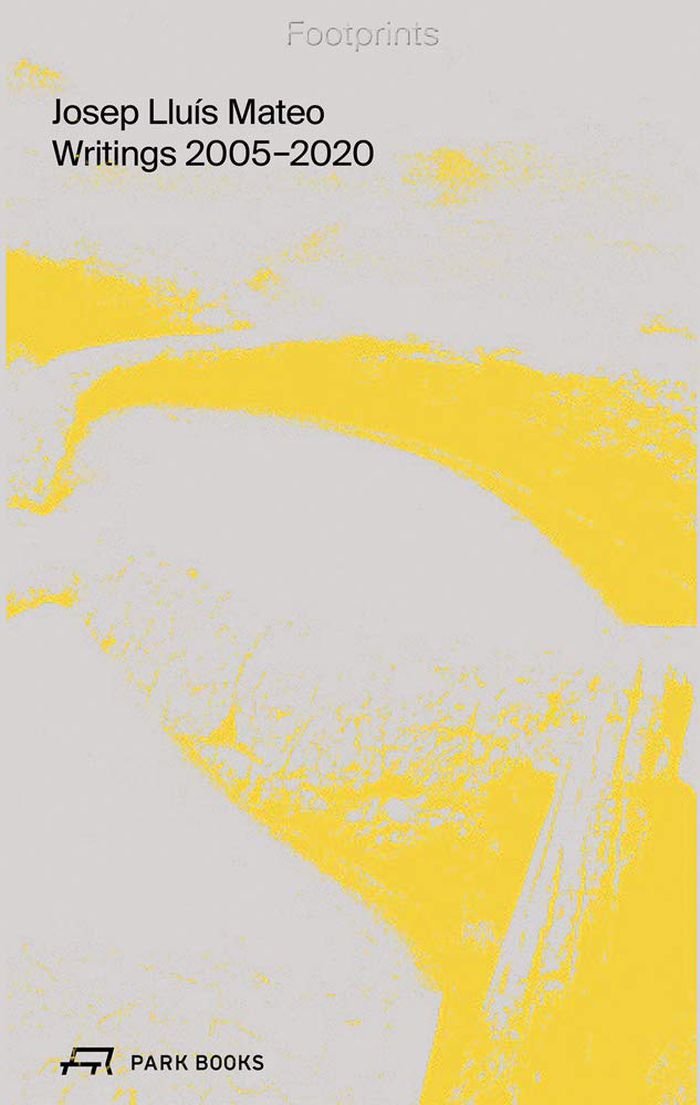
Josep Lluís Mateo is one of Spain’s leading architects and one of Europe’s most influential architectural intellectuals. He runs a firm called mateoarquitectura in Barcelona, which has designed buildings in many countries across Europe. Alongside his work as guest lecturer, Mateo was professor of design at the Federal Institute of Technology (ETH) Zürich from 2002 to 2014. Mateo’s standing as a pacesetter in the international intellectual discourse about the future of architecture is closely tied to the journal "Quaderns d’Arquitectura i Urbanisme," which has appeared in Catalan, Spanish, and English since 1985 and of which he was editor in chief from 2002 to 2014. Under Mateo, it developed into the leading platform for discussions on architectural issues, urban design, and aesthetic concepts. "Footprints" collects Mateo’s most important writings from the last fifteen years—short and longer essays and vignettes, along with interviews touching on core questions of contemporary architecture as well as on Mateo’s own designs. The pieces are illustrated and arranged thematically to allow juxtapositions and inspire new connections.
Footprints: Writings 2005-2020
Actions:
Prix:
$45.00
(disponible sur commande)
Résumé:
Josep Lluís Mateo is one of Spain’s leading architects and one of Europe’s most influential architectural intellectuals. He runs a firm called mateoarquitectura in Barcelona, which has designed buildings in many countries across Europe. Alongside his work as guest lecturer, Mateo was professor of design at the Federal Institute of Technology (ETH) Zürich from 2002 to 2014. Mateo’s standing as a pacesetter in the international intellectual discourse about the future of architecture is closely tied to the journal "Quaderns d’Arquitectura i Urbanisme," which has appeared in Catalan, Spanish, and English since 1985 and of which he was editor in chief from 2002 to 2014. Under Mateo, it developed into the leading platform for discussions on architectural issues, urban design, and aesthetic concepts. "Footprints" collects Mateo’s most important writings from the last fifteen years—short and longer essays and vignettes, along with interviews touching on core questions of contemporary architecture as well as on Mateo’s own designs. The pieces are illustrated and arranged thematically to allow juxtapositions and inspire new connections.
Classification:
livres
livres
Publication:
avril 2021
avril 2021
Sujet:
Théorie de l’architecture
Théorie de l’architecture
Classification:
livres
livres
Actions:
Prix:
$88.95
(disponible sur commande)
Résumé:
For the sheer quantity and quality of his inventions, scientist and structural engineer Vladimir Shukhov (1853–1939) is sometimes referred to as the “Russian Thomas Edison.” Among his pioneering contributions are a number of innovations related to the oil industry, including the design and construction of the first Russian pipeline and the world’s first industrial plant(...)
$88.95
(disponible sur commande)
Résumé:
For the sheer quantity and quality of his inventions, scientist and structural engineer Vladimir Shukhov (1853–1939) is sometimes referred to as the “Russian Thomas Edison.” Among his pioneering contributions are a number of innovations related to the oil industry, including the design and construction of the first Russian pipeline and the world’s first industrial plant(...)
Publication:
août 2016
août 2016
Titre:
Networks of construction: Vladimir Shukohov
Actions:
Prix:
$88.95
(disponible sur commande)
Résumé:
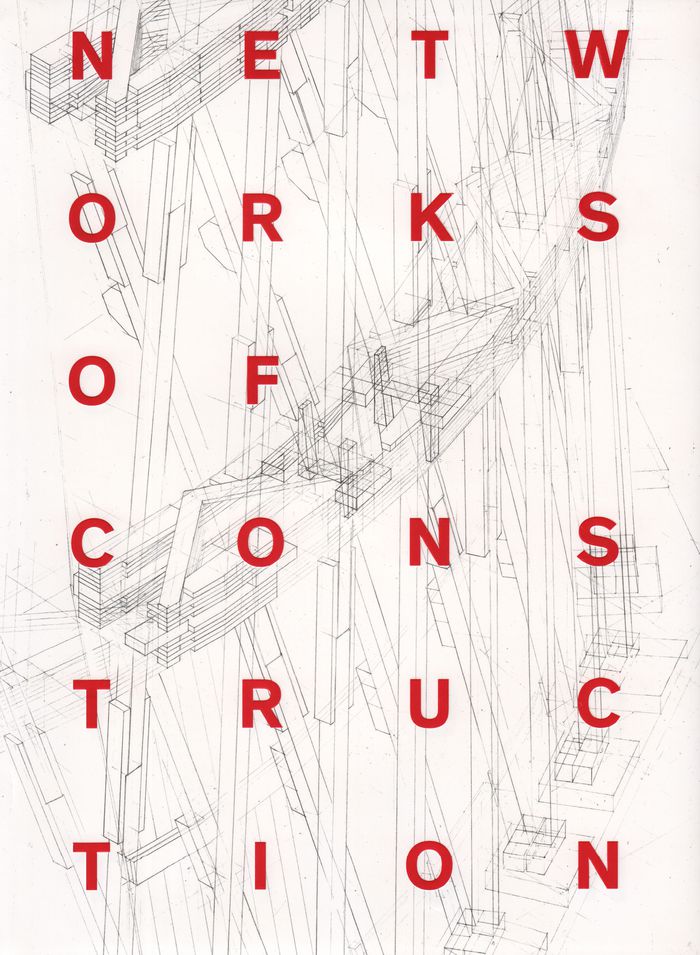
For the sheer quantity and quality of his inventions, scientist and structural engineer Vladimir Shukhov (1853–1939) is sometimes referred to as the “Russian Thomas Edison.” Among his pioneering contributions are a number of innovations related to the oil industry, including the design and construction of the first Russian pipeline and the world’s first industrial plant for oil cracking. His groundbreaking structural works include the cable-supported hanging roof and the hyperboloid lattice tower epitomized by the Shukhov Tower in Moscow, which bears his name. Networks of Construction collects Shukhov’s trailblazing achievements from the turn of the twentieth century, exploring his career and complicated creative process. Each of Shukhov’s projects, the book shows, was realized through an elaborate process beginning with an intense period of planning to account for the interconnections among a wide range of factors, from the technical background of the construction workers to technology transfer, the nomenclature of steel grades, and the scientification of construction knowledge. Ekaterina Nozhova and Uta Hassler of the Institute of Historic Building Research and Conservation at ETH Zurich have painstakingly reconstructed Shukhov’s process through a wealth of drawings, photographs, and documents.
Networks of construction: Vladimir Shukohov
Actions:
Prix:
$88.95
(disponible sur commande)
Résumé:
For the sheer quantity and quality of his inventions, scientist and structural engineer Vladimir Shukhov (1853–1939) is sometimes referred to as the “Russian Thomas Edison.” Among his pioneering contributions are a number of innovations related to the oil industry, including the design and construction of the first Russian pipeline and the world’s first industrial plant for oil cracking. His groundbreaking structural works include the cable-supported hanging roof and the hyperboloid lattice tower epitomized by the Shukhov Tower in Moscow, which bears his name. Networks of Construction collects Shukhov’s trailblazing achievements from the turn of the twentieth century, exploring his career and complicated creative process. Each of Shukhov’s projects, the book shows, was realized through an elaborate process beginning with an intense period of planning to account for the interconnections among a wide range of factors, from the technical background of the construction workers to technology transfer, the nomenclature of steel grades, and the scientification of construction knowledge. Ekaterina Nozhova and Uta Hassler of the Institute of Historic Building Research and Conservation at ETH Zurich have painstakingly reconstructed Shukhov’s process through a wealth of drawings, photographs, and documents.
Classification:
livres
livres
Publication:
août 2016
août 2016
Classification:
livres
livres
Actions:
Prix:
$54.99
(disponible sur commande)
Résumé:
In the next few years, emerging practices in interactive architecture are set to transform the built environment. Whereas 'smart' design was once regarded as the preserve of museum exhibit or Jumbotrom advertising screens, 'multi-mediated' interactive design has now entered every domain of public and private life. As a spatial medium, interactive design is(...)
$54.99
(disponible sur commande)
Résumé:
In the next few years, emerging practices in interactive architecture are set to transform the built environment. Whereas 'smart' design was once regarded as the preserve of museum exhibit or Jumbotrom advertising screens, 'multi-mediated' interactive design has now entered every domain of public and private life. As a spatial medium, interactive design is(...)
Publication:
janvier 2005, Chichester
janvier 2005, Chichester
Titre:
4dspace : interactive architecture
Actions:
Prix:
$54.99
(disponible sur commande)
Résumé:
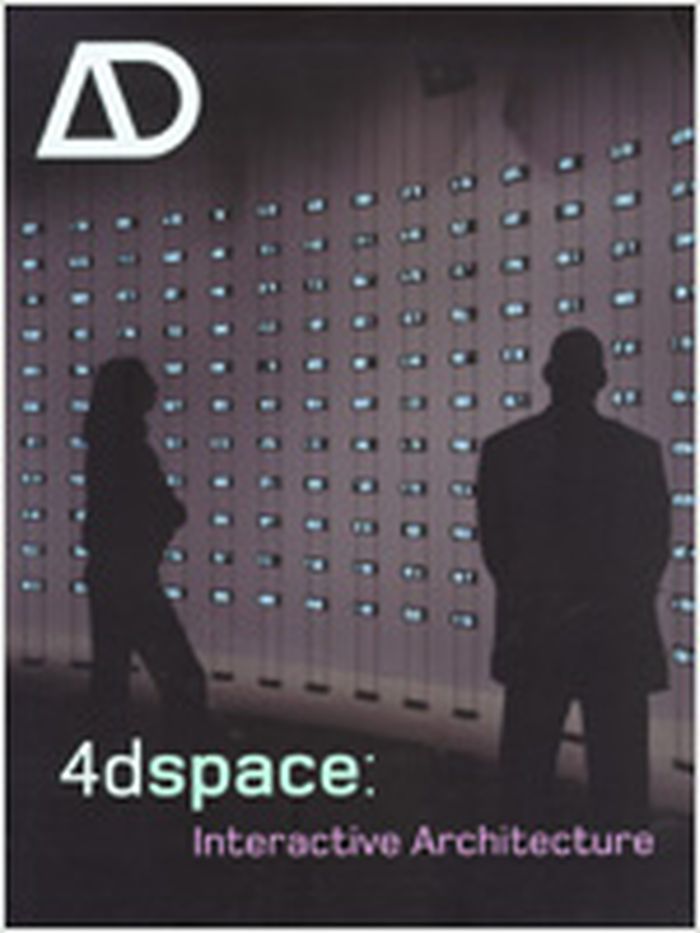
In the next few years, emerging practices in interactive architecture are set to transform the built environment. Whereas 'smart' design was once regarded as the preserve of museum exhibit or Jumbotrom advertising screens, 'multi-mediated' interactive design has now entered every domain of public and private life. As a spatial medium, interactive design is revolutionising and reinventing our homes, as well as our work and leisure spaces. Essays and interviews by international commentators Lucy Bullivant, guest editor of the issue, Ole Bouman, Antonino Saggio, Stefano Mirti and Walter Aprile and Mike Weinstock on the cultural issues raised by the emergence of interactive architecture will be complemented with features on acclaimed practitioners Christian Moller, Tobi Schneidler, Ron Arad and Jason Bruges. Benchmark interactive projects in this issue evolving new models of interdisciplinary teamwork include The Media House, led by Metapolis, IaaC and the MIT Media Lab and projects conceived at the Interactive Institute, Ivrea, Italy. New work is also featured by KDa/Toshio Iwai; realities: united, Usman Haque, Adam Somlai-Fischer, Ben Rubin and Mark Hansen, Lars Spuybroek and the Institute of Neuro-Informatics, ETH, Zurich, Kitchen Rogers Design; IDEO, and Tom Barker, b consultants/SmartSlab.
4dspace : interactive architecture
Actions:
Prix:
$54.99
(disponible sur commande)
Résumé:
In the next few years, emerging practices in interactive architecture are set to transform the built environment. Whereas 'smart' design was once regarded as the preserve of museum exhibit or Jumbotrom advertising screens, 'multi-mediated' interactive design has now entered every domain of public and private life. As a spatial medium, interactive design is revolutionising and reinventing our homes, as well as our work and leisure spaces. Essays and interviews by international commentators Lucy Bullivant, guest editor of the issue, Ole Bouman, Antonino Saggio, Stefano Mirti and Walter Aprile and Mike Weinstock on the cultural issues raised by the emergence of interactive architecture will be complemented with features on acclaimed practitioners Christian Moller, Tobi Schneidler, Ron Arad and Jason Bruges. Benchmark interactive projects in this issue evolving new models of interdisciplinary teamwork include The Media House, led by Metapolis, IaaC and the MIT Media Lab and projects conceived at the Interactive Institute, Ivrea, Italy. New work is also featured by KDa/Toshio Iwai; realities: united, Usman Haque, Adam Somlai-Fischer, Ben Rubin and Mark Hansen, Lars Spuybroek and the Institute of Neuro-Informatics, ETH, Zurich, Kitchen Rogers Design; IDEO, and Tom Barker, b consultants/SmartSlab.
Classification:
livres
livres
Publication:
janvier 2005, Chichester
janvier 2005, Chichester
Classification:
livres
livres
Prix:
$50.95
(disponible sur commande)
Résumé:
We are not only living longer than our grandparents, but we are also working longer and remaining more active and enterprising than they did. Thus for many today the second half of life os marked by a broad and varied range of activities that call for freedom of action, whether one has a disability or other limitation or not. What types of housing will make it possible to(...)
$50.95
(disponible sur commande)
Résumé:
We are not only living longer than our grandparents, but we are also working longer and remaining more active and enterprising than they did. Thus for many today the second half of life os marked by a broad and varied range of activities that call for freedom of action, whether one has a disability or other limitation or not. What types of housing will make it possible to(...)
Publication:
juin 2008, Basel, Boston, Berlin
juin 2008, Basel, Boston, Berlin
Titre:
New approaches to housing for the second half of life
Actions:
Prix:
$50.95
(disponible sur commande)
Résumé:
We are not only living longer than our grandparents, but we are also working longer and remaining more active and enterprising than they did. Thus for many today the second half of life os marked by a broad and varied range of activities that call for freedom of action, whether one has a disability or other limitation or not. What types of housing will make it possible to shape this ever longer and more important phase of our lives in accord with our wishes and needs? In addition to the desire of most older people to remain in their homes, we are also seeing the emergence of new and novel communal types of housing, such as shared apartments, houses, and housing developments; integrated residential communities; assisted living; and group homes. Against this backdrop, noted authors consider various aspects of the second phase of life. In addition, realized projects in Switzerland and Germany are presented and analysed in terms of their practical feasibility. Living Concepts is edited by the ETH Wohnforum, an interdiciplinary research group housed in the Faculty of Architecture of the Swiss Federal Institute of Technology Zurich. It presents selected themes from the broad field of housing and is aimed at both specialist readers and those with a general interest in culture.
New approaches to housing for the second half of life
Actions:
Prix:
$50.95
(disponible sur commande)
Résumé:
We are not only living longer than our grandparents, but we are also working longer and remaining more active and enterprising than they did. Thus for many today the second half of life os marked by a broad and varied range of activities that call for freedom of action, whether one has a disability or other limitation or not. What types of housing will make it possible to shape this ever longer and more important phase of our lives in accord with our wishes and needs? In addition to the desire of most older people to remain in their homes, we are also seeing the emergence of new and novel communal types of housing, such as shared apartments, houses, and housing developments; integrated residential communities; assisted living; and group homes. Against this backdrop, noted authors consider various aspects of the second phase of life. In addition, realized projects in Switzerland and Germany are presented and analysed in terms of their practical feasibility. Living Concepts is edited by the ETH Wohnforum, an interdiciplinary research group housed in the Faculty of Architecture of the Swiss Federal Institute of Technology Zurich. It presents selected themes from the broad field of housing and is aimed at both specialist readers and those with a general interest in culture.
Classification:
livres
livres
Publication:
juin 2008, Basel, Boston, Berlin
juin 2008, Basel, Boston, Berlin
Classification:
livres
livres
Actions:
Prix:
$42.95
(disponible sur commande)
Résumé:
The attention Swiss architecture has received in recent years has mainly focused on a small number of architects whose work has appeared on the covers of the specialized press. Extending throughout the Modern Movement, this is an architecture with its roots in a rich building tradition. In Graubünden, under the attentive gaze of maestro Peter Zumthor, a(...)
$42.95
(disponible sur commande)
Résumé:
The attention Swiss architecture has received in recent years has mainly focused on a small number of architects whose work has appeared on the covers of the specialized press. Extending throughout the Modern Movement, this is an architecture with its roots in a rich building tradition. In Graubünden, under the attentive gaze of maestro Peter Zumthor, a(...)
Sujet:
Architecture écologique
Architecture écologique
Publication:
juin 2000, Barcelona
juin 2000, Barcelona
Titre:
2G 14 : Building in the mountains, recent architecture in Graubünden
Actions:
Prix:
$42.95
(disponible sur commande)
Résumé:
The attention Swiss architecture has received in recent years has mainly focused on a small number of architects whose work has appeared on the covers of the specialized press. Extending throughout the Modern Movement, this is an architecture with its roots in a rich building tradition. In Graubünden, under the attentive gaze of maestro Peter Zumthor, a group of young architects educated at the ETH in Zurich, many of whom are former assistants in Zumthor's studio, demonstrate the extraordinary quality of the architectonic production of this small German-speaking region of Switzerland. These increasingly well-known names present a wide range of projects ranging from single-family houses to apartment blocks, schools, and public and commercial buildings of different sorts, yet with similarities in the way they handle materials and settings, a body of work that transcends the borders of the region and attracts the attention of the international architecture world. The introduction by Daniel Bosshard, Miguel Kreisler, Myriam Sterling and Txell Vaquer places the building tradition of Graubünden in its historical context. The Nexus section features a 1913 text by Adolf Loos called "Rules for Those Building in the Mountains", plus Bruno Reichlin's "When Moderns Architects Build in the Mountains" and an extract from Christoph Schaub's video "The Vrin Project".
2G 14 : Building in the mountains, recent architecture in Graubünden
Actions:
Prix:
$42.95
(disponible sur commande)
Résumé:
The attention Swiss architecture has received in recent years has mainly focused on a small number of architects whose work has appeared on the covers of the specialized press. Extending throughout the Modern Movement, this is an architecture with its roots in a rich building tradition. In Graubünden, under the attentive gaze of maestro Peter Zumthor, a group of young architects educated at the ETH in Zurich, many of whom are former assistants in Zumthor's studio, demonstrate the extraordinary quality of the architectonic production of this small German-speaking region of Switzerland. These increasingly well-known names present a wide range of projects ranging from single-family houses to apartment blocks, schools, and public and commercial buildings of different sorts, yet with similarities in the way they handle materials and settings, a body of work that transcends the borders of the region and attracts the attention of the international architecture world. The introduction by Daniel Bosshard, Miguel Kreisler, Myriam Sterling and Txell Vaquer places the building tradition of Graubünden in its historical context. The Nexus section features a 1913 text by Adolf Loos called "Rules for Those Building in the Mountains", plus Bruno Reichlin's "When Moderns Architects Build in the Mountains" and an extract from Christoph Schaub's video "The Vrin Project".
Classification:
livres
livres
Publication:
juin 2000, Barcelona
juin 2000, Barcelona
Sujet:
Architecture écologique
Architecture écologique
Classification:
livres
livres
Prix:
$40.00
(disponible sur commande)
Résumé:
In 2030, the world's population will be a staggering eight billion people. Of these, two-thirds will live in cities; most will be poor. With limited resources, this unbalanced growth will be one of the greatest challenges faced by societies across the globe. In the coming years, city authorities, urban planners, designers, economists and others will have to join forces to(...)
$40.00
(disponible sur commande)
Résumé:
In 2030, the world's population will be a staggering eight billion people. Of these, two-thirds will live in cities; most will be poor. With limited resources, this unbalanced growth will be one of the greatest challenges faced by societies across the globe. In the coming years, city authorities, urban planners, designers, economists and others will have to join forces to(...)
Titre:
Uneven growth: tactical urbanisms for expanding megacities
Actions:
Prix:
$40.00
(disponible sur commande)
Résumé:
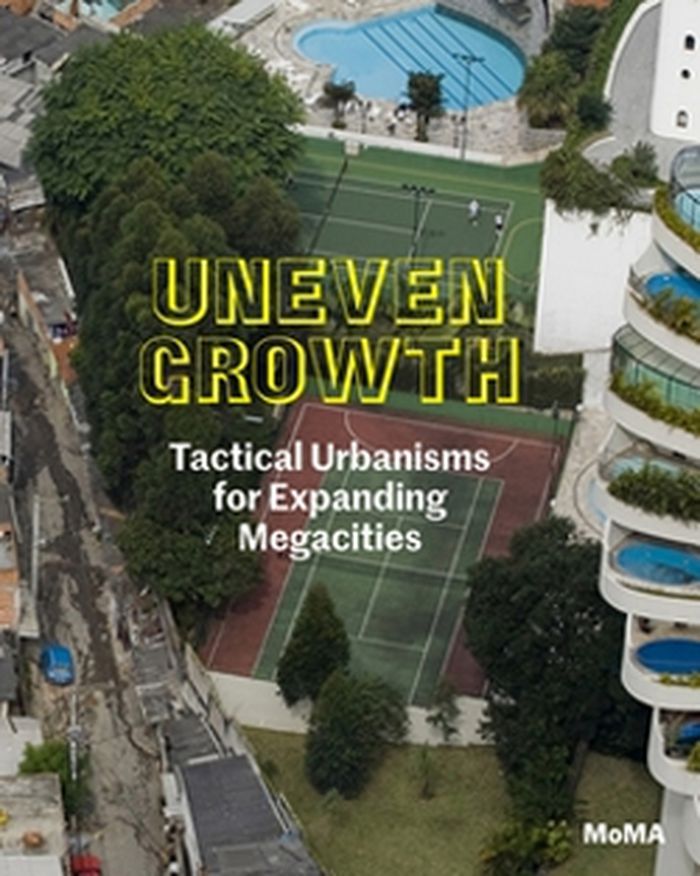
In 2030, the world's population will be a staggering eight billion people. Of these, two-thirds will live in cities; most will be poor. With limited resources, this unbalanced growth will be one of the greatest challenges faced by societies across the globe. In the coming years, city authorities, urban planners, designers, economists and others will have to join forces to avoid a major social and economic catastrophe and to ensure that these expanding megacities will be habitable. Exploring how emergent forms of tactical urbanism could address rapid and uneven urban growth around the globe, The Museum of Modern Art presents Uneven Growth: Tactical Urbanisms for Expanding Megacities, its third iteration of the Issues in Contemporary Architecture series. Uneven Growth is a combination of workshop, exhibition and publication that brings together ideas from an international group of scholars, practitioners and other experts on architecture and urbanism. Featuring proposals for six cities on five continents-New York, Mumbai, Rio de Janeiro, Istanbul, Hong Kong and Lagos, each developed by a pair of teams (one local to the host city and one abroad)-Uneven Growth also documents the brainstorming processes and the workshops. Contributions from each of the teams and essays by leading scholars on the issue make the publication a rich resource for students and professionals alike. Participating teams include Cohabitation Strategies with Situ Studio, POP Lab with URBZ, MAS Urban Design ETH with Rua Arquitetos, Atelier d'Architecture Autogérée with Superpool, Network Architecture Lab with MAP Office and Inteligencias Colectivas with NLÉ Architects.
Uneven growth: tactical urbanisms for expanding megacities
Actions:
Prix:
$40.00
(disponible sur commande)
Résumé:
In 2030, the world's population will be a staggering eight billion people. Of these, two-thirds will live in cities; most will be poor. With limited resources, this unbalanced growth will be one of the greatest challenges faced by societies across the globe. In the coming years, city authorities, urban planners, designers, economists and others will have to join forces to avoid a major social and economic catastrophe and to ensure that these expanding megacities will be habitable. Exploring how emergent forms of tactical urbanism could address rapid and uneven urban growth around the globe, The Museum of Modern Art presents Uneven Growth: Tactical Urbanisms for Expanding Megacities, its third iteration of the Issues in Contemporary Architecture series. Uneven Growth is a combination of workshop, exhibition and publication that brings together ideas from an international group of scholars, practitioners and other experts on architecture and urbanism. Featuring proposals for six cities on five continents-New York, Mumbai, Rio de Janeiro, Istanbul, Hong Kong and Lagos, each developed by a pair of teams (one local to the host city and one abroad)-Uneven Growth also documents the brainstorming processes and the workshops. Contributions from each of the teams and essays by leading scholars on the issue make the publication a rich resource for students and professionals alike. Participating teams include Cohabitation Strategies with Situ Studio, POP Lab with URBZ, MAS Urban Design ETH with Rua Arquitetos, Atelier d'Architecture Autogérée with Superpool, Network Architecture Lab with MAP Office and Inteligencias Colectivas with NLÉ Architects.
Classification:
livres
livres
Publication:
août 2014
août 2014
Sujet:
Théorie de l’urbanisme
Théorie de l’urbanisme
Classification:
livres
livres
Actions:
Prix:
$65.00
(disponible en magasin)
Résumé:
In the summer of 2018, Ursula Biemann was commissioned to undertake an extended field trip across the South of Colombia. Many surprising developments ensued from this initial journey in the Amazonian rainforest where the histories of colonial conquest and natural science intertwine. Forest Mind is the result of a series of territorial engagements through video-making,(...)
$65.00
(disponible en magasin)
Résumé:
In the summer of 2018, Ursula Biemann was commissioned to undertake an extended field trip across the South of Colombia. Many surprising developments ensued from this initial journey in the Amazonian rainforest where the histories of colonial conquest and natural science intertwine. Forest Mind is the result of a series of territorial engagements through video-making,(...)
Titre:
Forest mind: On the interconnection of all life
Actions:
Prix:
$65.00
(disponible en magasin)
Résumé:
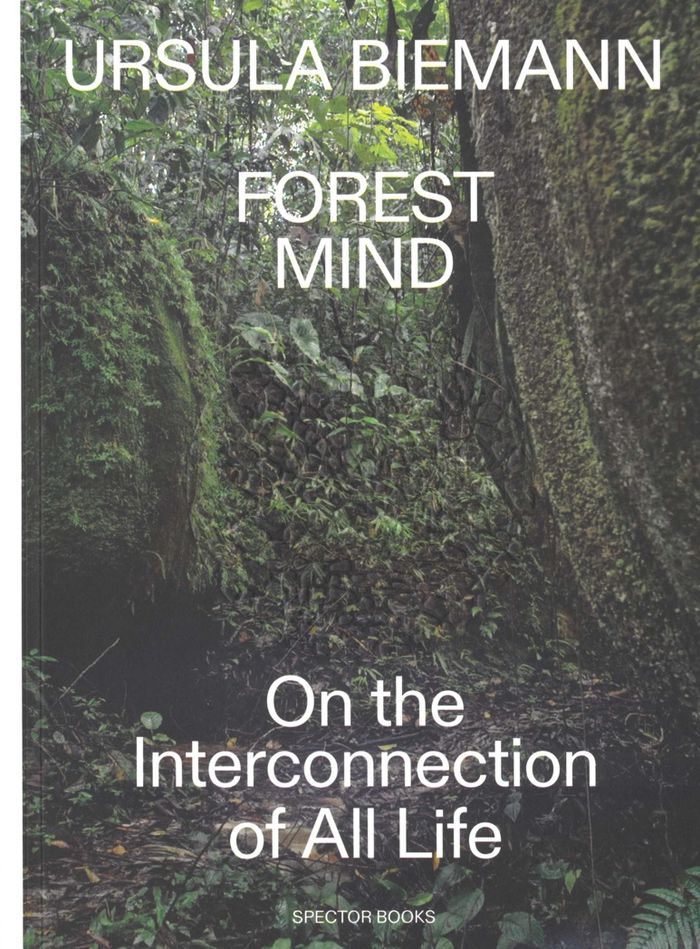
In the summer of 2018, Ursula Biemann was commissioned to undertake an extended field trip across the South of Colombia. Many surprising developments ensued from this initial journey in the Amazonian rainforest where the histories of colonial conquest and natural science intertwine. Forest Mind is the result of a series of territorial engagements through video-making, photography, academic research, personal narrative, and the co-creation of an Indigenous University with the Inga people of Colombia. The explorations focus on the intelligence in nature from both shamanic and scientific perspectives. In these tropical forests, human and nonhuman territorial projects become entangled, calling for new ways of generating knowledge that spur the imagination. The Indigenous science of Ayahuasca as it is practiced by the traditional medics in Amazonia, is largely based in visions evoked by the psychoactive plant. Here, knowing does not only occur from a distance by describing, naming, and exploiting, but as an encounter between minds and worlds. The artist’s research brings to light contemporary Western science that has already been practiced by ancestral medics for millennia, allowing them to interact at the molecular level of DNA. Experimenting with new genetic technologies in collaboration with the ETH lab in Zurich, the visual universe of this project partially derives from biological materials and video-images of the rainforest which were encoded in one and the same DNA strand. In this personal quest, Swiss artist and author Ursula Biemann pursues her long-term inquiry at the intersection of art, ecology and indigenous cosmologies. The artist book presents a biosemiotics project that takes a deep dive into the mechanics of the interconnectedness of all life, and reflects on the active, performative role images play in merging mind and forest.
Forest mind: On the interconnection of all life
Actions:
Prix:
$65.00
(disponible en magasin)
Résumé:
In the summer of 2018, Ursula Biemann was commissioned to undertake an extended field trip across the South of Colombia. Many surprising developments ensued from this initial journey in the Amazonian rainforest where the histories of colonial conquest and natural science intertwine. Forest Mind is the result of a series of territorial engagements through video-making, photography, academic research, personal narrative, and the co-creation of an Indigenous University with the Inga people of Colombia. The explorations focus on the intelligence in nature from both shamanic and scientific perspectives. In these tropical forests, human and nonhuman territorial projects become entangled, calling for new ways of generating knowledge that spur the imagination. The Indigenous science of Ayahuasca as it is practiced by the traditional medics in Amazonia, is largely based in visions evoked by the psychoactive plant. Here, knowing does not only occur from a distance by describing, naming, and exploiting, but as an encounter between minds and worlds. The artist’s research brings to light contemporary Western science that has already been practiced by ancestral medics for millennia, allowing them to interact at the molecular level of DNA. Experimenting with new genetic technologies in collaboration with the ETH lab in Zurich, the visual universe of this project partially derives from biological materials and video-images of the rainforest which were encoded in one and the same DNA strand. In this personal quest, Swiss artist and author Ursula Biemann pursues her long-term inquiry at the intersection of art, ecology and indigenous cosmologies. The artist book presents a biosemiotics project that takes a deep dive into the mechanics of the interconnectedness of all life, and reflects on the active, performative role images play in merging mind and forest.
Classification:
livres
livres
Publication:
octobre 2022
octobre 2022


