


5194 Résultats
Classification:
livres
livres

Actions:
Prix:
$72.00
(disponible sur commande)
Résumé:
This book takes readers on a journey through the rich and varied wellness cultures of 12 European countries, from Art Nouveau spas in Hungary to traditional pirts sauna rituals in Latvia. Throughout the book, the holistic approaches to wellbeing in each region are revealed, including those based in the power of natural resources, such as respiratory healing in Poland’s(...)
$72.00
(disponible sur commande)
Résumé:
This book takes readers on a journey through the rich and varied wellness cultures of 12 European countries, from Art Nouveau spas in Hungary to traditional pirts sauna rituals in Latvia. Throughout the book, the holistic approaches to wellbeing in each region are revealed, including those based in the power of natural resources, such as respiratory healing in Poland’s(...)
Titre:
Healing sources : spas and wellbeing, from the Baltic to the Black Sea
Actions:
Prix:
$72.00
(disponible sur commande)
Résumé:
This book takes readers on a journey through the rich and varied wellness cultures of 12 European countries, from Art Nouveau spas in Hungary to traditional pirts sauna rituals in Latvia. Throughout the book, the holistic approaches to wellbeing in each region are revealed, including those based in the power of natural resources, such as respiratory healing in Poland’s salt mines, mineral-water therapies in Hungary, smoke saunas in Estonia, and mud pools in Slovakia.
Healing sources : spas and wellbeing, from the Baltic to the Black Sea
Actions:
Prix:
$72.00
(disponible sur commande)
Résumé:
This book takes readers on a journey through the rich and varied wellness cultures of 12 European countries, from Art Nouveau spas in Hungary to traditional pirts sauna rituals in Latvia. Throughout the book, the holistic approaches to wellbeing in each region are revealed, including those based in the power of natural resources, such as respiratory healing in Poland’s salt mines, mineral-water therapies in Hungary, smoke saunas in Estonia, and mud pools in Slovakia.
Classification:
livres
livres
Publication:
octobre 2014
octobre 2014
Classification:
livres
livres

Titre:
Holzer-isms. Artists edition
Holzer-isms. Artists edition
Actions:
Prix:
$82.00
(disponible en magasin)
Résumé:
''Holzer-isms: Artist’s Edition'' presents a selection of artist Jenny Holzer’s ''Truisms'' (1977–79)—subtly subversive declarations such as ''ABUSE OF POWER COMES AS NO SURPRISE''—on six foldout posters designed by the artist. The stunning posters in ''Holzer-isms: Artist’s Edition'' come in a special cloth-covered, foil-stamped box, which also features a booklet(...)
$82.00
(disponible en magasin)
Résumé:
''Holzer-isms: Artist’s Edition'' presents a selection of artist Jenny Holzer’s ''Truisms'' (1977–79)—subtly subversive declarations such as ''ABUSE OF POWER COMES AS NO SURPRISE''—on six foldout posters designed by the artist. The stunning posters in ''Holzer-isms: Artist’s Edition'' come in a special cloth-covered, foil-stamped box, which also features a booklet(...)
Titre:
Holzer-isms. Artists edition
Actions:
Prix:
$82.00
(disponible en magasin)
Résumé:
''Holzer-isms: Artist’s Edition'' presents a selection of artist Jenny Holzer’s ''Truisms'' (1977–79)—subtly subversive declarations such as ''ABUSE OF POWER COMES AS NO SURPRISE''—on six foldout posters designed by the artist. The stunning posters in ''Holzer-isms: Artist’s Edition'' come in a special cloth-covered, foil-stamped box, which also features a booklet containing an introduction to 'Truisms'', a biography of Holzer, and a brief chronology of her career.
Holzer-isms. Artists edition
Actions:
Prix:
$82.00
(disponible en magasin)
Résumé:
''Holzer-isms: Artist’s Edition'' presents a selection of artist Jenny Holzer’s ''Truisms'' (1977–79)—subtly subversive declarations such as ''ABUSE OF POWER COMES AS NO SURPRISE''—on six foldout posters designed by the artist. The stunning posters in ''Holzer-isms: Artist’s Edition'' come in a special cloth-covered, foil-stamped box, which also features a booklet containing an introduction to 'Truisms'', a biography of Holzer, and a brief chronology of her career.
Classification:
livres
livres
Publication:
mars 2024
mars 2024
Classification:
livres
livres
Actions:
Prix:
$14.95
(disponible sur commande)
Résumé:
'Failed it!' celebrates the power of mistakes and shows how they can enrich the creative process. This is part photobook and part guide to loosening up and making mistakes to take the fear out of failure and encourage experimentation. It showcases humorous examples of imperfection and failure across a broad range of creative forms, including art, design, photography,(...)
$14.95
(disponible sur commande)
Résumé:
'Failed it!' celebrates the power of mistakes and shows how they can enrich the creative process. This is part photobook and part guide to loosening up and making mistakes to take the fear out of failure and encourage experimentation. It showcases humorous examples of imperfection and failure across a broad range of creative forms, including art, design, photography,(...)
Titre:
Failed it! How to turn mistakes into ideas and other advice for successfully screwing up
Actions:
Prix:
$14.95
(disponible sur commande)
Résumé:
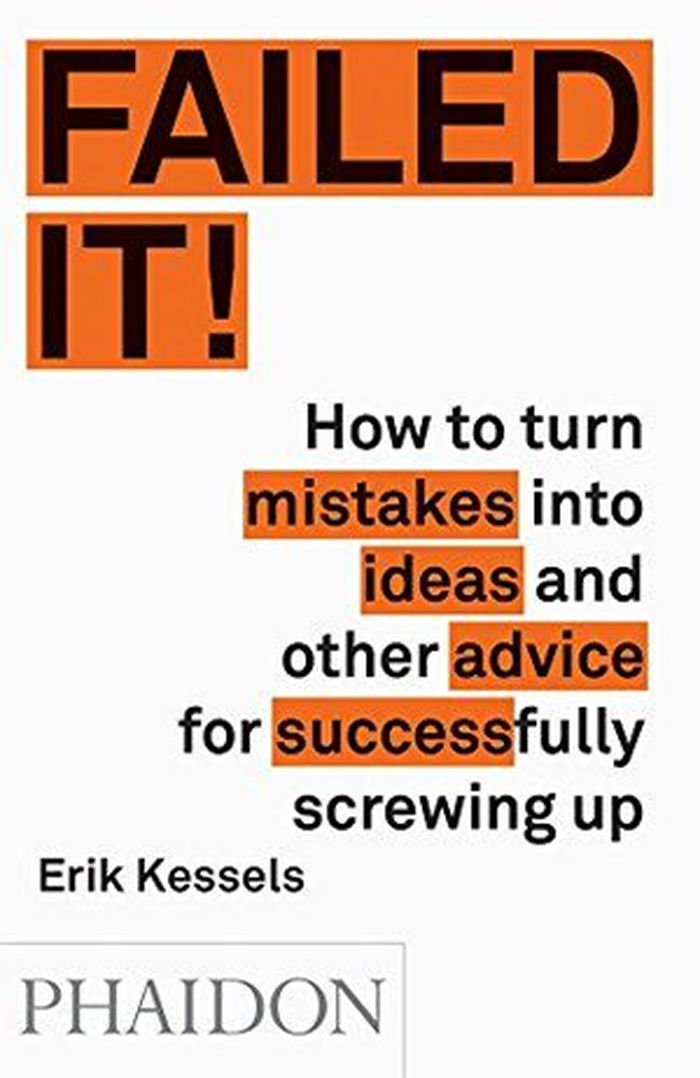
'Failed it!' celebrates the power of mistakes and shows how they can enrich the creative process. This is part photobook and part guide to loosening up and making mistakes to take the fear out of failure and encourage experimentation. It showcases humorous examples of imperfection and failure across a broad range of creative forms, including art, design, photography, architecture and product design, to inspire and encourage creatives to embrace and celebrate their mistakes.
Failed it! How to turn mistakes into ideas and other advice for successfully screwing up
Actions:
Prix:
$14.95
(disponible sur commande)
Résumé:
'Failed it!' celebrates the power of mistakes and shows how they can enrich the creative process. This is part photobook and part guide to loosening up and making mistakes to take the fear out of failure and encourage experimentation. It showcases humorous examples of imperfection and failure across a broad range of creative forms, including art, design, photography, architecture and product design, to inspire and encourage creatives to embrace and celebrate their mistakes.
Classification:
livres
livres
Publication:
avril 2016
avril 2016
Sujet:
CAISSE
CAISSE
Classification:
livres
livres
Prix:
$71.95
(disponible sur commande)
Résumé:
Narahashi's work has been exhibited in Japan to wide acclaim, but never published in book form until now. The photographs were made while the artist stood chest-deep in the ocean facing the shoreline; through them, she manages to extract the viewer's mind from its surroundings, and one finally succumbs to the hallucinatory power of the ocean. In the words of esteemed(...)
$71.95
(disponible sur commande)
Résumé:
Narahashi's work has been exhibited in Japan to wide acclaim, but never published in book form until now. The photographs were made while the artist stood chest-deep in the ocean facing the shoreline; through them, she manages to extract the viewer's mind from its surroundings, and one finally succumbs to the hallucinatory power of the ocean. In the words of esteemed(...)
Titre:
Asako Narahashi: half awake and half asleep in the water
Actions:
Prix:
$71.95
(disponible sur commande)
Résumé:
Narahashi's work has been exhibited in Japan to wide acclaim, but never published in book form until now. The photographs were made while the artist stood chest-deep in the ocean facing the shoreline; through them, she manages to extract the viewer's mind from its surroundings, and one finally succumbs to the hallucinatory power of the ocean. In the words of esteemed photographic historian Kotaro Iizawa, "the feeling of being stranded, however, is strangely comforting."
Asako Narahashi: half awake and half asleep in the water
Actions:
Prix:
$71.95
(disponible sur commande)
Résumé:
Narahashi's work has been exhibited in Japan to wide acclaim, but never published in book form until now. The photographs were made while the artist stood chest-deep in the ocean facing the shoreline; through them, she manages to extract the viewer's mind from its surroundings, and one finally succumbs to the hallucinatory power of the ocean. In the words of esteemed photographic historian Kotaro Iizawa, "the feeling of being stranded, however, is strangely comforting."
Classification:
livres
livres
Publication:
août 2008
août 2008
Sujet:
Monographies photo
Monographies photo
Classification:
livres
livres

Prix:
$29.95
(disponible sur commande)
Résumé:
In this book the author challenges the implicit authority of witnessing through the examination of a series of contemporary artworks, all of which make the act of witnessing visible, open to inspection and critique. Considering such artists as Marina Abramovic, James Luna, Felix Gonzalez-Torres, Eduardo Kac, and Ann Hamilton, Blocker investigates the artists and(...)
$29.95
(disponible sur commande)
Résumé:
In this book the author challenges the implicit authority of witnessing through the examination of a series of contemporary artworks, all of which make the act of witnessing visible, open to inspection and critique. Considering such artists as Marina Abramovic, James Luna, Felix Gonzalez-Torres, Eduardo Kac, and Ann Hamilton, Blocker investigates the artists and(...)
Titre:
Seeing witness: visuality and the ethnics of testimony
Actions:
Prix:
$29.95
(disponible sur commande)
Résumé:
In this book the author challenges the implicit authority of witnessing through the examination of a series of contemporary artworks, all of which make the act of witnessing visible, open to inspection and critique. Considering such artists as Marina Abramovic, James Luna, Felix Gonzalez-Torres, Eduardo Kac, and Ann Hamilton, Blocker investigates the artists and spectators who look, the technologies they look with, and the forms of power and moral authority that permit their viewing.
Seeing witness: visuality and the ethnics of testimony
Actions:
Prix:
$29.95
(disponible sur commande)
Résumé:
In this book the author challenges the implicit authority of witnessing through the examination of a series of contemporary artworks, all of which make the act of witnessing visible, open to inspection and critique. Considering such artists as Marina Abramovic, James Luna, Felix Gonzalez-Torres, Eduardo Kac, and Ann Hamilton, Blocker investigates the artists and spectators who look, the technologies they look with, and the forms of power and moral authority that permit their viewing.
Classification:
livres
livres
Publication:
février 2009, Minneapolis
février 2009, Minneapolis
Sujet:
Théorie de l’art
Théorie de l’art
Classification:
livres
livres
Prix:
$40.95
(disponible sur commande)
Résumé:
This book addresses the differences between apartheid and postapartheid Johannesburg and treats the city in regional, national, and international contexts. "Emerging Johannesburg" explores the recent economic and political transformations that have defined and hindered the city in its development as a world player. Contributors address issues such as Johannesburg's(...)
$40.95
(disponible sur commande)
Résumé:
This book addresses the differences between apartheid and postapartheid Johannesburg and treats the city in regional, national, and international contexts. "Emerging Johannesburg" explores the recent economic and political transformations that have defined and hindered the city in its development as a world player. Contributors address issues such as Johannesburg's(...)
Sujet:
Théorie de l’urbanisme
Théorie de l’urbanisme
Publication:
mars 2003, New York
mars 2003, New York
Titre:
Emerging Johannesburg : perspectives on the postapartheid city
Actions:
Prix:
$40.95
(disponible sur commande)
Résumé:
This book addresses the differences between apartheid and postapartheid Johannesburg and treats the city in regional, national, and international contexts. "Emerging Johannesburg" explores the recent economic and political transformations that have defined and hindered the city in its development as a world player. Contributors address issues such as Johannesburg's urban/suburban divide and its relationship to poverty and socio-economical power, local politics, AIDS, and the effects of postapartheid on ordinary residents.
Emerging Johannesburg : perspectives on the postapartheid city
Actions:
Prix:
$40.95
(disponible sur commande)
Résumé:
This book addresses the differences between apartheid and postapartheid Johannesburg and treats the city in regional, national, and international contexts. "Emerging Johannesburg" explores the recent economic and political transformations that have defined and hindered the city in its development as a world player. Contributors address issues such as Johannesburg's urban/suburban divide and its relationship to poverty and socio-economical power, local politics, AIDS, and the effects of postapartheid on ordinary residents.
Classification:
livres
livres
Publication:
mars 2003, New York
mars 2003, New York
Sujet:
Théorie de l’urbanisme
Théorie de l’urbanisme
Classification:
livres
livres
Titre:
Your Time Is Your Time.
Your Time Is Your Time.
Actions:
Description:
1 online resource.
Auteur:
Sujet:
Publication:
[Place of publication not identified] : American Academy of Arts and Letters, 2025.
[Place of publication not identified] : American Academy of Arts and Letters, 2025.
Classification:
livres
livres
Publication:
[Place of publication not identified] : American Academy of Arts and Letters, 2025.
[Place of publication not identified] : American Academy of Arts and Letters, 2025.
Auteur:
Sujet:
Classification:
livres
livres
Actions:
Description:
1 online resource.
Auteur:
Sujet:
Publication:
[Place of publication not identified] : American Academy of Arts and Letters, 2025.
[Place of publication not identified] : American Academy of Arts and Letters, 2025.
Classification:
livres
livres
Publication:
[Place of publication not identified] : American Academy of Arts and Letters, 2025.
[Place of publication not identified] : American Academy of Arts and Letters, 2025.
Auteur:
Sujet:
Classification:
livres
livres
Actions:
Prix:
$44.95
(disponible sur commande)
Résumé:
Essays, projects, and interviews will examine emerging forms of sponsorship, new forms of connectivity - technological or social - that produce innovative modes of collaboration, and strategies for cultivating relationships that allow us to rethink typical hierarchies between those in power and those in service. One could argue that the profession of architecture has(...)
$44.95
(disponible sur commande)
Résumé:
Essays, projects, and interviews will examine emerging forms of sponsorship, new forms of connectivity - technological or social - that produce innovative modes of collaboration, and strategies for cultivating relationships that allow us to rethink typical hierarchies between those in power and those in service. One could argue that the profession of architecture has(...)
Titre:
Beyond patronage: reconsidering models of practice
Actions:
Prix:
$44.95
(disponible sur commande)
Résumé:
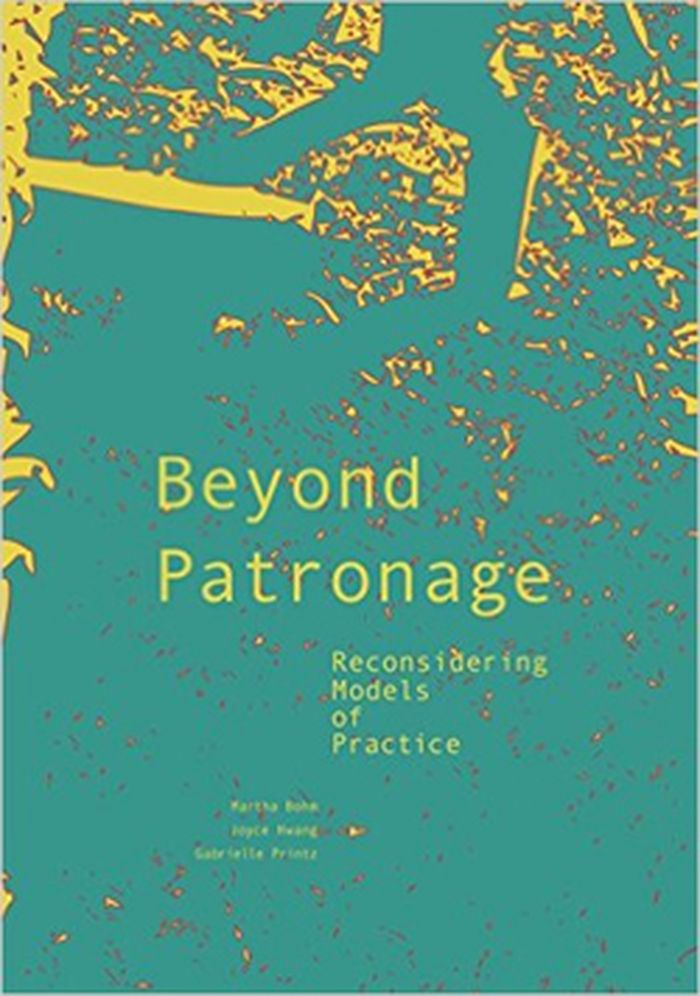
Essays, projects, and interviews will examine emerging forms of sponsorship, new forms of connectivity - technological or social - that produce innovative modes of collaboration, and strategies for cultivating relationships that allow us to rethink typical hierarchies between those in power and those in service. One could argue that the profession of architecture has traditionally been characterized by patronage. Throughout the twentieth century, private clients have enabled architects to develop and realize their most significant work. Today, the landscape of patronage is shifting. While the role of private clients is still central to the survival of the profession, an increasing number of architects and design practitioners are actively cultivating partnerships with not-for-profits, granting agencies, educational institutions, and other public organizations. How are these broader relationships redefining the role of patronage in architecture? Have our current economic, ecological, and political climates provoked architecture to confront its own priorities and assumptions? How can the practice of architecture be shaped not only through relationships of power, but also through strategies of empowerment? How are emerging practitioners today grappling with issues of inclusion and exclusion in the field?
Beyond patronage: reconsidering models of practice
Actions:
Prix:
$44.95
(disponible sur commande)
Résumé:
Essays, projects, and interviews will examine emerging forms of sponsorship, new forms of connectivity - technological or social - that produce innovative modes of collaboration, and strategies for cultivating relationships that allow us to rethink typical hierarchies between those in power and those in service. One could argue that the profession of architecture has traditionally been characterized by patronage. Throughout the twentieth century, private clients have enabled architects to develop and realize their most significant work. Today, the landscape of patronage is shifting. While the role of private clients is still central to the survival of the profession, an increasing number of architects and design practitioners are actively cultivating partnerships with not-for-profits, granting agencies, educational institutions, and other public organizations. How are these broader relationships redefining the role of patronage in architecture? Have our current economic, ecological, and political climates provoked architecture to confront its own priorities and assumptions? How can the practice of architecture be shaped not only through relationships of power, but also through strategies of empowerment? How are emerging practitioners today grappling with issues of inclusion and exclusion in the field?
Classification:
livres
livres
Publication:
mars 2014
mars 2014
Sujet:
Théorie de l’architecture
Théorie de l’architecture
Classification:
livres
livres
Prix:
$39.95
(disponible sur commande)
Résumé:
''Feminist designer'' brings together a constellation of voices and perspectives to examine the intersection of design and feminist theory. For decades, the feminist refrain within design has hinged on the representation and inclusion of women in the field. This collection, edited by Alison Place, however, is a call to move beyond this narrow application. Feminist design(...)
$39.95
(disponible sur commande)
Résumé:
''Feminist designer'' brings together a constellation of voices and perspectives to examine the intersection of design and feminist theory. For decades, the feminist refrain within design has hinged on the representation and inclusion of women in the field. This collection, edited by Alison Place, however, is a call to move beyond this narrow application. Feminist design(...)
Titre:
Feminist designer: On the personal and the political in design
Actions:
Prix:
$39.95
(disponible sur commande)
Résumé:
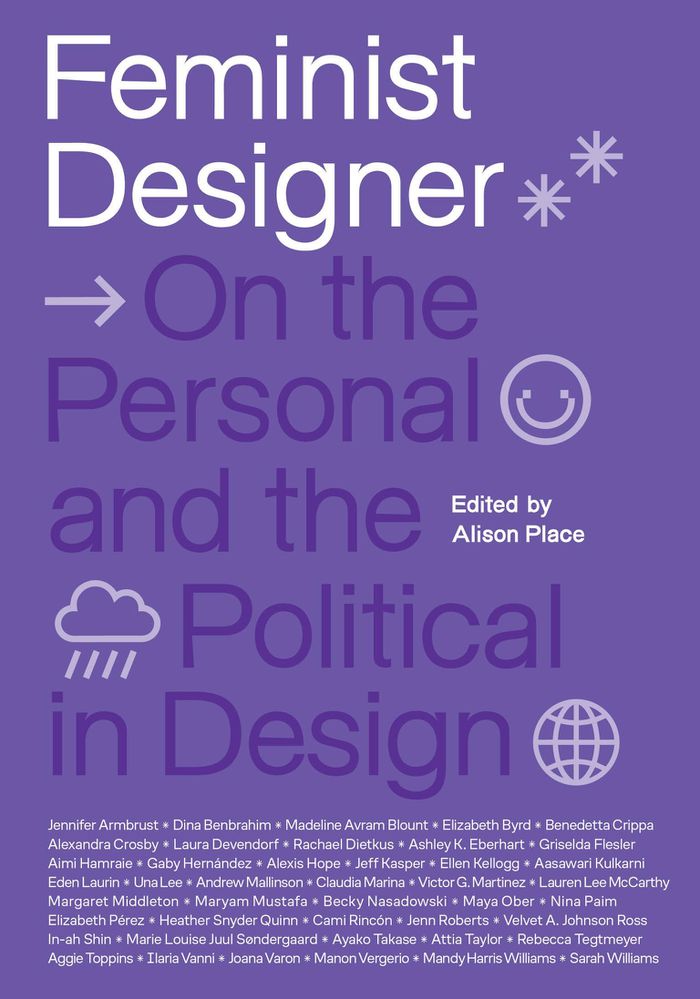
''Feminist designer'' brings together a constellation of voices and perspectives to examine the intersection of design and feminist theory. For decades, the feminist refrain within design has hinged on the representation and inclusion of women in the field. This collection, edited by Alison Place, however, is a call to move beyond this narrow application. Feminist design is not just about who does design—it is about how we do design and why. Feminist frameworks for design activism are now more relevant than ever, as they emphasize collaborative processes that aim to disrupt and dismantle power hierarchies while centering feminist ways of knowing and doing. ''Feminist designer'' contains essays, case studies, and dialogues by 43 contributors from 16 different countries. It engages a wide variety of design disciplines, from graphic design to disability design to algorithmic design, and explores key feminist themes, such as power, knowledge, care, plurality, liberation, and community. Through diverse, sometimes conflicting, intersectional perspectives, this book contributes new design methods informed by a multiplicity of feminisms that confront design’s patriarchal origins while ushering in new pathways for making critical and meaningful change.
Feminist designer: On the personal and the political in design
Actions:
Prix:
$39.95
(disponible sur commande)
Résumé:
''Feminist designer'' brings together a constellation of voices and perspectives to examine the intersection of design and feminist theory. For decades, the feminist refrain within design has hinged on the representation and inclusion of women in the field. This collection, edited by Alison Place, however, is a call to move beyond this narrow application. Feminist design is not just about who does design—it is about how we do design and why. Feminist frameworks for design activism are now more relevant than ever, as they emphasize collaborative processes that aim to disrupt and dismantle power hierarchies while centering feminist ways of knowing and doing. ''Feminist designer'' contains essays, case studies, and dialogues by 43 contributors from 16 different countries. It engages a wide variety of design disciplines, from graphic design to disability design to algorithmic design, and explores key feminist themes, such as power, knowledge, care, plurality, liberation, and community. Through diverse, sometimes conflicting, intersectional perspectives, this book contributes new design methods informed by a multiplicity of feminisms that confront design’s patriarchal origins while ushering in new pathways for making critical and meaningful change.
Classification:
livres
livres
Publication:
septembre 2023
septembre 2023
Sujet:
Théorie du design
Théorie du design


