


12071 Résultats
Classification:
livres
livres
Titre:
The battle for modernism: Quadrante and the politicization of architecture discourse in facist Italy
The battle for modernism: Quadrante and the politicization of architecture discourse in facist Italy
Actions:
Prix:
$51.00
(disponible sur commande)
Résumé:
The other side of twentieth-century architectural history in Italy and Europe. Quadrante rallied supporters and organized the most prominent practitioners and benefactors of Italian rationalism into a coherent movement that advanced the cause of specific currents of modern architecture in interwar Italy. Through a detailed study of Quadrante and its circle of architects,(...)
$51.00
(disponible sur commande)
Résumé:
The other side of twentieth-century architectural history in Italy and Europe. Quadrante rallied supporters and organized the most prominent practitioners and benefactors of Italian rationalism into a coherent movement that advanced the cause of specific currents of modern architecture in interwar Italy. Through a detailed study of Quadrante and its circle of architects,(...)
Titre:
The battle for modernism: Quadrante and the politicization of architecture discourse in facist Italy
Actions:
Prix:
$51.00
(disponible sur commande)
Résumé:
The other side of twentieth-century architectural history in Italy and Europe. Quadrante rallied supporters and organized the most prominent practitioners and benefactors of Italian rationalism into a coherent movement that advanced the cause of specific currents of modern architecture in interwar Italy. Through a detailed study of Quadrante and its circle of architects, critics, artists, and patrons, the book investigates the relationship between modern architecture and fascist political practices in Italy during Benito Mussolini's regime (1922-1943).
The battle for modernism: Quadrante and the politicization of architecture discourse in facist Italy
Actions:
Prix:
$51.00
(disponible sur commande)
Résumé:
The other side of twentieth-century architectural history in Italy and Europe. Quadrante rallied supporters and organized the most prominent practitioners and benefactors of Italian rationalism into a coherent movement that advanced the cause of specific currents of modern architecture in interwar Italy. Through a detailed study of Quadrante and its circle of architects, critics, artists, and patrons, the book investigates the relationship between modern architecture and fascist political practices in Italy during Benito Mussolini's regime (1922-1943).
Classification:
livres
livres
Publication:
avril 2013
avril 2013
Sujet:
Théorie de l’architecture
Théorie de l’architecture
Classification:
livres
livres
Titre:
Notes for those beginning the discipline of architecture alternate ending 1 : the glimmering noise
Notes for those beginning the discipline of architecture alternate ending 1 : the glimmering noise
Actions:
Prix:
$22.95
(disponible sur commande)
Résumé:
Michael Meredith hits hard with his first publication in the form of a Manifesto on architecture but the theme crosses into all design related professions.
$22.95
(disponible sur commande)
Résumé:
Michael Meredith hits hard with his first publication in the form of a Manifesto on architecture but the theme crosses into all design related professions.
Titre:
Notes for those beginning the discipline of architecture alternate ending 1 : the glimmering noise
Actions:
Prix:
$22.95
(disponible sur commande)
Résumé:
Michael Meredith hits hard with his first publication in the form of a Manifesto on architecture but the theme crosses into all design related professions.
Notes for those beginning the discipline of architecture alternate ending 1 : the glimmering noise
Actions:
Prix:
$22.95
(disponible sur commande)
Résumé:
Michael Meredith hits hard with his first publication in the form of a Manifesto on architecture but the theme crosses into all design related professions.
Classification:
livres
livres
Publication:
janvier 2007
janvier 2007
Sujet:
Théorie de l’architecture
Théorie de l’architecture
Classification:
livres
livres
Titre:
Hans Zwimpfer : Peter Meriam Haus Basel - at the interface between art, technology and architecture
Hans Zwimpfer : Peter Meriam Haus Basel - at the interface between art, technology and architecture
Actions:
Prix:
$65.00
(disponible sur commande)
Résumé:
Designed by Zwimpfer Partner Architects in cooperation with the American artist Donald Judd, the Peter Merian house in Basel Switzerland involved artists Hans Danuser, Brigitte Kowanz, Roni Horn, François Morellet, Ursula Mumenthaler, Pipilotti Rist. Beat Zoderer also participated in the project. When architects incorporate art into their projects, when artists involve(...)
$65.00
(disponible sur commande)
Résumé:
Designed by Zwimpfer Partner Architects in cooperation with the American artist Donald Judd, the Peter Merian house in Basel Switzerland involved artists Hans Danuser, Brigitte Kowanz, Roni Horn, François Morellet, Ursula Mumenthaler, Pipilotti Rist. Beat Zoderer also participated in the project. When architects incorporate art into their projects, when artists involve(...)
Titre:
Hans Zwimpfer : Peter Meriam Haus Basel - at the interface between art, technology and architecture
Actions:
Prix:
$65.00
(disponible sur commande)
Résumé:
Designed by Zwimpfer Partner Architects in cooperation with the American artist Donald Judd, the Peter Merian house in Basel Switzerland involved artists Hans Danuser, Brigitte Kowanz, Roni Horn, François Morellet, Ursula Mumenthaler, Pipilotti Rist. Beat Zoderer also participated in the project. When architects incorporate art into their projects, when artists involve themselves in the constraints of the construction industry, the results can be immensely fruitful as this striking new building in the Basel cityscape goes to prove.
Hans Zwimpfer : Peter Meriam Haus Basel - at the interface between art, technology and architecture
Actions:
Prix:
$65.00
(disponible sur commande)
Résumé:
Designed by Zwimpfer Partner Architects in cooperation with the American artist Donald Judd, the Peter Merian house in Basel Switzerland involved artists Hans Danuser, Brigitte Kowanz, Roni Horn, François Morellet, Ursula Mumenthaler, Pipilotti Rist. Beat Zoderer also participated in the project. When architects incorporate art into their projects, when artists involve themselves in the constraints of the construction industry, the results can be immensely fruitful as this striking new building in the Basel cityscape goes to prove.
Classification:
livres
livres
Publication:
avril 2002, Basel
avril 2002, Basel
Sujet:
Architecture, monographies
Architecture, monographies
Classification:
livres
livres
Actions:
Prix:
$65.95
(disponible sur commande)
Résumé:
Studies in Tectonic Culture is nothing less than a rethinking of the entire modern architectural tradition. The notion of tectonics as employed by Frampton -- the focus on architecture as a constructional craft -- constitutes a direct challenge to current mainstream thinking on the artistic limits of postmodernism, and suggests a convincing alternative. Indeed, Frampton(...)
$65.95
(disponible sur commande)
Résumé:
Studies in Tectonic Culture is nothing less than a rethinking of the entire modern architectural tradition. The notion of tectonics as employed by Frampton -- the focus on architecture as a constructional craft -- constitutes a direct challenge to current mainstream thinking on the artistic limits of postmodernism, and suggests a convincing alternative. Indeed, Frampton(...)
Sujet:
Théorie de l’architecture
Théorie de l’architecture
Publication:
octobre 2001, Cambridge, Mass.
octobre 2001, Cambridge, Mass.
Titre:
Studies in tectonic culture: the poetics of construction in nineteenth and twentieth century architecture
Actions:
Prix:
$65.95
(disponible sur commande)
Résumé:
Studies in Tectonic Culture is nothing less than a rethinking of the entire modern architectural tradition. The notion of tectonics as employed by Frampton -- the focus on architecture as a constructional craft -- constitutes a direct challenge to current mainstream thinking on the artistic limits of postmodernism, and suggests a convincing alternative. Indeed, Frampton argues, modern architecture is invariably as much about structure and construction as it is about space and abstract form. Composed of ten essays and an epilogue that trace the history of contemporary form as an evolving poetic of structure and construction, the book's analytical framework rests on Frampton's close readings of key French and German, and English sources from the eighteenth century to the present. He clarifies the various turns that structural engineering and tectonic imagination have taken in the work of such architects as Perret, Wright, Kahn, Scarpa, and Mies, and shows how both constructional form and material character were integral to an evolving architectural expression of their work. Frampton also demonstrates that the way in which these elements are articulated from one work to the next provides a basis upon which to evaluate the works as a whole. This is especially evident in his consideration of the work of Perret, Mies, and Kahn and the continuities in their thought and attitudes that linked them to the past. Frampton considers the conscious cultivation of the tectonic tradition in architecture as an essential element in the future development of architectural form, casting a critical new light on the entire issue of modernity and on the place of much work that has passed as "avant-garde."
Studies in tectonic culture: the poetics of construction in nineteenth and twentieth century architecture
Actions:
Prix:
$65.95
(disponible sur commande)
Résumé:
Studies in Tectonic Culture is nothing less than a rethinking of the entire modern architectural tradition. The notion of tectonics as employed by Frampton -- the focus on architecture as a constructional craft -- constitutes a direct challenge to current mainstream thinking on the artistic limits of postmodernism, and suggests a convincing alternative. Indeed, Frampton argues, modern architecture is invariably as much about structure and construction as it is about space and abstract form. Composed of ten essays and an epilogue that trace the history of contemporary form as an evolving poetic of structure and construction, the book's analytical framework rests on Frampton's close readings of key French and German, and English sources from the eighteenth century to the present. He clarifies the various turns that structural engineering and tectonic imagination have taken in the work of such architects as Perret, Wright, Kahn, Scarpa, and Mies, and shows how both constructional form and material character were integral to an evolving architectural expression of their work. Frampton also demonstrates that the way in which these elements are articulated from one work to the next provides a basis upon which to evaluate the works as a whole. This is especially evident in his consideration of the work of Perret, Mies, and Kahn and the continuities in their thought and attitudes that linked them to the past. Frampton considers the conscious cultivation of the tectonic tradition in architecture as an essential element in the future development of architectural form, casting a critical new light on the entire issue of modernity and on the place of much work that has passed as "avant-garde."
Classification:
livres
livres
Publication:
octobre 2001, Cambridge, Mass.
octobre 2001, Cambridge, Mass.
Sujet:
Théorie de l’architecture
Théorie de l’architecture
Classification:
livres
livres
Actions:
Prix:
$112.00
(disponible en magasin)
Résumé:
After studying at the Architectural Association in London, John Godwin and Gillian Hopwood moved to Nigeria, where they significantly shaped the country's architectural landscape for more than sixty years. When Nigeria became independent in 1960 following British dominance since the 19th century, the couple worked to create architecture that was site-specific, modern, and(...)
$112.00
(disponible en magasin)
Résumé:
After studying at the Architectural Association in London, John Godwin and Gillian Hopwood moved to Nigeria, where they significantly shaped the country's architectural landscape for more than sixty years. When Nigeria became independent in 1960 following British dominance since the 19th century, the couple worked to create architecture that was site-specific, modern, and(...)
Titre:
Who are Godwin and Hopwood? Exploring tropical architecture in the age of climate crisis
Actions:
Prix:
$112.00
(disponible en magasin)
Résumé:
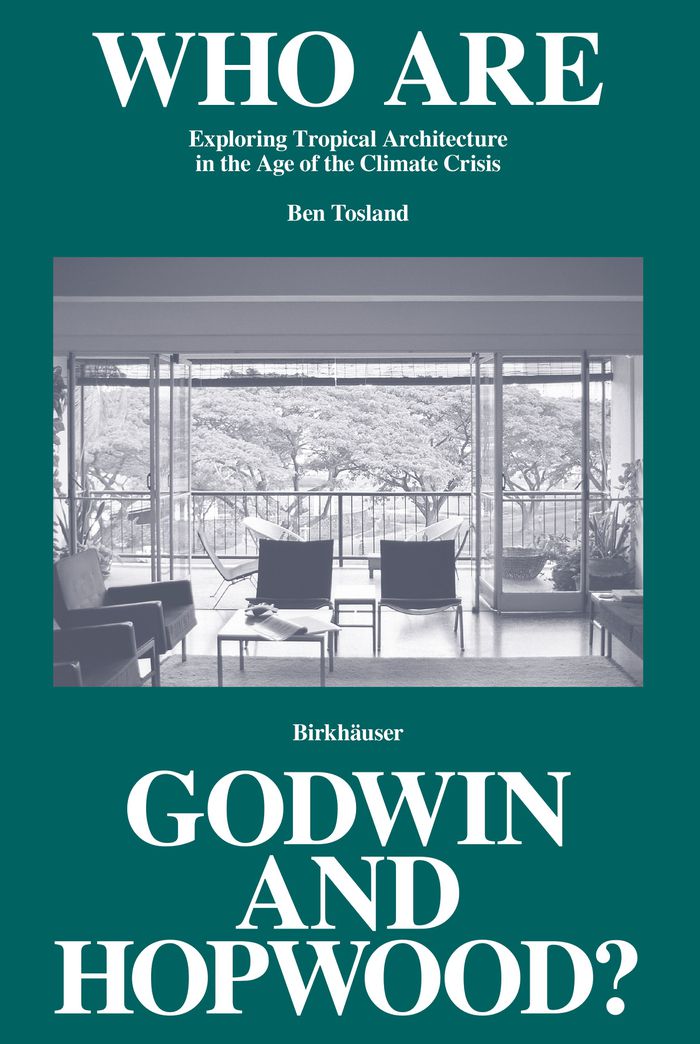
After studying at the Architectural Association in London, John Godwin and Gillian Hopwood moved to Nigeria, where they significantly shaped the country's architectural landscape for more than sixty years. When Nigeria became independent in 1960 following British dominance since the 19th century, the couple worked to create architecture that was site-specific, modern, and adapted to the climate relevant to Nigeria's aspirational political and economic policies. In this illustrated monograph, organised by typology, Ben Tosland examines Godwin and Hopwood's form of tropical modernism and illuminates its contemporary meanings and concluding with its relevance in times of the climate crisis.
Who are Godwin and Hopwood? Exploring tropical architecture in the age of climate crisis
Actions:
Prix:
$112.00
(disponible en magasin)
Résumé:
After studying at the Architectural Association in London, John Godwin and Gillian Hopwood moved to Nigeria, where they significantly shaped the country's architectural landscape for more than sixty years. When Nigeria became independent in 1960 following British dominance since the 19th century, the couple worked to create architecture that was site-specific, modern, and adapted to the climate relevant to Nigeria's aspirational political and economic policies. In this illustrated monograph, organised by typology, Ben Tosland examines Godwin and Hopwood's form of tropical modernism and illuminates its contemporary meanings and concluding with its relevance in times of the climate crisis.
Classification:
livres
livres
Publication:
juillet 2024
juillet 2024
Sujet:
Architecture, monographies
Architecture, monographies
Classification:
livres
livres
Titre:
City, climate and architecture: A theory of collective practice, Volume 1. Revised second edition
City, climate and architecture: A theory of collective practice, Volume 1. Revised second edition
Actions:
Prix:
$105.00
(disponible sur commande)
Résumé:
The publication rethinks climate control – a key concern of the discipline of architecture – through the lens of city climate phenomena over the course of the 20th century. Based on a history of climate control on urban scales, it promotes the integration of indoors and outdoors in order to reduce environmental and thermal loads in cities. Just as heating and cooling(...)
$105.00
(disponible sur commande)
Résumé:
The publication rethinks climate control – a key concern of the discipline of architecture – through the lens of city climate phenomena over the course of the 20th century. Based on a history of climate control on urban scales, it promotes the integration of indoors and outdoors in order to reduce environmental and thermal loads in cities. Just as heating and cooling(...)
Titre:
City, climate and architecture: A theory of collective practice, Volume 1. Revised second edition
Actions:
Prix:
$105.00
(disponible sur commande)
Résumé:
The publication rethinks climate control – a key concern of the discipline of architecture – through the lens of city climate phenomena over the course of the 20th century. Based on a history of climate control on urban scales, it promotes the integration of indoors and outdoors in order to reduce environmental and thermal loads in cities. Just as heating and cooling practices inside the buildings are affecting the (urban) climate outdoors, urban heat islands are influencing the energy requirements and thermal conditions inside the buildings. While the first part of the book focuses on the interwar period in Europe, the publication’s second part considers examples from all over the globe, tracing the growing significance of ecological thinking for the design of urban environments.
City, climate and architecture: A theory of collective practice, Volume 1. Revised second edition
Actions:
Prix:
$105.00
(disponible sur commande)
Résumé:
The publication rethinks climate control – a key concern of the discipline of architecture – through the lens of city climate phenomena over the course of the 20th century. Based on a history of climate control on urban scales, it promotes the integration of indoors and outdoors in order to reduce environmental and thermal loads in cities. Just as heating and cooling practices inside the buildings are affecting the (urban) climate outdoors, urban heat islands are influencing the energy requirements and thermal conditions inside the buildings. While the first part of the book focuses on the interwar period in Europe, the publication’s second part considers examples from all over the globe, tracing the growing significance of ecological thinking for the design of urban environments.
Classification:
livres
livres
Publication:
février 2025
février 2025
Sujet:
Architecture écologique
Architecture écologique
Classification:
livres
livres
Titre:
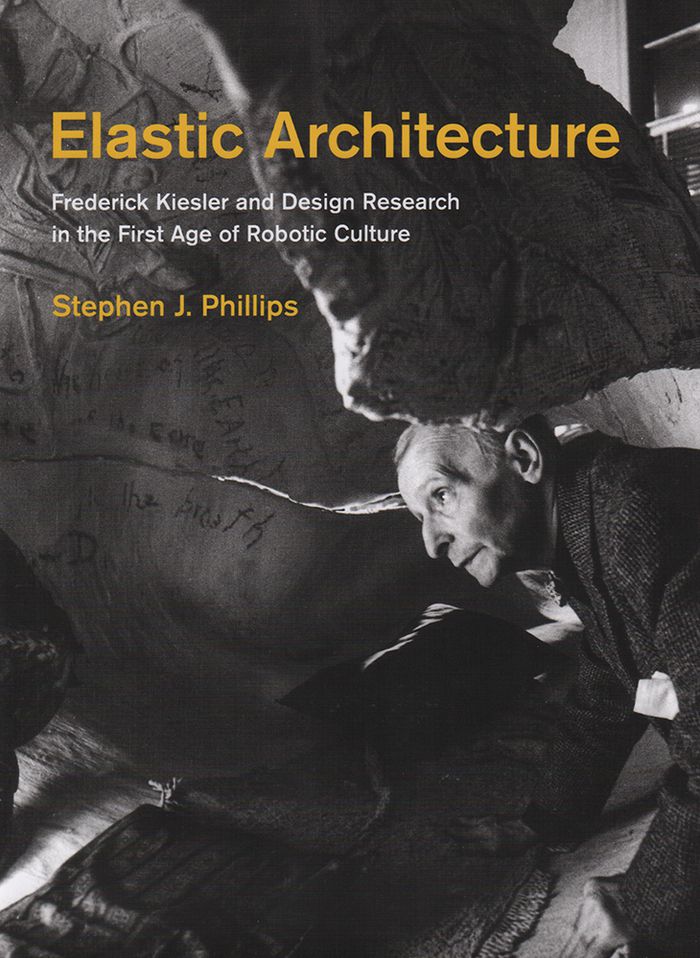
Elastic architecture: Frederick Kiesler and design research in the first age of robotic culture
Elastic architecture: Frederick Kiesler and design research in the first age of robotic culture
Actions:
Prix:
$42.95
(disponible sur commande)
Résumé:
In 1960, architect Philip Johnson championed Frederick Kiesler, calling him “the greatest non-building architect of our time.” Kiesler’s ideas were difficult to construct, but as Johnson believed, “enormous” and “profound.” Kiesler (1890–1965) went against the grain of the accepted modern style, rejecting rectilinear glass and steel in favor of more organic forms and(...)
$42.95
(disponible sur commande)
Résumé:
In 1960, architect Philip Johnson championed Frederick Kiesler, calling him “the greatest non-building architect of our time.” Kiesler’s ideas were difficult to construct, but as Johnson believed, “enormous” and “profound.” Kiesler (1890–1965) went against the grain of the accepted modern style, rejecting rectilinear glass and steel in favor of more organic forms and(...)
Titre:
Elastic architecture: Frederick Kiesler and design research in the first age of robotic culture
Actions:
Prix:
$42.95
(disponible sur commande)
Résumé:
In 1960, architect Philip Johnson championed Frederick Kiesler, calling him “the greatest non-building architect of our time.” Kiesler’s ideas were difficult to construct, but as Johnson believed, “enormous” and “profound.” Kiesler (1890–1965) went against the grain of the accepted modern style, rejecting rectilinear glass and steel in favor of more organic forms and flexible structures that could respond to the ever-changing needs of the body in motion. In Elastic Architecture, Stephen Phillips offers the first in-depth exploration of Kiesler’s innovative and multidisciplinary research and design practice. Exploring Kiesler’s formative relationships with the European avant-garde, Phillips shows how Kiesler found inspiration in the plastic arts, experimental theater, early animation, and automatons to develop and refine his spatial concept of the Endless. Moving from Europe to New York in the 1920s, Kiesler applied these radical Dadaist, constructivist, and surrealist practices to his urban display projects, which included shop windows for Saks Fifth Avenue. After launching his innovative Design Correlation Laboratory at Columbia and Yale, Kiesler went on to invent new houses, theaters, and galleries that were meant to move, shift, and adapt to evolutionary changes occurring within the natural and built environment.
Elastic architecture: Frederick Kiesler and design research in the first age of robotic culture
Actions:
Prix:
$42.95
(disponible sur commande)
Résumé:
In 1960, architect Philip Johnson championed Frederick Kiesler, calling him “the greatest non-building architect of our time.” Kiesler’s ideas were difficult to construct, but as Johnson believed, “enormous” and “profound.” Kiesler (1890–1965) went against the grain of the accepted modern style, rejecting rectilinear glass and steel in favor of more organic forms and flexible structures that could respond to the ever-changing needs of the body in motion. In Elastic Architecture, Stephen Phillips offers the first in-depth exploration of Kiesler’s innovative and multidisciplinary research and design practice. Exploring Kiesler’s formative relationships with the European avant-garde, Phillips shows how Kiesler found inspiration in the plastic arts, experimental theater, early animation, and automatons to develop and refine his spatial concept of the Endless. Moving from Europe to New York in the 1920s, Kiesler applied these radical Dadaist, constructivist, and surrealist practices to his urban display projects, which included shop windows for Saks Fifth Avenue. After launching his innovative Design Correlation Laboratory at Columbia and Yale, Kiesler went on to invent new houses, theaters, and galleries that were meant to move, shift, and adapt to evolutionary changes occurring within the natural and built environment.
Classification:
livres
livres
Publication:
mars 2017
mars 2017
Sujet:
Théorie de l’architecture
Théorie de l’architecture
Classification:
livres
livres
Actions:
Prix:
$37.70
(disponible en magasin)
Résumé:
"Five ways to make architecture political" presents an innovative pragmatist agenda that will inspire new thinking about the politics of design and architectural practice. Moving beyond conventional conversations about design and politics, the book shows how recent developments in political philosophy can transform our understanding of the role of the architect. It asks:(...)
$37.70
(disponible en magasin)
Résumé:
"Five ways to make architecture political" presents an innovative pragmatist agenda that will inspire new thinking about the politics of design and architectural practice. Moving beyond conventional conversations about design and politics, the book shows how recent developments in political philosophy can transform our understanding of the role of the architect. It asks:(...)
Titre:
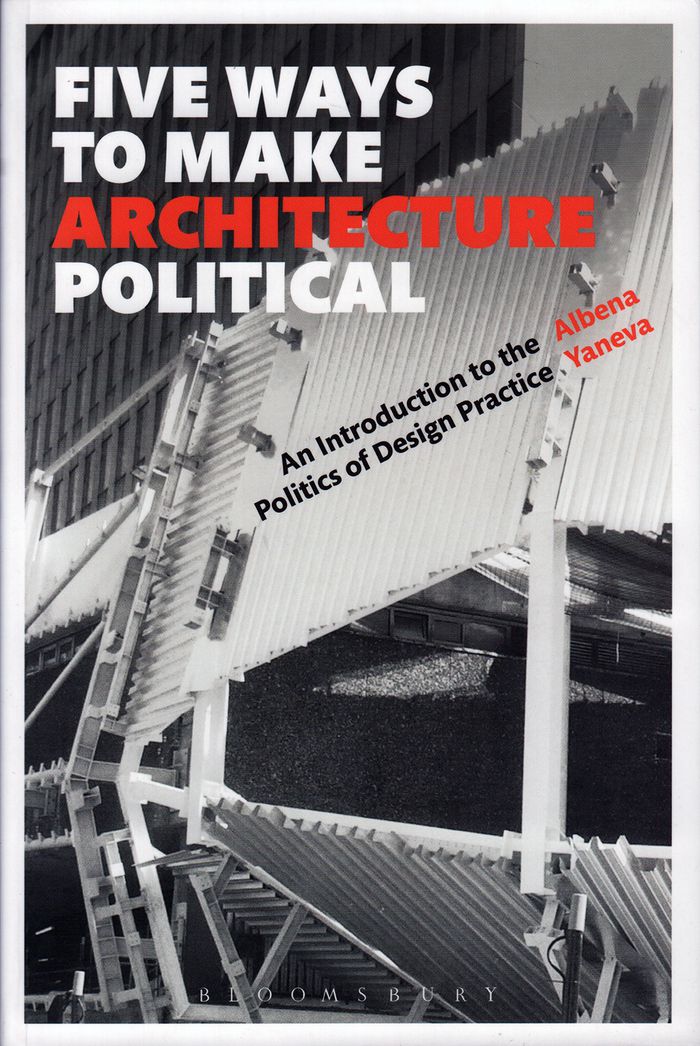
Five ways to make architecture political: An introduction to the politics of design practice
Actions:
Prix:
$37.70
(disponible en magasin)
Résumé:
"Five ways to make architecture political" presents an innovative pragmatist agenda that will inspire new thinking about the politics of design and architectural practice. Moving beyond conventional conversations about design and politics, the book shows how recent developments in political philosophy can transform our understanding of the role of the architect. It asks: how, when, and under what circumstances can design practice generate political relations? How can architectural design become more 'political'? Five central chapters, which can be read alone or in sequence, explore the answers to these questions. Powerfully pragmatic in approach, each presents one of the 'five ways to make architecture political', and each is illustrated by case studies from a range of contemporary situations around the world. We see how politics happens in architectural practice, learn how different design technologies have political effects, and follow how architects reach different publics, trigger reactions and affect different communities worldwide.
Five ways to make architecture political: An introduction to the politics of design practice
Actions:
Prix:
$37.70
(disponible en magasin)
Résumé:
"Five ways to make architecture political" presents an innovative pragmatist agenda that will inspire new thinking about the politics of design and architectural practice. Moving beyond conventional conversations about design and politics, the book shows how recent developments in political philosophy can transform our understanding of the role of the architect. It asks: how, when, and under what circumstances can design practice generate political relations? How can architectural design become more 'political'? Five central chapters, which can be read alone or in sequence, explore the answers to these questions. Powerfully pragmatic in approach, each presents one of the 'five ways to make architecture political', and each is illustrated by case studies from a range of contemporary situations around the world. We see how politics happens in architectural practice, learn how different design technologies have political effects, and follow how architects reach different publics, trigger reactions and affect different communities worldwide.
Classification:
livres
livres
Publication:
mai 2017
mai 2017
Sujet:
Théorie de l’architecture
Théorie de l’architecture
Classification:
livres
livres
Actions:
Prix:
$83.90
(disponible en magasin)
Résumé:
This book looks at architecture history in reverse, in order to follow chains of precedents back through time to see how ideas alter the course of civilization in general and the discipline of architecture in particular. Part One begins with present-day attitudes about architecture and traces them back to seminal ideas from the beginning of the twentieth century. Part Two(...)
$83.90
(disponible en magasin)
Résumé:
This book looks at architecture history in reverse, in order to follow chains of precedents back through time to see how ideas alter the course of civilization in general and the discipline of architecture in particular. Part One begins with present-day attitudes about architecture and traces them back to seminal ideas from the beginning of the twentieth century. Part Two(...)
Titre:
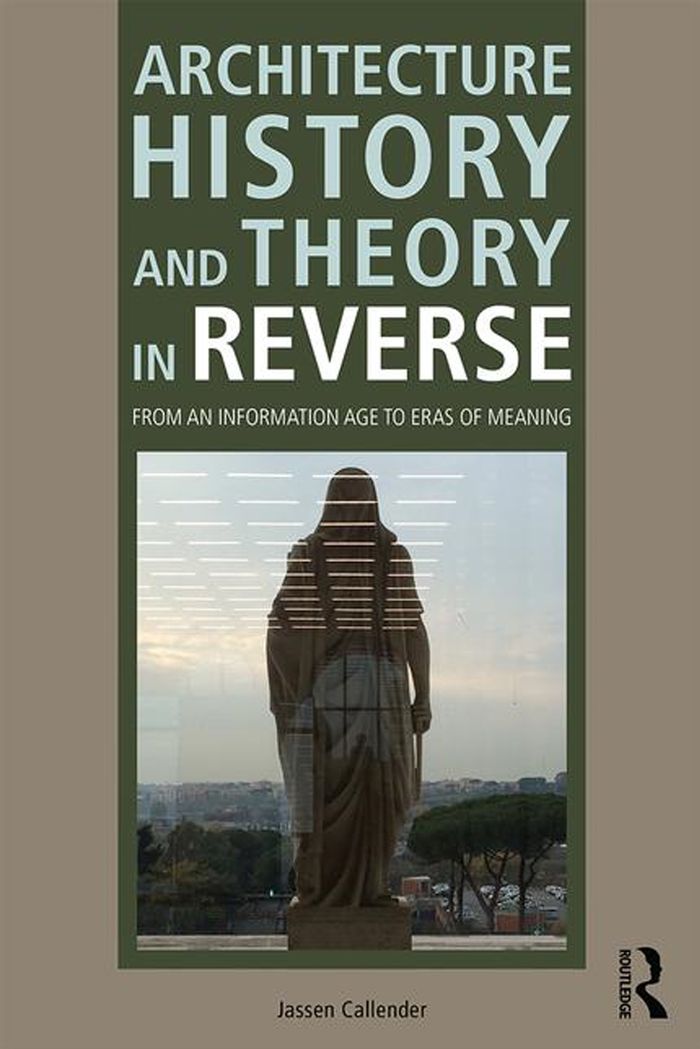
Architecture history and theory in reverse: from an information age to eras of meaning
Actions:
Prix:
$83.90
(disponible en magasin)
Résumé:
This book looks at architecture history in reverse, in order to follow chains of precedents back through time to see how ideas alter the course of civilization in general and the discipline of architecture in particular. Part One begins with present-day attitudes about architecture and traces them back to seminal ideas from the beginning of the twentieth century. Part Two examines how pre-twentieth century societies designed and understood architecture, how they strove to create communal physical languages, and how their disagreements set the stage for our information age practices. Includes 45 black and white images.
Architecture history and theory in reverse: from an information age to eras of meaning
Actions:
Prix:
$83.90
(disponible en magasin)
Résumé:
This book looks at architecture history in reverse, in order to follow chains of precedents back through time to see how ideas alter the course of civilization in general and the discipline of architecture in particular. Part One begins with present-day attitudes about architecture and traces them back to seminal ideas from the beginning of the twentieth century. Part Two examines how pre-twentieth century societies designed and understood architecture, how they strove to create communal physical languages, and how their disagreements set the stage for our information age practices. Includes 45 black and white images.
Classification:
livres
livres
Publication:
juillet 2017
juillet 2017
Sujet:
Théorie de l’architecture
Théorie de l’architecture
Classification:
livres
livres
Titre:
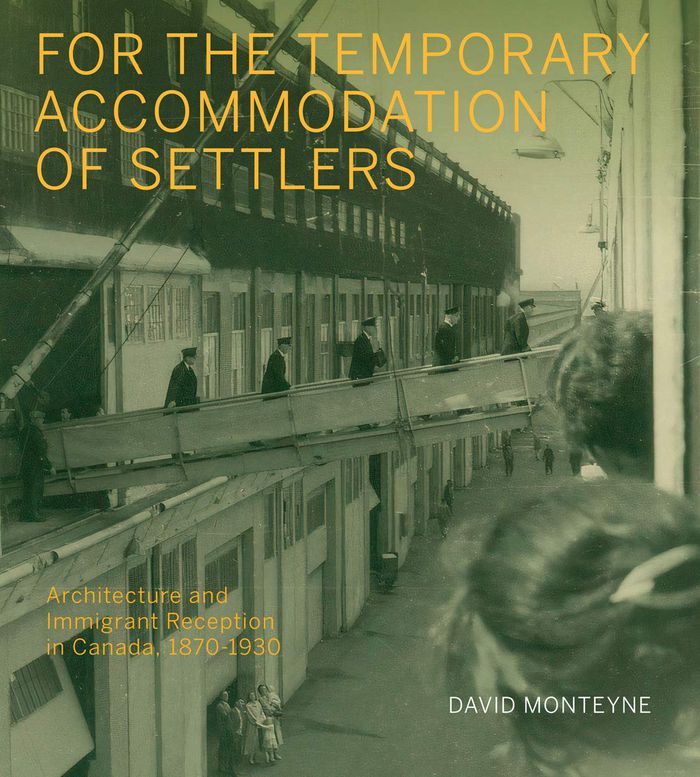
For the temporary accomodation of settlers: Architecture and immigrant reception in Canada 1870-1930
For the temporary accomodation of settlers: Architecture and immigrant reception in Canada 1870-1930
Actions:
Prix:
$75.00
(disponible sur commande)
Résumé:
For immigrants making the transoceanic journey from Europe or Asia to North America, the experience of a new country began when they disembarked. In Canada the federal government built a network of buildings that provided newcomers with shelter, services, and state support. "Immigration sheds" such as Pier 21 in Halifax – where ocean liners would dock and global migrants(...)
$75.00
(disponible sur commande)
Résumé:
For immigrants making the transoceanic journey from Europe or Asia to North America, the experience of a new country began when they disembarked. In Canada the federal government built a network of buildings that provided newcomers with shelter, services, and state support. "Immigration sheds" such as Pier 21 in Halifax – where ocean liners would dock and global migrants(...)
Titre:
For the temporary accomodation of settlers: Architecture and immigrant reception in Canada 1870-1930
Actions:
Prix:
$75.00
(disponible sur commande)
Résumé:
For immigrants making the transoceanic journey from Europe or Asia to North America, the experience of a new country began when they disembarked. In Canada the federal government built a network of buildings that provided newcomers with shelter, services, and state support. "Immigration sheds" such as Pier 21 in Halifax – where ocean liners would dock and global migrants arrived and were processed – had many counterparts across the country: new arrivals were accommodated or incarcerated at reception halls, quarantine stations, and immigrant detention hospitals. For the Temporary Accommodation of Settlers reconstructs the experiences of people in these spaces – both immigrants and government agents – to pose a question at the heart of architectural thinking: how is meaning produced in the built environments that we encounter? David Monteyne interprets official governmental intentions and policy goals embodied by the architecture of immigration but foregrounds the unofficial, informal practices of people who negotiated these spaces to satisfy basic needs, ensure the safety of their families, learn about land and job opportunities, and ultimately arrive at their destinations. The extent of this Canadian network, which peaked in the early twentieth century at over sixty different sites, and the range of building types that comprised it are unique among immigrant-receiving nations in this period. In our era of pandemic quarantine and migrant detention facilities, ''For the temporary accommodation of settlers'' offers new ways of seeing and thinking about the historical processes of immigration, challenging readers to consider government architecture and the experience of migrants across global networks.
For the temporary accomodation of settlers: Architecture and immigrant reception in Canada 1870-1930
Actions:
Prix:
$75.00
(disponible sur commande)
Résumé:
For immigrants making the transoceanic journey from Europe or Asia to North America, the experience of a new country began when they disembarked. In Canada the federal government built a network of buildings that provided newcomers with shelter, services, and state support. "Immigration sheds" such as Pier 21 in Halifax – where ocean liners would dock and global migrants arrived and were processed – had many counterparts across the country: new arrivals were accommodated or incarcerated at reception halls, quarantine stations, and immigrant detention hospitals. For the Temporary Accommodation of Settlers reconstructs the experiences of people in these spaces – both immigrants and government agents – to pose a question at the heart of architectural thinking: how is meaning produced in the built environments that we encounter? David Monteyne interprets official governmental intentions and policy goals embodied by the architecture of immigration but foregrounds the unofficial, informal practices of people who negotiated these spaces to satisfy basic needs, ensure the safety of their families, learn about land and job opportunities, and ultimately arrive at their destinations. The extent of this Canadian network, which peaked in the early twentieth century at over sixty different sites, and the range of building types that comprised it are unique among immigrant-receiving nations in this period. In our era of pandemic quarantine and migrant detention facilities, ''For the temporary accommodation of settlers'' offers new ways of seeing and thinking about the historical processes of immigration, challenging readers to consider government architecture and the experience of migrants across global networks.
Classification:
livres
livres
Publication:
décembre 2021
décembre 2021
Sujet:
Architecture du Canada
Architecture du Canada


