


488 Résultats
Classification:
livres
livres
Actions:
Prix:
$420.00
(disponible sur commande)
Résumé:
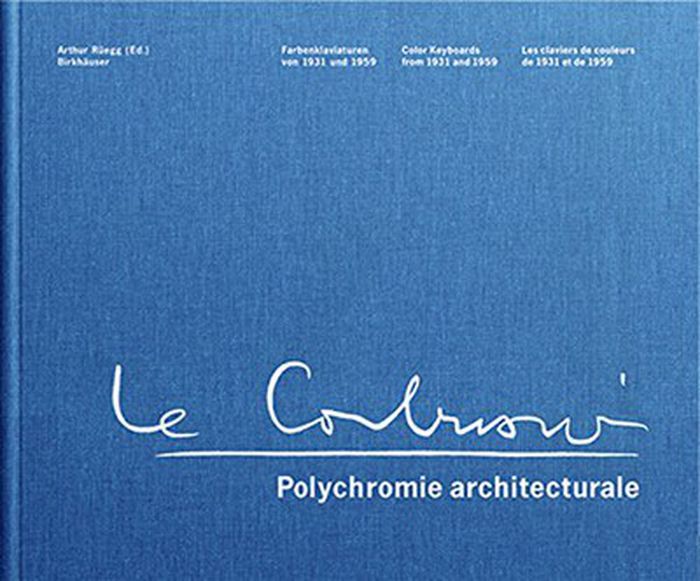
Le Corbusier designed two collections of colors for the Salubra wallpaper company, the “Clavier de couleurs” of 1931, with 43 colors, and the 1959 collection, with 20. Not content with the choice of 43 colors drawn from his experience as an architect and painter, he organized the tones on 12 sample cards in such a manner that one could use a slider to isolate or combine(...)
Titre:
Le Corbusier: polychromie architecturale
Actions:
Prix:
$420.00
(disponible sur commande)
Résumé:
Le Corbusier designed two collections of colors for the Salubra wallpaper company, the “Clavier de couleurs” of 1931, with 43 colors, and the 1959 collection, with 20. Not content with the choice of 43 colors drawn from his experience as an architect and painter, he organized the tones on 12 sample cards in such a manner that one could use a slider to isolate or combine different sets of three to five colors. Each of these cards contained a different chromatic atmosphere, intended, when used, to produce a particular spatial effect. Thus Le Corbusier not only created a useful tool but also a kind of testament of the purist theory of color. In 1959 he created a second collection reflecting the changes in his views, with 20 single colors assembled on a single “clavier.” In the first volume, Arthur Rüegg, a professor at the Eidgenössische Technische Hochschule and a specialist in Le Corbusier, explores the significance of the Salubra collections for the history of modern architecture.
Classification:
livres
livres
Publication:
avril 2006
avril 2006
Sujet:
Architecture, monographies
Architecture, monographies
Classification:
livres
livres
Prix:
$48.95
(disponible sur commande)
Résumé:
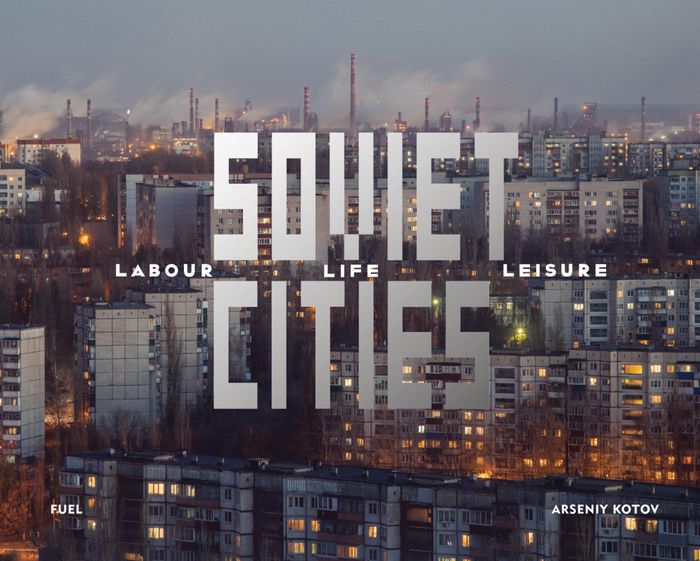
In recent years Russian cities have visibly changed. The architectural heritage of the Soviet period has not been fully acknowledged. As a result many unique modernist buildings have been destroyed or changed beyond recognition. Russian photographer Arseniy Kotov intends to document these buildings and their surroundings before they are lost forever. He likes to take(...)
Sujet:
Monographies photo
Monographies photo
Publication:
octobre 2020
octobre 2020
Titre:
Arseniy Kotov: Soviet cities: labour, life and leisure
Actions:
Prix:
$48.95
(disponible sur commande)
Résumé:
In recent years Russian cities have visibly changed. The architectural heritage of the Soviet period has not been fully acknowledged. As a result many unique modernist buildings have been destroyed or changed beyond recognition. Russian photographer Arseniy Kotov intends to document these buildings and their surroundings before they are lost forever. He likes to take pictures in winter, during the 'blue hour,' which occurs immediately after sunset or just before sunrise. At this time, the warm yellow colors inside apartment-block windows contrast with the twilight gloom outside. To Kotov, this atmosphere reflects the Soviet period of his imagination. His impression of this time is unashamedly idealistic: he envisages a great civilization, built on a fair society, which hopes to explore nature and conquer space. From the Baikonur Cosmodrome in the desert steppes of Kazakhstan to the grim monolithic high-rise dormitory blocks of inner-city Volgograd, Kotov captures the essence of the post-Soviet world.
Classification:
livres
livres
Publication:
octobre 2020
octobre 2020
Sujet:
Monographies photo
Monographies photo
Classification:
livres
livres
Actions:
Prix:
$82.00
(disponible sur commande)
Résumé:
Deichman Bjørvika, Olso’s new public library, was completed and opened in summer 2020 after a lengthy period of planning and construction. Located opposite the city’s Opera House and the Munch Museum, this imposing building fits into the ensemble in the new cultural quarter of the Norwegian capital. The project, designed by Lundhagem and Atelier Oslo Architects following(...)
Publication:
avril 2022
avril 2022
Titre:
Deichman Bjørvika: Oslo Public Library. Lund Hagem Architects, Atelier Oslo
Actions:
Prix:
$82.00
(disponible sur commande)
Résumé:
Deichman Bjørvika, Olso’s new public library, was completed and opened in summer 2020 after a lengthy period of planning and construction. Located opposite the city’s Opera House and the Munch Museum, this imposing building fits into the ensemble in the new cultural quarter of the Norwegian capital. The project, designed by Lundhagem and Atelier Oslo Architects following an international architectural competition, was conceived around a radical paradigm of the library as a place for conviviality and substantial multimedia platforms in a conducive, unobtrusive environment. The publication documents in detail the planning and building process, from the first draft to the opening. Essays by the novelist Elif Shafak and the library’s long-term director Liv Sæteren explain the significance of the institution as an integrative social force, while Niklas Maak pays tribute to the building from the perspective of architectural criticism. Iwan Baan and Hélène Binet capture the architecture and its atmosphere in exquisite photographs.
Classification:
livres
livres
Publication:
avril 2022
avril 2022
Classification:
livres
livres
Actions:
Prix:
$39.99
(disponible sur commande)
Résumé:
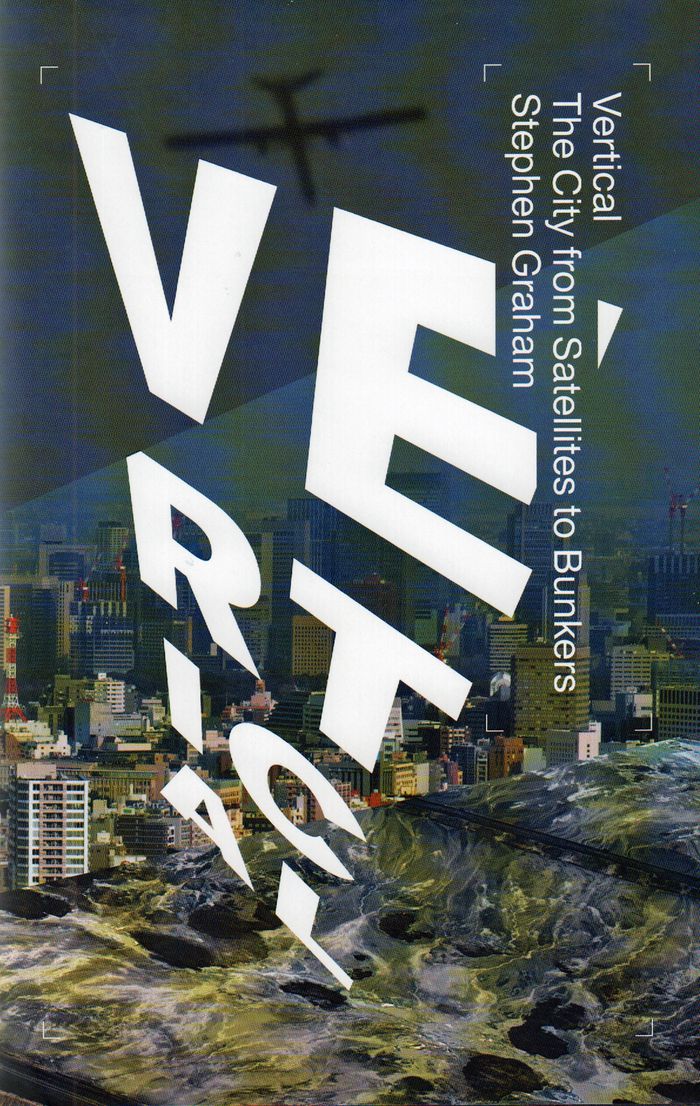
Today we live in a world that can no longer be read as a two-dimensional map, but must now be understood as a series of vertical strata that reach from the satellites that encircle our planet to the tunnels deep within the ground. In "Vertical", Stephen Graham rewrites the city at every level: how the geography of inequality, politics, and identity is determined in terms(...)
Titre:
Vertical : the city from satellites to bunkers
Actions:
Prix:
$39.99
(disponible sur commande)
Résumé:
Today we live in a world that can no longer be read as a two-dimensional map, but must now be understood as a series of vertical strata that reach from the satellites that encircle our planet to the tunnels deep within the ground. In "Vertical", Stephen Graham rewrites the city at every level: how the geography of inequality, politics, and identity is determined in terms of above and below. Starting at the edge of earth’s atmosphere and, in a series of riveting studies, descending through each layer, Graham explores the world of drones, the city from the viewpoint of an aerial bomber, the design of sidewalks and the hidden depths of underground bunkers. He asks: why was Dubai built to be seen from Google Earth? How do the super-rich in São Paulo live in their penthouses far above the street? Why do London billionaires build vast subterranean basements? And how do the technology of elevators and subversive urban explorers shape life on the surface and subsurface of the earth?
Classification:
livres
livres
Publication:
novembre 2016
novembre 2016
Sujet:
Théorie de l’urbanisme
Théorie de l’urbanisme
Classification:
livres
livres
Titre:
Mamma Andersson
Mamma Andersson
Actions:
Prix:
$72.00
(disponible sur commande)
Résumé:
The Swedish painter Karin Mamma Andersson works with a highly idiosyncratic imagery, engendered by the mysteries of dreams, fairytales and everyday life. She paints with an indefatigable passion for storytelling, spreading the paint thickly with broad, sweeping gestures, or dryly and sparsely, across the canvas. Glimmering beauty and dark maelstroms of doom are sampled(...)
Publication:
mai 2007, Göttingen / London
mai 2007, Göttingen / London
Titre:
Mamma Andersson
Actions:
Prix:
$72.00
(disponible sur commande)
Résumé:
The Swedish painter Karin Mamma Andersson works with a highly idiosyncratic imagery, engendered by the mysteries of dreams, fairytales and everyday life. She paints with an indefatigable passion for storytelling, spreading the paint thickly with broad, sweeping gestures, or dryly and sparsely, across the canvas. Glimmering beauty and dark maelstroms of doom are sampled with elements from myths, films and dreams, the absurd and the realistic, in the same picture. Her early works feature children in vast landscapes, echoing her own childhood in northern Sweden. The figures are set, each separately, in forests, by lakes, in the countryside. This rural setting later gives way to the interiors of the art world – cluttered framers’ workshops, libraries and elegant salons with finely ornamented objects. More recently, these rooms have opened up towards new worlds, where dream and reality seem to be careening. Whatever motifs she paints, the atmosphere appears to be fairly constant: a form of serenity in between finding and forgetting. The titles underline the ambiguity, explaining nothing but running parallel with the paintings.
Classification:
livres
livres
Publication:
mai 2007, Göttingen / London
mai 2007, Göttingen / London
Classification:
livres
livres
Actions:
Prix:
$85.00
(disponible sur commande)
Résumé:
Much more than a resort destination, Palm Springs has served as a laboratory of the Modern; here so much architectural innovation and design took form. From the steel-and-glass boxes of Richard Neutra to the earthy organic homes of John Lautner, and everything in between, the solutions of architects and designers—including notably William F. Cody, E. Stewart Williams, and(...)
Titre:
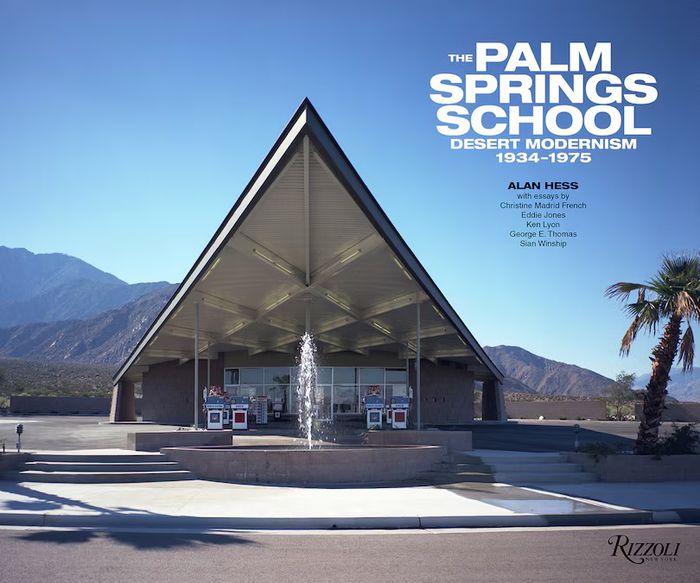
The Palm Springs School: Desert Modernism 1934-1975
Actions:
Prix:
$85.00
(disponible sur commande)
Résumé:
Much more than a resort destination, Palm Springs has served as a laboratory of the Modern; here so much architectural innovation and design took form. From the steel-and-glass boxes of Richard Neutra to the earthy organic homes of John Lautner, and everything in between, the solutions of architects and designers—including notably William F. Cody, E. Stewart Williams, and Albert Frey—were diverse and are ever more relevant in the face of contemporary challenges. Their answers addressed questions that still hold urgency: How to design sustainably in harsh climates? How to use technology efficiently and creatively to meet those challenges? How to build affordable and high-quality mass-produced housing? How to reflect a region’s culture, economy, and distinctive atmosphere? Architects here responded to nature’s climatological demands, and Palm Springs became a center for innovations that were rooted in practice more than theory. Benefitting from the architectural freedoms offered by the remoteness of the California desert, designers explored new approaches that we can now identify as central to the Palm Springs School, shown here in rich archival and contemporary photography.
Classification:
livres
livres
Publication:
février 2025
février 2025
Sujet:
Modernisme
Modernisme
Classification:
livres
livres
Prix:
$75.00
(disponible sur commande)
Résumé:
Seamlessly interweaving the new with the historic, the renovation by Selldorf Architects preserves The Frick Collection’s Gilded Age grandeur and sense of tranquillity while making more of the museum accessible and adding important new amenities. A museum of memorable rooms and superb Old Master holdings, The Frick Collection, the former home of industrialist Henry Clay(...)
Publication:
janvier 2026
janvier 2026
Titre:
A Design for Continuity and Change: The Frick Collection
Actions:
Prix:
$75.00
(disponible sur commande)
Résumé:
Seamlessly interweaving the new with the historic, the renovation by Selldorf Architects preserves The Frick Collection’s Gilded Age grandeur and sense of tranquillity while making more of the museum accessible and adding important new amenities. A museum of memorable rooms and superb Old Master holdings, The Frick Collection, the former home of industrialist Henry Clay Frick, is one of New York City’s most beloved art institutions. Designed by Thomas Hastings of the New York firm of Carrère and Hastings, the original Fifth Avenue mansion was completed in 1914 and served the Frick family until 1931. With John Russell Pope’s expansion of the mansion in 1935, which included the addition of a library (today’s esteemed Frick Art Research Library), the residence was converted into a public museum. The goal of the renovation was to honor the architectural legacy and unique contemplative atmosphere of the Frick while adding new space and critical infrastructure updates. Visitors will enjoy the enhanced functionality of the institution, and its improved climate controls will ensure the preservation of the collection and the house for generations to come.
Classification:
livres
livres
Publication:
janvier 2026
janvier 2026
Classification:
livres
livres
Actions:
Prix:
$66.95
(disponible sur commande)
Résumé:
Windows are moments in modern architecture where we look to ascertain elegance, technical expression and material language or to capture a certain atmosphere. A window opening is as much an interval and an opportunity as it is a device for admitting light, air or views; it is simultaneously a physical aperture but also a philosophical opening of collaboration and(...)
Titre:
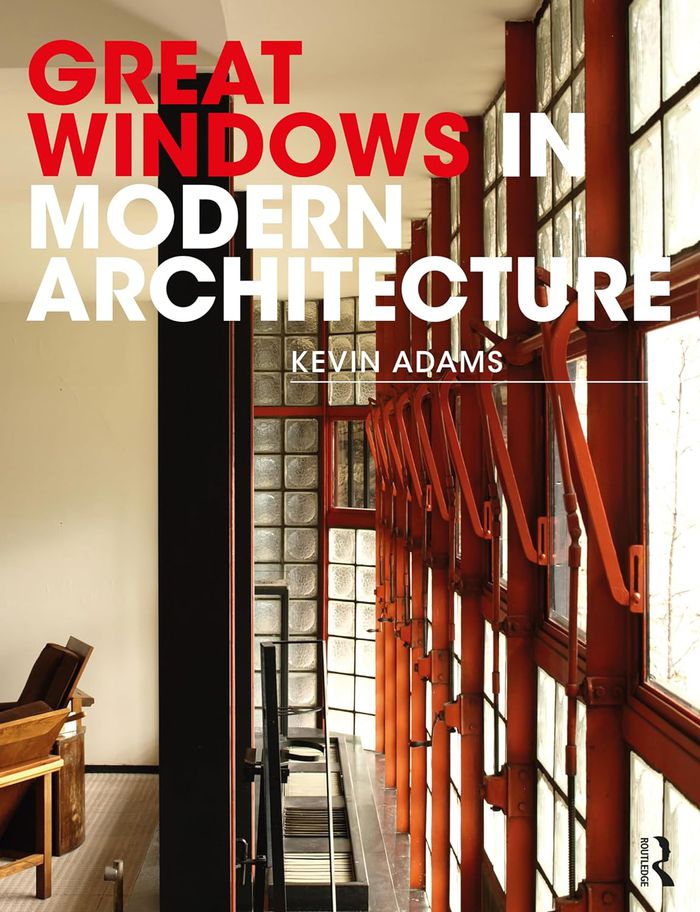
Great windows in modern architecture
Actions:
Prix:
$66.95
(disponible sur commande)
Résumé:
Windows are moments in modern architecture where we look to ascertain elegance, technical expression and material language or to capture a certain atmosphere. A window opening is as much an interval and an opportunity as it is a device for admitting light, air or views; it is simultaneously a physical aperture but also a philosophical opening of collaboration and reflection. In order to understand the language of a building we might look to the detail of the window. But what does this mean and why does modern architecture invest so much expression in the window? This book explores how the act of detailing and situating windows in buildings is a key proponent in the language of architecture, which both informs and works with the contingencies of design and construction. It investigates 18 case studies in-depth using painstakingly drawn details and vivid photographs in full colour to define what makes these windows “great” and how each window is situated within both its technical and philosophical context and as an overall development of modern architecture.
Classification:
livres
livres
Publication:
mars 2024
mars 2024
Sujet:
Modernisme
Modernisme
Classification:
livres
livres
Actions:
Prix:
$75.00
(disponible sur commande)
Résumé:
Gardens have inspired artists for hundreds of years. In the late 19th and early 20th centuries, photographers ranging from Eugène Atget to Edward Steichen were drawn to gardens for their beauty and their metaphorical associations. A century later, in the mid-1980s, an unusually large number of artists returned to the garden as a subject for their photography. This lovely(...)
Sujet:
Théorie de la photographie
Théorie de la photographie
Publication:
novembre 2004, New York
novembre 2004, New York
Titre:
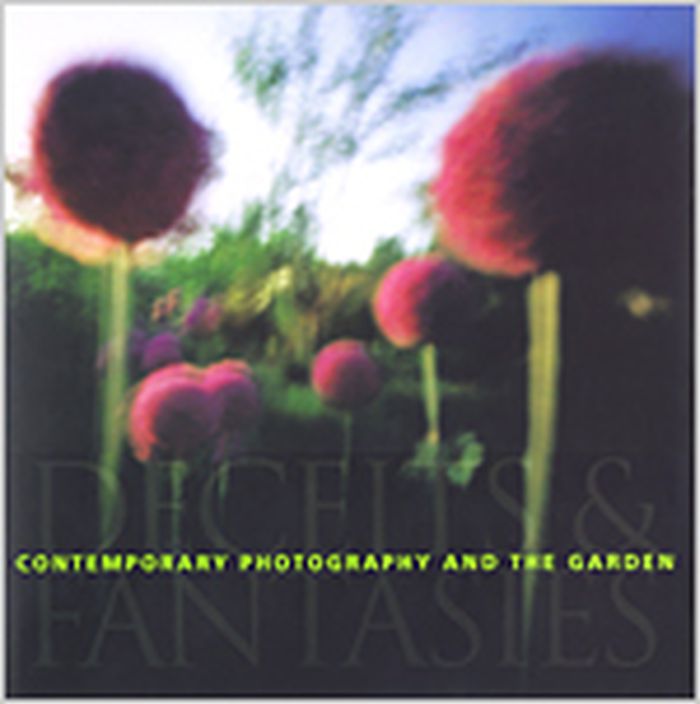
Contemporary photography and the garden
Actions:
Prix:
$75.00
(disponible sur commande)
Résumé:
Gardens have inspired artists for hundreds of years. In the late 19th and early 20th centuries, photographers ranging from Eugène Atget to Edward Steichen were drawn to gardens for their beauty and their metaphorical associations. A century later, in the mid-1980s, an unusually large number of artists returned to the garden as a subject for their photography. This lovely book devoted to the garden photography of contemporary artists accompanies an exhibition organized by the American Federation of Arts. The photographs—by Gregory Crewdson, Len Jenshel, Erica Lennard, Sally Mann, Catherine Opie, Jack Pierson, and other acclaimed artists—demonstrate a remarkably wide range of artistic responses to the garden. Whether presenting it as a haven of tranquility and lyrical beauty or drawing on it as a dark visual metaphor for the manipulation of nature, these photographs express the artists' investigation of the forms, atmosphere, and symbolism of the garden. Essays by Thomas Padon, Robert Harrison, Ronald Jones, and Shirin Neshat bring historical and contextual insight to the fascination many contemporary artists have with this popular subject.
Classification:
livres
livres
Publication:
novembre 2004, New York
novembre 2004, New York
Sujet:
Théorie de la photographie
Théorie de la photographie
Classification:
livres
livres
Prix:
$41.99
(disponible sur commande)
Résumé:
The current epoch is one of accumulation: not only of capital but also of raw, often unruly material, from plastic in the ocean and carbon in the atmosphere to people, buildings, and cities. Alongside this material growth, image-making practices embedded within the fields of art and architecture have proven to be fertile, mobile, and capacious. Images of accumulation help(...)
Sujet:
Théorie de l’architecture
Théorie de l’architecture
Publication:
avril 2022
avril 2022
Titre:
Accumulation: the art, architecture and media of climate change
Actions:
Prix:
$41.99
(disponible sur commande)
Résumé:
The current epoch is one of accumulation: not only of capital but also of raw, often unruly material, from plastic in the ocean and carbon in the atmosphere to people, buildings, and cities. Alongside this material growth, image-making practices embedded within the fields of art and architecture have proven to be fertile, mobile, and capacious. Images of accumulation help open up the climate to cultural inquiry and political mobilization and have formed a cultural infrastructure focused on the relationships between humans, other species, and their environments. The essays in ''Accumulation'' address this cultural infrastructure and the methodological challenges of its analysis. They offer a response to the relative invisibility of the climate now seen as material manifestations of social behavior. Contributors outline opportunities and ambitions of visual scholarship as a means to encounter the challenges emergent in the current moment: how can climate become visible, culturally and politically? Knowledge of climatic instability can change collective behavior and offer other trajectories, counteraccumulations that draw the present into a different, more livable, future.
Classification:
livres
livres
Publication:
avril 2022
avril 2022
Sujet:
Théorie de l’architecture
Théorie de l’architecture


