


6146 Résultats
Classification:
événements
événements
Actions:
Description:
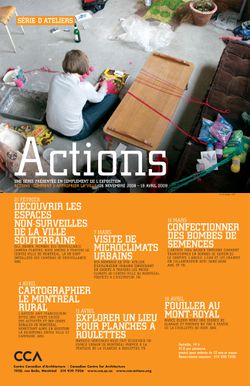
Les membres du collectif montréalais SYN- atelier d’exploration urbaine dirigent cet atelier explorant les microclimats urbains du centre-ville de Montréal. En raison de facteurs propres à la construction urbaine, les microclimats engendrent des variations de température surprenantes – par exemple, la cour d’un bâtiment peut être plus chaude que la rue de plusieurs(...)
Les membres du collectif montréalais SYN- atelier d’exploration urbaine dirigent cet atelier explorant les microclimats urbains du centre-ville de Montréal. En raison de facteurs propres à la construction urbaine, les microclimats engendrent des variations de température surprenantes – par exemple, la cour d’un bâtiment peut être plus chaude que la rue de plusieurs(...)
Date:
7 mars 2009
7 mars 2009
Titre:
Explorer les microclimats urbains
Actions:
Description:
Les membres du collectif montréalais SYN- atelier d’exploration urbaine dirigent cet atelier explorant les microclimats urbains du centre-ville de Montréal. En raison de facteurs propres à la construction urbaine, les microclimats engendrent des variations de température surprenantes – par exemple, la cour d’un bâtiment peut être plus chaude que la rue de plusieurs(...)
Explorer les microclimats urbains
Actions:
Description:
Les membres du collectif montréalais SYN- atelier d’exploration urbaine dirigent cet atelier explorant les microclimats urbains du centre-ville de Montréal. En raison de facteurs propres à la construction urbaine, les microclimats engendrent des variations de température surprenantes – par exemple, la cour d’un bâtiment peut être plus chaude que la rue de plusieurs(...)
Classification:
événements
événements
Date:
7 mars 2009
7 mars 2009
Classification:
événements
événements
Actions:
Description:
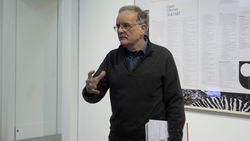
Suite à l’ouverture de L’université à l’antenne : diffuser l’architecture moderne, Tim Benton présente une lecture différente de la nouvelle exposition au cours d’une contre-visite. Plutôt qu’une visite des galeries qui donne la parole aux idées du commissaire, les contre-visites présentent des versions critiques, subversives, correctives ou alternatives d’un projet(...)
Suite à l’ouverture de L’université à l’antenne : diffuser l’architecture moderne, Tim Benton présente une lecture différente de la nouvelle exposition au cours d’une contre-visite. Plutôt qu’une visite des galeries qui donne la parole aux idées du commissaire, les contre-visites présentent des versions critiques, subversives, correctives ou alternatives d’un projet(...)
Date:
16 novembre 2017
16 novembre 2017
Titre:
Contre-visite : la version de Tim Benton
Actions:
Description:
Suite à l’ouverture de L’université à l’antenne : diffuser l’architecture moderne, Tim Benton présente une lecture différente de la nouvelle exposition au cours d’une contre-visite. Plutôt qu’une visite des galeries qui donne la parole aux idées du commissaire, les contre-visites présentent des versions critiques, subversives, correctives ou alternatives d’un projet(...)
Contre-visite : la version de Tim Benton
Actions:
Description:
Suite à l’ouverture de L’université à l’antenne : diffuser l’architecture moderne, Tim Benton présente une lecture différente de la nouvelle exposition au cours d’une contre-visite. Plutôt qu’une visite des galeries qui donne la parole aux idées du commissaire, les contre-visites présentent des versions critiques, subversives, correctives ou alternatives d’un projet(...)
Classification:
événements
événements
Date:
16 novembre 2017
16 novembre 2017
Classification:
expositions
expositions
Actions:
Description:
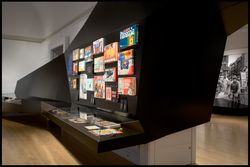
1973 : Désolé, plus d’essence analyse l’innovation architecturale à laquelle a donné naissance la crise énergétique de 1973, alors que la valeur du baril de pétrole augmentait de façon exponentielle, donnant lieu à des bouleversements économiques, politiques et sociaux dans de nombreux pays. Présentant plus de 350 objets – dessins d’architecture, photographies,(...)
1973 : Désolé, plus d’essence analyse l’innovation architecturale à laquelle a donné naissance la crise énergétique de 1973, alors que la valeur du baril de pétrole augmentait de façon exponentielle, donnant lieu à des bouleversements économiques, politiques et sociaux dans de nombreux pays. Présentant plus de 350 objets – dessins d’architecture, photographies,(...)
Localisation:
Salles principales Mot(s)-clé(s):
1973, désolé plus d'essence, crise du pétrole, énergie, environnement
Salles principales Mot(s)-clé(s):
1973, désolé plus d'essence, crise du pétrole, énergie, environnement
Date:
7 novembre 2007 au 20 avril 2008
7 novembre 2007 au 20 avril 2008
Titre:
1973 : désolé, plus d’essence
Actions:
Description:
1973 : Désolé, plus d’essence analyse l’innovation architecturale à laquelle a donné naissance la crise énergétique de 1973, alors que la valeur du baril de pétrole augmentait de façon exponentielle, donnant lieu à des bouleversements économiques, politiques et sociaux dans de nombreux pays. Présentant plus de 350 objets – dessins d’architecture, photographies,(...)
1973 : désolé, plus d’essence
Actions:
Description:
1973 : Désolé, plus d’essence analyse l’innovation architecturale à laquelle a donné naissance la crise énergétique de 1973, alors que la valeur du baril de pétrole augmentait de façon exponentielle, donnant lieu à des bouleversements économiques, politiques et sociaux dans de nombreux pays. Présentant plus de 350 objets – dessins d’architecture, photographies,(...)
Classification:
expositions
expositions
Date:
7 novembre 2007 au
20 avril 2008
7 novembre 2007 au
20 avril 2008
Localisation:
Salles principales Mot(s)-clé(s):
1973, désolé plus d'essence, crise du pétrole, énergie, environnement
Salles principales Mot(s)-clé(s):
1973, désolé plus d'essence, crise du pétrole, énergie, environnement
Classification:
archives
Niveau de description archivistique:
Fonds
archives
Niveau de description archivistique:
Fonds
Titre:
Fonds Günter Günschel
Fonds Günter Günschel
Numéro de référence:
AP187
Résumé:
The Günter Günschel fonds documents the architectural work of Günter Günschel. The fonds spans the years 1943 to 2006 and consists of drawings, photographic materials, and textual documentation related to over 50 projects, such as Kristallwucherungen (1953-1988), Geodätische Hallen (1955-1978), Wohnheim in Raumzellenbauweise für das Studentenwerk Göttingen (1969), Stadtquartiere (1977-1988), Emtwurf zur Bebauung der Weserinsel Teerhof in Bremen (1977-1978), and Stühle, Computergrafiken (1998).
AP187
Résumé:
The Günter Günschel fonds documents the architectural work of Günter Günschel. The fonds spans the years 1943 to 2006 and consists of drawings, photographic materials, and textual documentation related to over 50 projects, such as Kristallwucherungen (1953-1988), Geodätische Hallen (1955-1978), Wohnheim in Raumzellenbauweise für das Studentenwerk Göttingen (1969), Stadtquartiere (1977-1988), Emtwurf zur Bebauung der Weserinsel Teerhof in Bremen (1977-1978), and Stühle, Computergrafiken (1998).
Personnes et institutions:
Date:
1943-2006
1943-2006
Titre:
Fonds Günter Günschel
Actions:
AP187
Résumé:
The Günter Günschel fonds documents the architectural work of Günter Günschel. The fonds spans the years 1943 to 2006 and consists of drawings, photographic materials, and textual documentation related to over 50 projects, such as Kristallwucherungen (1953-1988), Geodätische Hallen (1955-1978), Wohnheim in Raumzellenbauweise für das Studentenwerk Göttingen (1969), Stadtquartiere (1977-1988), Emtwurf zur Bebauung der Weserinsel Teerhof in Bremen (1977-1978), and Stühle, Computergrafiken (1998).
Fonds Günter Günschel
Actions:
AP187
Résumé:
The Günter Günschel fonds documents the architectural work of Günter Günschel. The fonds spans the years 1943 to 2006 and consists of drawings, photographic materials, and textual documentation related to over 50 projects, such as Kristallwucherungen (1953-1988), Geodätische Hallen (1955-1978), Wohnheim in Raumzellenbauweise für das Studentenwerk Göttingen (1969), Stadtquartiere (1977-1988), Emtwurf zur Bebauung der Weserinsel Teerhof in Bremen (1977-1978), and Stühle, Computergrafiken (1998).
Classification:
archives
Niveau de description archivistique:
Fonds
archives
Niveau de description archivistique:
Fonds
Date:
1943-2006
1943-2006
Personnes et institutions:
Niveau de description archivistique:
Projet
Projet
Numéro de référence:
AP178.S1.1983.PR04
Description:
The project series documents the 1983 design entry for the Kulturforum. While the records were held in the office’s archives this project was assigned the number 21/80. The office assigned the date 1983 for this project. This project was a competition entry for the International Architectural Exhibition Berlin competition (International Bauaustellung, IBA, circa 1979-1987), an urban renewal strategy for West Berlin, Germany. Siza also submitted five other entries to the IBA: Görtlitzer Bad swimming pool; Block 70 and 89 (Fränkelufer residential complex); Bonjour Tristesse (Block 121); Block 11-12; and Monument to Gestapo victims. The Kulturforum was a complex of cultural buildings. The site underwent many changes during Nazi Germany and post-war with the construction of the National Library of Staatsbibliothek, designed by Hans Scharoun. Two examples of features that the IBA asked participants to include in their design proposals were to exclude vehicle traffic between the library and national gallery, and to reinterpret the Forum space. Documenting this project are several sketches and studies. There are also plans, elevations, and axonometric drawings of site plans. Siza’s office has indicated on some of the studies that they were possibly not created by Siza. Where this is the case it has been noted with the physical material. Photographs and negatives document the competition site and model, and there are transparencies and slides of drawings. Also included is textual documentation on the competition site and a few letters from members of the Berlin Senate, two of which are from Brigitte Cassirer (later Brigitte Fleck).
AP178.S1.1983.PR04
Description:
The project series documents the 1983 design entry for the Kulturforum. While the records were held in the office’s archives this project was assigned the number 21/80. The office assigned the date 1983 for this project. This project was a competition entry for the International Architectural Exhibition Berlin competition (International Bauaustellung, IBA, circa 1979-1987), an urban renewal strategy for West Berlin, Germany. Siza also submitted five other entries to the IBA: Görtlitzer Bad swimming pool; Block 70 and 89 (Fränkelufer residential complex); Bonjour Tristesse (Block 121); Block 11-12; and Monument to Gestapo victims. The Kulturforum was a complex of cultural buildings. The site underwent many changes during Nazi Germany and post-war with the construction of the National Library of Staatsbibliothek, designed by Hans Scharoun. Two examples of features that the IBA asked participants to include in their design proposals were to exclude vehicle traffic between the library and national gallery, and to reinterpret the Forum space. Documenting this project are several sketches and studies. There are also plans, elevations, and axonometric drawings of site plans. Siza’s office has indicated on some of the studies that they were possibly not created by Siza. Where this is the case it has been noted with the physical material. Photographs and negatives document the competition site and model, and there are transparencies and slides of drawings. Also included is textual documentation on the competition site and a few letters from members of the Berlin Senate, two of which are from Brigitte Cassirer (later Brigitte Fleck).
Personnes et institutions:
Date:
1982-2012
1982-2012
Titre:
Kulturforum [Kulturforum], Berlin, Germany (1982-1986)
Actions:
AP178.S1.1983.PR04
Description:
The project series documents the 1983 design entry for the Kulturforum. While the records were held in the office’s archives this project was assigned the number 21/80. The office assigned the date 1983 for this project. This project was a competition entry for the International Architectural Exhibition Berlin competition (International Bauaustellung, IBA, circa 1979-1987), an urban renewal strategy for West Berlin, Germany. Siza also submitted five other entries to the IBA: Görtlitzer Bad swimming pool; Block 70 and 89 (Fränkelufer residential complex); Bonjour Tristesse (Block 121); Block 11-12; and Monument to Gestapo victims. The Kulturforum was a complex of cultural buildings. The site underwent many changes during Nazi Germany and post-war with the construction of the National Library of Staatsbibliothek, designed by Hans Scharoun. Two examples of features that the IBA asked participants to include in their design proposals were to exclude vehicle traffic between the library and national gallery, and to reinterpret the Forum space. Documenting this project are several sketches and studies. There are also plans, elevations, and axonometric drawings of site plans. Siza’s office has indicated on some of the studies that they were possibly not created by Siza. Where this is the case it has been noted with the physical material. Photographs and negatives document the competition site and model, and there are transparencies and slides of drawings. Also included is textual documentation on the competition site and a few letters from members of the Berlin Senate, two of which are from Brigitte Cassirer (later Brigitte Fleck).
Kulturforum [Kulturforum], Berlin, Germany (1982-1986)
Actions:
AP178.S1.1983.PR04
Description:
The project series documents the 1983 design entry for the Kulturforum. While the records were held in the office’s archives this project was assigned the number 21/80. The office assigned the date 1983 for this project. This project was a competition entry for the International Architectural Exhibition Berlin competition (International Bauaustellung, IBA, circa 1979-1987), an urban renewal strategy for West Berlin, Germany. Siza also submitted five other entries to the IBA: Görtlitzer Bad swimming pool; Block 70 and 89 (Fränkelufer residential complex); Bonjour Tristesse (Block 121); Block 11-12; and Monument to Gestapo victims. The Kulturforum was a complex of cultural buildings. The site underwent many changes during Nazi Germany and post-war with the construction of the National Library of Staatsbibliothek, designed by Hans Scharoun. Two examples of features that the IBA asked participants to include in their design proposals were to exclude vehicle traffic between the library and national gallery, and to reinterpret the Forum space. Documenting this project are several sketches and studies. There are also plans, elevations, and axonometric drawings of site plans. Siza’s office has indicated on some of the studies that they were possibly not created by Siza. Where this is the case it has been noted with the physical material. Photographs and negatives document the competition site and model, and there are transparencies and slides of drawings. Also included is textual documentation on the competition site and a few letters from members of the Berlin Senate, two of which are from Brigitte Cassirer (later Brigitte Fleck).
Niveau de description archivistique:
Project
Project
Date:
1982-2012
1982-2012
Personnes et institutions:
Classification:
expositions
expositions
Titre:
Nouvelles entrées
Nouvelles entrées
Actions:
Description:
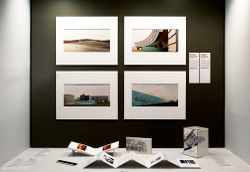
Une exposition de dons à la collection reçus à l’occasion du 80e anniversaire de son directeur fondateur, Phyllis Lambert, Nouvelles entrées comprend des oeuvres originales de photographes et artistes réputés, maniant le langage de la photographie, tels Dieter Appelt, Robert Burley, Edward Burtynsky, Giovanni Chiaramonte, Thomas Florschuetz, John Gossage, Gordon(...)
Une exposition de dons à la collection reçus à l’occasion du 80e anniversaire de son directeur fondateur, Phyllis Lambert, Nouvelles entrées comprend des oeuvres originales de photographes et artistes réputés, maniant le langage de la photographie, tels Dieter Appelt, Robert Burley, Edward Burtynsky, Giovanni Chiaramonte, Thomas Florschuetz, John Gossage, Gordon(...)
Localisation:
Vitrines
Vitrines
Date:
24 janvier 2008 au 23 mars 2008
24 janvier 2008 au 23 mars 2008
Titre:
Nouvelles entrées
Actions:
Description:
Une exposition de dons à la collection reçus à l’occasion du 80e anniversaire de son directeur fondateur, Phyllis Lambert, Nouvelles entrées comprend des oeuvres originales de photographes et artistes réputés, maniant le langage de la photographie, tels Dieter Appelt, Robert Burley, Edward Burtynsky, Giovanni Chiaramonte, Thomas Florschuetz, John Gossage, Gordon(...)
Nouvelles entrées
Actions:
Description:
Une exposition de dons à la collection reçus à l’occasion du 80e anniversaire de son directeur fondateur, Phyllis Lambert, Nouvelles entrées comprend des oeuvres originales de photographes et artistes réputés, maniant le langage de la photographie, tels Dieter Appelt, Robert Burley, Edward Burtynsky, Giovanni Chiaramonte, Thomas Florschuetz, John Gossage, Gordon(...)
Classification:
expositions
expositions
Date:
24 janvier 2008 au
23 mars 2008
24 janvier 2008 au
23 mars 2008
Localisation:
Vitrines
Vitrines
Classification:
archives
Niveau de description archivistique:
Fonds
archives
Niveau de description archivistique:
Fonds
Titre:
Joseph Rykwert fonds
Joseph Rykwert fonds
Numéro de référence:
AP209
Résumé:
The Joseph Rykwert fonds, 1928-2022, documents Joseph Rykwert’s career as an architectural historian, author and professor. The fonds includes the records for over a dozen monographs written between the mid-1960s and the mid-2010s as well as edited works and articles, and details his teaching and lecturing activities from the 1960s onwards in universities in Europe and the United States. The records highlight Joseph Rykwert’s multidisciplinary approach, which involved archaeology, anthropology and psychoanalysis in his study of the history and theory of architecture and of the urban form. The fonds is composed of textual records, publications and ephemera, and of photographs including multiple albums and a large number of slides; the fonds also documents Joseph Rykwert’s career as an independent designer through drawings realized between the late 1940s and the late 1970s.
AP209
Résumé:
The Joseph Rykwert fonds, 1928-2022, documents Joseph Rykwert’s career as an architectural historian, author and professor. The fonds includes the records for over a dozen monographs written between the mid-1960s and the mid-2010s as well as edited works and articles, and details his teaching and lecturing activities from the 1960s onwards in universities in Europe and the United States. The records highlight Joseph Rykwert’s multidisciplinary approach, which involved archaeology, anthropology and psychoanalysis in his study of the history and theory of architecture and of the urban form. The fonds is composed of textual records, publications and ephemera, and of photographs including multiple albums and a large number of slides; the fonds also documents Joseph Rykwert’s career as an independent designer through drawings realized between the late 1940s and the late 1970s.
Personnes et institutions:
Date:
1928-2022
1928-2022
Titre:
Joseph Rykwert fonds
Actions:
AP209
Résumé:
The Joseph Rykwert fonds, 1928-2022, documents Joseph Rykwert’s career as an architectural historian, author and professor. The fonds includes the records for over a dozen monographs written between the mid-1960s and the mid-2010s as well as edited works and articles, and details his teaching and lecturing activities from the 1960s onwards in universities in Europe and the United States. The records highlight Joseph Rykwert’s multidisciplinary approach, which involved archaeology, anthropology and psychoanalysis in his study of the history and theory of architecture and of the urban form. The fonds is composed of textual records, publications and ephemera, and of photographs including multiple albums and a large number of slides; the fonds also documents Joseph Rykwert’s career as an independent designer through drawings realized between the late 1940s and the late 1970s.
Joseph Rykwert fonds
Actions:
AP209
Résumé:
The Joseph Rykwert fonds, 1928-2022, documents Joseph Rykwert’s career as an architectural historian, author and professor. The fonds includes the records for over a dozen monographs written between the mid-1960s and the mid-2010s as well as edited works and articles, and details his teaching and lecturing activities from the 1960s onwards in universities in Europe and the United States. The records highlight Joseph Rykwert’s multidisciplinary approach, which involved archaeology, anthropology and psychoanalysis in his study of the history and theory of architecture and of the urban form. The fonds is composed of textual records, publications and ephemera, and of photographs including multiple albums and a large number of slides; the fonds also documents Joseph Rykwert’s career as an independent designer through drawings realized between the late 1940s and the late 1970s.
Classification:
archives
Niveau de description archivistique:
Fonds
archives
Niveau de description archivistique:
Fonds
Date:
1928-2022
1928-2022
Personnes et institutions:
Niveau de description archivistique:
Projet
Projet
Numéro de référence:
AP207.S1.1971.PR04
Description:
This project series documents Pettena's performance "Vestirsi Di Siede", also know in English as "Wearable Chairs". The performance was carried out between 3 pm and 5 pm on February 12, 1971, in the streets of Minneapolis by ten students of Pettena at the Minneapolis College of Art and Design. The students, each wearing a portable chair harnessed on their back, wandered around the city, either by foot or by bus, and than returned to the college. "In this performance, it was the body that activated and gave meaning to the object: the chair only taking on meaning when carried, otherwise, it became disjointed." [1] The chairs were then put on display at the Minneapolis Institute of Art. A second edition of the performance was also carried out with the students from Nuova Accademia di Belle Arti (NABA) in Milan, 2011, and an installation of the chairs was presented at the exhibition "Un art pauvre" at the Centre Pompidou in 2016. The project series contains photographs of the performance by the students of the Minneapolis College of Art and Design and photographs of the exhibit at the Minneapolis Institute of Art in 1971. It also contains three sketches for the chairs, a drawing of the performance and a statement about the perfomance. The project series also includes photographs of the performance of the NABA students in 2011. Source: [1] FRAC Centre-Val de Loire, http://www.frac-centre.fr/_en/art-and-architecture-collection/pettena-gianni/wearable-chairs-verstirsi-siede-317.html?authID=148&ensembleID=1286 (last accessed 11 November 2019)
AP207.S1.1971.PR04
Description:
This project series documents Pettena's performance "Vestirsi Di Siede", also know in English as "Wearable Chairs". The performance was carried out between 3 pm and 5 pm on February 12, 1971, in the streets of Minneapolis by ten students of Pettena at the Minneapolis College of Art and Design. The students, each wearing a portable chair harnessed on their back, wandered around the city, either by foot or by bus, and than returned to the college. "In this performance, it was the body that activated and gave meaning to the object: the chair only taking on meaning when carried, otherwise, it became disjointed." [1] The chairs were then put on display at the Minneapolis Institute of Art. A second edition of the performance was also carried out with the students from Nuova Accademia di Belle Arti (NABA) in Milan, 2011, and an installation of the chairs was presented at the exhibition "Un art pauvre" at the Centre Pompidou in 2016. The project series contains photographs of the performance by the students of the Minneapolis College of Art and Design and photographs of the exhibit at the Minneapolis Institute of Art in 1971. It also contains three sketches for the chairs, a drawing of the performance and a statement about the perfomance. The project series also includes photographs of the performance of the NABA students in 2011. Source: [1] FRAC Centre-Val de Loire, http://www.frac-centre.fr/_en/art-and-architecture-collection/pettena-gianni/wearable-chairs-verstirsi-siede-317.html?authID=148&ensembleID=1286 (last accessed 11 November 2019)
Personnes et institutions:
Date:
1971-2017
1971-2017
Titre:
Vestirsi Di Siede [Wearable Chairs] (1971)
Actions:
AP207.S1.1971.PR04
Description:
This project series documents Pettena's performance "Vestirsi Di Siede", also know in English as "Wearable Chairs". The performance was carried out between 3 pm and 5 pm on February 12, 1971, in the streets of Minneapolis by ten students of Pettena at the Minneapolis College of Art and Design. The students, each wearing a portable chair harnessed on their back, wandered around the city, either by foot or by bus, and than returned to the college. "In this performance, it was the body that activated and gave meaning to the object: the chair only taking on meaning when carried, otherwise, it became disjointed." [1] The chairs were then put on display at the Minneapolis Institute of Art. A second edition of the performance was also carried out with the students from Nuova Accademia di Belle Arti (NABA) in Milan, 2011, and an installation of the chairs was presented at the exhibition "Un art pauvre" at the Centre Pompidou in 2016. The project series contains photographs of the performance by the students of the Minneapolis College of Art and Design and photographs of the exhibit at the Minneapolis Institute of Art in 1971. It also contains three sketches for the chairs, a drawing of the performance and a statement about the perfomance. The project series also includes photographs of the performance of the NABA students in 2011. Source: [1] FRAC Centre-Val de Loire, http://www.frac-centre.fr/_en/art-and-architecture-collection/pettena-gianni/wearable-chairs-verstirsi-siede-317.html?authID=148&ensembleID=1286 (last accessed 11 November 2019)
Vestirsi Di Siede [Wearable Chairs] (1971)
Actions:
AP207.S1.1971.PR04
Description:
This project series documents Pettena's performance "Vestirsi Di Siede", also know in English as "Wearable Chairs". The performance was carried out between 3 pm and 5 pm on February 12, 1971, in the streets of Minneapolis by ten students of Pettena at the Minneapolis College of Art and Design. The students, each wearing a portable chair harnessed on their back, wandered around the city, either by foot or by bus, and than returned to the college. "In this performance, it was the body that activated and gave meaning to the object: the chair only taking on meaning when carried, otherwise, it became disjointed." [1] The chairs were then put on display at the Minneapolis Institute of Art. A second edition of the performance was also carried out with the students from Nuova Accademia di Belle Arti (NABA) in Milan, 2011, and an installation of the chairs was presented at the exhibition "Un art pauvre" at the Centre Pompidou in 2016. The project series contains photographs of the performance by the students of the Minneapolis College of Art and Design and photographs of the exhibit at the Minneapolis Institute of Art in 1971. It also contains three sketches for the chairs, a drawing of the performance and a statement about the perfomance. The project series also includes photographs of the performance of the NABA students in 2011. Source: [1] FRAC Centre-Val de Loire, http://www.frac-centre.fr/_en/art-and-architecture-collection/pettena-gianni/wearable-chairs-verstirsi-siede-317.html?authID=148&ensembleID=1286 (last accessed 11 November 2019)
Niveau de description archivistique:
Project
Project
Date:
1971-2017
1971-2017
Personnes et institutions:
Classification:
documents textuels
documents textuels
Numéro de référence:
AP075.S3.SS2.150
Description:
This box contains professional correspondence, organized in chronological order, from 1994-2001. This correspondence contains chiefly letters related to participation to exhibitions and publishing in landscape architecture publications, correspondence related to nominations and awards received by Oberlander, requests to serve on juries, correspondence with schools of architecture and landscape architects associations, about membership or attendance to events. It also comprises correspondence related to research and involvement in sustainable development. It also contains correspondence with city planning committees or other governmental institutions related to projects or consultation in landscape design, and letters of reference or received job applications. This box also includes correspondence related to Oberlander's trip to Australia This correspondence also comprises a few letters related to Oberlander's projects, mainly letters of congratulations or comments for her design.
AP075.S3.SS2.150
Description:
This box contains professional correspondence, organized in chronological order, from 1994-2001. This correspondence contains chiefly letters related to participation to exhibitions and publishing in landscape architecture publications, correspondence related to nominations and awards received by Oberlander, requests to serve on juries, correspondence with schools of architecture and landscape architects associations, about membership or attendance to events. It also comprises correspondence related to research and involvement in sustainable development. It also contains correspondence with city planning committees or other governmental institutions related to projects or consultation in landscape design, and letters of reference or received job applications. This box also includes correspondence related to Oberlander's trip to Australia This correspondence also comprises a few letters related to Oberlander's projects, mainly letters of congratulations or comments for her design.
Personnes et institutions:
Date:
1994-2001
1994-2001
Titre:
Professional correspondence from 1994-2001
Actions:
AP075.S3.SS2.150
Description:
This box contains professional correspondence, organized in chronological order, from 1994-2001. This correspondence contains chiefly letters related to participation to exhibitions and publishing in landscape architecture publications, correspondence related to nominations and awards received by Oberlander, requests to serve on juries, correspondence with schools of architecture and landscape architects associations, about membership or attendance to events. It also comprises correspondence related to research and involvement in sustainable development. It also contains correspondence with city planning committees or other governmental institutions related to projects or consultation in landscape design, and letters of reference or received job applications. This box also includes correspondence related to Oberlander's trip to Australia This correspondence also comprises a few letters related to Oberlander's projects, mainly letters of congratulations or comments for her design.
Professional correspondence from 1994-2001
Actions:
AP075.S3.SS2.150
Description:
This box contains professional correspondence, organized in chronological order, from 1994-2001. This correspondence contains chiefly letters related to participation to exhibitions and publishing in landscape architecture publications, correspondence related to nominations and awards received by Oberlander, requests to serve on juries, correspondence with schools of architecture and landscape architects associations, about membership or attendance to events. It also comprises correspondence related to research and involvement in sustainable development. It also contains correspondence with city planning committees or other governmental institutions related to projects or consultation in landscape design, and letters of reference or received job applications. This box also includes correspondence related to Oberlander's trip to Australia This correspondence also comprises a few letters related to Oberlander's projects, mainly letters of congratulations or comments for her design.
Classification:
documents textuels
documents textuels
Date:
1994-2001
1994-2001
Personnes et institutions:
Classification:
événements
événements
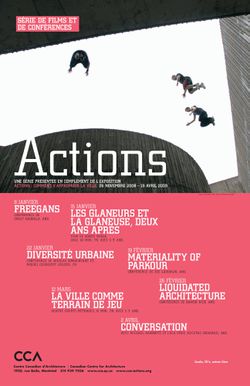
Titre:
Materiality of Parkour
Materiality of Parkour
Actions:
Description:
Zoe Laughlin, ingénieure, artiste et théoricienne, s’exprime sur l’utilisation inédite des bâtiments et du mobilier urbain qu’engendre la pratique du parkour, une activité qui réinterprète le paysage urbain. Ses réflexions portent essentiellement sur la matérialité de la vie quotidienne, sur la manière dont se comporte la matière, sur ses qualités sensorielles, et sur la(...)
Zoe Laughlin, ingénieure, artiste et théoricienne, s’exprime sur l’utilisation inédite des bâtiments et du mobilier urbain qu’engendre la pratique du parkour, une activité qui réinterprète le paysage urbain. Ses réflexions portent essentiellement sur la matérialité de la vie quotidienne, sur la manière dont se comporte la matière, sur ses qualités sensorielles, et sur la(...)
Localisation:
Théâtre Paul-Desmarais
Théâtre Paul-Desmarais
Date:
19 février 2009
19 février 2009
Titre:
Materiality of Parkour
Actions:
Description:
Zoe Laughlin, ingénieure, artiste et théoricienne, s’exprime sur l’utilisation inédite des bâtiments et du mobilier urbain qu’engendre la pratique du parkour, une activité qui réinterprète le paysage urbain. Ses réflexions portent essentiellement sur la matérialité de la vie quotidienne, sur la manière dont se comporte la matière, sur ses qualités sensorielles, et sur la(...)
Materiality of Parkour
Actions:
Description:
Zoe Laughlin, ingénieure, artiste et théoricienne, s’exprime sur l’utilisation inédite des bâtiments et du mobilier urbain qu’engendre la pratique du parkour, une activité qui réinterprète le paysage urbain. Ses réflexions portent essentiellement sur la matérialité de la vie quotidienne, sur la manière dont se comporte la matière, sur ses qualités sensorielles, et sur la(...)
Classification:
événements
événements
Date:
19 février 2009
19 février 2009
Localisation:
Théâtre Paul-Desmarais
Théâtre Paul-Desmarais


