


458 Résultats
Classification:
livres
livres
Actions:
Prix:
$63.95
(disponible sur commande)
Résumé:
In Soviet Salvage, Catherine Walworth explores how artists on the margins of the Constructivist movement of the 1920s rejected “elitist” media and imagined a new world, knitting together avant-garde art, imperial castoffs, and everyday life. Applying anthropological models borrowed from Claude Lévi-Strauss, Walworth shows that his mythmaker typologies—the “engineer”(...)
$63.95
(disponible sur commande)
Résumé:
In Soviet Salvage, Catherine Walworth explores how artists on the margins of the Constructivist movement of the 1920s rejected “elitist” media and imagined a new world, knitting together avant-garde art, imperial castoffs, and everyday life. Applying anthropological models borrowed from Claude Lévi-Strauss, Walworth shows that his mythmaker typologies—the “engineer”(...)
Publication:
septembre 2018
septembre 2018
Titre:
Soviet salvage: Imperial debris, revolutionary reuse, and Russian Constructivism
Actions:
Prix:
$63.95
(disponible sur commande)
Résumé:
In Soviet Salvage, Catherine Walworth explores how artists on the margins of the Constructivist movement of the 1920s rejected “elitist” media and imagined a new world, knitting together avant-garde art, imperial castoffs, and everyday life. Applying anthropological models borrowed from Claude Lévi-Strauss, Walworth shows that his mythmaker typologies—the “engineer” and “bricoleur”—illustrate, respectively, the canonical Constructivists and artists on the movement’s margins who deployed a wide range of clever make-do tactics. Walworth explores the relationships of Nadezhda Lamanova, Esfir Shub, and others with Constructivists such as Aleksei Gan, Varvara Stepanova, and Aleksandr Rodchenko. Together, the work of these artists reflected the chaotic and often contradictory zeitgeist of the decade from 1918 to 1929 and redefined the concept of mass production. Reappropriated fragments of a former enemy era provided a wide range of play and possibility for these artists, and the resulting propaganda porcelain, film, fashion, and architecture tell a broader story of the unique political and economic pressures felt by their makers. An engaging multidisciplinary study of objects and their makers during the Soviet Union’s early years, this volume highlights a group of artists who hover like free radicals at the border of existing art-historical discussions of Constructivism and deepens our knowledge of Soviet art and material culture.
Soviet salvage: Imperial debris, revolutionary reuse, and Russian Constructivism
Actions:
Prix:
$63.95
(disponible sur commande)
Résumé:
In Soviet Salvage, Catherine Walworth explores how artists on the margins of the Constructivist movement of the 1920s rejected “elitist” media and imagined a new world, knitting together avant-garde art, imperial castoffs, and everyday life. Applying anthropological models borrowed from Claude Lévi-Strauss, Walworth shows that his mythmaker typologies—the “engineer” and “bricoleur”—illustrate, respectively, the canonical Constructivists and artists on the movement’s margins who deployed a wide range of clever make-do tactics. Walworth explores the relationships of Nadezhda Lamanova, Esfir Shub, and others with Constructivists such as Aleksei Gan, Varvara Stepanova, and Aleksandr Rodchenko. Together, the work of these artists reflected the chaotic and often contradictory zeitgeist of the decade from 1918 to 1929 and redefined the concept of mass production. Reappropriated fragments of a former enemy era provided a wide range of play and possibility for these artists, and the resulting propaganda porcelain, film, fashion, and architecture tell a broader story of the unique political and economic pressures felt by their makers. An engaging multidisciplinary study of objects and their makers during the Soviet Union’s early years, this volume highlights a group of artists who hover like free radicals at the border of existing art-historical discussions of Constructivism and deepens our knowledge of Soviet art and material culture.
Classification:
livres
livres
Publication:
septembre 2018
septembre 2018
Classification:
livres
livres

Prix:
$18.95
(disponible sur commande)
Résumé:
The fictitious hero of this 1984 installation is a lonely dreamer who develops an impossible project: to fly alone in cosmic space. But this dream is also an individual appropriation of a collective Soviet project and the official Soviet propaganda connected to it. Having built a makeshift slingshot, the hero apparently flies through the ceiling of his shabby room and(...)
$18.95
(disponible sur commande)
Résumé:
The fictitious hero of this 1984 installation is a lonely dreamer who develops an impossible project: to fly alone in cosmic space. But this dream is also an individual appropriation of a collective Soviet project and the official Soviet propaganda connected to it. Having built a makeshift slingshot, the hero apparently flies through the ceiling of his shabby room and(...)
Titre:
Ilka Kabakov: the man who flew into space from his apartment
Actions:
Prix:
$18.95
(disponible sur commande)
Résumé:
The fictitious hero of this 1984 installation is a lonely dreamer who develops an impossible project: to fly alone in cosmic space. But this dream is also an individual appropriation of a collective Soviet project and the official Soviet propaganda connected to it. Having built a makeshift slingshot, the hero apparently flies through the ceiling of his shabby room and vanishes into space. The miserable room and the primitive slingshot suggest the reality behind the Soviet utopia, in which where cosmic vision and the political project of the Communist revolution are seen as indissoluble. The Man who Flew into Space from His Apartment also raises questions of authorship in modernity. All of Kabakov's work is made in the name of other, fictitious artists. This reveals a hidden rule of the modern art system: only an artist who doesn't want to be an artist or who doesn't even know that he is an artist is a real artist—just as only an artwork that does not look like an artwork is a real artwork. The installation is a narrative, the documentation of a fictitious event. Boris Groys is Professor of Philosophy and Art Theory at the Academy for Design in Karlsruhe, Germany, and Global Professor at New York University.
Ilka Kabakov: the man who flew into space from his apartment
Actions:
Prix:
$18.95
(disponible sur commande)
Résumé:
The fictitious hero of this 1984 installation is a lonely dreamer who develops an impossible project: to fly alone in cosmic space. But this dream is also an individual appropriation of a collective Soviet project and the official Soviet propaganda connected to it. Having built a makeshift slingshot, the hero apparently flies through the ceiling of his shabby room and vanishes into space. The miserable room and the primitive slingshot suggest the reality behind the Soviet utopia, in which where cosmic vision and the political project of the Communist revolution are seen as indissoluble. The Man who Flew into Space from His Apartment also raises questions of authorship in modernity. All of Kabakov's work is made in the name of other, fictitious artists. This reveals a hidden rule of the modern art system: only an artist who doesn't want to be an artist or who doesn't even know that he is an artist is a real artist—just as only an artwork that does not look like an artwork is a real artwork. The installation is a narrative, the documentation of a fictitious event. Boris Groys is Professor of Philosophy and Art Theory at the Academy for Design in Karlsruhe, Germany, and Global Professor at New York University.
Classification:
livres
livres
Publication:
mai 2006, London
mai 2006, London
Sujet:
Théorie de l’art
Théorie de l’art
Classification:
livres
livres
Prix:
$44.95
(disponible sur commande)
Résumé:
Our culture is dominated by the visual. Yet most writing on design reflects a narrow preoccupation with products, biographies, and design influences. Maud Lavin approaches design from the broader field of visual culture criticism, asking challenging questions(...)
$44.95
(disponible sur commande)
Résumé:
Our culture is dominated by the visual. Yet most writing on design reflects a narrow preoccupation with products, biographies, and design influences. Maud Lavin approaches design from the broader field of visual culture criticism, asking challenging questions(...)
Titre:
Clean new world: culture, politics, and graphic design
Actions:
Prix:
$44.95
(disponible sur commande)
Résumé:
Our culture is dominated by the visual. Yet most writing on design reflects a narrow preoccupation with products, biographies, and design influences. Maud Lavin approaches design from the broader field of visual culture criticism, asking challenging questions about about who really has a voice in the culture and what unseen influences affect the look of things designers produce. Lavin shows how design fits into larger questions of power, democracy, and communication. Many corporate clients instruct designers to convey order and clarity in order to give their companies the look of a clean new world. But since designers cannot clean up messy reality, Lavin shows, they often end up simply veiling it. Lacking the power to influence the content of their commercial work, many designers work simultaneously on other, more fulfilling projects. Lavin is especially interested in the graphic designer’s role in shaping cultural norms. She examines the anti-Nazi propaganda of John Heartfield, the modernist utopian design of Kurt Schwitters and the neue ring werbegestalter, the alternative images of women by studio ringl + pit, the activist work of such contemporary designers as Marlene McCarty and Sheila Levrant de Bretteville, and the Internet innovations of David Steuer and others. Throughout the book, Lavin asks how designers can expand the pleasure, democracy, and vitality of communication.
Clean new world: culture, politics, and graphic design
Actions:
Prix:
$44.95
(disponible sur commande)
Résumé:
Our culture is dominated by the visual. Yet most writing on design reflects a narrow preoccupation with products, biographies, and design influences. Maud Lavin approaches design from the broader field of visual culture criticism, asking challenging questions about about who really has a voice in the culture and what unseen influences affect the look of things designers produce. Lavin shows how design fits into larger questions of power, democracy, and communication. Many corporate clients instruct designers to convey order and clarity in order to give their companies the look of a clean new world. But since designers cannot clean up messy reality, Lavin shows, they often end up simply veiling it. Lacking the power to influence the content of their commercial work, many designers work simultaneously on other, more fulfilling projects. Lavin is especially interested in the graphic designer’s role in shaping cultural norms. She examines the anti-Nazi propaganda of John Heartfield, the modernist utopian design of Kurt Schwitters and the neue ring werbegestalter, the alternative images of women by studio ringl + pit, the activist work of such contemporary designers as Marlene McCarty and Sheila Levrant de Bretteville, and the Internet innovations of David Steuer and others. Throughout the book, Lavin asks how designers can expand the pleasure, democracy, and vitality of communication.
Classification:
livres
livres
Publication:
mars 2001, Cambridge, Mass.
mars 2001, Cambridge, Mass.
Classification:
livres
livres
Actions:
Prix:
$94.00
(disponible sur commande)
Résumé:
The art of Anselm Kiefer is rich with references to writers, philosophers, and poets, and his relationship with Paul Celan has been the most complex and intense of these dialogues with the past. Celan's poetry, inextricably linked with the memory of the Holocaust, has haunted Kiefer's work for more than twenty-five years and has influenced him on every level, from the(...)
$94.00
(disponible sur commande)
Résumé:
The art of Anselm Kiefer is rich with references to writers, philosophers, and poets, and his relationship with Paul Celan has been the most complex and intense of these dialogues with the past. Celan's poetry, inextricably linked with the memory of the Holocaust, has haunted Kiefer's work for more than twenty-five years and has influenced him on every level, from the(...)
Titre:
Anselm Kiefer, Paul Celan, Myth, Mourning and Memory
Actions:
Prix:
$94.00
(disponible sur commande)
Résumé:
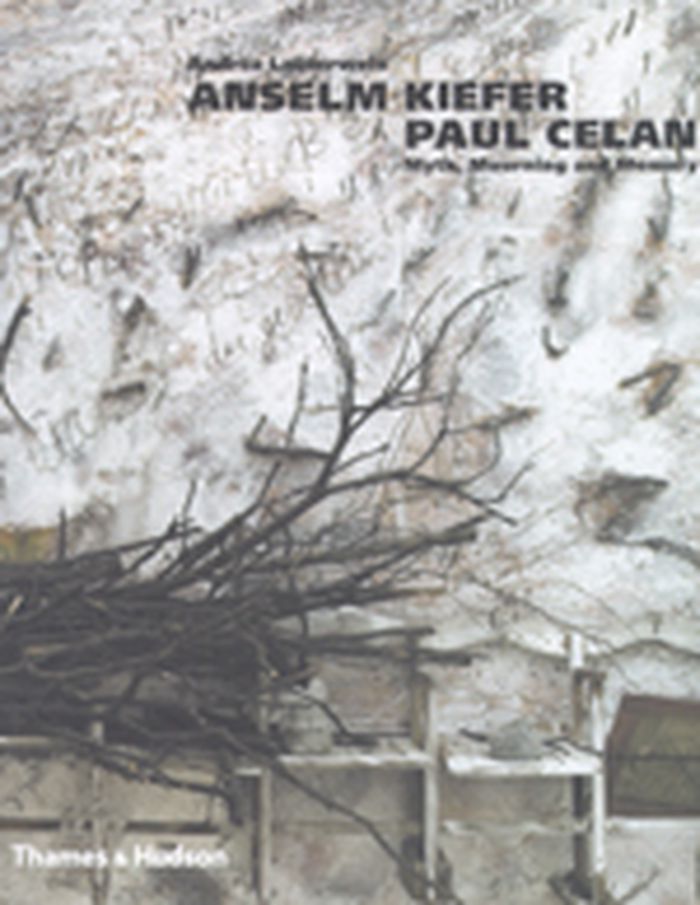
The art of Anselm Kiefer is rich with references to writers, philosophers, and poets, and his relationship with Paul Celan has been the most complex and intense of these dialogues with the past. Celan's poetry, inextricably linked with the memory of the Holocaust, has haunted Kiefer's work for more than twenty-five years and has influenced him on every level, from the naming of works and exhibitions to the incorporation of symbolic materials from Celan's imagery—sand, straw, hair, and ashes—into his paintings. Like other German artists of his generation, Kiefer began by questioning his own artistic heritage, focusing on the iconographic and mythological elements of German culture that had been taken over by Nazi propaganda, and subsequently repressed and buried deep in the collective unconscious. It was his encounter with Celan's work in the early 1980s that first enabled him to escape from the vicious circle of fascination and disgust at the cultural ties that bound him to the Third Reich, leading him to confront the subject of the Holocaust and Jewish memory as a whole and to embrace this body of traditions within his art. Magnificently illustrated throughout with reproductions of Kiefer's best-known works, this book explores the intricate web of associations between the poet and the painter, a network that is extended to embrace other artistic and literary figures such as Ingeborg Bachmann and Joseph Beuys. 157 illustrations, 140 in color.
Anselm Kiefer, Paul Celan, Myth, Mourning and Memory
Actions:
Prix:
$94.00
(disponible sur commande)
Résumé:
The art of Anselm Kiefer is rich with references to writers, philosophers, and poets, and his relationship with Paul Celan has been the most complex and intense of these dialogues with the past. Celan's poetry, inextricably linked with the memory of the Holocaust, has haunted Kiefer's work for more than twenty-five years and has influenced him on every level, from the naming of works and exhibitions to the incorporation of symbolic materials from Celan's imagery—sand, straw, hair, and ashes—into his paintings. Like other German artists of his generation, Kiefer began by questioning his own artistic heritage, focusing on the iconographic and mythological elements of German culture that had been taken over by Nazi propaganda, and subsequently repressed and buried deep in the collective unconscious. It was his encounter with Celan's work in the early 1980s that first enabled him to escape from the vicious circle of fascination and disgust at the cultural ties that bound him to the Third Reich, leading him to confront the subject of the Holocaust and Jewish memory as a whole and to embrace this body of traditions within his art. Magnificently illustrated throughout with reproductions of Kiefer's best-known works, this book explores the intricate web of associations between the poet and the painter, a network that is extended to embrace other artistic and literary figures such as Ingeborg Bachmann and Joseph Beuys. 157 illustrations, 140 in color.
Classification:
livres
livres
Publication:
août 2007, New York
août 2007, New York
Classification:
livres
livres
Actions:
Prix:
$58.95
(disponible sur commande)
Résumé:
Bathing in antiquity elevates a prosaic function to the level of a civic institution for which there is no counterpart in contemporary culture. Enriched by over 500 illustrations, many of them by the author, "Baths and bathing in classical antiquity" is an important sourcebook for this ancient institution. Through hundreds of examples, it reviews and analyzes the(...)
$58.95
(disponible sur commande)
Résumé:
Bathing in antiquity elevates a prosaic function to the level of a civic institution for which there is no counterpart in contemporary culture. Enriched by over 500 illustrations, many of them by the author, "Baths and bathing in classical antiquity" is an important sourcebook for this ancient institution. Through hundreds of examples, it reviews and analyzes the(...)
Titre:
Baths and bathing in classical antiquity
Actions:
Prix:
$58.95
(disponible sur commande)
Résumé:
Bathing in antiquity elevates a prosaic function to the level of a civic institution for which there is no counterpart in contemporary culture. Enriched by over 500 illustrations, many of them by the author, "Baths and bathing in classical antiquity" is an important sourcebook for this ancient institution. Through hundreds of examples, it reviews and analyzes the structure, function, and design of baths, seeking to integrate their architecture with the wider social and cultural custom of bathing, and examining in particular the changes this custom underwent in Late Antiquity and in Byzantine and Islamic cultures. Yegul explores the complexities of ancient bathing from several points of view. Sociologically, the baths with their vast appeal for all levels of society - were seen as the epitome of democratic ideals and institutions. Politically, they provided the perfect vehicle of propaganda : their lavish and magnificent interiors reflected the might and prosperity of the Roman empire and the apparent generosity of the emperor himself. Architecturally, baths are at the vanguard in the development of Roman building technology. Some of the earliest uses of concrete as a building material and the most innovative applications of the aesthetics of concrete - bold, curvilinear forms, vaults, and domes involved bath buildings. Because of their status as transition between purely utilitarian structures and the more conservative, traditional forms of public and religious architecture, the baths helped to propagate and make acceptable new ideas and new styles in architecture.
Baths and bathing in classical antiquity
Actions:
Prix:
$58.95
(disponible sur commande)
Résumé:
Bathing in antiquity elevates a prosaic function to the level of a civic institution for which there is no counterpart in contemporary culture. Enriched by over 500 illustrations, many of them by the author, "Baths and bathing in classical antiquity" is an important sourcebook for this ancient institution. Through hundreds of examples, it reviews and analyzes the structure, function, and design of baths, seeking to integrate their architecture with the wider social and cultural custom of bathing, and examining in particular the changes this custom underwent in Late Antiquity and in Byzantine and Islamic cultures. Yegul explores the complexities of ancient bathing from several points of view. Sociologically, the baths with their vast appeal for all levels of society - were seen as the epitome of democratic ideals and institutions. Politically, they provided the perfect vehicle of propaganda : their lavish and magnificent interiors reflected the might and prosperity of the Roman empire and the apparent generosity of the emperor himself. Architecturally, baths are at the vanguard in the development of Roman building technology. Some of the earliest uses of concrete as a building material and the most innovative applications of the aesthetics of concrete - bold, curvilinear forms, vaults, and domes involved bath buildings. Because of their status as transition between purely utilitarian structures and the more conservative, traditional forms of public and religious architecture, the baths helped to propagate and make acceptable new ideas and new styles in architecture.
Classification:
livres
livres
Publication:
août 1995, Cambridge
août 1995, Cambridge
Classification:
livres
livres

Actions:
Prix:
$29.95
(disponible sur commande)
Résumé:
When Richard Reynolds began planting flowers secretly at night outside his tower block in South London, he had no idea that he was part of a growing global movement committed to combating the forces of neglect, land shortage and apathy towards public spaces. But before long, his blog had attracted other guerrillas from around the world to share their experiences of the(...)
$29.95
(disponible sur commande)
Résumé:
When Richard Reynolds began planting flowers secretly at night outside his tower block in South London, he had no idea that he was part of a growing global movement committed to combating the forces of neglect, land shortage and apathy towards public spaces. But before long, his blog had attracted other guerrillas from around the world to share their experiences of the(...)
Titre:
On guerrilla gardening : a handbook for gardening without boundaries
Actions:
Prix:
$29.95
(disponible sur commande)
Résumé:
When Richard Reynolds began planting flowers secretly at night outside his tower block in South London, he had no idea that he was part of a growing global movement committed to combating the forces of neglect, land shortage and apathy towards public spaces. But before long, his blog had attracted other guerrillas from around the world to share their experiences of the horticultural frontline, and is now a focal point for guerrilla gardeners everywhere, with over 4,000 people enlisted as recruits. "On Guerrilla Gardening" is Reynolds' lively, colourful treatise on why people illicitly cultivate land and how to do it yourself. From discreetly beautifying corners of Montreal to striving for green communal space in Berlin and sustainable food production in San Francisco, from Christmas trees on London roundabouts to the political agitations of landless workers in Brazil, Reynolds charts a battle that people worldwide are fighting on many different fronts. Along the way he unearths the movement's notable historic advances by seventeenth-century English radicals, a nineteenth-century American entrepreneur and public-spirited artists in 1970s New York. Reynolds has researched the subject with guerrilla gardeners from thirty different countries, and compiles their advice on what to grow where, how to cope with adverse environmental conditions, how to seed-bomb effectively, how to harness propaganda to win support and even how to handle anti-terror police. "On Guerrilla Gardening" informs, entertains and inspires. Packed with photographs, anecdotes and sound horticultural advice, it is an irresistible invitation to shoulder your shovel and join the revolution that is blooming in the world's shared spaces.
On guerrilla gardening : a handbook for gardening without boundaries
Actions:
Prix:
$29.95
(disponible sur commande)
Résumé:
When Richard Reynolds began planting flowers secretly at night outside his tower block in South London, he had no idea that he was part of a growing global movement committed to combating the forces of neglect, land shortage and apathy towards public spaces. But before long, his blog had attracted other guerrillas from around the world to share their experiences of the horticultural frontline, and is now a focal point for guerrilla gardeners everywhere, with over 4,000 people enlisted as recruits. "On Guerrilla Gardening" is Reynolds' lively, colourful treatise on why people illicitly cultivate land and how to do it yourself. From discreetly beautifying corners of Montreal to striving for green communal space in Berlin and sustainable food production in San Francisco, from Christmas trees on London roundabouts to the political agitations of landless workers in Brazil, Reynolds charts a battle that people worldwide are fighting on many different fronts. Along the way he unearths the movement's notable historic advances by seventeenth-century English radicals, a nineteenth-century American entrepreneur and public-spirited artists in 1970s New York. Reynolds has researched the subject with guerrilla gardeners from thirty different countries, and compiles their advice on what to grow where, how to cope with adverse environmental conditions, how to seed-bomb effectively, how to harness propaganda to win support and even how to handle anti-terror police. "On Guerrilla Gardening" informs, entertains and inspires. Packed with photographs, anecdotes and sound horticultural advice, it is an irresistible invitation to shoulder your shovel and join the revolution that is blooming in the world's shared spaces.
Classification:
livres
livres
Publication:
mai 2008, London
mai 2008, London
Sujet:
Théorie du paysage
Théorie du paysage
Classification:
livres
livres
Actions:
Prix:
$82.95
(disponible en magasin)
Résumé:
Of all the visual arts, illustration shares a unique relationship with the written word, often serving to visualize, enhance, or respond to a text. "Reading Pictures" presents a global history of this versatile art form, linking its emergence to modern developments such as the illustrated news, recreational reading, and ad-driven consumer culture. From the advent of(...)
$82.95
(disponible en magasin)
Résumé:
Of all the visual arts, illustration shares a unique relationship with the written word, often serving to visualize, enhance, or respond to a text. "Reading Pictures" presents a global history of this versatile art form, linking its emergence to modern developments such as the illustrated news, recreational reading, and ad-driven consumer culture. From the advent of(...)
Titre:
Reading pictures: A history of illustration
Actions:
Prix:
$82.95
(disponible en magasin)
Résumé:
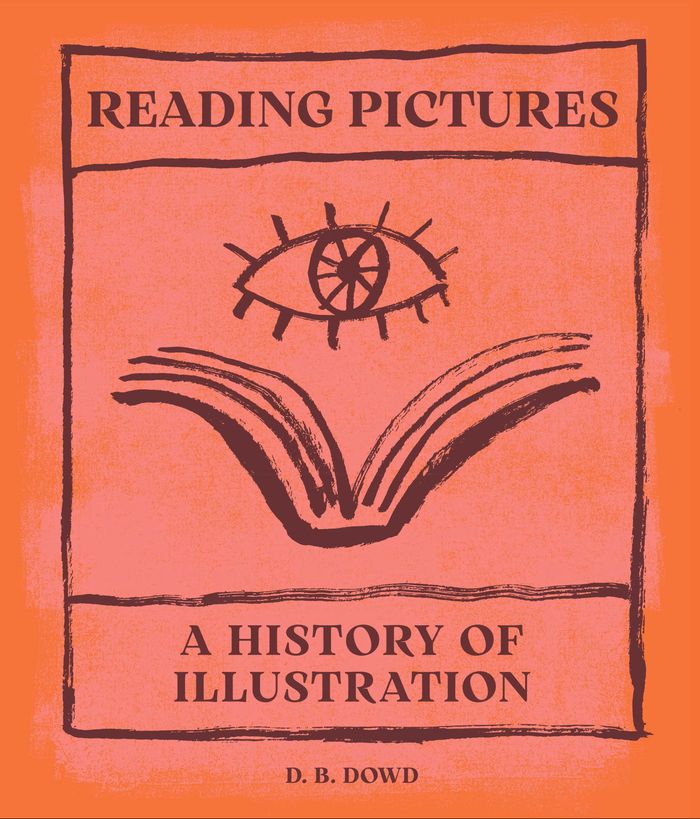
Of all the visual arts, illustration shares a unique relationship with the written word, often serving to visualize, enhance, or respond to a text. "Reading Pictures" presents a global history of this versatile art form, linking its emergence to modern developments such as the illustrated news, recreational reading, and ad-driven consumer culture. From the advent of the printing press in the mid-fifteenth century to the modernist artistic and cultural movements of the nineteenth and twentieth centuries, D. B. Dowd traces the development of illustration as an integral part of the reading experience. He examines the move from ancient scrolls to pamphlets and book forms, and a return to the scroll in electronic form on smartphones and tablets. His story begins with relief prints and woodcuts in ancient China and Japan before moving to printing and platemaking in early modern Europe. Dowd discusses how book and periodical publishing rose sharply with the innovations of wood engraving and lithography, leading to a boom in cultural literacy; and how the illustrated press reached its zenith between the 1860s and 1960s, as printed entertainment and the news of the world became commonplace in every household, bringing with them advertising, propaganda, and consumer culture. Richly illustrated with more than four hundred images spanning the iconic to the unexpected, Reading Pictures reframes the story of illustration within the broader histories of race, gender, literacy, and the transmission of cultural memory. It reveals how reading and looking have become increasingly integrated, and that, as images have become ever more prevalent today with the digital revolution, what is meant by literacy has evolved.
Reading pictures: A history of illustration
Actions:
Prix:
$82.95
(disponible en magasin)
Résumé:
Of all the visual arts, illustration shares a unique relationship with the written word, often serving to visualize, enhance, or respond to a text. "Reading Pictures" presents a global history of this versatile art form, linking its emergence to modern developments such as the illustrated news, recreational reading, and ad-driven consumer culture. From the advent of the printing press in the mid-fifteenth century to the modernist artistic and cultural movements of the nineteenth and twentieth centuries, D. B. Dowd traces the development of illustration as an integral part of the reading experience. He examines the move from ancient scrolls to pamphlets and book forms, and a return to the scroll in electronic form on smartphones and tablets. His story begins with relief prints and woodcuts in ancient China and Japan before moving to printing and platemaking in early modern Europe. Dowd discusses how book and periodical publishing rose sharply with the innovations of wood engraving and lithography, leading to a boom in cultural literacy; and how the illustrated press reached its zenith between the 1860s and 1960s, as printed entertainment and the news of the world became commonplace in every household, bringing with them advertising, propaganda, and consumer culture. Richly illustrated with more than four hundred images spanning the iconic to the unexpected, Reading Pictures reframes the story of illustration within the broader histories of race, gender, literacy, and the transmission of cultural memory. It reveals how reading and looking have become increasingly integrated, and that, as images have become ever more prevalent today with the digital revolution, what is meant by literacy has evolved.
Classification:
livres
livres
Publication:
avril 2026
avril 2026
Sujet:
Illustration
Illustration
Classification:
livres
livres
Actions:
Prix:
$99.95
(disponible sur commande)
Résumé:
While the history of photography is a well-established canon, much less critical attention has been directed at the phenomenon of the photobook, which for many photographers is perhaps the most significant vehicle for the display of their work and the communication of their vision to a mass audience. In the first of two volumes, both co-edited by Martin Parr and Gerry(...)
$99.95
(disponible sur commande)
Résumé:
While the history of photography is a well-established canon, much less critical attention has been directed at the phenomenon of the photobook, which for many photographers is perhaps the most significant vehicle for the display of their work and the communication of their vision to a mass audience. In the first of two volumes, both co-edited by Martin Parr and Gerry(...)
Sujet:
Photographie- collections
Photographie- collections
Publication:
novembre 2004, London
novembre 2004, London
Titre:
The photobook : a history, volume 1
Actions:
Prix:
$99.95
(disponible sur commande)
Résumé:
While the history of photography is a well-established canon, much less critical attention has been directed at the phenomenon of the photobook, which for many photographers is perhaps the most significant vehicle for the display of their work and the communication of their vision to a mass audience. In the first of two volumes, both co-edited by Martin Parr and Gerry Badger, "The Photobook" provides a comprehensive overview of the development of the photobook, from its inception at the dawn of photography in the early nineteenth century through to the radical Japanese photobooks of the 1960s and 70s, by way of the modernist and propaganda books of the 1930s and 40s. In his introduction, Badger argues that the photobook is one of the most significant photographic genres due to the extent of its distribution and level of availability, and contests the traditional notion that the history of photography is best represented by the original print. This study provides an important corrective to the traditional history of photography. The selection of photographers made by Badger and Parr challenges the popular canon, and their survey of the history of the photobook reveals a secret web of influence and interrelationships between photographers and photographic movements around the world. The book is divided into a series of thematic and broadly chronological chapters, each featuring a general introductory text providing background information and highlighting the dominant political and artistic influences on the photobook in the period, followed by more detailed discussion of the individual photobooks. The chapter texts are followed by spreads and images from over 200 books, which provide the central means of telling the history of the photobook. Chosen by Parr and Badger, these illustrations show around 200 of the most artistically and culturally important photobooks in three dimensions, with the cover or jacket and a selection of spreads from the book shown. Volume One also features an illuminating and provocative introduction, ‘The Photobook: Between the Film and the Novel’ by Badger, which is accompanied by a preface written by Parr.
The photobook : a history, volume 1
Actions:
Prix:
$99.95
(disponible sur commande)
Résumé:
While the history of photography is a well-established canon, much less critical attention has been directed at the phenomenon of the photobook, which for many photographers is perhaps the most significant vehicle for the display of their work and the communication of their vision to a mass audience. In the first of two volumes, both co-edited by Martin Parr and Gerry Badger, "The Photobook" provides a comprehensive overview of the development of the photobook, from its inception at the dawn of photography in the early nineteenth century through to the radical Japanese photobooks of the 1960s and 70s, by way of the modernist and propaganda books of the 1930s and 40s. In his introduction, Badger argues that the photobook is one of the most significant photographic genres due to the extent of its distribution and level of availability, and contests the traditional notion that the history of photography is best represented by the original print. This study provides an important corrective to the traditional history of photography. The selection of photographers made by Badger and Parr challenges the popular canon, and their survey of the history of the photobook reveals a secret web of influence and interrelationships between photographers and photographic movements around the world. The book is divided into a series of thematic and broadly chronological chapters, each featuring a general introductory text providing background information and highlighting the dominant political and artistic influences on the photobook in the period, followed by more detailed discussion of the individual photobooks. The chapter texts are followed by spreads and images from over 200 books, which provide the central means of telling the history of the photobook. Chosen by Parr and Badger, these illustrations show around 200 of the most artistically and culturally important photobooks in three dimensions, with the cover or jacket and a selection of spreads from the book shown. Volume One also features an illuminating and provocative introduction, ‘The Photobook: Between the Film and the Novel’ by Badger, which is accompanied by a preface written by Parr.
Classification:
livres
livres
Publication:
novembre 2004, London
novembre 2004, London
Sujet:
Photographie- collections
Photographie- collections


