


479 Résultats
Classification:
livres
livres
Prix:
$81.50
(disponible en magasin)
Résumé:
Do you know how to design for a circular economy? A truly sustainable, circular economy is both a robust and viable option for architecture. Through 24 inspirational case studies, interviews and essays, this book is an accessible and practical guide to how architects can move from a linear economy towards a circular economy. This atlas to sustainable, closed-loop systems(...)
$81.50
(disponible en magasin)
Résumé:
Do you know how to design for a circular economy? A truly sustainable, circular economy is both a robust and viable option for architecture. Through 24 inspirational case studies, interviews and essays, this book is an accessible and practical guide to how architects can move from a linear economy towards a circular economy. This atlas to sustainable, closed-loop systems(...)
Titre:
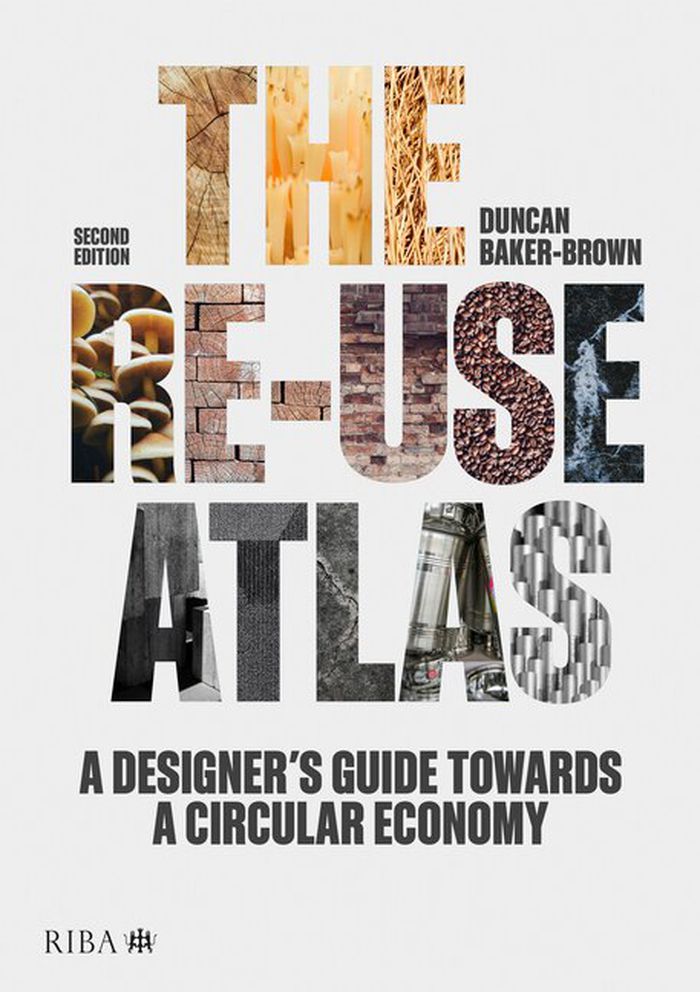
The re-use atlas: A designer's guide towards a circular economy
Actions:
Prix:
$81.50
(disponible en magasin)
Résumé:
Do you know how to design for a circular economy? A truly sustainable, circular economy is both a robust and viable option for architecture. Through 24 inspirational case studies, interviews and essays, this book is an accessible and practical guide to how architects can move from a linear economy towards a circular economy. This atlas to sustainable, closed-loop systems takes the reader on a journey through four distinct steps (Recycle, Reuse, Reduce, Circular Economy) that show how they can dramatically reduce the negative impact humans have on the planet. It gives architects the skills and knowledge to navigate through the emerging fields of resource management towards a true Circular Economy. Each step is supplemented with an in-depth interview with an expert who is successfully tacking one or more of the challenges facing all designers today. If we change our behaviour, we enable humanity to work with nature rather than against it.
The re-use atlas: A designer's guide towards a circular economy
Actions:
Prix:
$81.50
(disponible en magasin)
Résumé:
Do you know how to design for a circular economy? A truly sustainable, circular economy is both a robust and viable option for architecture. Through 24 inspirational case studies, interviews and essays, this book is an accessible and practical guide to how architects can move from a linear economy towards a circular economy. This atlas to sustainable, closed-loop systems takes the reader on a journey through four distinct steps (Recycle, Reuse, Reduce, Circular Economy) that show how they can dramatically reduce the negative impact humans have on the planet. It gives architects the skills and knowledge to navigate through the emerging fields of resource management towards a true Circular Economy. Each step is supplemented with an in-depth interview with an expert who is successfully tacking one or more of the challenges facing all designers today. If we change our behaviour, we enable humanity to work with nature rather than against it.
Classification:
livres
livres
Publication:
novembre 2024
novembre 2024
Sujet:
Architecture écologique
Architecture écologique
Classification:
livres
livres
Actions:
Prix:
$51.00
(disponible sur commande)
Résumé:
In 1965, leading Swiss furniture company USM patented its signature modular furniture system, USM Haller. This flexible storage solution for both home and office was inspired by Fritz Haller’s modular architecture and designed for infinite reuse and reconfiguration. Considered a design classic, USM Haller is included in the collections of major museums including MoMA and(...)
$51.00
(disponible sur commande)
Résumé:
In 1965, leading Swiss furniture company USM patented its signature modular furniture system, USM Haller. This flexible storage solution for both home and office was inspired by Fritz Haller’s modular architecture and designed for infinite reuse and reconfiguration. Considered a design classic, USM Haller is included in the collections of major museums including MoMA and(...)
Titre:
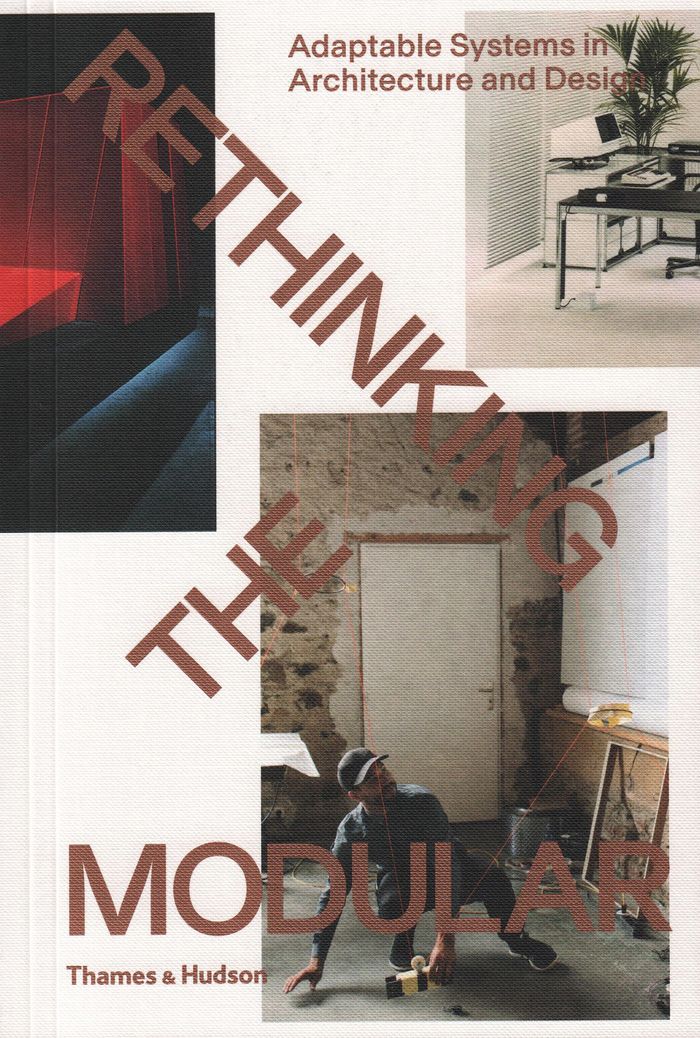
Rethinking the modular: adaptable systems in architecture and design
Actions:
Prix:
$51.00
(disponible sur commande)
Résumé:
In 1965, leading Swiss furniture company USM patented its signature modular furniture system, USM Haller. This flexible storage solution for both home and office was inspired by Fritz Haller’s modular architecture and designed for infinite reuse and reconfiguration. Considered a design classic, USM Haller is included in the collections of major museums including MoMA and the Cooper-Hewitt National Design Museum. Released as part of USM’s fiftieth-anniversary celebration of this iconic furniture design, Rethink the Modular examines the role of unit-based systems in the wider context of architecture and design. It combines previously published writings, specially commissioned essays from thinkers and innovators John Thackara and Rick Poyner, and interviews with leading figures in the design world that explain how the concept of the modular influences their work. Interspersed with visual material, the texts reveal the many possibilities created by balancing structure with flexibility, and seek to redefine the place of modularity in modern design history.
Rethinking the modular: adaptable systems in architecture and design
Actions:
Prix:
$51.00
(disponible sur commande)
Résumé:
In 1965, leading Swiss furniture company USM patented its signature modular furniture system, USM Haller. This flexible storage solution for both home and office was inspired by Fritz Haller’s modular architecture and designed for infinite reuse and reconfiguration. Considered a design classic, USM Haller is included in the collections of major museums including MoMA and the Cooper-Hewitt National Design Museum. Released as part of USM’s fiftieth-anniversary celebration of this iconic furniture design, Rethink the Modular examines the role of unit-based systems in the wider context of architecture and design. It combines previously published writings, specially commissioned essays from thinkers and innovators John Thackara and Rick Poyner, and interviews with leading figures in the design world that explain how the concept of the modular influences their work. Interspersed with visual material, the texts reveal the many possibilities created by balancing structure with flexibility, and seek to redefine the place of modularity in modern design history.
Classification:
livres
livres
Publication:
juillet 2016
juillet 2016
Sujet:
Design industriel
Design industriel
Classification:
livres
livres
Actions:
Prix:
$89.99
(disponible sur commande)
Résumé:
Building Type Basics for Healthcare Facilities, Second Edition is your one-stop reference for the essential information you need to confidently begin the design process and successfully complete a healthcare project, large or small, on time and within budget. Leading architects from across the United States share their firsthand knowledge in order to guide you through all(...)
$89.99
(disponible sur commande)
Résumé:
Building Type Basics for Healthcare Facilities, Second Edition is your one-stop reference for the essential information you need to confidently begin the design process and successfully complete a healthcare project, large or small, on time and within budget. Leading architects from across the United States share their firsthand knowledge in order to guide you through all(...)
Publication:
avril 2007, 2008
avril 2007, 2008
Titre:
Building type basics for healthcare facilities
Actions:
Prix:
$89.99
(disponible sur commande)
Résumé:
Building Type Basics for Healthcare Facilities, Second Edition is your one-stop reference for the essential information you need to confidently begin the design process and successfully complete a healthcare project, large or small, on time and within budget. Leading architects from across the United States share their firsthand knowledge in order to guide you through all aspects of healthcare facility design, with an emphasis on what you need to do to get started quickly. This edition is revised with multiple new healthcare project examples completed this century, more information on engineering requirements, and background on evolving sustainability and technology issues. It begins with an assessment of the healthcare industry's current and future needs, focusing on how those needs affect architecture. Next you get critical information and guidelines that enable you to create successful designs for inpatient, outpatient, and long-term care facilities. Coverage includes clinics, emergency departments, ambulatory care units, specialty centers, as well as facilities designed for adaptive reuse or the assimilation of future technologies.
Building type basics for healthcare facilities
Actions:
Prix:
$89.99
(disponible sur commande)
Résumé:
Building Type Basics for Healthcare Facilities, Second Edition is your one-stop reference for the essential information you need to confidently begin the design process and successfully complete a healthcare project, large or small, on time and within budget. Leading architects from across the United States share their firsthand knowledge in order to guide you through all aspects of healthcare facility design, with an emphasis on what you need to do to get started quickly. This edition is revised with multiple new healthcare project examples completed this century, more information on engineering requirements, and background on evolving sustainability and technology issues. It begins with an assessment of the healthcare industry's current and future needs, focusing on how those needs affect architecture. Next you get critical information and guidelines that enable you to create successful designs for inpatient, outpatient, and long-term care facilities. Coverage includes clinics, emergency departments, ambulatory care units, specialty centers, as well as facilities designed for adaptive reuse or the assimilation of future technologies.
Classification:
livres
livres
Publication:
avril 2007, 2008
avril 2007, 2008
Classification:
livres
livres
Actions:
Prix:
$41.95
(disponible sur commande)
Résumé:
"If it isn't Electric, it isn't Modern." Such was the slogan of the Philadelphia Electric Company, developer of an unprecedented network of massive metropolitan power stations servicing greater Philadelphia at the turn of the twentieth century. These once-brilliant sentinels of civic utility and activity were designed to convey solidity and immensity in an age of deep(...)
$41.95
(disponible sur commande)
Résumé:
"If it isn't Electric, it isn't Modern." Such was the slogan of the Philadelphia Electric Company, developer of an unprecedented network of massive metropolitan power stations servicing greater Philadelphia at the turn of the twentieth century. These once-brilliant sentinels of civic utility and activity were designed to convey solidity and immensity in an age of deep(...)
Sujet:
Structures d’ingénierie
Structures d’ingénierie
Publication:
novembre 2016
novembre 2016
Titre:
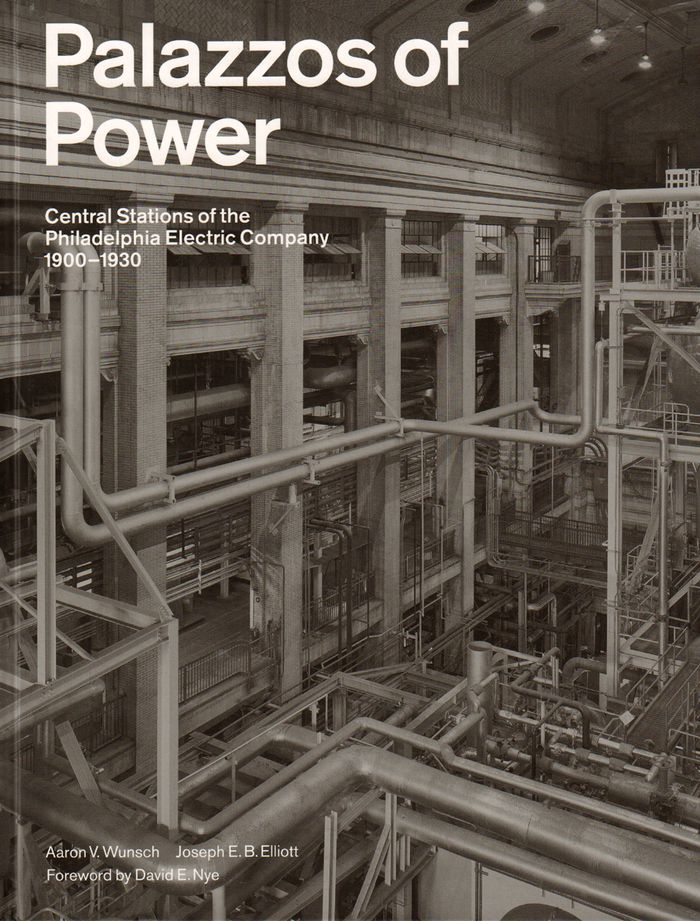
Palazzos of power : central station of the Phalidelphia Electric Company
Actions:
Prix:
$41.95
(disponible sur commande)
Résumé:
"If it isn't Electric, it isn't Modern." Such was the slogan of the Philadelphia Electric Company, developer of an unprecedented network of massive metropolitan power stations servicing greater Philadelphia at the turn of the twentieth century. These once-brilliant sentinels of civic utility and activity were designed to convey solidity and immensity in an age of deep public skepticism. They now stand vacant and decaying, a blight in the eyes of city planners and a beacon to urban explorers.'the first book on the buildings and machines that made possible the electrification of the United States, "Palazzos of power" offers a visual and analytical exploration of architecture, technology, place, loss, and reuse. With a foreword by David Nye, this collection of Joseph Elliott's large-format photographs reveal the urban landscape, monumental spaces, giant machinery, and intricate controls that made up the central station. Aaron Wunsch's essay provides historical context on the social and political climate.
Palazzos of power : central station of the Phalidelphia Electric Company
Actions:
Prix:
$41.95
(disponible sur commande)
Résumé:
"If it isn't Electric, it isn't Modern." Such was the slogan of the Philadelphia Electric Company, developer of an unprecedented network of massive metropolitan power stations servicing greater Philadelphia at the turn of the twentieth century. These once-brilliant sentinels of civic utility and activity were designed to convey solidity and immensity in an age of deep public skepticism. They now stand vacant and decaying, a blight in the eyes of city planners and a beacon to urban explorers.'the first book on the buildings and machines that made possible the electrification of the United States, "Palazzos of power" offers a visual and analytical exploration of architecture, technology, place, loss, and reuse. With a foreword by David Nye, this collection of Joseph Elliott's large-format photographs reveal the urban landscape, monumental spaces, giant machinery, and intricate controls that made up the central station. Aaron Wunsch's essay provides historical context on the social and political climate.
Classification:
livres
livres
Publication:
novembre 2016
novembre 2016
Sujet:
Structures d’ingénierie
Structures d’ingénierie
Classification:
livres
livres
Titre:
Experiment cyclebowl
Experiment cyclebowl
Actions:
Prix:
$66.00
(disponible sur commande)
Résumé:
A pavilion of cycles at Expo in Hanover. An interdisciplinary work involving architecture, scenography, graphics, sound, light, film, drama and an actual tornado, created by Atelier Brückner for the Expo 2000. Dual System Deutschland, a company which is responsible for the reuse and recycling of packaging in Germany commissioned the Stuttgart firm Atelier Brückner to(...)
$66.00
(disponible sur commande)
Résumé:
A pavilion of cycles at Expo in Hanover. An interdisciplinary work involving architecture, scenography, graphics, sound, light, film, drama and an actual tornado, created by Atelier Brückner for the Expo 2000. Dual System Deutschland, a company which is responsible for the reuse and recycling of packaging in Germany commissioned the Stuttgart firm Atelier Brückner to(...)
Publication:
juin 2002, Ludwigsburg
juin 2002, Ludwigsburg
Titre:
Experiment cyclebowl
Actions:
Prix:
$66.00
(disponible sur commande)
Résumé:
A pavilion of cycles at Expo in Hanover. An interdisciplinary work involving architecture, scenography, graphics, sound, light, film, drama and an actual tornado, created by Atelier Brückner for the Expo 2000. Dual System Deutschland, a company which is responsible for the reuse and recycling of packaging in Germany commissioned the Stuttgart firm Atelier Brückner to create a pavilion at the EXPO in Hanover which would reflect the company's vision of combining the product cycle with the environment and use of resources in a responsible way. The journey through this cycle is represented visually through the architecture and staging of the pavilion. Living plants, real objects, information, light and sound are brought together and provide an exciting backdrop for the dramatic highlight - a 25m high tornado which was generated every hour. This book shows primarily creative process leading to the final design and architecture of the Cyclebowl. Enhanced with technical details of the innovative facades, the publication is a fascinating documentation of architecture as a means of conveying ideas.
Experiment cyclebowl
Actions:
Prix:
$66.00
(disponible sur commande)
Résumé:
A pavilion of cycles at Expo in Hanover. An interdisciplinary work involving architecture, scenography, graphics, sound, light, film, drama and an actual tornado, created by Atelier Brückner for the Expo 2000. Dual System Deutschland, a company which is responsible for the reuse and recycling of packaging in Germany commissioned the Stuttgart firm Atelier Brückner to create a pavilion at the EXPO in Hanover which would reflect the company's vision of combining the product cycle with the environment and use of resources in a responsible way. The journey through this cycle is represented visually through the architecture and staging of the pavilion. Living plants, real objects, information, light and sound are brought together and provide an exciting backdrop for the dramatic highlight - a 25m high tornado which was generated every hour. This book shows primarily creative process leading to the final design and architecture of the Cyclebowl. Enhanced with technical details of the innovative facades, the publication is a fascinating documentation of architecture as a means of conveying ideas.
Classification:
livres
livres
Publication:
juin 2002, Ludwigsburg
juin 2002, Ludwigsburg
Classification:
livres
livres
Prix:
$44.50
(disponible sur commande)
Résumé:
In "Archiveology" Catherine Russell uses the work of Walter Benjamin to explore how the practice of archiveology-the reuse, recycling, appropriation, and borrowing of archival sounds and images by filmmakers-provides ways to imagine the past and the future. Noting how the film archive does not function simply as a place where moving images are preserved, Russell examines(...)
$44.50
(disponible sur commande)
Résumé:
In "Archiveology" Catherine Russell uses the work of Walter Benjamin to explore how the practice of archiveology-the reuse, recycling, appropriation, and borrowing of archival sounds and images by filmmakers-provides ways to imagine the past and the future. Noting how the film archive does not function simply as a place where moving images are preserved, Russell examines(...)
Titre:
Archiveology: Walter Benjamin and archival film practices
Actions:
Prix:
$44.50
(disponible sur commande)
Résumé:
In "Archiveology" Catherine Russell uses the work of Walter Benjamin to explore how the practice of archiveology-the reuse, recycling, appropriation, and borrowing of archival sounds and images by filmmakers-provides ways to imagine the past and the future. Noting how the film archive does not function simply as a place where moving images are preserved, Russell examines a range of films alongside Benjamin's conceptions of memory, document, excavation, and historiography. She shows how city films such as Nicole Vedres's Paris 1900 (1947) and Thom Andersen's Los Angeles Plays Itself (2003) reconstruct notions of urban life and uses Christian Marclay's The Clock (2010) to draw parallels between critical cinephilia and Benjamin's theory of the phantasmagoria. Russell also discusses practices of collecting in archiveological film and rereads films by Joseph Cornell and Rania Stephan to explore an archival practice that dislocates and relocates the female image in film. In so doing, she not only shows how Benjamin's work is as relevant to film theory as ever; she shows how archiveology can awaken artists and audiences to critical forms of history and memory.
Archiveology: Walter Benjamin and archival film practices
Actions:
Prix:
$44.50
(disponible sur commande)
Résumé:
In "Archiveology" Catherine Russell uses the work of Walter Benjamin to explore how the practice of archiveology-the reuse, recycling, appropriation, and borrowing of archival sounds and images by filmmakers-provides ways to imagine the past and the future. Noting how the film archive does not function simply as a place where moving images are preserved, Russell examines a range of films alongside Benjamin's conceptions of memory, document, excavation, and historiography. She shows how city films such as Nicole Vedres's Paris 1900 (1947) and Thom Andersen's Los Angeles Plays Itself (2003) reconstruct notions of urban life and uses Christian Marclay's The Clock (2010) to draw parallels between critical cinephilia and Benjamin's theory of the phantasmagoria. Russell also discusses practices of collecting in archiveological film and rereads films by Joseph Cornell and Rania Stephan to explore an archival practice that dislocates and relocates the female image in film. In so doing, she not only shows how Benjamin's work is as relevant to film theory as ever; she shows how archiveology can awaken artists and audiences to critical forms of history and memory.
Classification:
livres
livres
Publication:
mars 2018
mars 2018
Classification:
livres
livres

Prix:
$95.00
(disponible en magasin)
Résumé:
Media coverage of Japanese architecture the past twenty years has largely been dominated by the works of SANAA, Sou Fujimoto, Junya Ishigami and their contemporaries. Their skillfully designed, ethereal white spaces and structures, have proved well suited to being exported in an increasingly visual culture. ''Communal Ecologies'', on the other hand, highlights an(...)
$95.00
(disponible en magasin)
Résumé:
Media coverage of Japanese architecture the past twenty years has largely been dominated by the works of SANAA, Sou Fujimoto, Junya Ishigami and their contemporaries. Their skillfully designed, ethereal white spaces and structures, have proved well suited to being exported in an increasingly visual culture. ''Communal Ecologies'', on the other hand, highlights an(...)
Publication:
décembre 2025
décembre 2025
Titre:
Communal Ecologies: Conversations with Young Japanese Architects
Actions:
Prix:
$95.00
(disponible en magasin)
Résumé:
Media coverage of Japanese architecture the past twenty years has largely been dominated by the works of SANAA, Sou Fujimoto, Junya Ishigami and their contemporaries. Their skillfully designed, ethereal white spaces and structures, have proved well suited to being exported in an increasingly visual culture. ''Communal Ecologies'', on the other hand, highlights an emerging generation of young architects pursuing a very different vision. They strive for an architecture that is rougher, more dynamic, and deeply rooted in social and ecological engagement. With a growing interest in community and network building, and a reevaluation of architecture’s connection to nature, they are developing critical methodologies for practice, and are reimagining the role of the architect in the process. Faced with a lack of opportunities in traditional housing design due to Japan’s economic decline, alongside a heightened awareness of ecological challenges brought on by frequent natural disasters, this generation of architects are crafting innovative strategies to engage with the existing housing stock and address challenges related to sustainability, reuse and transformation.
Communal Ecologies: Conversations with Young Japanese Architects
Actions:
Prix:
$95.00
(disponible en magasin)
Résumé:
Media coverage of Japanese architecture the past twenty years has largely been dominated by the works of SANAA, Sou Fujimoto, Junya Ishigami and their contemporaries. Their skillfully designed, ethereal white spaces and structures, have proved well suited to being exported in an increasingly visual culture. ''Communal Ecologies'', on the other hand, highlights an emerging generation of young architects pursuing a very different vision. They strive for an architecture that is rougher, more dynamic, and deeply rooted in social and ecological engagement. With a growing interest in community and network building, and a reevaluation of architecture’s connection to nature, they are developing critical methodologies for practice, and are reimagining the role of the architect in the process. Faced with a lack of opportunities in traditional housing design due to Japan’s economic decline, alongside a heightened awareness of ecological challenges brought on by frequent natural disasters, this generation of architects are crafting innovative strategies to engage with the existing housing stock and address challenges related to sustainability, reuse and transformation.
Classification:
livres
livres
Publication:
décembre 2025
décembre 2025
Classification:
livres
livres
Actions:
Prix:
$46.00
(disponible sur commande)
Résumé:
Spanning four continents and six countries, this book introduces "new art landscapes" that fuse architecture, the reuse of found structures, environmentalism, and artistic experimentation. Through words and pictures, readers explore six institutions--Olympic Sculpture Park, Seattle, USA; Raketenstation Hombroich, near Neuss, Germany; Benesse Art Site in Naoshima, Japan;(...)
$46.00
(disponible sur commande)
Résumé:
Spanning four continents and six countries, this book introduces "new art landscapes" that fuse architecture, the reuse of found structures, environmentalism, and artistic experimentation. Through words and pictures, readers explore six institutions--Olympic Sculpture Park, Seattle, USA; Raketenstation Hombroich, near Neuss, Germany; Benesse Art Site in Naoshima, Japan;(...)
Titre:
White cube, green maze: new art landscapes
Actions:
Prix:
$46.00
(disponible sur commande)
Résumé:
Spanning four continents and six countries, this book introduces "new art landscapes" that fuse architecture, the reuse of found structures, environmentalism, and artistic experimentation. Through words and pictures, readers explore six institutions--Olympic Sculpture Park, Seattle, USA; Raketenstation Hombroich, near Neuss, Germany; Benesse Art Site in Naoshima, Japan; Inhotim, near Belo Horizonte, Brazil; Jardin Botanico, Culiacan, Mexico; and Grand Traiano Art Complex, Grottaferrata, Italy--dedicated to the experience of culture and nature. Integrating vegetation and non-linear sequences of spaces, the sites offer multiple experiences enticing the visitor to circulate between and within buildings. The sites are depicted with architects' plans and sketches, historical photographs, and maquettes and sketches by key installation artists. Raymund Ryan's essay discusses important historical precedents and considers the defining characteristics of "new art landscapes" through descriptions of each of the projects. Brian O'Doherty offers an artist's critical perspective, while Marc Treib situates the projects in the history of landscape design Architects under consideration include such established masters as Tadao Ando and Alvaro Siza Vieira as well as emerging practices such as Tatiana Bilbao and Johnston Marklee.
White cube, green maze: new art landscapes
Actions:
Prix:
$46.00
(disponible sur commande)
Résumé:
Spanning four continents and six countries, this book introduces "new art landscapes" that fuse architecture, the reuse of found structures, environmentalism, and artistic experimentation. Through words and pictures, readers explore six institutions--Olympic Sculpture Park, Seattle, USA; Raketenstation Hombroich, near Neuss, Germany; Benesse Art Site in Naoshima, Japan; Inhotim, near Belo Horizonte, Brazil; Jardin Botanico, Culiacan, Mexico; and Grand Traiano Art Complex, Grottaferrata, Italy--dedicated to the experience of culture and nature. Integrating vegetation and non-linear sequences of spaces, the sites offer multiple experiences enticing the visitor to circulate between and within buildings. The sites are depicted with architects' plans and sketches, historical photographs, and maquettes and sketches by key installation artists. Raymund Ryan's essay discusses important historical precedents and considers the defining characteristics of "new art landscapes" through descriptions of each of the projects. Brian O'Doherty offers an artist's critical perspective, while Marc Treib situates the projects in the history of landscape design Architects under consideration include such established masters as Tadao Ando and Alvaro Siza Vieira as well as emerging practices such as Tatiana Bilbao and Johnston Marklee.
Classification:
livres
livres
Publication:
septembre 2012
septembre 2012
Sujet:
Jardins
Jardins
Classification:
livres
livres
Actions:
Exemplaires:
Description:
224 pages : illustrations ; 24 cm.
Description:
224 pages : illustrations ; 24 cm.
Auteur:
Sujet:
Publication:
Chichester : Wiley-Academy, 2006.
Chichester : Wiley-Academy, 2006.
Titre:
Blurring the lines / edited by André Chaszar.
Actions:
Exemplaires:
Description:
224 pages : illustrations ; 24 cm.
Blurring the lines / edited by André Chaszar.
Actions:
Exemplaires:
Description:
224 pages : illustrations ; 24 cm.
Classification:
livres
livres
Publication:
Chichester : Wiley-Academy, 2006.
Chichester : Wiley-Academy, 2006.
Auteur:
Sujet:
Classification:
livres
livres
Actions:
Exemplaires:
Description:
31 p., [11] leaves of plates : ill. ; 30 cm.
Description:
31 p., [11] leaves of plates : ill. ; 30 cm.
Auteur:
Sujet:
Publication:
[S.l. : s.n., 1921?] ([Strasbourg?] : Impr. populaire strasbourgeoise)
[S.l. : s.n., 1921?] ([Strasbourg?] : Impr. populaire strasbourgeoise)
Titre:
Glanes sur la cathédrale de Strasbourg / Félix Blumstein ; préface de Rodolphe Reuss.
Actions:
Exemplaires:
Description:
31 p., [11] leaves of plates : ill. ; 30 cm.
Glanes sur la cathédrale de Strasbourg / Félix Blumstein ; préface de Rodolphe Reuss.
Actions:
Exemplaires:
Description:
31 p., [11] leaves of plates : ill. ; 30 cm.
Classification:
livres
livres
Publication:
[S.l. : s.n., 1921?] ([Strasbourg?] : Impr. populaire strasbourgeoise)
[S.l. : s.n., 1921?] ([Strasbourg?] : Impr. populaire strasbourgeoise)
Auteur:
Sujet:


