


458 Résultats
Classification:
livres
livres
Actions:
Prix:
$70.00
(disponible sur commande)
Résumé:
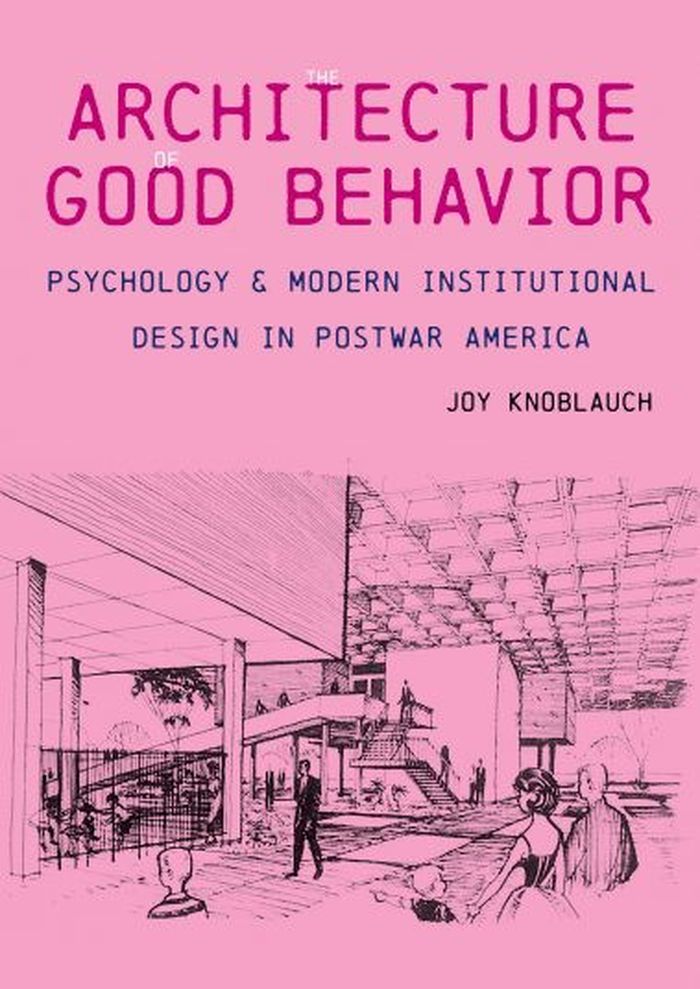
Inspired by the rise of environmental psychology and increasing support for behavioral research after the Second World War, new initiatives at the federal, state, and local levels looked to influence the human psyche through form, or elicit desired behaviors with environmental incentives, implementing what Joy Knoblauch calls 'psychological functionalism.' Recruited by(...)
Titre:
The architecture of good behaviour
Actions:
Prix:
$70.00
(disponible sur commande)
Résumé:
Inspired by the rise of environmental psychology and increasing support for behavioral research after the Second World War, new initiatives at the federal, state, and local levels looked to influence the human psyche through form, or elicit desired behaviors with environmental incentives, implementing what Joy Knoblauch calls 'psychological functionalism.' Recruited by federal construction and research programs for institutional reform and expansion — which included hospitals, mental health centers, prisons, and public housing—architects theorized new ways to control behavior and make it more functional by exercising soft power, or power through persuasion, with their designs. In the 1960s – 1970s era of anti-institutional sentiment, they hoped to offer an enlightened, palatable, more humane solution to larger social problems related to health, mental health, justice, and security of the population by applying psychological expertise to institutional design. In turn, Knoblauch argues, architects gained new roles as researchers, organizers, and writers while theories of confinement, territory, and surveillance proliferated. 'The Architecture of Good Behavior' explores psychological functionalism as a political tool and the architectural projects funded by a postwar nation in its efforts to govern, exert control over, and ultimately pacify its patients, prisoners, and residents.
Classification:
livres
livres
Publication:
juin 2020
juin 2020
Sujet:
Théorie de l’architecture
Théorie de l’architecture
Classification:
livres
livres
Actions:
Prix:
$20.00
(disponible sur commande)
Résumé:
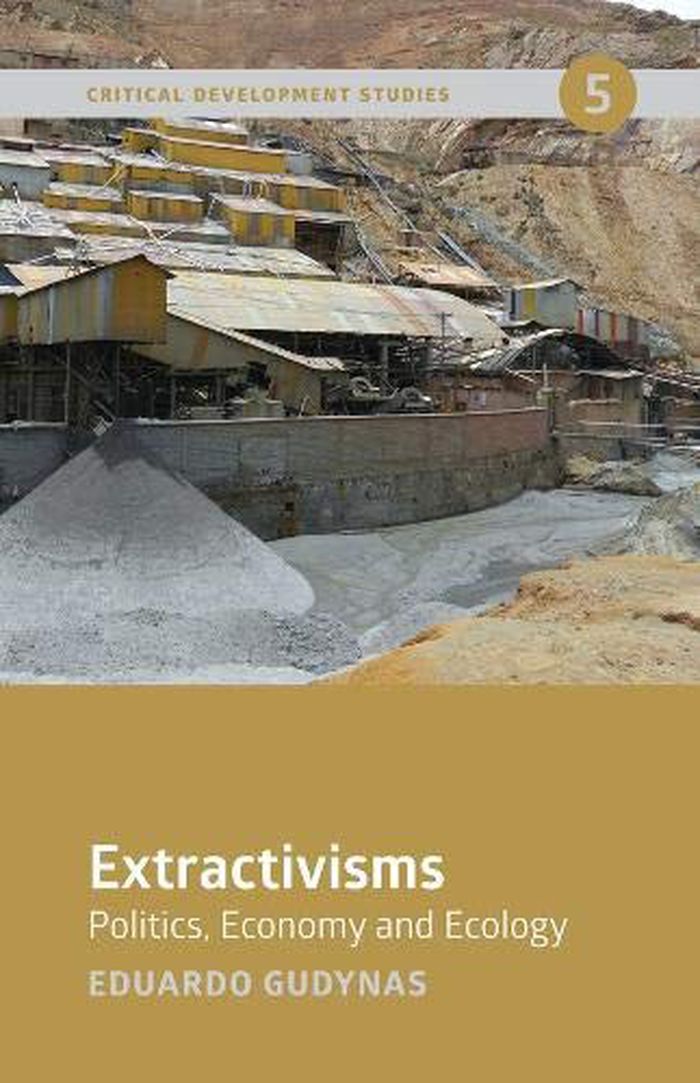
Nature and communities in the global south is being overwhelmed at a shocking rate. In many places this is due to ventures such as large-scale open-pit mining, oil extraction in tropical areas, and the spread of monocultures. These and other such forms of natural resource appropriation are usually known as extractivisms. This introductory book on the one hand adopts an(...)
Publication:
septembre 2021
septembre 2021
Titre:
Extractivisms: politics, economy and ecology
Actions:
Prix:
$20.00
(disponible sur commande)
Résumé:
Nature and communities in the global south is being overwhelmed at a shocking rate. In many places this is due to ventures such as large-scale open-pit mining, oil extraction in tropical areas, and the spread of monocultures. These and other such forms of natural resource appropriation are usually known as extractivisms. This introductory book on the one hand adopts an interdisciplinary and critical perspective, incorporating contributions from economics, politics, ecology, and more. On the other hand it is an exercise in the politics among humans and with the environment. Eduardo Gudnyas explores negative local impacts such as ecological and health degradation or violence, along with spillover effects that redefines democracy and justice. Significantly, presented for the first time in English is a comprehensive overview of the theoretical innovations currently being discussed in the South, such as the distinction between appropriation and production modes and a redefinition of surplus to include social and economic features or new understandings on conflict dynamics. Furthermore, Gudynas discusses the Latin American peculiarities of extractivisms produced both by conservative and new-left governments, making clear that it has very deep roots in culture and ideologies, and offers solutions for the future.
Classification:
livres
livres
Publication:
septembre 2021
septembre 2021
Classification:
livres
livres

Actions:
Prix:
$40.00
(disponible sur commande)
Résumé:
Discard studies is an emerging field that looks at waste and wasting broadly construed. Rather than focusing on waste and trash as the primary objects of study, discard studies looks at wider systems of waste and wasting to explore how some materials, practices, regions, and people are valued or devalued, becoming dominant or disposable. In this book, Max Liboiron and(...)
Publication:
mai 2022
mai 2022
Titre:
Discard studies: Wasting, systems, and power
Actions:
Prix:
$40.00
(disponible sur commande)
Résumé:
Discard studies is an emerging field that looks at waste and wasting broadly construed. Rather than focusing on waste and trash as the primary objects of study, discard studies looks at wider systems of waste and wasting to explore how some materials, practices, regions, and people are valued or devalued, becoming dominant or disposable. In this book, Max Liboiron and Josh Lepawsky argue that social, political, and economic systems maintain power by discarding certain people, places, and things. They show how the theories and methods of discard studies can be applied in a variety of cases, many of which do not involve waste, trash, or pollution. Liboiron and Lepawsky consider the partiality of knowledge and offer a theory of scale, exploring the myth that most waste is municipal solid waste produced by consumers; discuss peripheries, centers, and power, using content moderation as an example of how dominant systems find ways to discard; and use theories of difference to show that universalism, stereotypes, and inclusion all have politics of discard and even purification—as exemplified in ''inclusive'' efforts to broaden the Black Lives Matter movement. Finally, they develop a theory of change by considering ''wasting well,'' outlining techniques, methods, and propositions for a justice-oriented discard studies that keeps power in view.
Classification:
livres
livres
Publication:
mai 2022
mai 2022
Classification:
livres
livres
Prix:
$24.95
(disponible sur commande)
Résumé:
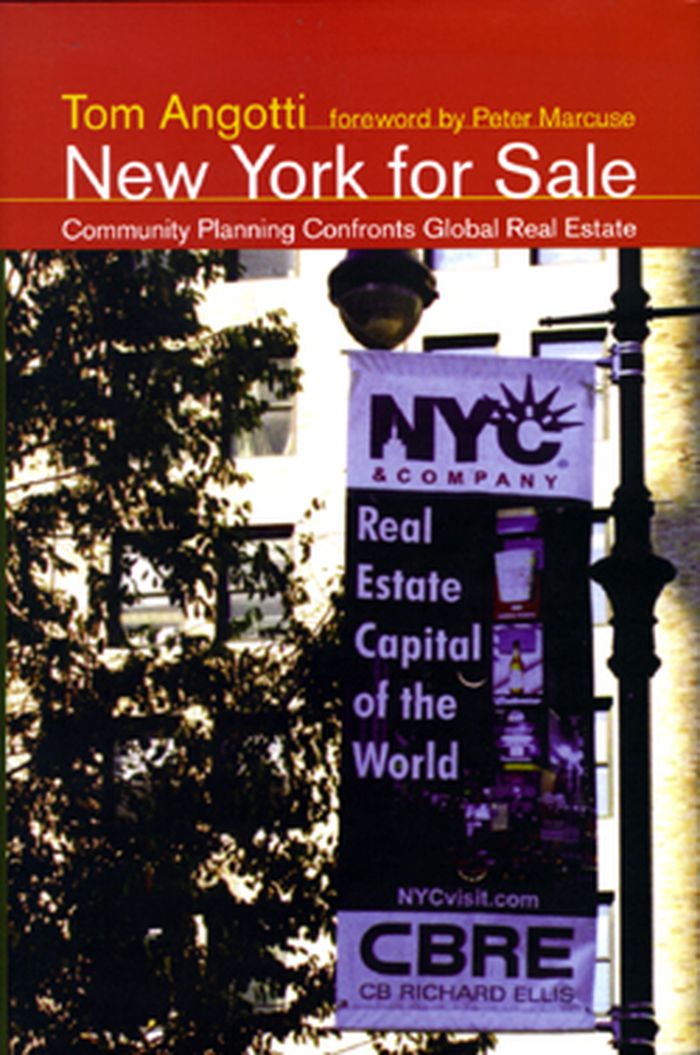
In New York for Sale, Tom Angotti tells some of the stories of community planning in New York City: how activists moved beyond simple protests and began to formulate community plans to protect neighborhoods against urban renewal, real estate mega-projects, gentrification, and environmental hazards. Angotti, both observer of and longtime participant in New York community(...)
Titre:
New York for sale: community planning confronts global real estate
Actions:
Prix:
$24.95
(disponible sur commande)
Résumé:
In New York for Sale, Tom Angotti tells some of the stories of community planning in New York City: how activists moved beyond simple protests and began to formulate community plans to protect neighborhoods against urban renewal, real estate mega-projects, gentrification, and environmental hazards. Angotti, both observer of and longtime participant in New York community planning, focuses on the close relationships among community planning, political strategy, and control over land. After describing the political economy of New York City real estate, its close ties to global financial capital, and the roots of community planning in social movements and community organizing, Angotti turns to specifics. He tells of two pioneering plans forged in reaction to urban renewal plans (including the first community plan in the city, the 1961 Cooper Square Alternate Plan—a response to a Robert Moses urban renewal scheme); struggles for environmental justice, including battles over incinerators, sludge, and garbage; plans officially adopted by the city; and plans dominated by powerful real estate interests. Finally, Angotti proposes strategies for progressive, inclusive community planning not only for New York City but for anywhere that neighborhoods want to protect themselves and their land. New York for Sale teaches the empowering lesson that community plans can challenge market-driven development even in global cities with powerful real estate industries.
Classification:
livres
livres
Publication:
novembre 2008, Cambridge, London
novembre 2008, Cambridge, London
Sujet:
Théorie de l’urbanisme
Théorie de l’urbanisme
Classification:
livres
livres

Titre:
Prisons must fall
Prisons must fall
Actions:
Prix:
$29.50
(disponible sur commande)
Résumé:
From Mariame Kaba, New York Times-bestselling author of "We do this ‘til we free us," and social worker Jane Ball comes a powerful book showing the harm that prisons cause and exploring alternatives, illustrated by Olly Costello. On a moonlit road, tucked away from prying eyes, a child sees a prison complex-- cinder blocks, watch towers, barbed wire. Page by page, we come(...)
Titre:
Prisons must fall
Actions:
Prix:
$29.50
(disponible sur commande)
Résumé:
From Mariame Kaba, New York Times-bestselling author of "We do this ‘til we free us," and social worker Jane Ball comes a powerful book showing the harm that prisons cause and exploring alternatives, illustrated by Olly Costello. On a moonlit road, tucked away from prying eyes, a child sees a prison complex-- cinder blocks, watch towers, barbed wire. Page by page, we come to see the prison as a child sees it. Prisons hurt people and leave them lonely, without loved ones to comfort them or lend a listening ear. As dandelion stars float up in the air, this dreamscape becomes a hope-scape, where love transcends the prison walls. All the families and friends of the people in the prison march and protest in beautiful song, march together to a new way and a new dawn-- in this case a cooperative housing and community center, next to a neighborhood greenhouse for restoration and healing. A new world, where connection and repair are fundamental, and even tangible, as people around a table quilt messages, “I hear you. I’m sorry for what I did. How can I make it better?” In "Prisons must fall," Mariame Kaba, a longtime activist, together with co-author Jane Ball, present solutions that do not involve incarceration, such as meeting people’s basic needs, restorative justice, and community support-- seeds for a safe world.
Classification:
livres
livres
Publication:
avril 2025
avril 2025
Sujet:
Littérature jeunesse
Littérature jeunesse
Classification:
livres
livres

Titre:
Planet of slums
Planet of slums
Actions:
Prix:
$25.00
(disponible sur commande)
Résumé:
Urban theorist Davis takes a global approach to documenting the astonishing depth of squalid poverty that dominates the lives of the planet's increasingly urban population, detailing poor urban communities from Cape Town and Caracas to Casablanca and Khartoum. Davis argues health, justice and social issues associated with gargantuan slums (the largest, in Mexico City, has(...)
Titre:
Planet of slums
Actions:
Prix:
$25.00
(disponible sur commande)
Résumé:
Urban theorist Davis takes a global approach to documenting the astonishing depth of squalid poverty that dominates the lives of the planet's increasingly urban population, detailing poor urban communities from Cape Town and Caracas to Casablanca and Khartoum. Davis argues health, justice and social issues associated with gargantuan slums (the largest, in Mexico City, has an estimated population of 4 million) get overlooked in world politics: "The demonizing rhetorics of the various international 'wars' on terrorism, drugs, and crime are so much semantic apartheid: they construct epistemological walls around gecekondus, favelas, and chawls that disable any honest debate about the daily violence of economic exclusion." Though Davis focuses on individual communities, he presents statistics showing the skyrocketing population and number of "megaslums" (informally, "stinking mountains of shit" or, formally, "when shanty-towns and squatter communities merge in continuous belts of informal housing and poverty, usually on the urban periphery") since the 1960s. Layered over the hard numbers are a fascinating grid of specific area studies and sub-topics ranging from how the Olympics has spurred the forceful relocation of thousands (and, sometimes, hundreds of thousands) of the urban poor, to the conversion of formerly second world countries to third world status. Davis paints a bleak picture of the upward trend in urbanization and maintains a stark outlook for slum-dwellers' futures
Classification:
livres
livres
Publication:
août 2007, London New York
août 2007, London New York
Sujet:
Théorie de l’urbanisme
Théorie de l’urbanisme
Classification:
livres
livres

Actions:
Prix:
$79.95
(disponible sur commande)
Résumé:
Une synthèse inédite de l’art des jardins au XXè siècle. L'humanité a toujours essayé de façonner la nature selon l'idée qu'elle se faisait de la perfection – cette notion évoluant au gré des époques –, oscillant entre le désir de la maîtriser et celui de la laisser libre. Au XXè siècle, l’art des jardins et le paysagisme en France n’ont cessé de soulever à leur manière(...)
Titre:
Le sauvage et le régulier : art des jardins et paysagisme en France au XXè siècle
Actions:
Prix:
$79.95
(disponible sur commande)
Résumé:
Une synthèse inédite de l’art des jardins au XXè siècle. L'humanité a toujours essayé de façonner la nature selon l'idée qu'elle se faisait de la perfection – cette notion évoluant au gré des époques –, oscillant entre le désir de la maîtriser et celui de la laisser libre. Au XXè siècle, l’art des jardins et le paysagisme en France n’ont cessé de soulever à leur manière un débat essentiel, opposant les partisans d’une beauté «libre» et «naturelle», soucieux de préserver la diversité des paysages et des écosystèmes, à ceux d’une beauté soumise à la puissance rationnelle et unificatrice de la technique. Parmi les livres consacrés à l’histoire de l’art des jardins en France, peu nombreux sont ceux qui traitent du Xè siècle. Cet ouvrage richement illustré de Jean-Pierre Le Dantec synthétise ce débat en confrontant le «sauvage» et le «régulier», qui ont marqué la création jardiniste et paysagiste française tout au long du XXè siècle, depuis les conceptions de Jean-Claude-Nicolas Forestier jusqu'à notre époque d'«urbain généralisé», en passant par le jardin art déco ou cubiste de Véra, Moreux, Gévrékian ou Lurçat ou le paysagisme «bocager» de Le Corbusier dans l'entre-deux guerres. De nos jours, le débat se situe entre les défenseurs intransigeants des écosystèmes existants et les partisans de la toute puissance de la technique. Premier à embrasser dans sa totalité cette histoire méconnue, cet ouvrage entend rendre justice à un art réputé mineur en le situant dans son contexte social, politique, économique, culturel et international. À l'heure où la vogue des jardins fait en France un retour étonnant, ce livre propose de multiples axes de réflexion : le jardin ne serait-il pas un miroir de notre société ouverte, urbaine, technologique et démocratique ?
Classification:
livres
livres
Publication:
juin 2002, Paris
juin 2002, Paris
Sujet:
Jardins
Jardins
Classification:
audio
audio
Description:
1 online resource.
Auteur:
Sujet:
Publication:
[Place of publication not identified] : Lateral Addition, 2018.
[Place of publication not identified] : Lateral Addition, 2018.
Titre:
June 21, 2018 : Listening for Southwest Key in San Diego.
Actions:
Description:
1 online resource.
June 21, 2018 : Listening for Southwest Key in San Diego.
Actions:
Description:
1 online resource.
Classification:
audio
audio
Publication:
[Place of publication not identified] : Lateral Addition, 2018.
[Place of publication not identified] : Lateral Addition, 2018.
Auteur:
Sujet:


