


5088 Résultats
Classification:
livres
livres
Actions:
Prix:
$16.00
(disponible sur commande)
Résumé:
George Bernard Shaw once wrote: “If you have an apple and I have an apple and we exchange these apples then you and I will still each have one apple. But if you have an idea and I have an idea and we exchange these ideas, then each of us will have two ideas.” Open Field is the Walker Art Center's ongoing experiment in participation and public space. Taking place outdoors(...)
Titre:
Open fields : conversations on the commons
Actions:
Prix:
$16.00
(disponible sur commande)
Résumé:
George Bernard Shaw once wrote: “If you have an apple and I have an apple and we exchange these apples then you and I will still each have one apple. But if you have an idea and I have an idea and we exchange these ideas, then each of us will have two ideas.” Open Field is the Walker Art Center's ongoing experiment in participation and public space. Taking place outdoors in the summer months, the project invites artists and visitors to imagine and inhabit the museum's campus as a cultural commons - a shared space for idea exchange, creative gatherings and unexpected interactions. In 2010, the Walker's backyard was home to numerous activities from conversations to performances and temporary sculptures. This volume discusses Open Field's genesis, exploring the meaning and impact of public practice for institutions.
Classification:
livres
livres
Publication:
décembre 2011
décembre 2011
Sujet:
Théorie de l’art
Théorie de l’art
Classification:
livres
livres
Prix:
$23.50
(disponible sur commande)
Résumé:
Described as “a continuous carnival” and “the crossroads of the world,” Times Square is a singular phenomenon: the spot where imagination and veracity intersect. To Marshall Berman, it is also the flashing, teeming, and strangely beautiful nexus of his life. In this remarkable book, Berman takes us on a thrilling illustrated tour of Times Square, revealing a landscape(...)
Titre:
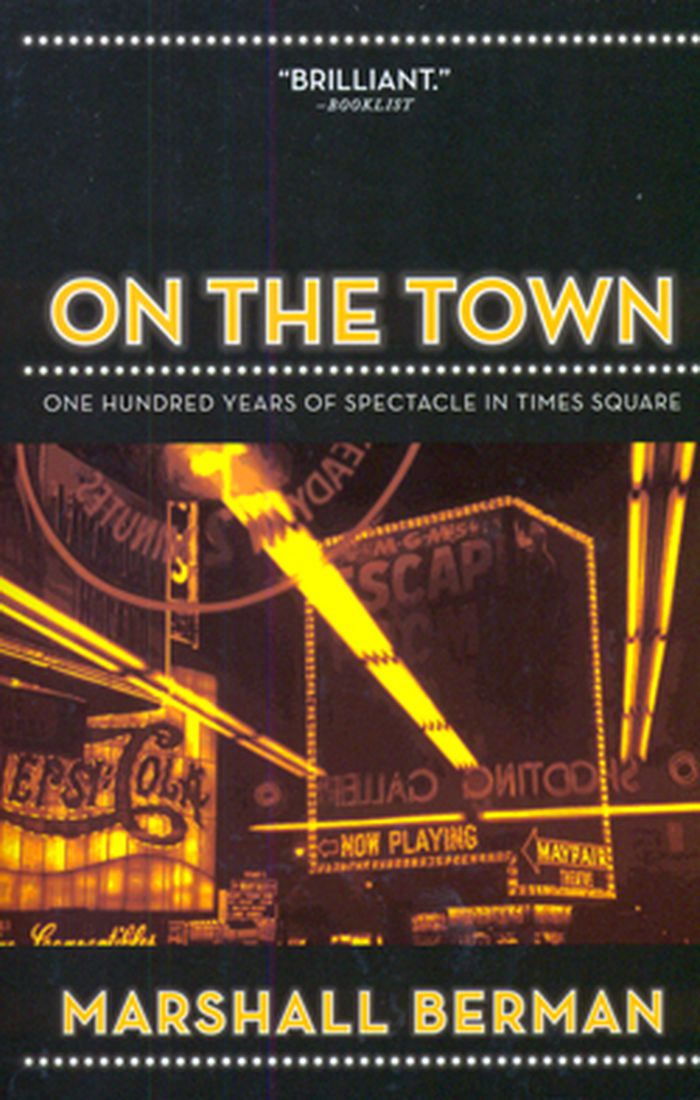
On the town: one hundred years of spectacle in Times Square
Actions:
Prix:
$23.50
(disponible sur commande)
Résumé:
Described as “a continuous carnival” and “the crossroads of the world,” Times Square is a singular phenomenon: the spot where imagination and veracity intersect. To Marshall Berman, it is also the flashing, teeming, and strangely beautiful nexus of his life. In this remarkable book, Berman takes us on a thrilling illustrated tour of Times Square, revealing a landscape both mythic and real. Interleafing his own recollections with social commentary, he reveals how movies, graphic arts, literature, popular music, television, and, of course, the Broadway theater have reflected Times Square’s voluminous light to illuminate a vast spectrum of themes and vignettes. Berman shows how the square’s distinctive aura finds its source in a stunningly diverse list of performers, writers, and impresarios. He also celebrates the unsung heroes—the artists, engineers, and hucksters behind the square’s landmark signs.
Classification:
livres
livres
Publication:
août 2009
août 2009
Classification:
livres
livres

Titre:
In Giacometti's studio
In Giacometti's studio
Actions:
Prix:
$69.95
(disponible sur commande)
Résumé:
This book introduces the reader to the creative chaos of the tiny Parisian studio of the great sculptor Alberto Giacometti, from the moment he and his brother, Diego, arrived in 1927, until Alberto’s death in 1966. Michael Peppiatt relates how the artist first worked there as a member of the Surrealist movement and then how he gradually made his mark on Paris’s artistic,(...)
Titre:
In Giacometti's studio
Actions:
Prix:
$69.95
(disponible sur commande)
Résumé:
This book introduces the reader to the creative chaos of the tiny Parisian studio of the great sculptor Alberto Giacometti, from the moment he and his brother, Diego, arrived in 1927, until Alberto’s death in 1966. Michael Peppiatt relates how the artist first worked there as a member of the Surrealist movement and then how he gradually made his mark on Paris’s artistic, literary, and intellectual worlds. He explains how the studio, now dismantled, seems to be both Giacometti’s most important artwork, encompassing countless complete or unfinished works, and the archive of years of struggle. With Giacometti’s death, it became his greatest achievement, containing as it did the traces of a lifetime’s search for truth. This exploration of one of the most influential spaces in 20th-century art connects us with both a unique career and an entire, outstanding moment in French culture.
Classification:
livres
livres
Publication:
novembre 2010
novembre 2010
Classification:
livres
livres

Actions:
Prix:
$91.95
(disponible sur commande)
Résumé:
The Transported of KwaNdebele is the second of David Goldblatt’s books re-designed and expanded by the artist for Steidl Publishers. Dating originally from 1989, it talks about the workers of an apartheid tribal homeland for blacks, KwaNdebele, which has no industry, very few opportunities for jobs, and is a long way from the nearest industrial-commercial activity of(...)
Titre:
The transported of KwaNdebele
Actions:
Prix:
$91.95
(disponible sur commande)
Résumé:
The Transported of KwaNdebele is the second of David Goldblatt’s books re-designed and expanded by the artist for Steidl Publishers. Dating originally from 1989, it talks about the workers of an apartheid tribal homeland for blacks, KwaNdebele, which has no industry, very few opportunities for jobs, and is a long way from the nearest industrial-commercial activity of white-controlled Pretoria. Workers from KwaNdebele catch buses in the very early morning, some as early as 2:45 am, in order to be at their workplaces in Pretoria by 7:00. At the end of the day they repeat the journey in the other direction, to get home at between 8 and 10 pm. Goldblatt takes us on their bone-jarring journeys through the night, which is a metaphor for their arduous struggle toward freedom itself.
Classification:
livres
livres
Publication:
janvier 2013
janvier 2013
Sujet:
Monographies photo
Monographies photo
Classification:
livres
livres

Titre:
Mona Hatoum
Mona Hatoum
Actions:
Prix:
$55.00
(disponible sur commande)
Résumé:
Mona Hatoum (born 1952) has established herself as a truly transnational artist: born in Beirut, and working in Berlin and London, her multimedia work explores the dangers inherent to the borderlines between nation and body. This multi-authored and richly illustrated publication reveals all of the different facets of the artist's career, from her overtly political(...)
Titre:
Mona Hatoum
Actions:
Prix:
$55.00
(disponible sur commande)
Résumé:
Mona Hatoum (born 1952) has established herself as a truly transnational artist: born in Beirut, and working in Berlin and London, her multimedia work explores the dangers inherent to the borderlines between nation and body. This multi-authored and richly illustrated publication reveals all of the different facets of the artist's career, from her overtly political performances of the 1980s to her later installations, photographs, sculptures and videos that examine the human body as a metaphor for oppression in a broader sense. Hatoum's unusual blend of Surrealism and Minimalism both seduces and repels: her endoscopic videos of her organs, blood-red lights, the crackling electricity of wired furniture and glowing globes, a variety of cages and the murderous possibilities of kitchen utensils present us with an alienating intimacy that questions our relationship to our bodies and to the world.
Classification:
livres
livres
Publication:
mars 2012
mars 2012
Classification:
livres
livres
Actions:
Prix:
$20.00
(disponible sur commande)
Résumé:
In the 1920s, the urban theory of Ludwig Hilberseimer (1885–1967) redefined architecture’s relationship to the city. His proposal for a high-rise city, where leisure, labor and circulation would be vertically integrated, both frightened his contemporaries and offered a trenchant critique of the dynamics of the capitalist metropolis. Hilberseimer’s Groszstadt-architektur(...)
Titre:
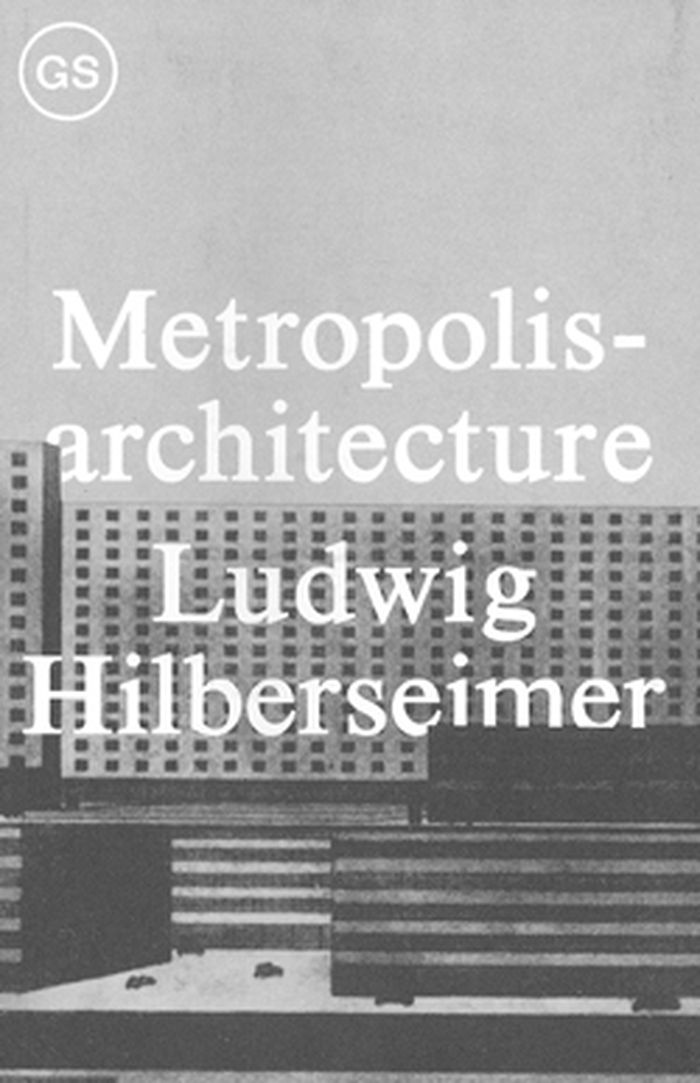
Metropolisarchitecture and selected essays
Actions:
Prix:
$20.00
(disponible sur commande)
Résumé:
In the 1920s, the urban theory of Ludwig Hilberseimer (1885–1967) redefined architecture’s relationship to the city. His proposal for a high-rise city, where leisure, labor and circulation would be vertically integrated, both frightened his contemporaries and offered a trenchant critique of the dynamics of the capitalist metropolis. Hilberseimer’s Groszstadt-architektur (Metropolisarchitecture) is presented here for the first time in English translation. Two additional essays frame this international cross-section of metropolitan architecture: “Der Wille zur Architektur” (The Will to Architecture) and “Vorschlag zur City-Bebauung” (Proposal for City-Building). The propositions assembled here encourage us to reconsider mobility, concentration and the scale of architectural intervention in our own era of urban expansion. This is the second title in the GSAPP Sourcebooks series, devoted to recovering and translating overlooked texts on architecture and the city.
Classification:
livres
livres
Publication:
octobre 2012
octobre 2012
Sujet:
Théorie de l’architecture
Théorie de l’architecture
Classification:
livres
livres
Titre:
Haim Steinbach : travel
Haim Steinbach : travel
Actions:
Prix:
$40.00
(disponible sur commande)
Résumé:
Haim Steinbach is interested in the shared social ritual of collecting, arranging and presenting everyday objects and materials, an experience that extends to us all, whether in the way we arrange our homes or the way we select and wear our clothes. Travel explores Steinbach's recent exhibition at White Cube Mason's Yard, London and is comprised of two new series of works(...)
Titre:
Haim Steinbach : travel
Actions:
Prix:
$40.00
(disponible sur commande)
Résumé:
Haim Steinbach is interested in the shared social ritual of collecting, arranging and presenting everyday objects and materials, an experience that extends to us all, whether in the way we arrange our homes or the way we select and wear our clothes. Travel explores Steinbach's recent exhibition at White Cube Mason's Yard, London and is comprised of two new series of works that trace a trajectory in the artist's practice that stretches from the 1970s to today. In 1976, Steinbach produced a series of works based on grid-like geometric patterns created with strips of linoleum flooring. The Linopanel works evoke a pivotal moment in Steinbach's career, when he abandoned his investigation into minimalist painting and began to work with found objects. Jenny Jaskey's text explores Steinbach's interest in collecting and the methodologies of display forms.
Classification:
livres
livres
Publication:
août 2014
août 2014
Classification:
livres
livres
Actions:
Prix:
$49.95
(disponible en magasin)
Résumé:
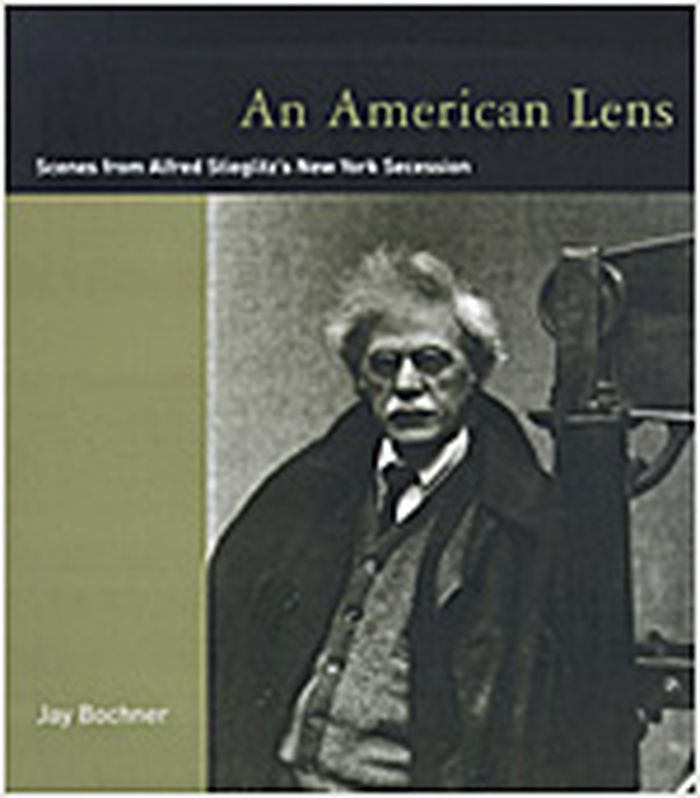
In "An American lens", Jay Bochner looks at a series of milestones in the development of the American avant-garde that capture a pivotal period in artistic consciousness. He focuses on the multiple roles of Alfred Stieglitz-as influential gallery owner, photographer, and impresario of the emerging art scene-at a series of significant moments in his career. These close-ups(...)
Titre:
An American lens : scenes from Alfred Stieglitz's New York Secession
Actions:
Prix:
$49.95
(disponible en magasin)
Résumé:
In "An American lens", Jay Bochner looks at a series of milestones in the development of the American avant-garde that capture a pivotal period in artistic consciousness. He focuses on the multiple roles of Alfred Stieglitz-as influential gallery owner, photographer, and impresario of the emerging art scene-at a series of significant moments in his career. These close-ups offer a more intense and expanded understanding of the subject than the familiar long view. Bochner uses these scenes to recreate for today's readers the birth of modernism in America-what it was like to be an audience for the art of the early avant-garde. Moving from frame to frame, he shows us, for example, a single photograph by Stieglitz of a snowy night in 1893 and a short description by Stephen Crane of just such a snowfall; the preparation, the reception, and the aftermath of the famous Armory Show of modern art in 1913; Gertrude Stein's portraits in prose; New York at the dawn of Dada, with Paul Strand, Francis Picabia, and others; and the intersecting paths of Mina Loy, William Carlos Williams, and Marcel Duchamp in 1917. Bochner also examines Stieglitz's three great photographic series: his photographs of Georgia O'Keeffe, of clouds, and of skyscrapers. These sections of the book include many Stieglitz photos, including some rarely seen portraits of O'Keeffe. Stieglitz as impresario and artist achieved an almost mythical status, which some recent critics have worked to deflate-casting him, for example, as Svengali to Georgia O'Keeffe's spellbound Trilby. Engaging in neither idolatry nor demolition, Bochner looks instead for the truth about the man and the myth. The scenes from American art in "An American lens" create a new version of Stieglitz's biography, allowing us to reread his life and the life of his times by focusing intently on what is visible and not so visible in the art he left behind.
Classification:
livres
livres
Publication:
octobre 2005, Cambridge, London
octobre 2005, Cambridge, London
Sujet:
Monographies photo
Monographies photo
Classification:
livres
livres

Actions:
Prix:
$72.50
(disponible sur commande)
Résumé:
"Temporary discomfort" documents Davos, Genoa, New York and Evian/Geneva in a transitory state of emergency lock-down during the global economic summits (2001–2003). It combines different photographical genres: landscape photography, photojournalism and police photography, though here with the camera lens turned back at the security forces. But instead of street fighting(...)
Titre:
Temporary discomfort chapter I-V
Actions:
Prix:
$72.50
(disponible sur commande)
Résumé:
"Temporary discomfort" documents Davos, Genoa, New York and Evian/Geneva in a transitory state of emergency lock-down during the global economic summits (2001–2003). It combines different photographical genres: landscape photography, photojournalism and police photography, though here with the camera lens turned back at the security forces. But instead of street fighting and handshakes, Jules Spinatsch shows winter nights in Davos, complete with floodlighted barbedwire labyrinths. He shows Genova, a fortress empty as the Mediterranean noonday sky. We see freight containers, symbols for world trade, that are used as barricades against its foes. He invites us to scrutinize the streets in New York at night: road blocks, tents, and mobile transmission units: that seem surreally empty. He photographs the sleepy waking of the security guards. Spinatsch examines the waiting for the big event that appears as meticulously planned, down to the last detail.
Classification:
livres
livres
Publication:
octobre 2005, Zürich
octobre 2005, Zürich
Sujet:
Monographies photo
Monographies photo
Classification:
livres
livres

Titre:
Becoming an artwork
Becoming an artwork
Actions:
Prix:
$15.95
(disponible sur commande)
Résumé:
For some time, artists and intellectuals struggled for the sovereign right to present themselves to society in their own way – to become self-created works of art. Today everybody has not only a right but also an obligation to practice self-design. We are responsible for the way we present ourselves to others – and we cannot get rid of this aesthetic responsibility.(...)
Titre:
Becoming an artwork
Actions:
Prix:
$15.95
(disponible sur commande)
Résumé:
For some time, artists and intellectuals struggled for the sovereign right to present themselves to society in their own way – to become self-created works of art. Today everybody has not only a right but also an obligation to practice self-design. We are responsible for the way we present ourselves to others – and we cannot get rid of this aesthetic responsibility. However, we are not able to produce our own bodies. Before we begin to practice self-design, we find ourselves already designed by the gaze of others. That is why the practice of self-design mostly takes a critical and confrontational turn. We want to bring others to see us in the way we want to be seen – not only during our earthly life but also after our death. This is a complicated struggle, and the aim of this book is to describe and analyze it.
Classification:
livres
livres
Publication:
décembre 2022
décembre 2022
Sujet:
Théorie de l’art
Théorie de l’art


