


5538 Résultats
Niveau de description archivistique:
Série(s)
Série(s)
Numéro de référence:
AP162.S8
Description:
Series documents the contribution of architect Bruno Taut to the correspondence circle of Die gläserne Kette. Bruno Taut participated under the pseudonym Glas. Born in 1880 in Königsberg, Germany, Bruno Taut studied architecture at the Bauwerkschule in Königsberg. After working in architectural firms from 1903 to 1909, he worked in partnership with Franz Hoffman and later with his brother Max Taut. Bruno Taut undertook various architectural projects including housing projects, public commissions, and later projects for universities and schools. In 1918, he founded the Arbeisrat für Kunst, a union of architects, painters, writers and other artists based in Berlin and dedicated to bring architectural and artisit tendencies of the time to a broader public. This union also involved some members of the Die gläserne Kette circle. Between 1920 and 1921, Bruno Taut was editor to the magazine "Frühlich". He taught architecture at the Technische Hochschule at Berlin-Charlottenburg from 1930 to 1932, and undertook a working visit in Russia in 1932 to 1933. After spending time in Japan between 1933 and 1936 due to enforced emigration, he taught at the Academy of Arts in Istanbul. He died in Istanbul in 1938. (Source: Ian Boyd Whyte, Bruno Taut and the Architecture of Activism. Cambridge: Cambridge University Press, 1982) This series comprises part of Bruno Taut's correspondence to the Die gläserne Kette circle, along with related drawings and documents. The series also includes photographic materials of some of his architectural projects.
AP162.S8
Description:
Series documents the contribution of architect Bruno Taut to the correspondence circle of Die gläserne Kette. Bruno Taut participated under the pseudonym Glas. Born in 1880 in Königsberg, Germany, Bruno Taut studied architecture at the Bauwerkschule in Königsberg. After working in architectural firms from 1903 to 1909, he worked in partnership with Franz Hoffman and later with his brother Max Taut. Bruno Taut undertook various architectural projects including housing projects, public commissions, and later projects for universities and schools. In 1918, he founded the Arbeisrat für Kunst, a union of architects, painters, writers and other artists based in Berlin and dedicated to bring architectural and artisit tendencies of the time to a broader public. This union also involved some members of the Die gläserne Kette circle. Between 1920 and 1921, Bruno Taut was editor to the magazine "Frühlich". He taught architecture at the Technische Hochschule at Berlin-Charlottenburg from 1930 to 1932, and undertook a working visit in Russia in 1932 to 1933. After spending time in Japan between 1933 and 1936 due to enforced emigration, he taught at the Academy of Arts in Istanbul. He died in Istanbul in 1938. (Source: Ian Boyd Whyte, Bruno Taut and the Architecture of Activism. Cambridge: Cambridge University Press, 1982) This series comprises part of Bruno Taut's correspondence to the Die gläserne Kette circle, along with related drawings and documents. The series also includes photographic materials of some of his architectural projects.
Personnes et institutions:
Date:
between 1919 and 1920
between 1919 and 1920
Titre:
Bruno Taut
Actions:
AP162.S8
Description:
Series documents the contribution of architect Bruno Taut to the correspondence circle of Die gläserne Kette. Bruno Taut participated under the pseudonym Glas. Born in 1880 in Königsberg, Germany, Bruno Taut studied architecture at the Bauwerkschule in Königsberg. After working in architectural firms from 1903 to 1909, he worked in partnership with Franz Hoffman and later with his brother Max Taut. Bruno Taut undertook various architectural projects including housing projects, public commissions, and later projects for universities and schools. In 1918, he founded the Arbeisrat für Kunst, a union of architects, painters, writers and other artists based in Berlin and dedicated to bring architectural and artisit tendencies of the time to a broader public. This union also involved some members of the Die gläserne Kette circle. Between 1920 and 1921, Bruno Taut was editor to the magazine "Frühlich". He taught architecture at the Technische Hochschule at Berlin-Charlottenburg from 1930 to 1932, and undertook a working visit in Russia in 1932 to 1933. After spending time in Japan between 1933 and 1936 due to enforced emigration, he taught at the Academy of Arts in Istanbul. He died in Istanbul in 1938. (Source: Ian Boyd Whyte, Bruno Taut and the Architecture of Activism. Cambridge: Cambridge University Press, 1982) This series comprises part of Bruno Taut's correspondence to the Die gläserne Kette circle, along with related drawings and documents. The series also includes photographic materials of some of his architectural projects.
Bruno Taut
Actions:
AP162.S8
Description:
Series documents the contribution of architect Bruno Taut to the correspondence circle of Die gläserne Kette. Bruno Taut participated under the pseudonym Glas. Born in 1880 in Königsberg, Germany, Bruno Taut studied architecture at the Bauwerkschule in Königsberg. After working in architectural firms from 1903 to 1909, he worked in partnership with Franz Hoffman and later with his brother Max Taut. Bruno Taut undertook various architectural projects including housing projects, public commissions, and later projects for universities and schools. In 1918, he founded the Arbeisrat für Kunst, a union of architects, painters, writers and other artists based in Berlin and dedicated to bring architectural and artisit tendencies of the time to a broader public. This union also involved some members of the Die gläserne Kette circle. Between 1920 and 1921, Bruno Taut was editor to the magazine "Frühlich". He taught architecture at the Technische Hochschule at Berlin-Charlottenburg from 1930 to 1932, and undertook a working visit in Russia in 1932 to 1933. After spending time in Japan between 1933 and 1936 due to enforced emigration, he taught at the Academy of Arts in Istanbul. He died in Istanbul in 1938. (Source: Ian Boyd Whyte, Bruno Taut and the Architecture of Activism. Cambridge: Cambridge University Press, 1982) This series comprises part of Bruno Taut's correspondence to the Die gläserne Kette circle, along with related drawings and documents. The series also includes photographic materials of some of his architectural projects.
Niveau de description archivistique:
series
series
Date:
between 1919 and 1920
between 1919 and 1920
Personnes et institutions:
Classification:
événements
événements
Actions:
Description:
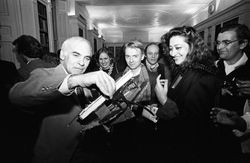
Le chercheur en résidence Irene Sunwoo présente sa recherche : Dans les années 1970 et 1980, l’Architectural Association (AA) à Londres a mis à l’essai un modèle d’éducation architecturale « du marché », appuyant un éventail d’études théoriques. Explorant des questions concernant entre autres la politique, la phénoménologie, la sémiotique, la durabilité, la littérature(...)
Le chercheur en résidence Irene Sunwoo présente sa recherche : Dans les années 1970 et 1980, l’Architectural Association (AA) à Londres a mis à l’essai un modèle d’éducation architecturale « du marché », appuyant un éventail d’études théoriques. Explorant des questions concernant entre autres la politique, la phénoménologie, la sémiotique, la durabilité, la littérature(...)
Localisation:
Maison Shaughnessy
Maison Shaughnessy
Date:
27 juillet 2017, 18h
27 juillet 2017, 18h
Titre:
Séminaire de chercheur en résidence : Irene Sunwoo
Actions:
Description:
Le chercheur en résidence Irene Sunwoo présente sa recherche : Dans les années 1970 et 1980, l’Architectural Association (AA) à Londres a mis à l’essai un modèle d’éducation architecturale « du marché », appuyant un éventail d’études théoriques. Explorant des questions concernant entre autres la politique, la phénoménologie, la sémiotique, la durabilité, la littérature(...)
Séminaire de chercheur en résidence : Irene Sunwoo
Actions:
Description:
Le chercheur en résidence Irene Sunwoo présente sa recherche : Dans les années 1970 et 1980, l’Architectural Association (AA) à Londres a mis à l’essai un modèle d’éducation architecturale « du marché », appuyant un éventail d’études théoriques. Explorant des questions concernant entre autres la politique, la phénoménologie, la sémiotique, la durabilité, la littérature(...)
Classification:
événements
événements
Date:
27 juillet 2017
18h
27 juillet 2017
18h
Localisation:
Maison Shaughnessy
Maison Shaughnessy
Classification:
dessins
dessins
Numéro de référence:
DR1998:0092:002:006
Description:
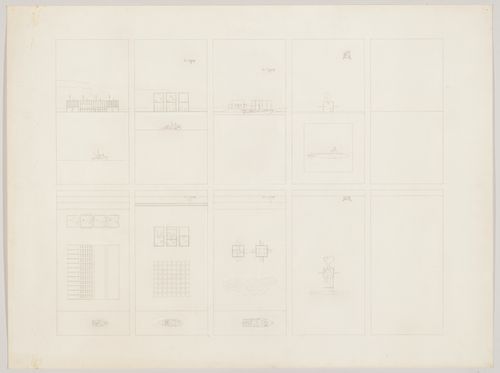
Robert Butscher was the draughtsman of this presentation drawing. The drawing, along with the drawing DR1998:0092:002:006 in this file, were done as part of a Third Year Architecture analysis project at Cooper Union School of Architecture. As part of the project, he read a great many of the novels written by the authors represented by the five sets of structures. The drawings were based on measurements taken from the presentation model. They were completed in 1980 and gifted to John Hejduk by Butscher to use in his Masque of Medusa book.
DR1998:0092:002:006
Description:
Robert Butscher was the draughtsman of this presentation drawing. The drawing, along with the drawing DR1998:0092:002:006 in this file, were done as part of a Third Year Architecture analysis project at Cooper Union School of Architecture. As part of the project, he read a great many of the novels written by the authors represented by the five sets of structures. The drawings were based on measurements taken from the presentation model. They were completed in 1980 and gifted to John Hejduk by Butscher to use in his Masque of Medusa book.
Personnes et institutions:
Date:
1974-1979
1974-1979
Titre:
Plans and elevations for The Silent Witnesses
Actions:
DR1998:0092:002:006
Description:
Robert Butscher was the draughtsman of this presentation drawing. The drawing, along with the drawing DR1998:0092:002:006 in this file, were done as part of a Third Year Architecture analysis project at Cooper Union School of Architecture. As part of the project, he read a great many of the novels written by the authors represented by the five sets of structures. The drawings were based on measurements taken from the presentation model. They were completed in 1980 and gifted to John Hejduk by Butscher to use in his Masque of Medusa book.
Plans and elevations for The Silent Witnesses
Actions:
DR1998:0092:002:006
Description:
Robert Butscher was the draughtsman of this presentation drawing. The drawing, along with the drawing DR1998:0092:002:006 in this file, were done as part of a Third Year Architecture analysis project at Cooper Union School of Architecture. As part of the project, he read a great many of the novels written by the authors represented by the five sets of structures. The drawings were based on measurements taken from the presentation model. They were completed in 1980 and gifted to John Hejduk by Butscher to use in his Masque of Medusa book.
Classification:
dessins
dessins
Date:
1974-1979
1974-1979
Personnes et institutions:
Classification:
dessins
dessins
Numéro de référence:
DR1998:0092:002:007
Description:
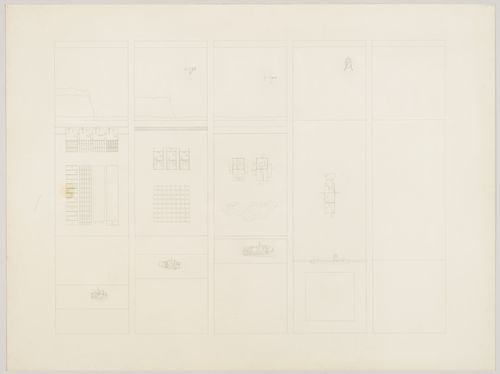
Robert Butscher was the draughtsman of this presentation drawing. The drawing, along with the drawing DR1998:0092:002:006 in this file, were done as part of a Third Year Architecture analysis project at Cooper Union School of Architecture. As part of the project, he read a great many of the novels written by the authors represented by the five sets of structures. The drawings were based on measurements taken from the presentation model. They were completed in 1980 and gifted to John Hejduk by Butscher to use in his Masque of Medusa book.
DR1998:0092:002:007
Description:
Robert Butscher was the draughtsman of this presentation drawing. The drawing, along with the drawing DR1998:0092:002:006 in this file, were done as part of a Third Year Architecture analysis project at Cooper Union School of Architecture. As part of the project, he read a great many of the novels written by the authors represented by the five sets of structures. The drawings were based on measurements taken from the presentation model. They were completed in 1980 and gifted to John Hejduk by Butscher to use in his Masque of Medusa book.
Personnes et institutions:
Date:
1974-1979
1974-1979
Titre:
Presentation drawing for The Silent Witnesses
Actions:
DR1998:0092:002:007
Description:
Robert Butscher was the draughtsman of this presentation drawing. The drawing, along with the drawing DR1998:0092:002:006 in this file, were done as part of a Third Year Architecture analysis project at Cooper Union School of Architecture. As part of the project, he read a great many of the novels written by the authors represented by the five sets of structures. The drawings were based on measurements taken from the presentation model. They were completed in 1980 and gifted to John Hejduk by Butscher to use in his Masque of Medusa book.
Presentation drawing for The Silent Witnesses
Actions:
DR1998:0092:002:007
Description:
Robert Butscher was the draughtsman of this presentation drawing. The drawing, along with the drawing DR1998:0092:002:006 in this file, were done as part of a Third Year Architecture analysis project at Cooper Union School of Architecture. As part of the project, he read a great many of the novels written by the authors represented by the five sets of structures. The drawings were based on measurements taken from the presentation model. They were completed in 1980 and gifted to John Hejduk by Butscher to use in his Masque of Medusa book.
Classification:
dessins
dessins
Date:
1974-1979
1974-1979
Personnes et institutions:
Classification:
documents textuels
documents textuels
Numéro de référence:
PHCON2002:0016:004:029:001
PHCON2002:0016:004:029:001
Personnes et institutions:
Date:
17 May 1976
17 May 1976
Classification:
documents textuels
documents textuels
Date:
17 May 1976
17 May 1976
Personnes et institutions:
Classification:
documents textuels
documents textuels
Numéro de référence:
PHCON2002:0016:004:029:002
PHCON2002:0016:004:029:002
Personnes et institutions:
Date:
1 May 1976
1 May 1976
Classification:
documents textuels
documents textuels
Date:
1 May 1976
1 May 1976
Personnes et institutions:
Niveau de description archivistique:
Série(s)
Série(s)
Numéro de référence:
AP162.S9
Description:
Series documents the contribution of architect Max Taut to the correspondence circle of Die gläserne Kette, with Max Taut writing under the pseudonym Kein Name. Born in 1884 in Königsberg, Germany, Max Taut trained in carpentry and building before working in an architectural firm in Karlsruhe, Germany. In 1911, he worked independently, and later shared a practice with his brother Bruno Taut and Franz Hoffman (who joined them after 1914). His first architectural projects consisted primarily of schools. After his military service from 1914 to 1918, Max Taut joined the Arbeisrat für Kunst and the Novembersgruppe. After the First World War, he undertook several architectural projects, both private and public commissions such as housing and office buildings (mainly in Berlin), and also worked on projects for exhibitions. Unable to pratice during the Nazi Regime and the Second World War, Max Taut return to his architectural practice after the war and taught as a professor of architecture at the Hochschule für bildende Kunst in Berlin from 1945 to 1954. He undertook mainly housing development projects during this period. He died in Berlin in 1967. (Source: Ian Boyd Whyte, Bruno Taut and the Architecture of Activism. Cambridge: Cambridge University Press, 1982) The series comprises part of the correspondence of Max Taut to the Die gläserne Kette circle and related drawings. The series also includes photographic materials of some of his architectural projects.
AP162.S9
Description:
Series documents the contribution of architect Max Taut to the correspondence circle of Die gläserne Kette, with Max Taut writing under the pseudonym Kein Name. Born in 1884 in Königsberg, Germany, Max Taut trained in carpentry and building before working in an architectural firm in Karlsruhe, Germany. In 1911, he worked independently, and later shared a practice with his brother Bruno Taut and Franz Hoffman (who joined them after 1914). His first architectural projects consisted primarily of schools. After his military service from 1914 to 1918, Max Taut joined the Arbeisrat für Kunst and the Novembersgruppe. After the First World War, he undertook several architectural projects, both private and public commissions such as housing and office buildings (mainly in Berlin), and also worked on projects for exhibitions. Unable to pratice during the Nazi Regime and the Second World War, Max Taut return to his architectural practice after the war and taught as a professor of architecture at the Hochschule für bildende Kunst in Berlin from 1945 to 1954. He undertook mainly housing development projects during this period. He died in Berlin in 1967. (Source: Ian Boyd Whyte, Bruno Taut and the Architecture of Activism. Cambridge: Cambridge University Press, 1982) The series comprises part of the correspondence of Max Taut to the Die gläserne Kette circle and related drawings. The series also includes photographic materials of some of his architectural projects.
Personnes et institutions:
Date:
circa 1919 -1920
circa 1919 -1920
Titre:
Max Taut
Actions:
AP162.S9
Description:
Series documents the contribution of architect Max Taut to the correspondence circle of Die gläserne Kette, with Max Taut writing under the pseudonym Kein Name. Born in 1884 in Königsberg, Germany, Max Taut trained in carpentry and building before working in an architectural firm in Karlsruhe, Germany. In 1911, he worked independently, and later shared a practice with his brother Bruno Taut and Franz Hoffman (who joined them after 1914). His first architectural projects consisted primarily of schools. After his military service from 1914 to 1918, Max Taut joined the Arbeisrat für Kunst and the Novembersgruppe. After the First World War, he undertook several architectural projects, both private and public commissions such as housing and office buildings (mainly in Berlin), and also worked on projects for exhibitions. Unable to pratice during the Nazi Regime and the Second World War, Max Taut return to his architectural practice after the war and taught as a professor of architecture at the Hochschule für bildende Kunst in Berlin from 1945 to 1954. He undertook mainly housing development projects during this period. He died in Berlin in 1967. (Source: Ian Boyd Whyte, Bruno Taut and the Architecture of Activism. Cambridge: Cambridge University Press, 1982) The series comprises part of the correspondence of Max Taut to the Die gläserne Kette circle and related drawings. The series also includes photographic materials of some of his architectural projects.
Max Taut
Actions:
AP162.S9
Description:
Series documents the contribution of architect Max Taut to the correspondence circle of Die gläserne Kette, with Max Taut writing under the pseudonym Kein Name. Born in 1884 in Königsberg, Germany, Max Taut trained in carpentry and building before working in an architectural firm in Karlsruhe, Germany. In 1911, he worked independently, and later shared a practice with his brother Bruno Taut and Franz Hoffman (who joined them after 1914). His first architectural projects consisted primarily of schools. After his military service from 1914 to 1918, Max Taut joined the Arbeisrat für Kunst and the Novembersgruppe. After the First World War, he undertook several architectural projects, both private and public commissions such as housing and office buildings (mainly in Berlin), and also worked on projects for exhibitions. Unable to pratice during the Nazi Regime and the Second World War, Max Taut return to his architectural practice after the war and taught as a professor of architecture at the Hochschule für bildende Kunst in Berlin from 1945 to 1954. He undertook mainly housing development projects during this period. He died in Berlin in 1967. (Source: Ian Boyd Whyte, Bruno Taut and the Architecture of Activism. Cambridge: Cambridge University Press, 1982) The series comprises part of the correspondence of Max Taut to the Die gläserne Kette circle and related drawings. The series also includes photographic materials of some of his architectural projects.
Niveau de description archivistique:
series
series
Date:
circa 1919 -1920
circa 1919 -1920
Personnes et institutions:
Classification:
documents textuels
documents textuels
Numéro de référence:
AP197.S2.003
Description:
The first half of the box contains research materials that are organized alphabetically, by authors last names, from L-Z. Essays are written by students from Kenneth Frampton's seminars at Princeton University and Columbia University's Graduate School of Architecture, Preservation and Planning. The second half of the box contains research files comprising of 20th century critical essays written by unknown authors.
AP197.S2.003
Description:
The first half of the box contains research materials that are organized alphabetically, by authors last names, from L-Z. Essays are written by students from Kenneth Frampton's seminars at Princeton University and Columbia University's Graduate School of Architecture, Preservation and Planning. The second half of the box contains research files comprising of 20th century critical essays written by unknown authors.
Personnes et institutions:
Date:
1962-1994
1962-1994
Titre:
Research files on various subjects that relate to 20th century criticism written by students (L-Z) as well as research files on various subjects that relate to 20th century criticism written by unknown writers
Actions:
AP197.S2.003
Description:
The first half of the box contains research materials that are organized alphabetically, by authors last names, from L-Z. Essays are written by students from Kenneth Frampton's seminars at Princeton University and Columbia University's Graduate School of Architecture, Preservation and Planning. The second half of the box contains research files comprising of 20th century critical essays written by unknown authors.
Research files on various subjects that relate to 20th century criticism written by students (L-Z) as well as research files on various subjects that relate to 20th century criticism written by unknown writers
Actions:
AP197.S2.003
Description:
The first half of the box contains research materials that are organized alphabetically, by authors last names, from L-Z. Essays are written by students from Kenneth Frampton's seminars at Princeton University and Columbia University's Graduate School of Architecture, Preservation and Planning. The second half of the box contains research files comprising of 20th century critical essays written by unknown authors.
Classification:
documents textuels
documents textuels
Date:
1962-1994
1962-1994
Personnes et institutions:
Classification:
livres
livres
Numéro de référence:
ARCH269252
ARCH269252
Personnes et institutions:
Date:
1976
1976
Classification:
livres
livres
Date:
1976
1976
Personnes et institutions:
Classification:
dessins
dessins
Numéro de référence:
DR2012:0012:046:006
Description:
Includes plans and sketches for an unidentified architectural project. The roll is labelled "Fontaines - Date ?", and includes one drawing that appears to be a plan for the ground floor of a school.
DR2012:0012:046:006
Description:
Includes plans and sketches for an unidentified architectural project. The roll is labelled "Fontaines - Date ?", and includes one drawing that appears to be a plan for the ground floor of a school.
Personnes et institutions:
Date:
circa 1984
circa 1984
Titre:
Sketches and designs for Public fountains for the City of Montréal, Québec
Actions:
DR2012:0012:046:006
Description:
Includes plans and sketches for an unidentified architectural project. The roll is labelled "Fontaines - Date ?", and includes one drawing that appears to be a plan for the ground floor of a school.
Sketches and designs for Public fountains for the City of Montréal, Québec
Actions:
DR2012:0012:046:006
Description:
Includes plans and sketches for an unidentified architectural project. The roll is labelled "Fontaines - Date ?", and includes one drawing that appears to be a plan for the ground floor of a school.
Classification:
dessins
dessins
Date:
circa 1984
circa 1984
Personnes et institutions:


