


462 Résultats
Classification:
livres
livres
Actions:
Prix:
$36.00
(disponible en magasin)
Résumé:
Synanthropes have always been an immutable part of the tapestry of our lives. They are the reason we hear birdsong in the morning and skittering throughout the day, and why we take such pains to fix lids to our garbage cans. But they are so much more than that, too: epidemic vectors, churners of soil, ecosystem evolvers, spiritual lodestars, and, sometimes, sharp-toothed(...)
$36.00
(disponible en magasin)
Résumé:
Synanthropes have always been an immutable part of the tapestry of our lives. They are the reason we hear birdsong in the morning and skittering throughout the day, and why we take such pains to fix lids to our garbage cans. But they are so much more than that, too: epidemic vectors, churners of soil, ecosystem evolvers, spiritual lodestars, and, sometimes, sharp-toothed(...)
Titre:
Our wild familiars: How animals are adapting to cities and reshaping the natural world
Actions:
Prix:
$36.00
(disponible en magasin)
Résumé:
Synanthropes have always been an immutable part of the tapestry of our lives. They are the reason we hear birdsong in the morning and skittering throughout the day, and why we take such pains to fix lids to our garbage cans. But they are so much more than that, too: epidemic vectors, churners of soil, ecosystem evolvers, spiritual lodestars, and, sometimes, sharp-toothed marauders making their way through our most intimate spaces with cruel intent. But beyond their quotidian impact on our lives, synanthropes have a critical part to play in how our communities are shaped and how sustainably they function. These creatures are ambassadors from nature, arbiters of our planet’s future, and a key influence on our species’ ongoing evolution; and recently, something essential has shifted with them. We are in a fraught era of environmental disruption, habitat destruction, and human population expansion that is ravaging formerly wild and untouched habitats. That’s caused us to become ever more inundated with synanthropes, which are bringing delight, chaos and danger to our doorstep. These species, so long dismissed, are forcing us to reckon with them—from the hundreds of thousands of raccoons in urban spaces that spread our refuse no matter how many “raccoon-proof” bags and bins we invent, to the invasive kudzu plants that grow a foot a day, enveloping houses, telephone poles, trees, and any other structures into their green abyss. Now, as urban spaces increasingly become wild spaces, we have a choice: continue to resist them by any means necessary, or take the opportunity to promote a more harmonious coexistence. Through vivid storytelling, ''Our Wild Familiars'' brings to spectacular life the world’s most successful synanthropes, from bats, raccoons, and crows, to some of its weirdest, including the Giant Pacific Octopus. Acting as a guide to the curious, Werb reveals how the cracks in our millennia-long efforts to shield ourselves against the outside world might just lead us to a new and necessary balance with nature—or to an ever more savage future.
Our wild familiars: How animals are adapting to cities and reshaping the natural world
Actions:
Prix:
$36.00
(disponible en magasin)
Résumé:
Synanthropes have always been an immutable part of the tapestry of our lives. They are the reason we hear birdsong in the morning and skittering throughout the day, and why we take such pains to fix lids to our garbage cans. But they are so much more than that, too: epidemic vectors, churners of soil, ecosystem evolvers, spiritual lodestars, and, sometimes, sharp-toothed marauders making their way through our most intimate spaces with cruel intent. But beyond their quotidian impact on our lives, synanthropes have a critical part to play in how our communities are shaped and how sustainably they function. These creatures are ambassadors from nature, arbiters of our planet’s future, and a key influence on our species’ ongoing evolution; and recently, something essential has shifted with them. We are in a fraught era of environmental disruption, habitat destruction, and human population expansion that is ravaging formerly wild and untouched habitats. That’s caused us to become ever more inundated with synanthropes, which are bringing delight, chaos and danger to our doorstep. These species, so long dismissed, are forcing us to reckon with them—from the hundreds of thousands of raccoons in urban spaces that spread our refuse no matter how many “raccoon-proof” bags and bins we invent, to the invasive kudzu plants that grow a foot a day, enveloping houses, telephone poles, trees, and any other structures into their green abyss. Now, as urban spaces increasingly become wild spaces, we have a choice: continue to resist them by any means necessary, or take the opportunity to promote a more harmonious coexistence. Through vivid storytelling, ''Our Wild Familiars'' brings to spectacular life the world’s most successful synanthropes, from bats, raccoons, and crows, to some of its weirdest, including the Giant Pacific Octopus. Acting as a guide to the curious, Werb reveals how the cracks in our millennia-long efforts to shield ourselves against the outside world might just lead us to a new and necessary balance with nature—or to an ever more savage future.
Classification:
livres
livres
Publication:
juillet 2026
juillet 2026
Sujet:
Faune et flore
Faune et flore
Classification:
livres
livres
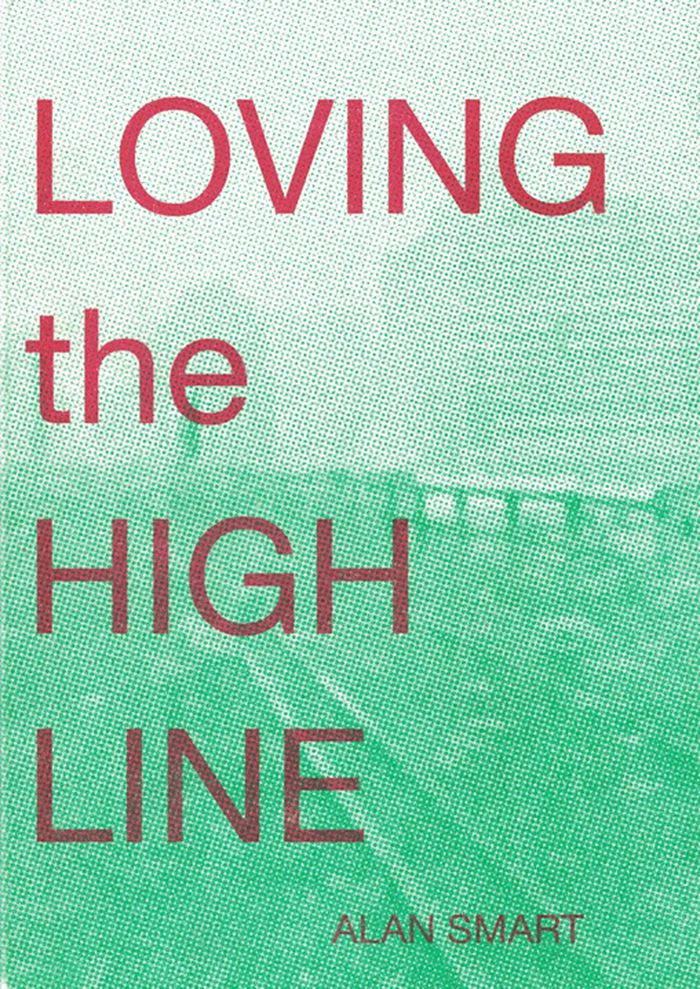
Titre:
Loving the High Line
Loving the High Line
Actions:
Prix:
$20.00
(disponible sur commande)
Résumé:
As an elevated rail line, designed to lift freight trains serving the Hudson River docks above street level circulation, The High Line was originally constructed as material infrastructure for an industrial city. It was closed in 1960s and stood abandoned for the next forty years. In this time organic debris accumulated and decayed, and seeds landed on the newly forming(...)
$20.00
(disponible sur commande)
Résumé:
As an elevated rail line, designed to lift freight trains serving the Hudson River docks above street level circulation, The High Line was originally constructed as material infrastructure for an industrial city. It was closed in 1960s and stood abandoned for the next forty years. In this time organic debris accumulated and decayed, and seeds landed on the newly forming(...)
Titre:
Loving the High Line
Actions:
Prix:
$20.00
(disponible sur commande)
Résumé:
As an elevated rail line, designed to lift freight trains serving the Hudson River docks above street level circulation, The High Line was originally constructed as material infrastructure for an industrial city. It was closed in 1960s and stood abandoned for the next forty years. In this time organic debris accumulated and decayed, and seeds landed on the newly forming soil creating a meadow on the derelict railbed. This microcosmic biome then also became a heterotopic, other space, in the social ecology of the city as an efflorescence of new art forms and underground subcultures flourished in the evacuated post-industrial spaces of Chelsea. These processes would unfold as New York City was being transformed into a global center in an emerging political-economy defined by the integration of finance capital with media and information industries. In this, marginal spaces of the kind that developed in Chelsea, and the cultures that create them, became important sources of new aesthetic and cultural innovation, that offer an exploitable social ground from which to extract semiotic value. As the Bloomberg administration gave shape to this new regime, a project was initiated to convert the High Line into a publicly accessible, linear park. This would be realized through a convoluted process in which the manifold tensions and contradictions of the postmodern city would be dramatically played out and the disjunctions between ideal image regimes and the reality of the material substrates that support them would be brought to light, if only to be newly obscured. The High Line urban park has been both heralded as a definitive model for new urban development, and denounced as a driver, or at least a morbid symptom, of devastating gentrification, and the destructive financialization of urban space. This text, originally published in 2015 as part of the Deconstructing the High Line anthology, edited by Mark Linder and Brian Rosa, tracks a collection of interconnected historical treads that converge in the reconstruction of the High Line, and situates the project within architectural discourse and practice, and social and material conditions with which it struggles to engage.
Loving the High Line
Actions:
Prix:
$20.00
(disponible sur commande)
Résumé:
As an elevated rail line, designed to lift freight trains serving the Hudson River docks above street level circulation, The High Line was originally constructed as material infrastructure for an industrial city. It was closed in 1960s and stood abandoned for the next forty years. In this time organic debris accumulated and decayed, and seeds landed on the newly forming soil creating a meadow on the derelict railbed. This microcosmic biome then also became a heterotopic, other space, in the social ecology of the city as an efflorescence of new art forms and underground subcultures flourished in the evacuated post-industrial spaces of Chelsea. These processes would unfold as New York City was being transformed into a global center in an emerging political-economy defined by the integration of finance capital with media and information industries. In this, marginal spaces of the kind that developed in Chelsea, and the cultures that create them, became important sources of new aesthetic and cultural innovation, that offer an exploitable social ground from which to extract semiotic value. As the Bloomberg administration gave shape to this new regime, a project was initiated to convert the High Line into a publicly accessible, linear park. This would be realized through a convoluted process in which the manifold tensions and contradictions of the postmodern city would be dramatically played out and the disjunctions between ideal image regimes and the reality of the material substrates that support them would be brought to light, if only to be newly obscured. The High Line urban park has been both heralded as a definitive model for new urban development, and denounced as a driver, or at least a morbid symptom, of devastating gentrification, and the destructive financialization of urban space. This text, originally published in 2015 as part of the Deconstructing the High Line anthology, edited by Mark Linder and Brian Rosa, tracks a collection of interconnected historical treads that converge in the reconstruction of the High Line, and situates the project within architectural discourse and practice, and social and material conditions with which it struggles to engage.
Classification:
livres
livres
Publication:
novembre 2022
novembre 2022
Sujet:
Paysages urbains
Paysages urbains


