


5194 Résultats
Classification:
livres
livres
Actions:
Prix:
$49.99
(disponible sur commande)
Résumé:
The magic of photography is its unique power to capture a moment in the past to be viewed in the present, to capture a subject suspended between life and death. This evocative, beautifully written catalog from Japan's Izu Photo Museum documents an inspired exhibition that looks into photography's mystical way of suspending time. Even with the relatively recent(...)
$49.99
(disponible sur commande)
Résumé:
The magic of photography is its unique power to capture a moment in the past to be viewed in the present, to capture a subject suspended between life and death. This evocative, beautifully written catalog from Japan's Izu Photo Museum documents an inspired exhibition that looks into photography's mystical way of suspending time. Even with the relatively recent(...)
Titre:
Suspending time: Life - photography - death
Actions:
Prix:
$49.99
(disponible sur commande)
Résumé:
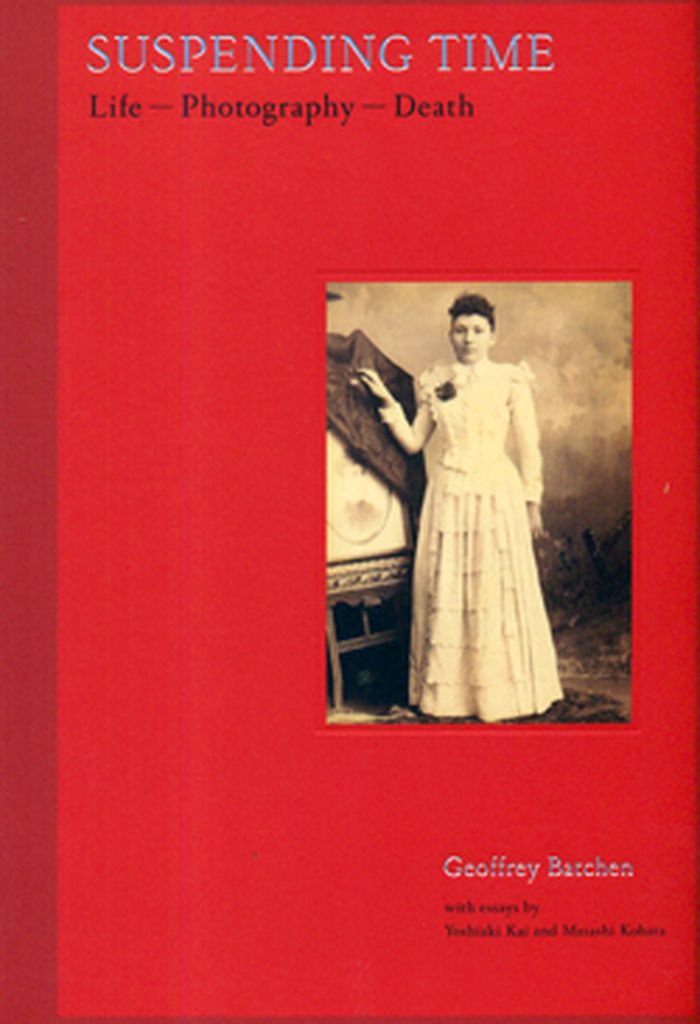
The magic of photography is its unique power to capture a moment in the past to be viewed in the present, to capture a subject suspended between life and death. This evocative, beautifully written catalog from Japan's Izu Photo Museum documents an inspired exhibition that looks into photography's mystical way of suspending time. Even with the relatively recent inclusion of vernacular photos in photography collections, the study of the art form has remained almost entirely Euro-centric. In Suspending Time, curator Geoffrey Batchen opens the door to using Japanese vernacular photos. With over 100 plates of cabinet cards, Daguerreotypes, photography jewelry, tintypes, Japanese ambrotypes, and Mexican sculptures.
Suspending time: Life - photography - death
Actions:
Prix:
$49.99
(disponible sur commande)
Résumé:
The magic of photography is its unique power to capture a moment in the past to be viewed in the present, to capture a subject suspended between life and death. This evocative, beautifully written catalog from Japan's Izu Photo Museum documents an inspired exhibition that looks into photography's mystical way of suspending time. Even with the relatively recent inclusion of vernacular photos in photography collections, the study of the art form has remained almost entirely Euro-centric. In Suspending Time, curator Geoffrey Batchen opens the door to using Japanese vernacular photos. With over 100 plates of cabinet cards, Daguerreotypes, photography jewelry, tintypes, Japanese ambrotypes, and Mexican sculptures.
Classification:
livres
livres
Publication:
août 2010
août 2010
Sujet:
Monographies photo
Monographies photo
Classification:
périodiques
périodiques
Actions:
Prix:
$86.00
(disponible en magasin)
Résumé:
In 2002, ‘Wallpaper’ magazine listed Australian architect Sean Godsell as someone destined to change the way we live. His ‘Future Shack’ (1999), constructed from shipping containers, drew international attention, and he has since garnered numerous awards. This monographic edition of ‘El Croquis’ explores Godsell’s work, which is primarily rooted in his belief in the power(...)
$86.00
(disponible en magasin)
Résumé:
In 2002, ‘Wallpaper’ magazine listed Australian architect Sean Godsell as someone destined to change the way we live. His ‘Future Shack’ (1999), constructed from shipping containers, drew international attention, and he has since garnered numerous awards. This monographic edition of ‘El Croquis’ explores Godsell’s work, which is primarily rooted in his belief in the power(...)
Titre:
El Croquis 165 : Sean Godsell 1997 2013
Actions:
Prix:
$86.00
(disponible en magasin)
Résumé:
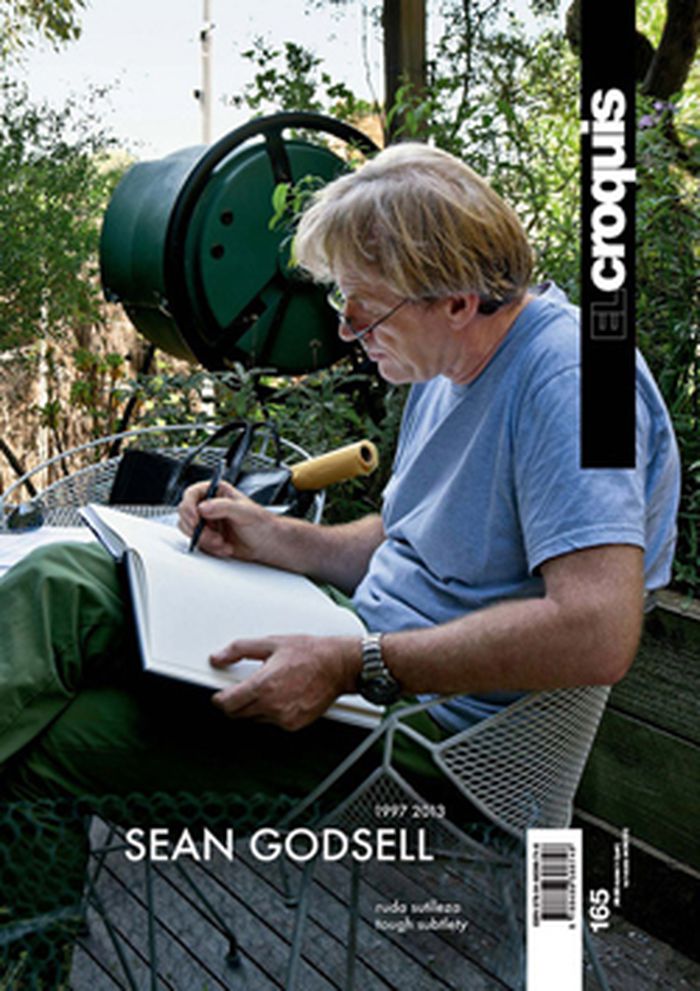
In 2002, ‘Wallpaper’ magazine listed Australian architect Sean Godsell as someone destined to change the way we live. His ‘Future Shack’ (1999), constructed from shipping containers, drew international attention, and he has since garnered numerous awards. This monographic edition of ‘El Croquis’ explores Godsell’s work, which is primarily rooted in his belief in the power of architecture to help the less fortunate. A craftsman at heart, the fact that he is demanding and exacting in both the logic and execution of his designs is clear. Besides an in-depth focus on ten significant projects, the issue includes an interview with Leon van Schaik and a critical text by Juhani Pallasmaa.
El Croquis 165 : Sean Godsell 1997 2013
Actions:
Prix:
$86.00
(disponible en magasin)
Résumé:
In 2002, ‘Wallpaper’ magazine listed Australian architect Sean Godsell as someone destined to change the way we live. His ‘Future Shack’ (1999), constructed from shipping containers, drew international attention, and he has since garnered numerous awards. This monographic edition of ‘El Croquis’ explores Godsell’s work, which is primarily rooted in his belief in the power of architecture to help the less fortunate. A craftsman at heart, the fact that he is demanding and exacting in both the logic and execution of his designs is clear. Besides an in-depth focus on ten significant projects, the issue includes an interview with Leon van Schaik and a critical text by Juhani Pallasmaa.
Classification:
périodiques
périodiques
Publication:
février 2013
février 2013
Sujet:
El Croquis
El Croquis
Classification:
livres
livres
Titre:
Silent whale letters
Silent whale letters
Actions:
Prix:
$27.95
(disponible sur commande)
Résumé:
As part of an ongoing collaboration between Ella Finer and Vibeke Mascini the letters consider how the silent document shifts the logic of the archive, figuring listening as a practice of preservation. As the letters attune to the ocean loud with communications across time and space, the authors write about the movement of matter, of energies, wavelengths, currents and(...)
$27.95
(disponible sur commande)
Résumé:
As part of an ongoing collaboration between Ella Finer and Vibeke Mascini the letters consider how the silent document shifts the logic of the archive, figuring listening as a practice of preservation. As the letters attune to the ocean loud with communications across time and space, the authors write about the movement of matter, of energies, wavelengths, currents and(...)
Titre:
Silent whale letters
Actions:
Prix:
$27.95
(disponible sur commande)
Résumé:
As part of an ongoing collaboration between Ella Finer and Vibeke Mascini the letters consider how the silent document shifts the logic of the archive, figuring listening as a practice of preservation. As the letters attune to the ocean loud with communications across time and space, the authors write about the movement of matter, of energies, wavelengths, currents and how the ocean preserves as it disperses what it carries. How does working with what we cannot see, or even hear within range, shift the parameters of attention? How does the energetic archival space of the ocean agitate and disrupt claims to knowledge, history, and power?
Silent whale letters
Actions:
Prix:
$27.95
(disponible sur commande)
Résumé:
As part of an ongoing collaboration between Ella Finer and Vibeke Mascini the letters consider how the silent document shifts the logic of the archive, figuring listening as a practice of preservation. As the letters attune to the ocean loud with communications across time and space, the authors write about the movement of matter, of energies, wavelengths, currents and how the ocean preserves as it disperses what it carries. How does working with what we cannot see, or even hear within range, shift the parameters of attention? How does the energetic archival space of the ocean agitate and disrupt claims to knowledge, history, and power?
Classification:
livres
livres
Publication:
octobre 2023
octobre 2023
Sujet:
Théorie de l’art
Théorie de l’art
Classification:
livres
livres
Actions:
Prix:
$39.95
(disponible en magasin)
Résumé:
Bridging histories of technology, media studies, and aesthetics, ''Electrographic architecture'' forges a critical narrative of the ways in which illuminated light and color have played key roles in the formation of America's white imaginary. Carolyn L. Kane charts the rise of the country's urban advertisements, light empires, and neoclassical buildings in the early(...)
$39.95
(disponible en magasin)
Résumé:
Bridging histories of technology, media studies, and aesthetics, ''Electrographic architecture'' forges a critical narrative of the ways in which illuminated light and color have played key roles in the formation of America's white imaginary. Carolyn L. Kane charts the rise of the country's urban advertisements, light empires, and neoclassical buildings in the early(...)
Titre:
Electrographic architecture: New York color, Las Vegas light, and America's white imaginary
Actions:
Prix:
$39.95
(disponible en magasin)
Résumé:
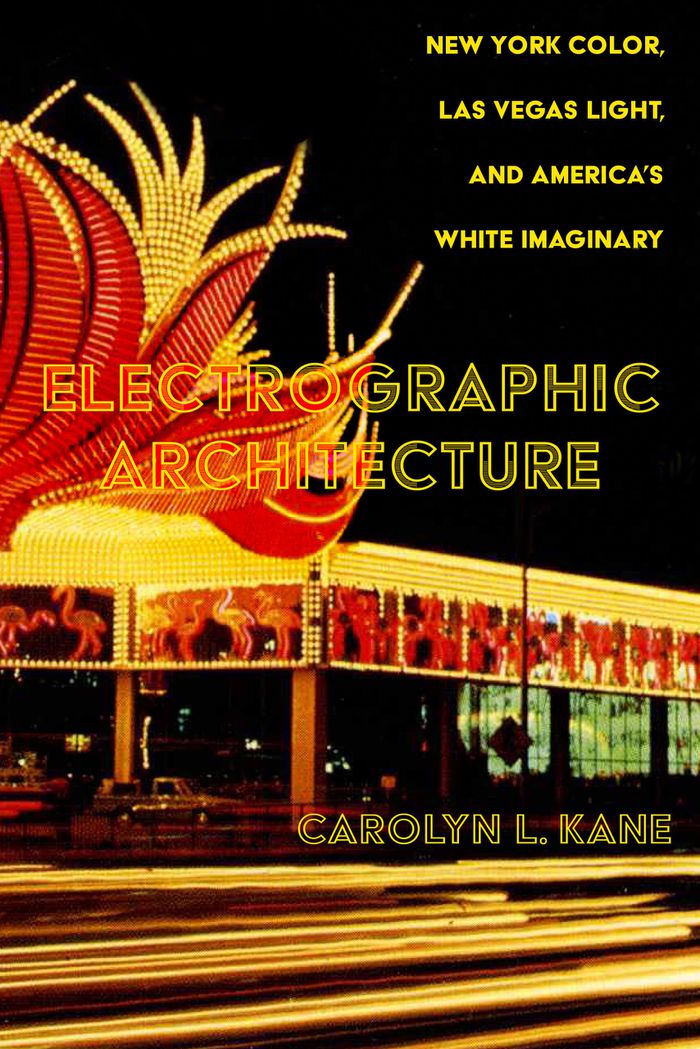
Bridging histories of technology, media studies, and aesthetics, ''Electrographic architecture'' forges a critical narrative of the ways in which illuminated light and color have played key roles in the formation of America's white imaginary. Carolyn L. Kane charts the rise of the country's urban advertisements, light empires, and neoclassical buildings in the early twentieth century; the midcentury construction of polychromatic electrographic spectacles; and their eclipse by informatically intense, invisible algorithms at the dawn of the new millennium. Drawing on archival research, interviews, and visual analysis, Electrographic Architecture shows how the development of America's electrographic surround runs parallel to a new paradigm of power, property, and possession.
Electrographic architecture: New York color, Las Vegas light, and America's white imaginary
Actions:
Prix:
$39.95
(disponible en magasin)
Résumé:
Bridging histories of technology, media studies, and aesthetics, ''Electrographic architecture'' forges a critical narrative of the ways in which illuminated light and color have played key roles in the formation of America's white imaginary. Carolyn L. Kane charts the rise of the country's urban advertisements, light empires, and neoclassical buildings in the early twentieth century; the midcentury construction of polychromatic electrographic spectacles; and their eclipse by informatically intense, invisible algorithms at the dawn of the new millennium. Drawing on archival research, interviews, and visual analysis, Electrographic Architecture shows how the development of America's electrographic surround runs parallel to a new paradigm of power, property, and possession.
Classification:
livres
livres
Publication:
août 2023
août 2023
Sujet:
Théorie de l’architecture
Théorie de l’architecture
Classification:
livres
livres
Actions:
Prix:
$74.95
(disponible sur commande)
Résumé:
Sarah Malakoff’s large-scale color photographs investigate domestic interiors as both a refuge from and a re-creation of the outside world. In ''Personal History'', she turns her attention to objects displayed within American homes that reference culture, history, and ideology. Whether representations of historical figures, events, or monuments, the possessions point to a(...)
$74.95
(disponible sur commande)
Résumé:
Sarah Malakoff’s large-scale color photographs investigate domestic interiors as both a refuge from and a re-creation of the outside world. In ''Personal History'', she turns her attention to objects displayed within American homes that reference culture, history, and ideology. Whether representations of historical figures, events, or monuments, the possessions point to a(...)
Titre:
Sarah Malakoff: personal history
Actions:
Prix:
$74.95
(disponible sur commande)
Résumé:
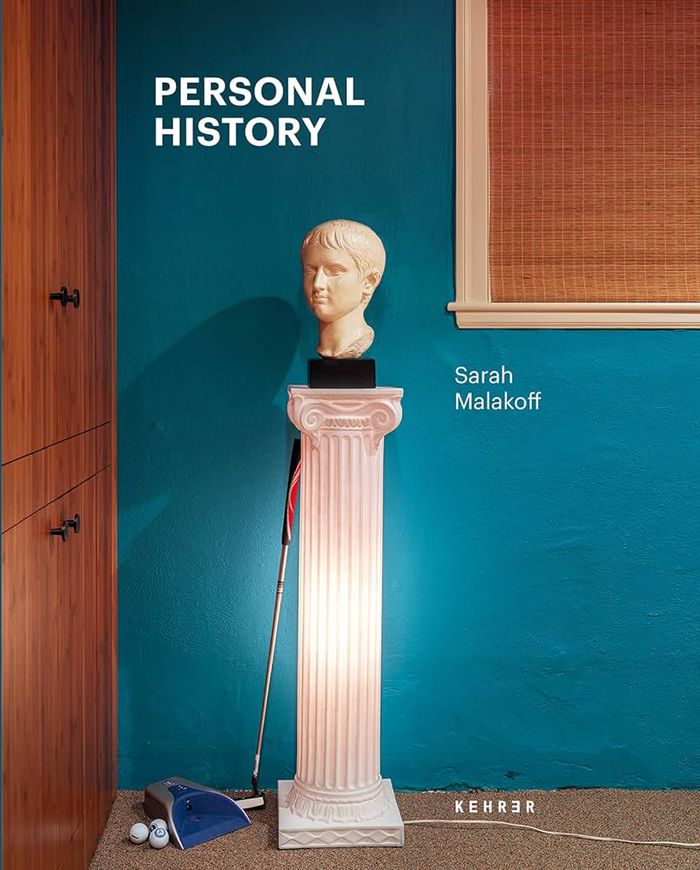
Sarah Malakoff’s large-scale color photographs investigate domestic interiors as both a refuge from and a re-creation of the outside world. In ''Personal History'', she turns her attention to objects displayed within American homes that reference culture, history, and ideology. Whether representations of historical figures, events, or monuments, the possessions point to a longing for connection to the past and an engagement with the world at large. Often the collections of objects underscore the privilege and power implicit in the act of collecting. These souvenirs resonate—sometimes humorously, sometimes disturbingly—with the other possessions and architecture that surround them, uneasily vacillating between heroism and kitsch, patriotism and colonialism.
Sarah Malakoff: personal history
Actions:
Prix:
$74.95
(disponible sur commande)
Résumé:
Sarah Malakoff’s large-scale color photographs investigate domestic interiors as both a refuge from and a re-creation of the outside world. In ''Personal History'', she turns her attention to objects displayed within American homes that reference culture, history, and ideology. Whether representations of historical figures, events, or monuments, the possessions point to a longing for connection to the past and an engagement with the world at large. Often the collections of objects underscore the privilege and power implicit in the act of collecting. These souvenirs resonate—sometimes humorously, sometimes disturbingly—with the other possessions and architecture that surround them, uneasily vacillating between heroism and kitsch, patriotism and colonialism.
Classification:
livres
livres
Publication:
mai 2023
mai 2023
Sujet:
Monographies photo
Monographies photo
Classification:
livres
livres
Prix:
$27.00
(disponible en magasin)
Résumé:
Museums, galleries, foundations, collectors, artists, viewers--how do they all come together? How is that changing? This collection of essays and some photographs from a Cologne working group called European Kunsthalle tackles the fundamental issues facing new initiatives and institutions for contemporary art. It is divided into five topics: The Problem of Location, The(...)
$27.00
(disponible en magasin)
Résumé:
Museums, galleries, foundations, collectors, artists, viewers--how do they all come together? How is that changing? This collection of essays and some photographs from a Cologne working group called European Kunsthalle tackles the fundamental issues facing new initiatives and institutions for contemporary art. It is divided into five topics: The Problem of Location, The(...)
Titre:
Under Construction : perspectives on institutional practice
Actions:
Prix:
$27.00
(disponible en magasin)
Résumé:
Museums, galleries, foundations, collectors, artists, viewers--how do they all come together? How is that changing? This collection of essays and some photographs from a Cologne working group called European Kunsthalle tackles the fundamental issues facing new initiatives and institutions for contemporary art. It is divided into five topics: The Problem of Location, The Process of Societal Transformation, Cultural Economies, Curatorial Concepts, and, most ambitiously of all, The Way in Which the Art System Operates. Articles and discussion transcripts include "The Crisis of the Audience," "The Cultural Politics of Institutions," "Smuggling: A Curatorial Model," "The Power and Powerlessness of the Private Collector" and Liam Gillick's "Revised Construction of One."
Under Construction : perspectives on institutional practice
Actions:
Prix:
$27.00
(disponible en magasin)
Résumé:
Museums, galleries, foundations, collectors, artists, viewers--how do they all come together? How is that changing? This collection of essays and some photographs from a Cologne working group called European Kunsthalle tackles the fundamental issues facing new initiatives and institutions for contemporary art. It is divided into five topics: The Problem of Location, The Process of Societal Transformation, Cultural Economies, Curatorial Concepts, and, most ambitiously of all, The Way in Which the Art System Operates. Articles and discussion transcripts include "The Crisis of the Audience," "The Cultural Politics of Institutions," "Smuggling: A Curatorial Model," "The Power and Powerlessness of the Private Collector" and Liam Gillick's "Revised Construction of One."
Classification:
livres
livres
Publication:
avril 2007, Cologne
avril 2007, Cologne
Sujet:
Muséologie
Muséologie
Classification:
livres
livres
Actions:
Prix:
$55.00
(disponible sur commande)
Résumé:
A phenomenon as old as humanity, megalomania has become, now more than ever, an attitude reflective of our contemporary culture. It reveals a universal desire: to be noticed and unique, political and dangerous. In this book, Philippe Tretiack casts his humorous and scathing eye over a gallery of megalomaniacs who push the envelope, paying alarmed homage to these high(...)
$55.00
(disponible sur commande)
Résumé:
A phenomenon as old as humanity, megalomania has become, now more than ever, an attitude reflective of our contemporary culture. It reveals a universal desire: to be noticed and unique, political and dangerous. In this book, Philippe Tretiack casts his humorous and scathing eye over a gallery of megalomaniacs who push the envelope, paying alarmed homage to these high(...)
Titre:
Megalomania, too much is never enough
Actions:
Prix:
$55.00
(disponible sur commande)
Résumé:
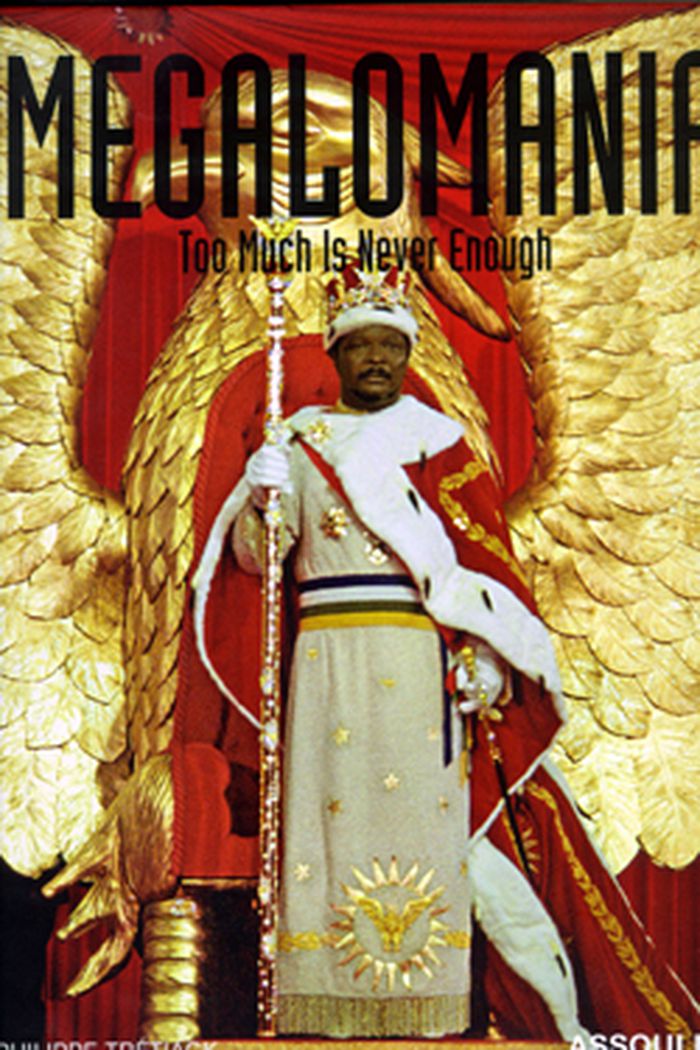
A phenomenon as old as humanity, megalomania has become, now more than ever, an attitude reflective of our contemporary culture. It reveals a universal desire: to be noticed and unique, political and dangerous. In this book, Philippe Tretiack casts his humorous and scathing eye over a gallery of megalomaniacs who push the envelope, paying alarmed homage to these high priests of excess and their dazzling displays of eccentricity. From power-grasping leaders to rappers bedecked in bling, from showbiz stars to bloodthirsty war chiefs to decadent dandies, Megalomania shakes up the artists of this new nihilism, in which materialism flirts with mortality. Megalomania: extravagance as a dare.
Megalomania, too much is never enough
Actions:
Prix:
$55.00
(disponible sur commande)
Résumé:
A phenomenon as old as humanity, megalomania has become, now more than ever, an attitude reflective of our contemporary culture. It reveals a universal desire: to be noticed and unique, political and dangerous. In this book, Philippe Tretiack casts his humorous and scathing eye over a gallery of megalomaniacs who push the envelope, paying alarmed homage to these high priests of excess and their dazzling displays of eccentricity. From power-grasping leaders to rappers bedecked in bling, from showbiz stars to bloodthirsty war chiefs to decadent dandies, Megalomania shakes up the artists of this new nihilism, in which materialism flirts with mortality. Megalomania: extravagance as a dare.
Classification:
livres
livres
Publication:
octobre 2003, New York
octobre 2003, New York
Sujet:
Histoire jusqu’à 1900
Histoire jusqu’à 1900
Classification:
livres
livres
Actions:
Prix:
$65.00
(disponible sur commande)
Résumé:
In ‘'Thinking Space'’, architect and educator Leon van Schaik explores how books, and book collecting, have framed his lifelong research into spatial intelligence – the ways in which our past experiences in physical space shape our mental space, which in turn informs how we act in the world. Journeying through the history of the author’s own library, the book reveals some(...)
$65.00
(disponible sur commande)
Résumé:
In ‘'Thinking Space'’, architect and educator Leon van Schaik explores how books, and book collecting, have framed his lifelong research into spatial intelligence – the ways in which our past experiences in physical space shape our mental space, which in turn informs how we act in the world. Journeying through the history of the author’s own library, the book reveals some(...)
Titre:
Thinking space: readings from a life in architecture
Actions:
Prix:
$65.00
(disponible sur commande)
Résumé:
In ‘'Thinking Space'’, architect and educator Leon van Schaik explores how books, and book collecting, have framed his lifelong research into spatial intelligence – the ways in which our past experiences in physical space shape our mental space, which in turn informs how we act in the world. Journeying through the history of the author’s own library, the book reveals some of his most prized texts, the often deeply personal relationships they represent, and their influence on him as conceptual touchstones. In this extended reflection, Van Schaik essentially offers a celebration of the art, poetry, and philosophy of inhabitation – and its power to change our understanding of the world.
Thinking space: readings from a life in architecture
Actions:
Prix:
$65.00
(disponible sur commande)
Résumé:
In ‘'Thinking Space'’, architect and educator Leon van Schaik explores how books, and book collecting, have framed his lifelong research into spatial intelligence – the ways in which our past experiences in physical space shape our mental space, which in turn informs how we act in the world. Journeying through the history of the author’s own library, the book reveals some of his most prized texts, the often deeply personal relationships they represent, and their influence on him as conceptual touchstones. In this extended reflection, Van Schaik essentially offers a celebration of the art, poetry, and philosophy of inhabitation – and its power to change our understanding of the world.
Classification:
livres
livres
Publication:
septembre 2025
septembre 2025
Sujet:
Théorie de l’architecture
Théorie de l’architecture
Classification:
livres
livres
Actions:
Prix:
$60.00
(disponible sur commande)
Résumé:
Back by popular demand, this is the third reissue of the first monograph on the work of Dutch power trio Experimental Jetset. Presenting almost two decades of graphic design praxis, it is more a loose personal archive than a monolithic tome. The book features essays by Mark Owens, Ian Svenonius, and Linda van Deursen, plus two photographic chapters with a selection of the(...)
$60.00
(disponible sur commande)
Résumé:
Back by popular demand, this is the third reissue of the first monograph on the work of Dutch power trio Experimental Jetset. Presenting almost two decades of graphic design praxis, it is more a loose personal archive than a monolithic tome. The book features essays by Mark Owens, Ian Svenonius, and Linda van Deursen, plus two photographic chapters with a selection of the(...)
Titre:
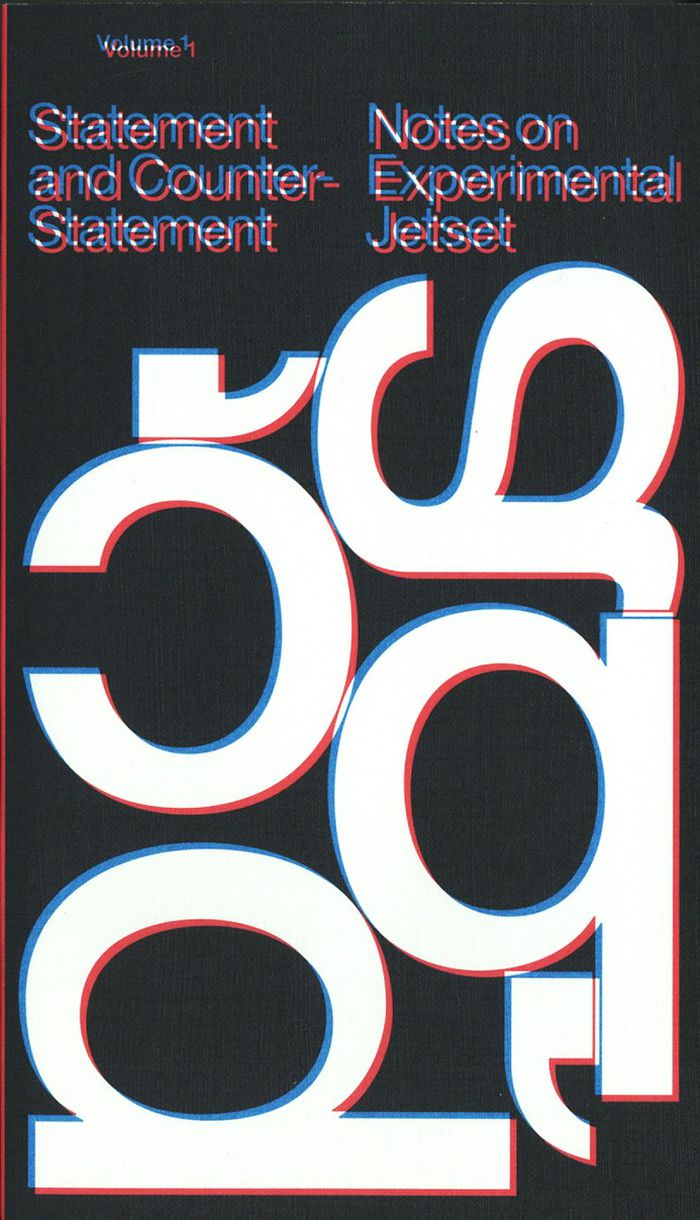
Experimental Jetset – Statement and Counter-Statement 2: Typologies, Typographies,Topologies
Actions:
Prix:
$60.00
(disponible sur commande)
Résumé:
Back by popular demand, this is the third reissue of the first monograph on the work of Dutch power trio Experimental Jetset. Presenting almost two decades of graphic design praxis, it is more a loose personal archive than a monolithic tome. The book features essays by Mark Owens, Ian Svenonius, and Linda van Deursen, plus two photographic chapters with a selection of the studio’s work, covering both printed matter and the documentation of site-specific pieces and installations. It also includes a glossary-like anthology of texts (fragments of interviews, lectures, correspondence, etc.) written by Experimental Jetset and selected, edited, and structured by Jon Sueda.
Experimental Jetset – Statement and Counter-Statement 2: Typologies, Typographies,Topologies
Actions:
Prix:
$60.00
(disponible sur commande)
Résumé:
Back by popular demand, this is the third reissue of the first monograph on the work of Dutch power trio Experimental Jetset. Presenting almost two decades of graphic design praxis, it is more a loose personal archive than a monolithic tome. The book features essays by Mark Owens, Ian Svenonius, and Linda van Deursen, plus two photographic chapters with a selection of the studio’s work, covering both printed matter and the documentation of site-specific pieces and installations. It also includes a glossary-like anthology of texts (fragments of interviews, lectures, correspondence, etc.) written by Experimental Jetset and selected, edited, and structured by Jon Sueda.
Classification:
livres
livres
Publication:
janvier 2025
janvier 2025
Classification:
livres
livres
Actions:
Prix:
$54.00
(disponible sur commande)
Résumé:
The desert is a huge paradox. Beneath its outward appearance of immensity and silence, are the sounds of various experiments, mysteries, and utopias. The setting of outrageous true histories, entertainment oases founded on consumerism and play, and the secret staging of military power, the desert is far from empty. Instead, it is full of activity: unexpected, uninhibited,(...)
$54.00
(disponible sur commande)
Résumé:
The desert is a huge paradox. Beneath its outward appearance of immensity and silence, are the sounds of various experiments, mysteries, and utopias. The setting of outrageous true histories, entertainment oases founded on consumerism and play, and the secret staging of military power, the desert is far from empty. Instead, it is full of activity: unexpected, uninhibited,(...)
Publication:
décembre 2005, Barcelona
décembre 2005, Barcelona
Titre:
Desert America: Territory of paradox
Actions:
Prix:
$54.00
(disponible sur commande)
Résumé:
The desert is a huge paradox. Beneath its outward appearance of immensity and silence, are the sounds of various experiments, mysteries, and utopias. The setting of outrageous true histories, entertainment oases founded on consumerism and play, and the secret staging of military power, the desert is far from empty. Instead, it is full of activity: unexpected, uninhibited, and excessive. Not subject to barriers and seemingly free of the formal, ideological or cultural ties of global society, the desert cultivates alternate architectures, urbanisms, and built phenomena. Through photographs, essays, and history, this book emerges as an exploration of some of these phenomena and the protagonists that made them possible.
Desert America: Territory of paradox
Actions:
Prix:
$54.00
(disponible sur commande)
Résumé:
The desert is a huge paradox. Beneath its outward appearance of immensity and silence, are the sounds of various experiments, mysteries, and utopias. The setting of outrageous true histories, entertainment oases founded on consumerism and play, and the secret staging of military power, the desert is far from empty. Instead, it is full of activity: unexpected, uninhibited, and excessive. Not subject to barriers and seemingly free of the formal, ideological or cultural ties of global society, the desert cultivates alternate architectures, urbanisms, and built phenomena. Through photographs, essays, and history, this book emerges as an exploration of some of these phenomena and the protagonists that made them possible.
Classification:
livres
livres
Publication:
décembre 2005, Barcelona
décembre 2005, Barcelona


