


4749 Résultats
Classification:
livres
livres
Actions:
Prix:
$63.95
(disponible sur commande)
Résumé:
"The architectural project" considers the practice of architectural design as it has developed during the last two centuries. In this challenging interpretation of design education and its effect on design process and products, Argentinean scholar Alfonso Corona-Martínez emphasizes the distinction between an architectural project, created in the architect's mind(...)
$63.95
(disponible sur commande)
Résumé:
"The architectural project" considers the practice of architectural design as it has developed during the last two centuries. In this challenging interpretation of design education and its effect on design process and products, Argentinean scholar Alfonso Corona-Martínez emphasizes the distinction between an architectural project, created in the architect's mind(...)
Publication:
janvier 2003, Coolege Station
janvier 2003, Coolege Station
Titre:
The architectural project - number six : studies in architecture and culture
Actions:
Prix:
$63.95
(disponible sur commande)
Résumé:
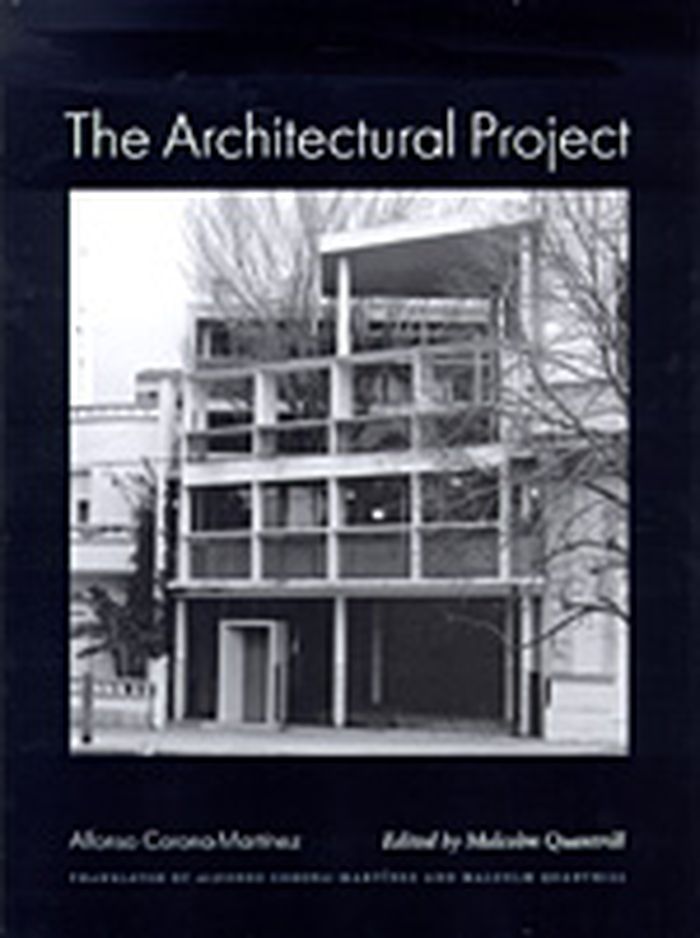
"The architectural project" considers the practice of architectural design as it has developed during the last two centuries. In this challenging interpretation of design education and its effect on design process and products, Argentinean scholar Alfonso Corona-Martínez emphasizes the distinction between an architectural project, created in the architect's mind and materialized as a set of drawings on paper, and the realized three-dimensional building. Corona-Martínez demonstrates how representation plays a substantial role in determining both the notion and the character of architecture, and he traces this relationship from the Renaissance into the Modern era, giving detailed considerations of Functionalism and Typology. His argument clarifies the continuity in the practice of design method through the nineteenth and twentieth centuries, a continuity that has been obscured by the emphasis on changing goals instead of design procedures.
The architectural project - number six : studies in architecture and culture
Actions:
Prix:
$63.95
(disponible sur commande)
Résumé:
"The architectural project" considers the practice of architectural design as it has developed during the last two centuries. In this challenging interpretation of design education and its effect on design process and products, Argentinean scholar Alfonso Corona-Martínez emphasizes the distinction between an architectural project, created in the architect's mind and materialized as a set of drawings on paper, and the realized three-dimensional building. Corona-Martínez demonstrates how representation plays a substantial role in determining both the notion and the character of architecture, and he traces this relationship from the Renaissance into the Modern era, giving detailed considerations of Functionalism and Typology. His argument clarifies the continuity in the practice of design method through the nineteenth and twentieth centuries, a continuity that has been obscured by the emphasis on changing goals instead of design procedures.
Classification:
livres
livres
Publication:
janvier 2003, Coolege Station
janvier 2003, Coolege Station
Classification:
livres
livres
Prix:
$21.95
(disponible sur commande)
Résumé:
Au coeur du château de Pierrefonds, une collection originale s’offre aux visiteurs : les ornements d’architecture créés par Honoré Monduit. Offerte par ses descendants, elle est l’un des trésors du château. Ce livre permet de découvrir le travail de ce collaborateur de Viollet-le-Duc sur les grands chantiers de restauration. Il fut aussi l’un des principaux artisans de la(...)
$21.95
(disponible sur commande)
Résumé:
Au coeur du château de Pierrefonds, une collection originale s’offre aux visiteurs : les ornements d’architecture créés par Honoré Monduit. Offerte par ses descendants, elle est l’un des trésors du château. Ce livre permet de découvrir le travail de ce collaborateur de Viollet-le-Duc sur les grands chantiers de restauration. Il fut aussi l’un des principaux artisans de la(...)
Titre:
L'Atelier Monduit : une collection d'ornements d'architecture
Actions:
Prix:
$21.95
(disponible sur commande)
Résumé:
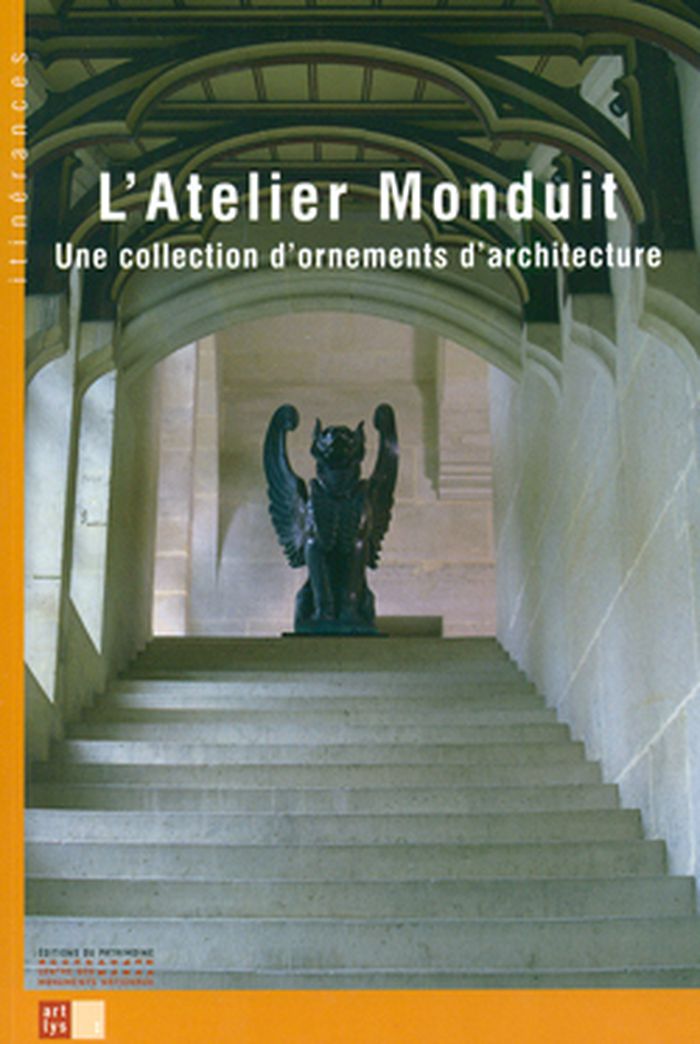
Au coeur du château de Pierrefonds, une collection originale s’offre aux visiteurs : les ornements d’architecture créés par Honoré Monduit. Offerte par ses descendants, elle est l’un des trésors du château. Ce livre permet de découvrir le travail de ce collaborateur de Viollet-le-Duc sur les grands chantiers de restauration. Il fut aussi l’un des principaux artisans de la statue de la Liberté, de la fontaine Saint-Michel et des toitures de l’Hôtel de Ville à Paris, du beffroi d’Arras… En obtenant d’importantes commandes publiques et privées, Monduit se lança dans une véritable renaissance de la plomberie et de la cuivrerie d’art. Travaillant avec les architectes et les sculpteurs les plus illustres de leur temps, les ateliers produisirent ainsi nombre de faîtages, épis de faîtage, poinçons,gargouilles, sculptures animalières, statuaires selon la technique du métal repoussé.
L'Atelier Monduit : une collection d'ornements d'architecture
Actions:
Prix:
$21.95
(disponible sur commande)
Résumé:
Au coeur du château de Pierrefonds, une collection originale s’offre aux visiteurs : les ornements d’architecture créés par Honoré Monduit. Offerte par ses descendants, elle est l’un des trésors du château. Ce livre permet de découvrir le travail de ce collaborateur de Viollet-le-Duc sur les grands chantiers de restauration. Il fut aussi l’un des principaux artisans de la statue de la Liberté, de la fontaine Saint-Michel et des toitures de l’Hôtel de Ville à Paris, du beffroi d’Arras… En obtenant d’importantes commandes publiques et privées, Monduit se lança dans une véritable renaissance de la plomberie et de la cuivrerie d’art. Travaillant avec les architectes et les sculpteurs les plus illustres de leur temps, les ateliers produisirent ainsi nombre de faîtages, épis de faîtage, poinçons,gargouilles, sculptures animalières, statuaires selon la technique du métal repoussé.
Classification:
livres
livres
Publication:
avril 2011
avril 2011
Sujet:
Ornementation
Ornementation
Classification:
livres
livres
Prix:
$69.95
(disponible sur commande)
Résumé:
An unusual collaboration among art historians and historians of science, this book demonstrates how printmakers of the Northern Renaissance, far from merely illustrating the ideas of others, contributed to scientific investigations of their time. Hans Holbein, for instance, worked with cosmographers and instrument makers on some of the earliest sundial manuals published;(...)
$69.95
(disponible sur commande)
Résumé:
An unusual collaboration among art historians and historians of science, this book demonstrates how printmakers of the Northern Renaissance, far from merely illustrating the ideas of others, contributed to scientific investigations of their time. Hans Holbein, for instance, worked with cosmographers and instrument makers on some of the earliest sundial manuals published;(...)
Titre:
Prints and the pursuit of knowledge in early modern Europe
Actions:
Prix:
$69.95
(disponible sur commande)
Résumé:
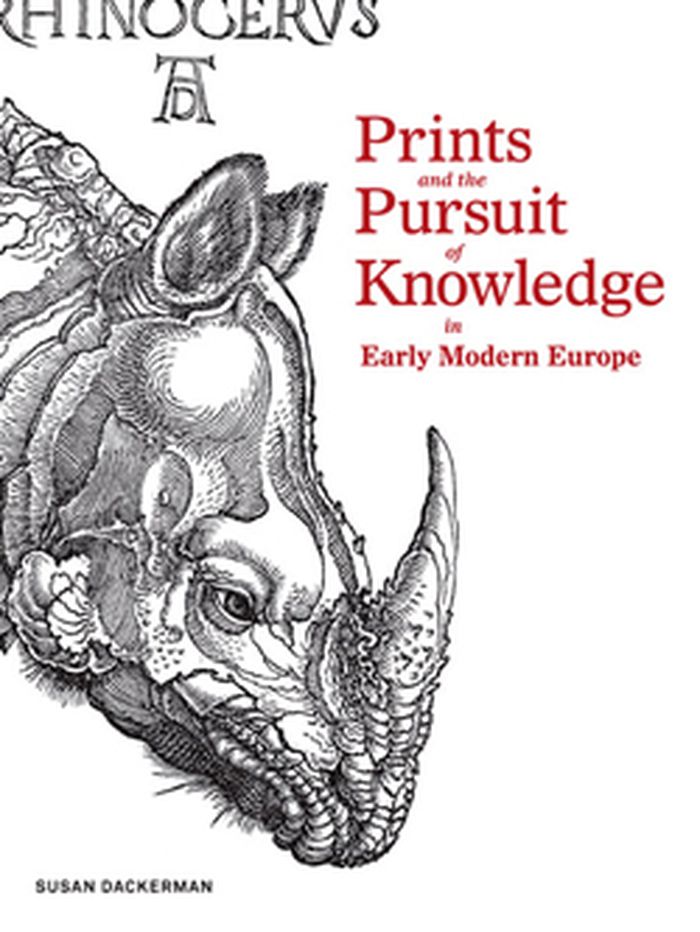
An unusual collaboration among art historians and historians of science, this book demonstrates how printmakers of the Northern Renaissance, far from merely illustrating the ideas of others, contributed to scientific investigations of their time. Hans Holbein, for instance, worked with cosmographers and instrument makers on some of the earliest sundial manuals published; Albrecht Dürer produced the first printed maps of the constellations, which astronomers copied for over a century; and Hendrick Goltzius's depiction of the muscle-bound Hercules served as a study aid for students of anatomy. This books features fascinating reproductions of woodcuts, engravings, and etchings; maps, globe gores, and globes; multilayered anatomical "flap" prints; and paper scientific instruments used for observation and measurement. Among the "do-it-yourself" paper instruments were sundials and astrolabes, and the book incorporates a facsimile of globe gores for the reader to cut out and assemble.
Prints and the pursuit of knowledge in early modern Europe
Actions:
Prix:
$69.95
(disponible sur commande)
Résumé:
An unusual collaboration among art historians and historians of science, this book demonstrates how printmakers of the Northern Renaissance, far from merely illustrating the ideas of others, contributed to scientific investigations of their time. Hans Holbein, for instance, worked with cosmographers and instrument makers on some of the earliest sundial manuals published; Albrecht Dürer produced the first printed maps of the constellations, which astronomers copied for over a century; and Hendrick Goltzius's depiction of the muscle-bound Hercules served as a study aid for students of anatomy. This books features fascinating reproductions of woodcuts, engravings, and etchings; maps, globe gores, and globes; multilayered anatomical "flap" prints; and paper scientific instruments used for observation and measurement. Among the "do-it-yourself" paper instruments were sundials and astrolabes, and the book incorporates a facsimile of globe gores for the reader to cut out and assemble.
Classification:
livres
livres
Publication:
novembre 2011
novembre 2011
Sujet:
Théorie de l’art
Théorie de l’art
Classification:
livres
livres
Actions:
Prix:
$69.95
(disponible sur commande)
Résumé:
During the summer months of 2011, the Migros Museum für Gegenwartskunst inaugurated a sculpture project on the grounds of the Froh Ussicht estate in Samstagern, Zurich. The project was inspired by Bomarzo, the famous Italian Renaissance garden populated with fantastical and monstrous sculptures and follies (i.e. buildings constructed primarily for the embellishment of a(...)
$69.95
(disponible sur commande)
Résumé:
During the summer months of 2011, the Migros Museum für Gegenwartskunst inaugurated a sculpture project on the grounds of the Froh Ussicht estate in Samstagern, Zurich. The project was inspired by Bomarzo, the famous Italian Renaissance garden populated with fantastical and monstrous sculptures and follies (i.e. buildings constructed primarily for the embellishment of a(...)
Titre:
The garden of forking paths: an anthology about contemporary follies
Actions:
Prix:
$69.95
(disponible sur commande)
Résumé:
During the summer months of 2011, the Migros Museum für Gegenwartskunst inaugurated a sculpture project on the grounds of the Froh Ussicht estate in Samstagern, Zurich. The project was inspired by Bomarzo, the famous Italian Renaissance garden populated with fantastical and monstrous sculptures and follies (i.e. buildings constructed primarily for the embellishment of a landscape). Artists Pablo Bronstein, Liz Craft, Ida Ekblad, Geoffrey Farmer, Kerstin Kartscher, Ragnar Kjartansson, Fabian Marti, Peter Regli and Thiago Rocha Pitta all devised their own fantastical narratives in response to Bomarzo. The Garden of Forking Paths enlarges upon this innovative exhibition with reproductions of installed works, and essays by architecture and garden theorists and writers on the history of follies and the interaction between art and garden: Lars Bang Larsen, Michael Bracewell, Horst Bredekamp, Brian Dillon, Patrick Eyres, Heike Munder, Anthony Vidler and Catherine Wood.
The garden of forking paths: an anthology about contemporary follies
Actions:
Prix:
$69.95
(disponible sur commande)
Résumé:
During the summer months of 2011, the Migros Museum für Gegenwartskunst inaugurated a sculpture project on the grounds of the Froh Ussicht estate in Samstagern, Zurich. The project was inspired by Bomarzo, the famous Italian Renaissance garden populated with fantastical and monstrous sculptures and follies (i.e. buildings constructed primarily for the embellishment of a landscape). Artists Pablo Bronstein, Liz Craft, Ida Ekblad, Geoffrey Farmer, Kerstin Kartscher, Ragnar Kjartansson, Fabian Marti, Peter Regli and Thiago Rocha Pitta all devised their own fantastical narratives in response to Bomarzo. The Garden of Forking Paths enlarges upon this innovative exhibition with reproductions of installed works, and essays by architecture and garden theorists and writers on the history of follies and the interaction between art and garden: Lars Bang Larsen, Michael Bracewell, Horst Bredekamp, Brian Dillon, Patrick Eyres, Heike Munder, Anthony Vidler and Catherine Wood.
Classification:
livres
livres
Publication:
avril 2012
avril 2012
Sujet:
Jardins
Jardins
Classification:
livres
livres

Actions:
Prix:
$75.00
(disponible en magasin)
Résumé:
Photographie et architecture: 1839-1939 regroupe des oeuvres qui montrent divers aspects de l'histoire de l'architecture vus à travers la photographie, et de l'histoire de la photographie vus à travers l'architecture. Cette sélection de cent quarante-huit photographies originales de la collection du Centre Canadien d'Architecture démontre la grande richesse du sujet, qui(...)
$75.00
(disponible en magasin)
Résumé:
Photographie et architecture: 1839-1939 regroupe des oeuvres qui montrent divers aspects de l'histoire de l'architecture vus à travers la photographie, et de l'histoire de la photographie vus à travers l'architecture. Cette sélection de cent quarante-huit photographies originales de la collection du Centre Canadien d'Architecture démontre la grande richesse du sujet, qui(...)
Titre:
Photographie et architecture 1839-1939
Actions:
Prix:
$75.00
(disponible en magasin)
Résumé:
Photographie et architecture: 1839-1939 regroupe des oeuvres qui montrent divers aspects de l'histoire de l'architecture vus à travers la photographie, et de l'histoire de la photographie vus à travers l'architecture. Cette sélection de cent quarante-huit photographies originales de la collection du Centre Canadien d'Architecture démontre la grande richesse du sujet, qui comprend les origines de la photographie en Angleterre et en France, les premières expéditions accompagnées de photographes qui ramenèrent des images des monuments les plus célèbres, de la Méditerreanée jusqu'à l'Etrême-Orient, enfin les grands documentaires photographiques du dix-neuvième siècle. Des oeuvres de la renaissance américaine en photographie, au cours des années 1920 et 1930, explorent sous divers angles la verticalité de la ville moderne. La dernière partie du livre est consacrée à des oeuvres qui reflètent les idées architecturales développées en Allemagne entre les deux guerres mondiales.
Photographie et architecture 1839-1939
Actions:
Prix:
$75.00
(disponible en magasin)
Résumé:
Photographie et architecture: 1839-1939 regroupe des oeuvres qui montrent divers aspects de l'histoire de l'architecture vus à travers la photographie, et de l'histoire de la photographie vus à travers l'architecture. Cette sélection de cent quarante-huit photographies originales de la collection du Centre Canadien d'Architecture démontre la grande richesse du sujet, qui comprend les origines de la photographie en Angleterre et en France, les premières expéditions accompagnées de photographes qui ramenèrent des images des monuments les plus célèbres, de la Méditerreanée jusqu'à l'Etrême-Orient, enfin les grands documentaires photographiques du dix-neuvième siècle. Des oeuvres de la renaissance américaine en photographie, au cours des années 1920 et 1930, explorent sous divers angles la verticalité de la ville moderne. La dernière partie du livre est consacrée à des oeuvres qui reflètent les idées architecturales développées en Allemagne entre les deux guerres mondiales.
Classification:
livres
livres
Publication:
janvier 1983, Montréal
janvier 1983, Montréal
Sujet:
Publications du CCA
Publications du CCA
Classification:
livres
livres
Actions:
Prix:
$45.95
(disponible sur commande)
Résumé:
In this latest work, art historian T. J. Clark sets out to investigate the different ways painting has depicted the dream of God's kingdom come: heaven descended to earth. He goes back to the late Middle Ages and Renaissance- to Giotto in Padua, Bruegel facing the horrors of religious war, Poussin painting the Sacraments, and Veronese unfolding the human comedy, in(...)
$45.95
(disponible sur commande)
Résumé:
In this latest work, art historian T. J. Clark sets out to investigate the different ways painting has depicted the dream of God's kingdom come: heaven descended to earth. He goes back to the late Middle Ages and Renaissance- to Giotto in Padua, Bruegel facing the horrors of religious war, Poussin painting the Sacraments, and Veronese unfolding the human comedy, in(...)
Titre:
Heaven on earth: painting and the life to come
Actions:
Prix:
$45.95
(disponible sur commande)
Résumé:
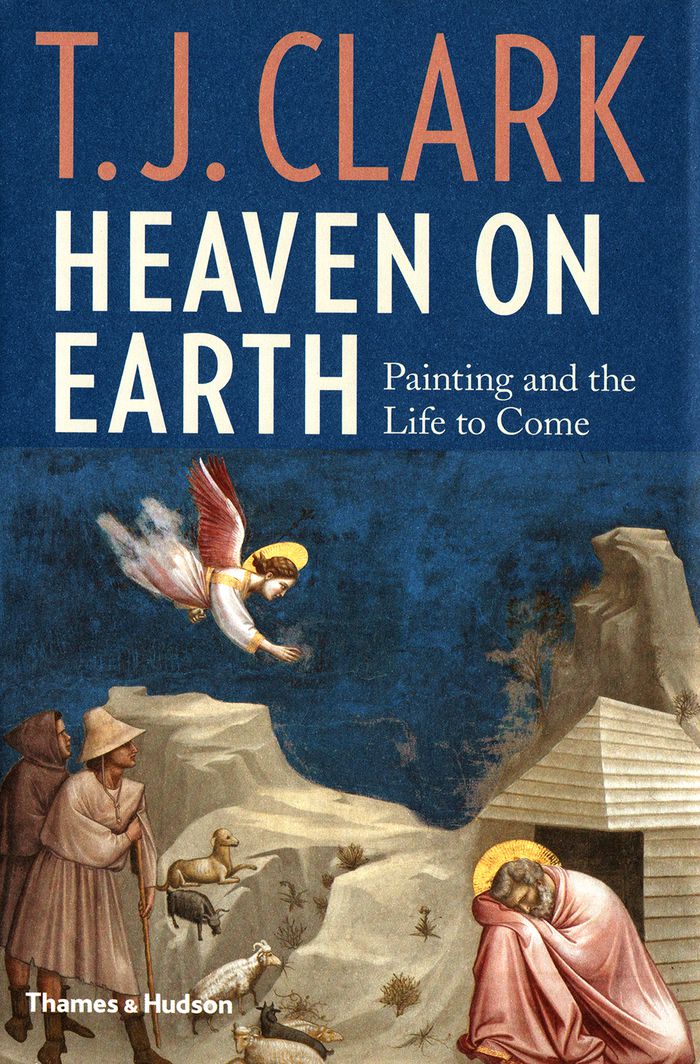
In this latest work, art historian T. J. Clark sets out to investigate the different ways painting has depicted the dream of God's kingdom come: heaven descended to earth. He goes back to the late Middle Ages and Renaissance- to Giotto in Padua, Bruegel facing the horrors of religious war, Poussin painting the Sacraments, and Veronese unfolding the human comedy, in particular his inscrutable Allegory of Love. Was it ultimately to painting's advantage that in an age of orthodoxy and enforced censorship (threats of hellfire, burnings at the stake) artists found ways reflect on the powers and limitations of religion without putting their thoughts into words? In conclusion Clark brings us into the Nuclear Age with Picasso's Fall of Icarus, made for UNESCO in 1958, which already seems to signal, or even prescribe, an age when all futures are dead.
Heaven on earth: painting and the life to come
Actions:
Prix:
$45.95
(disponible sur commande)
Résumé:
In this latest work, art historian T. J. Clark sets out to investigate the different ways painting has depicted the dream of God's kingdom come: heaven descended to earth. He goes back to the late Middle Ages and Renaissance- to Giotto in Padua, Bruegel facing the horrors of religious war, Poussin painting the Sacraments, and Veronese unfolding the human comedy, in particular his inscrutable Allegory of Love. Was it ultimately to painting's advantage that in an age of orthodoxy and enforced censorship (threats of hellfire, burnings at the stake) artists found ways reflect on the powers and limitations of religion without putting their thoughts into words? In conclusion Clark brings us into the Nuclear Age with Picasso's Fall of Icarus, made for UNESCO in 1958, which already seems to signal, or even prescribe, an age when all futures are dead.
Classification:
livres
livres
Publication:
novembre 2018
novembre 2018
Sujet:
Théorie de l’art
Théorie de l’art
Classification:
livres
livres
Actions:
Prix:
$46.95
(disponible sur commande)
Résumé:
From the dawn of European civilization to the twentieth century, the automaton—better known today as the robot—has captured the Western imagination and provided a vital lens into the nature of humanity. Historian Minsoo Kang argues that to properly understand the human-as-machine and the human-as-fundamentally-different-from-machine, we must trace the origins of these(...)
$46.95
(disponible sur commande)
Résumé:
From the dawn of European civilization to the twentieth century, the automaton—better known today as the robot—has captured the Western imagination and provided a vital lens into the nature of humanity. Historian Minsoo Kang argues that to properly understand the human-as-machine and the human-as-fundamentally-different-from-machine, we must trace the origins of these(...)
Titre:
Sublime dreams of living machines: The automaton in the European imagination
Actions:
Prix:
$46.95
(disponible sur commande)
Résumé:
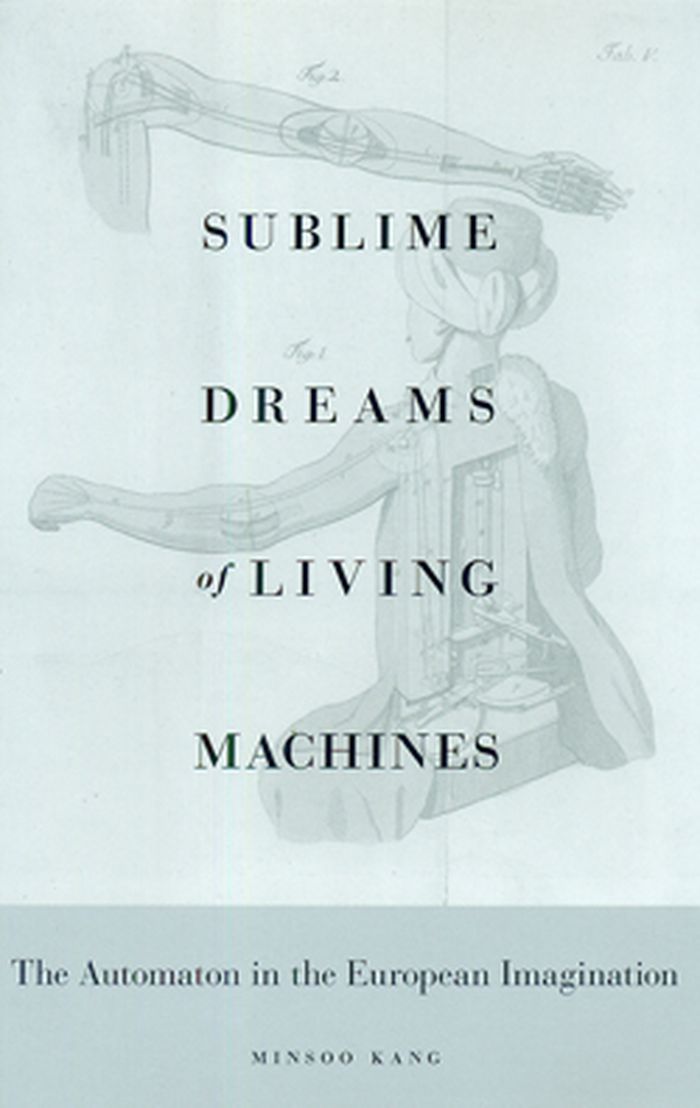
From the dawn of European civilization to the twentieth century, the automaton—better known today as the robot—has captured the Western imagination and provided a vital lens into the nature of humanity. Historian Minsoo Kang argues that to properly understand the human-as-machine and the human-as-fundamentally-different-from-machine, we must trace the origins of these ideas and examine how they were transformed by intellectual, cultural, and artistic appearances of the automaton throughout the history of the West. Kang tracks the first appearance of the automaton in ancient myths through the medieval and Renaissance periods, marks the proliferation of the automaton as a central intellectual concept in the Scientific Revolution and the subsequent backlash during the Enlightenment, and details appearances in Romantic literature and the introduction of the living machine in the Industrial Age.
Sublime dreams of living machines: The automaton in the European imagination
Actions:
Prix:
$46.95
(disponible sur commande)
Résumé:
From the dawn of European civilization to the twentieth century, the automaton—better known today as the robot—has captured the Western imagination and provided a vital lens into the nature of humanity. Historian Minsoo Kang argues that to properly understand the human-as-machine and the human-as-fundamentally-different-from-machine, we must trace the origins of these ideas and examine how they were transformed by intellectual, cultural, and artistic appearances of the automaton throughout the history of the West. Kang tracks the first appearance of the automaton in ancient myths through the medieval and Renaissance periods, marks the proliferation of the automaton as a central intellectual concept in the Scientific Revolution and the subsequent backlash during the Enlightenment, and details appearances in Romantic literature and the introduction of the living machine in the Industrial Age.
Classification:
livres
livres
Publication:
février 2011
février 2011
Sujet:
Théorie/ philosophie
Théorie/ philosophie
Classification:
livres
livres
Titre:
Trois zoos humains
Trois zoos humains
Actions:
Prix:
$20.00
(disponible sur commande)
Résumé:
Avec crainte ou fascination pour l'Autre et l'Ailleurs, humanisme, exotisme et zoos dialoguent depuis longtemps dans l'histoire de l'Occident. Que l'animal selon Heidegger soit « pauvre en monde » ne dépare nullement la distance maintenue entre le sauvage primitif et son « inventeur » scientifique ou colonial. Mais, ainsi exploré et reconstruit, l'homme serait-il vraiment(...)
$20.00
(disponible sur commande)
Résumé:
Avec crainte ou fascination pour l'Autre et l'Ailleurs, humanisme, exotisme et zoos dialoguent depuis longtemps dans l'histoire de l'Occident. Que l'animal selon Heidegger soit « pauvre en monde » ne dépare nullement la distance maintenue entre le sauvage primitif et son « inventeur » scientifique ou colonial. Mais, ainsi exploré et reconstruit, l'homme serait-il vraiment(...)
Titre:
Trois zoos humains
Actions:
Prix:
$20.00
(disponible sur commande)
Résumé:
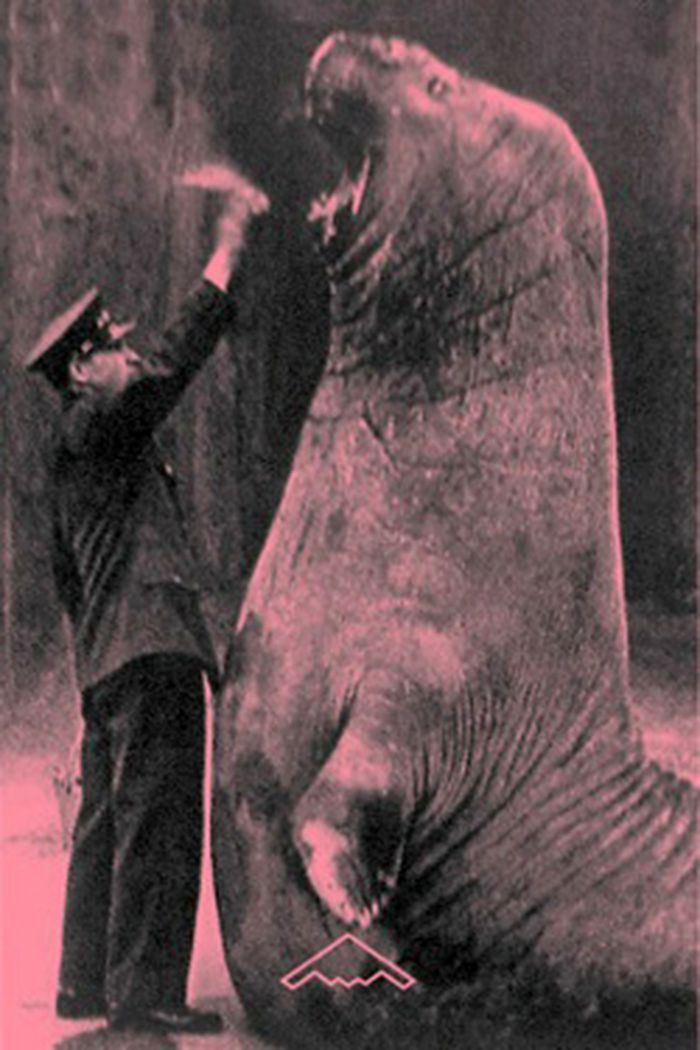
Avec crainte ou fascination pour l'Autre et l'Ailleurs, humanisme, exotisme et zoos dialoguent depuis longtemps dans l'histoire de l'Occident. Que l'animal selon Heidegger soit « pauvre en monde » ne dépare nullement la distance maintenue entre le sauvage primitif et son « inventeur » scientifique ou colonial. Mais, ainsi exploré et reconstruit, l'homme serait-il vraiment devenu un singe affranchi de sa cage ontologique ? Ne serait-il pas l'architecte ayant fait du monde un parc animalier presque sous contrôle ? Et si, par-delà les premières ménageries de la Renaissance, il y avait eu au moins trois autres « humanismes » du zoo : celui des zoos anthropologiques du Jardin d'Acclimatation ; celui de la condition animale d'après-guerre, si interrogatifs au regard des camps du IIIe Reich ; et celui d'un « jardin planétaire » artificiel pour animaux sauvages, Pangée 2.0 sur le thème de leur disparition et, avec eux, de la nôtre ?
Trois zoos humains
Actions:
Prix:
$20.00
(disponible sur commande)
Résumé:
Avec crainte ou fascination pour l'Autre et l'Ailleurs, humanisme, exotisme et zoos dialoguent depuis longtemps dans l'histoire de l'Occident. Que l'animal selon Heidegger soit « pauvre en monde » ne dépare nullement la distance maintenue entre le sauvage primitif et son « inventeur » scientifique ou colonial. Mais, ainsi exploré et reconstruit, l'homme serait-il vraiment devenu un singe affranchi de sa cage ontologique ? Ne serait-il pas l'architecte ayant fait du monde un parc animalier presque sous contrôle ? Et si, par-delà les premières ménageries de la Renaissance, il y avait eu au moins trois autres « humanismes » du zoo : celui des zoos anthropologiques du Jardin d'Acclimatation ; celui de la condition animale d'après-guerre, si interrogatifs au regard des camps du IIIe Reich ; et celui d'un « jardin planétaire » artificiel pour animaux sauvages, Pangée 2.0 sur le thème de leur disparition et, avec eux, de la nôtre ?
Classification:
livres
livres
Publication:
novembre 2012
novembre 2012
Sujet:
Théorie de l’architecture
Théorie de l’architecture
Classification:
périodiques
périodiques
Actions:
Prix:
$50.00
(disponible sur commande)
Résumé:
For centuries, architectural theory, discourse and agency have been based on diurnal and solar paradigms. References to night in Vitruvius’s De architectura are few, and the same absence is notable in Renaissance treatises by Alberti or Palladio. It was not until the 19th and 20th centuries that the invention and institutionalization of artificial light in private and(...)
$50.00
(disponible sur commande)
Résumé:
For centuries, architectural theory, discourse and agency have been based on diurnal and solar paradigms. References to night in Vitruvius’s De architectura are few, and the same absence is notable in Renaissance treatises by Alberti or Palladio. It was not until the 19th and 20th centuries that the invention and institutionalization of artificial light in private and(...)
Publication:
juillet 2024
juillet 2024
Titre:
Nocturnal history of architecture. Column issue 2
Actions:
Prix:
$50.00
(disponible sur commande)
Résumé:
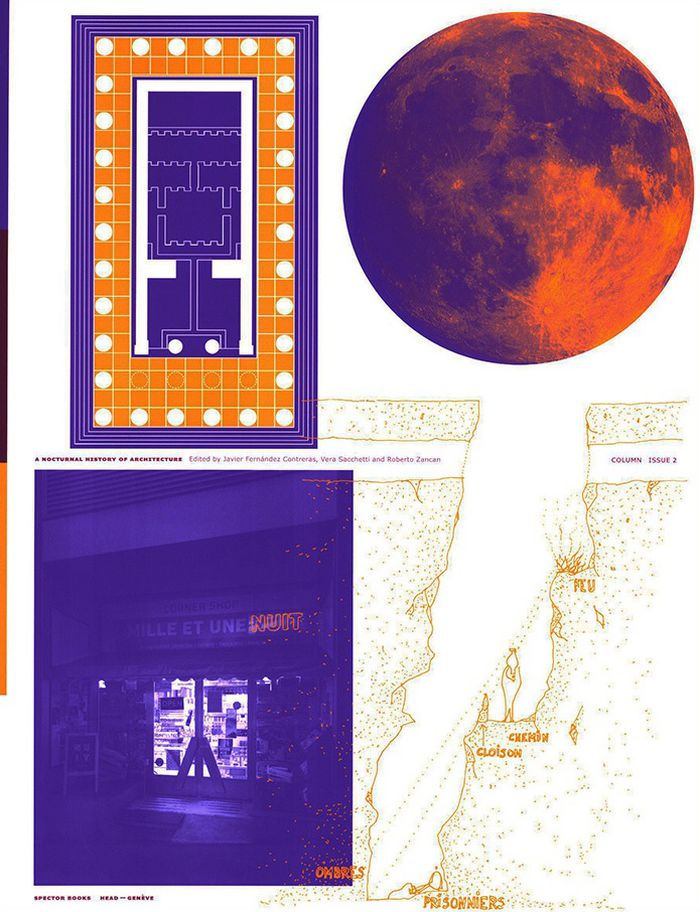
For centuries, architectural theory, discourse and agency have been based on diurnal and solar paradigms. References to night in Vitruvius’s De architectura are few, and the same absence is notable in Renaissance treatises by Alberti or Palladio. It was not until the 19th and 20th centuries that the invention and institutionalization of artificial light in private and public spaces gradually transformed conceptions of night in the architectural discipline. This volume offers the first attempt at a nocturnal history of architecture. What emerges from the studies is the thesis that the identity of human beings—across time and their domestic, professional and cultural spaces—is powerfully determined by the parameters of nighttime. By analyzing and studying "night scenes," this book reveals how the night is a laboratory for the development of new forms of conceptualizing space and, ultimately, of living.
Nocturnal history of architecture. Column issue 2
Actions:
Prix:
$50.00
(disponible sur commande)
Résumé:
For centuries, architectural theory, discourse and agency have been based on diurnal and solar paradigms. References to night in Vitruvius’s De architectura are few, and the same absence is notable in Renaissance treatises by Alberti or Palladio. It was not until the 19th and 20th centuries that the invention and institutionalization of artificial light in private and public spaces gradually transformed conceptions of night in the architectural discipline. This volume offers the first attempt at a nocturnal history of architecture. What emerges from the studies is the thesis that the identity of human beings—across time and their domestic, professional and cultural spaces—is powerfully determined by the parameters of nighttime. By analyzing and studying "night scenes," this book reveals how the night is a laboratory for the development of new forms of conceptualizing space and, ultimately, of living.
Classification:
périodiques
périodiques
Publication:
juillet 2024
juillet 2024
Classification:
périodiques
périodiques
Actions:
Prix:
$30.00
(disponible en magasin)
Résumé:
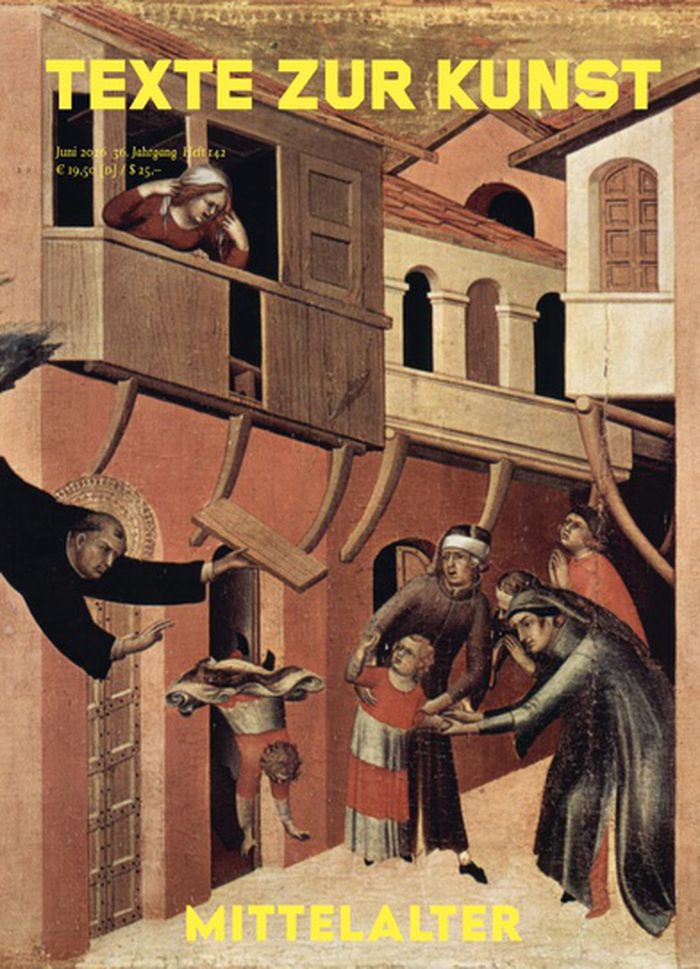
Ever since the term Middle Ages came into use, this historical era has been inextricably bound up with notions of alterity. Beginning in the 14th century, the picture of a dark age was utilized as a foil to set off the ideals of Renaissance enlightenment and humanism; later on, the Romantics pioneered the vision of the Middle Ages as an era unspoiled by advancing(...)
$30.00
(disponible en magasin)
Résumé:
Ever since the term Middle Ages came into use, this historical era has been inextricably bound up with notions of alterity. Beginning in the 14th century, the picture of a dark age was utilized as a foil to set off the ideals of Renaissance enlightenment and humanism; later on, the Romantics pioneered the vision of the Middle Ages as an era unspoiled by advancing(...)
Titre:
Texte zur kunst #142: Mittelalter
Actions:
Prix:
$30.00
(disponible en magasin)
Résumé:
Ever since the term Middle Ages came into use, this historical era has been inextricably bound up with notions of alterity. Beginning in the 14th century, the picture of a dark age was utilized as a foil to set off the ideals of Renaissance enlightenment and humanism; later on, the Romantics pioneered the vision of the Middle Ages as an era unspoiled by advancing industrialization, onto which they projected their longing for a way of life in harmony with nature and spirituality. The temptation to escape the complex and unsettled present for an allegedly simpler past is also characteristic of references to the Middle Ages in contemporary pop culture and politics. This issue of TEXTE ZUR KUNST counters such simplistic perspectives with a more nuanced portrayal of the Middle Ages that acknowledges historical parallels and continuities as well as contradictions.
Texte zur kunst #142: Mittelalter
Actions:
Prix:
$30.00
(disponible en magasin)
Résumé:
Ever since the term Middle Ages came into use, this historical era has been inextricably bound up with notions of alterity. Beginning in the 14th century, the picture of a dark age was utilized as a foil to set off the ideals of Renaissance enlightenment and humanism; later on, the Romantics pioneered the vision of the Middle Ages as an era unspoiled by advancing industrialization, onto which they projected their longing for a way of life in harmony with nature and spirituality. The temptation to escape the complex and unsettled present for an allegedly simpler past is also characteristic of references to the Middle Ages in contemporary pop culture and politics. This issue of TEXTE ZUR KUNST counters such simplistic perspectives with a more nuanced portrayal of the Middle Ages that acknowledges historical parallels and continuities as well as contradictions.
Classification:
périodiques
périodiques
Publication:
juin 2026
juin 2026
Sujet:
Revues
Revues


