


6146 Résultats
Classification:
archives
Niveau de description archivistique:
Fonds
archives
Niveau de description archivistique:
Fonds
Titre:
Fonds Álvaro Siza
Fonds Álvaro Siza
Numéro de référence:
AP178
Description:
The Álvaro Siza fonds documents the architectural work of Portuguese architect Álvaro Siza. Records in this fonds document Siza’s projects from 1958-2012, including built and unbuilt designs. A collaborative project was established between the Canadian Centre for Architecture (CCA), Fundação de Serralves, and Fundação Calouste Gulbenkian to allow for international research and access to the archive. The archive is shared by the three institutions with each institution holding different projects while collaborating on the descriptive work and increasing the visibility of the archive. The holdings at both the Fundação de Serralves and Fundação Calouste Gulbenkian focus on Siza’s Portuguese projects, while the portion of the archive held by the CCA mainly includes Siza’s projects abroad. All three institutions are committed to describing the archive and making it accessible for scholarly research. The processing of the Siza archive held by the CCA has been divided into four phases to allow for access to parts of the archive while still in process. For the first, second, and third phases, the processing archivist has described the projects from the fifties, sixties, and seventies, as well as projects for the IBA competition in Berlin, urban renewal projects in The Hague from the eighties, urban plans, museums, and individual houses between 1980 and 2000. The processing archivist has also described approximately 203 sketchbooks. Many of these sketchbooks include sketches related to architectural projects which were processed. The complete list of projects processed by the CCA to date can be found in series AP178.S1. The bulk of the Álvaro Siza fonds is arranged in Series AP178.S1, which contains documentation for over 200 of Siza’s architectural projects. Records in this archive are predominantly from 1970 to 2000. Series AP178.S1 mainly contains conceptual, design development, presentation, and working drawings. Also included are photographic materials, models, born digital records, and textual documentation, which include correspondence, project proposals, and notes. The architect’s creative process is captured in 282 sketchbooks arranged in Series AP178.S2. In all there are approximately 60 000 drawings, 3000 folders of textual documentation, 9.46 linear meters of photographs and negatives, 6,545 slides, 250 CD-ROMS, 101 floppy disks, and 371 models that document the architectural activities of Siza and his office. Among the drawings are sketches by Siza on various items, such as napkins, receipts, envelopes, or on the back of working drawings. The fonds contains several types of architectural projects including residential buildings, museums, universities, urban plans, offices, and city restorations. Of particular significance are the sketchbooks, comprised of sketches for architectural projects, Siza’s travels, people, and animals as well as notes and draft letters. The sketchbooks are organized in chronological order, starting in the late 1970’s to the beginning of the 2000’s. Locations, notes, and dates have also been identified on the front of each sketchbook along with the sketchbook number. The sketchbooks provide a unique perspective of Siza’s use of drawing as part of his work process.
AP178
Description:
The Álvaro Siza fonds documents the architectural work of Portuguese architect Álvaro Siza. Records in this fonds document Siza’s projects from 1958-2012, including built and unbuilt designs. A collaborative project was established between the Canadian Centre for Architecture (CCA), Fundação de Serralves, and Fundação Calouste Gulbenkian to allow for international research and access to the archive. The archive is shared by the three institutions with each institution holding different projects while collaborating on the descriptive work and increasing the visibility of the archive. The holdings at both the Fundação de Serralves and Fundação Calouste Gulbenkian focus on Siza’s Portuguese projects, while the portion of the archive held by the CCA mainly includes Siza’s projects abroad. All three institutions are committed to describing the archive and making it accessible for scholarly research. The processing of the Siza archive held by the CCA has been divided into four phases to allow for access to parts of the archive while still in process. For the first, second, and third phases, the processing archivist has described the projects from the fifties, sixties, and seventies, as well as projects for the IBA competition in Berlin, urban renewal projects in The Hague from the eighties, urban plans, museums, and individual houses between 1980 and 2000. The processing archivist has also described approximately 203 sketchbooks. Many of these sketchbooks include sketches related to architectural projects which were processed. The complete list of projects processed by the CCA to date can be found in series AP178.S1. The bulk of the Álvaro Siza fonds is arranged in Series AP178.S1, which contains documentation for over 200 of Siza’s architectural projects. Records in this archive are predominantly from 1970 to 2000. Series AP178.S1 mainly contains conceptual, design development, presentation, and working drawings. Also included are photographic materials, models, born digital records, and textual documentation, which include correspondence, project proposals, and notes. The architect’s creative process is captured in 282 sketchbooks arranged in Series AP178.S2. In all there are approximately 60 000 drawings, 3000 folders of textual documentation, 9.46 linear meters of photographs and negatives, 6,545 slides, 250 CD-ROMS, 101 floppy disks, and 371 models that document the architectural activities of Siza and his office. Among the drawings are sketches by Siza on various items, such as napkins, receipts, envelopes, or on the back of working drawings. The fonds contains several types of architectural projects including residential buildings, museums, universities, urban plans, offices, and city restorations. Of particular significance are the sketchbooks, comprised of sketches for architectural projects, Siza’s travels, people, and animals as well as notes and draft letters. The sketchbooks are organized in chronological order, starting in the late 1970’s to the beginning of the 2000’s. Locations, notes, and dates have also been identified on the front of each sketchbook along with the sketchbook number. The sketchbooks provide a unique perspective of Siza’s use of drawing as part of his work process.
Personnes et institutions:
Date:
1958-2002
1958-2002
Titre:
Fonds Álvaro Siza
Actions:
AP178
Description:
The Álvaro Siza fonds documents the architectural work of Portuguese architect Álvaro Siza. Records in this fonds document Siza’s projects from 1958-2012, including built and unbuilt designs. A collaborative project was established between the Canadian Centre for Architecture (CCA), Fundação de Serralves, and Fundação Calouste Gulbenkian to allow for international research and access to the archive. The archive is shared by the three institutions with each institution holding different projects while collaborating on the descriptive work and increasing the visibility of the archive. The holdings at both the Fundação de Serralves and Fundação Calouste Gulbenkian focus on Siza’s Portuguese projects, while the portion of the archive held by the CCA mainly includes Siza’s projects abroad. All three institutions are committed to describing the archive and making it accessible for scholarly research. The processing of the Siza archive held by the CCA has been divided into four phases to allow for access to parts of the archive while still in process. For the first, second, and third phases, the processing archivist has described the projects from the fifties, sixties, and seventies, as well as projects for the IBA competition in Berlin, urban renewal projects in The Hague from the eighties, urban plans, museums, and individual houses between 1980 and 2000. The processing archivist has also described approximately 203 sketchbooks. Many of these sketchbooks include sketches related to architectural projects which were processed. The complete list of projects processed by the CCA to date can be found in series AP178.S1. The bulk of the Álvaro Siza fonds is arranged in Series AP178.S1, which contains documentation for over 200 of Siza’s architectural projects. Records in this archive are predominantly from 1970 to 2000. Series AP178.S1 mainly contains conceptual, design development, presentation, and working drawings. Also included are photographic materials, models, born digital records, and textual documentation, which include correspondence, project proposals, and notes. The architect’s creative process is captured in 282 sketchbooks arranged in Series AP178.S2. In all there are approximately 60 000 drawings, 3000 folders of textual documentation, 9.46 linear meters of photographs and negatives, 6,545 slides, 250 CD-ROMS, 101 floppy disks, and 371 models that document the architectural activities of Siza and his office. Among the drawings are sketches by Siza on various items, such as napkins, receipts, envelopes, or on the back of working drawings. The fonds contains several types of architectural projects including residential buildings, museums, universities, urban plans, offices, and city restorations. Of particular significance are the sketchbooks, comprised of sketches for architectural projects, Siza’s travels, people, and animals as well as notes and draft letters. The sketchbooks are organized in chronological order, starting in the late 1970’s to the beginning of the 2000’s. Locations, notes, and dates have also been identified on the front of each sketchbook along with the sketchbook number. The sketchbooks provide a unique perspective of Siza’s use of drawing as part of his work process.
Fonds Álvaro Siza
Actions:
AP178
Description:
The Álvaro Siza fonds documents the architectural work of Portuguese architect Álvaro Siza. Records in this fonds document Siza’s projects from 1958-2012, including built and unbuilt designs. A collaborative project was established between the Canadian Centre for Architecture (CCA), Fundação de Serralves, and Fundação Calouste Gulbenkian to allow for international research and access to the archive. The archive is shared by the three institutions with each institution holding different projects while collaborating on the descriptive work and increasing the visibility of the archive. The holdings at both the Fundação de Serralves and Fundação Calouste Gulbenkian focus on Siza’s Portuguese projects, while the portion of the archive held by the CCA mainly includes Siza’s projects abroad. All three institutions are committed to describing the archive and making it accessible for scholarly research. The processing of the Siza archive held by the CCA has been divided into four phases to allow for access to parts of the archive while still in process. For the first, second, and third phases, the processing archivist has described the projects from the fifties, sixties, and seventies, as well as projects for the IBA competition in Berlin, urban renewal projects in The Hague from the eighties, urban plans, museums, and individual houses between 1980 and 2000. The processing archivist has also described approximately 203 sketchbooks. Many of these sketchbooks include sketches related to architectural projects which were processed. The complete list of projects processed by the CCA to date can be found in series AP178.S1. The bulk of the Álvaro Siza fonds is arranged in Series AP178.S1, which contains documentation for over 200 of Siza’s architectural projects. Records in this archive are predominantly from 1970 to 2000. Series AP178.S1 mainly contains conceptual, design development, presentation, and working drawings. Also included are photographic materials, models, born digital records, and textual documentation, which include correspondence, project proposals, and notes. The architect’s creative process is captured in 282 sketchbooks arranged in Series AP178.S2. In all there are approximately 60 000 drawings, 3000 folders of textual documentation, 9.46 linear meters of photographs and negatives, 6,545 slides, 250 CD-ROMS, 101 floppy disks, and 371 models that document the architectural activities of Siza and his office. Among the drawings are sketches by Siza on various items, such as napkins, receipts, envelopes, or on the back of working drawings. The fonds contains several types of architectural projects including residential buildings, museums, universities, urban plans, offices, and city restorations. Of particular significance are the sketchbooks, comprised of sketches for architectural projects, Siza’s travels, people, and animals as well as notes and draft letters. The sketchbooks are organized in chronological order, starting in the late 1970’s to the beginning of the 2000’s. Locations, notes, and dates have also been identified on the front of each sketchbook along with the sketchbook number. The sketchbooks provide a unique perspective of Siza’s use of drawing as part of his work process.
Classification:
archives
Niveau de description archivistique:
Fonds
archives
Niveau de description archivistique:
Fonds
Date:
1958-2002
1958-2002
Personnes et institutions:
Niveau de description archivistique:
Sous-série
Sous-série
Titre:
Broadcast
Broadcast
Numéro de référence:
AP165.S5.SS1
Description:
The Broadcast sub-series, circa 1990 – 2000, consists of 31 video recordings that consist of television broadcasts of Hoberman and his work in transformable design. This includes educational series about Hoberman’s innovation in folding structures, national and international news coverage of Hoberman’s projects and exhibitions, and other collected broadcasts. Material consists of Betacam SP cassettes, MiniDV cassettes, U-matic cassettes and Betacam cassettes. The majority of the records date from the mid to late 90’s to early 2000’s. Video recordings in this sub-series are about Hoberman and/or feature his work in a number of different spaces around the world. It includes television programs featuring Hoberman such as Mister Rogers and The Discovery Channel’s “Invention” series; news coverage from networks such as ABC News and CNN, including footage of President Clinton with the Hoberman Sphere on Eyewitness News, August 16, 1988, and international broadcasts in Japan, Germany, and the Netherlands; and footage of Hoberman’s Innovative Lives Presentation at the Lemelson Centre for the Study of Invention and Innovation at the Smithsonian in 1996.
AP165.S5.SS1
Description:
The Broadcast sub-series, circa 1990 – 2000, consists of 31 video recordings that consist of television broadcasts of Hoberman and his work in transformable design. This includes educational series about Hoberman’s innovation in folding structures, national and international news coverage of Hoberman’s projects and exhibitions, and other collected broadcasts. Material consists of Betacam SP cassettes, MiniDV cassettes, U-matic cassettes and Betacam cassettes. The majority of the records date from the mid to late 90’s to early 2000’s. Video recordings in this sub-series are about Hoberman and/or feature his work in a number of different spaces around the world. It includes television programs featuring Hoberman such as Mister Rogers and The Discovery Channel’s “Invention” series; news coverage from networks such as ABC News and CNN, including footage of President Clinton with the Hoberman Sphere on Eyewitness News, August 16, 1988, and international broadcasts in Japan, Germany, and the Netherlands; and footage of Hoberman’s Innovative Lives Presentation at the Lemelson Centre for the Study of Invention and Innovation at the Smithsonian in 1996.
Personnes et institutions:
Date:
circa 1990-2000
circa 1990-2000
Titre:
Broadcast
Actions:
AP165.S5.SS1
Description:
The Broadcast sub-series, circa 1990 – 2000, consists of 31 video recordings that consist of television broadcasts of Hoberman and his work in transformable design. This includes educational series about Hoberman’s innovation in folding structures, national and international news coverage of Hoberman’s projects and exhibitions, and other collected broadcasts. Material consists of Betacam SP cassettes, MiniDV cassettes, U-matic cassettes and Betacam cassettes. The majority of the records date from the mid to late 90’s to early 2000’s. Video recordings in this sub-series are about Hoberman and/or feature his work in a number of different spaces around the world. It includes television programs featuring Hoberman such as Mister Rogers and The Discovery Channel’s “Invention” series; news coverage from networks such as ABC News and CNN, including footage of President Clinton with the Hoberman Sphere on Eyewitness News, August 16, 1988, and international broadcasts in Japan, Germany, and the Netherlands; and footage of Hoberman’s Innovative Lives Presentation at the Lemelson Centre for the Study of Invention and Innovation at the Smithsonian in 1996.
Broadcast
Actions:
AP165.S5.SS1
Description:
The Broadcast sub-series, circa 1990 – 2000, consists of 31 video recordings that consist of television broadcasts of Hoberman and his work in transformable design. This includes educational series about Hoberman’s innovation in folding structures, national and international news coverage of Hoberman’s projects and exhibitions, and other collected broadcasts. Material consists of Betacam SP cassettes, MiniDV cassettes, U-matic cassettes and Betacam cassettes. The majority of the records date from the mid to late 90’s to early 2000’s. Video recordings in this sub-series are about Hoberman and/or feature his work in a number of different spaces around the world. It includes television programs featuring Hoberman such as Mister Rogers and The Discovery Channel’s “Invention” series; news coverage from networks such as ABC News and CNN, including footage of President Clinton with the Hoberman Sphere on Eyewitness News, August 16, 1988, and international broadcasts in Japan, Germany, and the Netherlands; and footage of Hoberman’s Innovative Lives Presentation at the Lemelson Centre for the Study of Invention and Innovation at the Smithsonian in 1996.
Niveau de description archivistique:
Sub-series 1
Sub-series 1
Date:
circa 1990-2000
circa 1990-2000
Personnes et institutions:
Classification:
archives
Niveau de description archivistique:
Fonds
archives
Niveau de description archivistique:
Fonds
Numéro de référence:
AP057
Résumé:
The Institute for Architecture and Urban Studies (IAUS) fonds is composed primarily of textual and photographic material which document the activities of the IAUS from its inception in 1967 until its dissolution in 1983. Those activities include the publication of three periodicals (Oppositions, October and Skyline), as well as numerous books, conferences, lectures, exhibitions and educational programming. In addition, the IAUS fonds documents the activities of the IAUS' director, architect Peter Eisenman.
AP057
Résumé:
The Institute for Architecture and Urban Studies (IAUS) fonds is composed primarily of textual and photographic material which document the activities of the IAUS from its inception in 1967 until its dissolution in 1983. Those activities include the publication of three periodicals (Oppositions, October and Skyline), as well as numerous books, conferences, lectures, exhibitions and educational programming. In addition, the IAUS fonds documents the activities of the IAUS' director, architect Peter Eisenman.
Personnes et institutions:
Date:
1965-1984
1965-1984
Titre:
Fonds Institute for Architecture and Urban Studies
Actions:
AP057
Résumé:
The Institute for Architecture and Urban Studies (IAUS) fonds is composed primarily of textual and photographic material which document the activities of the IAUS from its inception in 1967 until its dissolution in 1983. Those activities include the publication of three periodicals (Oppositions, October and Skyline), as well as numerous books, conferences, lectures, exhibitions and educational programming. In addition, the IAUS fonds documents the activities of the IAUS' director, architect Peter Eisenman.
Fonds Institute for Architecture and Urban Studies
Actions:
AP057
Résumé:
The Institute for Architecture and Urban Studies (IAUS) fonds is composed primarily of textual and photographic material which document the activities of the IAUS from its inception in 1967 until its dissolution in 1983. Those activities include the publication of three periodicals (Oppositions, October and Skyline), as well as numerous books, conferences, lectures, exhibitions and educational programming. In addition, the IAUS fonds documents the activities of the IAUS' director, architect Peter Eisenman.
Classification:
archives
Niveau de description archivistique:
Fonds
archives
Niveau de description archivistique:
Fonds
Date:
1965-1984
1965-1984
Personnes et institutions:
Classification:
expositions
expositions
Description:
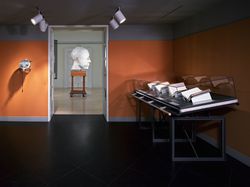
Piero en tête présente des sculptures contemporaines de l’artiste canado-britannique Geoffrey Smedley, ainsi que 30 livres rares datant du XVe au XVIIIe siècle. Les sculptures de Smedley s’inspirent d’une série de dessins de tête humaine, réalisés par le maître de la Renaissance Piero della Francesca. L’exposition relie ces dessins et les sculptures de Smedley à la(...)
Piero en tête présente des sculptures contemporaines de l’artiste canado-britannique Geoffrey Smedley, ainsi que 30 livres rares datant du XVe au XVIIIe siècle. Les sculptures de Smedley s’inspirent d’une série de dessins de tête humaine, réalisés par le maître de la Renaissance Piero della Francesca. L’exposition relie ces dessins et les sculptures de Smedley à la(...)
Localisation:
Salle octogonale
Salle octogonale
Date:
2 mai 2001 au 16 septembre 2001
2 mai 2001 au 16 septembre 2001
Titre:
Piero en tête
Actions:
Description:
Piero en tête présente des sculptures contemporaines de l’artiste canado-britannique Geoffrey Smedley, ainsi que 30 livres rares datant du XVe au XVIIIe siècle. Les sculptures de Smedley s’inspirent d’une série de dessins de tête humaine, réalisés par le maître de la Renaissance Piero della Francesca. L’exposition relie ces dessins et les sculptures de Smedley à la(...)
Piero en tête
Actions:
Description:
Piero en tête présente des sculptures contemporaines de l’artiste canado-britannique Geoffrey Smedley, ainsi que 30 livres rares datant du XVe au XVIIIe siècle. Les sculptures de Smedley s’inspirent d’une série de dessins de tête humaine, réalisés par le maître de la Renaissance Piero della Francesca. L’exposition relie ces dessins et les sculptures de Smedley à la(...)
Classification:
expositions
expositions
Date:
2 mai 2001 au
16 septembre 2001
2 mai 2001 au
16 septembre 2001
Localisation:
Salle octogonale
Salle octogonale
Niveau de description archivistique:
Série(s)
Série(s)
Numéro de référence:
AP140.S2
Description:
Series documents the professional activities of James Stirling, James Gowan, Michael Wilford, and the successive firms of Stirling and Gowan; James Stirling; James Stirling and Partner; James Stirling, Michael Wilford, and Associates; Michael Wilford and Partners; as well as the firm of Michael Wilford GmbH. It chiefly illustrates the architectural and urban planning projects by James Stirling and the successive firms, including earlier theoretical and housing schemes, competition entries, major international commissions, as well as dead projects. The series also relates to exhibitions and publications of the firms' work, to writing and lecturing activities, to prizes, distinctions and honours received by the partners and the successive firms, and to other professional activities including participation to competition juries and teaching. Administrative and office activities are also documented in this series. Material in this series was produced between ca. 1948 and probably 2004. Series contains a large number of reference, conceptual, and design development drawings, publication and presentation drawings and panels, working drawings and several models. Series also contains photographic materials, textual records, film reels and other audiovisual materials, and artefacts.
AP140.S2
Description:
Series documents the professional activities of James Stirling, James Gowan, Michael Wilford, and the successive firms of Stirling and Gowan; James Stirling; James Stirling and Partner; James Stirling, Michael Wilford, and Associates; Michael Wilford and Partners; as well as the firm of Michael Wilford GmbH. It chiefly illustrates the architectural and urban planning projects by James Stirling and the successive firms, including earlier theoretical and housing schemes, competition entries, major international commissions, as well as dead projects. The series also relates to exhibitions and publications of the firms' work, to writing and lecturing activities, to prizes, distinctions and honours received by the partners and the successive firms, and to other professional activities including participation to competition juries and teaching. Administrative and office activities are also documented in this series. Material in this series was produced between ca. 1948 and probably 2004. Series contains a large number of reference, conceptual, and design development drawings, publication and presentation drawings and panels, working drawings and several models. Series also contains photographic materials, textual records, film reels and other audiovisual materials, and artefacts.
Personnes et institutions:
Date:
[ca. 1948-2004?]
[ca. 1948-2004?]
Titre:
James Stirling/Michael Wilford professional papers
Actions:
AP140.S2
Description:
Series documents the professional activities of James Stirling, James Gowan, Michael Wilford, and the successive firms of Stirling and Gowan; James Stirling; James Stirling and Partner; James Stirling, Michael Wilford, and Associates; Michael Wilford and Partners; as well as the firm of Michael Wilford GmbH. It chiefly illustrates the architectural and urban planning projects by James Stirling and the successive firms, including earlier theoretical and housing schemes, competition entries, major international commissions, as well as dead projects. The series also relates to exhibitions and publications of the firms' work, to writing and lecturing activities, to prizes, distinctions and honours received by the partners and the successive firms, and to other professional activities including participation to competition juries and teaching. Administrative and office activities are also documented in this series. Material in this series was produced between ca. 1948 and probably 2004. Series contains a large number of reference, conceptual, and design development drawings, publication and presentation drawings and panels, working drawings and several models. Series also contains photographic materials, textual records, film reels and other audiovisual materials, and artefacts.
James Stirling/Michael Wilford professional papers
Actions:
AP140.S2
Description:
Series documents the professional activities of James Stirling, James Gowan, Michael Wilford, and the successive firms of Stirling and Gowan; James Stirling; James Stirling and Partner; James Stirling, Michael Wilford, and Associates; Michael Wilford and Partners; as well as the firm of Michael Wilford GmbH. It chiefly illustrates the architectural and urban planning projects by James Stirling and the successive firms, including earlier theoretical and housing schemes, competition entries, major international commissions, as well as dead projects. The series also relates to exhibitions and publications of the firms' work, to writing and lecturing activities, to prizes, distinctions and honours received by the partners and the successive firms, and to other professional activities including participation to competition juries and teaching. Administrative and office activities are also documented in this series. Material in this series was produced between ca. 1948 and probably 2004. Series contains a large number of reference, conceptual, and design development drawings, publication and presentation drawings and panels, working drawings and several models. Series also contains photographic materials, textual records, film reels and other audiovisual materials, and artefacts.
Niveau de description archivistique:
Series 2
Series 2
Date:
[ca. 1948-2004?]
[ca. 1948-2004?]
Personnes et institutions:
Classification:
expositions
expositions
Actions:
Description:
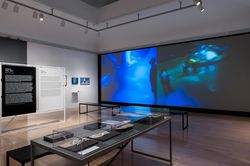
Environnements virtuels, objets interactifs marque la seconde étape du projet de recherche amorcé avec l’exposition Archéologie du numérique en 2013. Sous le commissariat de Greg Lynn, cette initiative explore les liens entre architecture et technologie numérique des années 1980 à la fin du XXe siècle. La première exposition s’intéressait aux pratiques émergentes(...)
Environnements virtuels, objets interactifs marque la seconde étape du projet de recherche amorcé avec l’exposition Archéologie du numérique en 2013. Sous le commissariat de Greg Lynn, cette initiative explore les liens entre architecture et technologie numérique des années 1980 à la fin du XXe siècle. La première exposition s’intéressait aux pratiques émergentes(...)
Localisation:
Salles principales
Salles principales
Date:
21 mai 2014 au 5 octobre 2014
21 mai 2014 au 5 octobre 2014
Titre:
Archéologie du numérique : Environnements virtuels, objets interactifs
Actions:
Description:
Environnements virtuels, objets interactifs marque la seconde étape du projet de recherche amorcé avec l’exposition Archéologie du numérique en 2013. Sous le commissariat de Greg Lynn, cette initiative explore les liens entre architecture et technologie numérique des années 1980 à la fin du XXe siècle. La première exposition s’intéressait aux pratiques émergentes(...)
Archéologie du numérique : Environnements virtuels, objets interactifs
Actions:
Description:
Environnements virtuels, objets interactifs marque la seconde étape du projet de recherche amorcé avec l’exposition Archéologie du numérique en 2013. Sous le commissariat de Greg Lynn, cette initiative explore les liens entre architecture et technologie numérique des années 1980 à la fin du XXe siècle. La première exposition s’intéressait aux pratiques émergentes(...)
Classification:
expositions
expositions
Date:
21 mai 2014 au
5 octobre 2014
21 mai 2014 au
5 octobre 2014
Localisation:
Salles principales
Salles principales
Classification:
documents textuels
documents textuels
Actions:
Numéro de référence:
DR2001:0029
Description:
documents include correspondence to colleagues and universities for 1991-1992: Coop Himmelblau, UMRISS - Coop Himmelblauk Stephanie Dudek, Kurt Forster, Frank O. Gehry & Assoc., Fabio Ghersi (architect), David Goldblatt - Journal of Aesthetics and Art Criticism, Zaha Hadid, Philip Johnson, Philip Johnson 85th Birthday Invoices, Libeskind, Daniel and Nina, Macklowe - CMRI (drawings for exhibition), Rick Mandell, Edith Miller, David Neuman, Peter Noever - Architecture in Transition, John Rajchman, Renato Rizzi, Zoran Sladoljev, Antoine Predock, Antonia Soulez, Mark Taylor, Massimo Vignelli and Faruk Yorgancioglu. University Publications: University of California - Riverside, The Cooper Union, Cornell University, The Chicago Institute (for Architecture and Urbanism), Columbia High School, Columbia University, Universitat Hanover, Harvard Graduate school of Design, The University of Illinois at Chicago, Oberlin (College), Ohio State University, Pratt Institute, Princeton University, Rice School of Architecture, College of William and Mary and Richard Bland College.
DR2001:0029
Description:
documents include correspondence to colleagues and universities for 1991-1992: Coop Himmelblau, UMRISS - Coop Himmelblauk Stephanie Dudek, Kurt Forster, Frank O. Gehry & Assoc., Fabio Ghersi (architect), David Goldblatt - Journal of Aesthetics and Art Criticism, Zaha Hadid, Philip Johnson, Philip Johnson 85th Birthday Invoices, Libeskind, Daniel and Nina, Macklowe - CMRI (drawings for exhibition), Rick Mandell, Edith Miller, David Neuman, Peter Noever - Architecture in Transition, John Rajchman, Renato Rizzi, Zoran Sladoljev, Antoine Predock, Antonia Soulez, Mark Taylor, Massimo Vignelli and Faruk Yorgancioglu. University Publications: University of California - Riverside, The Cooper Union, Cornell University, The Chicago Institute (for Architecture and Urbanism), Columbia High School, Columbia University, Universitat Hanover, Harvard Graduate school of Design, The University of Illinois at Chicago, Oberlin (College), Ohio State University, Pratt Institute, Princeton University, Rice School of Architecture, College of William and Mary and Richard Bland College.
Personnes et institutions:
Titre:
Correspondence to colleagues and universities
Actions:
DR2001:0029
Description:
documents include correspondence to colleagues and universities for 1991-1992: Coop Himmelblau, UMRISS - Coop Himmelblauk Stephanie Dudek, Kurt Forster, Frank O. Gehry & Assoc., Fabio Ghersi (architect), David Goldblatt - Journal of Aesthetics and Art Criticism, Zaha Hadid, Philip Johnson, Philip Johnson 85th Birthday Invoices, Libeskind, Daniel and Nina, Macklowe - CMRI (drawings for exhibition), Rick Mandell, Edith Miller, David Neuman, Peter Noever - Architecture in Transition, John Rajchman, Renato Rizzi, Zoran Sladoljev, Antoine Predock, Antonia Soulez, Mark Taylor, Massimo Vignelli and Faruk Yorgancioglu. University Publications: University of California - Riverside, The Cooper Union, Cornell University, The Chicago Institute (for Architecture and Urbanism), Columbia High School, Columbia University, Universitat Hanover, Harvard Graduate school of Design, The University of Illinois at Chicago, Oberlin (College), Ohio State University, Pratt Institute, Princeton University, Rice School of Architecture, College of William and Mary and Richard Bland College.
Correspondence to colleagues and universities
Actions:
DR2001:0029
Description:
documents include correspondence to colleagues and universities for 1991-1992: Coop Himmelblau, UMRISS - Coop Himmelblauk Stephanie Dudek, Kurt Forster, Frank O. Gehry & Assoc., Fabio Ghersi (architect), David Goldblatt - Journal of Aesthetics and Art Criticism, Zaha Hadid, Philip Johnson, Philip Johnson 85th Birthday Invoices, Libeskind, Daniel and Nina, Macklowe - CMRI (drawings for exhibition), Rick Mandell, Edith Miller, David Neuman, Peter Noever - Architecture in Transition, John Rajchman, Renato Rizzi, Zoran Sladoljev, Antoine Predock, Antonia Soulez, Mark Taylor, Massimo Vignelli and Faruk Yorgancioglu. University Publications: University of California - Riverside, The Cooper Union, Cornell University, The Chicago Institute (for Architecture and Urbanism), Columbia High School, Columbia University, Universitat Hanover, Harvard Graduate school of Design, The University of Illinois at Chicago, Oberlin (College), Ohio State University, Pratt Institute, Princeton University, Rice School of Architecture, College of William and Mary and Richard Bland College.
Classification:
documents textuels
documents textuels
Personnes et institutions:
Classification:
expositions
expositions
Actions:
Description:
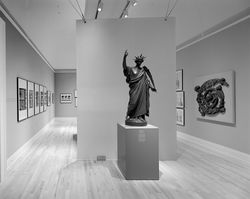
L’exposition souligne le rôle primordial du Panthéon dans la vie artistique et politique française depuis les débuts du projet en 1774 jusqu’au 20e siècle. Coïncidant avec les célébrations internationales du bicentenaire de la Révolution française, elle porte essentiellement sur l’une des principales manifestations architecturales de la Révolution : la transformation de(...)
L’exposition souligne le rôle primordial du Panthéon dans la vie artistique et politique française depuis les débuts du projet en 1774 jusqu’au 20e siècle. Coïncidant avec les célébrations internationales du bicentenaire de la Révolution française, elle porte essentiellement sur l’une des principales manifestations architecturales de la Révolution : la transformation de(...)
Localisation:
Salles principales
Salles principales
Date:
19 septembre 1989 au 19 novembre 1989
19 septembre 1989 au 19 novembre 1989
Titre:
Le Panthéon, symbole des révolutions
Actions:
Description:
L’exposition souligne le rôle primordial du Panthéon dans la vie artistique et politique française depuis les débuts du projet en 1774 jusqu’au 20e siècle. Coïncidant avec les célébrations internationales du bicentenaire de la Révolution française, elle porte essentiellement sur l’une des principales manifestations architecturales de la Révolution : la transformation de(...)
Le Panthéon, symbole des révolutions
Actions:
Description:
L’exposition souligne le rôle primordial du Panthéon dans la vie artistique et politique française depuis les débuts du projet en 1774 jusqu’au 20e siècle. Coïncidant avec les célébrations internationales du bicentenaire de la Révolution française, elle porte essentiellement sur l’une des principales manifestations architecturales de la Révolution : la transformation de(...)
Classification:
expositions
expositions
Date:
19 septembre 1989 au
19 novembre 1989
19 septembre 1989 au
19 novembre 1989
Localisation:
Salles principales
Salles principales
Niveau de description archivistique:
Série(s)
Série(s)
Titre:
Architectural projects
Architectural projects
Numéro de référence:
AP180.S1
Description:
This series documents the architectural projects of Umberto Riva from the 1960s to the mid-2000s. Most of these projects were undertaken for sites in Italy, with the exception of Apartment Mieli (1994) in the United States and a project for a new settlement in the Oued Touil valley, Algeria (1980). The series contains original drawings and some reprographic copies for various private residences, such as Casa Frea (1983) and Casa Insinga (1987) in Milan. Riva's projects for industrial buildings are also represented, for example his work for the thermoelectric power plant Centrale Edison in Torviscosa, Italy (2003). Also documented are Riva's designs for public spaces, such as his work for the Piazza San Nazaro (1989) in Milan and proposals for the redevelopment of historical neighbourhoods in Otranto (1987) and in Binago (1988), as well as designs for shops and private entreprises. Furthermore, this series contains materials related to redesigns for gallery spaces, such as redesigns for the Centro Palladio in Vicenza (1999) and the Palazzo dell'Arte in Milan (1995). Projects for exhibition installations by Riva are arranged in series AP180.S3.
AP180.S1
Description:
This series documents the architectural projects of Umberto Riva from the 1960s to the mid-2000s. Most of these projects were undertaken for sites in Italy, with the exception of Apartment Mieli (1994) in the United States and a project for a new settlement in the Oued Touil valley, Algeria (1980). The series contains original drawings and some reprographic copies for various private residences, such as Casa Frea (1983) and Casa Insinga (1987) in Milan. Riva's projects for industrial buildings are also represented, for example his work for the thermoelectric power plant Centrale Edison in Torviscosa, Italy (2003). Also documented are Riva's designs for public spaces, such as his work for the Piazza San Nazaro (1989) in Milan and proposals for the redevelopment of historical neighbourhoods in Otranto (1987) and in Binago (1988), as well as designs for shops and private entreprises. Furthermore, this series contains materials related to redesigns for gallery spaces, such as redesigns for the Centro Palladio in Vicenza (1999) and the Palazzo dell'Arte in Milan (1995). Projects for exhibition installations by Riva are arranged in series AP180.S3.
Personnes et institutions:
Date:
1960-2007
1960-2007
Titre:
Architectural projects
Actions:
AP180.S1
Description:
This series documents the architectural projects of Umberto Riva from the 1960s to the mid-2000s. Most of these projects were undertaken for sites in Italy, with the exception of Apartment Mieli (1994) in the United States and a project for a new settlement in the Oued Touil valley, Algeria (1980). The series contains original drawings and some reprographic copies for various private residences, such as Casa Frea (1983) and Casa Insinga (1987) in Milan. Riva's projects for industrial buildings are also represented, for example his work for the thermoelectric power plant Centrale Edison in Torviscosa, Italy (2003). Also documented are Riva's designs for public spaces, such as his work for the Piazza San Nazaro (1989) in Milan and proposals for the redevelopment of historical neighbourhoods in Otranto (1987) and in Binago (1988), as well as designs for shops and private entreprises. Furthermore, this series contains materials related to redesigns for gallery spaces, such as redesigns for the Centro Palladio in Vicenza (1999) and the Palazzo dell'Arte in Milan (1995). Projects for exhibition installations by Riva are arranged in series AP180.S3.
Architectural projects
Actions:
AP180.S1
Description:
This series documents the architectural projects of Umberto Riva from the 1960s to the mid-2000s. Most of these projects were undertaken for sites in Italy, with the exception of Apartment Mieli (1994) in the United States and a project for a new settlement in the Oued Touil valley, Algeria (1980). The series contains original drawings and some reprographic copies for various private residences, such as Casa Frea (1983) and Casa Insinga (1987) in Milan. Riva's projects for industrial buildings are also represented, for example his work for the thermoelectric power plant Centrale Edison in Torviscosa, Italy (2003). Also documented are Riva's designs for public spaces, such as his work for the Piazza San Nazaro (1989) in Milan and proposals for the redevelopment of historical neighbourhoods in Otranto (1987) and in Binago (1988), as well as designs for shops and private entreprises. Furthermore, this series contains materials related to redesigns for gallery spaces, such as redesigns for the Centro Palladio in Vicenza (1999) and the Palazzo dell'Arte in Milan (1995). Projects for exhibition installations by Riva are arranged in series AP180.S3.
Niveau de description archivistique:
Series
Series
Date:
1960-2007
1960-2007
Personnes et institutions:
Niveau de description archivistique:
Série(s)
Série(s)
Titre:
Architectural projects
Architectural projects
Numéro de référence:
AP164.S1
Description:
This series documents the architectural projects of Ábalos&Herreros from 1986 to 2006 and represents over 150 projects, including exhibitions. The firm worked on a wide variety of projects from commercial and residential structures to libraries and sewage treatment plants. The firm's design process was research oriented and involved conversations between Ábalos and Herreros, office collaborators, artists who partook in the projects, as well as other architects. Several projects found in this series were developed in collaboration with other architects including: José Manuel Ábalos; Salvador Pérez Arroyo; Filippo Costi; Ángel Jaramillo Esteban; Javier Fresneda; Eduardo Horta; Martín Marciano; Ángel Jaramillo Sánchez; Renata Sentkiewicz; and Héctor Vigliecca. Most projects were designed for the city of Madrid and the Community of Madrid. Projects were also developed for other sites in Spain, including the Canary Islands, as well as for sites in Portugal, Germany, the United States, and Brazil. Ábalos & Herreros often created new projects from the firm's existing work. The firm also identified their projects numerically. These identification numbers are documented at the project series level for each project. Among the materials documenting the firm's projects are conceptual, design development, presentation, and working drawings, as well as panels. There are also several CAD drawings and prints of born digital drawings. Documenting the firms conceptual process are collages and photomontages. Photographic materials included in this series depict project sites and built projects. Also included are a variety of research reference materials, correspondence, project documentation, and project submissions. Although creating models was not a common practice for the firm, there are a few project series which include models.
AP164.S1
Description:
This series documents the architectural projects of Ábalos&Herreros from 1986 to 2006 and represents over 150 projects, including exhibitions. The firm worked on a wide variety of projects from commercial and residential structures to libraries and sewage treatment plants. The firm's design process was research oriented and involved conversations between Ábalos and Herreros, office collaborators, artists who partook in the projects, as well as other architects. Several projects found in this series were developed in collaboration with other architects including: José Manuel Ábalos; Salvador Pérez Arroyo; Filippo Costi; Ángel Jaramillo Esteban; Javier Fresneda; Eduardo Horta; Martín Marciano; Ángel Jaramillo Sánchez; Renata Sentkiewicz; and Héctor Vigliecca. Most projects were designed for the city of Madrid and the Community of Madrid. Projects were also developed for other sites in Spain, including the Canary Islands, as well as for sites in Portugal, Germany, the United States, and Brazil. Ábalos & Herreros often created new projects from the firm's existing work. The firm also identified their projects numerically. These identification numbers are documented at the project series level for each project. Among the materials documenting the firm's projects are conceptual, design development, presentation, and working drawings, as well as panels. There are also several CAD drawings and prints of born digital drawings. Documenting the firms conceptual process are collages and photomontages. Photographic materials included in this series depict project sites and built projects. Also included are a variety of research reference materials, correspondence, project documentation, and project submissions. Although creating models was not a common practice for the firm, there are a few project series which include models.
Personnes et institutions:
Date:
1953-2009
1953-2009
Titre:
Architectural projects
Actions:
AP164.S1
Description:
This series documents the architectural projects of Ábalos&Herreros from 1986 to 2006 and represents over 150 projects, including exhibitions. The firm worked on a wide variety of projects from commercial and residential structures to libraries and sewage treatment plants. The firm's design process was research oriented and involved conversations between Ábalos and Herreros, office collaborators, artists who partook in the projects, as well as other architects. Several projects found in this series were developed in collaboration with other architects including: José Manuel Ábalos; Salvador Pérez Arroyo; Filippo Costi; Ángel Jaramillo Esteban; Javier Fresneda; Eduardo Horta; Martín Marciano; Ángel Jaramillo Sánchez; Renata Sentkiewicz; and Héctor Vigliecca. Most projects were designed for the city of Madrid and the Community of Madrid. Projects were also developed for other sites in Spain, including the Canary Islands, as well as for sites in Portugal, Germany, the United States, and Brazil. Ábalos & Herreros often created new projects from the firm's existing work. The firm also identified their projects numerically. These identification numbers are documented at the project series level for each project. Among the materials documenting the firm's projects are conceptual, design development, presentation, and working drawings, as well as panels. There are also several CAD drawings and prints of born digital drawings. Documenting the firms conceptual process are collages and photomontages. Photographic materials included in this series depict project sites and built projects. Also included are a variety of research reference materials, correspondence, project documentation, and project submissions. Although creating models was not a common practice for the firm, there are a few project series which include models.
Architectural projects
Actions:
AP164.S1
Description:
This series documents the architectural projects of Ábalos&Herreros from 1986 to 2006 and represents over 150 projects, including exhibitions. The firm worked on a wide variety of projects from commercial and residential structures to libraries and sewage treatment plants. The firm's design process was research oriented and involved conversations between Ábalos and Herreros, office collaborators, artists who partook in the projects, as well as other architects. Several projects found in this series were developed in collaboration with other architects including: José Manuel Ábalos; Salvador Pérez Arroyo; Filippo Costi; Ángel Jaramillo Esteban; Javier Fresneda; Eduardo Horta; Martín Marciano; Ángel Jaramillo Sánchez; Renata Sentkiewicz; and Héctor Vigliecca. Most projects were designed for the city of Madrid and the Community of Madrid. Projects were also developed for other sites in Spain, including the Canary Islands, as well as for sites in Portugal, Germany, the United States, and Brazil. Ábalos & Herreros often created new projects from the firm's existing work. The firm also identified their projects numerically. These identification numbers are documented at the project series level for each project. Among the materials documenting the firm's projects are conceptual, design development, presentation, and working drawings, as well as panels. There are also several CAD drawings and prints of born digital drawings. Documenting the firms conceptual process are collages and photomontages. Photographic materials included in this series depict project sites and built projects. Also included are a variety of research reference materials, correspondence, project documentation, and project submissions. Although creating models was not a common practice for the firm, there are a few project series which include models.
Niveau de description archivistique:
Series
Series
Date:
1953-2009
1953-2009
Personnes et institutions:


