


5088 Résultats
Classification:
livres
livres

Titre:
Volcano: nature and culture
Volcano: nature and culture
Actions:
Prix:
$35.50
(disponible sur commande)
Résumé:
For years, tourists have trekked across cracked rock at Hawaii’s Kilauea volcano to witness the inspiring sight of creeping lava and its devastating effects on the landscape. In 2010, Eyjafjallajökull erupted in Iceland, stranding travelers as a cloud of ash covered western and northern Europe, causing the largest disruption of air travel since World War II. And just a(...)
Titre:
Volcano: nature and culture
Actions:
Prix:
$35.50
(disponible sur commande)
Résumé:
For years, tourists have trekked across cracked rock at Hawaii’s Kilauea volcano to witness the inspiring sight of creeping lava and its devastating effects on the landscape. In 2010, Eyjafjallajökull erupted in Iceland, stranding travelers as a cloud of ash covered western and northern Europe, causing the largest disruption of air travel since World War II. And just a few months later, Mount Merapi blew in Indonesia, killing over 350 people and displacing over 350,000 others, awakening people once more to the dangerous potential of these sleeping giants. Though today largely dormant, volcanoes continue to erupt across the world, reminding us of their sheer physical power. In Volcano, James Hamilton explores the cultural history generated by the violence and terrifying beauty of volcanoes. He describes the reverberations of early eruptions of Vesuvius and Etna in Greek and Roman myth. He also examines the depiction of volcanoes in art—from the earliest known wall painting of an erupting volcano in 6200 BCE to the distinctive colors of Andy Warhol and Michael Sandle’s exploding mountains. Surveying a number of twenty-first-century works, Hamilton shows that volcanoes continue to influence the artistic imagination.
Classification:
livres
livres
Publication:
juin 2012
juin 2012
Sujet:
Théorie du paysage
Théorie du paysage
Classification:
livres
livres
Titre:
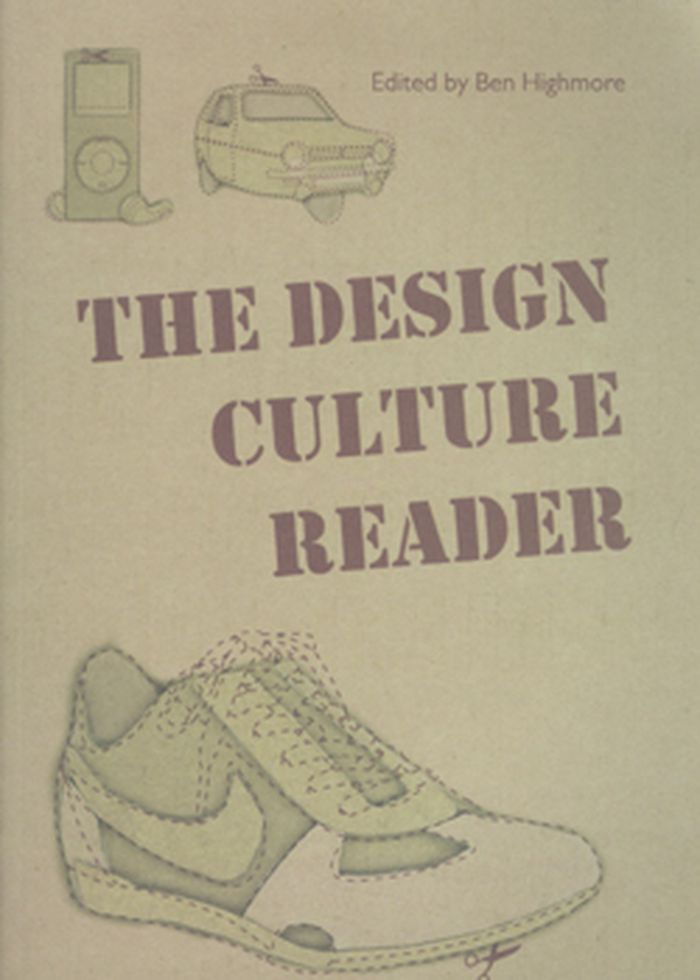
The design culture reader
The design culture reader
Actions:
Prix:
$50.95
(disponible en magasin)
Résumé:
Design is part of ordinary, everyday life, to be found in every room in every building in the world. While we may tend to think of design in terms of highly desirable objects, this book encourages us to think about design as ubiquitous (from plumbing to television) and as an agent of social change (from telephones to weapon systems). The Design Culture Reader brings(...)
Titre:
The design culture reader
Actions:
Prix:
$50.95
(disponible en magasin)
Résumé:
Design is part of ordinary, everyday life, to be found in every room in every building in the world. While we may tend to think of design in terms of highly desirable objects, this book encourages us to think about design as ubiquitous (from plumbing to television) and as an agent of social change (from telephones to weapon systems). The Design Culture Reader brings together an international array of writers whose work is of central importance for thinking about design culture in the past, present and future. Essays from philosophers, media and cultural theorists, historians of design, anthropologists, cultural historians, artists and literary critics all demonstrate the enormous potential of design studies for understanding the modern world. Organised in thematic sections, The Design Culture Reader explores the social role of design by looking at the impact it has in a number of areas - especially globalisation, ecology, and the changing experiences of modern life. Particular essays focus on topics such as design and the senses, design and war and design and technology, while the editor's introduction to the collection provides a compelling argument for situating design studies at the very forefront of contemporary thought.
Classification:
livres
livres
Publication:
août 2008, London, New York
août 2008, London, New York
Sujet:
Théorie du design
Théorie du design
Classification:
livres
livres
Actions:
Prix:
$26.95
(disponible sur commande)
Résumé:
"The Promise of the City" proposes a new theoretical framework for the study of cities and urban life. Finding the contemporary urban scene too complex to be captured by radical or conventional approaches, Kian Tajbakhsh offers a threefold, interdisciplinary (...)
Titre:
The promise of the city : space, identity, and politics in contemporary social thought
Actions:
Prix:
$26.95
(disponible sur commande)
Résumé:
"The Promise of the City" proposes a new theoretical framework for the study of cities and urban life. Finding the contemporary urban scene too complex to be captured by radical or conventional approaches, Kian Tajbakhsh offers a threefold, interdisciplinary approach linking agency, space, and structure. First, he says, urban identities cannot be understood through individualistic, communitarian, or class perspectives but rather through the shifting spectrum of cultural, political, and economic influences. Second, the layered, unfinished city spaces we inhabit and within which we create meaning are best represented not by the image of bounded physical spaces but rather by overlapping and shifting boundaries. And third, the macro forces shaping urban society include bureaucratic and governmental interventions not captured by a purely economic paradigm. Tajbakhsh examines these dimensions in the work of three major critical urban theorists of recent decades: Manuel Castells, David Harvey, and Ira Katznelson. He shows why the answers offered by Marxian urban theory to the questions of identity, space, and structure are unsatisfactory and why the perspectives of other intellectual traditions such as poststructuralism, feminism, Habermasian Critical Theory, and pragmatism can help us better understand the challenges facing contemporary cities.
Classification:
livres
livres
Publication:
décembre 2000, Los Angeles
décembre 2000, Los Angeles
Sujet:
Théorie de l’urbanisme
Théorie de l’urbanisme
Classification:
périodiques
périodiques
Titre:
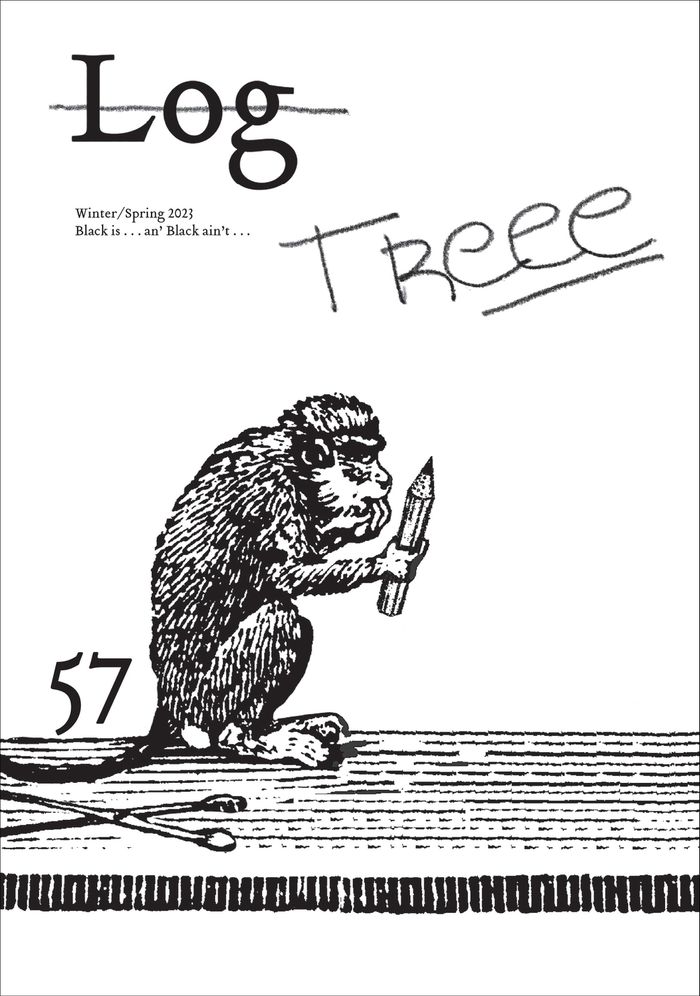
Log 57
Log 57
Actions:
Prix:
$26.50
(disponible en magasin)
Résumé:
''Calls for more Blackness in architecture schools can be simplistic,'' writes architect Darell Wayne Fields, guest editor of Log 57. Well-meaning equity and inclusion programs often simply ''associate the mere presence of Black bodies with institutional change.'' In Log 57, a 208-page thematic issue titled ''Black is . . . an’ Black ain’t . . .,'' 29 authors explore the(...)
Titre:
Log 57
Actions:
Prix:
$26.50
(disponible en magasin)
Résumé:
''Calls for more Blackness in architecture schools can be simplistic,'' writes architect Darell Wayne Fields, guest editor of Log 57. Well-meaning equity and inclusion programs often simply ''associate the mere presence of Black bodies with institutional change.'' In Log 57, a 208-page thematic issue titled ''Black is . . . an’ Black ain’t . . .,'' 29 authors explore the complexities of Blackness as it relates to aesthetics and architectural pedagogy. As Fields notes, ''In calling for more Blackness, I, for one, am calling for more Black methodology. An inherent characteristic of [which] is a measurement of difference.'' To that end, Log 57 gathers essays and reflections on architectural pedagogies, both in academia and in practice, by Sean Canty, Michelle JaJa Chang, Ajay Manthripragada, and Mónica Ponce de León, among others. Projects by young designers for whom methodological concepts of Black Signification and bricolage are central are presented in a four-color section, and built works and a preservation effort channel difference as a generative force in real-world communities. ''This work demonstrates what is possible when methodological change is real,'' writes Fields. ''Real change, like Blackness, makes us nervous. Black difference, however, is revolutionary.''
Classification:
périodiques
périodiques
Publication:
mars 2023
mars 2023
Sujet:
Revues
Revues
Classification:
livres
livres

Actions:
Prix:
$40.00
(disponible sur commande)
Résumé:
While the philosophical dimension of painting has long been discussed, a clear case for painting as a form of visual thinking has yet to be made. Traditionally, vanitas still life paintings are considered to raise ontological issues while landscapes direct the mind toward introspection. Grootenboer moves beyond these considerations to focus on what remains unspoken in(...)
Titre:
The pensive image: Art as a form of thinking
Actions:
Prix:
$40.00
(disponible sur commande)
Résumé:
While the philosophical dimension of painting has long been discussed, a clear case for painting as a form of visual thinking has yet to be made. Traditionally, vanitas still life paintings are considered to raise ontological issues while landscapes direct the mind toward introspection. Grootenboer moves beyond these considerations to focus on what remains unspoken in painting, the implicit and inexpressible that manifests in a quality she calls pensiveness. Different from self-aware or actively desiring images, pensive images are speculative, pointing beyond interpretation. An alternative pictorial category, pensive images stir us away from interpretation and toward a state of suspension where thinking through and with the image can start. In fluid prose, Grootenboer explores various modalities of visual thinking— as the location where thought should be found, as a refuge enabling reflection, and as an encounter that provokes thought. Through these considerations, she demonstrates that artworks serve as models for thought as much as they act as instruments through which thinking can take place. Starting from the premise that painting is itself a type of thinking, ''The pensive image'' argues that art is capable of forming thoughts and shaping concepts in visual terms.
Classification:
livres
livres
Publication:
septembre 2023
septembre 2023
Sujet:
Théorie de l’art
Théorie de l’art
Classification:
livres
livres
Titre:
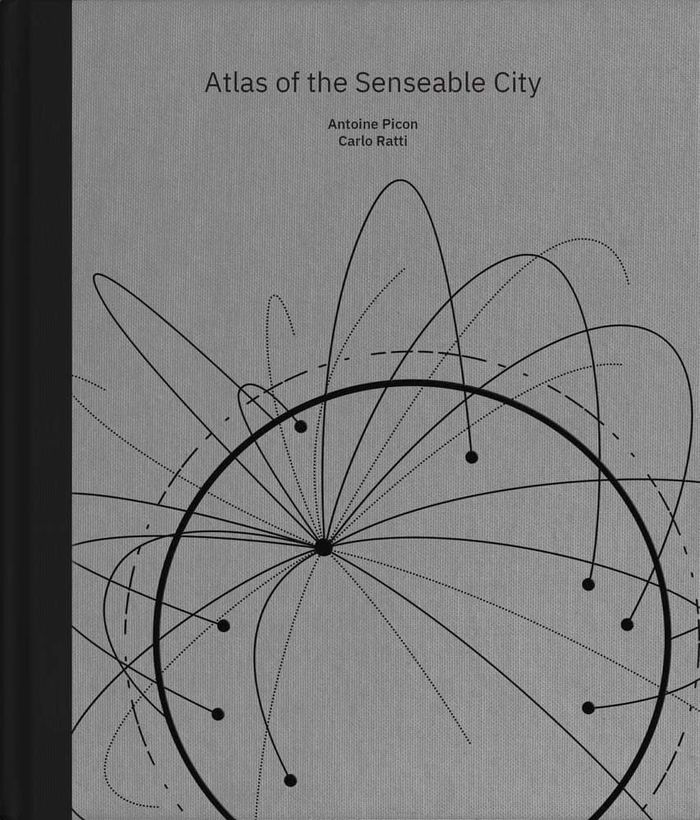
Atlas of the senseable city
Atlas of the senseable city
Actions:
Prix:
$48.00
(disponible en magasin)
Résumé:
What have smart technologies taught us about cities? What lessons can we learn from today’s urbanites to make better places to live? Antoine Picon and Carlo Ratti argue that the answers are in the maps we make. For centuries, we have relied on maps to navigate the enormity of the city. Now, as the physical world combines with the digital world, we need a new generation of(...)
Titre:
Atlas of the senseable city
Actions:
Prix:
$48.00
(disponible en magasin)
Résumé:
What have smart technologies taught us about cities? What lessons can we learn from today’s urbanites to make better places to live? Antoine Picon and Carlo Ratti argue that the answers are in the maps we make. For centuries, we have relied on maps to navigate the enormity of the city. Now, as the physical world combines with the digital world, we need a new generation of maps to navigate the city of tomorrow. Pervasive sensors allow anyone to visualize cities in entirely new ways—ebbs and flows of pollution, traffic, and internet connectivity. This book explores how the growth of digital mapping, spurred by sensing technologies, is affecting cities and daily lives. It examines how new cartographic possibilities aid urban planners, technicians, politicians, and administrators; how digitally mapped cities could reveal ways to make cities smarter and more efficient; how monitoring urbanites has political and social repercussions; and how the proliferation of open-source maps and collaborative platforms can aid activists and vulnerable populations. With its beautiful, accessible presentation of cutting-edge research, this book makes it easy for readers to understand the stakes of the new information age—and appreciate the timeless power of the city.
Classification:
livres
livres
Publication:
juin 2023
juin 2023
Sujet:
Théorie de l’urbanisme
Théorie de l’urbanisme
Classification:
livres
livres
Actions:
Prix:
$100.00
(disponible en magasin)
Résumé:
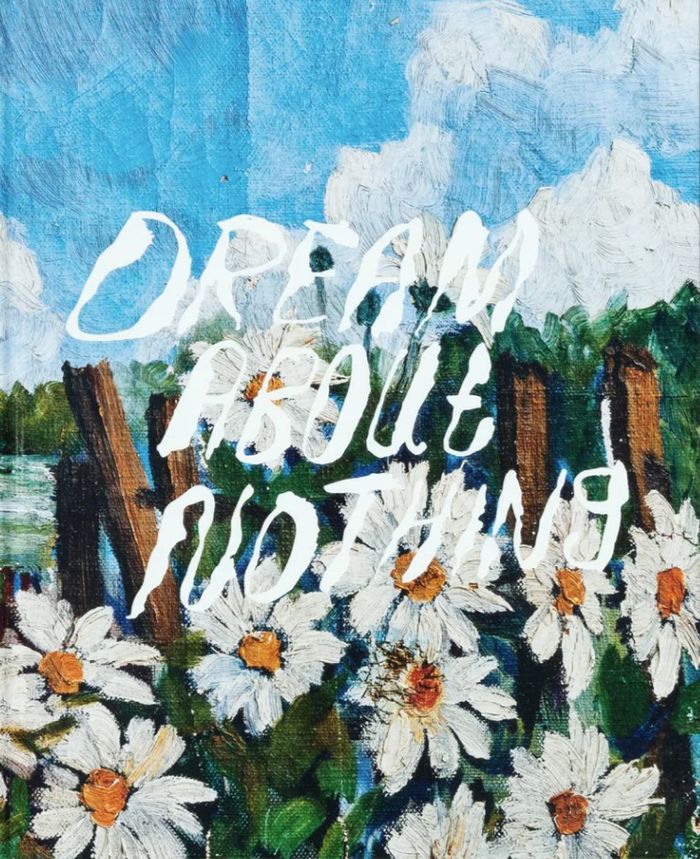
Acclaimed still-life photographer Doherty pushes his precise visual language to a place of inarticulation and unconscious association, in a bold sequence of singular image arrangements, rhymed and bonded together. Individually, Bobby Doherty’s photographs are quite clear. In front of you, a flower, a drinks can, a courgette, next an alloy wheel. But collectively their(...)
Titre:
Bobby Doherty: Dream about nothing
Actions:
Prix:
$100.00
(disponible en magasin)
Résumé:
Acclaimed still-life photographer Doherty pushes his precise visual language to a place of inarticulation and unconscious association, in a bold sequence of singular image arrangements, rhymed and bonded together. Individually, Bobby Doherty’s photographs are quite clear. In front of you, a flower, a drinks can, a courgette, next an alloy wheel. But collectively their meanings become distorted. A photo of a popsicle carries a different weight once it is opposite a battered butterfly. But what are you meant to be looking at? Doherty's images attempt to overwhelm the viewer with questions about what we consider mundane, and what we view as special, in order to ask a greater question: one that transcends "why this over that" but instead, "why anything at all?" In "Dream about nothing," Doherty embarks on a more introspective articulation of his remarkably consistent visual practice. He invites us to pull back from the visually-tumbling-image-overload language that much of contemporary still-life and observational photography relents itself to, instead placing, with utmost care and precision, a line of observed things and places before your eyes. What does it all mean?
Classification:
livres
livres
Publication:
novembre 2023
novembre 2023
Sujet:
Monographies photo
Monographies photo
Classification:
livres
livres
Actions:
Prix:
$22.00
(disponible sur commande)
Résumé:
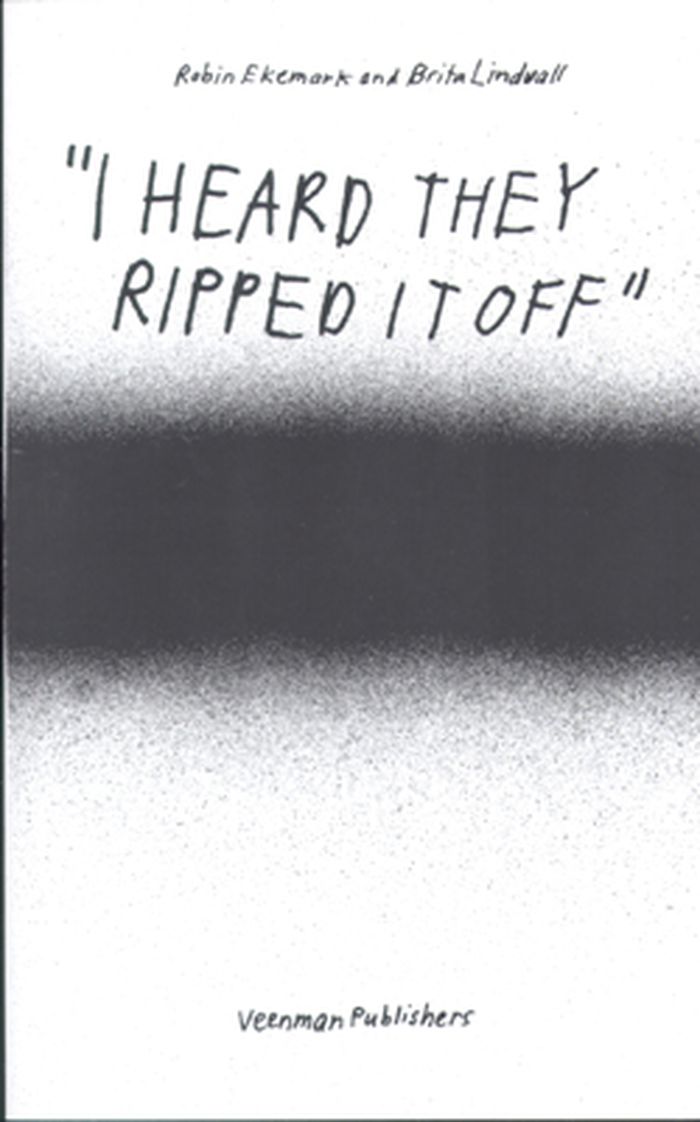
This book is an attempt to tell a story from the closest point of a source. Before it is supposed to be a gossip. Before the juice is added and still is a bit boring and stiff. When looking up at reliable sources like Wikipedia and Google, the word gossip: ''Originates from God-sib, he Godparent of one's child, referring to a relationship of close friendship'' and it(...)
Sujet:
Théorie du design
Théorie du design
Publication:
mars 2008, London, Amsterdam, New York
mars 2008, London, Amsterdam, New York
Titre:
'' I heard they ripped it off ''
Actions:
Prix:
$22.00
(disponible sur commande)
Résumé:
This book is an attempt to tell a story from the closest point of a source. Before it is supposed to be a gossip. Before the juice is added and still is a bit boring and stiff. When looking up at reliable sources like Wikipedia and Google, the word gossip: ''Originates from God-sib, he Godparent of one's child, referring to a relationship of close friendship'' and it is also: '' An event between loose mouthed assholes, that happens as soon as you get into high-school, and follows you all the way to your death bed. It never ends.'' It is also: '' In it's form one of the oldest and most common means of spreading and sharing facts, with a reputation of errors and other variations'' This we of course found highly interesting so we did this book based on that, about the variations of a story when it comes from the same source. To try it out we asked people from the graphics design department in the Rietveld Academy, to re-tell us a story we are supposed to know better than others.
Classification:
livres
livres
Publication:
mars 2008, London, Amsterdam, New York
mars 2008, London, Amsterdam, New York
Sujet:
Théorie du design
Théorie du design
Classification:
livres
livres
Actions:
Prix:
$20.00
(disponible en magasin)
Résumé:
The gesture of pointing is the perfect embodiment of photography’s function as a visual document: an injunction to look at this. In this textual and visual essay, artist Joan Fontcuberta takes the index finger as his point of departure for an insightful and irreverent consideration of photography’s relation to indexicality. He refutes, as well as draws on, Roland(...)
Titre:
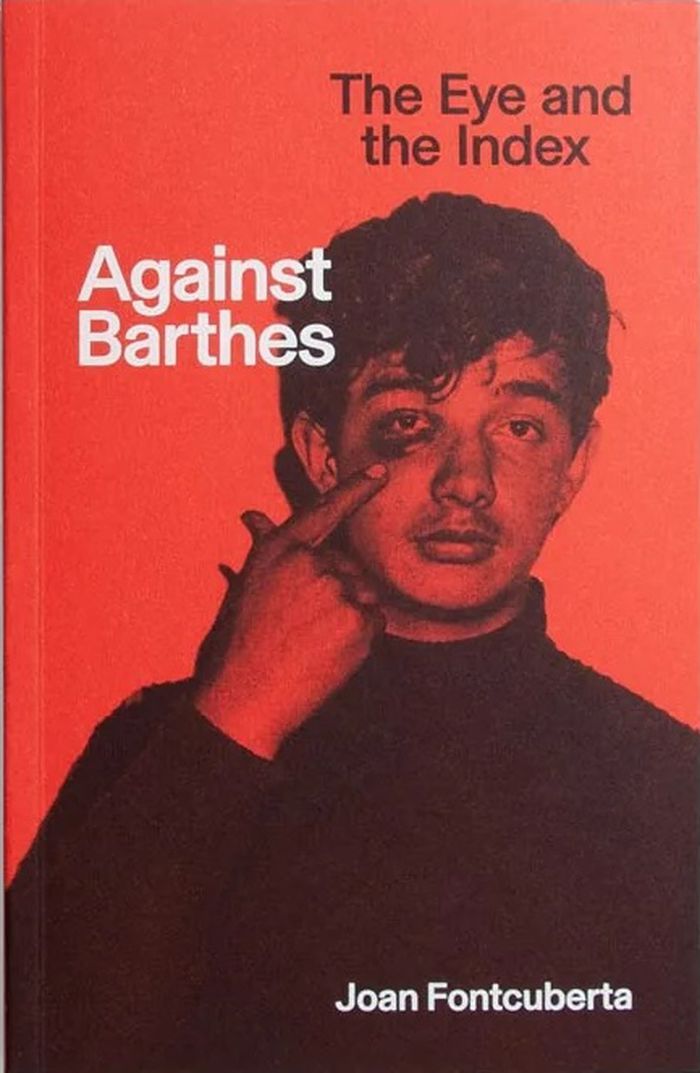
Against Barthes: The eye and the index
Actions:
Prix:
$20.00
(disponible en magasin)
Résumé:
The gesture of pointing is the perfect embodiment of photography’s function as a visual document: an injunction to look at this. In this textual and visual essay, artist Joan Fontcuberta takes the index finger as his point of departure for an insightful and irreverent consideration of photography’s relation to indexicality. He refutes, as well as draws on, Roland Barthes’s suggestion that every photograph tells us ‘'this has been'’ (‘ça a été’), reckoning with the inconvenient multiplicity of thises in any given image. If a photograph constitutes such a statement – as made explicit in images that include a pointing finger – does the camera witness reality or performance? These existential issues are further complicated by the emergence of post-photography and generative AI. In this typically engaging and iconoclastic essay, Fontcuberta destabilises our ideas about the authority and authoriality of images, drawing on psychoanalysis, semiotics, and his own autobiography. His text is interleaved between two compelling visual essays formed of images from the archive of Mexican tabloid Alerta from the 1960s to 1980s, in which the pointing index finger forms a haunting and often humorous through-line.
Classification:
livres
livres
Publication:
août 2025
août 2025
Sujet:
Théorie de la photographie
Théorie de la photographie
Classification:
livres
livres

Titre:
Daniel Shea: Distribution
Daniel Shea: Distribution
Actions:
Prix:
$125.00
(disponible sur commande)
Résumé:
This vast artist’s book began with a deceptively simple question: how do you photograph a forest? Daniel Shea found that forests presented a revealing challenge: that of capturing the whole – the immersive totality of being in nature – when photography so relentlessly pulls us to the fragment. Over several years and across varied geographies, he made photographs with(...)
Titre:
Daniel Shea: Distribution
Actions:
Prix:
$125.00
(disponible sur commande)
Résumé:
This vast artist’s book began with a deceptively simple question: how do you photograph a forest? Daniel Shea found that forests presented a revealing challenge: that of capturing the whole – the immersive totality of being in nature – when photography so relentlessly pulls us to the fragment. Over several years and across varied geographies, he made photographs with deliberately constrained methods – rendering dense woodlands with a telephoto lens, capturing cities only through the window of a moving car – as if to invert the old adage about not seeing the forest for the trees. These working constraints foregrounded what resists representation: ecological complexity, social entanglement, and the architectures that influence both. The resulting book, ''Distribution'', explores the tension between environments that overwhelm with density and patterns that slowly emerge through repetition, accumulation, and framing. It opens with a series of portraits of Jessica, a woman who represents the statistical median of a person living in the United States, before expanding outward to surfaces, buildings, trees, and eventually groups of people. It asks how we locate subjects and attendant problems in a world shaped by competing density and dispersion.
Classification:
livres
livres
Publication:
septembre 2025
septembre 2025
Sujet:
Monographies photo
Monographies photo


