


5088 Résultats
Classification:
livres
livres

Actions:
Prix:
$134.99
(disponible en magasin)
Résumé:
The 1960s continue to hold an almost mythical place in Western culture, particularly in Britain, where change was widespread and infiltrated many aspects of life. This included architecture, whose role in a modern democracy and the form it should take were hotly debated. This book discusses the architectural thinking of the time through an examination of the design of(...)
Titre:
1960s University buildings: The golden age of British modern architecture
Actions:
Prix:
$134.99
(disponible en magasin)
Résumé:
The 1960s continue to hold an almost mythical place in Western culture, particularly in Britain, where change was widespread and infiltrated many aspects of life. This included architecture, whose role in a modern democracy and the form it should take were hotly debated. This book discusses the architectural thinking of the time through an examination of the design of university buildings. While there were notable buildings being built in other spheres, no other field of architecture provided the opportunity to express those ideas as freely, while also reflecting innovative new thinking about education and society. Somehow, the university buildings of the 1960s seemed to represent the cutting edge of modern architecture in the UK. This book provides the first critical analysis and overview of these buildings, designed by some of the leading British architects of the period including Basil Spence, Leslie Martin, Alison and Peter Smithson, Denys Lasdun, Powell and Moya and James Stirling. By placing the buildings in a wider social, cultural and political context, it examines the combination of circumstances and attitudes that produced results that are equally admired and detested and allows us to understand how we might replicate or avoid them in the future.
Classification:
livres
livres
Publication:
juin 2025
juin 2025
Sujet:
Modernisme
Modernisme
Classification:
livres
livres
Actions:
Prix:
$21.99
(disponible en magasin)
Résumé:
At the start of the twenty-first century, globalization forced a rethinking of some of the categories—such as “the people”—that had been traditionally associated with the now-eroding state. Virno argues that the category of “multitude,” elaborated by Spinoza and for the most part left fallow since the seventeenth century, is a far better tool to analyze contemporary(...)
Titre:
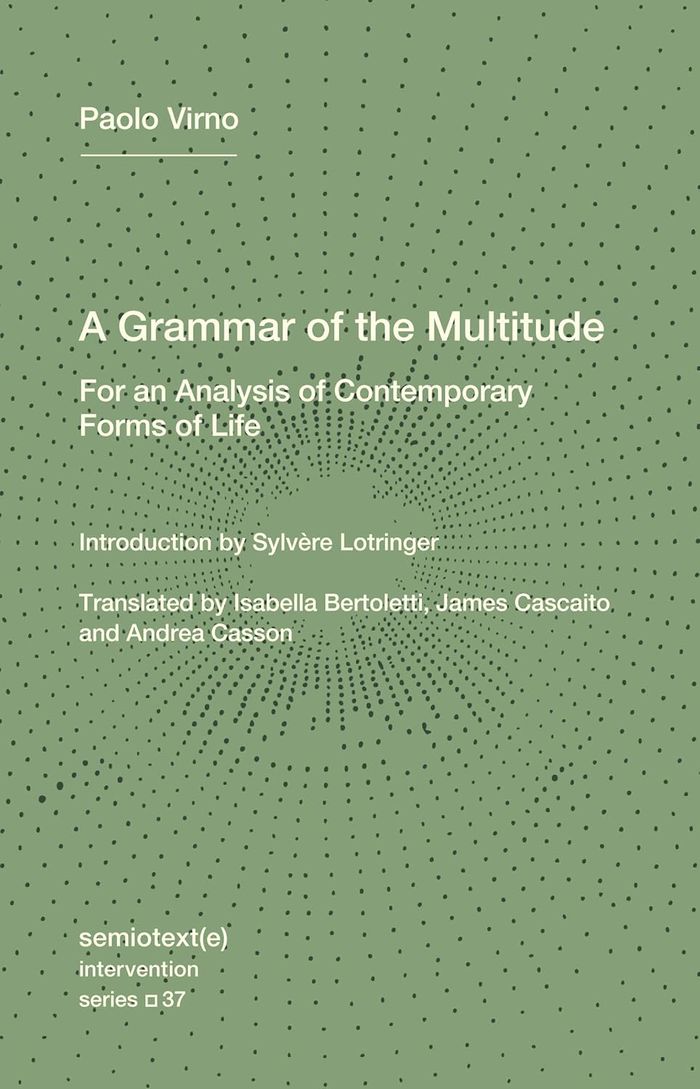
A grammar of the multitude: For an analysis of contemporary forms of life
Actions:
Prix:
$21.99
(disponible en magasin)
Résumé:
At the start of the twenty-first century, globalization forced a rethinking of some of the categories—such as “the people”—that had been traditionally associated with the now-eroding state. Virno argues that the category of “multitude,” elaborated by Spinoza and for the most part left fallow since the seventeenth century, is a far better tool to analyze contemporary issues than the Hobbesian concept of “people” favored by classical political philosophy. Hobbes, who detested the notion of multitude, defined it as shunning political unity, resisting authority, and never entering into lasting agreements. “When they rebel against the state,” Hobbes wrote, “the citizens are the multitude against the people.” But the multitude isn't just a negative notion; it is a rich concept that allows us to examine anew plural experiences and forms of nonrepresentative democracy. Drawing from philosophy of language, political economics, and ethics, Virno shows that being foreign, “not-feeling-at-home-anywhere,” is a condition that forces the multitude to place its trust in the intellect. In conclusion, Virno suggests that the metamorphosis of the social systems in the West during the 1980s and 1990s precipitated a paradoxical “Communism of the Capital.”
Classification:
livres
livres
Publication:
septembre 2025
septembre 2025
Sujet:
Théorie/ philosophie
Théorie/ philosophie
Classification:
livres
livres

Prix:
$36.00
(disponible en magasin)
Résumé:
The visual and textual contributions in this volume take shape from a series of questions that place at the center of reflection the role of artistic and design practices in the production of knowledge. What tools can we adopt when words are no longer sufficient to describe what surrounds us? How can we construct new languages and new imaginaries capable of giving form to(...)
Titre:
When words fail: On practice-based art, design and educations
Actions:
Prix:
$36.00
(disponible en magasin)
Résumé:
The visual and textual contributions in this volume take shape from a series of questions that place at the center of reflection the role of artistic and design practices in the production of knowledge. What tools can we adopt when words are no longer sufficient to describe what surrounds us? How can we construct new languages and new imaginaries capable of giving form to experience, uncertainty, and the complexity of our present? What does it mean today to produce knowledge through practice, at a historical moment when the boundaries between discipline and action, between theory and project, between art and life are becoming increasingly blurred? How do artists and designers use the tools of their practices to question reality, deconstruct dominant narratives, and propose alternative perspectives? The volume gathers and weaves together the works and writings of more than one hundred artists, designers, scholars, and thinkers who, through different approaches, languages, and sensibilities, explore the possibility of generating knowledge through image, gesture, form, and action. The aim is to shed light on how visual practices can not only represent the world but also have an impact on it, activating processes of situated, critical, and transformative knowledge.
Classification:
livres
livres
Publication:
avril 2026
avril 2026
Sujet:
Muséologie
Muséologie
Classification:
livres
livres
Prix:
$24.95
(disponible en magasin)
Résumé:
“Of course, we all want to be happy.” So wrote the Roman statesman, orator, and philosopher Marcus Tullius Cicero. He and his fellow Greek and Roman philosophers agreed that the secret to happiness—or what they called the “good life”—is pursuing the “greatest good.” The only problem is that they couldn’t agree on what the greatest good is. Cicero addressed this dilemma by(...)
Titre:
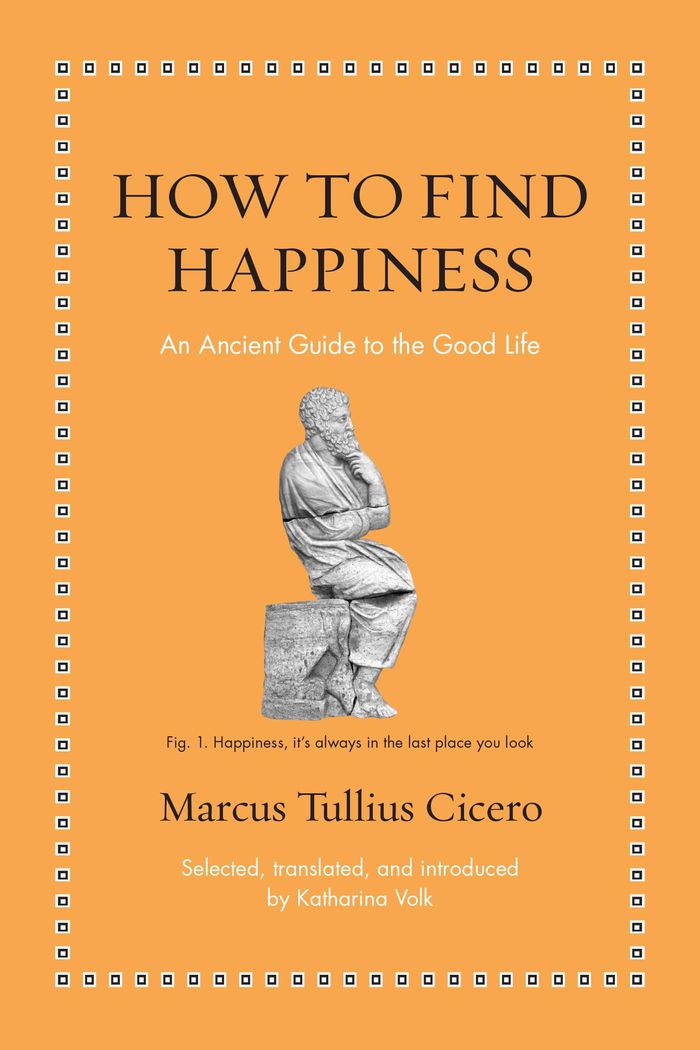
How to find happiness: An ancient guide to the good life
Actions:
Prix:
$24.95
(disponible en magasin)
Résumé:
“Of course, we all want to be happy.” So wrote the Roman statesman, orator, and philosopher Marcus Tullius Cicero. He and his fellow Greek and Roman philosophers agreed that the secret to happiness—or what they called the “good life”—is pursuing the “greatest good.” The only problem is that they couldn’t agree on what the greatest good is. Cicero addressed this dilemma by composing a set of dialogues, ''On the Greatest Good and Evil'' (''De finibus bonorum et malorum''), in which he pitted advocates of different philosophical approaches to happiness against one another. Notably, these include the Epicureans (who believe that the greatest good is pleasure) and the Stoics (according to whom it is moral virtue). Rather than choosing sides, Cicero considers the pros and cons of the different philosophies, ultimately leaving it to his readers to make up their own minds. In ''How to Find Happiness'', Katharina Volk offers a vivid new translation of selections from Cicero’s work, complete with an introduction and the original Latin text on facing pages. The result is a lively and engaging debate that invites each of us to discover our own path to happiness.
Classification:
livres
livres
Publication:
mars 2026
mars 2026
Sujet:
Théorie/ philosophie
Théorie/ philosophie
Classification:
livres
livres
Titre:
Theory of water
Theory of water
Actions:
Prix:
$22.00
(disponible en magasin)
Résumé:
For many years, Leanne Betasamosake Simpson has found refuge in skiing—in all kinds of weather across different forms of terrain, often following the trail beside a beloved creek near her home. Recently, as she skimmed along this path and meditated on our world's uncertainty—including environmental devastation, the rise of authoritarianism, and the effects of ongoing(...)
Titre:
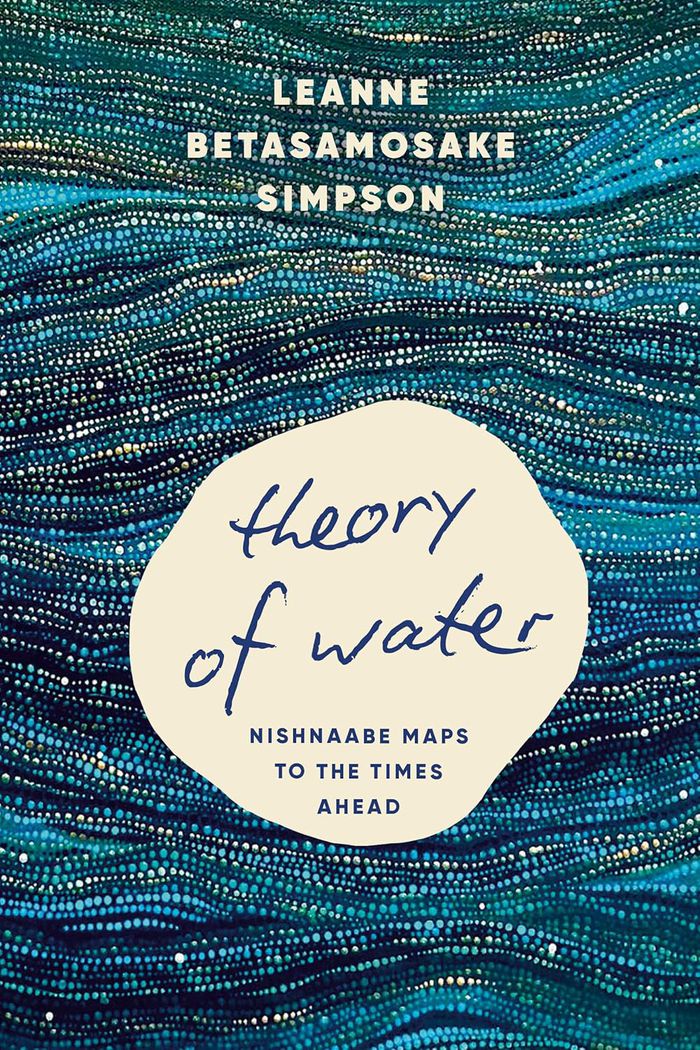
Theory of water
Actions:
Prix:
$22.00
(disponible en magasin)
Résumé:
For many years, Leanne Betasamosake Simpson has found refuge in skiing—in all kinds of weather across different forms of terrain, often following the trail beside a beloved creek near her home. Recently, as she skimmed along this path and meditated on our world's uncertainty—including environmental devastation, the rise of authoritarianism, and the effects of ongoing social injustice—her mind turned to the ice beside her, and the snow beneath her feet. And she asked herself: What might it mean to truly listen to water? To know not only the land on which we live, but the water that surrounds and inhabits us? To coexist with and alongside water? So begins this renowned writer's quest to discover, understand, and trace the historical and cultural interactions of Indigenous peoples with water in all its forms. On her journey, she reflects on the teachings, traditions, stories, and creative work of others in her community—particularly those of her longtime friend Doug Williams, an Elder whose presence suffuses these pages; reads deeply the words of thinkers from other communities whose writing expands her own; and begins to shape a "Theory of Water" that reimagines relationships among all beings and life-forces.
Classification:
livres
livres
Publication:
mars 2026
mars 2026
Sujet:
Autochtone
Autochtone
Classification:
livres
livres

Actions:
Prix:
$65.00
(disponible sur commande)
Résumé:
In ''Tbilisi Interiors'', photographer Anna Tsitsishvili returns to the subject that defined her acclaimed debut, Tbilisi, with a renewed and intimate focus. This follow-up photobook shifts the lens inward—literally—inviting us beyond the façades of the Georgian capital to explore the layered and often surprising worlds within. Where her first book captured the(...)
Titre:
Anna Tsitsishvili: Tbilisi interiors
Actions:
Prix:
$65.00
(disponible sur commande)
Résumé:
In ''Tbilisi Interiors'', photographer Anna Tsitsishvili returns to the subject that defined her acclaimed debut, Tbilisi, with a renewed and intimate focus. This follow-up photobook shifts the lens inward—literally—inviting us beyond the façades of the Georgian capital to explore the layered and often surprising worlds within. Where her first book captured the textured urban landscapes of Tbilisi’s streets and architecture, ''Tbilisi Interiors'' reveals the hidden lives behind closed doors: eclectic rooms filled with faded grandeur, modest apartments shaped by decades of personal history, and spaces that quietly tell stories of resilience, creativity, and cultural continuity. Through Tsitsishvili’s eye, interiors become portraits—of individuals, families, and the city itself. This collection is not merely about design or decor; it is an emotional and aesthetic mapping of Tbilisi’s soul. With sensitivity and an artist’s sense of composition, Tsitsishvili documents spaces both curated and chaotic, refined and improvised, capturing the poetry of everyday life in Georgia’s capital.Tbilisi Interiors is a love letter to a city in transition, seen from within.With sensitivity and an artist’s sense of composition, Tsitsishvili documents spaces both curated and chaotic, refined and improvised, capturing the poetry of everyday life in Georgia’s capital.
Classification:
livres
livres
Publication:
janvier 2026
janvier 2026
Sujet:
Monographies photo
Monographies photo
Classification:
livres
livres
Prix:
$34.00
(disponible en magasin)
Résumé:
The second annual Alchemy Lecture was presented in November 2023 at York University to a sold out in-person audience and nearly one thousand live online viewers. Moderated by Dr. Christina Sharpe, the Alchemists—agile thinkers and practitioners working across a range of disciplines and geographies—convened to discuss their radical visions of the beautiful world, and the(...)
Sujet:
Social
Social
Publication:
septembre 2024
septembre 2024
Titre:
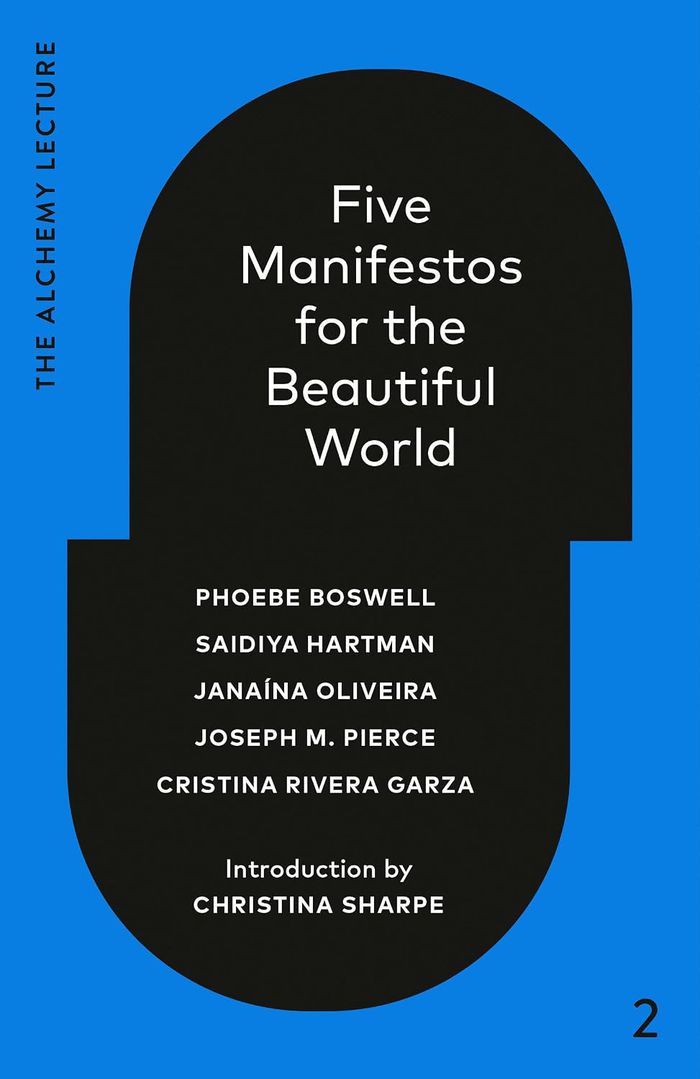
Five manifestos for the beautiful world. The Alchemy lectures 2
Actions:
Prix:
$34.00
(disponible en magasin)
Résumé:
The second annual Alchemy Lecture was presented in November 2023 at York University to a sold out in-person audience and nearly one thousand live online viewers. Moderated by Dr. Christina Sharpe, the Alchemists—agile thinkers and practitioners working across a range of disciplines and geographies—convened to discuss their radical visions of the beautiful world, and the manifestos that may help to guide us there. Their treatises have been captured and luminously expanded in the pages of this book. Cherokee Nation citizen and professor Joseph M. Pierce asserts that "[f]or this decolonial future to become possible, the guiding force must no longer be capital but relations." Informed by her practice of "curation as care," Brazilian film curator Janaína Oliveira evokes music and movement as a means toward this relationality: "it's almost by falling that you live. . . . The beautiful world dances the stumbles. The beautiful world dances dancing." Kenyan-British visual artist Phoebe Boswell uses the space of a virtual gallery to ask, "If we burn down the institution, what happens next? Do we trust ourselves to know?" and gestures toward the possibility of this "as yet unlived, unexperienced thing."
Classification:
livres
livres
Publication:
septembre 2024
septembre 2024
Sujet:
Social
Social
Classification:
livres
livres
Actions:
Prix:
$39.95
(disponible en magasin)
Résumé:
Unpublished photographs taken by Josef Albers during his travels to Mexico with Anni in the 1930s and 50s. Josef and Anni Albers began their travels to Mexico in 1935, drawn to a country very unlike the United States. They were not in search of the exotic but rather of the traces of ancient pre-Colombian civilisations (the Mayans and the Aztecs) and testimonies of the(...)
Titre:
Messico 1935/1956: Josef Albers
Actions:
Prix:
$39.95
(disponible en magasin)
Résumé:
Unpublished photographs taken by Josef Albers during his travels to Mexico with Anni in the 1930s and 50s. Josef and Anni Albers began their travels to Mexico in 1935, drawn to a country very unlike the United States. They were not in search of the exotic but rather of the traces of ancient pre-Colombian civilisations (the Mayans and the Aztecs) and testimonies of the everyday lives of a population that was very poor yet full of vitality. Dressed in dark colours and donning a large black hat, Albers was a non-professional photographer with the gaze of an architect, as may be noted from the great sense of composition and the search for geometries which he digs out even from the millenary archaeological findings. These photographs have never previously been published in Italy, and contribute to depicting the figure of one of the greatest innovators of the art and culture of the twentieth century, who to this day still has a lot to teach us. The volume also features an introduction by Brenda Danilowitz, curator and head of the Josef and Anni Albers Foundation, as well as an essay by Luca Galofaro, architect (LSGMA) and curator (CAMPO, Rome).
Classification:
livres
livres
Publication:
mars 2021
mars 2021
Sujet:
Monographies photo
Monographies photo
Classification:
livres
livres

Actions:
Prix:
$29.95
(disponible sur commande)
Résumé:
Urban planning is not just about applying a suite of systematic principles or plotting out pragmatic designs to satisfy the briefs of private developers or public bodies. Planning is also an activity of imagination, with a stock of wisdom and an array of useful methods for making decisions and getting things done.This publication uncovers and celebrates this imagination(...)
Titre:
The urban planning imagination
Actions:
Prix:
$29.95
(disponible sur commande)
Résumé:
Urban planning is not just about applying a suite of systematic principles or plotting out pragmatic designs to satisfy the briefs of private developers or public bodies. Planning is also an activity of imagination, with a stock of wisdom and an array of useful methods for making decisions and getting things done.This publication uncovers and celebrates this imagination and its creative potential. Nicholas A. Phelps explores the key themes and driving questions in the circulation of planning ideas and methods over time and across spaces, identifying the contrasts and commonalities between urban planning systems and cultures. He argues that the tools for inclusive urban planning are today, more than ever, not solely restricted to the hands of planning bodies, but are distributed across citizens, a variety of organizations (what Phelps calls ‘clubs’) and states. As a result, the book sets the ground for the new arrangements between these groups and actors which will be central to the future of urban planning.By unsettling standard accounts, this book compels us towards more critical and creative thinking to ensure that the imagination, wisdom and methods of urban planning are mobilized towards achieving the aspiration of shaping better places.
Classification:
livres
livres
Publication:
juin 2021
juin 2021
Sujet:
Théorie de l’urbanisme
Théorie de l’urbanisme
Classification:
livres
livres
Prix:
$62.95
(disponible en magasin)
Résumé:
Throughout the early twentieth century, waves of migration brought working-class people to the outskirts of Buenos Aires. This prompted a dilemma: Where should these restive populations be situated relative to the city’s spatial politics? Enter Antonio Bonet, a Catalan architect inspired by the transatlantic modernist and surrealist movements. Ana María León follows(...)
Titre:
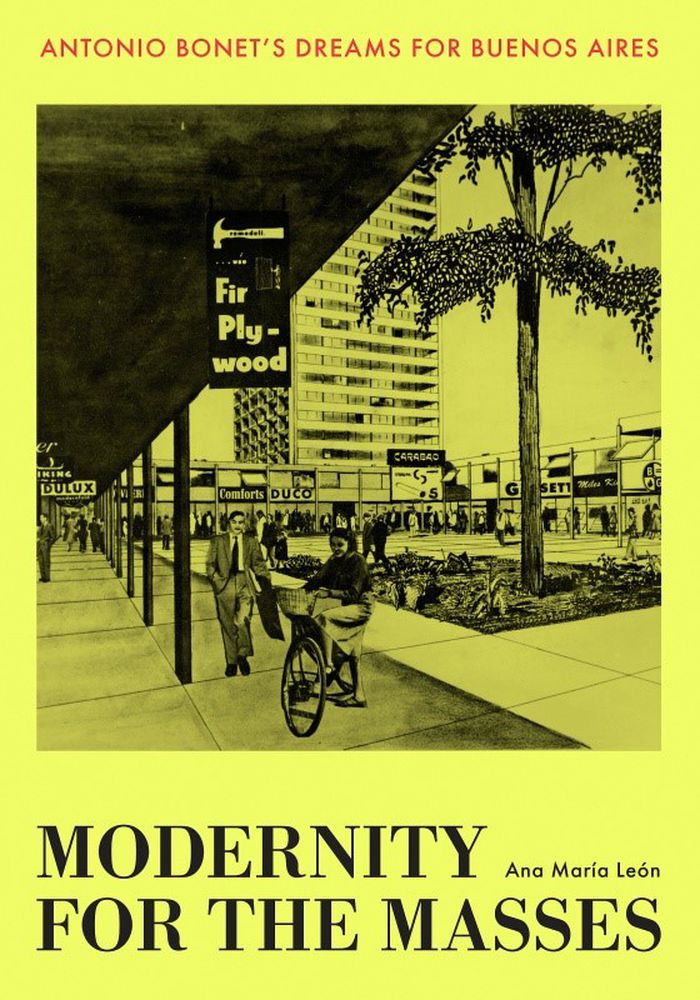
Modernity for the masses: Antonio Bonet's Dreams for Buenos Aires
Actions:
Prix:
$62.95
(disponible en magasin)
Résumé:
Throughout the early twentieth century, waves of migration brought working-class people to the outskirts of Buenos Aires. This prompted a dilemma: Where should these restive populations be situated relative to the city’s spatial politics? Enter Antonio Bonet, a Catalan architect inspired by the transatlantic modernist and surrealist movements. Ana María León follows Bonet's decades-long, state-backed quest to house Buenos Aires's diverse and fractious population. Working with totalitarian and populist regimes, Bonet developed three large-scale housing plans, each scuttled as a new government took over. Yet these incomplete plans—Bonet's dreams—teach us much about the relationship between modernism and state power. This volume finds in Bonet's projects the disconnect between modern architecture’s discourse of emancipation and the reality of its rationalizing control. Although he and his patrons constantly glorified the people and depicted them in housing plans, Bonet never consulted them. Instead he succumbed to official and elite fears of the people's latent political power. In careful readings of Bonet's work, León discovers the progressive erasure of surrealism's psychological sensitivity, replaced with an impulse, realized in modernist design, to contain the increasingly empowered population.
Classification:
livres
livres
Publication:
avril 2021
avril 2021
Sujet:
Théorie de l’urbanisme
Théorie de l’urbanisme


