


5088 Résultats
Classification:
livres
livres
Actions:
Prix:
$35.00
(disponible sur commande)
Résumé:
"I trace my ancestry back to the Mayflower," writes Andrew S. Dolkart. "Not to the legendary ship that brought the Pilgrims to Plymouth, Massachusetts, in 1620, but to the more prosaic tenement on the southeast corner of East Broadway and Clinton Street named the Mayflower, where my father was born in 1914 to Russian-Jewish immigrants." For Dolkart, the experience of(...)
Publication:
juin 2006, Santa fe, Staunton
juin 2006, Santa fe, Staunton
Titre:
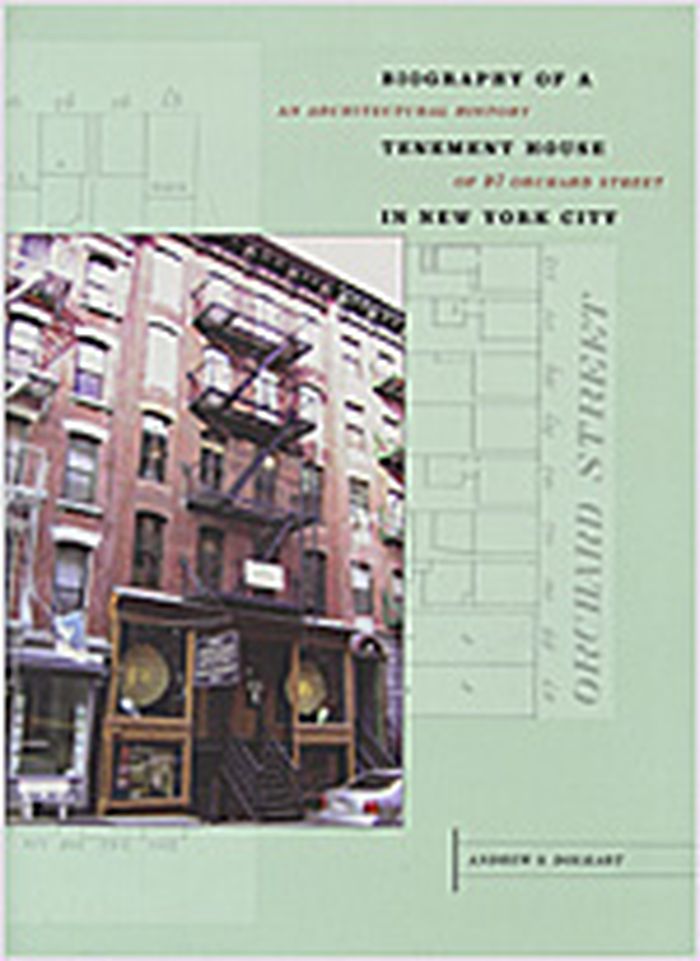
Biography of a tenement house : an architectural history of 97 Orchard Street
Actions:
Prix:
$35.00
(disponible sur commande)
Résumé:
"I trace my ancestry back to the Mayflower," writes Andrew S. Dolkart. "Not to the legendary ship that brought the Pilgrims to Plymouth, Massachusetts, in 1620, but to the more prosaic tenement on the southeast corner of East Broadway and Clinton Street named the Mayflower, where my father was born in 1914 to Russian-Jewish immigrants." For Dolkart, the experience of being raised in a tenement became a metaphor for the life that was afforded countless thousands of other immigrant children growing up in Lower Manhattan during the past century and more. Dolkart presents for us a precise and informative biography of a typical tenement house in New York City that became, in 1988, the site for the Lower East Side Tenement Museum. Dolkart documents, analyzes, and interprets the architectural and social history of this building at 97 Orchard Street, starting in the 1860s when it was erected, moving on to the late nineteenth and early twentieth centuries when the neighborhood started to change, and concluding in the present day as the building is reincarnated as the museum. This book is a lasting tribute to the legacy of immigrants and their children, who were part of the transformation of New York City and the fabric of everyday American urban life.
Classification:
livres
livres
Publication:
juin 2006, Santa fe, Staunton
juin 2006, Santa fe, Staunton
Classification:
livres
livres
Actions:
Prix:
$31.95
(disponible sur commande)
Résumé:
The ugly buildings that characterize the modern landscape are inferior not only to the great cathedrals of medieval Europe and the temples of ancient Egypt and Greece, but even to lesser buildings of the more recent past. The great masterworks of our ancestors spoke to humanity’s higher nature. Architect Herbert Bangs reveals how today’s dysfunctional buildings bring out(...)
Publication:
janvier 2007, Rochester
janvier 2007, Rochester
Titre:
The return of sacred architecture : the golden ratio and the end of modernism
Actions:
Prix:
$31.95
(disponible sur commande)
Résumé:
The ugly buildings that characterize the modern landscape are inferior not only to the great cathedrals of medieval Europe and the temples of ancient Egypt and Greece, but even to lesser buildings of the more recent past. The great masterworks of our ancestors spoke to humanity’s higher nature. Architect Herbert Bangs reveals how today’s dysfunctional buildings bring out the worst in humanity, reinforcing that which is most base within us. He shows how, through the ancient laws of proportion and number, architecture once expressed the harmonious relationship between man and the cosmos. In early times, the architect worked within a sacred and esoteric tradition of creating structures through which human beings could gain insight into the nature of the divine reality. Today, that tradition has been abandoned in favor of narrowly defined utilitarian principles of efficiency and economy. In The Return of Sacred Architecture, Bangs provides the key to freeing architecture from the crude functionality of the twentieth century: the architects of the modern human landscape must find the deep-felt connection to the cosmos that guided the inner lives of those who built the temples of the past. The form of their buildings will then reflect the sacred patterns of geometry and proportion and bring forth greater harmony in the world.
Classification:
livres
livres
Publication:
janvier 2007, Rochester
janvier 2007, Rochester
Classification:
livres
livres
Titre:
School
School
Actions:
Prix:
$31.00
(disponible sur commande)
Résumé:
As a specific form of architecture, the school is an amalgam of its function and its history. Though recognizable across cultures, the schoolhouse nevertheless retains the distinctive markings of different nations and eras. School is the first book to examine this institutional building’s modern growth on a global scale. Ian Grosvenor and Catherine Burke demonstrate(...)
Publication:
novembre 2006, London
novembre 2006, London
Titre:
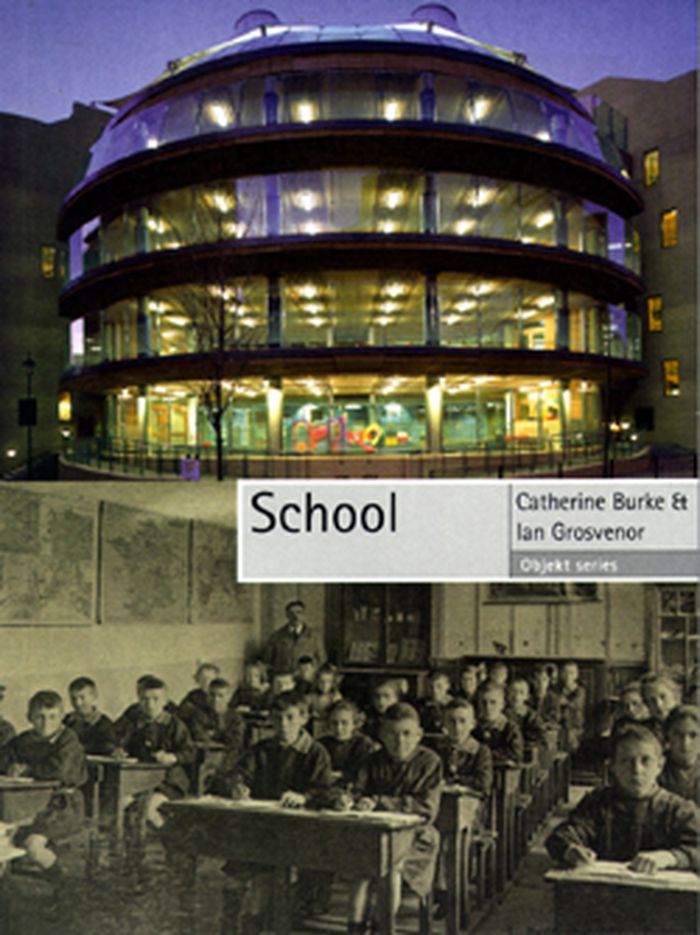
School
Actions:
Prix:
$31.00
(disponible sur commande)
Résumé:
As a specific form of architecture, the school is an amalgam of its function and its history. Though recognizable across cultures, the schoolhouse nevertheless retains the distinctive markings of different nations and eras. School is the first book to examine this institutional building’s modern growth on a global scale. Ian Grosvenor and Catherine Burke demonstrate how school buildings help organize and manipulate time and space for teachers and students, using methods ranging from bells to lines to lesson plans. They reveal the ways in which schools, by their actual physical situation—surrounded by swathes of green or butting up against other urban structures, in neighborhoods stratified by class or segregated by race—make clear their place in society as fragmented sites of cultural memory and creation. The authors further consider how new technologies and continuing globalization will inevitably force us to rethink our notions of school—and school buildings. In the twenty-first century, these shifts represent a radically new context for education. School will provide stimulating reading for anyone interested in this extraordinary evolution of architecture and education. Ian Grosvenor is director of learning and teaching at the School of Education, University of Birmingham. Catherine Burke is lecturer in education in the School of Education, University of Leeds.
Classification:
livres
livres
Publication:
novembre 2006, London
novembre 2006, London
Classification:
livres
livres
Actions:
Prix:
$16.95
(disponible en magasin)
Résumé:
In the summer of 2025, nine Western States formally recognized the State of Palestine. This State recognition and the resurrection of the moribund so-called “two-State solution” is combined with a criminalization of calls to liberate Palestine “from the river to the sea.” This issue asks: can liberation ever take the form of a state? Borrowing a phrase Sophia Azeb used(...)
Titre:
The Funambulist 64: The no-state solution
Actions:
Prix:
$16.95
(disponible en magasin)
Résumé:
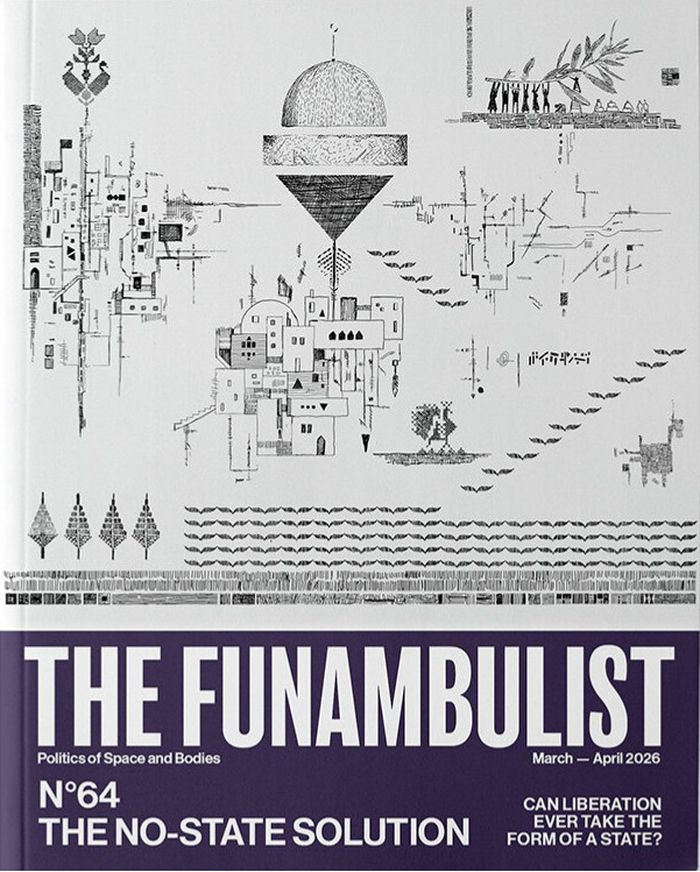
In the summer of 2025, nine Western States formally recognized the State of Palestine. This State recognition and the resurrection of the moribund so-called “two-State solution” is combined with a criminalization of calls to liberate Palestine “from the river to the sea.” This issue asks: can liberation ever take the form of a state? Borrowing a phrase Sophia Azeb used multiple times in the history of The Funambulist (since our first conversation in 2014), The No-State Solution intends to revisit this concept in the context of Palestine in challenging the very idea of “solution” (Sophia Azeb & Rebecca Gross), but also in other liberation struggles such as the Kurdish (Havin Guneser) and Zapatista (Linda Quiquivix) ones. It warns us against state dreams, such as the ones implemented in Sierra Leone and Liberia (what William C. Anderson calls “Black Zionism” in his contribution), and questions the differences between State and community forms of governance, in particular when it comes to healthcare, as made evident in Cuba and Venezuela (Lisbeth Moya González). Finally, it envisions borderless, stateless futures in Aotearoa (Kai-rui Cheng) and Kanaky (Florenda Nirikani). As for the artwork on the cover, it is an original creation by Samir Harb.
Classification:
livres
livres
Publication:
mars 2026
mars 2026
Sujet:
Revues
Revues
Classification:
livres
livres
Actions:
Prix:
$27.99
(disponible sur commande)
Résumé:
The architecture of Britain is an art gallery all around us. From our streets to squares, through our cities, suburbs and villages, we are surrounded by magnificent buildings of eclectic styles. ''A Short History of British Architecture'' is story of why Britain looks the way it does, from prehistoric Stonehenge to the lofty towers of today. Historian Simon Jenkins(...)
Titre:
A short history of British architecture: From Stonehenge to The Shard
Actions:
Prix:
$27.99
(disponible sur commande)
Résumé:
The architecture of Britain is an art gallery all around us. From our streets to squares, through our cities, suburbs and villages, we are surrounded by magnificent buildings of eclectic styles. ''A Short History of British Architecture'' is story of why Britain looks the way it does, from prehistoric Stonehenge to the lofty towers of today. Historian Simon Jenkins traces the relentless battles over the European traditions of classicism and gothic- from the gothic cathedrals of Lincoln, Ely and Wells to the ‘'prodigy'’ houses of the Tudor renaissance, and visits the great estates of Georgian London, the docks of Liverpool, the mills of Yorkshire and the chapels of south Wales. The arrival of modernism in the twentieth century politicised public taste, upheaved communities and sought to reconstruct entire cities. It produced Coventry Cathedral and Lloyd’s of London, but also the brutalist monoliths of Sheffield’s Park Hill, Glasgow’s Cumbernauld and London’s South Bank. Only in the 1970s did the public at last give voice to what became the conservation revolution – a movement in which Jenkins played a leading role, both as deputy chairman of English Heritage and chairman of the National Trust, and in the saving of iconic buildings such as St Pancras International and Covent Garden.
Classification:
livres
livres
Publication:
janvier 2026
janvier 2026
Classification:
livres
livres
Prix:
$67.95
(disponible en magasin)
Résumé:
Homelessness is one of the most pressing social challenges of our time, and is closely linked to issues of urban design and architecture. Homeless people are part of urban society and depend on accessible public spaces and urban infrastructure. Yet, in cities around the world, local governments use policies and urban planning to ward off street people, aiming at making(...)
Titre:
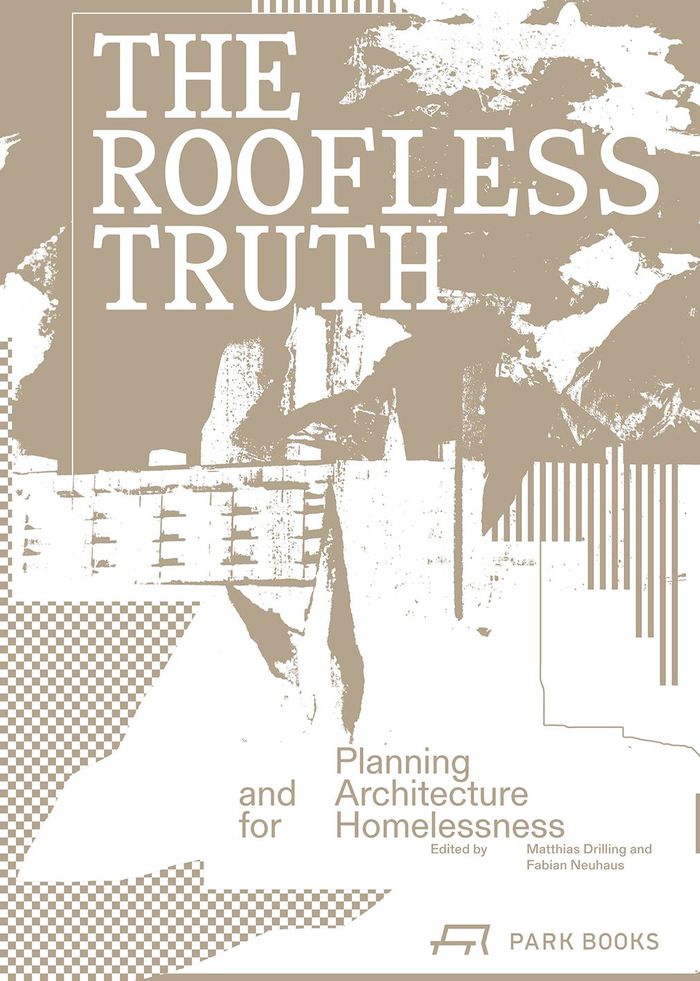
The roofless truth: planning and architecture for homelessness
Actions:
Prix:
$67.95
(disponible en magasin)
Résumé:
Homelessness is one of the most pressing social challenges of our time, and is closely linked to issues of urban design and architecture. Homeless people are part of urban society and depend on accessible public spaces and urban infrastructure. Yet, in cities around the world, local governments use policies and urban planning to ward off street people, aiming at making them invisible in the cityscape and deliberately impeding certain forms of stay. Urban design always reflects power structures—it can exclude or open up avenues for participation. ''The Roofless Truth'' brings together contributions by international researchers and practitioners from the fields of architecture, urban development and design, sociology, ethnology, social work, and education. It offers academic analyses and essays, field reports, and student proposals for interventions in public space, and features award-winning projects and initiatives in Canada, Germany, Iran, Switzerland, and the US. The book highlights how public spaces should be designed to offer protection, dignity, and opportunities for homeless people, and to facilitate encounters and interaction. The featured examples impressively demonstrate that even the smallest spatial decision can determine inclusion or exclusion. ''The Roofless Truth'' paints a multifaceted picture of planning and design as a social practice beyond representation and prestige.
Classification:
livres
livres
Publication:
juillet 2026
juillet 2026
Sujet:
L'humain et la ville
L'humain et la ville
Classification:
livres
livres
Actions:
Prix:
$85.00
(disponible sur commande)
Résumé:
With "Atacama", Jamey Stillings again shares his distinctive aerial perspective to examine dramatic large-scale renewable energy projects, the visual dynamic of enormous mining operations and the stark beauty of the Atacama Desert, so often scarred by human activity. Chile produces a third of the world’s copper and has the largest known lithium reserves, and we utilize(...)
Titre:
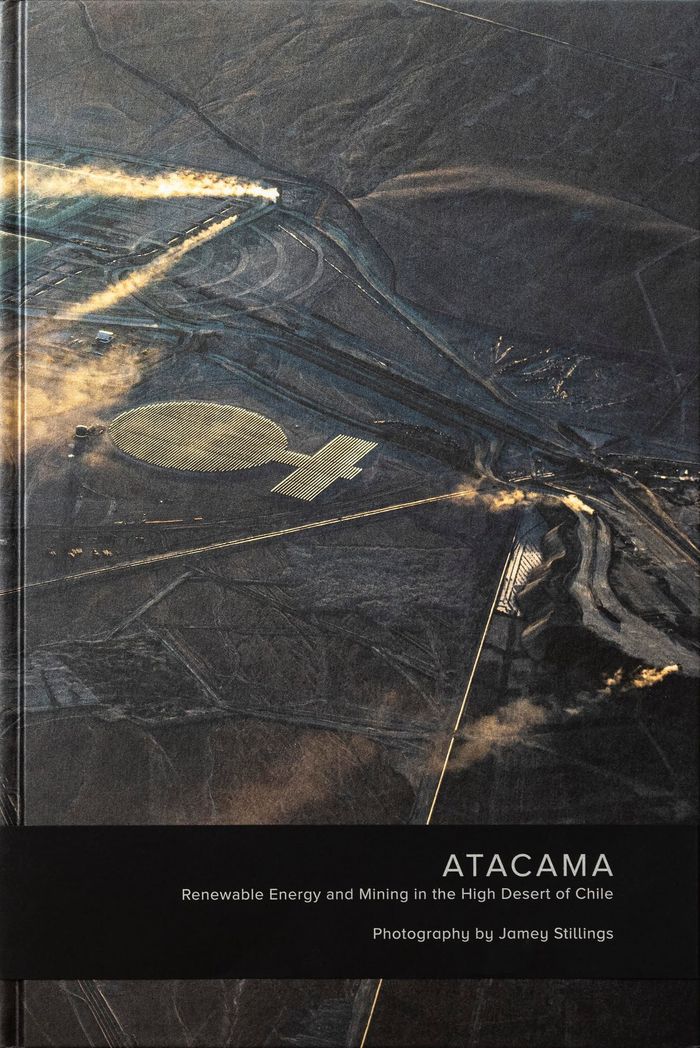
Jamey Stillings: Atacama, renewable energy and mining in the high desert of Chile
Actions:
Prix:
$85.00
(disponible sur commande)
Résumé:
With "Atacama", Jamey Stillings again shares his distinctive aerial perspective to examine dramatic large-scale renewable energy projects, the visual dynamic of enormous mining operations and the stark beauty of the Atacama Desert, so often scarred by human activity. Chile produces a third of the world’s copper and has the largest known lithium reserves, and we utilize these resources daily in our cars, computers and smartphones. The country’s mining industry has traditionally been dependent on imported coal, diesel and natural gas for its energy. Yet the Atacama Desert has excellent solar and wind potential: new renewable energy projects there now supply significant electricity to the northern grid, transmit power to population centers in the south, and are reducing mining’s dependence on fossil fuel. Stillings’ aesthetic interest in the human-altered landscape and concerns for environmental sustainability are principal pillars of his work. His photography elicits a critical dialogue about meeting our needs and desires while seeking equilibrium between nature and human activity. "Atacama," the latest chapter in his ongoing project "Changing perspectives," shows how photography can concurrently be a source of inspiration, motivation and information, and reminds us that a carbon-constrained future is crucial to a responsible approach to life on earth.
Classification:
livres
livres
Publication:
juin 2020
juin 2020
Sujet:
Monographies photo
Monographies photo
Classification:
livres
livres
Actions:
Prix:
$56.95
(disponible sur commande)
Résumé:
How do we live well? The first sentence of ''Grace and gravity'' raises the fundamental question that constantly occupies our minds-and of all those who lived before us. Paradoxically, the impossibility of answering this question opens up the very room needed to find ways of living well. It is the gap where all disciplines fall short, where architecture does not fit its(...)
Titre:
Grace and gravity: Architectures of the figure
Actions:
Prix:
$56.95
(disponible sur commande)
Résumé:
How do we live well? The first sentence of ''Grace and gravity'' raises the fundamental question that constantly occupies our minds-and of all those who lived before us. Paradoxically, the impossibility of answering this question opens up the very room needed to find ways of living well. It is the gap where all disciplines fall short, where architecture does not fit its inhabitants, where economy is not based on shortage, where religion cannot be explained by its followers, and where technology works far beyond its own principles. According to Lars Spuybroek, the prize-winning former architect, this marks the point where the “paradoxical machine” of grace reveals its powers, a point where we “cannot say if we are moving or being moved”. Following the trail of grace leads him to a new form of analysis that transcends the age-old opposition between appearances and technology. Linking up a dazzling and often delightful variety of sources-monkeys, paintings, lamp posts, octopuses, tattoos, bleeding fingers, rose windows, robots, smart phones, spirits, saints, and fossils-with profound meditations on living, death, consciousness, and existence, ''Grace and gravity'' offers an eye-opening provocation to a wide range of art historians, architects, theologians, anthropologists, artists, media theorists and philosophers.
Classification:
livres
livres
Publication:
novembre 2020
novembre 2020
Sujet:
Théorie de l’architecture
Théorie de l’architecture
Classification:
livres
livres
Actions:
Prix:
$22.00
(disponible sur commande)
Résumé:
How does the world form itself? How does it create itself as a world? And how do we understand the role of the visual in this regard? Most responses to these questions within cultural theory and visual culture refer to the rise of globalization, thus highlighting the acceleration of exchanges, the proliferation of information and communication devices, and the(...)
Titre:
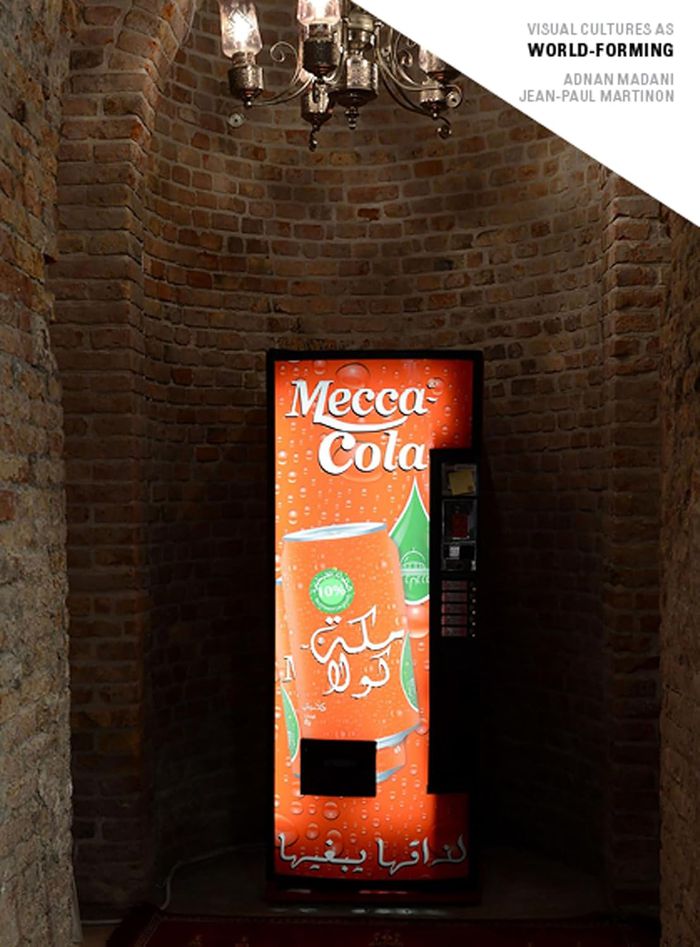
Visual cultures as world forming
Actions:
Prix:
$22.00
(disponible sur commande)
Résumé:
How does the world form itself? How does it create itself as a world? And how do we understand the role of the visual in this regard? Most responses to these questions within cultural theory and visual culture refer to the rise of globalization, thus highlighting the acceleration of exchanges, the proliferation of information and communication devices, and the multiplication of globally circulated goods and images that characterize the world we live in. "Visual cultures as world forming" takes a different approach by focusing on the taking place of the world, a creative act that knows no economic return. This taking place does not lead to more proliferation of goods, additional financial exchanges, further communications, or an increase in the distribution of visual material, but leads to the continued "worlding" of the world. This approach is predominantly, but not exclusively, inspired by the work of Jean-Luc Nancy. Through a reading of his work and of some of his contemporaries both inside and outside of the Western canon, Madani and Martinon attempt to expose how the world—and the world of visual culture in particular—creates itself and the ways in which each one of us is embodying this creation without economy.
Classification:
livres
livres
Publication:
août 2024
août 2024
Sujet:
Théorie/ philosophie
Théorie/ philosophie
Classification:
livres
livres
Actions:
Prix:
$47.95
(disponible sur commande)
Résumé:
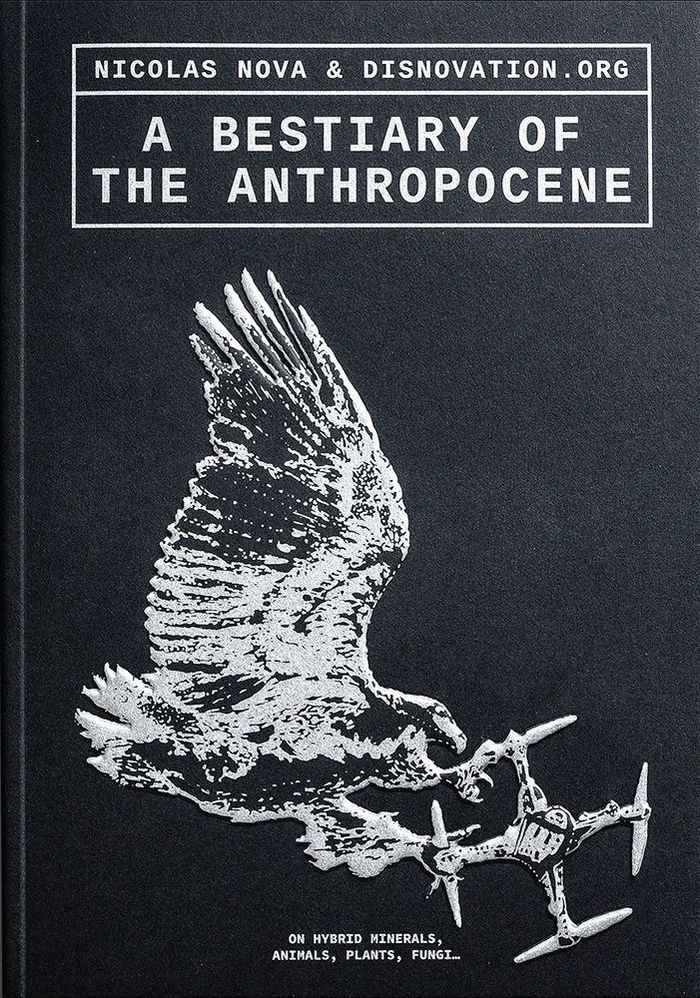
Plastiglomerates, surveillance robot dogs, fordite, artificial grass, antenna trees, COVID-19, decapitated mountains, drone-fighting eagles, standardized bananas: all of these specimens—some more familiar than others—are examples of the hybridity that shapes the current landscapes of science, technology and everyday life. Inspired by medieval bestiaries and the(...)
Titre:
A bestiary of the Anthropocene. Hybrid plants, animals, minerals, fungi, and other specimens
Actions:
Prix:
$47.95
(disponible sur commande)
Résumé:
Plastiglomerates, surveillance robot dogs, fordite, artificial grass, antenna trees, COVID-19, decapitated mountains, drone-fighting eagles, standardized bananas: all of these specimens—some more familiar than others—are examples of the hybridity that shapes the current landscapes of science, technology and everyday life. Inspired by medieval bestiaries and the increasingly visible effects of climate change on the planet, French researcher Nicolas Nova & art collective DISNOVATION.ORG provide an ethnographic guide to the ''post-natural'' era in which we live, highlighting the amalgamations of nature and artifice that already co-exist in the 21st century. A sort of field handbook, ''A bestiary of the Anthropocene'' aims to help us orient ourselves within the technosphere and the biosphere. What happens when technologies and their unintended consequences become so ubiquitous that it is difficult to define what is “natural” or not? What does it mean to live in a hybrid environment made of organic and synthetic matter? In order to answer such questions, Nova & DISNOVATION.ORG bring their own research together with contributions from collectives such as the Center for Genomic Gastronomy and Aliens in Green as well as text by scholars and researchers from around the world. Polish graphic designer Maria Roszkowska provides illustrations.
Classification:
livres
livres
Publication:
mai 2021
mai 2021


