


5088 Résultats
Classification:
livres
livres
Titre:
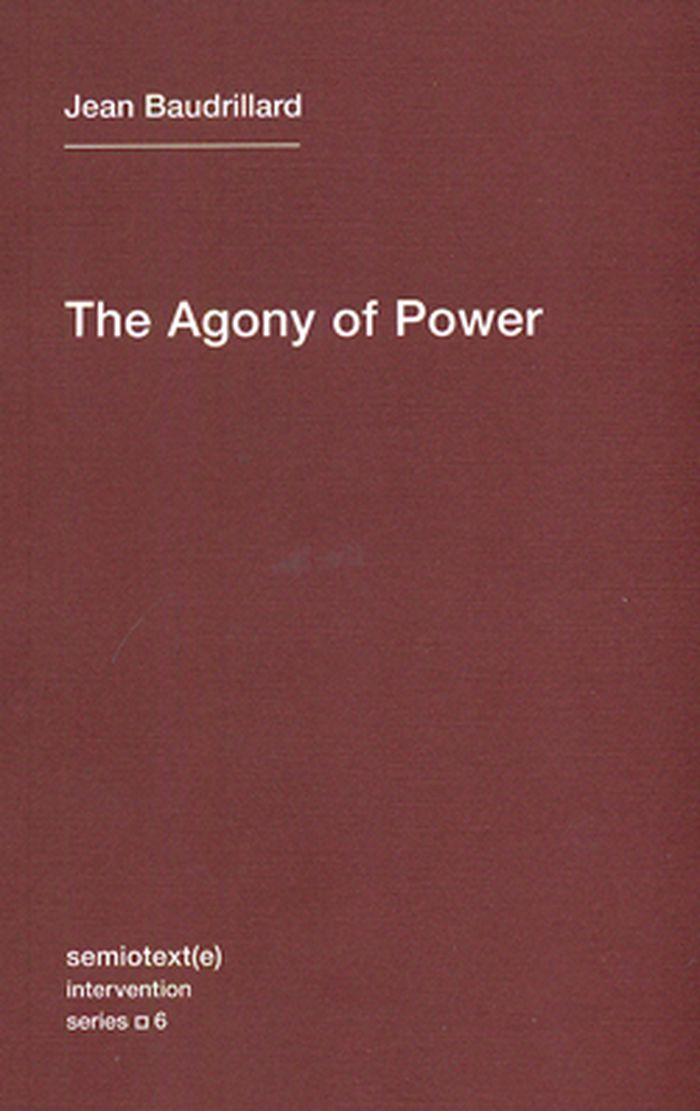
The agony of power
The agony of power
Actions:
Prix:
$15.95
(disponible sur commande)
Résumé:
In these previously unpublished manuscripts written just before his death in 2007, Jean Baudrillard takes a last crack at the bewildering situation currently facing us as we exit the system of "domination" (based on alienation, revolt, revolution) and enter a world of generalized "hegemony" in which everyone becomes both hostage and accomplice of the global market. But in(...)
Titre:
The agony of power
Actions:
Prix:
$15.95
(disponible sur commande)
Résumé:
In these previously unpublished manuscripts written just before his death in 2007, Jean Baudrillard takes a last crack at the bewildering situation currently facing us as we exit the system of "domination" (based on alienation, revolt, revolution) and enter a world of generalized "hegemony" in which everyone becomes both hostage and accomplice of the global market. But in the free-form market of political and sexual liberation, as the possibility of revolution (and our understanding of it) dissipates, Baudrillard sees the hegemonic process as only beginning. Once expelled, negativity returns from within ourselves as an antagonistic force — most vividly in the phenomenon of terrorism, but also as irony, mockery, and the symbolic liquidation of all human values. This is the dimension of hegemony marked by an unbridled circulation — of capital, goods, information, or manufactured history — that is bringing the very concept of exchange to an end and pushing capital beyond its limits : to the point at which it destroys the conditions of its own existence. In the system of hegemony, the alienated, the oppressed, and the colonized find themselves on the side of the system that holds them hostage. In this paradoxical moment in which history has turned to farce, domination itself may appear to have been a lesser evil.
Classification:
livres
livres
Publication:
novembre 2012
novembre 2012
Sujet:
Théorie/ philosophie
Théorie/ philosophie
Classification:
livres
livres
Titre:
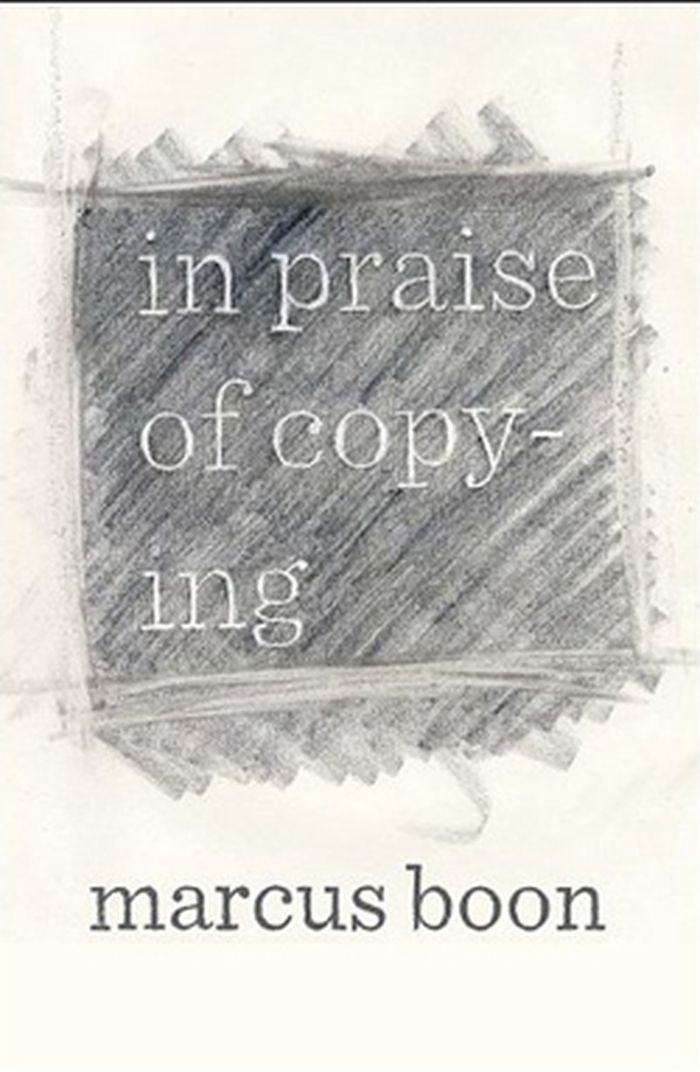
In praise of copying
In praise of copying
Actions:
Prix:
$24.95
(disponible sur commande)
Résumé:
This book is devoted to a deceptively simple but original argument : that copying is an essential part of being human, that the ability to copy is worthy of celebration, and that, without recognizing how integral copying is to being human, we cannot understand ourselves or the world we live in. In spite of the laws, stigmas, and anxieties attached to it, the word(...)
Titre:
In praise of copying
Actions:
Prix:
$24.95
(disponible sur commande)
Résumé:
This book is devoted to a deceptively simple but original argument : that copying is an essential part of being human, that the ability to copy is worthy of celebration, and that, without recognizing how integral copying is to being human, we cannot understand ourselves or the world we live in. In spite of the laws, stigmas, and anxieties attached to it, the word “copying” permeates contemporary culture, shaping discourse on issues from hip hop to digitization to gender reassignment, and is particularly crucial in legal debates concerning intellectual property and copyright. Yet as a philosophical concept, copying remains poorly understood. Working comparatively across cultures and times, Marcus Boon undertakes an examination of what this word means — historically, culturally, philosophically — and why it fills us with fear and fascination. He argues that the dominant legal-political structures that define copying today obscure much broader processes of imitation that have constituted human communities for ages and continue to shape various subcultures today. Drawing on contemporary art, music and film, the history of aesthetics, critical theory, and Buddhist philosophy and practice, In Praise of Copying seeks to show how and why copying works, what the sources of its power are, and the political stakes of renegotiating the way we value copying in the age of globalization.
Classification:
livres
livres
Publication:
mars 2013
mars 2013
Sujet:
Théorie/ philosophie
Théorie/ philosophie
Classification:
livres
livres
Prix:
$47.50
(disponible sur commande)
Résumé:
In times where global matters such as the climate, currencies and places of residence become increasingly volatile, the urban public space we live in is an area where power, identity and belonging are negotiated. Cities have always been melting pots of history, society, art and politics, which is why the way a city is shaped tells us a lot about the people who live in it.(...)
Titre:
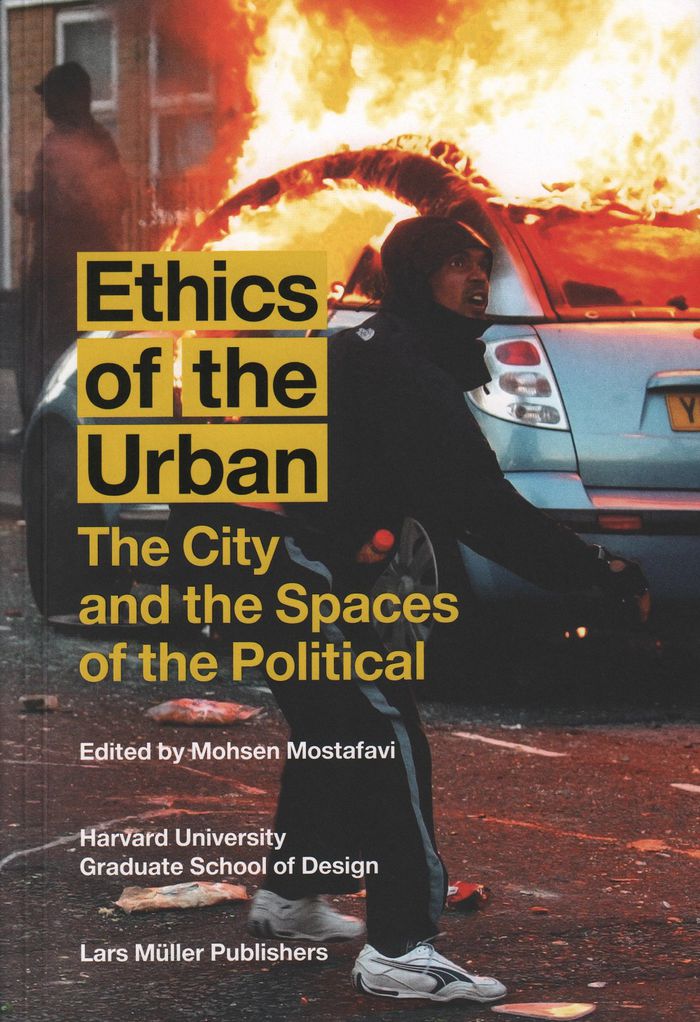
Ethics of the urban: the city and the spaces of the political
Actions:
Prix:
$47.50
(disponible sur commande)
Résumé:
In times where global matters such as the climate, currencies and places of residence become increasingly volatile, the urban public space we live in is an area where power, identity and belonging are negotiated. Cities have always been melting pots of history, society, art and politics, which is why the way a city is shaped tells us a lot about the people who live in it. With contributors from a variety of fields, Ethics of the Urban discusses these urban spaces of the political. "How do we move about the city?", "How does memory of the past inspire the future of cities?" and "What makes a city a home?" are only some of the many questions that Ethics of the Urban addresses. The publication gathers experts from history, sociology, art, political theory, planning, law and design to emphasize the complexity of the meaning that urban space has today. Urban spaces are on one hand political spaces, since buildings, streets and people moving around all mirror political decisions in one way or another. On the other hand, the urban space is also a designed space, conceptualized, planned and sometimes gentrified. Complimented by stunning photography, Ethics of the Urban is a vibrant intellectual journey straight into the bone marrow of every contemporary city around the globe.
Classification:
livres
livres
Publication:
mars 2017
mars 2017
Sujet:
Théorie de l’urbanisme
Théorie de l’urbanisme
Classification:
livres
livres
Prix:
$42.00
(disponible sur commande)
Résumé:
In The Hoarders, Scott Herring provides an in-depth examination of how modern hoarders came into being, from their onset in the late 1930s to the present day. He finds that both the idea of organization and the role of the clutterologist are deeply ingrained in our culture, and that there is a fine line between clutter and deviance in America. Herring introduces us to(...)
Titre:
The hoarders : material deviance in Modern American cutlure
Actions:
Prix:
$42.00
(disponible sur commande)
Résumé:
In The Hoarders, Scott Herring provides an in-depth examination of how modern hoarders came into being, from their onset in the late 1930s to the present day. He finds that both the idea of organization and the role of the clutterologist are deeply ingrained in our culture, and that there is a fine line between clutter and deviance in America. Herring introduces us to Jill, whose countertops are piled high with decaying food and whose cabinets are overrun with purchases, while the fly strips hanging from her ceiling are arguably more fly than strip. When Jill spots a decomposing pumpkin about to be jettisoned, she stops, seeing in the rotting, squalid vegetable a special treasure. “I’ve never seen one quite like this before,” she says, and looks to see if any seeds remain. It is from moments like these that Herring builds his questions: What counts as an acceptable material life—and who decides? Is hoarding some sort of inherent deviation of the mind, or a recent historical phenomenon grounded in changing material cultures? Herring opts for the latter, explaining that hoarders attract attention not because they are mentally ill but because they challenge normal modes of material relations.
Classification:
livres
livres
Publication:
septembre 2014
septembre 2014
Sujet:
Théorie/ philosophie
Théorie/ philosophie
Classification:
livres
livres
Actions:
Prix:
$48.00
(disponible sur commande)
Résumé:
Ever since the landmark publication of Susan Sontag’s On Photography, it has been impossible to look at photographs, particularly those of violence and suffering, without questioning our role as photographic voyeur. Are we desensitized by the proliferation of these images, and does this make it easier to be passive and uninvolved? Or do the images immediately stir our own(...)
Titre:
Picturing atrocity: photography in crisis
Actions:
Prix:
$48.00
(disponible sur commande)
Résumé:
Ever since the landmark publication of Susan Sontag’s On Photography, it has been impossible to look at photographs, particularly those of violence and suffering, without questioning our role as photographic voyeur. Are we desensitized by the proliferation of these images, and does this make it easier to be passive and uninvolved? Or do the images immediately stir our own sense of justice and act as a call to arms? Are we consuming the suffering of others as a form of intrigue? Or is it an act of empathy? To answer these questions, Picturing Atrocity brings together writers and critics on photography today to offer close readings of images that reveal the realities behind the photographs, the subjects, and the photographers. From the massacre of the Sioux Indians at Wounded Knee to the torture of prisoners at Abu Ghraib, from famine in China to apartheid in South Africa, Picturing Atrocity examines a broad spectrum of photographs. Each of the essays focuses specifically on an iconic image, offering a distinct approach and context, in order to enable us to look again—and this time more closely—at the picture. In addition, four photo-essays showcase the work of photographers involved in the making of photographs of brutality as well as the artists’ own reflections on these images.
Classification:
livres
livres
Publication:
novembre 2011
novembre 2011
Sujet:
Théorie de la photographie
Théorie de la photographie
Classification:
livres
livres
Titre:
Adam Bartos: darkroom
Adam Bartos: darkroom
Actions:
Prix:
$109.95
(disponible sur commande)
Résumé:
Darkroom charts the physical and psychic terrain of photographic printing rooms while conveying their transition from the realm of pure functionality into historical artifact. Indirect portraits of both producer and product, Bartos' work explores the physical space linking artist to artwork and linking the tools of the medium to the signs of their use. As more darkrooms(...)
Titre:
Adam Bartos: darkroom
Actions:
Prix:
$109.95
(disponible sur commande)
Résumé:
Darkroom charts the physical and psychic terrain of photographic printing rooms while conveying their transition from the realm of pure functionality into historical artifact. Indirect portraits of both producer and product, Bartos' work explores the physical space linking artist to artwork and linking the tools of the medium to the signs of their use. As more darkrooms switch to digital printing or close shop altogether, we become more aware that the tangible elements of darkroom printing may one day be lost. Bartos' recent large-format work documents and explores in equal measure the visual language and ethos of that analogue printing culture before it slips beyond our experience forever. The acrid odour of chemistry, an uncanny stillness hanging in damp air - Bartos records the descriptive aspects and spatial constraints of the darkroom but also visualizes the lab as a site of limitless creative potential, invested with as much aura as a photographic print. Heroic and humbling at the same time, these portraits speak to the individuality of the workspaces and their inhabitants but also to the shared architecture of all darkrooms. Bartos presents us with the perceptual tools to know the darkroom as it is today and to remember it one day as it will have been.
Classification:
livres
livres
Publication:
novembre 2011
novembre 2011
Sujet:
Monographies photo
Monographies photo
Classification:
livres
livres
Prix:
$85.00
(disponible sur commande)
Résumé:
The city in the twenty-first century faces major challenges, including social and economic stratification, wasteful consumption of resources, transportation congestion, and environmental degradation. More than half of the world’s population lives in cities and major metropolitan areas, and in the next two decades the number of city dwellers is estimated to reach five(...)
Titre:
Sustainable urbanism and beyond: rethinking cities for the future
Actions:
Prix:
$85.00
(disponible sur commande)
Résumé:
The city in the twenty-first century faces major challenges, including social and economic stratification, wasteful consumption of resources, transportation congestion, and environmental degradation. More than half of the world’s population lives in cities and major metropolitan areas, and in the next two decades the number of city dwellers is estimated to reach five billion. This puts enormous pressures on transportation systems, housing stock, and infrastructure such as energy, waste, and water, which directly influences the emissions of greenhouse gases. As the long emergency awaits us, urgent questions remain: How will our cities survive? How can we combat and reconcile urban growth with sustainable use of resources for future generations to thrive? Where and how urbanism comes into the picture and what “sustainable” urban forms can do in light of these events are some of the issues Sustainable Urbanism and Beyond explores. With more than sixty essays, including contributions by Andrés Duany, Saskia Sassen, Peter Newman, Douglas Farr, Henry Cisneros, Peter Hall, Sharon Zukin, Peter Eisenman, and others, this book is a unique perspective on architecture, urban planning, environmental and urban design, exploring ways for raising quality of life and the standard of living in a new modern era by creating better and more viable places to live.
Classification:
livres
livres
Publication:
avril 2012
avril 2012
Sujet:
Théorie de l’urbanisme
Théorie de l’urbanisme
Classification:
livres
livres
Titre:
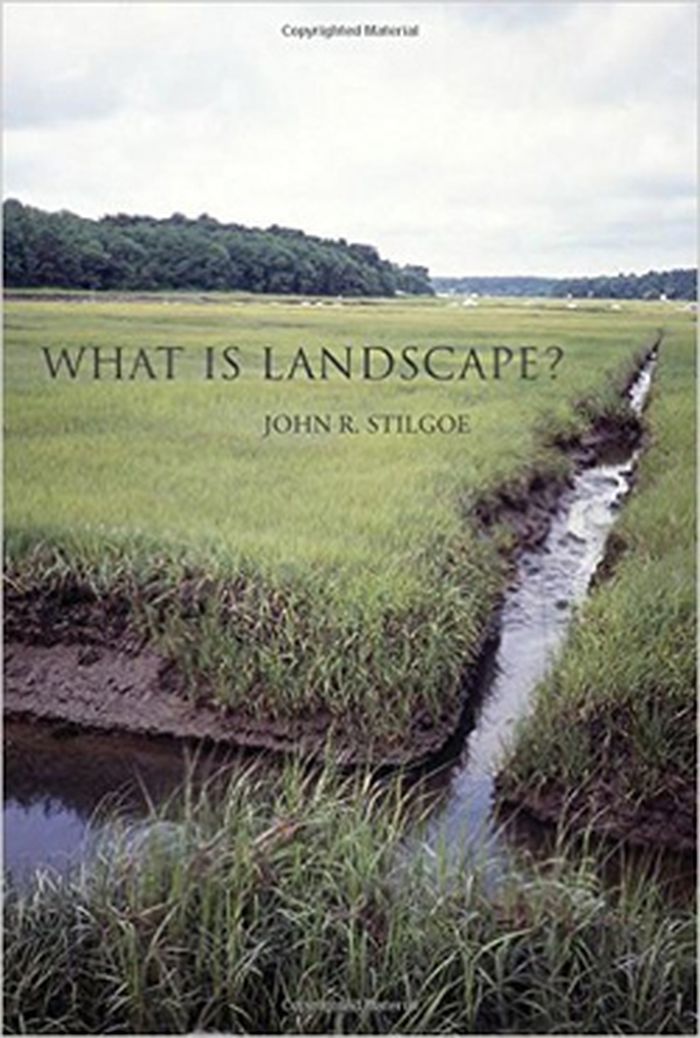
What is landscape?
What is landscape?
Actions:
Prix:
$29.50
(disponible sur commande)
Résumé:
Landscape, John Stilgoe tells us, is a noun. From the old Frisian language (once spoken in coastal parts of the Netherlands and Germany), it meant shoveled land: landschop. Sixteenth-century Englishmen misheard or mispronounced this as landskep, which became landskip, then landscape, designating the surface of the earth shaped for human habitation. In What Is Landscape?(...)
Titre:
What is landscape?
Actions:
Prix:
$29.50
(disponible sur commande)
Résumé:
Landscape, John Stilgoe tells us, is a noun. From the old Frisian language (once spoken in coastal parts of the Netherlands and Germany), it meant shoveled land: landschop. Sixteenth-century Englishmen misheard or mispronounced this as landskep, which became landskip, then landscape, designating the surface of the earth shaped for human habitation. In What Is Landscape? Stilgoe maps the discovery of landscape by putting words to things, zeroing in on landscape’s essence but also leading sideways expeditions through such sources as children’s picture books, folklore, deeds, antique terminology, out-of-print dictionaries, and conversations with locals. (“What is that?” “Well, it’s not really a slough, not really, it’s a bayou . . .”) He offers a written narrative lexicon of landscape as word, concept, and path to discoveries. What Is Landscape? is an invitation to walk, to notice, to ask: to see a sandcastle with a pinwheel at the beach and think of Dutch windmills—icons of triumph, markers of territory won from the sea; to walk in the woods and be amused by the Elizabethans’ misuse of the Latin silvaticus (people of the woods) to coin the word savages; to see in a suburban front lawn a representation of the meadow of a medieval freehold.
Classification:
livres
livres
Publication:
août 2015
août 2015
Sujet:
Théorie du paysage
Théorie du paysage
Classification:
livres
livres
Actions:
Prix:
$50.00
(disponible sur commande)
Résumé:
In landscape architecture, representation has become the subject of contention and much discussion. While computer techniques have been a catalyst for change across the field of design as a whole, nowhere have the conventions of representation been called into question more than in landscape architecture – which in itself is undergoing a process of reinvention. With the(...)
Titre:
Drawing and reinventing landscape
Actions:
Prix:
$50.00
(disponible sur commande)
Résumé:
In landscape architecture, representation has become the subject of contention and much discussion. While computer techniques have been a catalyst for change across the field of design as a whole, nowhere have the conventions of representation been called into question more than in landscape architecture – which in itself is undergoing a process of reinvention. With the onset of rapid urbanisation and our shifting relationship with nature, landscape architecture has proved a potent lens for expressing a wider dialogue taking place in the world. It is, however, only through the introduction of innovative forms of representation – whether digital, analogue or hybrid – that one most vividly sees the emergence of the new. In this book, Diana Balmori explores notions of representation in the discipline at large and across time. She takes us back to landscape design’s roots in the seventeenth century in France and the eighteenth century in England, when it first grappled with questions of imagined exterior space. She explores the discipline’s relationship to painting and the influence of cartography with its bird's-eye views, topographic sections and perspectives. She highlights how new attempts at representation by modern landscape artists such as Patricia Johanson, Ian Hamilton Finlay and David Hockney continue to wrestle with the depiction of landscape.
Classification:
livres
livres
Publication:
janvier 2015
janvier 2015
Sujet:
Théorie du paysage
Théorie du paysage
Classification:
périodiques
périodiques
Titre:
Literature film quarterly.
Literature film quarterly.
Actions:
Auteur:
Sujet:
Publication:
[Salisbury, Md.] : Salisbury State College, ©1973-
[Salisbury, Md.] : Salisbury State College, ©1973-
Classification:
périodiques
périodiques
Publication:
[Salisbury, Md.] : Salisbury State College, ©1973-
[Salisbury, Md.] : Salisbury State College, ©1973-
Auteur:
Sujet:


