


5194 Résultats
Classification:
livres
livres
Titre:
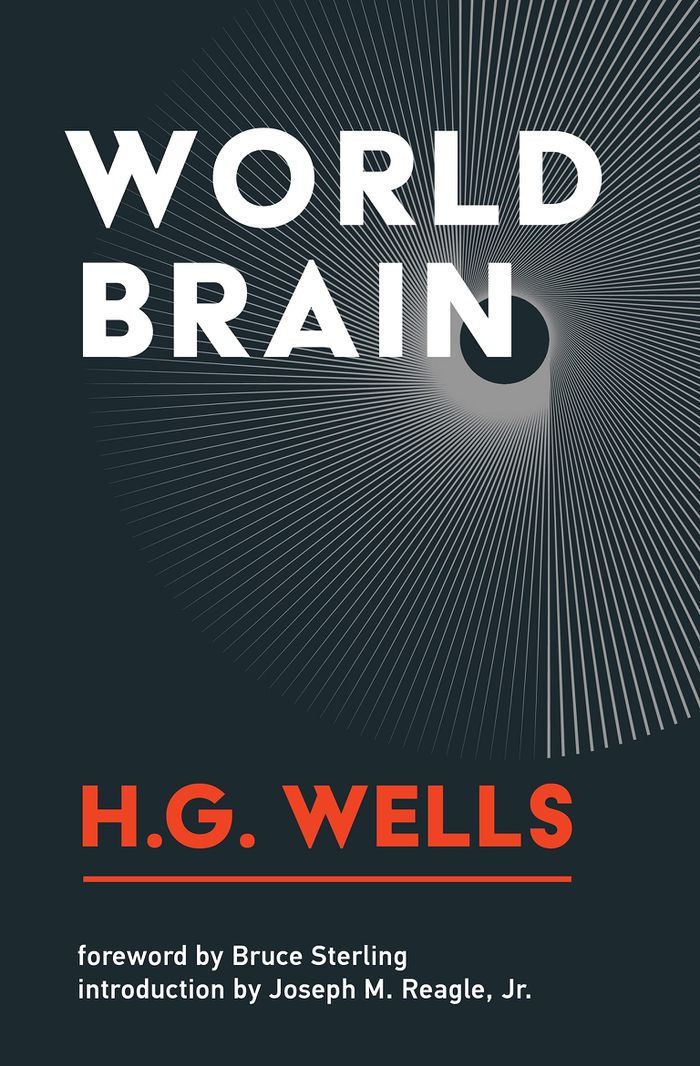
World brain
World brain
Actions:
Prix:
$33.95
(disponible sur commande)
Résumé:
In a series of talks and essays in 1937, H. G. Wells proselytized for what he called a "World Brain," as manifested in a World Encyclopedia--a repository of scientifically established knowledge--that would spread enlightenment around the world and lead to world peace. Wells, known to readers today as the author of "The War of the Worlds" and other science fiction(...)
$33.95
(disponible sur commande)
Résumé:
In a series of talks and essays in 1937, H. G. Wells proselytized for what he called a "World Brain," as manifested in a World Encyclopedia--a repository of scientifically established knowledge--that would spread enlightenment around the world and lead to world peace. Wells, known to readers today as the author of "The War of the Worlds" and other science fiction(...)
Titre:
World brain
Actions:
Prix:
$33.95
(disponible sur commande)
Résumé:
In a series of talks and essays in 1937, H. G. Wells proselytized for what he called a "World Brain," as manifested in a World Encyclopedia--a repository of scientifically established knowledge--that would spread enlightenment around the world and lead to world peace. Wells, known to readers today as the author of "The War of the Worlds" and other science fiction classics, was imagining something like a predigital Wikipedia. The World Encyclopedia would provide a summary of verified reality (in about forty volumes); it would be widely available, free of copyright, and utilize the latest technology. Of course, as Bruce Sterling points out in the foreword to this edition of Wells's work, the World Brain didn't happen; the internet did. And yet, Wells anticipated aspects of the internet, envisioning the World Brain as a technical system of networked knowledge (in Sterling's words, a "hypothetical super-gadget"). Wells's optimism about the power of information might strike readers today as naïvely utopian, but possibly also inspirational.
World brain
Actions:
Prix:
$33.95
(disponible sur commande)
Résumé:
In a series of talks and essays in 1937, H. G. Wells proselytized for what he called a "World Brain," as manifested in a World Encyclopedia--a repository of scientifically established knowledge--that would spread enlightenment around the world and lead to world peace. Wells, known to readers today as the author of "The War of the Worlds" and other science fiction classics, was imagining something like a predigital Wikipedia. The World Encyclopedia would provide a summary of verified reality (in about forty volumes); it would be widely available, free of copyright, and utilize the latest technology. Of course, as Bruce Sterling points out in the foreword to this edition of Wells's work, the World Brain didn't happen; the internet did. And yet, Wells anticipated aspects of the internet, envisioning the World Brain as a technical system of networked knowledge (in Sterling's words, a "hypothetical super-gadget"). Wells's optimism about the power of information might strike readers today as naïvely utopian, but possibly also inspirational.
Classification:
livres
livres
Publication:
août 2021
août 2021
Classification:
livres
livres
Prix:
$34.00
(disponible sur commande)
Résumé:
This volume addresses the complex relationships that the reproducible image creates with its viewers, their bodies, their minds, and their sense of the physical and metaphysical world. The selection addresses the image’s role in the social constitution of individual and collective identity, in social practices of resistance to the structural violences of racism, or in(...)
$34.00
(disponible sur commande)
Résumé:
This volume addresses the complex relationships that the reproducible image creates with its viewers, their bodies, their minds, and their sense of the physical and metaphysical world. The selection addresses the image’s role in the social constitution of individual and collective identity, in social practices of resistance to the structural violences of racism, or in(...)
Sujet:
Théorie de la photographie
Théorie de la photographie
Publication:
octobre 2021
octobre 2021
Titre:
The lives of images, vol. 2 : analogy, attunement and attention
Actions:
Prix:
$34.00
(disponible sur commande)
Résumé:
This volume addresses the complex relationships that the reproducible image creates with its viewers, their bodies, their minds, and their sense of the physical and metaphysical world. The selection addresses the image’s role in the social constitution of individual and collective identity, in social practices of resistance to the structural violences of racism, or in relation to state exercises of power. Of particular importance in this volume are questions of our changing relationship to space and to selfhood as mediated by the image and by the many networked technologies and norms built around it. Essays in the volume ask: what modes of attention are required of us as viewers and agents of image circulation? The question of how image technologies provide us with an array of freedoms is here combined with and read against the many ways images are deployed to reorient, repress, or reduce our field of vision—thus affecting our capacity to see and to act in social space.
The lives of images, vol. 2 : analogy, attunement and attention
Actions:
Prix:
$34.00
(disponible sur commande)
Résumé:
This volume addresses the complex relationships that the reproducible image creates with its viewers, their bodies, their minds, and their sense of the physical and metaphysical world. The selection addresses the image’s role in the social constitution of individual and collective identity, in social practices of resistance to the structural violences of racism, or in relation to state exercises of power. Of particular importance in this volume are questions of our changing relationship to space and to selfhood as mediated by the image and by the many networked technologies and norms built around it. Essays in the volume ask: what modes of attention are required of us as viewers and agents of image circulation? The question of how image technologies provide us with an array of freedoms is here combined with and read against the many ways images are deployed to reorient, repress, or reduce our field of vision—thus affecting our capacity to see and to act in social space.
Classification:
livres
livres
Publication:
octobre 2021
octobre 2021
Sujet:
Théorie de la photographie
Théorie de la photographie
Classification:
livres
livres

Titre:
Undoing property?
Undoing property?
Actions:
Prix:
$37.00
(disponible sur commande)
Résumé:
''Undoing property?'' examines complex relationships inside art, culture, political economy, immaterial production, and the public realm today. In its pages artists and theorists address aspects of computing, curating, economy, ecology, gentrification, music, publishing, piracy, and much more. Property shapes all social relations. Its invisible lines force separations(...)
$37.00
(disponible sur commande)
Résumé:
''Undoing property?'' examines complex relationships inside art, culture, political economy, immaterial production, and the public realm today. In its pages artists and theorists address aspects of computing, curating, economy, ecology, gentrification, music, publishing, piracy, and much more. Property shapes all social relations. Its invisible lines force separations(...)
Titre:
Undoing property?
Actions:
Prix:
$37.00
(disponible sur commande)
Résumé:
''Undoing property?'' examines complex relationships inside art, culture, political economy, immaterial production, and the public realm today. In its pages artists and theorists address aspects of computing, curating, economy, ecology, gentrification, music, publishing, piracy, and much more. Property shapes all social relations. Its invisible lines force separations and create power relations felt through the unequal distribution of what is otherwise collectively produced value. Over the last few years the precise question of what should be privately owned and publicly shared in society has animated intense political struggles and social movements around the world. In this shadow the publication's critical texts, interviews and artistic interventions offer models of practice and interrogate diverse sites, from the body, to the courtroom, to the server, to the museum. The book asks why propertization itself has changed so fundamentally over the last few decades and what might be done to challenge it. The "undoing" of ''Undoing property?'' begins with the recognition that something else is possible.
Undoing property?
Actions:
Prix:
$37.00
(disponible sur commande)
Résumé:
''Undoing property?'' examines complex relationships inside art, culture, political economy, immaterial production, and the public realm today. In its pages artists and theorists address aspects of computing, curating, economy, ecology, gentrification, music, publishing, piracy, and much more. Property shapes all social relations. Its invisible lines force separations and create power relations felt through the unequal distribution of what is otherwise collectively produced value. Over the last few years the precise question of what should be privately owned and publicly shared in society has animated intense political struggles and social movements around the world. In this shadow the publication's critical texts, interviews and artistic interventions offer models of practice and interrogate diverse sites, from the body, to the courtroom, to the server, to the museum. The book asks why propertization itself has changed so fundamentally over the last few decades and what might be done to challenge it. The "undoing" of ''Undoing property?'' begins with the recognition that something else is possible.
Classification:
livres
livres
Publication:
septembre 2013
septembre 2013
Sujet:
Théorie/ philosophie
Théorie/ philosophie
Classification:
livres
livres
Actions:
Prix:
$65.95
(disponible sur commande)
Résumé:
This publication presents a compilation of photographs from African diasporic culture. With over one hundred works by Black artists from Canada, the Caribbean, Great Britain, the United States, South America, as well as throughout the African continent, this volume provides a timely exploration of Black identity on both sides of the Atlantic. Drawn from Dr. Kenneth(...)
$65.95
(disponible sur commande)
Résumé:
This publication presents a compilation of photographs from African diasporic culture. With over one hundred works by Black artists from Canada, the Caribbean, Great Britain, the United States, South America, as well as throughout the African continent, this volume provides a timely exploration of Black identity on both sides of the Atlantic. Drawn from Dr. Kenneth(...)
Sujet:
Photographie- collections
Photographie- collections
Publication:
novembre 2021
novembre 2021
Titre:
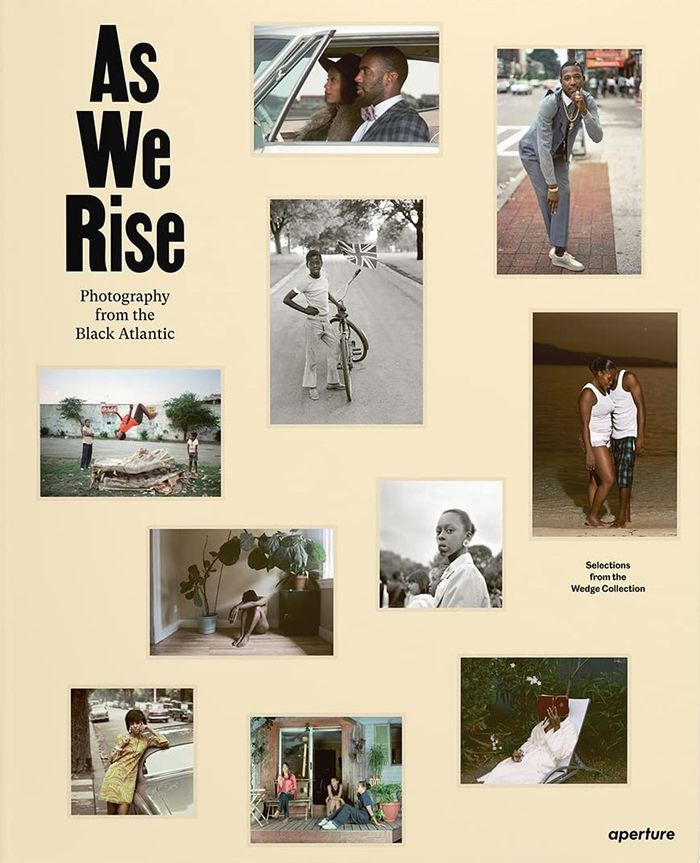
As we rise: Photography from the Black Atlantic
Actions:
Prix:
$65.95
(disponible sur commande)
Résumé:
This publication presents a compilation of photographs from African diasporic culture. With over one hundred works by Black artists from Canada, the Caribbean, Great Britain, the United States, South America, as well as throughout the African continent, this volume provides a timely exploration of Black identity on both sides of the Atlantic. Drawn from Dr. Kenneth Montague’s Wedge Collection in Toronto—a Black-owned collection dedicated to artists of African descent—this book looks at the multifaceted ideas of Black life through the lenses of community, identity, and power. Artists such as Stan Douglas, LaToya Ruby Frazier, Barkley L. Hendricks, Texas Isaiah, Liz Johnson Artur, Seydou Keïta, Deana Lawson, Jamel Shabazz, and Carrie Mae Weems, touch on themes of agency, beauty, joy, belonging, subjectivity, and self-representation. Writings by Isolde Brielmaier, Ugochukwu-Smooth C. Nzewi, Mark Sealy, Teka Selman, and Deborah Willis among others provide insight and commentary on this monumental collection.
As we rise: Photography from the Black Atlantic
Actions:
Prix:
$65.95
(disponible sur commande)
Résumé:
This publication presents a compilation of photographs from African diasporic culture. With over one hundred works by Black artists from Canada, the Caribbean, Great Britain, the United States, South America, as well as throughout the African continent, this volume provides a timely exploration of Black identity on both sides of the Atlantic. Drawn from Dr. Kenneth Montague’s Wedge Collection in Toronto—a Black-owned collection dedicated to artists of African descent—this book looks at the multifaceted ideas of Black life through the lenses of community, identity, and power. Artists such as Stan Douglas, LaToya Ruby Frazier, Barkley L. Hendricks, Texas Isaiah, Liz Johnson Artur, Seydou Keïta, Deana Lawson, Jamel Shabazz, and Carrie Mae Weems, touch on themes of agency, beauty, joy, belonging, subjectivity, and self-representation. Writings by Isolde Brielmaier, Ugochukwu-Smooth C. Nzewi, Mark Sealy, Teka Selman, and Deborah Willis among others provide insight and commentary on this monumental collection.
Classification:
livres
livres
Publication:
novembre 2021
novembre 2021
Sujet:
Photographie- collections
Photographie- collections
Classification:
livres
livres
Actions:
Prix:
$25.00
(disponible sur commande)
Résumé:
Design thinking has created divisions in the discipline: either designers are too theory driven or simply practitioners. Those feeling lost can easily turn to a language meant to inspire creative production in easy to pitch ways, where rhetoric uses design to keep power at bay, to celebrate hegemonic beliefs which are used to indoctrinate designers in bad education,(...)
$25.00
(disponible sur commande)
Résumé:
Design thinking has created divisions in the discipline: either designers are too theory driven or simply practitioners. Those feeling lost can easily turn to a language meant to inspire creative production in easy to pitch ways, where rhetoric uses design to keep power at bay, to celebrate hegemonic beliefs which are used to indoctrinate designers in bad education,(...)
Titre:
Designerly ways of knowing: A working inventory of things a designer should know
Actions:
Prix:
$25.00
(disponible sur commande)
Résumé:
Design thinking has created divisions in the discipline: either designers are too theory driven or simply practitioners. Those feeling lost can easily turn to a language meant to inspire creative production in easy to pitch ways, where rhetoric uses design to keep power at bay, to celebrate hegemonic beliefs which are used to indoctrinate designers in bad education, incapable of imagining different futures. If you take away the post-its, the A3 papers and the markers, can designers think? Led by Antonio Gramsci’s advice that knowing thyself requires compiling an inventory, design critic, educator and researcher Danah Abdulla pays tribute to the late architect, activist and critic Michael Sorkin, whose original list "Two Hundred and Fifty Things an Architect Should Know" inspired this updated version targeted at designers. The iterative list is not meant to be a definitive how to guide, but to spark conversations, to prompt critical thinking and to help designers reconfigure their discipline.
Designerly ways of knowing: A working inventory of things a designer should know
Actions:
Prix:
$25.00
(disponible sur commande)
Résumé:
Design thinking has created divisions in the discipline: either designers are too theory driven or simply practitioners. Those feeling lost can easily turn to a language meant to inspire creative production in easy to pitch ways, where rhetoric uses design to keep power at bay, to celebrate hegemonic beliefs which are used to indoctrinate designers in bad education, incapable of imagining different futures. If you take away the post-its, the A3 papers and the markers, can designers think? Led by Antonio Gramsci’s advice that knowing thyself requires compiling an inventory, design critic, educator and researcher Danah Abdulla pays tribute to the late architect, activist and critic Michael Sorkin, whose original list "Two Hundred and Fifty Things an Architect Should Know" inspired this updated version targeted at designers. The iterative list is not meant to be a definitive how to guide, but to spark conversations, to prompt critical thinking and to help designers reconfigure their discipline.
Classification:
livres
livres
Publication:
juillet 2022
juillet 2022
Classification:
livres
livres
Actions:
Prix:
$55.95
(disponible en magasin)
Résumé:
If participation has been an ideal in politics since ancient democracy, in art it became central only with the avant-gardes emerging from WWI and the Russian Revolution. Politics and aesthetics are still catching up with each other. In the 21st century, since the revolutionary unrest of the 1960s, participation in art and architecture has lost its utopian glow and become(...)
$55.95
(disponible en magasin)
Résumé:
If participation has been an ideal in politics since ancient democracy, in art it became central only with the avant-gardes emerging from WWI and the Russian Revolution. Politics and aesthetics are still catching up with each other. In the 21st century, since the revolutionary unrest of the 1960s, participation in art and architecture has lost its utopian glow and become(...)
Titre:
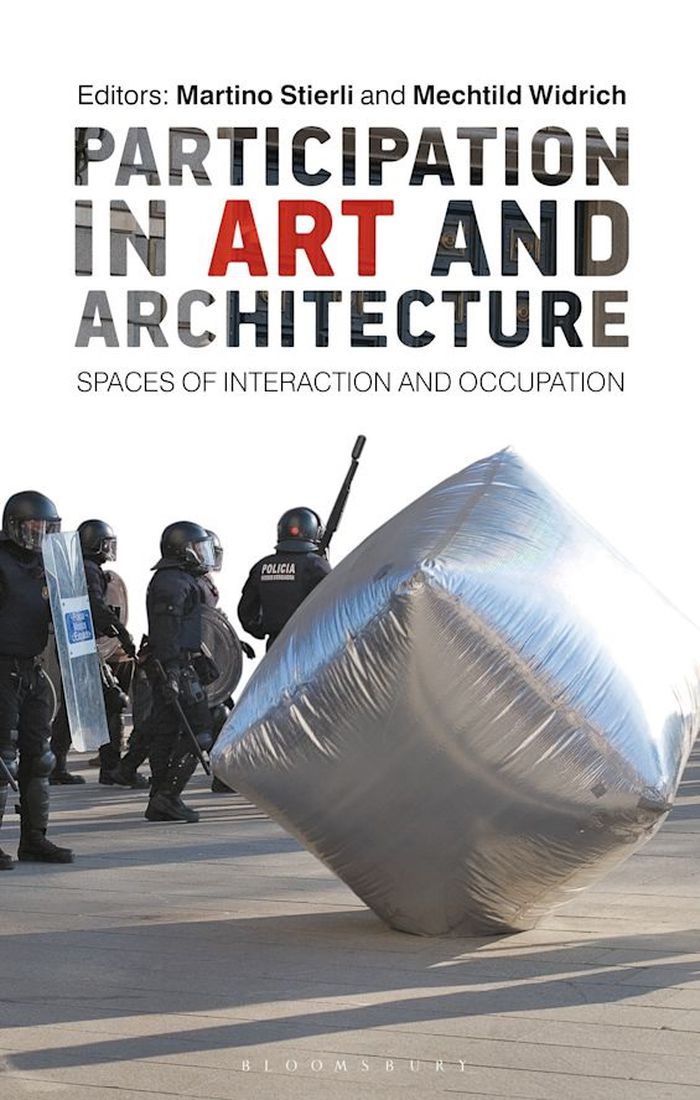
Participation in art and architecture: Spaces of interaction and occupation
Actions:
Prix:
$55.95
(disponible en magasin)
Résumé:
If participation has been an ideal in politics since ancient democracy, in art it became central only with the avant-gardes emerging from WWI and the Russian Revolution. Politics and aesthetics are still catching up with each other. In the 21st century, since the revolutionary unrest of the 1960s, participation in art and architecture has lost its utopian glow and become the focus of a fierce debate: does 'participatory' art and architecture shape social reality, or is it shaped by it? Contemporary critics see in participation only technocratic control, while others embrace it as a viable politics in an era of global capitalism. This innovative book breaks the impasse by looking at how participants themselves exert power, rather than being victimized or liberated from it. From artists hijacking Google Earth to protesters setting up a museum of the revolution in Cairo, art, architecture and daily life are explored in their participatory dimension.
Participation in art and architecture: Spaces of interaction and occupation
Actions:
Prix:
$55.95
(disponible en magasin)
Résumé:
If participation has been an ideal in politics since ancient democracy, in art it became central only with the avant-gardes emerging from WWI and the Russian Revolution. Politics and aesthetics are still catching up with each other. In the 21st century, since the revolutionary unrest of the 1960s, participation in art and architecture has lost its utopian glow and become the focus of a fierce debate: does 'participatory' art and architecture shape social reality, or is it shaped by it? Contemporary critics see in participation only technocratic control, while others embrace it as a viable politics in an era of global capitalism. This innovative book breaks the impasse by looking at how participants themselves exert power, rather than being victimized or liberated from it. From artists hijacking Google Earth to protesters setting up a museum of the revolution in Cairo, art, architecture and daily life are explored in their participatory dimension.
Classification:
livres
livres
Publication:
juillet 2022
juillet 2022
Classification:
livres
livres

Titre:
Catching the light
Catching the light
Actions:
Prix:
$32.00
(disponible sur commande)
Résumé:
In this lyrical meditation about the why of writing poetry, Joy Harjo reflects on significant points of illumination, experience, and questioning from her fifty years as a poet. Composed of intimate vignettes that take us through the author’s life journey as a youth in the late 1960s, a single mother, and a champion of Native nations, this book offers a fresh(...)
$32.00
(disponible sur commande)
Résumé:
In this lyrical meditation about the why of writing poetry, Joy Harjo reflects on significant points of illumination, experience, and questioning from her fifty years as a poet. Composed of intimate vignettes that take us through the author’s life journey as a youth in the late 1960s, a single mother, and a champion of Native nations, this book offers a fresh(...)
Titre:
Catching the light
Actions:
Prix:
$32.00
(disponible sur commande)
Résumé:
In this lyrical meditation about the why of writing poetry, Joy Harjo reflects on significant points of illumination, experience, and questioning from her fifty years as a poet. Composed of intimate vignettes that take us through the author’s life journey as a youth in the late 1960s, a single mother, and a champion of Native nations, this book offers a fresh understanding of how poetry functions as an expression of purpose, spirit, community, and memory—in both the private, individual journey and as a vehicle for prophetic, public witness. Harjo insists that the most meaningful poetry is birthed through cracks in history from what is broken and unseen. At the crossroads of this brokenness, she calls us to watch and listen for the songs of justice for all those America has denied. This is an homage to the power of words to defy erasure—to inscribe the story, again and again, of who we have been, who we are, and who we can be.
Catching the light
Actions:
Prix:
$32.00
(disponible sur commande)
Résumé:
In this lyrical meditation about the why of writing poetry, Joy Harjo reflects on significant points of illumination, experience, and questioning from her fifty years as a poet. Composed of intimate vignettes that take us through the author’s life journey as a youth in the late 1960s, a single mother, and a champion of Native nations, this book offers a fresh understanding of how poetry functions as an expression of purpose, spirit, community, and memory—in both the private, individual journey and as a vehicle for prophetic, public witness. Harjo insists that the most meaningful poetry is birthed through cracks in history from what is broken and unseen. At the crossroads of this brokenness, she calls us to watch and listen for the songs of justice for all those America has denied. This is an homage to the power of words to defy erasure—to inscribe the story, again and again, of who we have been, who we are, and who we can be.
Classification:
livres
livres
Publication:
octobre 2022
octobre 2022
Sujet:
Littérature et poésie
Littérature et poésie
Classification:
livres
livres
Sujet:
Publication:
L'Internationale Online 2017
L'Internationale Online 2017
Classification:
livres
livres
Publication:
L'Internationale Online 2017
L'Internationale Online 2017
Sujet:
Classification:
livres
livres
Actions:
Prix:
$34.00
(disponible sur commande)
Résumé:
How can the different strands of modern architecture in Britain be understood? For many British people, it remains an alien cultural import and minority taste, yet British architecture has never stood higher in world esteem than at the close of the twentieth century. In this book Alan Powers shows how beneath today’s achievements in architecture, past conflicts have not(...)
$34.00
(disponible sur commande)
Résumé:
How can the different strands of modern architecture in Britain be understood? For many British people, it remains an alien cultural import and minority taste, yet British architecture has never stood higher in world esteem than at the close of the twentieth century. In this book Alan Powers shows how beneath today’s achievements in architecture, past conflicts have not(...)
Titre:
Britain : modern architecture in history
Actions:
Prix:
$34.00
(disponible sur commande)
Résumé:
How can the different strands of modern architecture in Britain be understood? For many British people, it remains an alien cultural import and minority taste, yet British architecture has never stood higher in world esteem than at the close of the twentieth century. In this book Alan Powers shows how beneath today’s achievements in architecture, past conflicts have not been resolved, as the country that invented industrial civilization has struggled to control its effect on cities and countryside. He examines developments and changes from 1900 to the present day in a series of thematic chapters, giving equal weight to technical, economic and moral aspects and demonstrating how architecture has responded to specific social needs and political pressures. Rather than giving a conventional account of stylistic tendencies, Powers listens to the arguments and conversations of the time in order to recapture the dominating issues of each decade, and locate the moments of transition in architecture and in the wider culture. Featuring more than 220 images, including both recent and historical photographs, "Britain" is an authoritative yet highly accessible account of twentieth-century British architecture. Giving due regard to the separate identities of England, Scotland and Wales, the book also adds a new and original dimension to the perennial problem of defining ‘Britain’ in the modern world.
Britain : modern architecture in history
Actions:
Prix:
$34.00
(disponible sur commande)
Résumé:
How can the different strands of modern architecture in Britain be understood? For many British people, it remains an alien cultural import and minority taste, yet British architecture has never stood higher in world esteem than at the close of the twentieth century. In this book Alan Powers shows how beneath today’s achievements in architecture, past conflicts have not been resolved, as the country that invented industrial civilization has struggled to control its effect on cities and countryside. He examines developments and changes from 1900 to the present day in a series of thematic chapters, giving equal weight to technical, economic and moral aspects and demonstrating how architecture has responded to specific social needs and political pressures. Rather than giving a conventional account of stylistic tendencies, Powers listens to the arguments and conversations of the time in order to recapture the dominating issues of each decade, and locate the moments of transition in architecture and in the wider culture. Featuring more than 220 images, including both recent and historical photographs, "Britain" is an authoritative yet highly accessible account of twentieth-century British architecture. Giving due regard to the separate identities of England, Scotland and Wales, the book also adds a new and original dimension to the perennial problem of defining ‘Britain’ in the modern world.
Classification:
livres
livres
Publication:
juillet 2006, London
juillet 2006, London
Classification:
livres
livres
Actions:
Exemplaires:
Description:
325 pages : illustrations (some color) ; 22 cm
Description:
325 pages : illustrations (some color) ; 22 cm
Auteur:
Sujet:
Publication:
Paris : Éditions B42, ©2016.
Paris : Éditions B42, ©2016.
Titre:
Ramper, dédoubler : Collecte coloniale et affect = Crawling doubles : colonial collecting and affect / sous la direction de Mathieu K. Abonnenc, Lotte Arndt, Catalina Lozano ; avec les contributions de Julien Bondaz [and others].
Actions:
Exemplaires:
Description:
325 pages : illustrations (some color) ; 22 cm
Ramper, dédoubler : Collecte coloniale et affect = Crawling doubles : colonial collecting and affect / sous la direction de Mathieu K. Abonnenc, Lotte Arndt, Catalina Lozano ; avec les contributions de Julien Bondaz [and others].
Actions:
Exemplaires:
Description:
325 pages : illustrations (some color) ; 22 cm
Classification:
livres
livres
Publication:
Paris : Éditions B42, ©2016.
Paris : Éditions B42, ©2016.
Auteur:
Sujet:


