


5088 Résultats
Classification:
livres
livres
Prix:
$39.95
(disponible sur commande)
Résumé:
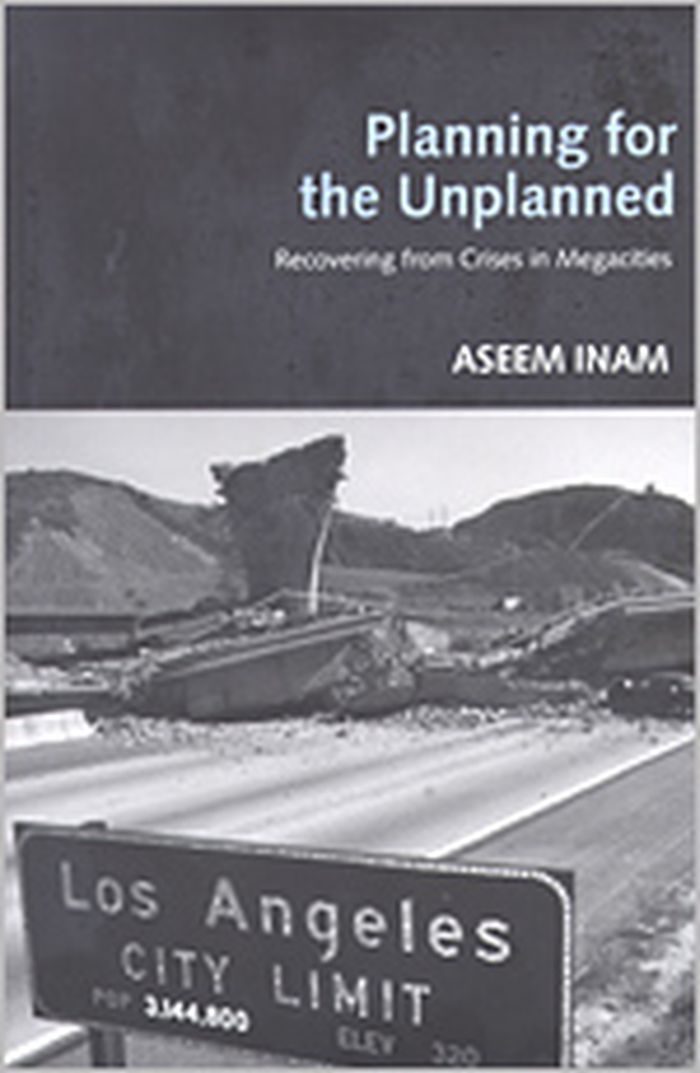
How do cities plan for the unplanned? Do cities plan for recovery from every possible sudden shock? How does one prepare a plan for the recovery after a tragedy, like the September 11, 2001 terrorist attacks on New York? The book discovers the systematic features that contribute to the success of planning institutions. In cities filled with uncertainty and complexity,(...)
Titre:
Planning for the unplanned : recovering from crises in megacities
Actions:
Prix:
$39.95
(disponible sur commande)
Résumé:
How do cities plan for the unplanned? Do cities plan for recovery from every possible sudden shock? How does one prepare a plan for the recovery after a tragedy, like the September 11, 2001 terrorist attacks on New York? The book discovers the systematic features that contribute to the success of planning institutions. In cities filled with uncertainty and complexity, planning institutions effectively tackle unexpected and sudden change by relying on the old and the familiar, rather than the new and the innovative. The author argues that planning programs institutions were successful because they were bureaucratic, and relied on standardized routines, rigorous sets of established regimes, familiar programs, and institutionalized hierarchies. Also contrary to popular perception, neither the leaders at the top of the institutions nor those workers at the grassroots level were the most important in the implementation of such routines. The key actors were middle managers, because they knew the institutional structures inside out, what the routines were and how to use them, and were successful go-betweens between national governments and grassroots community groups. Case studies from Mexico City, Los Angeles and New York provide a deeper understanding of urban planning processes. The case studies reveal that systematic institutional analysis helps us understand what works in planning, and why. They also demonstrate the manner in which institutional routines serve as powerful and effective tools for addressing novel situations.
Classification:
livres
livres
Publication:
avril 2005, New York
avril 2005, New York
Sujet:
Théorie de l’urbanisme
Théorie de l’urbanisme
Classification:
livres
livres
Titre:
The dominion of the dead
The dominion of the dead
Actions:
Prix:
$17.50
(disponible sur commande)
Résumé:
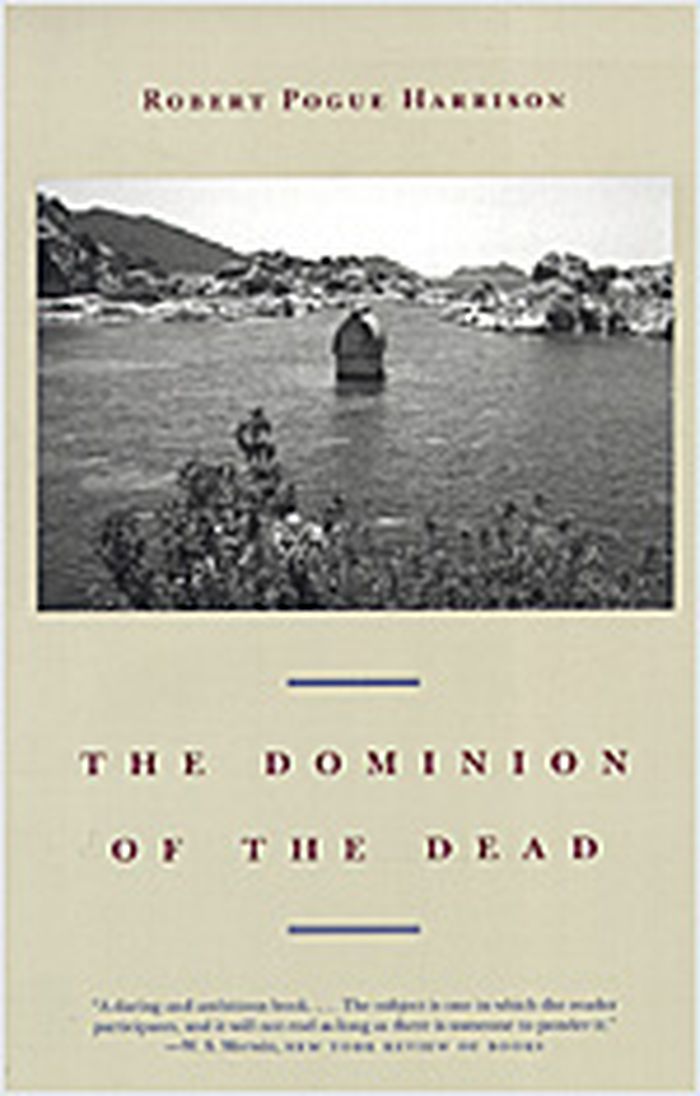
How do the living maintain relations to the dead? Why do we bury people when they die? And what is at stake when we do? In "The dominion of the dead", Robert Pogue Harrison considers the supreme importance of these questions to Western civilization, exploring the many places where the dead cohabit the world of the living-the graves, images, literature, architecture, and(...)
Titre:
The dominion of the dead
Actions:
Prix:
$17.50
(disponible sur commande)
Résumé:
How do the living maintain relations to the dead? Why do we bury people when they die? And what is at stake when we do? In "The dominion of the dead", Robert Pogue Harrison considers the supreme importance of these questions to Western civilization, exploring the many places where the dead cohabit the world of the living-the graves, images, literature, architecture, and monuments that house the dead in their afterlife among us. This work devotes particular attention to the practice of burial. Harrison contends that we bury our dead to humanize the lands where we build our present and imagine our future. As long as the dead are interred in graves and tombs, they never truly depart from this world, but remain, if only symbolically, among the living. Spanning a broad range of examples, from the graves of our first human ancestors to the empty tomb of the Gospels to the Vietnam Veterans Memorial, Harrison also considers the authority of predecessors in both modern and premodern societies. Through inspired readings of major writers and thinkers such as Vico, Virgil, Dante, Pater, Nietzsche, Heidegger, and Rilke, he argues that the buried dead form an essential foundation where future generations can retrieve their past, while burial grounds provide an important bedrock where past generations can preserve their legacy for the unborn.
Classification:
livres
livres
Publication:
mai 2005, Chicago, London
mai 2005, Chicago, London
Sujet:
Théorie du paysage
Théorie du paysage
Classification:
livres
livres
Titre:
Making a better world : public housing, the Red Scare, and the direction of modern Los Angeles
Making a better world : public housing, the Red Scare, and the direction of modern Los Angeles
Actions:
Prix:
$29.95
(disponible sur commande)
Résumé:
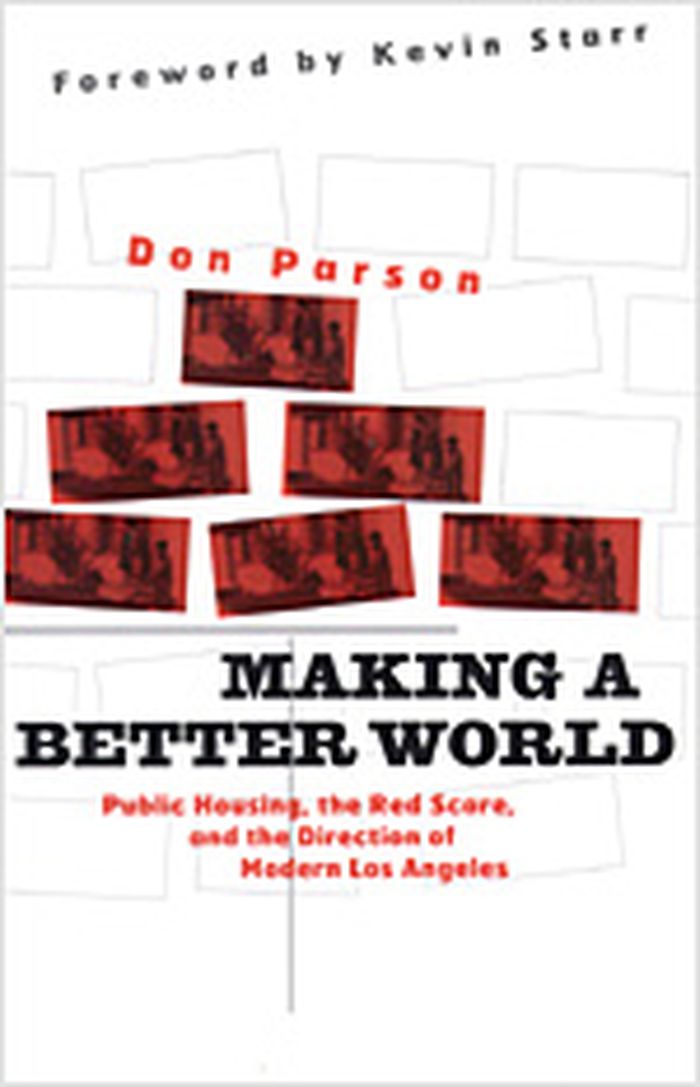
During the 1990s, Los Angeles - like many other cities across America - began demolishing public housing projects that had come to symbolize decades of failed urban policies. But public housing was not always regarded with such disdain. In the years surrounding World War II, it had been a popular New Deal program, viewed as a force for positive social change and supported(...)
Titre:
Making a better world : public housing, the Red Scare, and the direction of modern Los Angeles
Actions:
Prix:
$29.95
(disponible sur commande)
Résumé:
During the 1990s, Los Angeles - like many other cities across America - began demolishing public housing projects that had come to symbolize decades of failed urban policies. But public housing was not always regarded with such disdain. In the years surrounding World War II, it had been a popular New Deal program, viewed as a force for positive social change and supported by a broad coalition of civic, labor, religious, and community organizations. Socially conscious architects and planners developed innovative and livable projects that embodied the latest theories in urban design. With sharp historical perspective, "Making a better world" traces the rise and fall of a public housing ethic in Los Angeles and its impact on the city’s built environment. In the caustic political atmosphere of Joseph McCarthy’s America, public housing opponents accused the city’s housing authority of communist infiltration, effectively eliminating the left from debates over the city’s development. In place of public housing, conservative forces promoted a pro-private growth agenda that redefined urban renewal and reshaped modern Los Angeles. No conventional public housing projects have been constructed in Los Angeles since 1955. In this era of skyrocketing housing prices, especially in urban areas, Don Parson’s examination not only gives us the recent history of a city but also opens up a new debate on a current national crisis in providing shelter for low-income Americans. Foreword by Kevin Starr.
Classification:
livres
livres
Publication:
janvier 2005, Minneapolis
janvier 2005, Minneapolis
Sujet:
Théorie de l’urbanisme
Théorie de l’urbanisme
Classification:
livres
livres
Titre:
Gehry draws
Gehry draws
Actions:
Prix:
$84.95
(disponible sur commande)
Résumé:
Everyone knows what the distinctive curves and lines of Frank Gehry's buildings look like. But where do they come from? Gehry has described drawing as his way of "thinking aloud"; Gehry Draws traces that thinking through 32 major projects (both built and unbuilt) with more than 500 drawings (many of which have never before been published) and more than 400 additional(...)
Sujet:
Architecture, monographies
Architecture, monographies
Publication:
octobre 2004, Cambridge, Mass.
octobre 2004, Cambridge, Mass.
Titre:
Gehry draws
Actions:
Prix:
$84.95
(disponible sur commande)
Résumé:
Everyone knows what the distinctive curves and lines of Frank Gehry's buildings look like. But where do they come from? Gehry has described drawing as his way of "thinking aloud"; Gehry Draws traces that thinking through 32 major projects (both built and unbuilt) with more than 500 drawings (many of which have never before been published) and more than 400 additional illustrations -- providing a privileged view of the creative practice of a master architect. Horst Bredekamp's introduction relates Gehry's drawing methods to the concept of "disegno," as practiced by Leonardo and Durer -- not only the act of drawing and modeling but also the dynamics of creative thinking -- and shows how Gehry thinks through the curving movements of his hand on paper. Gehry himself describes for Bredekamp his method in several explanatory sketches, and Bredekamp applies this to a study of drawings made for specific Gehry commissions. Gehry Draws is produced in collaboration with Frank Gehry and his team at Gehry Partners. Project synopses and commentary by Gehry and two of his Partners and Project Designers, Edwin Chan and Craig Webb, guide us through the full range of Gehry production, from the small details of furniture design to such large-scale undertakings as the Disney Concert Hall and the Guggenheim Museum in Bilbao. The drawings, illustrations, and text in Gehry Draws definitively place drawing at the heart of Frank Gehry's creative process.
Classification:
livres
livres
Publication:
octobre 2004, Cambridge, Mass.
octobre 2004, Cambridge, Mass.
Sujet:
Architecture, monographies
Architecture, monographies
Classification:
livres
livres
Titre:
Boring postcards
Boring postcards
Actions:
Prix:
$14.95
(disponible sur commande)
Résumé:
Martin Parr is a key figure in the world of photography and contemporary art. Some accuse him of cruelty, but many more appreciate the wit and irony with which he tackles such subjects as bad taste, food, the tourist, shopping and the foibles of the British. Parr has been collecting postcards for twenty years, and here is the cream of his collection – his boring(...)
Titre:
Boring postcards
Actions:
Prix:
$14.95
(disponible sur commande)
Résumé:
Martin Parr is a key figure in the world of photography and contemporary art. Some accuse him of cruelty, but many more appreciate the wit and irony with which he tackles such subjects as bad taste, food, the tourist, shopping and the foibles of the British. Parr has been collecting postcards for twenty years, and here is the cream of his collection – his boring postcards. With no introduction or commentary of any kind, Parr’s boring postcards are reproduced straight: they are exactly what they say they are, namely boring picture postcards showing boring photographs of boring places … presumably for boring people to buy to send to their boring friends. All of them are shot in Britain, taking us on a boring tour of its motorways, ring roads, traffic interchanges, bus stations, pedestrian precincts, factories, housing estates, airports, caravan sites, convalescent homes and shopping centres. Some attempt to idealize their subjects, only to fail dismally. Others lack any apparent purpose or interest … but the resultant collection of photographic images is wholly compelling. Boring Postcards is multi-layered: a commentary on British architecture, social life and identity, a record of a folk photography which is today being appropriated by the most fashionable photographers (including Parr), an exercise in sublime minimalism … and, above all, a richly comic photographic entertainment
Classification:
livres
livres
Publication:
février 2004, London
février 2004, London
Sujet:
Théorie de la photographie
Théorie de la photographie
Classification:
livres
livres
Actions:
Prix:
$45.95
(disponible sur commande)
Résumé:
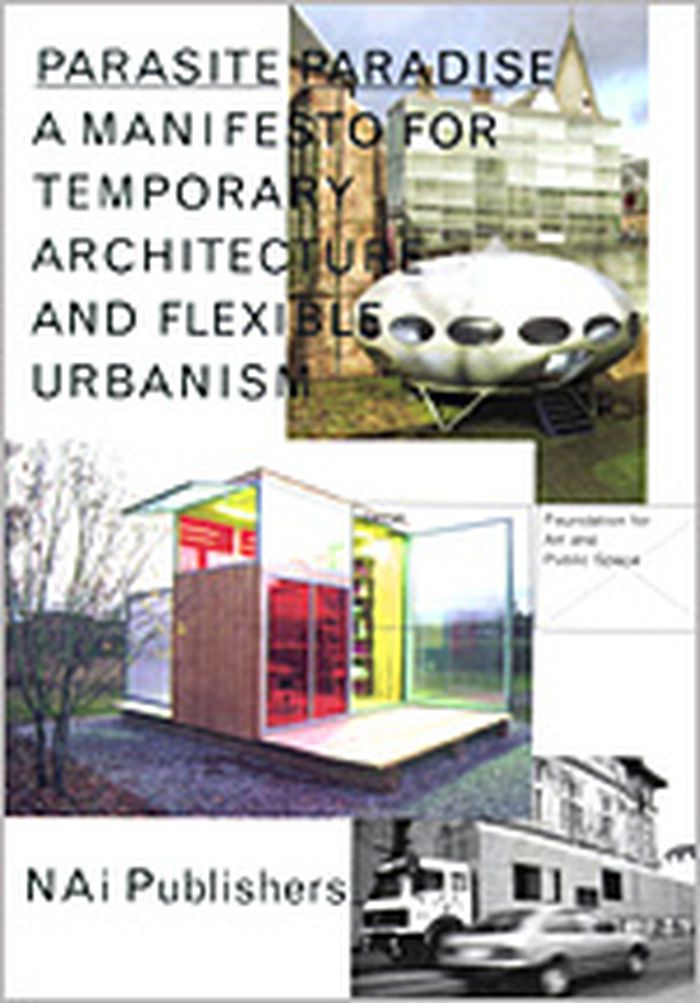
Parasites are flexible and temporary structures, designed by artists or architects, that feed off existing infrastructure. "Parasite Paradise" documents 23 projects that offer new ways of designing the public domain outside the existing rules. Many of these parasites have settled in the government-designated 'Vinex' district of Leidsche Rijn near Utrecht. There they have(...)
Sujet:
Architecture miniature
Architecture miniature
Publication:
juillet 2004, Rotterdam
juillet 2004, Rotterdam
Titre:
Parasite paradise : a manifesto for temporary architecture and flexible urbanism
Actions:
Prix:
$45.95
(disponible sur commande)
Résumé:
Parasites are flexible and temporary structures, designed by artists or architects, that feed off existing infrastructure. "Parasite Paradise" documents 23 projects that offer new ways of designing the public domain outside the existing rules. Many of these parasites have settled in the government-designated 'Vinex' district of Leidsche Rijn near Utrecht. There they have introduced new and unforeseen functions, turning a district almost exclusively concerned with dwelling into a more urban entity. What do these small, mobile architectural interventions mean for our strictly regulated society and for the planning of architecture and urbanism? What sense (or nonsense) is there in mobile architecture from a historical perspective? And how does it divide up the roles of art and architecture? Essays by Gijs van Oenen, Ivan Nio, Hans Ibelings, Jennifer Allen and Olof Koekebakker examine these issues in depth. The project descriptions and essays encourage us to consider another approach to planning, one where not everything is fixed beforehand. This makes Parasite Paradise required reading for architects, urban planners and artists whose concern is designing the public realm. "Parasite Paradise" features projects by a.o. Inge Roseboom and Mark Weemen, Shigeru Ban, Atelier van Lieshout, Exilhäuser Architekten, Hans Peter Wörndl, 2012 Architecten, Bik VanderPol with Korteknie Stuhlmacher Architecten, Alicia Framis, Eduard Böhtlingk, Luc Deleu, Attila Foundation (Kas Oosterhuis, Menno Rubbens, Ilona Lénárd), Daniel Milohnic & Dirk Paschke, Maurer United Architects and Dré Wapenaar.
Classification:
livres
livres
Publication:
juillet 2004, Rotterdam
juillet 2004, Rotterdam
Sujet:
Architecture miniature
Architecture miniature
Classification:
livres
livres

Actions:
Prix:
$37.95
(disponible sur commande)
Résumé:
Profoundly intimate yet immediately giving onto distant spaces, both an ‘organ of fear’ and an echo chamber of anticipated pleasures, an uncontrollable flow subject to unconscious selection and augmentation, the subtlety, complexity, and variety of modes of hearing has meant that sound has rarely received the same philosophical attention as the visual. In "The order of(...)
Titre:
The order of sounds: a sonorous archipelago
Actions:
Prix:
$37.95
(disponible sur commande)
Résumé:
Profoundly intimate yet immediately giving onto distant spaces, both an ‘organ of fear’ and an echo chamber of anticipated pleasures, an uncontrollable flow subject to unconscious selection and augmentation, the subtlety, complexity, and variety of modes of hearing has meant that sound has rarely received the same philosophical attention as the visual. In "The order of sounds", François J. Bonnet makes a compelling case for the irreducible heterogeneity of ‘sound’, navigating between the physical models constructed by psychophysics and refined through recording technologies, and the synthetic production of what is heard. From primitive vigilance and sonic mythologies to digital sampling and sound installations, he examines the ways in which we make sound speak to us, in an analysis of listening as a plurivocal phenomenon drawing on Foucault, Deleuze and Guattari, Barthes, Nancy, Adorno, and de Certeau, and experimental pioneers such as Tesla, Bell, and Raudive. Stringent critiques of the ‘soundscape’ and ‘reduced listening’ demonstrate that univocal ontologies of sound are always partial and politicized; for listening is always a selective fetishism, a hallucination of sound filtered by desire and convention, territorialized by discourse and its authorities. Bonnet proposes neither a disciplined listening that targets sound ‘itself’, nor an ‘ocean of sound’ in which we might lose ourselves, but instead maps out a sonorous archipelago—a heterogeneous set of shifting sonic territories shaped and aggregated by the vicissitudes of desire and discourse.
Classification:
livres
livres
Publication:
mai 2016
mai 2016
Sujet:
Acoustique
Acoustique
Classification:
livres
livres
Titre:
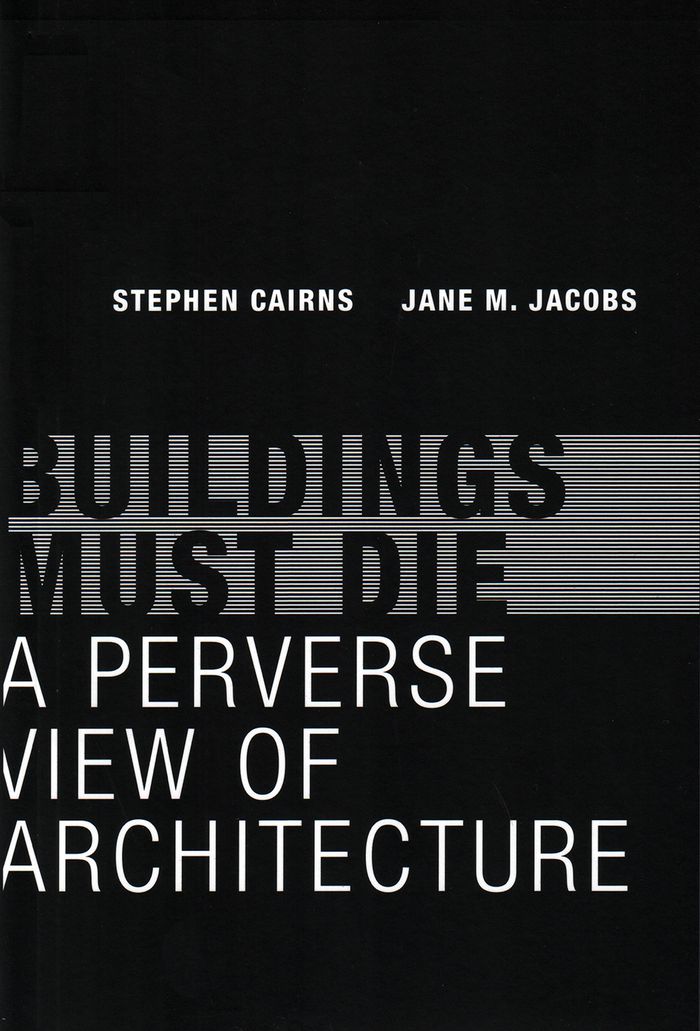
Buildings must die
Buildings must die
Actions:
Prix:
$38.95
(disponible sur commande)
Résumé:
Buildings, although inanimate, are often assumed to have “life.” And the architect, through the act of design, is assumed to be their conceiver and creator. But what of the “death” of buildings? What of the decay, deterioration, and destruction to which they are inevitably subject? And what might such endings mean for architecture’s sense of itself? In Buildings Must Die,(...)
Titre:
Buildings must die
Actions:
Prix:
$38.95
(disponible sur commande)
Résumé:
Buildings, although inanimate, are often assumed to have “life.” And the architect, through the act of design, is assumed to be their conceiver and creator. But what of the “death” of buildings? What of the decay, deterioration, and destruction to which they are inevitably subject? And what might such endings mean for architecture’s sense of itself? In Buildings Must Die, Stephen Cairns and Jane Jacobs look awry at core architectural concerns. They examine spalling concrete and creeping rust, contemplate ruins old and new, and pick through the rubble of earthquake-shattered churches, imploded housing projects, and demolished Brutalist office buildings. Their investigation of the death of buildings reorders architectural notions of creativity, reshapes architecture’s preoccupation with good form, loosens its vanities of durability, and expands its sense of value. It does so not to kill off architecture as we know it, but to rethink its agency and its capacity to make worlds differently. Cairns and Jacobs offer an original contemplation of architecture that draws on theories of waste and value. Their richly illustrated case studies of building “deaths” include the planned and the unintended, the lamented and the celebrated. They take us from Moline to Christchurch, from London to Bangkok, from Tokyo to Paris. And they feature the work of such architects as Eero Saarinen, Carlo Scarpa, Cedric Price, Arata Isozaki, Rem Koolhaas and François Roche.
Classification:
livres
livres
Publication:
août 2017
août 2017
Sujet:
Théorie de l’architecture
Théorie de l’architecture
Classification:
livres
livres
Prix:
$34.95
(disponible en magasin)
Résumé:
National historic sites commemorate decisive moments in the making of Canada. But seen through an environmental lens, these sites become artifacts of a bigger story: the occupation and transformation of nature into nation. In an age of pressing discussions about environmental sustainability, there is a growing need to know more about the history of our relationship with(...)
Titre:
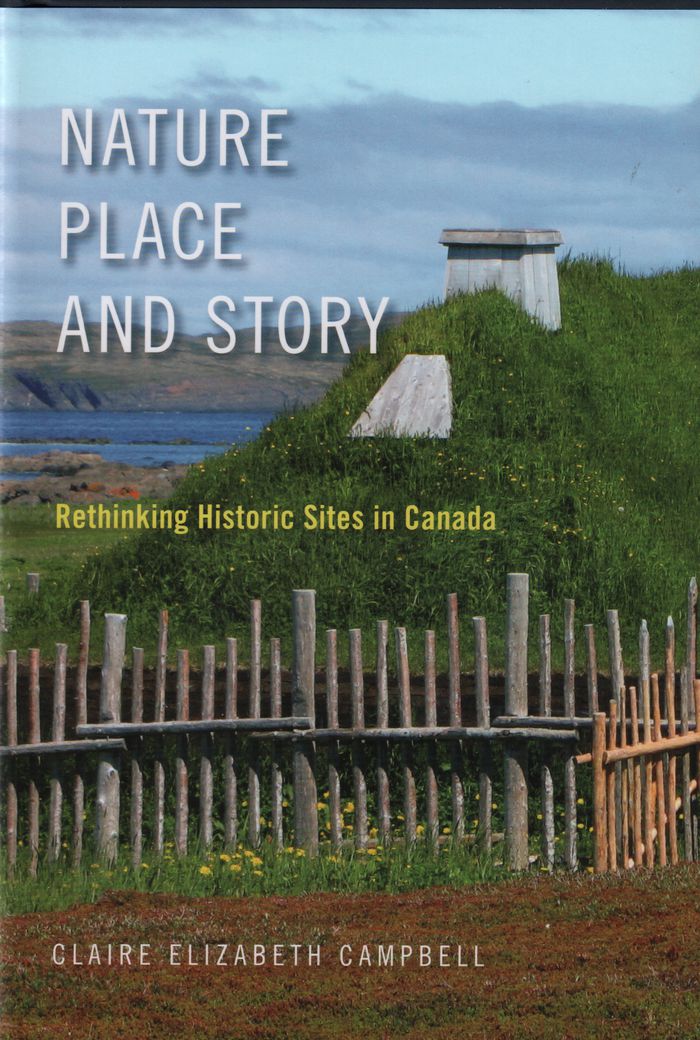
Nature, place, and story: rethinking historic sites in Canada
Actions:
Prix:
$34.95
(disponible en magasin)
Résumé:
National historic sites commemorate decisive moments in the making of Canada. But seen through an environmental lens, these sites become artifacts of a bigger story: the occupation and transformation of nature into nation. In an age of pressing discussions about environmental sustainability, there is a growing need to know more about the history of our relationship with the natural world and what lessons these places of public history, regional identity, and national narrative can teach us. "Nature, place, and story" provides new interpretations for five of Canada’s largest and most iconic historic sites (two of which are UNESCO World Heritage Sites): L’Anse aux Meadows, Newfoundland; Grand Pré, Nova Scotia; Fort William, Ontario; the Forks of the Red River, Manitoba; and the Bar U Ranch, Alberta. At each location, Claire Campbell rewrites public history as environmental history, revealing the country’s debt to the power and fragility of the natural world, and the relevance of the past to understanding climate change, agricultural sustainability, wilderness protection, urban reclamation, and fossil fuel extraction. From the medieval Atlantic to modern ranchlands, environmental history speaks directly to contemporary questions about the health of Canada’s habitat. Bringing together public and environmental history in an entirely new way, "Nature, place, and story" is a lively and ambitious call for a fresh perspective on natural heritage.
Classification:
livres
livres
Publication:
août 2017
août 2017
Sujet:
Architecture du Canada
Architecture du Canada
Classification:
livres
livres
Actions:
Prix:
$24.95
(disponible sur commande)
Résumé:
" Unboxed : engagements in social space " is a collection of critical essays about and by artists who work across the borders of art, architecture and performance. This collection is loosely based upon the lecture series that Gallery 101 and the Carleton University School of Architecture co-hosted throughout the fall and winter of 2002-2003. The goal of that series(...)
Titre:
Unboxed : engagements in social space
Actions:
Prix:
$24.95
(disponible sur commande)
Résumé:
" Unboxed : engagements in social space " is a collection of critical essays about and by artists who work across the borders of art, architecture and performance. This collection is loosely based upon the lecture series that Gallery 101 and the Carleton University School of Architecture co-hosted throughout the fall and winter of 2002-2003. The goal of that series (entitled "unboxed : dialogues on art & architecture") was, in part, to engage both architecture students and practicing visual artists with this vital yet under-explored arena of interstitial practices. The anthology, which is an attempt to further broaden the audience for this work and thereby increase the number of potential participants, includes transcriptions of lectures by international artists : Vito Acconci, Lucy Orta, Jan-Erik Andersson and Marko Peljhan, as well as commissioned essays by Canadian artists: Ana Rewakowicz, Eduardo Aquino, Marie-Paule Macdonald, Jean-François Prost, Luc Lévesque, Steve Topping, and Adrian Blackwell. Each text adds a mode of thinking about notions of space; directing us to consider the local and social connections between individuals and environments and, in their variety, they mirror the various ways we move in and around communities, rural and urban. Together, forming a challenging, engaging and accessible anthology that enlightens our way of seeing and our sense of being. It provides rare and exceptional information on interdisciplinary practices for students in art and architecture departments everywhere.
Classification:
livres
livres
Publication:
janvier 1900, Ottawa
janvier 1900, Ottawa
Sujet:
Théorie de l’urbanisme
Théorie de l’urbanisme


