


5088 Résultats
Classification:
livres
livres

Actions:
Prix:
$56.50
(disponible sur commande)
Résumé:
Near the homes of photographers John Willis and Tom Young is a paper mill that sits in the otherwise pristine and picturesque climes of western Massachusetts. For Willis and Young, this site is one of both aesthetic and philosophical contradictions : despite its verdant locale, the mill—with its ominous smoke stacks and countless bales of discarded paper—brings to mind(...)
Sujet:
Monographies photo
Monographies photo
Publication:
mars 2006, Santa Fe
mars 2006, Santa Fe
Titre:
Recycled realities : John Willis and Tom Young
Actions:
Prix:
$56.50
(disponible sur commande)
Résumé:
Near the homes of photographers John Willis and Tom Young is a paper mill that sits in the otherwise pristine and picturesque climes of western Massachusetts. For Willis and Young, this site is one of both aesthetic and philosophical contradictions : despite its verdant locale, the mill—with its ominous smoke stacks and countless bales of discarded paper—brings to mind the dreariness of industrialization and the impermanence of life itself. But the factory is actually one where such litter is reborn as reusable paper. Willis and Young’s stunning black-and-white images, collected in this unforgettable volume, transform this mill and the innumerable mounds of recyclable waste it processes daily into an indelible and evocative landscape. "Recycled realities" is not a jeremiad foretelling the consequences of excessive waste, rampant pollution, or unbridled consumption, but rather a profound meditation on the hidden meanings and connections that linger beneath the debris and detritus of everyday life. These astonishing and often surreal photos of discarded paper from the printed world trace the processes of emergence, revelation, and redemption that make the cycle of life possible. In their photographs, Willis and Young take that which we have discarded and create new forms of being in and of themselves: vibrant and ultimately life-affirming portraits of who we are as people and the realities that we constantly build—and rebuild—all around us.
Classification:
livres
livres
Publication:
mars 2006, Santa Fe
mars 2006, Santa Fe
Sujet:
Monographies photo
Monographies photo
Classification:
livres
livres
Actions:
Prix:
$30.00
(disponible sur commande)
Résumé:
Issue 101 of Texte zur Kunst takes “Polarities” as its theme—a term that in the first degree we associate with what’s unfolding around us right now: ideological polarization, from Pegida to Donald Trump. In turn, this issue looks to the macro conditions in which art critical and art historical discourses are currently being formed, and within which they will need to(...)
Titre:
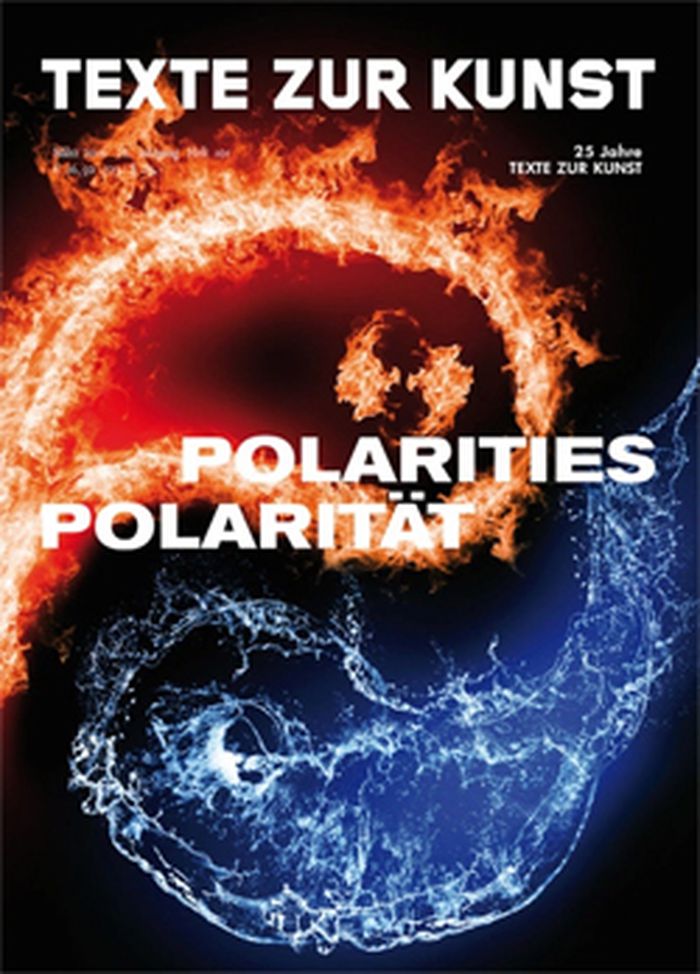
Texte zur Kunst 101: Polarities
Actions:
Prix:
$30.00
(disponible sur commande)
Résumé:
Issue 101 of Texte zur Kunst takes “Polarities” as its theme—a term that in the first degree we associate with what’s unfolding around us right now: ideological polarization, from Pegida to Donald Trump. In turn, this issue looks to the macro conditions in which art critical and art historical discourses are currently being formed, and within which they will need to position themselves. What’s particularly striking, we argue, is that this trend toward polarization is happening despite the popular tendency, in recent decades, to speak of increased unification. How, then, can such polarization be reconciled with the dominant, and inherently continuous, neoliberal system—one characterized by the global economy’s promise of inclusiveness; utopian visions of peace (if not survival) via the “singularity” of screen, mind, and body; and a European Union as project of post-Soviet unification, striving to push all conflict to its periphery? What do we make of this growing difference between the ideals of technological/smooth space (where the art world often resides, swiftly neutralizing any resistance as “content”) and the broadening expanses of material unrest? Could the image of polarization be something not to avoid but to engage, at least as a potentially generative model, for understanding true opposition within a continuous system—for times that are anything but free from ideological division?
Classification:
livres
livres
Publication:
mars 2016
mars 2016
Sujet:
Revues
Revues
Classification:
livres
livres

Actions:
Prix:
$44.95
(disponible sur commande)
Résumé:
Photographer Rafael Goldchain's Polish-Jewish ancestors emigrated to South America in the 1930s, and many others perished in Poland during the Nazi regime. Also lost in the turmoil of war and emigration were most of the portraits of his extended family. When Goldchain became a parent himself, he decided to make up for this lack of evidence and recreate the lost(...)
Titre:
I am my family : photographic memories and fiction
Actions:
Prix:
$44.95
(disponible sur commande)
Résumé:
Photographer Rafael Goldchain's Polish-Jewish ancestors emigrated to South America in the 1930s, and many others perished in Poland during the Nazi regime. Also lost in the turmoil of war and emigration were most of the portraits of his extended family. When Goldchain became a parent himself, he decided to make up for this lack of evidence and recreate the lost generations of the past, in the present. Rafael Goldchain's "I am my family" is a family album of traditional portrait photographs with an unconventional twist: the only subject is Goldchain himself. In an elaborate process involving genealogical research, the use of makeup, hair styling, costume, and props, Goldchain transforms himself into his ancestors and captures their personifications with the camera. Taking some liberties with historical accuracy, Goldchain has assembled a fascinating cast of characters : from his short-story-writing grandfather, to his great-aunts Pola and Fela, to the Rabbi Gur's nephew in wedding dress, Goldchain reinvents himself over and over again. These beautifully reproduced self-portraits trace the evolution of Jewish culture from tradition to modernity and invite us to engage the history of a family decimated and scattered by the traumatic events of the 20th century. Featuring an essay by curator Martha Langford, the portraits are complemented by a selection of the archival images on which they are based as well as selections from the artist's handwritten sketchbooks.
Classification:
livres
livres
Publication:
octobre 2008, New York
octobre 2008, New York
Sujet:
Monographies photo
Monographies photo
Classification:
livres
livres

Actions:
Prix:
$69.95
(disponible sur commande)
Résumé:
Dans un monde o� les outils et supports de communication connaissent d'incessants changements, la typographie demeure la base in�branlable de la cr�ation graphique. Elle continue cependant d'�voluer gr�ce en particulier � des designers graphiques qui, par leur r�interpr�tation de formes anciennes, fa�onnent des cr�ations hybrides au pouvoir puissamment(...)
Publication:
novembre 2007, Paris
novembre 2007, Paris
Titre:
Typographie vintage : � l'�re du num�rique
Actions:
Prix:
$69.95
(disponible sur commande)
Résumé:
Dans un monde o� les outils et supports de communication connaissent d'incessants changements, la typographie demeure la base in�branlable de la cr�ation graphique. Elle continue cependant d'�voluer gr�ce en particulier � des designers graphiques qui, par leur r�interpr�tation de formes anciennes, fa�onnent des cr�ations hybrides au pouvoir puissamment �vocateur. C'est � l'analyse de ce style �vintage� que s'attache le pr�sent ouvrage, style dont la caract�ristique principale est de se r�approprier des caract�res con�us dans un pass� plus ou moins lointain afin d'en exploiter ou d'en d�tourner la charge expressive. Les cinq chapitres qui composent Typographie Vintage s'attachent chacun � un moment pr�cis de l'histoire de la typographie ; ils d�crivent ainsi les r�alisations graphiques s'inspirant successivement de l'�poque victorienne, de l'�re des caract�res en bois, du style Art D�co, du modernisme et des formes excentriques du XXe si�cle. Chaque partie comprend une courte introduction d�crivant les principales caract�ristiques des diff�rents styles historiques et la pertinence de leur utilisation dans divers contextes contemporains. Richement illustr� de plusieurs centaines d'exemples, l'ouvrage de Steven Heller et Gail Anderson montre � quel point notre h�ritage typographique occupe une place plus que jamais centrale et dynamique sur la sc�ne graphique actuelle.
Classification:
livres
livres
Publication:
novembre 2007, Paris
novembre 2007, Paris
Classification:
livres
livres
Actions:
Prix:
$78.00
(disponible sur commande)
Résumé:
The need to personalize our surroundings is a defining human characteristic. For some this need becomes a compulsion to transform their personal surroundings into works of art. The John Michael Kohler Arts Center in Sheboygan, Wisconsin, has undertaken the mission to preserve these environments, which are presented for the first time in Sublime Spaces and Visionary(...)
Publication:
novembre 2007, New York
novembre 2007, New York
Titre:
Sublime spaces & visionary worlds : Built environments of vernacular artists
Actions:
Prix:
$78.00
(disponible sur commande)
Résumé:
The need to personalize our surroundings is a defining human characteristic. For some this need becomes a compulsion to transform their personal surroundings into works of art. The John Michael Kohler Arts Center in Sheboygan, Wisconsin, has undertaken the mission to preserve these environments, which are presented for the first time in Sublime Spaces and Visionary Worlds. This colorful and inspiring book features the work of twenty-two vernacular artists whose locales, personal histories, and reasons for art-making vary widely but who all share a powerful connection to home-as-art environments. Featured projects range from art environments that remain intact, such as Simon Rodia’s Watts Towers in California, to sites lost over the years such as Emery Blagdon’s six hundred elaborate "Healing Machines," made of copper, aluminum, tinfoil, magnets, ribbons, farm machinery parts, painted light bulbs, beads, coffee can lids, and more. Sublime Spaces and Visionary Worlds is the first book to explore these spectacularly offbeat spaces in detail. From the "Original Rhinestone Cowboy" Loy Bowlin’s wall-to-wall glitter-and-foil living room to the concrete bestiary of the "witch of Fox Point" Mary Nohl, each artist and project is described in detail through a wealth of visuals and text. Sublime Spaces and Visionary Worlds reminds us that our decorative choices tell the world not just what we like but who we are.
Classification:
livres
livres
Publication:
novembre 2007, New York
novembre 2007, New York
Classification:
livres
livres
Titre:
Prisons must fall
Prisons must fall
Actions:
Prix:
$29.50
(disponible sur commande)
Résumé:
From Mariame Kaba, New York Times-bestselling author of "We do this ‘til we free us," and social worker Jane Ball comes a powerful book showing the harm that prisons cause and exploring alternatives, illustrated by Olly Costello. On a moonlit road, tucked away from prying eyes, a child sees a prison complex-- cinder blocks, watch towers, barbed wire. Page by page, we come(...)
Titre:
Prisons must fall
Actions:
Prix:
$29.50
(disponible sur commande)
Résumé:
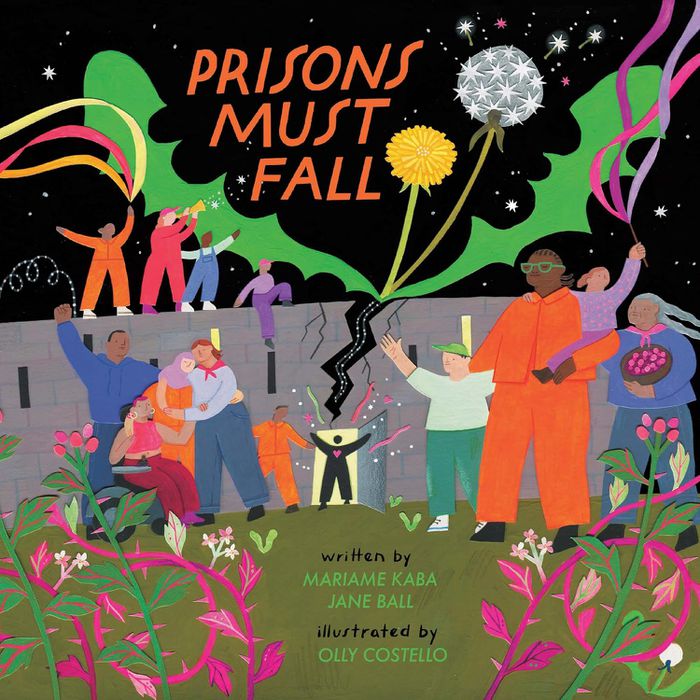
From Mariame Kaba, New York Times-bestselling author of "We do this ‘til we free us," and social worker Jane Ball comes a powerful book showing the harm that prisons cause and exploring alternatives, illustrated by Olly Costello. On a moonlit road, tucked away from prying eyes, a child sees a prison complex-- cinder blocks, watch towers, barbed wire. Page by page, we come to see the prison as a child sees it. Prisons hurt people and leave them lonely, without loved ones to comfort them or lend a listening ear. As dandelion stars float up in the air, this dreamscape becomes a hope-scape, where love transcends the prison walls. All the families and friends of the people in the prison march and protest in beautiful song, march together to a new way and a new dawn-- in this case a cooperative housing and community center, next to a neighborhood greenhouse for restoration and healing. A new world, where connection and repair are fundamental, and even tangible, as people around a table quilt messages, “I hear you. I’m sorry for what I did. How can I make it better?” In "Prisons must fall," Mariame Kaba, a longtime activist, together with co-author Jane Ball, present solutions that do not involve incarceration, such as meeting people’s basic needs, restorative justice, and community support-- seeds for a safe world.
Classification:
livres
livres
Publication:
avril 2025
avril 2025
Sujet:
Littérature jeunesse
Littérature jeunesse
Classification:
livres
livres
Titre:
Paul Graham: Troubled land
Paul Graham: Troubled land
Actions:
Prix:
$90.00
(disponible en magasin)
Résumé:
An iconic project made at the height of the ''Troubles'', ''Troubled land'' deals with the small but insistent signs of political division embedded in the landscape of Northern Ireland. At the heart of the Irish conflict lays the land — who owns it, who controls it, whose history it expresses. Paul Graham’s quietly radical book keeps this material truth in mind as it(...)
Titre:
Paul Graham: Troubled land
Actions:
Prix:
$90.00
(disponible en magasin)
Résumé:
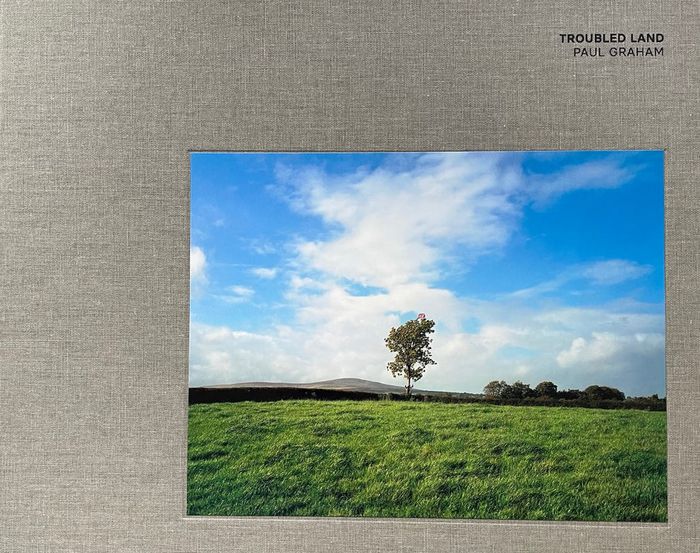
An iconic project made at the height of the ''Troubles'', ''Troubled land'' deals with the small but insistent signs of political division embedded in the landscape of Northern Ireland. At the heart of the Irish conflict lays the land — who owns it, who controls it, whose history it expresses. Paul Graham’s quietly radical book keeps this material truth in mind as it uniquely combines landscape and conflict photography, seducing us with bucolic views in which telling details only gradually appear: painted kerbs, distant soldiers or helicopters, flags and graffiti, paint-splattered roads, each tacitly aligning that location to its Republican or Loyalist allegiance. Pastoral photographs of green fields and hedgerows reveal themselves to be images of conflict and dispute — despite the steadiness of the photographic frame and the clarity of Graham’s vision, this is unsettled land. Originally published in 1986, ''Troubled land'' is reprinted here for the first time in thirty-five years. Controversial then for its use of colour and refusal to follow the clichéd tropes of photojournalism, the book was pivotal in providing a fresh perspective on Northern Ireland’s ''Troubles'' and left a lasting impact on landscape photography, suggesting how it might engage with politics and society rather than escape from them. Together with ''A1 – The Great North Road'' and ''Beyond Caring,'' it completes a new edition of the remarkable trilogy of books Graham made in 1980s UK.
Classification:
livres
livres
Publication:
mai 2022
mai 2022
Sujet:
Monographies photo
Monographies photo
Classification:
livres
livres
Actions:
Prix:
$33.95
(disponible sur commande)
Résumé:
'Darkness is not empty,' writes Teju Cole in ''Black Paper,'' a book that meditates on what it means to sustain our humanity—and witness the humanity of others—in a time of darkness. One of the most celebrated essayists of his generation, Cole here plays variations on the essay form, modeling ways to attend to experience—not just to take in but to think critically about(...)
Titre:
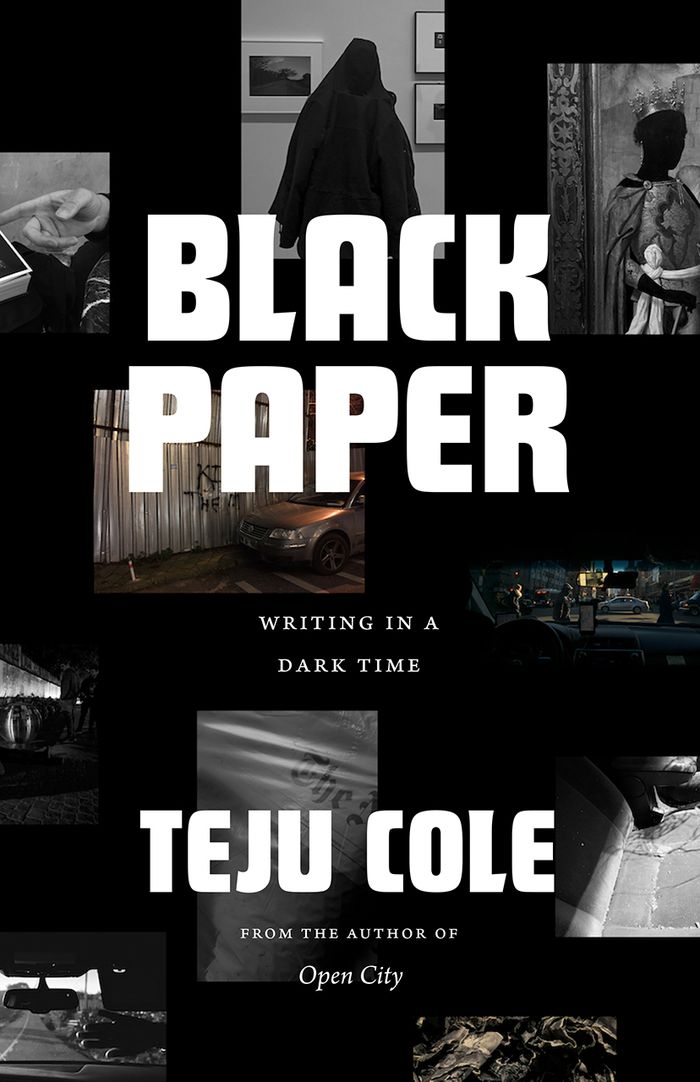
Black paper : writing in a dark time
Actions:
Prix:
$33.95
(disponible sur commande)
Résumé:
'Darkness is not empty,' writes Teju Cole in ''Black Paper,'' a book that meditates on what it means to sustain our humanity—and witness the humanity of others—in a time of darkness. One of the most celebrated essayists of his generation, Cole here plays variations on the essay form, modeling ways to attend to experience—not just to take in but to think critically about what we sense and what we don’t. Wide-ranging but thematically unified, the essays address ethical questions about what it means to be human and what it means to bear witness, recognizing how our individual present is informed by a collective past. Cole’s writings in ''Black Paper'' approach the fractured moment of our history through a constellation of interrelated concerns: confrontation with unsettling art, elegies both public and private, the defense of writing in a time of political upheaval, the role of the color black in the visual arts, the use of shadow in photography, and the links between literature and activism. Throughout, Cole gives us intriguing new ways of thinking about blackness and its numerous connotations. As he describes the carbon-copy process in his epilogue: 'Writing on the top white sheet would transfer the carbon from the black paper onto the bottom white sheet. Black transported the meaning.'
Classification:
livres
livres
Publication:
octobre 2021
octobre 2021
Sujet:
Social
Social
Classification:
livres
livres
Titre:
The care manifesto
The care manifesto
Actions:
Prix:
$19.95
(disponible sur commande)
Résumé:
''The care manifesto'' puts care at the heart of the debates of our current crisis: from intimate care--childcare, healthcare, elder care--to care for the natural world. We live in a world where carelessness reigns, but it does not have to be this way. ''The care manifesto'' puts forth a vision for a truly caring world. The authors want to reimagine the role of care(...)
Titre:
The care manifesto
Actions:
Prix:
$19.95
(disponible sur commande)
Résumé:
''The care manifesto'' puts care at the heart of the debates of our current crisis: from intimate care--childcare, healthcare, elder care--to care for the natural world. We live in a world where carelessness reigns, but it does not have to be this way. ''The care manifesto'' puts forth a vision for a truly caring world. The authors want to reimagine the role of care in our everyday lives, making it the organising principle in every dimension and at every scale of life. We are all dependent on each other, and only by nurturing these interdependencies can we cultivate a world in which each and every one of us can not only live but thrive. ''The care manifesto'' demands that we must put care at the heart of the state and the economy. A caring government must promote collective joy, not the satisfaction of individual desire. This means the transformation of how we organise work through co-operatives, localism and nationalisation. It proposes the expansion of our understanding of kinship for a more 'promiscuous care'. It calls for caring places through the reclamation of public space, to make a more convivial city. It sets out an agenda for the environment, most urgent of all, putting care at the centre of our relationship to the natural world.
Classification:
livres
livres
Publication:
septembre 2020
septembre 2020
Sujet:
Social
Social
Classification:
livres
livres
Actions:
Prix:
$42.00
(disponible sur commande)
Résumé:
Aline B. Louchheim (1914–1972) was an art critic on assignment for the New York Times in 1953 when she first met the Finnish-American architect Eero Saarinen. She would become his wife and the driving force behind his rise to critical prominence. ''When Eero met his match'' draws on the couple’s personal correspondence to reconstruct the early days of their thrilling(...)
Titre:
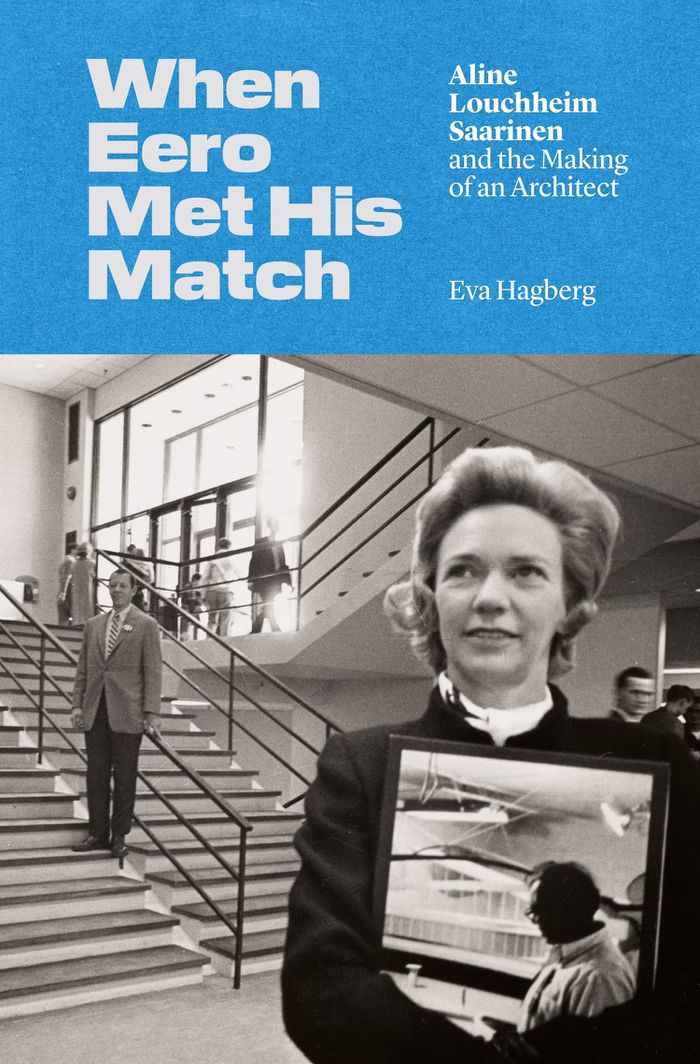
When Eero met his match: Aline Louchheim Saarinen and the making of an architect
Actions:
Prix:
$42.00
(disponible sur commande)
Résumé:
Aline B. Louchheim (1914–1972) was an art critic on assignment for the New York Times in 1953 when she first met the Finnish-American architect Eero Saarinen. She would become his wife and the driving force behind his rise to critical prominence. ''When Eero met his match'' draws on the couple’s personal correspondence to reconstruct the early days of their thrilling courtship and traces Louchheim’s gradual takeover of Saarinen’s public narrative in the 1950s, the decade when his career soared to unprecedented heights. Drawing on her own experiences as an architecture journalist on the receiving end of press pitches and then as a secret publicist for high-end architects, Eva Hagberg paints an unforgettable portrait of Louchheim while revealing the inner workings of a media world that has always relied on secrecy, friendship, and the exchange of favors. She describes how Louchheim codified the practices of architectural publicity that have become widely adopted today, and shows how, without Louchheim as his wife and publicist, Saarinen’s work would not have been nearly as well known. Providing a new understanding of postwar architectural history in the United States, ''When Eero met his match'' is both a poignant love story and a superb biographical study that challenges us to reconsider the relationship between fame and media representation, and the ways the narratives of others can become our own.
Classification:
livres
livres
Publication:
septembre 2022
septembre 2022
Sujet:
Théorie de l’architecture
Théorie de l’architecture


