


5088 Résultats
Classification:
livres
livres

Actions:
Prix:
$55.00
(disponible en magasin)
Résumé:
The oldest churches shown in this book were built as early as in the 15th century, most of those still standing were built in the 18th and 19th centuries, and quite a few are still being built today. Many were destroyed in the two world wars, many fell victim to ethnic cleansing after 1945, some fell into disrepair during the Soviet era, others were burnt down by(...)
Publication:
avril 2024
avril 2024
Titre:
Wooden churches in Eastern Europe
Actions:
Prix:
$55.00
(disponible en magasin)
Résumé:
The oldest churches shown in this book were built as early as in the 15th century, most of those still standing were built in the 18th and 19th centuries, and quite a few are still being built today. Many were destroyed in the two world wars, many fell victim to ethnic cleansing after 1945, some fell into disrepair during the Soviet era, others were burnt down by lightning or short circuits, and quite a few simply gave way to the more "representative" stone churches as early as the 19th century. But a large number are still standing, consecrated, and believers gather in them. In fact almost of them in the various Carpathian countries are protected monuments, and many have been lovingly restored in recent times. More than the architectural-historical value, the question arises here of the aesthetic assessment of these small buildings. It is not a refined canon of forms of great architecture that can be derived and proven from the history of architecture that inspires us so much. Ba-sically, they are not overly sophisticated constructions in terms of craftsmanship, they are safe and beautiful in their simplicity. Their aesthetic appeal, however, also includes the surface-weathered material, deformed structures, colour improvisations, recently ornamented sheet metal, inside wall paintings, altar and iconostasis furnishings derived from Renaissance and Baroque periods, but above all their location in the village, mostly isolated, often elevated, surrounded by old trees, enclosures and graves without cemetery order.
Classification:
livres
livres
Publication:
avril 2024
avril 2024
Classification:
livres
livres

Prix:
$79.95
(disponible sur commande)
Résumé:
This book reveals that historic sites and buildings have much to tell us about women's history. It documents women's contributions to the historic preservation movement at places such as Mount Vernon and explores women's history at several existing landmarks such as historic homes, as wells as in a wider array of cultural landscapes ranging from nurses' residences in(...)
Sujet:
Théorie de l’architecture
Théorie de l’architecture
Publication:
novembre 2002, Baltimore
novembre 2002, Baltimore
Titre:
Restoring womens' history through historic preservation
Actions:
Prix:
$79.95
(disponible sur commande)
Résumé:
This book reveals that historic sites and buildings have much to tell us about women's history. It documents women's contributions to the historic preservation movement at places such as Mount Vernon and explores women's history at several existing landmarks such as historic homes, as wells as in a wider array of cultural landscapes ranging from nurses' residences in Montreal to prostitutes' quarters in Los Angeles. The book includes essays on six exemplary projects that have advanced the integration of women's history into historic preservation and closes with three perspectives on preservation policy and practice. National in scope but applicable in any locality, Restoring Women's History through Historic Preservation combines the most important recently published information with the best new research and covers many national, state, and local initiatives of the past decade. It collects in one volume the seminal work of twenty academic historians, preservationists, and professionals at parks and monuments throughout the country who examine practical ways to represent women's history through historic preservation programs. Over the past several decades, work in the areas of women's history and historic preservation has done much to change not only how we regard history but also how we might broaden the very notion of what we consider historical. This volume reflects a growing commitment to historic preservation and shows how practitioners in both fields can benefit from an exchange of insights and create more effective public history.
Classification:
livres
livres
Publication:
novembre 2002, Baltimore
novembre 2002, Baltimore
Sujet:
Théorie de l’architecture
Théorie de l’architecture
Classification:
livres
livres
Prix:
$39.95
(disponible sur commande)
Résumé:
"Substance over Spectacle" presents the best and brightest architectural work in Canada in the last ten years, providing a representative sample of Canadian architectural practice since the early nineties, and demonstrating a specific Canadian sensibility that is unlike any architectural trend elsewhere in the world. The book also explores issues of viability,(...)
Titre:
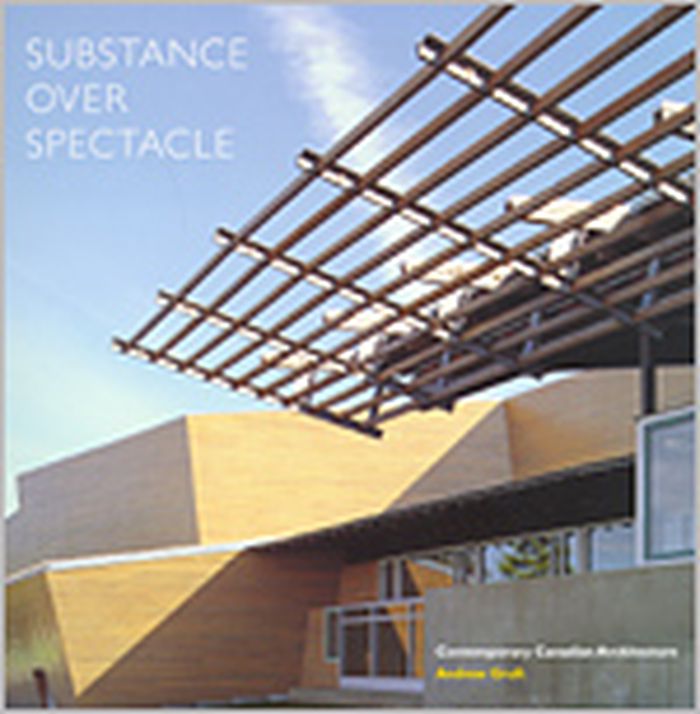
Substance over spectacle : contemporary Canadian architecture
Actions:
Prix:
$39.95
(disponible sur commande)
Résumé:
"Substance over Spectacle" presents the best and brightest architectural work in Canada in the last ten years, providing a representative sample of Canadian architectural practice since the early nineties, and demonstrating a specific Canadian sensibility that is unlike any architectural trend elsewhere in the world. The book also explores issues of viability, sustainability, community, and utility as they relate to the Canadian architectural experience. Included is the work of twenty-five architects from every area of the country, each represented by an installation of their own design and construction. In addition to photographs of the finished projects, "Substance over Spectacle" also features images of models and architectural drawings, together with analytical/critical text demonstrating the architectural ideas embedded in the work. Five essays deal with different aspects of contemporary Canadian architecture, written by some of Canada’s leading thinkers on architecture: George Baird, Sherry McKay, Marco Polo, Georges Adamczyk, and Andrew Gruft. Publication of the book coincides with an exhibition of the same name mounted by the Morris and Helen Belkin Art Gallery at the University of British Columbia, in April 2005, during the international conference of the Society of Architectural Historians, which is taking place at UBC. "Substance over Spectacle", the first national critical overview of Canadian architecture in some eighteen years, offers fresh new perspectives on how our architecture defines us as we approach the first mid-decade of the new century.
Classification:
livres
livres
Publication:
mai 2005, Vancouver
mai 2005, Vancouver
Sujet:
Architecture du Canada
Architecture du Canada
Classification:
livres
livres
Titre:
Shaping things
Shaping things
Actions:
Prix:
$27.50
(disponible sur commande)
Résumé:
Sterling offers a brilliant, often hilarious history of shaped things. We have moved from an age of artefacts, made by hand, through complex machines, to the current era of "gizmos." New forms of design and manufacture are appearing that lack historical precedent, he writes; but the production methods, using archaic forms of energy and materials that are finite and toxic,(...)
Sujet:
Théorie du design
Théorie du design
Publication:
septembre 2005, Cambridge, Massachusetts
septembre 2005, Cambridge, Massachusetts
Titre:
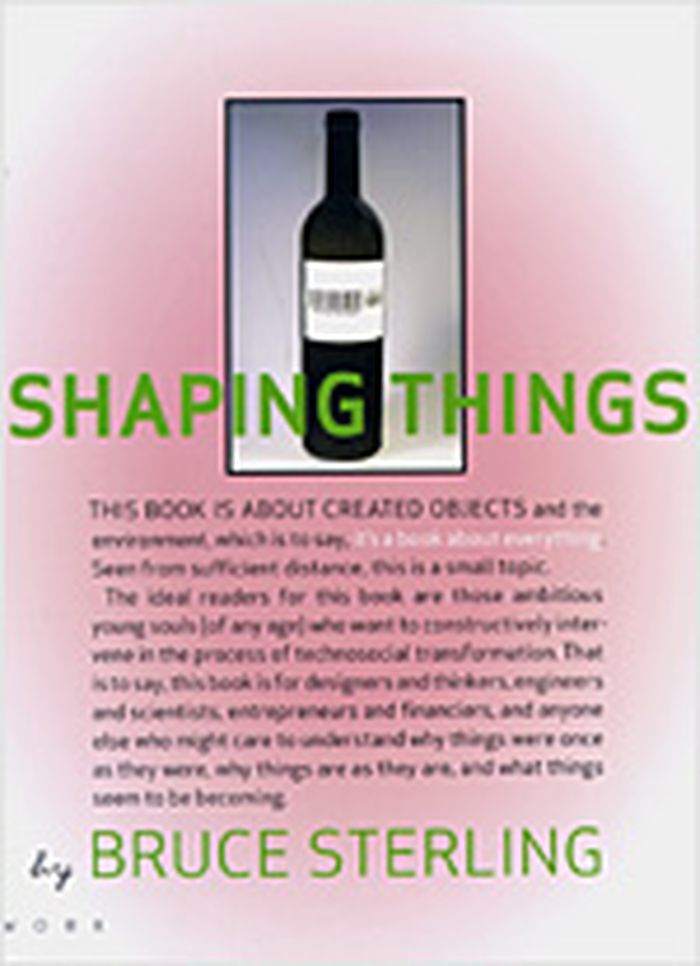
Shaping things
Actions:
Prix:
$27.50
(disponible sur commande)
Résumé:
Sterling offers a brilliant, often hilarious history of shaped things. We have moved from an age of artefacts, made by hand, through complex machines, to the current era of "gizmos." New forms of design and manufacture are appearing that lack historical precedent, he writes; but the production methods, using archaic forms of energy and materials that are finite and toxic, are not sustainable. The future will see a new kind of object - we have the primitive forms of them now in our pockets and briefcases: user-alterable, baroquely multi-featured, and programmable - that will be sustainable, enhanceable, and uniquely identifiable. Sterling coins the term "spime" for them, these future manufactured objects with informational support so extensive and rich that they are regarded as material instantiations of an immaterial system. Spimes are designed on screens, fabricated by digital means, and precisely tracked through space and time. They are made of substances that can be folded back into the production stream of future spimes, challenging all of us to become involved in their production. Spimes are coming, says Sterling. We will need these objects in order to live; we won't be able to surrender their advantages without awful consequences. The vision of ‘Shaping Things’ is given material form by the intricate design of Lorraine Wild. ‘Shaping Things’ is for designers and thinkers, engineers and scientists, entrepreneurs and financiers - and anyone who wants to understand and be part of the process of techno-social transformation.
Classification:
livres
livres
Publication:
septembre 2005, Cambridge, Massachusetts
septembre 2005, Cambridge, Massachusetts
Sujet:
Théorie du design
Théorie du design
Classification:
livres
livres
Titre:
Charles Rose, architect
Charles Rose, architect
Actions:
Prix:
$52.00
(disponible sur commande)
Résumé:
Charles Rose embraces the vast and varied panorama of the American landscape. Sensitive to his sites, the architect recognizes the poetry of every locale and uses his fascination with place as a central character in his designs. Regionalism, a term at times used to underrate architecture that is seen as too parochial or that eschews universal "truths" (most often those of(...)
Titre:
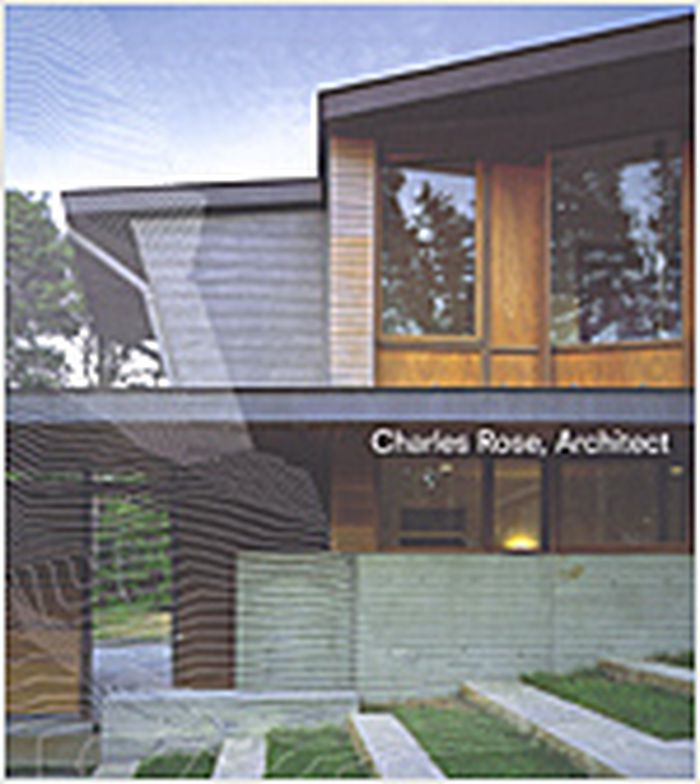
Charles Rose, architect
Actions:
Prix:
$52.00
(disponible sur commande)
Résumé:
Charles Rose embraces the vast and varied panorama of the American landscape. Sensitive to his sites, the architect recognizes the poetry of every locale and uses his fascination with place as a central character in his designs. Regionalism, a term at times used to underrate architecture that is seen as too parochial or that eschews universal "truths" (most often those of modernism) in favor of a local style, becomes a practice of the highest order in the hands of Rose, one of America's most accomplished young architects. With both the rigor of geometry and a commitment to ecosensitivity, his work is as attuned to the dense urban fabric of New York City as it is to the rural outback of Wyoming. The profile of his award-winning Camp Paint Rock in Hyattville, Wyoming, follows the contours of a nearby canyon; Roses's adaptive reuse of an industrial structure in New York City's Chelsea neighborhood preserves the existing streetscape while creating a seamless flow between inside and out; and the shape of his United States Port of Entry project in Del Rio, Texas, was determined by the scorching Texan sun and features sustainable landscapes. With surprising use of volumes, materials, and geometries, agile movement of spaces, and an active language of planes and lines, Rose creates dynamic, expressive architecture that reminds us that buildings can be both sensitive to their locale and embrace the timeless principles of geometry, material, light, and shadow.
Classification:
livres
livres
Publication:
février 2006, New York
février 2006, New York
Sujet:
livres soldés
livres soldés
Classification:
livres
livres
Titre:
The Paul Virilio reader
The Paul Virilio reader
Actions:
Prix:
$31.95
(disponible sur commande)
Résumé:
If nothing else, the war in Iraq and the 1991 Gulf War have taught us much about media and technology as key players in how war is waged, packaged for public consumption, and exported in real time to the rest of the globe. A critic of the art of technology, Paul Virilio has keenly observed that media images quite often constitute a strategy of war and that accident is(...)
Titre:
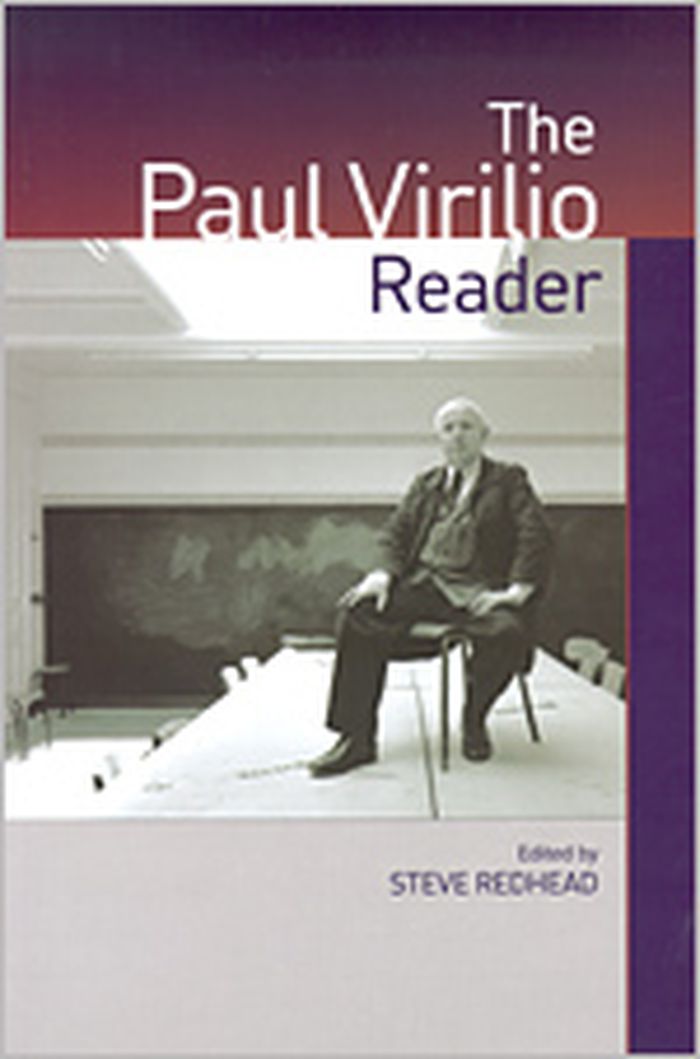
The Paul Virilio reader
Actions:
Prix:
$31.95
(disponible sur commande)
Résumé:
If nothing else, the war in Iraq and the 1991 Gulf War have taught us much about media and technology as key players in how war is waged, packaged for public consumption, and exported in real time to the rest of the globe. A critic of the art of technology, Paul Virilio has keenly observed that media images quite often constitute a strategy of war and that accident is becoming indistinguishable from attack. For more than fifty years Virilio has offered incisive and provocative criticism on technology and its moral, political, and cultural implications. Yet until now, much of his work, originally published in French, remains elusive in full English translation. "The Paul Virilio Reader" collects for the first time English extracts reflecting the entire range of Virilio’s diverse career. The book’s introduction demonstrates that Virilio has produced an important—if controversial—“theory at the speed of light” that uncannily illuminates the impact of new information and communications technologies in a world that collapses time and distance as never before. The inventor of “dromology,” which views speed as a defining concept for contemporary civilization, Virilio is noted for his proclamation that the logic of ever-increasing acceleration lies at the heart of the organization and transformation of the contemporary world. Arranged chronologically, "The Paul Virilio Reader" illustrates the development and interconnectedness of Virilio’s work. Each extract is prefaced by bibliographical and contextual commentary, and the book includes an innovative guide to reading Virilio.
Classification:
livres
livres
Publication:
janvier 1900, New York
janvier 1900, New York
Sujet:
Théorie de l’architecture
Théorie de l’architecture
Classification:
livres
livres

Actions:
Prix:
$46.99
(disponible sur commande)
Résumé:
Between 1936 and 1941 Walker Evans and James Agee collaborated on one of the most provocative books in American literature, "Let Us Now Praise Famous Men" (1941). While at work on this book, the two also conceived another less well-known but equally important book project entitled "Many Are Called". This three-year photographic study of subway passengers made with a(...)
Titre:
Many are called : Walker Evans
Actions:
Prix:
$46.99
(disponible sur commande)
Résumé:
Between 1936 and 1941 Walker Evans and James Agee collaborated on one of the most provocative books in American literature, "Let Us Now Praise Famous Men" (1941). While at work on this book, the two also conceived another less well-known but equally important book project entitled "Many Are Called". This three-year photographic study of subway passengers made with a hidden camera was first published in 1966, with an introduction written by Agee in 1940. Long out of print, "Many Are Called" is now being reissued with a new foreword and afterword and with exquisitely reproduced images from newly prepared digital scans. "Many Are Called" came to fruition at a slow pace. In 1938, Walker Evans began surreptitiously photographing people on the New York City subway. With his camera hidden in his coat--the lens peeking through a buttonhole--he captured the faces of riders hurtling through the dark tunnels, wrapped in their own private thoughts. By 1940-41, Evans had made over six hundred photographs and had begun to edit the series. The book remained unpublished until 1966 when The Museum of Modern Art mounted an exhibition of Evans’s subway portraits. This beautiful new edition--published in the centenary year of the NYC subway--is an essential book for all admirers of Evans’s unparalleled photographs, Agee’s elegant prose, and the great City of New York. Designed by Katy Homans with an introduction by Luc Santé.
Classification:
livres
livres
Publication:
janvier 1900, New Haven, London
janvier 1900, New Haven, London
Sujet:
Monographies photo
Monographies photo
Classification:
livres
livres
Actions:
Prix:
$37.50
(disponible sur commande)
Résumé:
This book chronicles the planning and construction process of the Frank Gehry-designed Ray and Maria Stata Center at MIT. Taking us from the historical background and architectural context at MIT through the interaction of the clients' needs and the architect's vision to the choice of building materials and construction methods, "Building Stata" offers a detailed look at(...)
Sujet:
Architecture, monographies
Architecture, monographies
Publication:
mai 2004, Cambridge, Mass.
mai 2004, Cambridge, Mass.
Titre:
Building Stata : the design and construction of Frank O. Gehry's Stata Center at MIT
Actions:
Prix:
$37.50
(disponible sur commande)
Résumé:
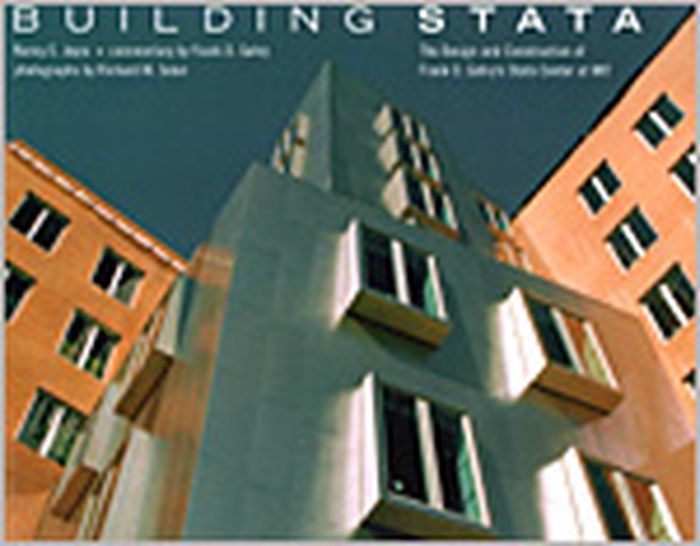
This book chronicles the planning and construction process of the Frank Gehry-designed Ray and Maria Stata Center at MIT. Taking us from the historical background and architectural context at MIT through the interaction of the clients' needs and the architect's vision to the choice of building materials and construction methods, "Building Stata" offers a detailed look at the evolution of a major work by a master architect. The purpose of the Stata Center is to bring the "intelligence sciences" - computer science, artificial intelligence, information and decision systems, linguistics, and philosophy - together into a space that emphasizes research-focused collaboration. Frank Gehry's design integrates flexible and interconnected workspaces and incorporates a series of steps from public to private space, with places for social and intellectual interaction on lower levels giving way to space for study and contemplation on the upper floors; thus a two-level warehouse-like space is topped by two towers. The Center is wrapped around a series of outdoor terraces visible from a central court in both towers. The characteristic Gehry curves are clad in metal, the more block-like elements in brick. The architectural drawings and photographs in "Building Stata" document the making of the Stata Center from concept to concrete reality. The photographs by Richard Sobol portray a work in progress, evoking the beauty of its architectural form and capturing the telling detail - the building's sculptured shape against a clear blue sky, or construction workers perched on a massive curve of metal.
Classification:
livres
livres
Publication:
mai 2004, Cambridge, Mass.
mai 2004, Cambridge, Mass.
Sujet:
Architecture, monographies
Architecture, monographies
Classification:
livres
livres
Prix:
$52.50
(disponible en magasin)
Résumé:
Soon after its inception in 1928, as part of Public Works, the Department of Physical Planning began work on Van Eesteren's General Extension Plan for Amsterdam (AUP). Issued in 1934, the AUP can be regarded as Amsterdam's first master plan. It fixed the broad lines of city policy on spatial development in a vision statement on the city. Vision statements and the plans(...)
Publication:
janvier 2004, Rotterdam
janvier 2004, Rotterdam
Titre:
Planning Amsterdam : scenarios for urban development, 1928-2003
Actions:
Prix:
$52.50
(disponible en magasin)
Résumé:
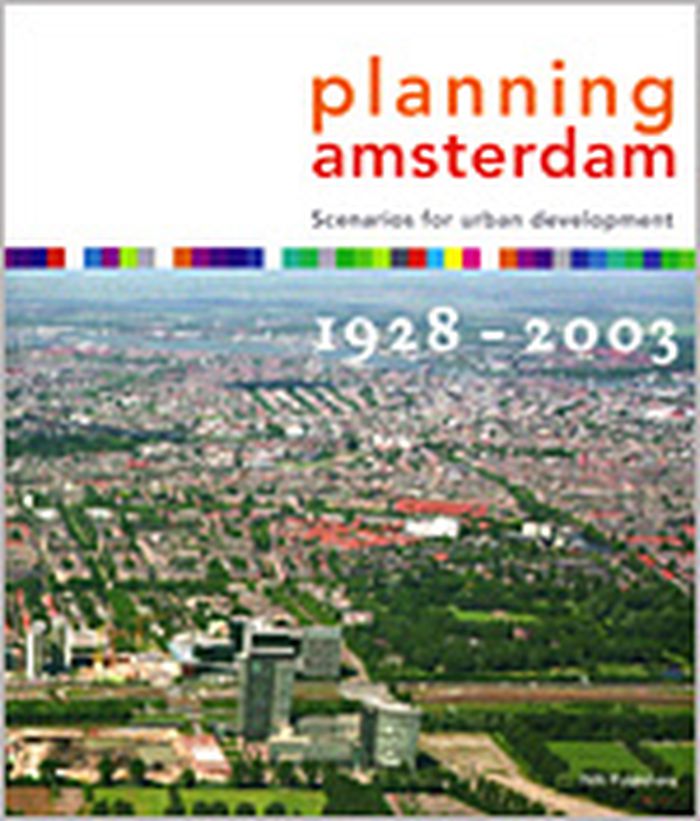
Soon after its inception in 1928, as part of Public Works, the Department of Physical Planning began work on Van Eesteren's General Extension Plan for Amsterdam (AUP). Issued in 1934, the AUP can be regarded as Amsterdam's first master plan. It fixed the broad lines of city policy on spatial development in a vision statement on the city. Vision statements and the plans they spawn are necessarily centred on the future, but with hindsight such master plans tell us more about the time when they were made. This certainly holds true for the eight such plans that were to follow the AUP. The most recent, 'Opting for Urbanity', was completed in 2003, by the Physical Planning Department. Something new, whether this is a residential estate or a business park, is invariably at the expense of something existing. Seventy-five years after the AUP was issued, the fitting out of urban space for dwelling, working, traffic and recreation is still a subject of discussion. How the space is filled in determines the urban dynamic. This book is not just about the Amsterdam masterplans but more particularly about three-quarters of a century of spatial development in that city. Words, images and a series of maps specially made for the occasion clearly show what has been happening in the inner areas and garden city suburbs of Amsterdam, the urban expansions and consolidations, the plans for traffic and transport, and for greenspace and recreation.
Classification:
livres
livres
Publication:
janvier 2004, Rotterdam
janvier 2004, Rotterdam
Classification:
livres
livres
Prix:
$44.95
(disponible sur commande)
Résumé:
For Rebecca Bushnell, English gardening books tell a tale of the human love for plants and our will to make them do as we wish. These books evoke the desires of gardeners: they show us gardeners who, like poets, imagine not just what is but what should be. In particular, the earliest English garden books, such as Thomas Hill’s The Gardeners Labyrinth or Hugh Platt’s(...)
Titre:
Green desire : imagining early modern English gardens
Actions:
Prix:
$44.95
(disponible sur commande)
Résumé:
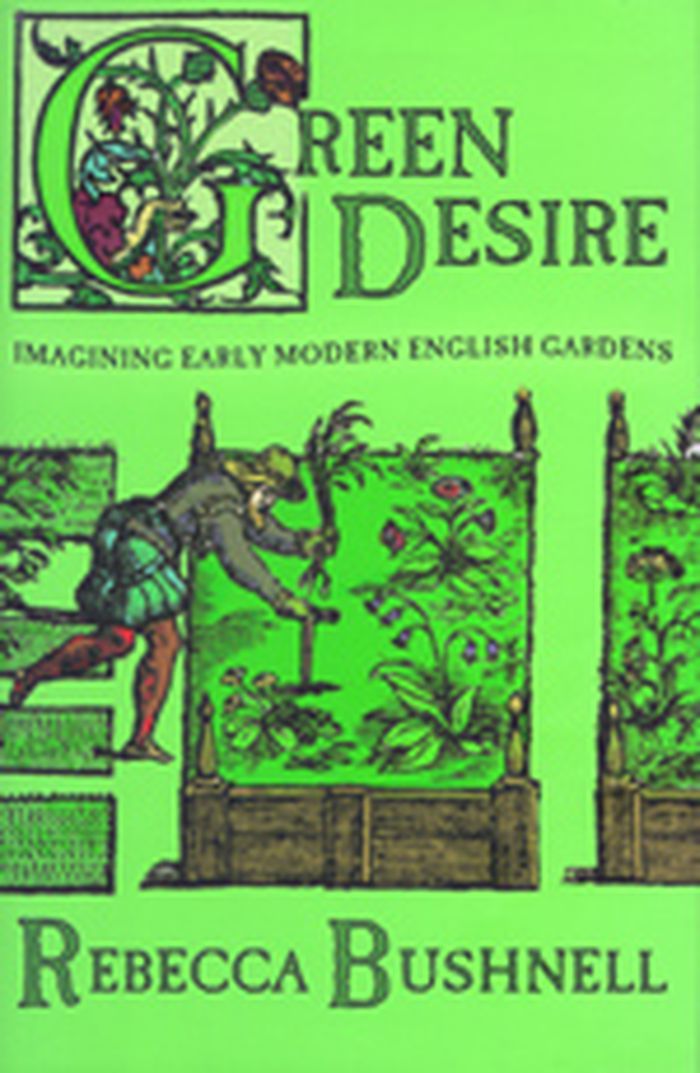
For Rebecca Bushnell, English gardening books tell a tale of the human love for plants and our will to make them do as we wish. These books evoke the desires of gardeners: they show us gardeners who, like poets, imagine not just what is but what should be. In particular, the earliest English garden books, such as Thomas Hill’s The Gardeners Labyrinth or Hugh Platt’s Floraes Paradise, mix magical practices with mundane recipes even when the authors insist that they rely completely on their own experience in these matters. Like early modern “books of secrets,” early gardening manuals often promise the reader power to alter the essential properties of plants: to make the gillyflower double, to change the lily’s hue, or to grow a cherry without a stone. "Green Desire" describes the innovative design of the old manuals, examining how writers and printers marketed them as fiction as well as practical advice for aspiring gardeners. Along with this attention to the delights of reading, it analyzes the strange dignity and pleasure of garden labor and the division of men’s and women’s roles in creating garden art. The book ends by recounting the heated debate over how much people could do to create marvels in their own gardens. For writers and readers alike, these green desires inspired dreams of power and self-improvement, fantasies of beauty achieved without work, and hopes for order in an unpredictable world.
Classification:
livres
livres
Publication:
octobre 2003, Ithaca, New York
octobre 2003, Ithaca, New York
Sujet:
Théorie du paysage
Théorie du paysage


