


58 Résultats
Classification:
livres
livres
Actions:
Exemplaires:
Description:
vi, 426 pages : illustrations ; 24 cm
Description:
vi, 426 pages : illustrations ; 24 cm
Auteur:
- Benjamin, Walter, 1892-1940,,
- Kunstwerk im Zeitalter seiner technischen Reproduzierbarkeit. English,
- Jennings, Michael William,,
- Doherty, Brigid,,
- Levin, Thomas Y.,,
- Jephcott, E. F. N.,,
- Livingstone, Rodney,,
- Eiland, Howard,
Sujet:
- Benjamin, Walter, 1892-1940 Knowledge and learning.,
- Benjamin, Walter, 1892-1940 Translations into English.,
- Benjamin, Walter, Knowledge.,
- Benjamin, Walter,,
- Benjamin, Walter, 1892-1940.,
- Fuchs, Eduard 1870-1940,
- Benjamin, Walter, 1892-1940 och massmedia.,
- Art and society.,
- Photography of art.,
- Mass media Philosophy.,
- Arts, Modern 20th century Philosophy.,
- Art et société.,
- Photographie d'œuvres d'art.,
- Médias Philosophie.,
- Arts 20e siècle Philosophie.,
- Arts, Modern Philosophy. 20th century.,
- Arts, Modern Philosophy.,
- Mass media.,
- Kunstsoziologie,
- Fotografie,
- Ästhetik,
- Text och bild.,
- Massmedia.,
- Benjamin, Walter Knowledge Mass media,
- Benjamin, Walter Translations into English,
- Translations.
Publication:
Cambridge, Massachusetts : The Belknap Press of Harvard University Press, 2008., ©2008
Cambridge, Massachusetts : The Belknap Press of Harvard University Press, 2008., ©2008
Titre:
The work of art in the age of its technological reproducibility, and other writings on media / Walter Benjamin ; edited by Michael W. Jennings, Brigid Doherty, and Thomas Y. Levin ; translated by Edmund Jephcot, Rodney Livingstone, Howard Eiland, and others.
Actions:
Exemplaires:
Description:
vi, 426 pages : illustrations ; 24 cm
The work of art in the age of its technological reproducibility, and other writings on media / Walter Benjamin ; edited by Michael W. Jennings, Brigid Doherty, and Thomas Y. Levin ; translated by Edmund Jephcot, Rodney Livingstone, Howard Eiland, and others.
Actions:
Exemplaires:
Description:
vi, 426 pages : illustrations ; 24 cm
Classification:
livres
livres
Publication:
Cambridge, Massachusetts : The Belknap Press of Harvard University Press, 2008., ©2008
Cambridge, Massachusetts : The Belknap Press of Harvard University Press, 2008., ©2008
Auteur:
- Benjamin, Walter, 1892-1940,,
- Kunstwerk im Zeitalter seiner technischen Reproduzierbarkeit. English,
- Jennings, Michael William,,
- Doherty, Brigid,,
- Levin, Thomas Y.,,
- Jephcott, E. F. N.,,
- Livingstone, Rodney,,
- Eiland, Howard,
Sujet:
- Benjamin, Walter, 1892-1940 Knowledge and learning.,
- Benjamin, Walter, 1892-1940 Translations into English.,
- Benjamin, Walter, Knowledge.,
- Benjamin, Walter,,
- Benjamin, Walter, 1892-1940.,
- Fuchs, Eduard 1870-1940,
- Benjamin, Walter, 1892-1940 och massmedia.,
- Art and society.,
- Photography of art.,
- Mass media Philosophy.,
- Arts, Modern 20th century Philosophy.,
- Art et société.,
- Photographie d'œuvres d'art.,
- Médias Philosophie.,
- Arts 20e siècle Philosophie.,
- Arts, Modern Philosophy. 20th century.,
- Arts, Modern Philosophy.,
- Mass media.,
- Kunstsoziologie,
- Fotografie,
- Ästhetik,
- Text och bild.,
- Massmedia.,
- Benjamin, Walter Knowledge Mass media,
- Benjamin, Walter Translations into English,
- Translations.
Classification:
livres
livres
Actions:
Exemplaires:
Description:
xxi, 610 pages ; 26 cm
Description:
xxi, 610 pages ; 26 cm
Auteur:
Sujet:
- Historic preservation.,
- Cities and towns.,
- City planning.,
- Préservation historique.,
- Villes.,
- historic preservation.,
- cities.,
- Denkmalschutz,
- Historische Stätte,
- Kulturerbe,
- Stadt,
- Stadtplanung,
- Essays
Publication:
Los Angeles : The Getty Conservation Institute, [2019], ©2019
Los Angeles : The Getty Conservation Institute, [2019], ©2019
Titre:
Historic cities : issues in urban conservation / edited by Jeff Cody and Francesco Siravo.
Actions:
Exemplaires:
Description:
xxi, 610 pages ; 26 cm
Historic cities : issues in urban conservation / edited by Jeff Cody and Francesco Siravo.
Actions:
Exemplaires:
Description:
xxi, 610 pages ; 26 cm
Classification:
livres
livres
Publication:
Los Angeles : The Getty Conservation Institute, [2019], ©2019
Los Angeles : The Getty Conservation Institute, [2019], ©2019
Auteur:
Sujet:
- Historic preservation.,
- Cities and towns.,
- City planning.,
- Préservation historique.,
- Villes.,
- historic preservation.,
- cities.,
- Denkmalschutz,
- Historische Stätte,
- Kulturerbe,
- Stadt,
- Stadtplanung,
- Essays
Classification:
livres
livres
Titre:
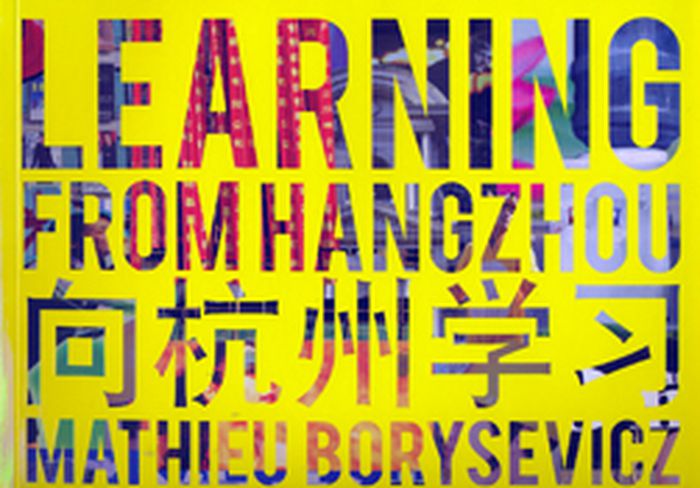
Learning from Hangzhou
Learning from Hangzhou
Actions:
Prix:
$54.00
(disponible sur commande)
Résumé:
Over the last ten years, the ancient city of Hangzhou, China, has tripled in size and added over a million people to its population. Learning from Hangzhou is an extended photoessay that situates Hangzhou within the physically and culturally transformative pressures of China's unbridled economic expansion. Between 2003 and 2008, more than 3,000 images of Hangzhou were(...)
$54.00
(disponible sur commande)
Résumé:
Over the last ten years, the ancient city of Hangzhou, China, has tripled in size and added over a million people to its population. Learning from Hangzhou is an extended photoessay that situates Hangzhou within the physically and culturally transformative pressures of China's unbridled economic expansion. Between 2003 and 2008, more than 3,000 images of Hangzhou were(...)
Titre:
Learning from Hangzhou
Actions:
Prix:
$54.00
(disponible sur commande)
Résumé:
Over the last ten years, the ancient city of Hangzhou, China, has tripled in size and added over a million people to its population. Learning from Hangzhou is an extended photoessay that situates Hangzhou within the physically and culturally transformative pressures of China's unbridled economic expansion. Between 2003 and 2008, more than 3,000 images of Hangzhou were taken, and then sorted for recurrent subject matter. This resulting condensed portrait catalogues such themes as the ubiquity of demolition and construction in Hangzhou, its architectural eclecticism, graffiti, advertising and the tenuous relationship between architecture and signage. This photo essay is accompanied by texts that explicate Hangzhou's emblematic role in China's larger transformations.
Learning from Hangzhou
Actions:
Prix:
$54.00
(disponible sur commande)
Résumé:
Over the last ten years, the ancient city of Hangzhou, China, has tripled in size and added over a million people to its population. Learning from Hangzhou is an extended photoessay that situates Hangzhou within the physically and culturally transformative pressures of China's unbridled economic expansion. Between 2003 and 2008, more than 3,000 images of Hangzhou were taken, and then sorted for recurrent subject matter. This resulting condensed portrait catalogues such themes as the ubiquity of demolition and construction in Hangzhou, its architectural eclecticism, graffiti, advertising and the tenuous relationship between architecture and signage. This photo essay is accompanied by texts that explicate Hangzhou's emblematic role in China's larger transformations.
Classification:
livres
livres
Publication:
août 2009
août 2009
Classification:
livres
livres
Actions:
Description:
1 online resource
Auteur:
- Antomarini, B. (Brunella),,
- Gerovitch, Slava,,
- Harashima, Daisuke,,
- Hayles, N. Katherine,,
- Hui, Yuk,,
- King, Dylan Levi,,
- Krzykawski, Michał,,
- Ladenburg, Alice,,
- Pickering, Andrew,,
- Reyes, David Maulén de los,,
- Sagan, Dorion,,
- Schröder, Heleen,,
- Triclot, Mathieu,,
- Wu, Jianru,,
- Library Stack,,
- Library Stack.
Sujet:
- Artificial intelligence.,
- Automation.,
- Computational intelligence.,
- Computer networks.,
- Cybernetics.,
- Philosophy.,
- Political science.,
- Intelligence artificielle.,
- Intelligence informatique.,
- Cybernétique.,
- Philosophie.,
- artificial intelligence.,
- cybernetics.,
- philosophy.,
- Discursive works.,
- Collections,
- book.,
- Anthologies.
Publication:
[Place of publication not identified] : Hanart Press, 2024.
[Place of publication not identified] : Hanart Press, 2024.
Titre:
Cybernetics for the 21st Century (Vol. 1 : Epistemological Reconstruction).
Actions:
Description:
1 online resource
Cybernetics for the 21st Century (Vol. 1 : Epistemological Reconstruction).
Actions:
Description:
1 online resource
Classification:
livres
livres
Publication:
[Place of publication not identified] : Hanart Press, 2024.
[Place of publication not identified] : Hanart Press, 2024.
Auteur:
- Antomarini, B. (Brunella),,
- Gerovitch, Slava,,
- Harashima, Daisuke,,
- Hayles, N. Katherine,,
- Hui, Yuk,,
- King, Dylan Levi,,
- Krzykawski, Michał,,
- Ladenburg, Alice,,
- Pickering, Andrew,,
- Reyes, David Maulén de los,,
- Sagan, Dorion,,
- Schröder, Heleen,,
- Triclot, Mathieu,,
- Wu, Jianru,,
- Library Stack,,
- Library Stack.
Sujet:
- Artificial intelligence.,
- Automation.,
- Computational intelligence.,
- Computer networks.,
- Cybernetics.,
- Philosophy.,
- Political science.,
- Intelligence artificielle.,
- Intelligence informatique.,
- Cybernétique.,
- Philosophie.,
- artificial intelligence.,
- cybernetics.,
- philosophy.,
- Discursive works.,
- Collections,
- book.,
- Anthologies.
Classification:
livres
livres
Actions:
Exemplaires:
Description:
88 pages : illustrations ; 27 cm
Description:
88 pages : illustrations ; 27 cm
Auteur:
Sujet:
- Sustainable architecture Taiwan.,
- Architecture Environmental aspects Taiwan.,
- Urban ecology (Sociology) Taiwan.,
- Architecture durable Taiwan.,
- Architecture Aspect de l'environnement Taiwan.,
- Écologie urbaine Taiwan.,
- Architecture Environmental aspects,
- Sustainable architecture,
- Urban ecology (Sociology),
- Taiwan
Publication:
Taiwan : National Taiwan Museum of Fine Arts, 2023.
Taiwan : National Taiwan Museum of Fine Arts, 2023.
Titre:
Diachronic apparatuses of Taiwan : architecture as on-going details within landscape / chief editor, Chia-Cheng Wang
Actions:
Exemplaires:
Description:
88 pages : illustrations ; 27 cm
Diachronic apparatuses of Taiwan : architecture as on-going details within landscape / chief editor, Chia-Cheng Wang
Actions:
Exemplaires:
Description:
88 pages : illustrations ; 27 cm
Classification:
livres
livres
Publication:
Taiwan : National Taiwan Museum of Fine Arts, 2023.
Taiwan : National Taiwan Museum of Fine Arts, 2023.
Auteur:
Sujet:
- Sustainable architecture Taiwan.,
- Architecture Environmental aspects Taiwan.,
- Urban ecology (Sociology) Taiwan.,
- Architecture durable Taiwan.,
- Architecture Aspect de l'environnement Taiwan.,
- Écologie urbaine Taiwan.,
- Architecture Environmental aspects,
- Sustainable architecture,
- Urban ecology (Sociology),
- Taiwan
Classification:
livres
livres
Prix:
$55.95
(disponible sur commande)
Résumé:
Built around snatches of discussion overheard in a Beijing design studio, this book explores attitudes toward architecture in China since the opening of the Treaty Ports in the 1840s. Central to the discussion are the concepts of ti and yong, or “essence” and “form,” Chinese characters that are used to define the proper arrangement of what should be considered modern and(...)
$55.95
(disponible sur commande)
Résumé:
Built around snatches of discussion overheard in a Beijing design studio, this book explores attitudes toward architecture in China since the opening of the Treaty Ports in the 1840s. Central to the discussion are the concepts of ti and yong, or “essence” and “form,” Chinese characters that are used to define the proper arrangement of what should be considered modern and(...)
Publication:
avril 2002, Cambridge, Mass.
avril 2002, Cambridge, Mass.
Titre:
Architectural encounters with essence and form in modern China
Actions:
Prix:
$55.95
(disponible sur commande)
Résumé:
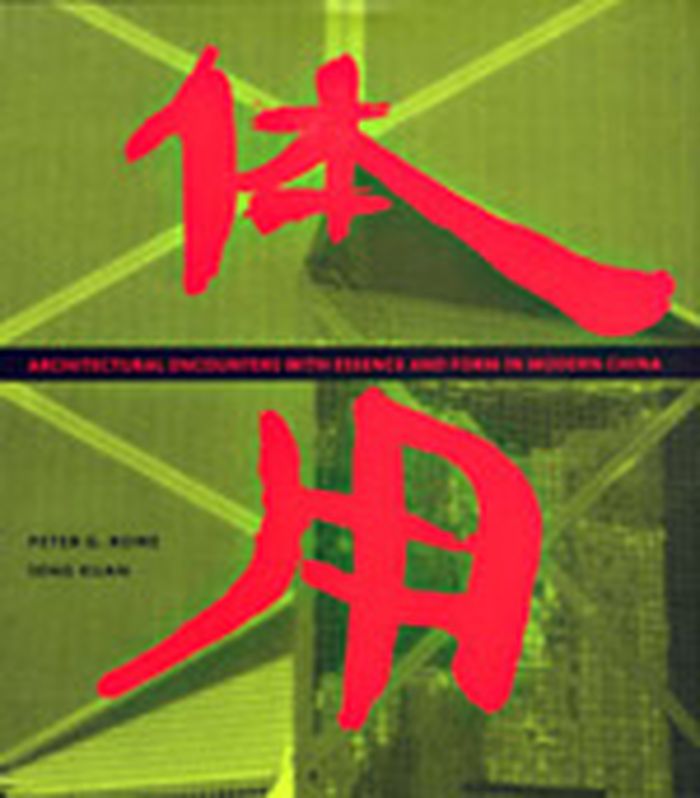
Built around snatches of discussion overheard in a Beijing design studio, this book explores attitudes toward architecture in China since the opening of the Treaty Ports in the 1840s. Central to the discussion are the concepts of ti and yong, or “essence” and “form,” Chinese characters that are used to define the proper arrangement of what should be considered modern and essentially Chinese. Ti and yong have gone through various transformations--for example, from “Chinese learning for essential principles and Western learning for practical application” to “socialist essence and cultural form” and an almost complete reversal to “modern essence and Chinese form.” The book opens with a discussion of cultural developments in China in response to the forced opening to the West in the mid-nineteenth century, efforts to reform the Qing dynasty, and the Nationalist and Communist regimes. It then considers the return of overseas-educated Chinese architects and foreign influences on Chinese architecture, four architectural orientations toward tradition and modernity in the 1920s and 1930s, and the controversy over the use of “big roofs” and other sinicizing aspects of Chinese architecture in the 1950s. The book then moves to the hard economic conditions of the Great Leap Forward and the Cultural Revolution, when architecture was almost abandoned, and the beginning of reform and opening up to the outside world in the late 1970s and 1980s. Finally, it looks at the present socialist market economy and Chinese architecture during the still incomplete process of modernization. It closes with a prognosis for the future.
Architectural encounters with essence and form in modern China
Actions:
Prix:
$55.95
(disponible sur commande)
Résumé:
Built around snatches of discussion overheard in a Beijing design studio, this book explores attitudes toward architecture in China since the opening of the Treaty Ports in the 1840s. Central to the discussion are the concepts of ti and yong, or “essence” and “form,” Chinese characters that are used to define the proper arrangement of what should be considered modern and essentially Chinese. Ti and yong have gone through various transformations--for example, from “Chinese learning for essential principles and Western learning for practical application” to “socialist essence and cultural form” and an almost complete reversal to “modern essence and Chinese form.” The book opens with a discussion of cultural developments in China in response to the forced opening to the West in the mid-nineteenth century, efforts to reform the Qing dynasty, and the Nationalist and Communist regimes. It then considers the return of overseas-educated Chinese architects and foreign influences on Chinese architecture, four architectural orientations toward tradition and modernity in the 1920s and 1930s, and the controversy over the use of “big roofs” and other sinicizing aspects of Chinese architecture in the 1950s. The book then moves to the hard economic conditions of the Great Leap Forward and the Cultural Revolution, when architecture was almost abandoned, and the beginning of reform and opening up to the outside world in the late 1970s and 1980s. Finally, it looks at the present socialist market economy and Chinese architecture during the still incomplete process of modernization. It closes with a prognosis for the future.
Classification:
livres
livres
Publication:
avril 2002, Cambridge, Mass.
avril 2002, Cambridge, Mass.
Classification:
audio
audio
Titre:
CAPOGIRI DEGLI DEI.
CAPOGIRI DEGLI DEI.
Actions:
Description:
1 online resource.
Auteur:
Sujet:
- Cosmology.,
- Sound art.,
- Sound installations (Art),
- Video games.,
- Cosmologie.,
- Art sonore.,
- Installations sonores (Art),
- cosmology.,
- sound art.,
- sound installations.,
- Sound in art,
- Tracts (Ephemera),
- serials (publications),
- Pamphlets,
- Serial publications.,
- Publications en série.
Publication:
[Place of publication not identified] : EBM(T), 2015.
[Place of publication not identified] : EBM(T), 2015.
Classification:
audio
audio
Publication:
[Place of publication not identified] : EBM(T), 2015.
[Place of publication not identified] : EBM(T), 2015.
Auteur:
Sujet:
- Cosmology.,
- Sound art.,
- Sound installations (Art),
- Video games.,
- Cosmologie.,
- Art sonore.,
- Installations sonores (Art),
- cosmology.,
- sound art.,
- sound installations.,
- Sound in art,
- Tracts (Ephemera),
- serials (publications),
- Pamphlets,
- Serial publications.,
- Publications en série.
Classification:
livres
livres
Titre:
Reimagining the library of the future: Public buildings and civic space for tomorrow's knowledge
Reimagining the library of the future: Public buildings and civic space for tomorrow's knowledge
Actions:
Prix:
$40.00
(disponible sur commande)
Résumé:
This study investigates the various models of public buildings and civic space through the lens of the library. It takes a critical look at the history, present, and future transformation of this significant building typology that has recently emerged as a redefined community place, social condenser, and urban incubator for knowledge generation, storage, and sharing. In(...)
$40.00
(disponible sur commande)
Résumé:
This study investigates the various models of public buildings and civic space through the lens of the library. It takes a critical look at the history, present, and future transformation of this significant building typology that has recently emerged as a redefined community place, social condenser, and urban incubator for knowledge generation, storage, and sharing. In(...)
Publication:
septembre 2022
septembre 2022
Titre:
Reimagining the library of the future: Public buildings and civic space for tomorrow's knowledge
Actions:
Prix:
$40.00
(disponible sur commande)
Résumé:
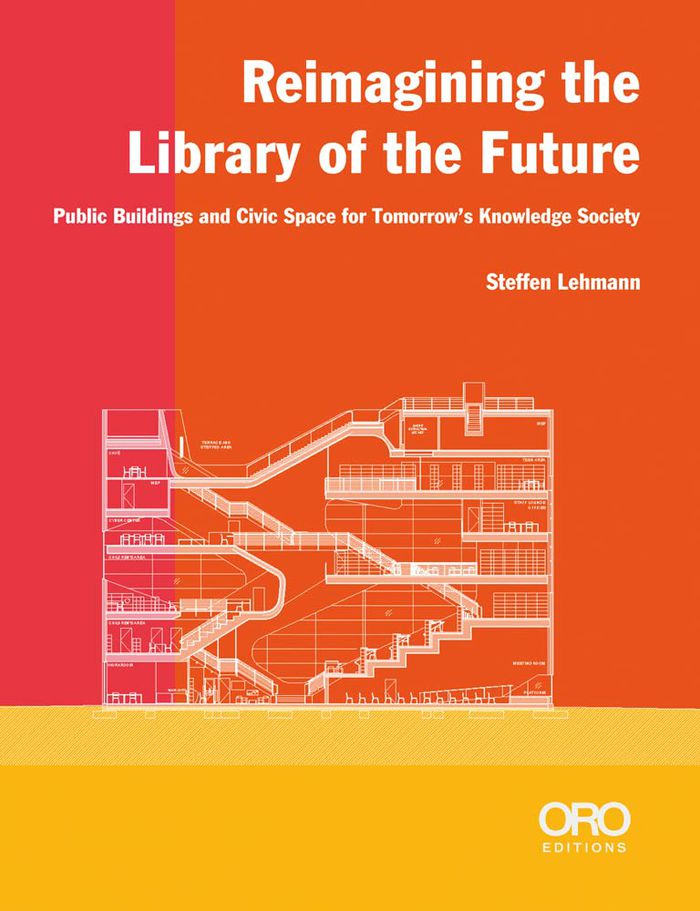
This study investigates the various models of public buildings and civic space through the lens of the library. It takes a critical look at the history, present, and future transformation of this significant building typology that has recently emerged as a redefined community place, social condenser, and urban incubator for knowledge generation, storage, and sharing. In particular, the library has evolved as a vibrant and vital member of community development and as a basis for outreach efforts. This book presents 40 recent public and academic libraries from around the world. As the survey of precedents shows, the historical cases have informed the design of the recent libraries and the continuous development of the building type over time. Well-designed libraries are now in abundance, and the wider view of this study includes mediatheques and learning centers. The selection of contemporary projects focuses on urban libraries in Europe (Germany, Italy, Austria, Netherlands), the US, Canada, Mexico, Australia, Japan, and China.
Reimagining the library of the future: Public buildings and civic space for tomorrow's knowledge
Actions:
Prix:
$40.00
(disponible sur commande)
Résumé:
This study investigates the various models of public buildings and civic space through the lens of the library. It takes a critical look at the history, present, and future transformation of this significant building typology that has recently emerged as a redefined community place, social condenser, and urban incubator for knowledge generation, storage, and sharing. In particular, the library has evolved as a vibrant and vital member of community development and as a basis for outreach efforts. This book presents 40 recent public and academic libraries from around the world. As the survey of precedents shows, the historical cases have informed the design of the recent libraries and the continuous development of the building type over time. Well-designed libraries are now in abundance, and the wider view of this study includes mediatheques and learning centers. The selection of contemporary projects focuses on urban libraries in Europe (Germany, Italy, Austria, Netherlands), the US, Canada, Mexico, Australia, Japan, and China.
Classification:
livres
livres
Publication:
septembre 2022
septembre 2022


