


510 Résultats
Classification:
livres
livres
Actions:
Prix:
$48.95
(disponible sur commande)
Résumé:
"Landscape and History" explores a complex relationship over the past five centuries. The book is international and interdisciplinary in scope, drawing on material from social, economic and cultural history as well as from geography, archaeology, cultural geography, planning and landscape history. In recent years, as the author points out, there has been increasing(...)
$48.95
(disponible sur commande)
Résumé:
"Landscape and History" explores a complex relationship over the past five centuries. The book is international and interdisciplinary in scope, drawing on material from social, economic and cultural history as well as from geography, archaeology, cultural geography, planning and landscape history. In recent years, as the author points out, there has been increasing(...)
Titre:
Landscape and history since 1500
Actions:
Prix:
$48.95
(disponible sur commande)
Résumé:
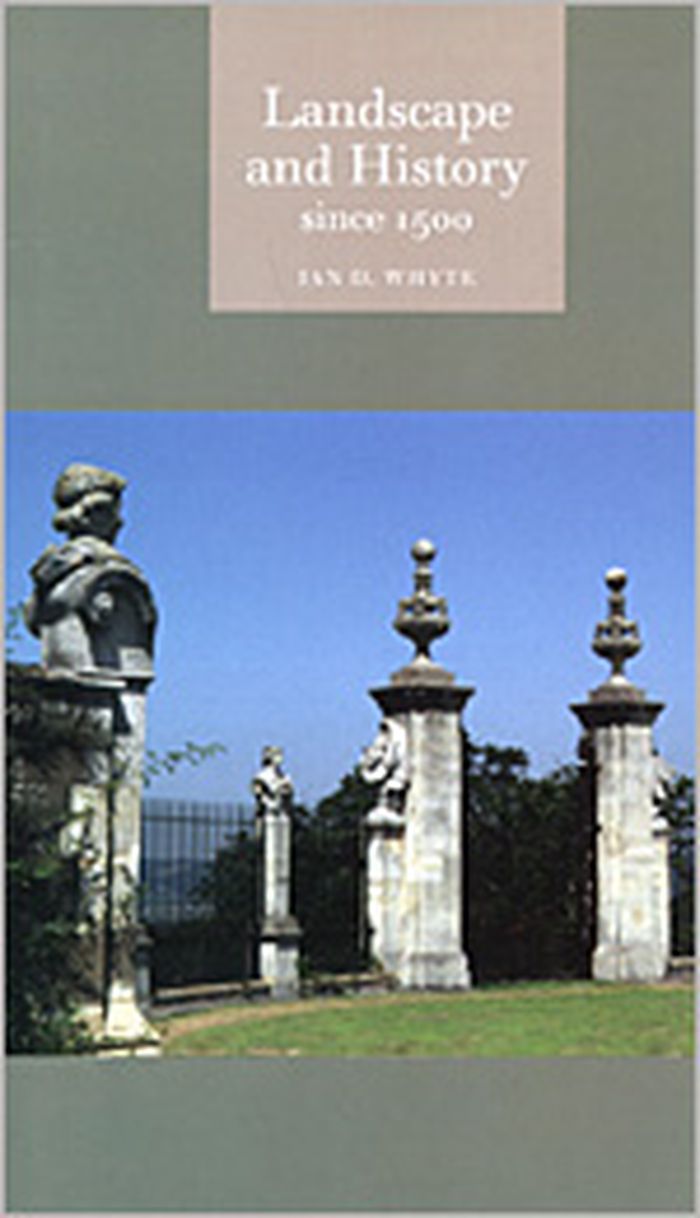
"Landscape and History" explores a complex relationship over the past five centuries. The book is international and interdisciplinary in scope, drawing on material from social, economic and cultural history as well as from geography, archaeology, cultural geography, planning and landscape history. In recent years, as the author points out, there has been increasing interest in, and concern for, many aspects of landscape within British, European and wider contexts. This has included the study of the history, development and changes in our perception of landscape, as well as research into the links between past landscapes and political ideologies, economic and social structures, cartography, art and literature. There is also considerable concern at present with the need to evaluate and classify historic landscapes, and to develop policies for their conservation and management in relation to their scenic, heritage and recreational value. This is manifest not only in the designation of particularly valued areas with enhanced protection from planning developments, such as national parks and world heritage sites, but in the countryside more generally. Further, Ian D. Whyte argues, changes in European Union policies relating to agriculture, with a greater concern for the protection and sustainable management of rural landscapes, are likely to be of major importance in relation to the themes of continuity and change in the landscapes of Britain and Europe.
Landscape and history since 1500
Actions:
Prix:
$48.95
(disponible sur commande)
Résumé:
"Landscape and History" explores a complex relationship over the past five centuries. The book is international and interdisciplinary in scope, drawing on material from social, economic and cultural history as well as from geography, archaeology, cultural geography, planning and landscape history. In recent years, as the author points out, there has been increasing interest in, and concern for, many aspects of landscape within British, European and wider contexts. This has included the study of the history, development and changes in our perception of landscape, as well as research into the links between past landscapes and political ideologies, economic and social structures, cartography, art and literature. There is also considerable concern at present with the need to evaluate and classify historic landscapes, and to develop policies for their conservation and management in relation to their scenic, heritage and recreational value. This is manifest not only in the designation of particularly valued areas with enhanced protection from planning developments, such as national parks and world heritage sites, but in the countryside more generally. Further, Ian D. Whyte argues, changes in European Union policies relating to agriculture, with a greater concern for the protection and sustainable management of rural landscapes, are likely to be of major importance in relation to the themes of continuity and change in the landscapes of Britain and Europe.
Classification:
livres
livres
Publication:
novembre 2002, London
novembre 2002, London
Sujet:
Théorie du paysage
Théorie du paysage
Classification:
livres
livres
Titre:
Italy
Italy
Actions:
Prix:
$38.95
(disponible sur commande)
Résumé:
Throughout the twentieth century, architects in Italy have attempted to define the role of architecture under diverse political systems, from the monarchy of the first seventy years since Italian unification, to the 21 years of Fascist control, to the post-Second World War parliamentary republic. At the same time, Italy holds some of the most prized architecture and art(...)
$38.95
(disponible sur commande)
Résumé:
Throughout the twentieth century, architects in Italy have attempted to define the role of architecture under diverse political systems, from the monarchy of the first seventy years since Italian unification, to the 21 years of Fascist control, to the post-Second World War parliamentary republic. At the same time, Italy holds some of the most prized architecture and art(...)
Titre:
Italy
Actions:
Prix:
$38.95
(disponible sur commande)
Résumé:
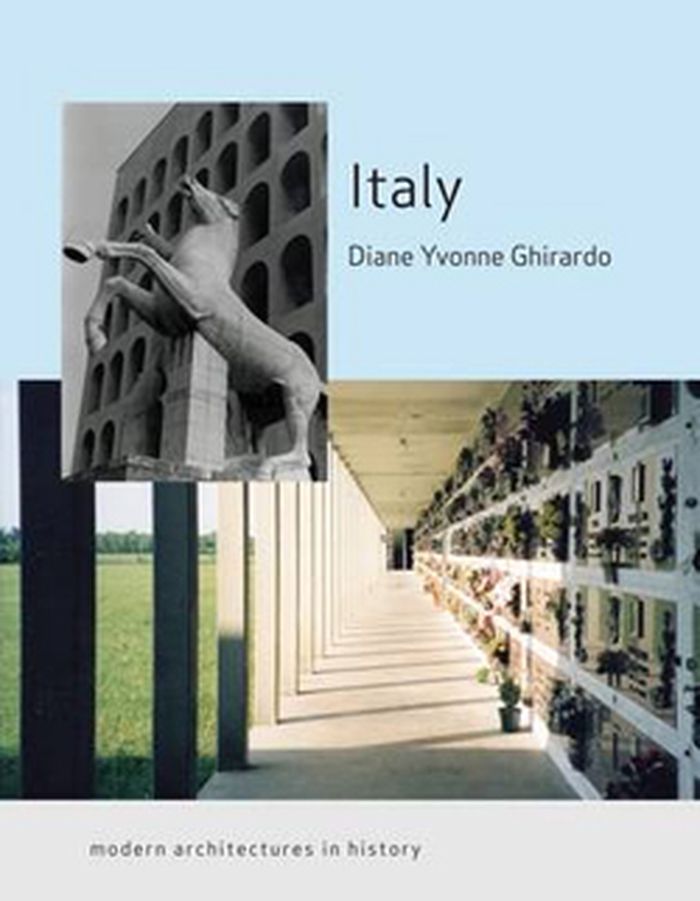
Throughout the twentieth century, architects in Italy have attempted to define the role of architecture under diverse political systems, from the monarchy of the first seventy years since Italian unification, to the 21 years of Fascist control, to the post-Second World War parliamentary republic. At the same time, Italy holds some of the most prized architecture and art in the world, from antiquity to the baroque, packed into its dense historic city centres, which planners and politicians have negotiated as they struggled to cope with massive migration from the countryside to the city. Diane Ghirardo addresses these and other issues by considering modern architectural production in Italy from the late nineteenth century to the present day within a clear presentation of the larger historical, social and political contexts. From the post-unification efforts to identify a distinctly Italian architectural language to the transformation of the urban environment in Italian cities undergoing industrialization in the late nineteenth and early twentieth centuries, Diane Ghirardo challenges received interpretations of modern architecture, as well as focusing on the subject of illegal building and responses to current ecological challenges. With up-to-date examples, both from the work of widely published architects in the largest cities and from throughout the peninsula, including small towns and rural areas, Italy provides a comprehensive view of the country’s modern built environment.
Italy
Actions:
Prix:
$38.95
(disponible sur commande)
Résumé:
Throughout the twentieth century, architects in Italy have attempted to define the role of architecture under diverse political systems, from the monarchy of the first seventy years since Italian unification, to the 21 years of Fascist control, to the post-Second World War parliamentary republic. At the same time, Italy holds some of the most prized architecture and art in the world, from antiquity to the baroque, packed into its dense historic city centres, which planners and politicians have negotiated as they struggled to cope with massive migration from the countryside to the city. Diane Ghirardo addresses these and other issues by considering modern architectural production in Italy from the late nineteenth century to the present day within a clear presentation of the larger historical, social and political contexts. From the post-unification efforts to identify a distinctly Italian architectural language to the transformation of the urban environment in Italian cities undergoing industrialization in the late nineteenth and early twentieth centuries, Diane Ghirardo challenges received interpretations of modern architecture, as well as focusing on the subject of illegal building and responses to current ecological challenges. With up-to-date examples, both from the work of widely published architects in the largest cities and from throughout the peninsula, including small towns and rural areas, Italy provides a comprehensive view of the country’s modern built environment.
Classification:
livres
livres
Publication:
novembre 2011
novembre 2011
Classification:
livres
livres

Actions:
Prix:
$44.95
(disponible sur commande)
Résumé:
New ideas and concepts for urban architecture and landscape architecture from the Netherlands: this survey takes stock of the current situation. In any discussion on contemporary landscape architecture, visionary urban development or revolutionary building, it is impossible to overlook the Netherlands. The experts look to this small, flat country which constantly(...)
$44.95
(disponible sur commande)
Résumé:
New ideas and concepts for urban architecture and landscape architecture from the Netherlands: this survey takes stock of the current situation. In any discussion on contemporary landscape architecture, visionary urban development or revolutionary building, it is impossible to overlook the Netherlands. The experts look to this small, flat country which constantly(...)
Titre:
The Netherlands in focus : exemplary ideas and concepts for town and landscape
Actions:
Prix:
$44.95
(disponible sur commande)
Résumé:
New ideas and concepts for urban architecture and landscape architecture from the Netherlands: this survey takes stock of the current situation. In any discussion on contemporary landscape architecture, visionary urban development or revolutionary building, it is impossible to overlook the Netherlands. The experts look to this small, flat country which constantly seeks to exceed its narrow boundaries by creating new space. The Netherlands is crowded and so it is hardly surprising that architects endeavour to "stack" landscapes and functions as the Dutch pavilion in the Expo 2000, designed by MVRDV demonstrated. Here, new ideas and concepts in architecture and landscape design fall on the fertile ground. Rem Koolhaas had prepared the way: nothing must stay as it is, even the open countryside and the towns can be changed, moulded, shaped. The Dutch are experts at building in the sea, on polders, on man-made islands, and on former harbour areas as in Rotterdam Kop van Zuid. Architecture and landscape architecture are not only a matter of public interest but they are ongoing processes in the Netherlands, and this is reflected in many of the projects in this book which include the gardens and squares of West 8, the Museumsplein in Amsterdam, the town planning in Zutphen or Apeldoorn. The examples have all been published in different contexts in Topos, but this is the first time that they have been collated to provide an illuminating overview of contemporary Dutch landscape architecture.
The Netherlands in focus : exemplary ideas and concepts for town and landscape
Actions:
Prix:
$44.95
(disponible sur commande)
Résumé:
New ideas and concepts for urban architecture and landscape architecture from the Netherlands: this survey takes stock of the current situation. In any discussion on contemporary landscape architecture, visionary urban development or revolutionary building, it is impossible to overlook the Netherlands. The experts look to this small, flat country which constantly seeks to exceed its narrow boundaries by creating new space. The Netherlands is crowded and so it is hardly surprising that architects endeavour to "stack" landscapes and functions as the Dutch pavilion in the Expo 2000, designed by MVRDV demonstrated. Here, new ideas and concepts in architecture and landscape design fall on the fertile ground. Rem Koolhaas had prepared the way: nothing must stay as it is, even the open countryside and the towns can be changed, moulded, shaped. The Dutch are experts at building in the sea, on polders, on man-made islands, and on former harbour areas as in Rotterdam Kop van Zuid. Architecture and landscape architecture are not only a matter of public interest but they are ongoing processes in the Netherlands, and this is reflected in many of the projects in this book which include the gardens and squares of West 8, the Museumsplein in Amsterdam, the town planning in Zutphen or Apeldoorn. The examples have all been published in different contexts in Topos, but this is the first time that they have been collated to provide an illuminating overview of contemporary Dutch landscape architecture.
Classification:
livres
livres
Publication:
mars 2002, Munich / Basel
mars 2002, Munich / Basel
Sujet:
Jardins
Jardins
Classification:
périodiques
périodiques
Actions:
Prix:
$36.00
(disponible sur commande)
Résumé:
The modern design and perception of the public domain is to a large degree determined by the tension between different memories - individual and collective, old and new, indigenous and immigrant. This makes memory a topical theme in the public domain, and its content, management and place are in urgent need of renewed consideration. How can one actively make use of the(...)
$36.00
(disponible sur commande)
Résumé:
The modern design and perception of the public domain is to a large degree determined by the tension between different memories - individual and collective, old and new, indigenous and immigrant. This makes memory a topical theme in the public domain, and its content, management and place are in urgent need of renewed consideration. How can one actively make use of the(...)
Titre:
Open 7 (no)memory : storing and recalling in contemporary art and culture
Actions:
Prix:
$36.00
(disponible sur commande)
Résumé:
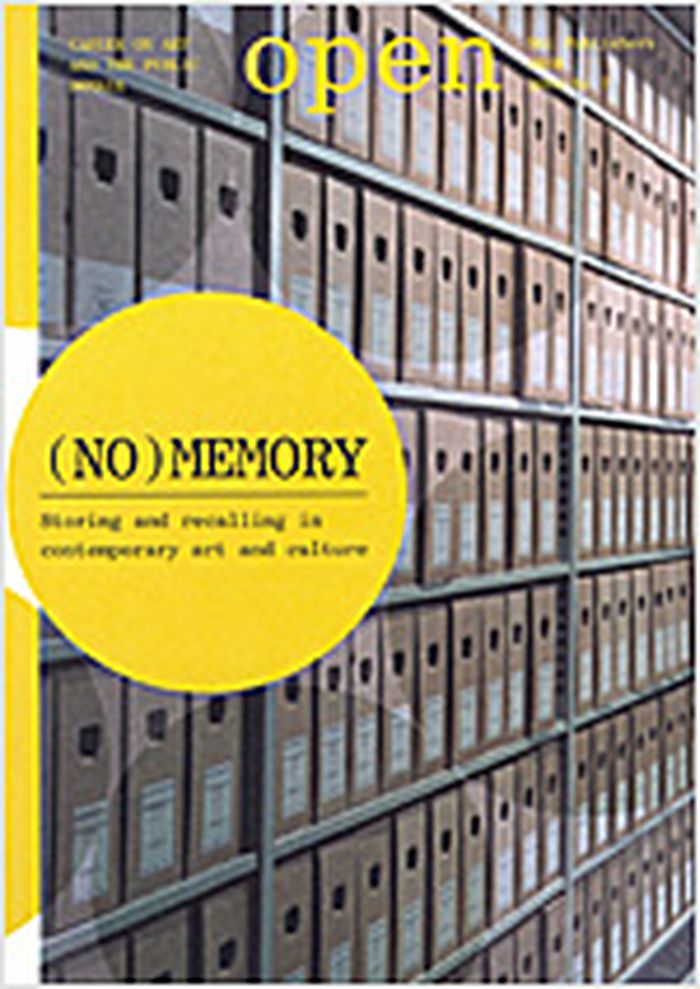
The modern design and perception of the public domain is to a large degree determined by the tension between different memories - individual and collective, old and new, indigenous and immigrant. This makes memory a topical theme in the public domain, and its content, management and place are in urgent need of renewed consideration. How can one actively make use of the information that is stored in modern-day 'places of memory'? What role does art play in this? Is collective memory even a possibility these days? How can cultural heritage be made accessible without transforming city and countryside into one big open-air museum? And what are the implications of new media and digital storage technologies for the social and historical processes of preserving and remembering? Rudi Laermans analyses the modern-day 'heritage regime'. Frank van Vree examines the role of the contemporary monument. Cor Wagenaar advocates the introduction of time as an instrument for the Belvedere Policy. Wolfgang Ernst considers how the archive becomes a literal metaphor in a digital culture. Nico Bick photographed various archives. Jorinde Seijdel takes a closer look at the visual archive of Bill Gates. Sven Lütticken writes about the conspiracy of openness that is apparently at work in the mass media. Geert Lovink interviews artist and archivist Tjebbe van Tijen. Artists' contributions from Joke Robaard, Nico Dockx, Hans Aarsman, Arnoud Holleman and Barbara Visser. Other contributions by Henk Oosterling, Brigitte van der Sande, Stef Scagliola, Jordan Crandall and Paul Meurs.
Open 7 (no)memory : storing and recalling in contemporary art and culture
Actions:
Prix:
$36.00
(disponible sur commande)
Résumé:
The modern design and perception of the public domain is to a large degree determined by the tension between different memories - individual and collective, old and new, indigenous and immigrant. This makes memory a topical theme in the public domain, and its content, management and place are in urgent need of renewed consideration. How can one actively make use of the information that is stored in modern-day 'places of memory'? What role does art play in this? Is collective memory even a possibility these days? How can cultural heritage be made accessible without transforming city and countryside into one big open-air museum? And what are the implications of new media and digital storage technologies for the social and historical processes of preserving and remembering? Rudi Laermans analyses the modern-day 'heritage regime'. Frank van Vree examines the role of the contemporary monument. Cor Wagenaar advocates the introduction of time as an instrument for the Belvedere Policy. Wolfgang Ernst considers how the archive becomes a literal metaphor in a digital culture. Nico Bick photographed various archives. Jorinde Seijdel takes a closer look at the visual archive of Bill Gates. Sven Lütticken writes about the conspiracy of openness that is apparently at work in the mass media. Geert Lovink interviews artist and archivist Tjebbe van Tijen. Artists' contributions from Joke Robaard, Nico Dockx, Hans Aarsman, Arnoud Holleman and Barbara Visser. Other contributions by Henk Oosterling, Brigitte van der Sande, Stef Scagliola, Jordan Crandall and Paul Meurs.
Classification:
périodiques
périodiques
Publication:
janvier 1900, Rotterdam
janvier 1900, Rotterdam
Sujet:
Revues
Revues
Classification:
livres
livres
Prix:
$38.99
(disponible en magasin)
Résumé:
As WWI drew to a close, change reverberated through the halls of England’s country homes. As the sun set slowly on the British Empire, the shadows lengthened on the lawns of a thousand stately homes. In The Long Weekend, historian Adrian Tinniswood introduces us to the tumultuous, scandalous and glamourous history of English country houses during the years between(...)
$38.99
(disponible en magasin)
Résumé:
As WWI drew to a close, change reverberated through the halls of England’s country homes. As the sun set slowly on the British Empire, the shadows lengthened on the lawns of a thousand stately homes. In The Long Weekend, historian Adrian Tinniswood introduces us to the tumultuous, scandalous and glamourous history of English country houses during the years between(...)
Titre:
The long weekend: life in the English country house 1918-1939
Actions:
Prix:
$38.99
(disponible en magasin)
Résumé:
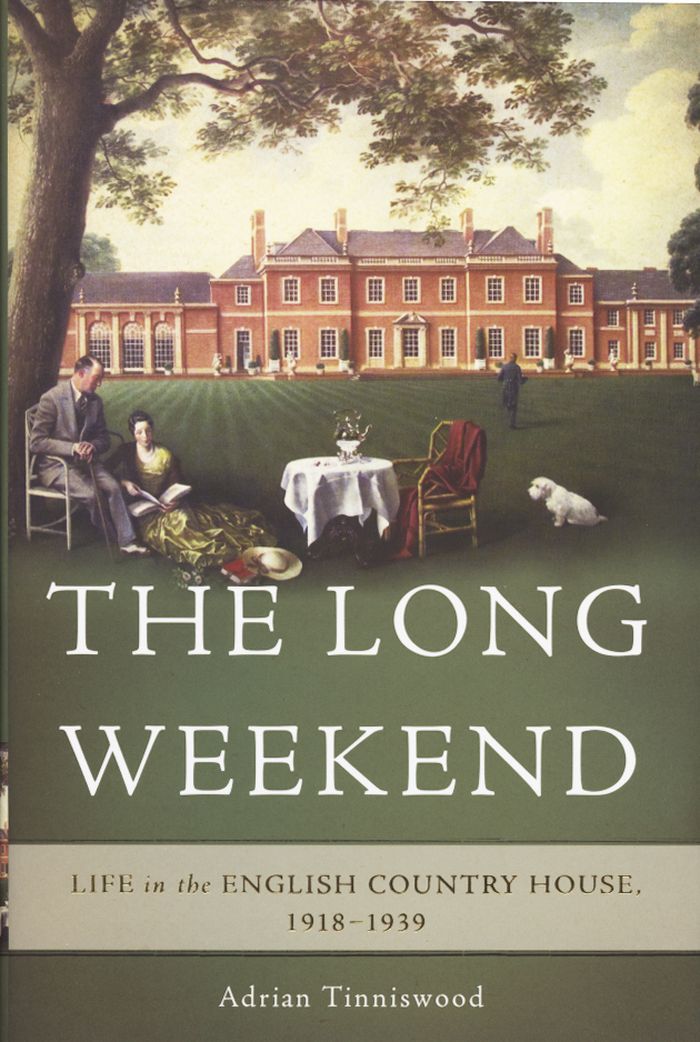
As WWI drew to a close, change reverberated through the halls of England’s country homes. As the sun set slowly on the British Empire, the shadows lengthened on the lawns of a thousand stately homes. In The Long Weekend, historian Adrian Tinniswood introduces us to the tumultuous, scandalous and glamourous history of English country houses during the years between World Wars. As estate taxes and other challenges forced many of these venerable houses onto the market, new sectors of British and American society were seduced by the dream of owning a home in the English countryside. Drawing on thousands of memoirs, letters, and diaries, as well as the eye-witness testimonies of belted earls and bibulous butlers, Tinniswood brings the stately homes of England to life as never before, opening the door to a world by turns opulent and ordinary, noble and vicious, and forever wrapped in myth. We are drawn into the intrigues of legendary families such as the Astors, the Churchills and the Devonshires as they hosted hunting parties and balls that attracted the likes of Charlie Chaplin, T.E. Lawrence, and royals such as Edward VIII and Wallis Simpson. We waltz through aristocratic soirées, and watch as the upper crust struggle to fend off rising taxes and underbred outsiders, property speculators and poultry farmers. We gain insight into the guilt and the gingerbread, and see how the image of the country house was carefully protected by its occupants above and below stairs.
The long weekend: life in the English country house 1918-1939
Actions:
Prix:
$38.99
(disponible en magasin)
Résumé:
As WWI drew to a close, change reverberated through the halls of England’s country homes. As the sun set slowly on the British Empire, the shadows lengthened on the lawns of a thousand stately homes. In The Long Weekend, historian Adrian Tinniswood introduces us to the tumultuous, scandalous and glamourous history of English country houses during the years between World Wars. As estate taxes and other challenges forced many of these venerable houses onto the market, new sectors of British and American society were seduced by the dream of owning a home in the English countryside. Drawing on thousands of memoirs, letters, and diaries, as well as the eye-witness testimonies of belted earls and bibulous butlers, Tinniswood brings the stately homes of England to life as never before, opening the door to a world by turns opulent and ordinary, noble and vicious, and forever wrapped in myth. We are drawn into the intrigues of legendary families such as the Astors, the Churchills and the Devonshires as they hosted hunting parties and balls that attracted the likes of Charlie Chaplin, T.E. Lawrence, and royals such as Edward VIII and Wallis Simpson. We waltz through aristocratic soirées, and watch as the upper crust struggle to fend off rising taxes and underbred outsiders, property speculators and poultry farmers. We gain insight into the guilt and the gingerbread, and see how the image of the country house was carefully protected by its occupants above and below stairs.
Classification:
livres
livres
Publication:
mai 2016
mai 2016
Classification:
livres
livres
Actions:
Prix:
$31.95
(disponible sur commande)
Résumé:
The underground has been a dominant image of modern life since the late eighteenth century. A site of crisis, fascination, and hidden truth, the underground is a space at once more immediate and more threatening than the ordinary world above. In Subterranean Cities, David L. Pike explores the representation of underground space in the nineteenth and early twentieth(...)
$31.95
(disponible sur commande)
Résumé:
The underground has been a dominant image of modern life since the late eighteenth century. A site of crisis, fascination, and hidden truth, the underground is a space at once more immediate and more threatening than the ordinary world above. In Subterranean Cities, David L. Pike explores the representation of underground space in the nineteenth and early twentieth(...)
Titre:
subterranean cities : the world beneath Paris and London, 1800-1945
Actions:
Prix:
$31.95
(disponible sur commande)
Résumé:
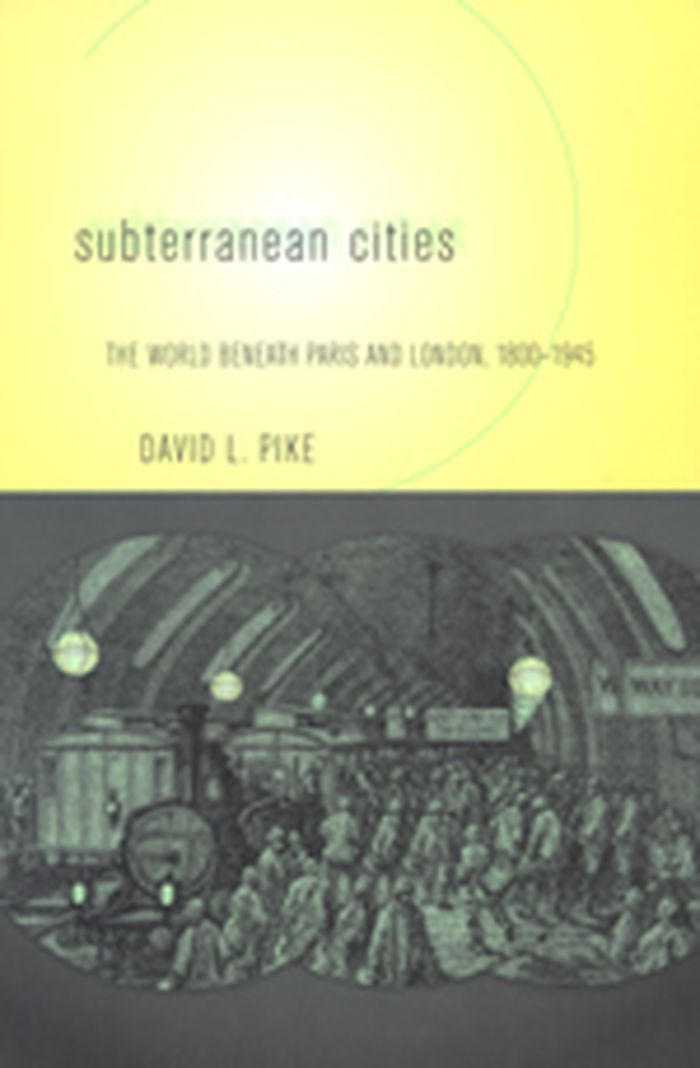
The underground has been a dominant image of modern life since the late eighteenth century. A site of crisis, fascination, and hidden truth, the underground is a space at once more immediate and more threatening than the ordinary world above. In Subterranean Cities, David L. Pike explores the representation of underground space in the nineteenth and early twentieth centuries, a period during which technology and heavy industry transformed urban life. The metropolis had long been considered a moral underworld of iniquity and dissolution. As the complex drainage systems, underground railways, utility tunnels, and storage vaults of the modern cityscape superseded the countryside of caverns and mines as the principal location of actual subterranean spaces, ancient and modern converged in a mythic space that was nevertheless rooted in the everyday life of the contemporary city. Writers and artists from Felix Nadar and Charles Baudelaire to Charles Dickens and Alice Meynell, Gustave Doré and Victor Hugo, George Gissing and Emile Zola, and Jules Verne and H. G. Wells integrated images of the urban underworld into their portrayals of the anatomy of modern society. Illustrated with photographs, movie stills, prints, engravings, paintings, cartoons, maps, and drawings of actual and imagined urban spaces, Subterranean Cities documents the emergence of a novel space in the subterranean obsessions and anxieties within nineteenth-century urban culture. Chapters on the subways, sewers, and cemeteries of Paris and London provide a detailed analysis of these competing centers of urban modernity. A concluding chapter considers the enduring influence of these spaces on urban culture at the turn of the twenty-first century.
subterranean cities : the world beneath Paris and London, 1800-1945
Actions:
Prix:
$31.95
(disponible sur commande)
Résumé:
The underground has been a dominant image of modern life since the late eighteenth century. A site of crisis, fascination, and hidden truth, the underground is a space at once more immediate and more threatening than the ordinary world above. In Subterranean Cities, David L. Pike explores the representation of underground space in the nineteenth and early twentieth centuries, a period during which technology and heavy industry transformed urban life. The metropolis had long been considered a moral underworld of iniquity and dissolution. As the complex drainage systems, underground railways, utility tunnels, and storage vaults of the modern cityscape superseded the countryside of caverns and mines as the principal location of actual subterranean spaces, ancient and modern converged in a mythic space that was nevertheless rooted in the everyday life of the contemporary city. Writers and artists from Felix Nadar and Charles Baudelaire to Charles Dickens and Alice Meynell, Gustave Doré and Victor Hugo, George Gissing and Emile Zola, and Jules Verne and H. G. Wells integrated images of the urban underworld into their portrayals of the anatomy of modern society. Illustrated with photographs, movie stills, prints, engravings, paintings, cartoons, maps, and drawings of actual and imagined urban spaces, Subterranean Cities documents the emergence of a novel space in the subterranean obsessions and anxieties within nineteenth-century urban culture. Chapters on the subways, sewers, and cemeteries of Paris and London provide a detailed analysis of these competing centers of urban modernity. A concluding chapter considers the enduring influence of these spaces on urban culture at the turn of the twenty-first century.
Classification:
livres
livres
Publication:
septembre 2005, Ithaca / London
septembre 2005, Ithaca / London
Sujet:
Théorie de l’urbanisme
Théorie de l’urbanisme
Classification:
livres
livres
Actions:
Prix:
$44.00
(disponible en magasin)
Résumé:
Questioning the traditional boundaries between cities, suburbs, countryside and wilderness, this issue of AD explores emergent types of public space in low-density environments. It describes this new form of urbanism: decentralised, in a constant process of expansion and contraction, not homogenous or necessarily low-rise, nor guided by one mode of development, typology(...)
$44.00
(disponible en magasin)
Résumé:
Questioning the traditional boundaries between cities, suburbs, countryside and wilderness, this issue of AD explores emergent types of public space in low-density environments. It describes this new form of urbanism: decentralised, in a constant process of expansion and contraction, not homogenous or necessarily low-rise, nor guided by one mode of development, typology(...)
Titre:
AD 78:1 : Cities of dispersal
Actions:
Prix:
$44.00
(disponible en magasin)
Résumé:
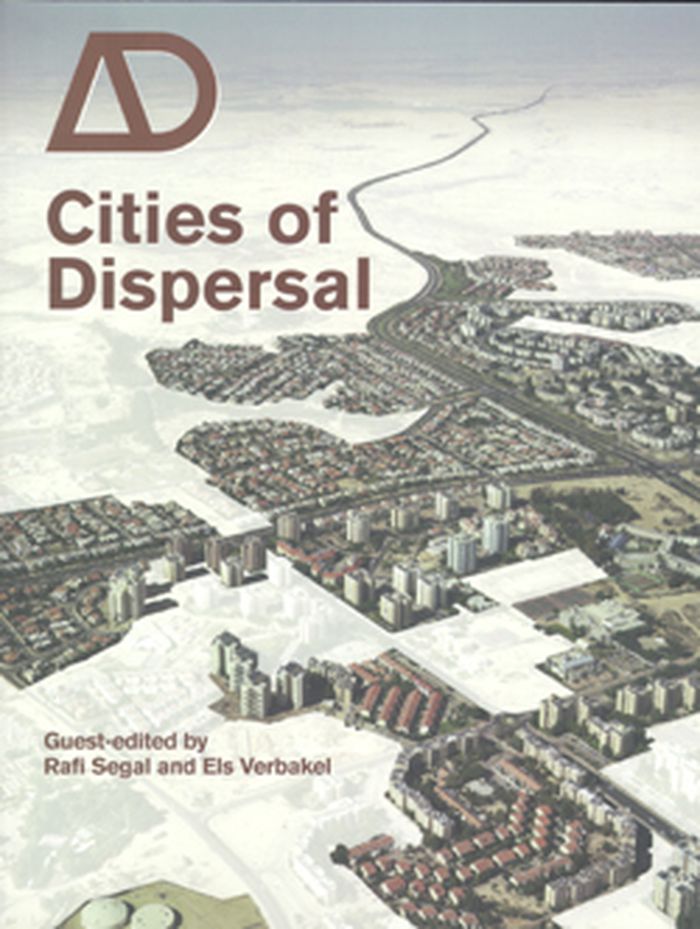
Questioning the traditional boundaries between cities, suburbs, countryside and wilderness, this issue of AD explores emergent types of public space in low-density environments. It describes this new form of urbanism: decentralised, in a constant process of expansion and contraction, not homogenous or necessarily low-rise, nor guided by one mode of development, typology or pattern. While functionally and programmatically dispersed, settlements operate as a form of urbanism; the place of collective spaces within them has yet to be defined and articulated. The physical transformation of the built environment on the one hand, and the change in our notion of the public on the other - due to globalisation, privatisation and segregation - call for renewed interpretations of the nature and character of public space. The concept of public space needs to be examined: replaced, re-created or adapted to fit these conditions. What is the place of the public in this form of urbanism, and how can architecture address the notion of common, collective spaces? What is the current sociopolitical role o such spaces? How does the form and use of these spaces reflect the conception of the public as a political (or non-political) body? And can architecture regain an active role in formulating the notion of the collective? These and other issues are addressed through essays, research projects and built work by distinguished writers such as Bruce Robbins, Albert Pope and Alex Wall, and Practitioners including Zvi Hecker, Vito Acconci, MUTOPIA, Manuel de Sola-Morales, Martha Rosler and Manuel Vicente in a search for new collective architectures within the dispersed city.
AD 78:1 : Cities of dispersal
Actions:
Prix:
$44.00
(disponible en magasin)
Résumé:
Questioning the traditional boundaries between cities, suburbs, countryside and wilderness, this issue of AD explores emergent types of public space in low-density environments. It describes this new form of urbanism: decentralised, in a constant process of expansion and contraction, not homogenous or necessarily low-rise, nor guided by one mode of development, typology or pattern. While functionally and programmatically dispersed, settlements operate as a form of urbanism; the place of collective spaces within them has yet to be defined and articulated. The physical transformation of the built environment on the one hand, and the change in our notion of the public on the other - due to globalisation, privatisation and segregation - call for renewed interpretations of the nature and character of public space. The concept of public space needs to be examined: replaced, re-created or adapted to fit these conditions. What is the place of the public in this form of urbanism, and how can architecture address the notion of common, collective spaces? What is the current sociopolitical role o such spaces? How does the form and use of these spaces reflect the conception of the public as a political (or non-political) body? And can architecture regain an active role in formulating the notion of the collective? These and other issues are addressed through essays, research projects and built work by distinguished writers such as Bruce Robbins, Albert Pope and Alex Wall, and Practitioners including Zvi Hecker, Vito Acconci, MUTOPIA, Manuel de Sola-Morales, Martha Rosler and Manuel Vicente in a search for new collective architectures within the dispersed city.
Classification:
livres
livres
Publication:
mai 2008, West Sussex
mai 2008, West Sussex
Sujet:
Théorie de l’urbanisme
Théorie de l’urbanisme
Classification:
livres
livres
Titre:
Sprawl : a compact history
Sprawl : a compact history
Actions:
Prix:
$34.50
(disponible sur commande)
Résumé:
As anyone who has flown into Los Angeles at dusk or Houston at midday knows, urban areas today defy traditional notions of what a city is. Our old definitions of urban, suburban, and rural fail to capture the complexity of these vast regions with their superhighways, subdivisions, industrial areas, office parks, and resort areas pushing far out into the countryside.(...)
$34.50
(disponible sur commande)
Résumé:
As anyone who has flown into Los Angeles at dusk or Houston at midday knows, urban areas today defy traditional notions of what a city is. Our old definitions of urban, suburban, and rural fail to capture the complexity of these vast regions with their superhighways, subdivisions, industrial areas, office parks, and resort areas pushing far out into the countryside.(...)
Titre:
Sprawl : a compact history
Actions:
Prix:
$34.50
(disponible sur commande)
Résumé:
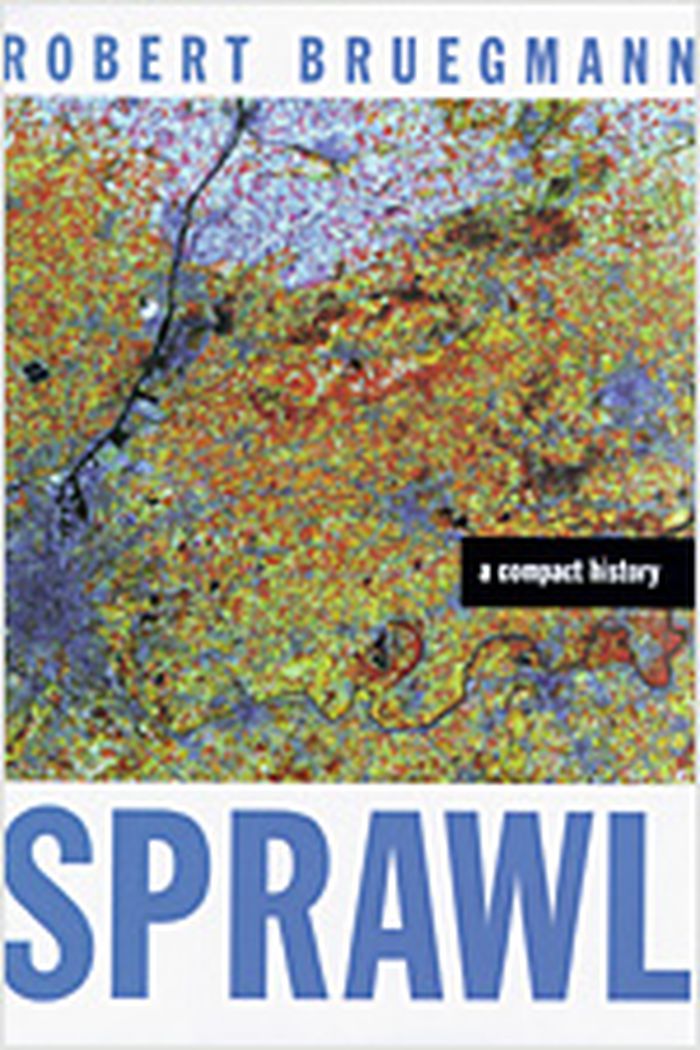
As anyone who has flown into Los Angeles at dusk or Houston at midday knows, urban areas today defy traditional notions of what a city is. Our old definitions of urban, suburban, and rural fail to capture the complexity of these vast regions with their superhighways, subdivisions, industrial areas, office parks, and resort areas pushing far out into the countryside. Detractors call it sprawl and assert that it is economically inefficient, socially inequitable, environmentally irresponsible, and aesthetically ugly. Robert Bruegmann calls it a logical consequence of economic growth and the democratization of society, with benefits that urban planners have failed to recognize. In his history of the expanded city, Bruegmann overturns every assumption we have about sprawl. Taking a long view of urban development, he demonstrates that sprawl is neither recent nor particularly American but as old as cities themselves, just as characteristic of ancient Rome and eighteenth-century Paris as it is of Atlanta or Los Angeles. Nor is sprawl the disaster claimed by many contemporary observers. Although sprawl, like any settlement pattern, has undoubtedly produced problems that must be addressed, it has also provided millions of people with the kinds of mobility, privacy, and choice that were once the exclusive prerogatives of the rich and powerful. The first major book to strip urban sprawl of its pejorative connotations, Sprawl offers a completely new vision of the city and its growth. Bruegmann leads readers to the powerful conclusion that ''in its immense complexity and constant change, the city-whether dense and concentrated at its core, looser and more sprawling in suburbia, or in the vast tracts of exurban penumbra that extend dozens, even hundreds, of miles-is the grandest and most marvelous work of mankind.''
Sprawl : a compact history
Actions:
Prix:
$34.50
(disponible sur commande)
Résumé:
As anyone who has flown into Los Angeles at dusk or Houston at midday knows, urban areas today defy traditional notions of what a city is. Our old definitions of urban, suburban, and rural fail to capture the complexity of these vast regions with their superhighways, subdivisions, industrial areas, office parks, and resort areas pushing far out into the countryside. Detractors call it sprawl and assert that it is economically inefficient, socially inequitable, environmentally irresponsible, and aesthetically ugly. Robert Bruegmann calls it a logical consequence of economic growth and the democratization of society, with benefits that urban planners have failed to recognize. In his history of the expanded city, Bruegmann overturns every assumption we have about sprawl. Taking a long view of urban development, he demonstrates that sprawl is neither recent nor particularly American but as old as cities themselves, just as characteristic of ancient Rome and eighteenth-century Paris as it is of Atlanta or Los Angeles. Nor is sprawl the disaster claimed by many contemporary observers. Although sprawl, like any settlement pattern, has undoubtedly produced problems that must be addressed, it has also provided millions of people with the kinds of mobility, privacy, and choice that were once the exclusive prerogatives of the rich and powerful. The first major book to strip urban sprawl of its pejorative connotations, Sprawl offers a completely new vision of the city and its growth. Bruegmann leads readers to the powerful conclusion that ''in its immense complexity and constant change, the city-whether dense and concentrated at its core, looser and more sprawling in suburbia, or in the vast tracts of exurban penumbra that extend dozens, even hundreds, of miles-is the grandest and most marvelous work of mankind.''
Classification:
livres
livres
Publication:
octobre 2005, Chicago, London
octobre 2005, Chicago, London
Sujet:
Théorie de l’urbanisme
Théorie de l’urbanisme
Classification:
livres
livres
Prix:
$90.95
(disponible en magasin)
Résumé:
Roger Fenton (1819-1869) was England’s most celebrated and influential photographer during the 1850s, the “golden age” of this radically new medium. Fenton’s majestic pictures of cathedrals, country houses, and varied countryside were without peer in England--as were his views of the royal castles and Houses of Parliament that embodied Britain’s power. But Fenton’s(...)
$90.95
(disponible en magasin)
Résumé:
Roger Fenton (1819-1869) was England’s most celebrated and influential photographer during the 1850s, the “golden age” of this radically new medium. Fenton’s majestic pictures of cathedrals, country houses, and varied countryside were without peer in England--as were his views of the royal castles and Houses of Parliament that embodied Britain’s power. But Fenton’s(...)
Sujet:
Monographies photo
Monographies photo
Publication:
novembre 2004, New Haven, London
novembre 2004, New Haven, London
Titre:
All the mighty world : the photographs of Roger Fenton, 1852-1860
Actions:
Prix:
$90.95
(disponible en magasin)
Résumé:
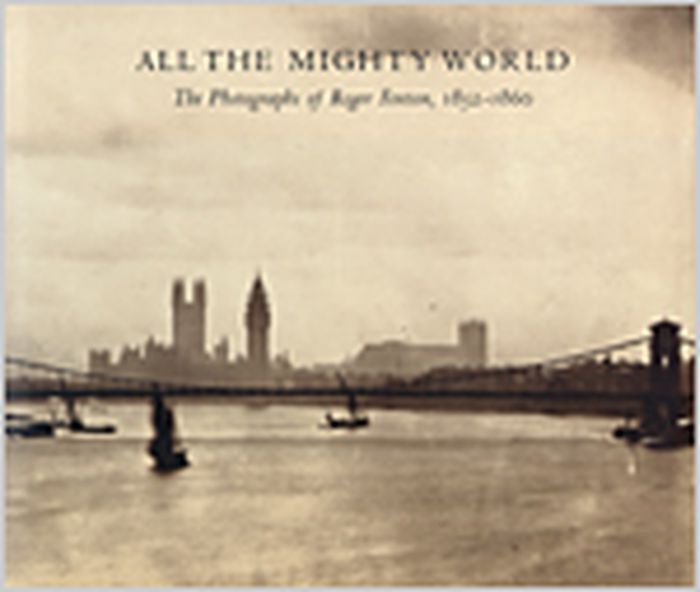
Roger Fenton (1819-1869) was England’s most celebrated and influential photographer during the 1850s, the “golden age” of this radically new medium. Fenton’s majestic pictures of cathedrals, country houses, and varied countryside were without peer in England--as were his views of the royal castles and Houses of Parliament that embodied Britain’s power. But Fenton’s choice of subjects ranged more widely still: he was among the first to photograph the Kremlin and other landmarks of Moscow and Kiev; he was commissioned in 1855 to document the Crimean War, producing early war photographs; and he created theatrical Orientalist costume pictures and a startling series of lush still lifes. Fenton had first studied law and painting, but soon after he took up the camera he was making photographs that were technically superb and highly original in their handling of composition, perspective, atmosphere, and light. Always he strove to demonstrate that photography could equal the art of painting and even surpass it. He was the force behind the founding of the Photographic Society (later the Royal Photographic Society), which worked to advance the profession and encouraged the exhibition of members’ works throughout Britain. In a career of a single decade, Fenton did much to transform photography into a medium of powerful expression and visual delight. This exquisitely produced book--the first comprehensive publication on Fenton in almost twenty years--presents eighty-five of the artist’s finest photographs and discusses every aspect of his work and his remarkable career. This catalogue accompanies an exhibition on view at the National Gallery of Art, Washington, D.C. (October 17, 2004, to January 2, 2005); the J. Paul Getty Museum, Los Angeles (February 1 to April 25, 2005); The Metropolitan Museum of Art, New York (May 16 to August 14, 2005); and Tate Britain, London (September 25, 2005, to January 2, 2006).
All the mighty world : the photographs of Roger Fenton, 1852-1860
Actions:
Prix:
$90.95
(disponible en magasin)
Résumé:
Roger Fenton (1819-1869) was England’s most celebrated and influential photographer during the 1850s, the “golden age” of this radically new medium. Fenton’s majestic pictures of cathedrals, country houses, and varied countryside were without peer in England--as were his views of the royal castles and Houses of Parliament that embodied Britain’s power. But Fenton’s choice of subjects ranged more widely still: he was among the first to photograph the Kremlin and other landmarks of Moscow and Kiev; he was commissioned in 1855 to document the Crimean War, producing early war photographs; and he created theatrical Orientalist costume pictures and a startling series of lush still lifes. Fenton had first studied law and painting, but soon after he took up the camera he was making photographs that were technically superb and highly original in their handling of composition, perspective, atmosphere, and light. Always he strove to demonstrate that photography could equal the art of painting and even surpass it. He was the force behind the founding of the Photographic Society (later the Royal Photographic Society), which worked to advance the profession and encouraged the exhibition of members’ works throughout Britain. In a career of a single decade, Fenton did much to transform photography into a medium of powerful expression and visual delight. This exquisitely produced book--the first comprehensive publication on Fenton in almost twenty years--presents eighty-five of the artist’s finest photographs and discusses every aspect of his work and his remarkable career. This catalogue accompanies an exhibition on view at the National Gallery of Art, Washington, D.C. (October 17, 2004, to January 2, 2005); the J. Paul Getty Museum, Los Angeles (February 1 to April 25, 2005); The Metropolitan Museum of Art, New York (May 16 to August 14, 2005); and Tate Britain, London (September 25, 2005, to January 2, 2006).
Classification:
livres
livres
Publication:
novembre 2004, New Haven, London
novembre 2004, New Haven, London
Sujet:
Monographies photo
Monographies photo
Classification:
livres
livres
Actions:
Prix:
$39.95
(disponible sur commande)
Résumé:
In "The Geography of Nowhere", James Howard Kunstler declared suburbia "a tragic landscape of cartoon architecture, junked cities, and ravaged countryside" and put himself at the heart of a fierce debate over how we will live in twenty-first century America. Now, Kunstler turns his eye on urban life both in America and across the world. From classical Rome to the(...)
$39.95
(disponible sur commande)
Résumé:
In "The Geography of Nowhere", James Howard Kunstler declared suburbia "a tragic landscape of cartoon architecture, junked cities, and ravaged countryside" and put himself at the heart of a fierce debate over how we will live in twenty-first century America. Now, Kunstler turns his eye on urban life both in America and across the world. From classical Rome to the(...)
Titre:
The city in mind : notes on the urban condition
Actions:
Prix:
$39.95
(disponible sur commande)
Résumé:
In "The Geography of Nowhere", James Howard Kunstler declared suburbia "a tragic landscape of cartoon architecture, junked cities, and ravaged countryside" and put himself at the heart of a fierce debate over how we will live in twenty-first century America. Now, Kunstler turns his eye on urban life both in America and across the world. From classical Rome to the "gigantic hairball" of contemporary Atlanta, he offers a far-reaching discourse on the history and current state of urban life. "The City in Mind" tells the story of urban design and how the architectural makeup of a city directly influences its culture as well as its success. From the ingenious architectural design of Louis-Napoleon's renovation of Paris to the bloody collision of cultures that occurred when Cortés conquered the Aztec capital Tenochtitlan, from the grandiose architectural schemes of Hitler and Albert Speer to the meanings behind the ludicrous spectacle of Las Vegas, Kunstler opens up a new dialogue on the development and effects of urban construction. In his investigations, he discovers American communities in the Sunbelt and Southwest alienated from each other and themselves, Northeastern cities caught between their initial civic construction and our current car-obsessed society, and a disparate Europe with its mix of pre-industrial creativity, and war-marked reminders of the twentieth century. Expanding on ideas first discussed in Jane Jacobs' seminal work, "The Death and Life of Great American Cities", Kunstler looks to Europe to discover what is constant and enduring in cities at their greatest, and at the same time, how a city's design can be directly linked to its decline. In these excursions he finds the reasons that America got lost in its suburban wilderness and locates the pathways in culture that might lead to a civic revival here. Kunstler's examination of these cities is at once a concise history of their urban lives and a detailed criticism of how those histories have either aided or hindered the social and civil progress of the cities' occupants. By turns dramatic and comic, and always authoritative, "The City in Mind", is an exceptional glimpse into the urban condition.
The city in mind : notes on the urban condition
Actions:
Prix:
$39.95
(disponible sur commande)
Résumé:
In "The Geography of Nowhere", James Howard Kunstler declared suburbia "a tragic landscape of cartoon architecture, junked cities, and ravaged countryside" and put himself at the heart of a fierce debate over how we will live in twenty-first century America. Now, Kunstler turns his eye on urban life both in America and across the world. From classical Rome to the "gigantic hairball" of contemporary Atlanta, he offers a far-reaching discourse on the history and current state of urban life. "The City in Mind" tells the story of urban design and how the architectural makeup of a city directly influences its culture as well as its success. From the ingenious architectural design of Louis-Napoleon's renovation of Paris to the bloody collision of cultures that occurred when Cortés conquered the Aztec capital Tenochtitlan, from the grandiose architectural schemes of Hitler and Albert Speer to the meanings behind the ludicrous spectacle of Las Vegas, Kunstler opens up a new dialogue on the development and effects of urban construction. In his investigations, he discovers American communities in the Sunbelt and Southwest alienated from each other and themselves, Northeastern cities caught between their initial civic construction and our current car-obsessed society, and a disparate Europe with its mix of pre-industrial creativity, and war-marked reminders of the twentieth century. Expanding on ideas first discussed in Jane Jacobs' seminal work, "The Death and Life of Great American Cities", Kunstler looks to Europe to discover what is constant and enduring in cities at their greatest, and at the same time, how a city's design can be directly linked to its decline. In these excursions he finds the reasons that America got lost in its suburban wilderness and locates the pathways in culture that might lead to a civic revival here. Kunstler's examination of these cities is at once a concise history of their urban lives and a detailed criticism of how those histories have either aided or hindered the social and civil progress of the cities' occupants. By turns dramatic and comic, and always authoritative, "The City in Mind", is an exceptional glimpse into the urban condition.
Classification:
livres
livres
Publication:
janvier 2002, New York
janvier 2002, New York
Sujet:
Théorie de l’urbanisme
Théorie de l’urbanisme


