


505 Résultats
Classification:
livres
livres
Actions:
Prix:
$139.95
(disponible sur commande)
Résumé:
Based in Barcelona, Harquitectes was established in 2000 and has since become internationally acclaimed. This issue looks at the Catalonian firm’s past decade of work and features detailed profiles of no less than 20 projects, plus an extensive conversation with the architects and an essay by Philip Ursprung. Many houses are included among the selection of recent(...)
$139.95
(disponible sur commande)
Résumé:
Based in Barcelona, Harquitectes was established in 2000 and has since become internationally acclaimed. This issue looks at the Catalonian firm’s past decade of work and features detailed profiles of no less than 20 projects, plus an extensive conversation with the architects and an essay by Philip Ursprung. Many houses are included among the selection of recent(...)
Titre:
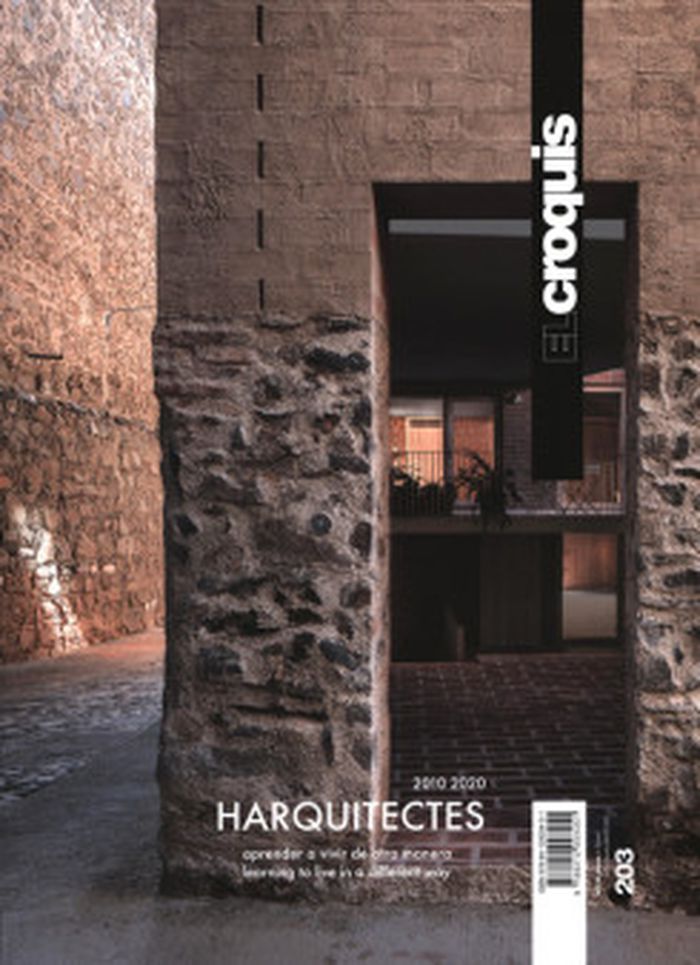
El Croquis 203: Harquitectes (2010-2020)
Actions:
Prix:
$139.95
(disponible sur commande)
Résumé:
Based in Barcelona, Harquitectes was established in 2000 and has since become internationally acclaimed. This issue looks at the Catalonian firm’s past decade of work and features detailed profiles of no less than 20 projects, plus an extensive conversation with the architects and an essay by Philip Ursprung. Many houses are included among the selection of recent projects, along with a student residence at the Vallès School of Architecture, Mas Geli Winery, New Barcelona Central Archives, ICTA-ICP Research Centre at UAB, social housing in Gavá, and the La Lleialtat Santsenca Civic Centre, plus renovation projects that include private homes and a theatre rehabilitation.
El Croquis 203: Harquitectes (2010-2020)
Actions:
Prix:
$139.95
(disponible sur commande)
Résumé:
Based in Barcelona, Harquitectes was established in 2000 and has since become internationally acclaimed. This issue looks at the Catalonian firm’s past decade of work and features detailed profiles of no less than 20 projects, plus an extensive conversation with the architects and an essay by Philip Ursprung. Many houses are included among the selection of recent projects, along with a student residence at the Vallès School of Architecture, Mas Geli Winery, New Barcelona Central Archives, ICTA-ICP Research Centre at UAB, social housing in Gavá, and the La Lleialtat Santsenca Civic Centre, plus renovation projects that include private homes and a theatre rehabilitation.
Classification:
livres
livres
Publication:
juin 2020
juin 2020
Sujet:
El Croquis
El Croquis
Classification:
périodiques
périodiques
Actions:
Prix:
$80.00
(disponible en magasin)
Résumé:
This new monograph from TC Cuadernos brings us closer to the recent work of Portuguese architect Nuno Brandão Costa, one of the most interesting contemporary voices in Portuguese architecture. This publication follows issue 90, which we released in 2009 featuring his early works, and now covers a period of intense creative activity and professional consolidation from 2010(...)
$80.00
(disponible en magasin)
Résumé:
This new monograph from TC Cuadernos brings us closer to the recent work of Portuguese architect Nuno Brandão Costa, one of the most interesting contemporary voices in Portuguese architecture. This publication follows issue 90, which we released in 2009 featuring his early works, and now covers a period of intense creative activity and professional consolidation from 2010(...)
Titre:
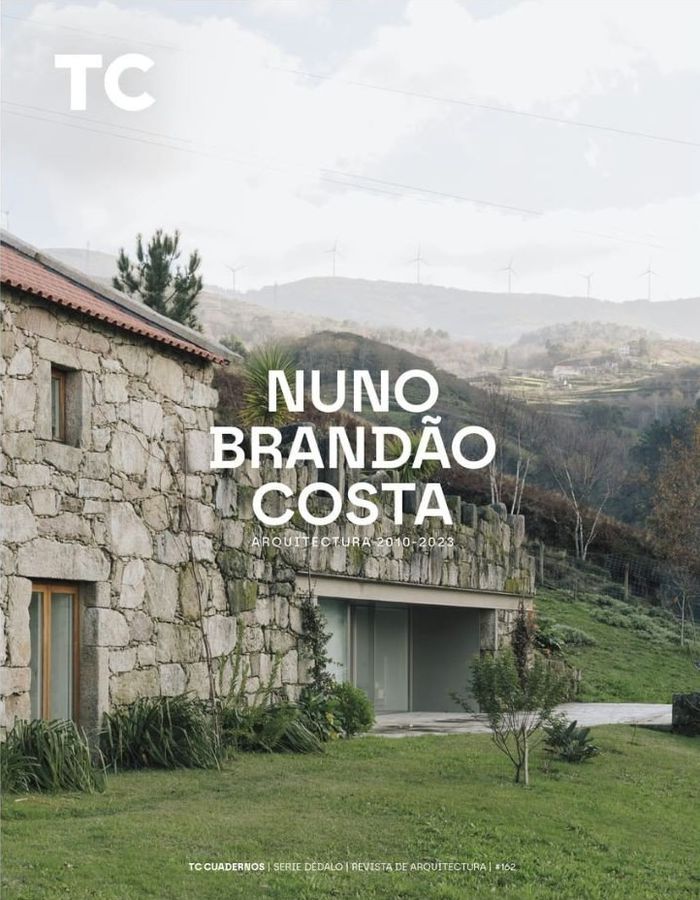
TC 162: Nuno Brandão. Architecture 2010-2023
Actions:
Prix:
$80.00
(disponible en magasin)
Résumé:
This new monograph from TC Cuadernos brings us closer to the recent work of Portuguese architect Nuno Brandão Costa, one of the most interesting contemporary voices in Portuguese architecture. This publication follows issue 90, which we released in 2009 featuring his early works, and now covers a period of intense creative activity and professional consolidation from 2010 to 2023. It is a meticulous journey through fifteen selected works that demonstrate the maturity reached by this architect over the last decade. The works span various typologies and scales, from single-family homes to large complexes. Projects such as the Campanhã Intermodal Terminal and the rehabilitation of the S. João de Deus neighborhood are studied with special attention, showing how Brandão Costa has expanded his field of action towards large-scale urban projects without losing the artisanal quality of the details that characterize his most intimate residential interventions. In all cases, his conceptual coherence, the harmonious relationship of his works with the landscape, and especially the masterful use of elementary geometries, refined volumes, and care for constructive details stand out.
TC 162: Nuno Brandão. Architecture 2010-2023
Actions:
Prix:
$80.00
(disponible en magasin)
Résumé:
This new monograph from TC Cuadernos brings us closer to the recent work of Portuguese architect Nuno Brandão Costa, one of the most interesting contemporary voices in Portuguese architecture. This publication follows issue 90, which we released in 2009 featuring his early works, and now covers a period of intense creative activity and professional consolidation from 2010 to 2023. It is a meticulous journey through fifteen selected works that demonstrate the maturity reached by this architect over the last decade. The works span various typologies and scales, from single-family homes to large complexes. Projects such as the Campanhã Intermodal Terminal and the rehabilitation of the S. João de Deus neighborhood are studied with special attention, showing how Brandão Costa has expanded his field of action towards large-scale urban projects without losing the artisanal quality of the details that characterize his most intimate residential interventions. In all cases, his conceptual coherence, the harmonious relationship of his works with the landscape, and especially the masterful use of elementary geometries, refined volumes, and care for constructive details stand out.
Classification:
périodiques
périodiques
Publication:
décembre 2023
décembre 2023
Sujet:
Architecture, monographies
Architecture, monographies
Classification:
livres
livres
Titre:
John Lehr: The last things
John Lehr: The last things
Actions:
Prix:
$168.95
(disponible en magasin)
Résumé:
"The last things" explores the artifacts of an American archeological present. The work in this series depicts vernacular forms of architecture, signage, images, and objects that were hastily made in a rush for attention, or abandoned in place after their usefulness had expired. Lehr posits them as symptomatic symbols of the repetitive cycles of decline, rehabilitation,(...)
$168.95
(disponible en magasin)
Résumé:
"The last things" explores the artifacts of an American archeological present. The work in this series depicts vernacular forms of architecture, signage, images, and objects that were hastily made in a rush for attention, or abandoned in place after their usefulness had expired. Lehr posits them as symptomatic symbols of the repetitive cycles of decline, rehabilitation,(...)
Titre:
John Lehr: The last things
Actions:
Prix:
$168.95
(disponible en magasin)
Résumé:
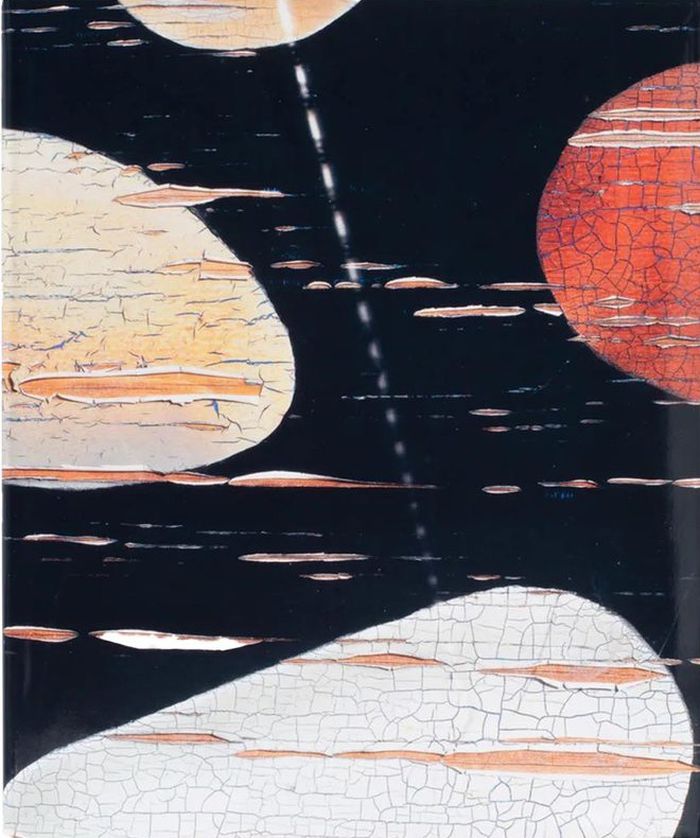
"The last things" explores the artifacts of an American archeological present. The work in this series depicts vernacular forms of architecture, signage, images, and objects that were hastily made in a rush for attention, or abandoned in place after their usefulness had expired. Lehr posits them as symptomatic symbols of the repetitive cycles of decline, rehabilitation, violence, and mourning that are woven into the fabric of contemporary American life. These light-drenched photographs vividly describe a nation speaking through the language of capitalism. Words and images repeat and contradict throughout the work, reflecting emphatic pleas and shifting priorities. At other times, language breaks down completely, giving way to pictographic forms that are both primitive and utterly contemporary. Flaking paint morphs into JPEG vinyl printouts and LED displays, blurring the line between commercial speech and individual expression. Embedded in the work is a belief in the power and absurdity of objects that—like a body—bear the traces of collective experience. In its distilled and emphatic sequencing "The last things" reads as a prose poem and a cryptic cipher about a country at the brink of a tipping point.
John Lehr: The last things
Actions:
Prix:
$168.95
(disponible en magasin)
Résumé:
"The last things" explores the artifacts of an American archeological present. The work in this series depicts vernacular forms of architecture, signage, images, and objects that were hastily made in a rush for attention, or abandoned in place after their usefulness had expired. Lehr posits them as symptomatic symbols of the repetitive cycles of decline, rehabilitation, violence, and mourning that are woven into the fabric of contemporary American life. These light-drenched photographs vividly describe a nation speaking through the language of capitalism. Words and images repeat and contradict throughout the work, reflecting emphatic pleas and shifting priorities. At other times, language breaks down completely, giving way to pictographic forms that are both primitive and utterly contemporary. Flaking paint morphs into JPEG vinyl printouts and LED displays, blurring the line between commercial speech and individual expression. Embedded in the work is a belief in the power and absurdity of objects that—like a body—bear the traces of collective experience. In its distilled and emphatic sequencing "The last things" reads as a prose poem and a cryptic cipher about a country at the brink of a tipping point.
Classification:
livres
livres
Publication:
novembre 2024
novembre 2024
Sujet:
Monographies photo
Monographies photo
Classification:
livres
livres
Titre:
Magasin 1986-2006
Magasin 1986-2006
Actions:
Prix:
$78.00
(disponible sur commande)
Résumé:
L'ouvrage réunit une documentation exhaustive sur la programmation des trois directeurs successifs du centre d'art contemporain Le Magasin, avec la participation des interventions de V.Acconci, R. Barry, J. Beuys, S. Fleury, L. Gillick & P. Parreno, M. Kelley, S. Lewitt, R. Prince, J. Shaw, X. Veilhan, ... Recapitulative publication about Le Magasin, Centre National(...)
$78.00
(disponible sur commande)
Résumé:
L'ouvrage réunit une documentation exhaustive sur la programmation des trois directeurs successifs du centre d'art contemporain Le Magasin, avec la participation des interventions de V.Acconci, R. Barry, J. Beuys, S. Fleury, L. Gillick & P. Parreno, M. Kelley, S. Lewitt, R. Prince, J. Shaw, X. Veilhan, ... Recapitulative publication about Le Magasin, Centre National(...)
Publication:
avril 2006, Zürich / Grenoble
avril 2006, Zürich / Grenoble
Titre:
Magasin 1986-2006
Actions:
Prix:
$78.00
(disponible sur commande)
Résumé:
L'ouvrage réunit une documentation exhaustive sur la programmation des trois directeurs successifs du centre d'art contemporain Le Magasin, avec la participation des interventions de V.Acconci, R. Barry, J. Beuys, S. Fleury, L. Gillick & P. Parreno, M. Kelley, S. Lewitt, R. Prince, J. Shaw, X. Veilhan, ... Recapitulative publication about Le Magasin, Centre National d’Art Contemporain de Grenoble. Considered, since its opening in 1986, a model rehabilitation of an abandoned industrial site for contemporary art, Le Magasin of Grenoble is emerging from a period of renovation. For its reopening, the center wished to publish an assessment of its activity. The book reunites exhaustive documentation on the programming of the three successive directors, and chose to highlight certain projects, for the most part never published, of artists such as Vito Acconci, John Baldessari, Robert Barry, Joseph Beuys, Alighiero Boetti, Monica Bonvicini, Daniel Buren, Chen Zhen, Sylvie Fleury, Liam Gillick & Philippe Parreno, Jack Goldstein, Dominique Gonzalez-Foerster, the GRAV, Jim Isermann, Ilya Kabakov, Mike Kelley, Barbara Kruger, Sol LeWitt, Richard Long, Matt Mullican, Richard Prince, Thomas Ruff, Allen Ruppersberg, Jim Shaw, Philippe Thomas, Xavier Veilhan, Lawrence Weiner, etc. Auteurs / authors : Paul Ardenne, Lionel Bovier, Laura Cottingham, Paul McCarthy, Stéphanie Moisdon Trembley, Frank Perrin, Eric Troncy.
Magasin 1986-2006
Actions:
Prix:
$78.00
(disponible sur commande)
Résumé:
L'ouvrage réunit une documentation exhaustive sur la programmation des trois directeurs successifs du centre d'art contemporain Le Magasin, avec la participation des interventions de V.Acconci, R. Barry, J. Beuys, S. Fleury, L. Gillick & P. Parreno, M. Kelley, S. Lewitt, R. Prince, J. Shaw, X. Veilhan, ... Recapitulative publication about Le Magasin, Centre National d’Art Contemporain de Grenoble. Considered, since its opening in 1986, a model rehabilitation of an abandoned industrial site for contemporary art, Le Magasin of Grenoble is emerging from a period of renovation. For its reopening, the center wished to publish an assessment of its activity. The book reunites exhaustive documentation on the programming of the three successive directors, and chose to highlight certain projects, for the most part never published, of artists such as Vito Acconci, John Baldessari, Robert Barry, Joseph Beuys, Alighiero Boetti, Monica Bonvicini, Daniel Buren, Chen Zhen, Sylvie Fleury, Liam Gillick & Philippe Parreno, Jack Goldstein, Dominique Gonzalez-Foerster, the GRAV, Jim Isermann, Ilya Kabakov, Mike Kelley, Barbara Kruger, Sol LeWitt, Richard Long, Matt Mullican, Richard Prince, Thomas Ruff, Allen Ruppersberg, Jim Shaw, Philippe Thomas, Xavier Veilhan, Lawrence Weiner, etc. Auteurs / authors : Paul Ardenne, Lionel Bovier, Laura Cottingham, Paul McCarthy, Stéphanie Moisdon Trembley, Frank Perrin, Eric Troncy.
Classification:
livres
livres
Publication:
avril 2006, Zürich / Grenoble
avril 2006, Zürich / Grenoble
Classification:
livres
livres
Titre:
Around
Around
Actions:
Prix:
$44.95
(disponible sur commande)
Résumé:
This book addresses the status of the periphery and of the peripheric -the state of being around something- as an antiquated space, a space fallen into disuse or discredit, where all defunct fashions are absorbed, and takes it as a starting point for revising the idea in which a recently acquired historical perspective plays an essential role. That as a common place, the(...)
$44.95
(disponible sur commande)
Résumé:
This book addresses the status of the periphery and of the peripheric -the state of being around something- as an antiquated space, a space fallen into disuse or discredit, where all defunct fashions are absorbed, and takes it as a starting point for revising the idea in which a recently acquired historical perspective plays an essential role. That as a common place, the(...)
Titre:
Around
Actions:
Prix:
$44.95
(disponible sur commande)
Résumé:
This book addresses the status of the periphery and of the peripheric -the state of being around something- as an antiquated space, a space fallen into disuse or discredit, where all defunct fashions are absorbed, and takes it as a starting point for revising the idea in which a recently acquired historical perspective plays an essential role. That as a common place, the periphery belongs to the past is an advantage which, along with the interventions making up this book, we intend to make good use of. The first part of this book, "Prepositions: A Journey to the Periphery", attempts to juxtapose examples of architectural and photographic interventions that have contributed, and contribute, to turning the periphery into an easily identifiable spatial signifier, and likewise to propose a rereading of these spaces which permits us to decipher their more or less diverse yearnings, utopias and social spaces. In all these interventions the periphery is always comparable to a concrete geographical reality to which one directs oneself, towards which one travels, with the aim of appropriating it, of defining it. This always involves the same preposition: around. The second part, "Propositions: The Journey of the Periphery", will be taken up with the rehabilitation or reutilization of the concept of the periphery. Once the concept of the periphery is considered as being obsolete, it is possible -and this is the chief theoretical contribution of this project- to recycle it, to convert the preposition "around" into a theoretical proposition that gives a number of new twists to the concept and explores its possibilities. The projects and photos included in this second part reflect a fundamental change in the perception of the periphery. The periphery escapes its geographical location and occupies the city's historic center, rural/natural surroundings, technological fantasies, the social utopias of postmodernity, etc. The periphery ceases to mean "around" as a physical location and becomes an invitation to reflection "around" the periphery as both concept and possibility. This doesn't so much mean a colonizing journey to the periphery, as in the first part, as a journey of the periphery to places where it was proscribed until quite recently. The periphery turns out to mean a mobile discourse that uses the common places of the classical periphery in order to dislodge and deterritorialize these.
Around
Actions:
Prix:
$44.95
(disponible sur commande)
Résumé:
This book addresses the status of the periphery and of the peripheric -the state of being around something- as an antiquated space, a space fallen into disuse or discredit, where all defunct fashions are absorbed, and takes it as a starting point for revising the idea in which a recently acquired historical perspective plays an essential role. That as a common place, the periphery belongs to the past is an advantage which, along with the interventions making up this book, we intend to make good use of. The first part of this book, "Prepositions: A Journey to the Periphery", attempts to juxtapose examples of architectural and photographic interventions that have contributed, and contribute, to turning the periphery into an easily identifiable spatial signifier, and likewise to propose a rereading of these spaces which permits us to decipher their more or less diverse yearnings, utopias and social spaces. In all these interventions the periphery is always comparable to a concrete geographical reality to which one directs oneself, towards which one travels, with the aim of appropriating it, of defining it. This always involves the same preposition: around. The second part, "Propositions: The Journey of the Periphery", will be taken up with the rehabilitation or reutilization of the concept of the periphery. Once the concept of the periphery is considered as being obsolete, it is possible -and this is the chief theoretical contribution of this project- to recycle it, to convert the preposition "around" into a theoretical proposition that gives a number of new twists to the concept and explores its possibilities. The projects and photos included in this second part reflect a fundamental change in the perception of the periphery. The periphery escapes its geographical location and occupies the city's historic center, rural/natural surroundings, technological fantasies, the social utopias of postmodernity, etc. The periphery ceases to mean "around" as a physical location and becomes an invitation to reflection "around" the periphery as both concept and possibility. This doesn't so much mean a colonizing journey to the periphery, as in the first part, as a journey of the periphery to places where it was proscribed until quite recently. The periphery turns out to mean a mobile discourse that uses the common places of the classical periphery in order to dislodge and deterritorialize these.
Classification:
livres
livres
Publication:
avril 2003, Barcelona
avril 2003, Barcelona
Sujet:
Théorie de l’urbanisme
Théorie de l’urbanisme


