


5194 Résultats
Classification:
livres
livres
Titre:
Mitch Epstein : work
Mitch Epstein : work
Actions:
Prix:
$60.00
(disponible sur commande)
Résumé:
Widely acknowledged as one of the world’s most distinguished art photographers, here, for the first time, Epstein has gathered his photographs together into a book that presents the span of his career. "Mitch Epstein: Work" allows readers to trace the evolution of his formal and thematic concerns. We see how his aesthetic views, photographic tools, and politics have(...)
$60.00
(disponible sur commande)
Résumé:
Widely acknowledged as one of the world’s most distinguished art photographers, here, for the first time, Epstein has gathered his photographs together into a book that presents the span of his career. "Mitch Epstein: Work" allows readers to trace the evolution of his formal and thematic concerns. We see how his aesthetic views, photographic tools, and politics have(...)
Titre:
Mitch Epstein : work
Actions:
Prix:
$60.00
(disponible sur commande)
Résumé:
Widely acknowledged as one of the world’s most distinguished art photographers, here, for the first time, Epstein has gathered his photographs together into a book that presents the span of his career. "Mitch Epstein: Work" allows readers to trace the evolution of his formal and thematic concerns. We see how his aesthetic views, photographic tools, and politics have transformed and influenced one another over time. This book offers a look at each of Epstein’s major projects — “Common Practice” (1973-89); “Vietnam” (1992-95); “The City” (1995-98); “Family Business” (2000-03), and his current, ongoing “American Power.” His early work on the theme of recreation is given its most natural yet unexpected configuration: images from the United States are mixed with those from other parts of the world. A short essay by the artist or an excerpt from his previously published writings orients each chapter. The book includes a DVD of his film, “Dad.” Many of the pictures here have never been seen before, let alone published. For Epstein fans and for those who would like an introduction to the artist’s work, this book is a necessary addition to their library.
Mitch Epstein : work
Actions:
Prix:
$60.00
(disponible sur commande)
Résumé:
Widely acknowledged as one of the world’s most distinguished art photographers, here, for the first time, Epstein has gathered his photographs together into a book that presents the span of his career. "Mitch Epstein: Work" allows readers to trace the evolution of his formal and thematic concerns. We see how his aesthetic views, photographic tools, and politics have transformed and influenced one another over time. This book offers a look at each of Epstein’s major projects — “Common Practice” (1973-89); “Vietnam” (1992-95); “The City” (1995-98); “Family Business” (2000-03), and his current, ongoing “American Power.” His early work on the theme of recreation is given its most natural yet unexpected configuration: images from the United States are mixed with those from other parts of the world. A short essay by the artist or an excerpt from his previously published writings orients each chapter. The book includes a DVD of his film, “Dad.” Many of the pictures here have never been seen before, let alone published. For Epstein fans and for those who would like an introduction to the artist’s work, this book is a necessary addition to their library.
Classification:
livres
livres
Publication:
novembre 2006, Göttingen
novembre 2006, Göttingen
Sujet:
Monographies photo
Monographies photo
Classification:
livres
livres
Titre:
Cartographic cinema
Cartographic cinema
Actions:
Prix:
$31.50
(disponible sur commande)
Résumé:
Cartography and cinema are what might be called locational machinery. Maps and movies tell their viewers where they are situated, what they are doing, and, to a strong degree, who they are. In this work,scholar Tom Conley establishes the ideological power of maps in classic, contemporary, and avant-garde cinema to shape the imaginary and mediated relations we hold with(...)
$31.50
(disponible sur commande)
Résumé:
Cartography and cinema are what might be called locational machinery. Maps and movies tell their viewers where they are situated, what they are doing, and, to a strong degree, who they are. In this work,scholar Tom Conley establishes the ideological power of maps in classic, contemporary, and avant-garde cinema to shape the imaginary and mediated relations we hold with(...)
Titre:
Cartographic cinema
Actions:
Prix:
$31.50
(disponible sur commande)
Résumé:
Cartography and cinema are what might be called locational machinery. Maps and movies tell their viewers where they are situated, what they are doing, and, to a strong degree, who they are. In this work,scholar Tom Conley establishes the ideological power of maps in classic, contemporary, and avant-garde cinema to shape the imaginary and mediated relations we hold with the world. "Cartographic cinema" examines the affinities of maps and movies through comparative theory and close analysis of films from the silent era to the French New Wave to Hollywood blockbusters. In doing so, Conley reveals that most of the movies we see contain maps of various kinds and almost invariably constitute a projective apparatus similar to cartography. In addition, he demonstrates that spatial signs in film foster a critical relation with the prevailing narrative and mimetic registers of cinema. Conley convincingly argues that the very act of watching films, and cinema itself, is actually a form of cartography. Unlike its function in an atlas, a map in a movie often causes the spectator to entertain broader questions—not only about cinema but also of the nature of space and being.
Cartographic cinema
Actions:
Prix:
$31.50
(disponible sur commande)
Résumé:
Cartography and cinema are what might be called locational machinery. Maps and movies tell their viewers where they are situated, what they are doing, and, to a strong degree, who they are. In this work,scholar Tom Conley establishes the ideological power of maps in classic, contemporary, and avant-garde cinema to shape the imaginary and mediated relations we hold with the world. "Cartographic cinema" examines the affinities of maps and movies through comparative theory and close analysis of films from the silent era to the French New Wave to Hollywood blockbusters. In doing so, Conley reveals that most of the movies we see contain maps of various kinds and almost invariably constitute a projective apparatus similar to cartography. In addition, he demonstrates that spatial signs in film foster a critical relation with the prevailing narrative and mimetic registers of cinema. Conley convincingly argues that the very act of watching films, and cinema itself, is actually a form of cartography. Unlike its function in an atlas, a map in a movie often causes the spectator to entertain broader questions—not only about cinema but also of the nature of space and being.
Classification:
livres
livres
Publication:
décembre 2006, Minneapolis, London
décembre 2006, Minneapolis, London
Sujet:
Théorie de l’architecture
Théorie de l’architecture
Classification:
livres
livres
Actions:
Prix:
$108.75
(disponible sur commande)
Résumé:
For those who have ever wondered why we have trees in cities or what makes the layout of cities like Paris and Amsterdam seem so memorable, "City trees: a historical geography from the Renaissance through the nineteenth century" by Henry W. Lawrence provides a comprehensive guide to the history of trees in urban landscapes. Covering four centuries of development in the(...)
$108.75
(disponible sur commande)
Résumé:
For those who have ever wondered why we have trees in cities or what makes the layout of cities like Paris and Amsterdam seem so memorable, "City trees: a historical geography from the Renaissance through the nineteenth century" by Henry W. Lawrence provides a comprehensive guide to the history of trees in urban landscapes. Covering four centuries of development in the(...)
Titre:
City Trees : a historical geography from the Renaissance through the nineteenth century
Actions:
Prix:
$108.75
(disponible sur commande)
Résumé:
For those who have ever wondered why we have trees in cities or what makes the layout of cities like Paris and Amsterdam seem so memorable, "City trees: a historical geography from the Renaissance through the nineteenth century" by Henry W. Lawrence provides a comprehensive guide to the history of trees in urban landscapes. Covering four centuries of development in the cities of Europe and America, this book shows how trees became integral to urban landscapes by looking at the historical evolution of the spaces in which they were planted and how these spaces were used. Reflecting on the impact trees have had on what many consider to be the fundamental aspects of city life — people, buildings, social and economic activity — Lawrence draws on graphic materials, written descriptions, local histories, and archival research to provide a unique look at the treeís role in urban landscape history. Primarily concerned with aesthetics, power, and national traditions, Lawrence reflects on the differing impacts city trees have had on multiple aspects of culture, from their roles as symbols and their representation of economic prosperity to the differing ways nations planted their trees, which gradually blended into an international style of urban planting.
City Trees : a historical geography from the Renaissance through the nineteenth century
Actions:
Prix:
$108.75
(disponible sur commande)
Résumé:
For those who have ever wondered why we have trees in cities or what makes the layout of cities like Paris and Amsterdam seem so memorable, "City trees: a historical geography from the Renaissance through the nineteenth century" by Henry W. Lawrence provides a comprehensive guide to the history of trees in urban landscapes. Covering four centuries of development in the cities of Europe and America, this book shows how trees became integral to urban landscapes by looking at the historical evolution of the spaces in which they were planted and how these spaces were used. Reflecting on the impact trees have had on what many consider to be the fundamental aspects of city life — people, buildings, social and economic activity — Lawrence draws on graphic materials, written descriptions, local histories, and archival research to provide a unique look at the treeís role in urban landscape history. Primarily concerned with aesthetics, power, and national traditions, Lawrence reflects on the differing impacts city trees have had on multiple aspects of culture, from their roles as symbols and their representation of economic prosperity to the differing ways nations planted their trees, which gradually blended into an international style of urban planting.
Classification:
livres
livres
Publication:
juin 2006, Charlottesville, London
juin 2006, Charlottesville, London
Sujet:
Jardins
Jardins
Classification:
livres
livres
Actions:
Prix:
$81.50
(disponible sur commande)
Résumé:
From the swooping concrete vaults of the TWA Terminal at JFK Airport to the 630-foot-tall Gateway Arch in St. Louis, the iconic designs of Eero Saarinen (1910–1961) captured the aspirations and values of mid-20th-century America. Potent expressions of national power, these and other Saarinen-designed structures—including the GM Technical Center, Dulles International(...)
$81.50
(disponible sur commande)
Résumé:
From the swooping concrete vaults of the TWA Terminal at JFK Airport to the 630-foot-tall Gateway Arch in St. Louis, the iconic designs of Eero Saarinen (1910–1961) captured the aspirations and values of mid-20th-century America. Potent expressions of national power, these and other Saarinen-designed structures—including the GM Technical Center, Dulles International(...)
Sujet:
Architecture, monographies
Architecture, monographies
Publication:
novembre 2006, New Haven / London
novembre 2006, New Haven / London
Titre:
Eero Saarinen : shaping the future
Actions:
Prix:
$81.50
(disponible sur commande)
Résumé:
From the swooping concrete vaults of the TWA Terminal at JFK Airport to the 630-foot-tall Gateway Arch in St. Louis, the iconic designs of Eero Saarinen (1910–1961) captured the aspirations and values of mid-20th-century America. Potent expressions of national power, these and other Saarinen-designed structures—including the GM Technical Center, Dulles International Airport, and John Deere headquarters—helped create the international image of the United States in the decades following World War II. Eero Saarinen: Shaping the Future offers a new and wide-ranging look at the entire scope of Saarinen’s career. This is the first book on Saarinen to incorporate significant research and materials from the newly available archives of his office, and includes the most complete portfolio of Saarinen's projects to date—a chronological survey of more than 100 built and unbuilt works, previously unpublished photographs, plans, and working drawings. Lavishly illustrated, this major study shows how Saarinen gave his structures an expressive dimension and helped introduce modern architecture to the mainstream of American practice. In his search for a richer and more varied modern architecture, Saarinen become one of the most prolific and controversial practitioners of his time.
Eero Saarinen : shaping the future
Actions:
Prix:
$81.50
(disponible sur commande)
Résumé:
From the swooping concrete vaults of the TWA Terminal at JFK Airport to the 630-foot-tall Gateway Arch in St. Louis, the iconic designs of Eero Saarinen (1910–1961) captured the aspirations and values of mid-20th-century America. Potent expressions of national power, these and other Saarinen-designed structures—including the GM Technical Center, Dulles International Airport, and John Deere headquarters—helped create the international image of the United States in the decades following World War II. Eero Saarinen: Shaping the Future offers a new and wide-ranging look at the entire scope of Saarinen’s career. This is the first book on Saarinen to incorporate significant research and materials from the newly available archives of his office, and includes the most complete portfolio of Saarinen's projects to date—a chronological survey of more than 100 built and unbuilt works, previously unpublished photographs, plans, and working drawings. Lavishly illustrated, this major study shows how Saarinen gave his structures an expressive dimension and helped introduce modern architecture to the mainstream of American practice. In his search for a richer and more varied modern architecture, Saarinen become one of the most prolific and controversial practitioners of his time.
Classification:
livres
livres
Publication:
novembre 2006, New Haven / London
novembre 2006, New Haven / London
Sujet:
Architecture, monographies
Architecture, monographies
Classification:
livres
livres
Prix:
$26.95
(disponible sur commande)
Résumé:
This new edition of Mike Davis’s work gives an update on Los Angeles as the city hits the 21st century. No metropolis has been more loved or more hated. To its official boosters, “Los Angeles brings it all together.” To detractors, LA is a sunlit mortuary where “you can rot without feeling it.” To Mike Davis, the author of this wide-ranging work of social history, Los(...)
$26.95
(disponible sur commande)
Résumé:
This new edition of Mike Davis’s work gives an update on Los Angeles as the city hits the 21st century. No metropolis has been more loved or more hated. To its official boosters, “Los Angeles brings it all together.” To detractors, LA is a sunlit mortuary where “you can rot without feeling it.” To Mike Davis, the author of this wide-ranging work of social history, Los(...)
Titre:
City of quartz : excavating the future in Los Angeles, new edition
Actions:
Prix:
$26.95
(disponible sur commande)
Résumé:
This new edition of Mike Davis’s work gives an update on Los Angeles as the city hits the 21st century. No metropolis has been more loved or more hated. To its official boosters, “Los Angeles brings it all together.” To detractors, LA is a sunlit mortuary where “you can rot without feeling it.” To Mike Davis, the author of this wide-ranging work of social history, Los Angeles is both utopia and dystopia, a place where the last Joshua trees are being plowed under to make room for model communities in the desert, where the rich have hired their own police to fend off street gangs, as well as armed Beirut militias. In "City of quartz", Davis reconstructs LA’s shadow history and dissects its ethereal economy. He tells us who has the power and how they hold on to it. He gives us a city of Dickensian extremes, Pynchonesque conspiracies, and a desperation straight out of Nathaniel West—a city in which we may glimpse our own future mirrored with terrifying clarity. In this new edition, Davis provides an update on the city’s current status.
City of quartz : excavating the future in Los Angeles, new edition
Actions:
Prix:
$26.95
(disponible sur commande)
Résumé:
This new edition of Mike Davis’s work gives an update on Los Angeles as the city hits the 21st century. No metropolis has been more loved or more hated. To its official boosters, “Los Angeles brings it all together.” To detractors, LA is a sunlit mortuary where “you can rot without feeling it.” To Mike Davis, the author of this wide-ranging work of social history, Los Angeles is both utopia and dystopia, a place where the last Joshua trees are being plowed under to make room for model communities in the desert, where the rich have hired their own police to fend off street gangs, as well as armed Beirut militias. In "City of quartz", Davis reconstructs LA’s shadow history and dissects its ethereal economy. He tells us who has the power and how they hold on to it. He gives us a city of Dickensian extremes, Pynchonesque conspiracies, and a desperation straight out of Nathaniel West—a city in which we may glimpse our own future mirrored with terrifying clarity. In this new edition, Davis provides an update on the city’s current status.
Classification:
livres
livres
Publication:
septembre 2006, London, New York
septembre 2006, London, New York
Sujet:
Théorie de l’urbanisme
Théorie de l’urbanisme
Classification:
livres
livres

Prix:
$50.95
(disponible sur commande)
Résumé:
In this sweeping chronicle of guaraná—a glossy-leaved Amazonian vine packed with more caffeine than any other plant—Seth Garfield develops a wide-ranging approach to the history of Brazil itself. The story begins with guaraná as the pre-Columbian cultivar of the Sateré-Mawé people in the Lower Amazon region, where it figured centrally in the Indigenous nation's origin(...)
$50.95
(disponible sur commande)
Résumé:
In this sweeping chronicle of guaraná—a glossy-leaved Amazonian vine packed with more caffeine than any other plant—Seth Garfield develops a wide-ranging approach to the history of Brazil itself. The story begins with guaraná as the pre-Columbian cultivar of the Sateré-Mawé people in the Lower Amazon region, where it figured centrally in the Indigenous nation's origin(...)
Titre:
Guaraná: How Brazil Embraced the World's Most Caffeine-Rich Plant
Actions:
Prix:
$50.95
(disponible sur commande)
Résumé:
In this sweeping chronicle of guaraná—a glossy-leaved Amazonian vine packed with more caffeine than any other plant—Seth Garfield develops a wide-ranging approach to the history of Brazil itself. The story begins with guaraná as the pre-Columbian cultivar of the Sateré-Mawé people in the Lower Amazon region, where it figured centrally in the Indigenous nation's origin stories, dietary regimes, and communal ceremonies. During subsequent centuries of Portuguese colonialism and Brazilian rule, guaraná was reformulated by settlers, scientists, folklorists, food technologists, and marketers. Whether in search of pleasure, profits, professional distinction, or patriotic markers, promoters imparted new meanings to guaraná and found new uses for it. Today, it is the namesake ingredient of a multibillion-dollar soft drink industry and a beloved national symbol. Guaraná’s journey elucidates human impacts on Amazonian ecosystems; the circulation of knowledge, goods, and power; and the promise of modernity in Latin America's largest nation. For Garfield, the beverage's history reveals not only the structuring of inequalities in Brazil but also the mythmaking and ordering of social practices that constitute so-called traditional and modern societies.
Guaraná: How Brazil Embraced the World's Most Caffeine-Rich Plant
Actions:
Prix:
$50.95
(disponible sur commande)
Résumé:
In this sweeping chronicle of guaraná—a glossy-leaved Amazonian vine packed with more caffeine than any other plant—Seth Garfield develops a wide-ranging approach to the history of Brazil itself. The story begins with guaraná as the pre-Columbian cultivar of the Sateré-Mawé people in the Lower Amazon region, where it figured centrally in the Indigenous nation's origin stories, dietary regimes, and communal ceremonies. During subsequent centuries of Portuguese colonialism and Brazilian rule, guaraná was reformulated by settlers, scientists, folklorists, food technologists, and marketers. Whether in search of pleasure, profits, professional distinction, or patriotic markers, promoters imparted new meanings to guaraná and found new uses for it. Today, it is the namesake ingredient of a multibillion-dollar soft drink industry and a beloved national symbol. Guaraná’s journey elucidates human impacts on Amazonian ecosystems; the circulation of knowledge, goods, and power; and the promise of modernity in Latin America's largest nation. For Garfield, the beverage's history reveals not only the structuring of inequalities in Brazil but also the mythmaking and ordering of social practices that constitute so-called traditional and modern societies.
Classification:
livres
livres
Publication:
juillet 2025
juillet 2025
Sujet:
Bouffe
Bouffe
Classification:
livres
livres
Actions:
Prix:
$88.00
(disponible sur commande)
Résumé:
Architecture shapes both human and more-than-human worlds. Historically, it has served (and still does) as an instrument of power—creating, restricting, and distributing both control and access. Yet architecture also carries the potential for care and inclusivity, offering shelter, and fostering belonging. Shifting the focus from the designers and creators of the built(...)
$88.00
(disponible sur commande)
Résumé:
Architecture shapes both human and more-than-human worlds. Historically, it has served (and still does) as an instrument of power—creating, restricting, and distributing both control and access. Yet architecture also carries the potential for care and inclusivity, offering shelter, and fostering belonging. Shifting the focus from the designers and creators of the built(...)
Titre:
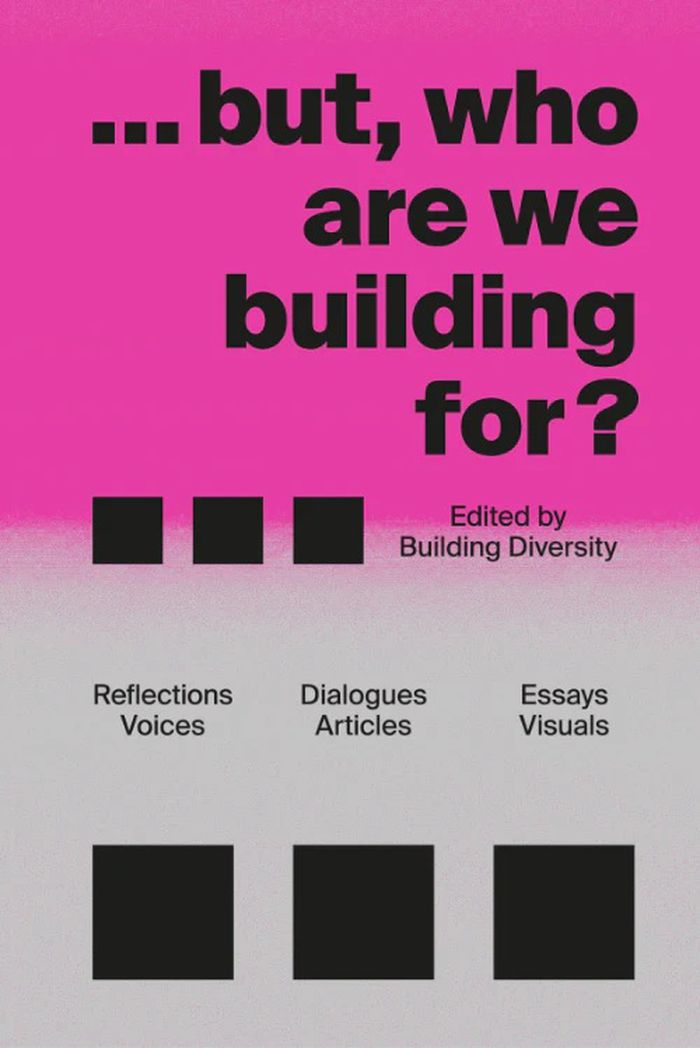
...but, who are we building for?
Actions:
Prix:
$88.00
(disponible sur commande)
Résumé:
Architecture shapes both human and more-than-human worlds. Historically, it has served (and still does) as an instrument of power—creating, restricting, and distributing both control and access. Yet architecture also carries the potential for care and inclusivity, offering shelter, and fostering belonging. Shifting the focus from the designers and creators of the built environment to its inhabitants, Building Diversity’s second publication offers a critical lens to explore for whom cities, buildings, spaces, and infrastructures are shaped for and with. The publication creates a space for diverse voices by bringing in different perspectives to highlight the complexities of the question: ... but, who are we building for? These multifaceted contributions spark curiosity and offer ideas and thoughts for further conversations and reflections. Building Diversity is a non-profit organisation based in Denmark, dedicated to foster diversity and inclusivity in the built environment. They believe that shaping architecture and design is a collective effort that thrives on diverse perspectives and inclusive collaborations. Building Diversity is powered by volunteers united by the vision of inclusive and equitable futures. With over 90 members from more than 40 nationalities, the community brings together a diverse group of perspectives.
...but, who are we building for?
Actions:
Prix:
$88.00
(disponible sur commande)
Résumé:
Architecture shapes both human and more-than-human worlds. Historically, it has served (and still does) as an instrument of power—creating, restricting, and distributing both control and access. Yet architecture also carries the potential for care and inclusivity, offering shelter, and fostering belonging. Shifting the focus from the designers and creators of the built environment to its inhabitants, Building Diversity’s second publication offers a critical lens to explore for whom cities, buildings, spaces, and infrastructures are shaped for and with. The publication creates a space for diverse voices by bringing in different perspectives to highlight the complexities of the question: ... but, who are we building for? These multifaceted contributions spark curiosity and offer ideas and thoughts for further conversations and reflections. Building Diversity is a non-profit organisation based in Denmark, dedicated to foster diversity and inclusivity in the built environment. They believe that shaping architecture and design is a collective effort that thrives on diverse perspectives and inclusive collaborations. Building Diversity is powered by volunteers united by the vision of inclusive and equitable futures. With over 90 members from more than 40 nationalities, the community brings together a diverse group of perspectives.
Classification:
livres
livres
Publication:
septembre 2025
septembre 2025
Sujet:
Architecture contemporaine
Architecture contemporaine
Classification:
livres
livres
Prix:
$21.99
(disponible en magasin)
Résumé:
Based on practical experiments, ''Unlearning with Translation'' posits the act of translation as a pedagogical tool, a political act, and ultimately a gesture of care in these tense cultural times. Written by French curator, writer, editor, and self-taught translatress Virginie Bobin, the essay revisits a series of workshops, exhibitions, and other collective activities(...)
$21.99
(disponible en magasin)
Résumé:
Based on practical experiments, ''Unlearning with Translation'' posits the act of translation as a pedagogical tool, a political act, and ultimately a gesture of care in these tense cultural times. Written by French curator, writer, editor, and self-taught translatress Virginie Bobin, the essay revisits a series of workshops, exhibitions, and other collective activities(...)
Titre:
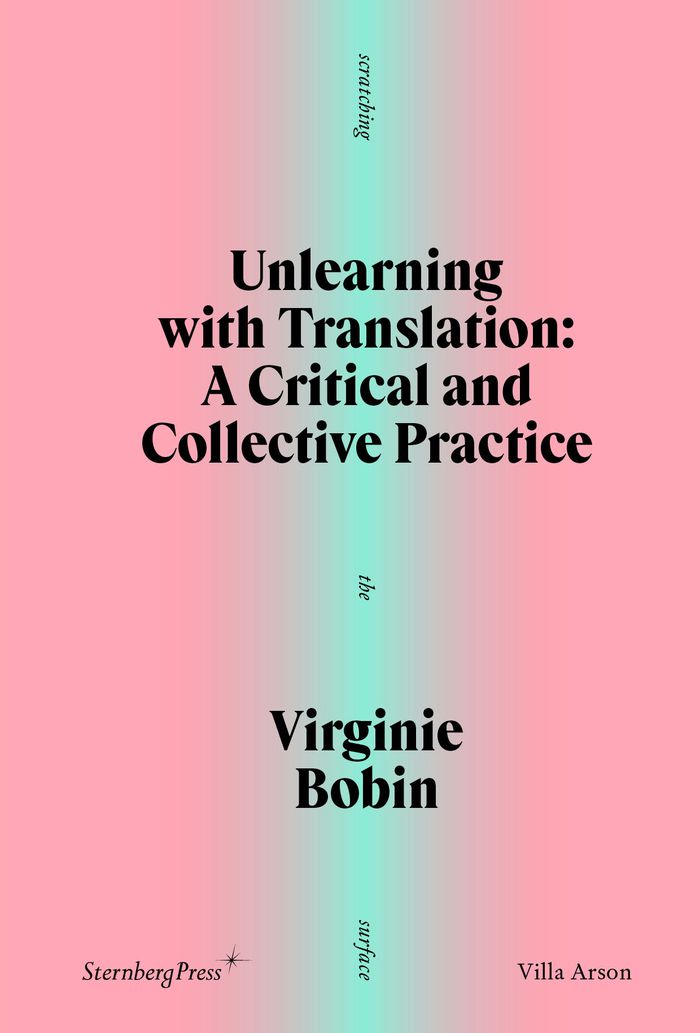
Unlearning with translation: A critical and collective practice
Actions:
Prix:
$21.99
(disponible en magasin)
Résumé:
Based on practical experiments, ''Unlearning with Translation'' posits the act of translation as a pedagogical tool, a political act, and ultimately a gesture of care in these tense cultural times. Written by French curator, writer, editor, and self-taught translatress Virginie Bobin, the essay revisits a series of workshops, exhibitions, and other collective activities that took translation as both subject and method to unsettle entrenched conceptions of language, identity, and belonging. In particular, the ambiguous notion of "untranslatability" is used as a lens through which to examine the power relations at play in those institutional, economic, and political contexts inhabited by art workers. Alongside collaborations with artists including Mercedes Azpilicueta, Serena Lee, and Mounira Al Solh, Bobin's reflections are grounded in her experience co-founding and facilitating the editorial and curatorial platform Qalqalah, which relies on translation as a tool for the production and publication of situated knowledge in three languages—French, Arabic, and English. Informed by feminist genealogies and methodologies throughout, the book maintains that collective labor and relations are key aspects of any critical practice, as exemplified in the concluding correspondence with Andrea Ancira.
Unlearning with translation: A critical and collective practice
Actions:
Prix:
$21.99
(disponible en magasin)
Résumé:
Based on practical experiments, ''Unlearning with Translation'' posits the act of translation as a pedagogical tool, a political act, and ultimately a gesture of care in these tense cultural times. Written by French curator, writer, editor, and self-taught translatress Virginie Bobin, the essay revisits a series of workshops, exhibitions, and other collective activities that took translation as both subject and method to unsettle entrenched conceptions of language, identity, and belonging. In particular, the ambiguous notion of "untranslatability" is used as a lens through which to examine the power relations at play in those institutional, economic, and political contexts inhabited by art workers. Alongside collaborations with artists including Mercedes Azpilicueta, Serena Lee, and Mounira Al Solh, Bobin's reflections are grounded in her experience co-founding and facilitating the editorial and curatorial platform Qalqalah, which relies on translation as a tool for the production and publication of situated knowledge in three languages—French, Arabic, and English. Informed by feminist genealogies and methodologies throughout, the book maintains that collective labor and relations are key aspects of any critical practice, as exemplified in the concluding correspondence with Andrea Ancira.
Classification:
livres
livres
Publication:
mars 2026
mars 2026
Sujet:
Muséologie
Muséologie
Classification:
livres
livres
Titre:
The Gothic Revival
The Gothic Revival
Actions:
Prix:
$22.99
(disponible sur commande)
Résumé:
‘The Gothic Revival’, writes Michael Lewis, ‘is more than a fashion craze for pointed arches and pinnacles. During its years of greatest influence, it subjected every aspect of art, belief, society, and labour to intense intellectual scrutiny, using the Middle Ages as a platform from which to judge the modern world.’ It is the unique merit of "The Gothic Revival"(...)
$22.99
(disponible sur commande)
Résumé:
‘The Gothic Revival’, writes Michael Lewis, ‘is more than a fashion craze for pointed arches and pinnacles. During its years of greatest influence, it subjected every aspect of art, belief, society, and labour to intense intellectual scrutiny, using the Middle Ages as a platform from which to judge the modern world.’ It is the unique merit of "The Gothic Revival"(...)
Titre:
The Gothic Revival
Actions:
Prix:
$22.99
(disponible sur commande)
Résumé:
‘The Gothic Revival’, writes Michael Lewis, ‘is more than a fashion craze for pointed arches and pinnacles. During its years of greatest influence, it subjected every aspect of art, belief, society, and labour to intense intellectual scrutiny, using the Middle Ages as a platform from which to judge the modern world.’ It is the unique merit of "The Gothic Revival" that it gives as much attention to the ideas that gave Gothic architecture its emotional and intellectual power as it does to its great monuments. The eighteenth century admired the Gothic for its sense of decay and melancholy; the nineteenth century first cherished its religious piety, then its superb engineering. In the course of the Revival the Gothic was attached to social movements of every sort – from political liberalism to patriotic nationalism to labour reform. Like Marxism, which also drew lessons from medieval society, the Gothic Revival seemed to offer a comprehensive response to the dislocations and traumas of the Industrial Revolution. By the early twentieth century, the Gothic Revival had outlived its ideals. In recent years, however, the climate of opinion has changed, and we are ready to understand, appreciate and learn from it.
The Gothic Revival
Actions:
Prix:
$22.99
(disponible sur commande)
Résumé:
‘The Gothic Revival’, writes Michael Lewis, ‘is more than a fashion craze for pointed arches and pinnacles. During its years of greatest influence, it subjected every aspect of art, belief, society, and labour to intense intellectual scrutiny, using the Middle Ages as a platform from which to judge the modern world.’ It is the unique merit of "The Gothic Revival" that it gives as much attention to the ideas that gave Gothic architecture its emotional and intellectual power as it does to its great monuments. The eighteenth century admired the Gothic for its sense of decay and melancholy; the nineteenth century first cherished its religious piety, then its superb engineering. In the course of the Revival the Gothic was attached to social movements of every sort – from political liberalism to patriotic nationalism to labour reform. Like Marxism, which also drew lessons from medieval society, the Gothic Revival seemed to offer a comprehensive response to the dislocations and traumas of the Industrial Revolution. By the early twentieth century, the Gothic Revival had outlived its ideals. In recent years, however, the climate of opinion has changed, and we are ready to understand, appreciate and learn from it.
Classification:
livres
livres
Publication:
juin 2002, London
juin 2002, London
Sujet:
Histoire jusqu’à 1900
Histoire jusqu’à 1900
Classification:
livres
livres
Actions:
Prix:
$97.95
(disponible sur commande)
Résumé:
This book offers a comprehensive account of the architecture of Florence, setting the city’s buildings within the political, economic, and cultural contexts in which they were made. The rapid expansion of its banking interests and its wool and textile industries brought Florence prosperity, and it became, under Medici power, the heart of the European Renaissance, and the(...)
$97.95
(disponible sur commande)
Résumé:
This book offers a comprehensive account of the architecture of Florence, setting the city’s buildings within the political, economic, and cultural contexts in which they were made. The rapid expansion of its banking interests and its wool and textile industries brought Florence prosperity, and it became, under Medici power, the heart of the European Renaissance, and the(...)
Titre:
Florence : the city and its architecture
Actions:
Prix:
$97.95
(disponible sur commande)
Résumé:
This book offers a comprehensive account of the architecture of Florence, setting the city’s buildings within the political, economic, and cultural contexts in which they were made. The rapid expansion of its banking interests and its wool and textile industries brought Florence prosperity, and it became, under Medici power, the heart of the European Renaissance, and the sponsor of pivotal architectural works. Stretching from the city’s foundation by Julius Caesar in 59 BC to modern times, the text takes a thematic approach. It begins with a historical overview, then moves on to look at buildings associated with the powers of Church and State, followed by the practicalities of building and the main architectural types, ending with modern developments. Buildings covered range from the Duomo, with Brunelleschi’s cupola, and the Palazzo Pitti, to neighbourhood churches and piazzas. Landmark modernist buildings include those by architect Pier Luigi Nervi. The visual wealth of the city is reflected in specially commissioned photography, while original plans and paintings by Florentine masters emphasize the historical context. In addition to a glossary of Italian terms and biographical notes on major figures, the book includes a foldout map with a key to the buildings discussed.
Florence : the city and its architecture
Actions:
Prix:
$97.95
(disponible sur commande)
Résumé:
This book offers a comprehensive account of the architecture of Florence, setting the city’s buildings within the political, economic, and cultural contexts in which they were made. The rapid expansion of its banking interests and its wool and textile industries brought Florence prosperity, and it became, under Medici power, the heart of the European Renaissance, and the sponsor of pivotal architectural works. Stretching from the city’s foundation by Julius Caesar in 59 BC to modern times, the text takes a thematic approach. It begins with a historical overview, then moves on to look at buildings associated with the powers of Church and State, followed by the practicalities of building and the main architectural types, ending with modern developments. Buildings covered range from the Duomo, with Brunelleschi’s cupola, and the Palazzo Pitti, to neighbourhood churches and piazzas. Landmark modernist buildings include those by architect Pier Luigi Nervi. The visual wealth of the city is reflected in specially commissioned photography, while original plans and paintings by Florentine masters emphasize the historical context. In addition to a glossary of Italian terms and biographical notes on major figures, the book includes a foldout map with a key to the buildings discussed.
Classification:
livres
livres
Publication:
avril 2002, London / New York
avril 2002, London / New York
Sujet:
Histoire jusqu’à 1900
Histoire jusqu’à 1900


