


5022 Résultats
Classification:
périodiques
périodiques
Actions:
Prix:
$29.95
(disponible sur commande)
Résumé:
ANCB The Aedes Metropolitan Laboratory was launched in 2009 as a physical and intellectual space focused on the inseparable interplay between urban form and social life. Now in its eighth year, ANCB decided to broaden its experimental journey as an independent public platform with an annual magazine entitled The Metropolitan Laboratory that further explores our deliberate(...)
$29.95
(disponible sur commande)
Résumé:
ANCB The Aedes Metropolitan Laboratory was launched in 2009 as a physical and intellectual space focused on the inseparable interplay between urban form and social life. Now in its eighth year, ANCB decided to broaden its experimental journey as an independent public platform with an annual magazine entitled The Metropolitan Laboratory that further explores our deliberate(...)
Titre:
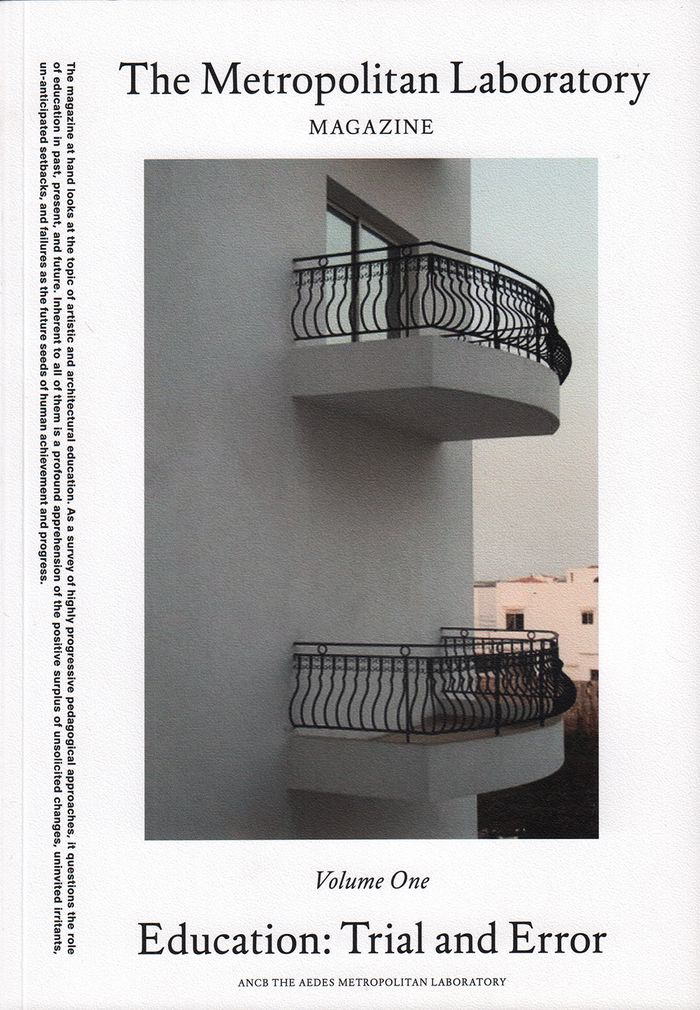
The Metropolitan Laboratory Magazine, Vol. 1. Education: trial and error
Actions:
Prix:
$29.95
(disponible sur commande)
Résumé:
ANCB The Aedes Metropolitan Laboratory was launched in 2009 as a physical and intellectual space focused on the inseparable interplay between urban form and social life. Now in its eighth year, ANCB decided to broaden its experimental journey as an independent public platform with an annual magazine entitled The Metropolitan Laboratory that further explores our deliberate goal of providing an alternative urban discourse. Entitled “Education: Trial and Error”, this first issue looks at the topic of artistic and architectural education. As a survey of highly progressive pedagogical approaches, it questions the role of education in past, present, and future. The broad spectrum of articles and essays ranges from Black Mountain College, Joseph Beuys, Paul Thek, Cedric Price, and Oswald Ungers all the way to Beatriz Colomina, Olafur Eliasson, Ai Wei Wei, Thom Mayne, Odile Decq, Peter Cook, and Joan Ockmann, to mention but a few. Inherent to all of these contributions is a profound apprehension of the positive surplus of unsolicited changes, uninvited irritants, unanticipated setbacks, and failures as the future seeds of human achievement and progress.
The Metropolitan Laboratory Magazine, Vol. 1. Education: trial and error
Actions:
Prix:
$29.95
(disponible sur commande)
Résumé:
ANCB The Aedes Metropolitan Laboratory was launched in 2009 as a physical and intellectual space focused on the inseparable interplay between urban form and social life. Now in its eighth year, ANCB decided to broaden its experimental journey as an independent public platform with an annual magazine entitled The Metropolitan Laboratory that further explores our deliberate goal of providing an alternative urban discourse. Entitled “Education: Trial and Error”, this first issue looks at the topic of artistic and architectural education. As a survey of highly progressive pedagogical approaches, it questions the role of education in past, present, and future. The broad spectrum of articles and essays ranges from Black Mountain College, Joseph Beuys, Paul Thek, Cedric Price, and Oswald Ungers all the way to Beatriz Colomina, Olafur Eliasson, Ai Wei Wei, Thom Mayne, Odile Decq, Peter Cook, and Joan Ockmann, to mention but a few. Inherent to all of these contributions is a profound apprehension of the positive surplus of unsolicited changes, uninvited irritants, unanticipated setbacks, and failures as the future seeds of human achievement and progress.
Classification:
périodiques
périodiques
Publication:
juillet 2016
juillet 2016
Sujet:
Revues
Revues
Classification:
livres
livres
Titre:
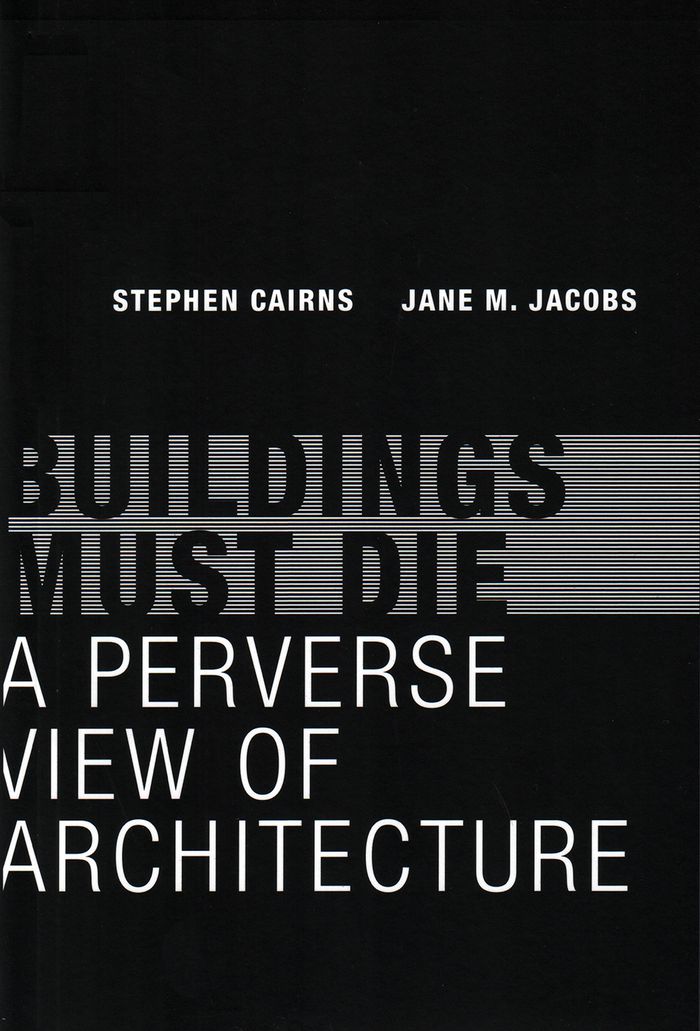
Buildings must die
Buildings must die
Actions:
Prix:
$38.95
(disponible sur commande)
Résumé:
Buildings, although inanimate, are often assumed to have “life.” And the architect, through the act of design, is assumed to be their conceiver and creator. But what of the “death” of buildings? What of the decay, deterioration, and destruction to which they are inevitably subject? And what might such endings mean for architecture’s sense of itself? In Buildings Must Die,(...)
$38.95
(disponible sur commande)
Résumé:
Buildings, although inanimate, are often assumed to have “life.” And the architect, through the act of design, is assumed to be their conceiver and creator. But what of the “death” of buildings? What of the decay, deterioration, and destruction to which they are inevitably subject? And what might such endings mean for architecture’s sense of itself? In Buildings Must Die,(...)
Titre:
Buildings must die
Actions:
Prix:
$38.95
(disponible sur commande)
Résumé:
Buildings, although inanimate, are often assumed to have “life.” And the architect, through the act of design, is assumed to be their conceiver and creator. But what of the “death” of buildings? What of the decay, deterioration, and destruction to which they are inevitably subject? And what might such endings mean for architecture’s sense of itself? In Buildings Must Die, Stephen Cairns and Jane Jacobs look awry at core architectural concerns. They examine spalling concrete and creeping rust, contemplate ruins old and new, and pick through the rubble of earthquake-shattered churches, imploded housing projects, and demolished Brutalist office buildings. Their investigation of the death of buildings reorders architectural notions of creativity, reshapes architecture’s preoccupation with good form, loosens its vanities of durability, and expands its sense of value. It does so not to kill off architecture as we know it, but to rethink its agency and its capacity to make worlds differently. Cairns and Jacobs offer an original contemplation of architecture that draws on theories of waste and value. Their richly illustrated case studies of building “deaths” include the planned and the unintended, the lamented and the celebrated. They take us from Moline to Christchurch, from London to Bangkok, from Tokyo to Paris. And they feature the work of such architects as Eero Saarinen, Carlo Scarpa, Cedric Price, Arata Isozaki, Rem Koolhaas and François Roche.
Buildings must die
Actions:
Prix:
$38.95
(disponible sur commande)
Résumé:
Buildings, although inanimate, are often assumed to have “life.” And the architect, through the act of design, is assumed to be their conceiver and creator. But what of the “death” of buildings? What of the decay, deterioration, and destruction to which they are inevitably subject? And what might such endings mean for architecture’s sense of itself? In Buildings Must Die, Stephen Cairns and Jane Jacobs look awry at core architectural concerns. They examine spalling concrete and creeping rust, contemplate ruins old and new, and pick through the rubble of earthquake-shattered churches, imploded housing projects, and demolished Brutalist office buildings. Their investigation of the death of buildings reorders architectural notions of creativity, reshapes architecture’s preoccupation with good form, loosens its vanities of durability, and expands its sense of value. It does so not to kill off architecture as we know it, but to rethink its agency and its capacity to make worlds differently. Cairns and Jacobs offer an original contemplation of architecture that draws on theories of waste and value. Their richly illustrated case studies of building “deaths” include the planned and the unintended, the lamented and the celebrated. They take us from Moline to Christchurch, from London to Bangkok, from Tokyo to Paris. And they feature the work of such architects as Eero Saarinen, Carlo Scarpa, Cedric Price, Arata Isozaki, Rem Koolhaas and François Roche.
Classification:
livres
livres
Publication:
août 2017
août 2017
Sujet:
Théorie de l’architecture
Théorie de l’architecture


