


5088 Résultats
Classification:
livres
livres
Actions:
Prix:
$26.95
(disponible sur commande)
Résumé:
Many years have passed since architect Andrea Ponsi settled in Florence, and still he feels he does not fully comprehend this mysterious city. The way Florence eludes understanding, however, can be an opportunity — to keep seeking, to keep exploring. Ponsi’s Florence is endlessly suggestive. His tour of the city is one of continually shifting light and perspective, of(...)
Titre:
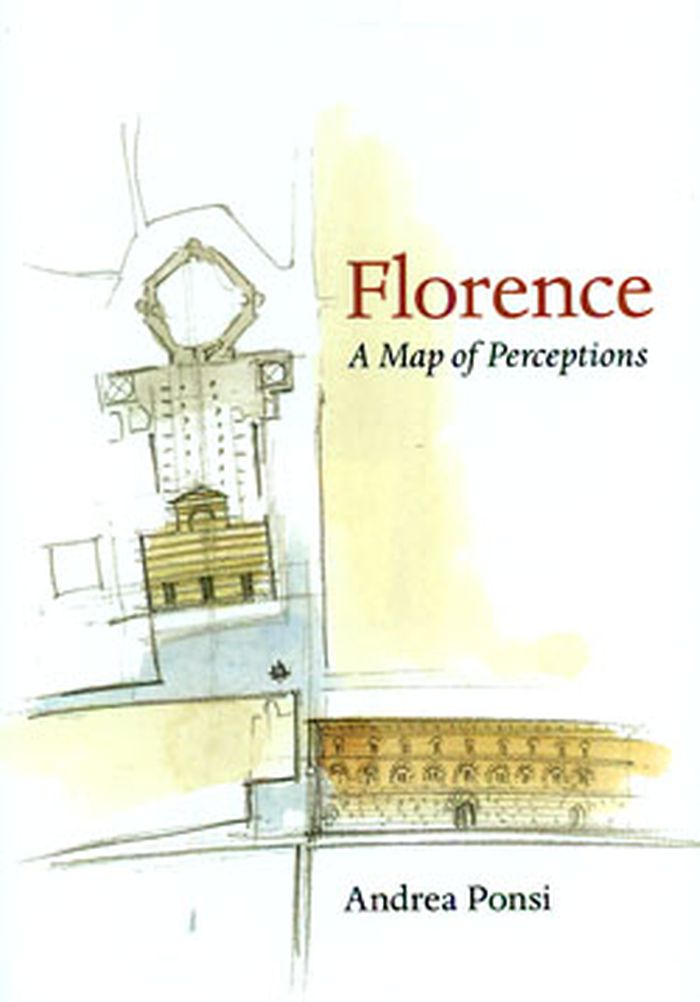
Florence : a map of perceptions
Actions:
Prix:
$26.95
(disponible sur commande)
Résumé:
Many years have passed since architect Andrea Ponsi settled in Florence, and still he feels he does not fully comprehend this mysterious city. The way Florence eludes understanding, however, can be an opportunity — to keep seeking, to keep exploring. Ponsi’s Florence is endlessly suggestive. His tour of the city is one of continually shifting light and perspective, of stunning symmetry and an even more compelling asymmetry, of sudden transitions from bustling streets to the most perfect silence. While Ponsi does consider such celebrated sites as the Piazza Santa Croce, the Ponte Vecchio, and the Duomo, the book is a decidedly personal view of Florence. The author notes the city’s recurring geometry — the square courtyards, triangular spires, octagonal plaques and pillars — and marvels at a room almost too big to be called a room. He views the city from various terraces and likens the expanse of rising and falling rooftops to ocean waves. Here is Florence as labyrinth, possessing a medieval density that is relieved only by the sudden views of sky framed by its piazzas. Ponsi shows us a six-street intersection and ponders the abundance of acute angles, both indoors and out, in this city of infinite corners. In Florence, humans and buildings commingle. The author equates haircuts and changes of clothes with fresh coats of paint and re-shingling jobs, and contemplates the way a human hand, feeling its way down a city block, adds to the patina of a stucco wall. Ponsi sees the city itself as a living body, through whose veins its inhabitants course.
Classification:
livres
livres
Publication:
avril 2010
avril 2010
Sujet:
Guides des villes
Guides des villes
Classification:
livres
livres
Titre:
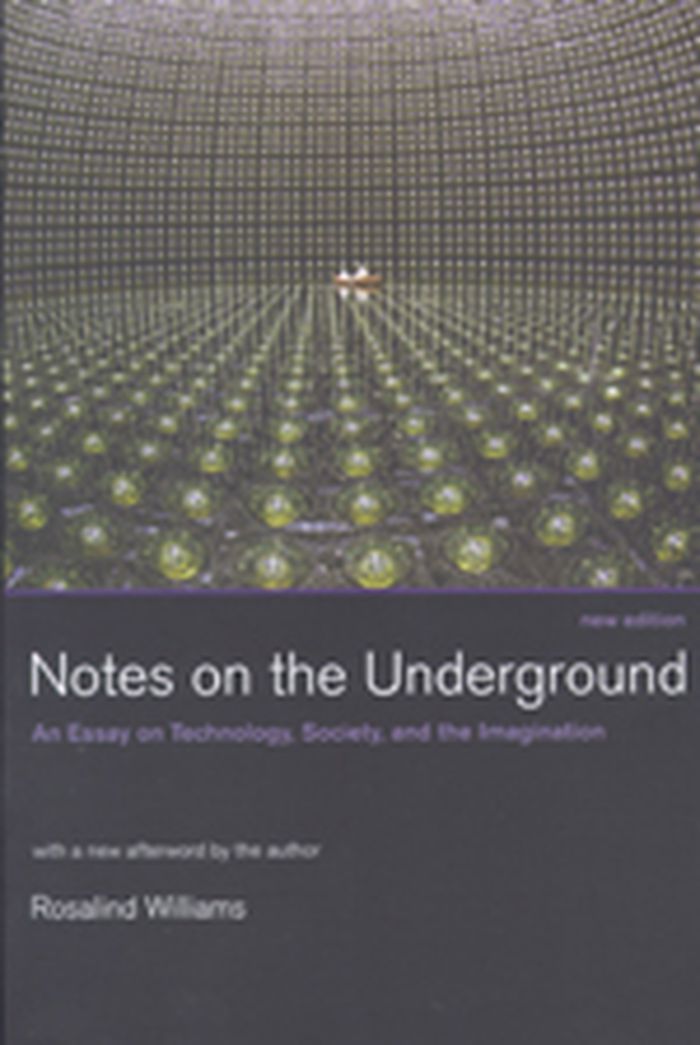
Notes on the Underground
Notes on the Underground
Actions:
Prix:
$24.95
(disponible sur commande)
Résumé:
The underground has always played a prominent role in human imaginings, both as a place of refuge and as a source of fear. The late nineteenth century saw a new fascination with the underground as Western societies tried to cope with the pervasive changes of a new social and technological order. In Notes on the Underground, Rosalind Williams takes us inside that critical(...)
Titre:
Notes on the Underground
Actions:
Prix:
$24.95
(disponible sur commande)
Résumé:
The underground has always played a prominent role in human imaginings, both as a place of refuge and as a source of fear. The late nineteenth century saw a new fascination with the underground as Western societies tried to cope with the pervasive changes of a new social and technological order. In Notes on the Underground, Rosalind Williams takes us inside that critical historical moment, giving equal coverage to actual and imaginary undergrounds. She looks at the real-life invasions of the underground that occurred as modern urban infrastructures of sewers and subways were laid, and at the simultaneous archaeological excavations that were unearthing both human history and the planet’s deep past. She also examines the subterranean stories of Verne, Wells, Forster, Hugo, Bulwer-Lytton, and other writers who proposed alternative visions of the coming technological civilization. Williams argues that these imagined and real underground environments provide models of human life in a world dominated by human presence and offer a prophetic look at today’s technology-dominated society. In a new afterword written for this edition, Williams points out that her book traces the emergence in the nineteenth century of what we would now call an environmental consciousness--an awareness that there will be consequences when humans live in a sealed, finite environment. Today we are more aware than ever of our limited biosphere and how vulnerable it is. Notes on the Underground, now even more than when it first appeared, offers a guide to the human, cultural, and technical consequences of what Williams calls "the human empire on earth."
Classification:
livres
livres
Publication:
mars 2008, Cambridge
mars 2008, Cambridge
Sujet:
Théorie de l’architecture
Théorie de l’architecture
Classification:
livres
livres
Actions:
Prix:
$62.50
(disponible sur commande)
Résumé:
The avant-garde movements of Central Europe were an integral part of modernism’s evolution as it reached its peak throughout the continent during the 1920s. Written documents--manifestoes, artists’ statements, and reviews--were the lifeblood of these movements and, during the periods when political events conspired to isolate them, one of their few means of communication(...)
Sujet:
Modernisme
Modernisme
Publication:
septembre 2002, Cambridge, Mass.
septembre 2002, Cambridge, Mass.
Titre:
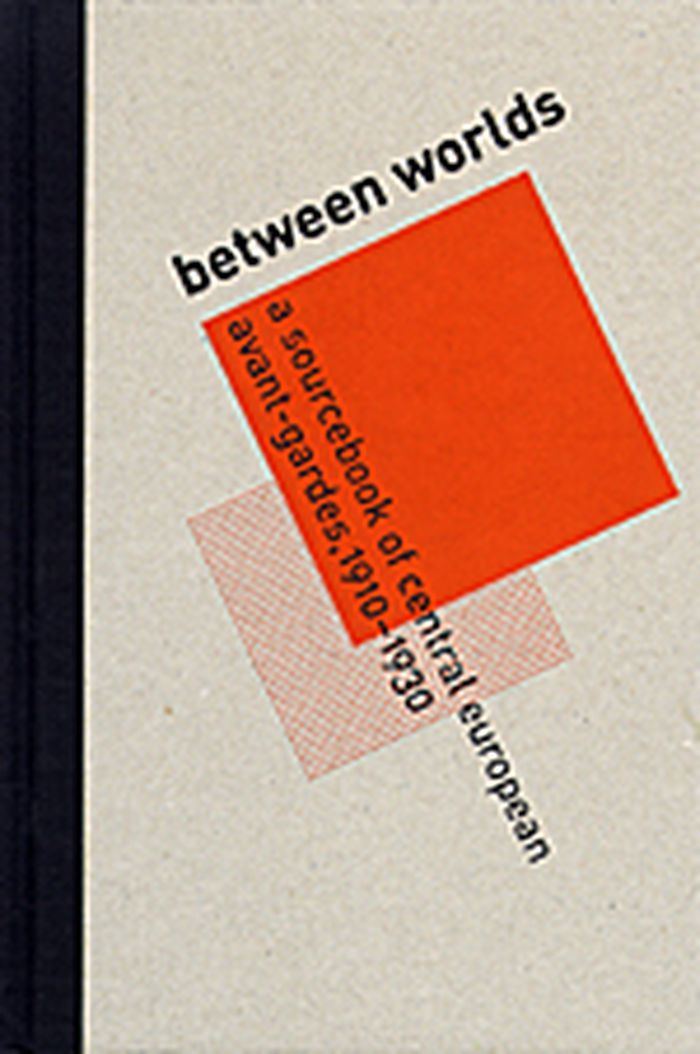
Between worlds : a sourcebook of Central European avant-garde, 1910-1930
Actions:
Prix:
$62.50
(disponible sur commande)
Résumé:
The avant-garde movements of Central Europe were an integral part of modernism’s evolution as it reached its peak throughout the continent during the 1920s. Written documents--manifestoes, artists’ statements, and reviews--were the lifeblood of these movements and, during the periods when political events conspired to isolate them, one of their few means of communication and exchange. Much of this crucial evidence has become lost to us, and the artistic avant-gardes of Central Europe have been a blind spot of modernist studies. Until their narratives have been recovered, the story of modernism will remain incomplete. In this book an international team of scholars has selected an essential compendium of documents that take an important step toward regaining this lost perspective. "Between worlds" contains primary documents of the avant-gardes in Austria, the Czech lands, Germany, Hungary, Poland, Romania, and Yugoslavia from 1910 to 1930. The manifestoes and magazines of Western European radical art circles are well known to Western scholars, but few have researched the pages of magazines such as Zenit, Integral, Punct, 75 HP, Tank, and Ma. We know about Italian Futurism but not about Polish Futurism. Few Westerners are aware that French surrealist magazines drew much of their inspiration from Czech publications. The hundreds of documents in the book, almost all of them translated into English for the first time, bring back into circulation landmark texts by the major writers, editors, artists, magazines, and movements of Central Europe. With this publication they are restored to their rightful place in the pantheon of modernism.
Classification:
livres
livres
Publication:
septembre 2002, Cambridge, Mass.
septembre 2002, Cambridge, Mass.
Sujet:
Modernisme
Modernisme
Classification:
périodiques
périodiques
Titre:
Harvard review.
Harvard review.
Actions:
Auteur:
Sujet:
Publication:
Cambridge, MA : President and Fellows of Harvard College, 1992-
Cambridge, MA : President and Fellows of Harvard College, 1992-
Classification:
périodiques
périodiques
Publication:
Cambridge, MA : President and Fellows of Harvard College, 1992-
Cambridge, MA : President and Fellows of Harvard College, 1992-
Auteur:
Sujet:
Classification:
livres
livres
Actions:
Prix:
$29.95
(disponible sur commande)
Résumé:
"Light in the Dark Room" explores photography not as a document of the past but rather as a realization of what we have lost. When we look at a photograph we see a moment that is no more. Photographs place reality into the past tense, representing not memory but memory’s loss. They are not conduits for the return of memory, but memento mori: reminders of the fact of(...)
Titre:
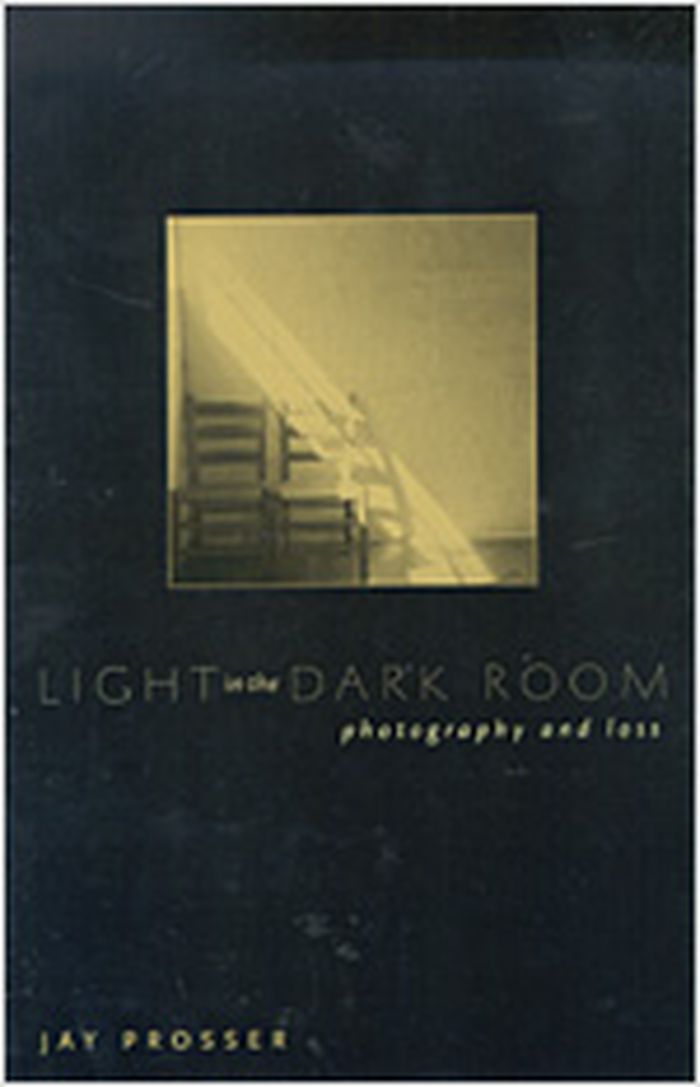
Light in the dark room : photography and loss
Actions:
Prix:
$29.95
(disponible sur commande)
Résumé:
"Light in the Dark Room" explores photography not as a document of the past but rather as a realization of what we have lost. When we look at a photograph we see a moment that is no more. Photographs place reality into the past tense, representing not memory but memory’s loss. They are not conduits for the return of memory, but memento mori: reminders of the fact of death itself. And it is in this, Jay Prosser tells us, that we find the gift of photography. Engaging the photographic reflections of figures as different as Roland Barthes and Claude Lévi-Strauss, Gordon Parks and Elizabeth Bishop, "Light in the Dark Room" offers a vision of photography as realization of loss - and a revelation of how photographs can shed light on the dark rooms of our lives. Beginning with an analysis of Roland Barthes’s "Camera Lucida", Prosser explores the relationship of autobiography and photography and then considers Lévi-Strauss’s last published book, his photographic memoir; he uncovers the collection of photography painstakingly assembled by poet Elizabeth Bishop but never published; and he recounts the story of a forgotten Brazilian boy from the 1960s who lost his home as a result of photographs. The losses this book recalls are poignant yet universal - a son loses his mother; an anthropologist, his culture; a photographer, his youth; a poet, her lover. Among these personal and moving losses and the remarkable photographs that accompany them, Prosser weaves his own meditations on photography, on the interdependence of loss and enlightenment, on the emergence of our technologized society - and the world we have lost in the process.
Classification:
livres
livres
Publication:
décembre 2005, Minneapolis
décembre 2005, Minneapolis
Sujet:
Théorie de la photographie
Théorie de la photographie
Classification:
livres
livres
Actions:
Prix:
$66.50
(disponible sur commande)
Résumé:
During the 1970s, the National Endowment for the Arts Photography Surveys granted money to photograph American cities at the bicentennial and years that followed. In “Through the Lens of the City: NEA Photography Surveys of the 1970s”, Mark Rice brings to light this long-neglected photographic endeavour. From 1976 to 1981, the NEA supported more than seventy projects(...)
Titre:
Through the lens of the city : NEA photography surveys of the 1970s
Actions:
Prix:
$66.50
(disponible sur commande)
Résumé:
During the 1970s, the National Endowment for the Arts Photography Surveys granted money to photograph American cities at the bicentennial and years that followed. In “Through the Lens of the City: NEA Photography Surveys of the 1970s”, Mark Rice brings to light this long-neglected photographic endeavour. From 1976 to 1981, the NEA supported more than seventy projects that examined a wide range of people and places in America. Artists involved included such well known photographers as Bruce Davidson, Lee Friedlander, and Joel Meyerowitz and many photographers who became widely known after their work with the surveys, such as Robert Adams, Joe Deal, Terry Evans, and Wendy Ewald. Rice argues that the NEA Photographic Surveys drew from two wells: a widespread sense of nostalgia and an intense public interest in photography. Looking at the works from eight key cities-Atlanta, Buffalo, Durham, East Baltimore, Galveston, Long Beach, Los Angeles, and Venice-the book uncovers marked differences as well as startling similarities in the concerns manifested by different photographers in far-flung places. Although the surveys are interesting both for their artistic merits and for their place in the history of American photography, they are equally important as a documentation of bicentennial-era America and a close examination of American cities. A major shift in the ideals of civil engineering and urban planning was underway in the 1970s. At the same time, ideas and theories about photography were changing along with our notions of what the city could and should be. These surveys, capturing American cities in a fascinating period of flux, show us American photographers matching artistry to subject matter in new and exciting ways.
Classification:
livres
livres
Publication:
janvier 2005, Jackson, Mississippi
janvier 2005, Jackson, Mississippi
Sujet:
Théorie de la photographie
Théorie de la photographie
Classification:
livres
livres

Titre:
Words fail me
Words fail me
Actions:
Prix:
$14.95
(disponible sur commande)
Résumé:
This book was originally inspired by the author’s Italian mother and her struggles with the vagaries of the English language. Over the years the author has tried to correct her attempts and explain why the word she has chosen is incorrect, only to be baffled herself by the lack of logic within those explanations. English is full of contradictions and peculiarities (not(...)
Publication:
juin 2006, London, New York
juin 2006, London, New York
Titre:
Words fail me
Actions:
Prix:
$14.95
(disponible sur commande)
Résumé:
This book was originally inspired by the author’s Italian mother and her struggles with the vagaries of the English language. Over the years the author has tried to correct her attempts and explain why the word she has chosen is incorrect, only to be baffled herself by the lack of logic within those explanations. English is full of contradictions and peculiarities (not counting such dull grammatical inconsistencies as ‘i before e except after c’, which are really no fun at all) and hoodwinks us into believing one thing while meaning something quite different. In English, all is not what it seems and with this book the author has brought these illogical oddities to the fore. Questions of spelling, pronunciation or the blatantly nonsensical are illustrated through clever visual representations that are created entirely through artfully manipulated typography. This playful and sometimes hilarious text sorts the homonyms from the heteronyms and introduces the ‘antigram’ (demonstrating how the swift shuffle of certain letters can create words that entirely contradict the first: honestly becomes on the sly, earliest becomes rise late and, fabulously, Elvis = lives!). Monachino goes on to demand an explanation from all those tricky little words that are spelt the same and pronounced the same, but yet have utterly different meanings, while highlighting a few of life`s petty pleonasms and showing off some quite excellent tautologies. A gaggle of one-word oxymorons shines the spotlight on words that harbour contradictory words within them and the final section provides a note on inadvisable hyphenation, which is a useful disco-very, but perhaps not the best place to beg-in.
Classification:
livres
livres
Publication:
juin 2006, London, New York
juin 2006, London, New York
Classification:
livres
livres

Actions:
Prix:
$39.95
(disponible sur commande)
Résumé:
As we spend more and more of our time staring at the screens of movies, televisions, computers, and handheld devices--"windows" full of moving images, texts, and icons--how the world is framed has become as important as what is in the frame. In The Virtual Window, Anne Friedberg examines the window as metaphor, as architectural component, and as an opening to the(...)
Titre:
The virtual window : from Alberti to Microsoft
Actions:
Prix:
$39.95
(disponible sur commande)
Résumé:
As we spend more and more of our time staring at the screens of movies, televisions, computers, and handheld devices--"windows" full of moving images, texts, and icons--how the world is framed has become as important as what is in the frame. In The Virtual Window, Anne Friedberg examines the window as metaphor, as architectural component, and as an opening to the dematerialized reality we see on the screen. In De pictura (1435), Leon Battista Alberti famously instructed painters to consider the frame of the painting as an open window. Taking Alberti's metaphor as her starting point, Friedberg tracks shifts in the perspectival paradigm as she gives us histories of the architectural window, developments in glass and transparency, and the emerging apparatuses of photography, cinema, television, and digital imaging. Single-point perspective--Alberti's metaphorical window--has long been challenged by modern painting, modern architecture, and moving-image technologies. And yet, notes Friedberg, for most of the twentieth century the dominant form of the moving image was a single image in a single frame. The fractured modernism exemplified by cubist painting, for example, remained largely confined to experimental, avant-garde work. On the computer screen, however, where multiple "windows" coexist and overlap, perspective may have met its end. In this wide-ranging book, Friedberg considers such topics as the framed view of the camera obscura, Le Corbusier's mandates for the architectural window, Eisenstein's opinions on the shape of the movie screen, and the multiple images and nested windows commonly displayed on screens today. The Virtual Window proposes a new logic of visuality, framed and virtual: an architecture not only of space but of time.
Classification:
livres
livres
Publication:
janvier 2006, Cambridge
janvier 2006, Cambridge
Sujet:
Théorie de l’architecture
Théorie de l’architecture
Classification:
livres
livres
Titre:
Valerio Olgiati: Villa Além
Valerio Olgiati: Villa Além
Actions:
Prix:
$95.00
(disponible en magasin)
Résumé:
"For many years, my wife Tamara and I had been searching for a place for which we could leave our current home in the Swiss mountains on social, cultural and climatic grounds. In the Alentejo region in Portugal, we found the perfect situation. A wonderful climate, a wide empty landscape and an existing culture that we like. Here, we spend a couple of months a year. From(...)
Titre:
Valerio Olgiati: Villa Além
Actions:
Prix:
$95.00
(disponible en magasin)
Résumé:
"For many years, my wife Tamara and I had been searching for a place for which we could leave our current home in the Swiss mountains on social, cultural and climatic grounds. In the Alentejo region in Portugal, we found the perfect situation. A wonderful climate, a wide empty landscape and an existing culture that we like. Here, we spend a couple of months a year. From here, we work – my wife is also an architect – close to our office in Flims. The basic idea and the all-influencing aim of our project was to create a garden, even more than a shelter, which, of course, we also have. The form of our house indeed should not primarily express ‘shelter’. It is the ‘garden’ that has to essentially find its form and that we want to experience. To date, three main forms are known to me in terms of housing. The first, ‘urban living’, I understand as living in the dense fabric of an urban setting. Then, ‘suburban living’, which takes place in a typical one-family home with a small garden in suburbia, and finally, ‘country living’, where people live socially and infrastructurally connected at large rural intervals. We excluded all three of these forms for our house. This was not what we were looking for. Our home is far away from the next town. It is disconnected in every respect. There is only the vast empty landscape around us. In Villa Além, a sense of loneliness and independence arises. It is a real retreat. I was looking for a term for this type of housing and have arrived at ‘landscape living’." – Valerio Olgiati
Classification:
livres
livres
Publication:
janvier 2016
janvier 2016
Sujet:
Architecture, monographies
Architecture, monographies
Classification:
livres
livres
Actions:
Prix:
$51.90
(disponible sur commande)
Résumé:
Urban gardening has become recently popular. We only have to think of the riverbanks restored to their natural state, the urban gardening and urban farming projects springing up all over the world, the green skyscrapers (prospective and actually built) such as, for instance, the utopian farmscrapers of Vincent Callebout, the conversion of former high rail lines into green(...)
Titre:
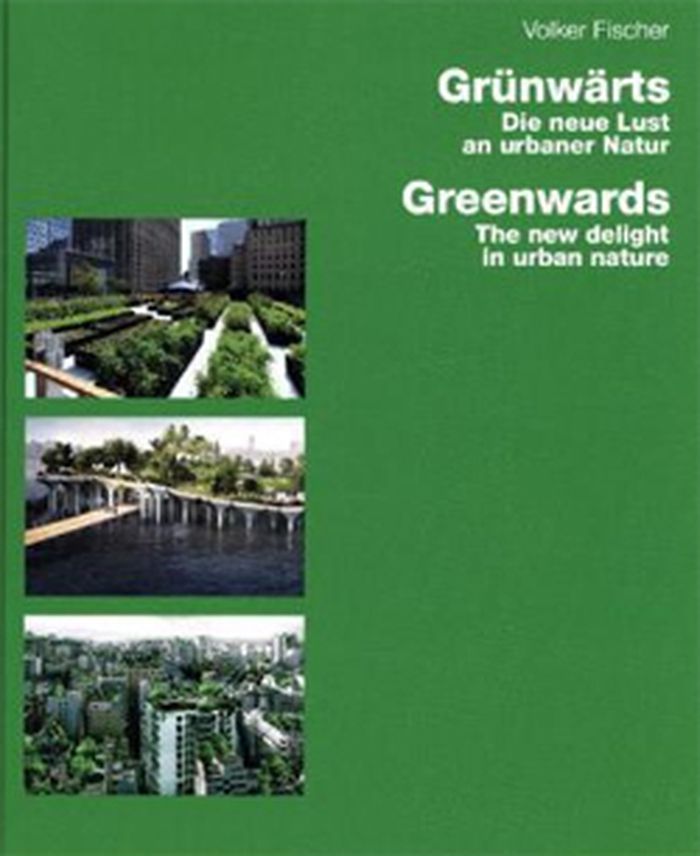
Greenwards: the new delight in urban nature
Actions:
Prix:
$51.90
(disponible sur commande)
Résumé:
Urban gardening has become recently popular. We only have to think of the riverbanks restored to their natural state, the urban gardening and urban farming projects springing up all over the world, the green skyscrapers (prospective and actually built) such as, for instance, the utopian farmscrapers of Vincent Callebout, the conversion of former high rail lines into green recreation spaces, the meditation gardens of Piet Oudolf, and the vertical gardens of Patrick Blanc. These days, we feel close to greenery, just as we feel close to our pets. We tend and nurture the seeds and stalks, the leaves and flowers, the shrubs and grasses, the bushes and trees, with a matchless solicitude. These culturally coded natural phenomena also have therapeutic qualities, because they offer us self-determination and the possibility to share in social development. This is nothing less than the reintegration of the first, primal nature into the context of the conditions that have become ubiquitous today into the context of what has, today, become 'second nature'. For some people, such as the campaigners of 'Guerilla Gardening', these plants, wild and domestic, provide a way of criticizing the system; others, such as vertical planners of wall gardens like Ken Yeang, utopia-infatuated and bitten by the green bug, presumably see themselves as an avant-garde working in harmony with the system. Volker Fischer was deputy director of the Deutsches Architekturmuseum in Frankfurt am Main for over ten years. From 1994 to 2012 he has built up a new design department at the Museum for Applied Arts in Frankfurt. At the same time, he taught on the history of architecture and design at the Hochschule fur Gestaltung in Offenbach.
Classification:
livres
livres
Publication:
janvier 2015
janvier 2015
Sujet:
Paysages urbains
Paysages urbains


