


5088 Résultats
Classification:
livres
livres
Titre:
Thirtyfour campgrounds
Thirtyfour campgrounds
Actions:
Prix:
$51.00
(disponible sur commande)
Résumé:
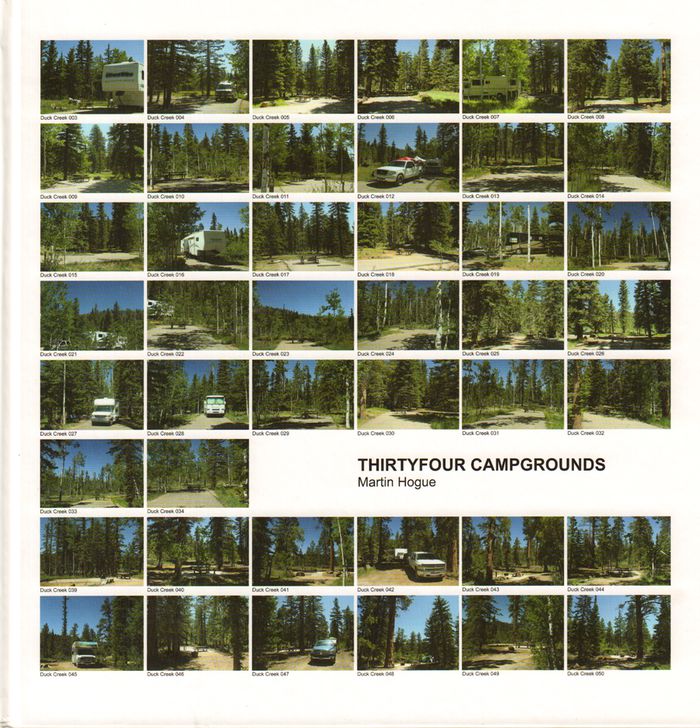
Camping can make us feel a powerful connection to nature and our rugged backwoods forebears. Campers once confronted the elemental facts of life, but now, the millions of Americans taking to the road on camping trips are more likely to drive to a campground, hook up service conduits, connect to WiFi, drop their awnings, and set out patio chairs. It is as if, Martin Hogue(...)
Titre:
Thirtyfour campgrounds
Actions:
Prix:
$51.00
(disponible sur commande)
Résumé:
Camping can make us feel a powerful connection to nature and our rugged backwoods forebears. Campers once confronted the elemental facts of life, but now, the millions of Americans taking to the road on camping trips are more likely to drive to a campground, hook up service conduits, connect to WiFi, drop their awnings, and set out patio chairs. It is as if, Martin Hogue observes, each campsite functions as a stage upon which campers perform a series of ritualized activities (pitching the tent, building a fire, cooking over flames). In Thirtyfour Campgrounds, Hogue investigates these sites, individually and in multiples, offering a photographic and typological survey of nearly 6,500 American campsites, mapping subtle differences within the apparently identical. The central part of the book consists of color photographs of individual campsites, downloaded from such online reservation websites as reserveamerica.com and recreation.gov, organized by zip code, and arranged in grids across the pages. Hogue nods to artist Ed Ruscha's Thirtyfour Parking Lots for his title and its attitude, and to the work of Bernd and Hilla Becher for the serial arrangement of images in grids. The campsite pictures seem at first endlessly repetitious; but then the repetition makes way for difference. Time reveals itself in fading light and passing clouds, the weather changes between photographs of neighboring sites, leaves turn color and fall, in an unexpected kind of time-lapse photography. This is a book that was made so seriously that it must (not) be taken too seriously. More scientific than any campground literature, Thirtyfour Campgrounds calls the very nature of scientific survey, research, and publication into question.
Classification:
livres
livres
Publication:
septembre 2016
septembre 2016
Sujet:
Théorie du paysage
Théorie du paysage
Classification:
vidéo
vidéo
Titre:
The end of suburbia
The end of suburbia
Actions:
Prix:
$25.00
(disponible sur commande)
Résumé:
Since World War II North Americans have invested much of their newfound wealth in suburbia. It has promised a sense of space, affordability, family life and upward mobility. As the population of suburban sprawl has exploded in the past 50 years, so too has the suburban way of life become embedded in the American consciousness. Suburbia, and all it promises, has become(...)
Titre:
The end of suburbia
Actions:
Prix:
$25.00
(disponible sur commande)
Résumé:
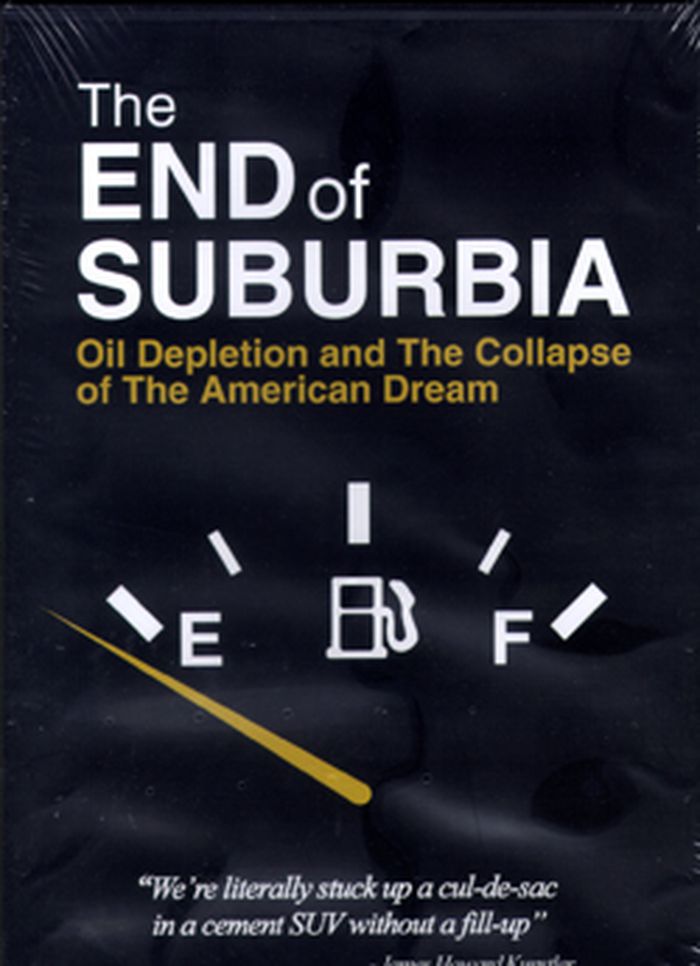
Since World War II North Americans have invested much of their newfound wealth in suburbia. It has promised a sense of space, affordability, family life and upward mobility. As the population of suburban sprawl has exploded in the past 50 years, so too has the suburban way of life become embedded in the American consciousness. Suburbia, and all it promises, has become the American Dream. But as we enter the 21st century, serious questions are beginning to emerge about the sustainability of this way of life. With brutal honesty and a touch of irony, "The End of Suburbia" explores the American Way of Life and its prospects as the planet approaches a critical era, as global demand for fossil fuels begins to outstrip supply. World Oil Peak and the inevitable decline of fossil fuels are upon us now, some scientists and policy makers argue in this documentary. The consequences of inaction in the face of this global crisis are enormous. What does Oil Peak mean for North America? As energy prices skyrocket in the coming years, how will the populations of suburbia react to the collapse of their dream? Are today's suburbs destined to become the slums of tomorrow? And what can be done NOW, individually and collectively, to avoid The End of Suburbia ? Hosted by Barrie Zwicker. Featuring James Howard Kunstler, Peter Calthorpe, Michael Klare, Richard Heinberg, Matthew Simmons, Michael C. Ruppert, Julian Darley, Colin Campbell, Kenneth Deffeyes, Ali Samsam Bakhtiari and Steve Andrews. Directed by Gregory Greene. Produced by Barry Silverthorn. Duration: 78 minutes DVD BONUS: Includes the vintage short films, "In the Suburbs" and "Destination Earth", and producer/director commentary.
Classification:
vidéo
vidéo
Publication:
novembre 2007, Toronto
novembre 2007, Toronto
Sujet:
DVD vidéo
DVD vidéo
Classification:
livres
livres
Prix:
$34.00
(disponible sur commande)
Résumé:
Along with Russian constructivism and surrealism, Dada stands as one of the three most significant movements of the historical avant-garde. Born in the heart of Europe in the midst of World War I, Dada displayed a raucous skepticism about accepted values. Its embrace of new materials, of collage and assemblage techniques, of the designation of manufactured objects as art(...)
Titre:
Dada: Zurich,Berlin, Hannover, Cologne, New York, Paris
Actions:
Prix:
$34.00
(disponible sur commande)
Résumé:
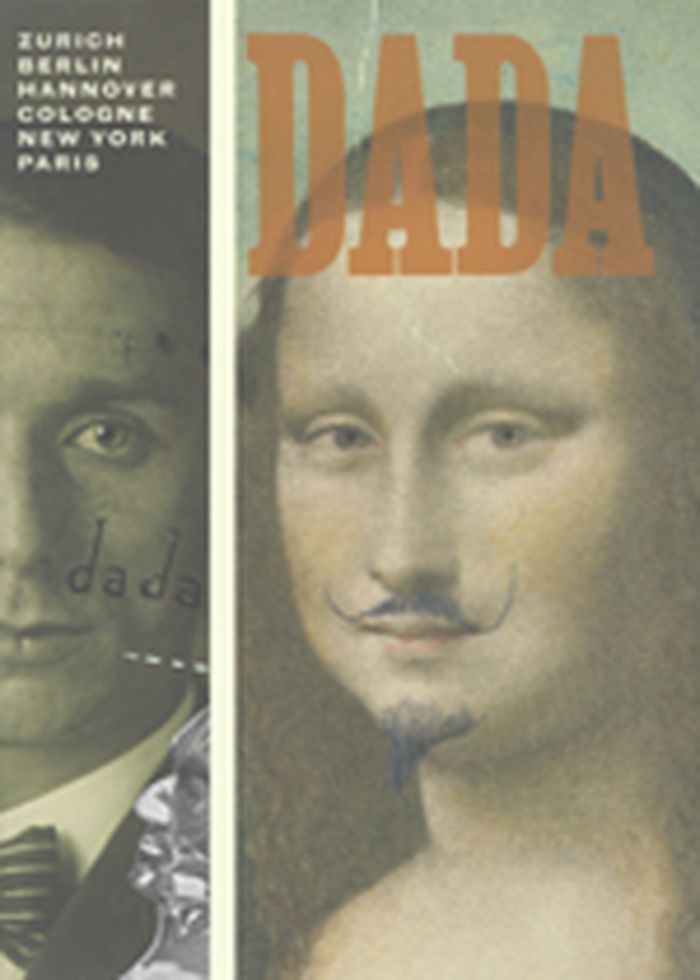
Along with Russian constructivism and surrealism, Dada stands as one of the three most significant movements of the historical avant-garde. Born in the heart of Europe in the midst of World War I, Dada displayed a raucous skepticism about accepted values. Its embrace of new materials, of collage and assemblage techniques, of the designation of manufactured objects as art objects as well as its interest in performance, sound poetry, and manifestos fundamentally shaped the terms of modern art practice and created an abiding legacy for postwar art. Yet, while the word Dada has common currency, few know much about Dada art itself. In contrast to other key avant-garde movements, there has never been a major American exhibition that explores Dada specifically in broad view. Dada--the catalogue to the exhibition on view in 2006 at the National Gallery of Art in Washington and The Museum of Modern Art in New York presents the hybrid forms of Dada art through an examination of city centers where Dada emerged: Zurich, Berlin, Cologne, Hannover, New York, and Paris. Covered here are works by some 40 artists made in the period from circa 1916, when the Cabaret Voltaire was founded in Zurich, to 1926, by which time most of the Dada groups had dispersed or significantly transformed. The city sections bring together painting, sculpture, photography, collage, photomontage, prints and graphic work. Relying on dynamic design and vivid documentary images, Dada takes us through these six cities via topical essays and extensive plate sections; an illustrated chronology of the movement; witty chronicles of events in each city center; a selected bibliography; and biographies of each artist--accompanied by Dada-era photographs.
Classification:
livres
livres
Publication:
mars 2008, Washington
mars 2008, Washington
Classification:
périodiques
périodiques
Actions:
Prix:
$52.00
(disponible en magasin)
Résumé:
Good design has the power to influence and support the human healing process. Because recovery is a process rather than a static state, it requires transitional spaces that foster transformation and facilitate social interaction. In this context, space does not merely serve as a form of complementary medicine; it is an environment with an agency of its own. Often, it(...)
Titre:
Detail 4 2026 : Healthcare buildings
Actions:
Prix:
$52.00
(disponible en magasin)
Résumé:
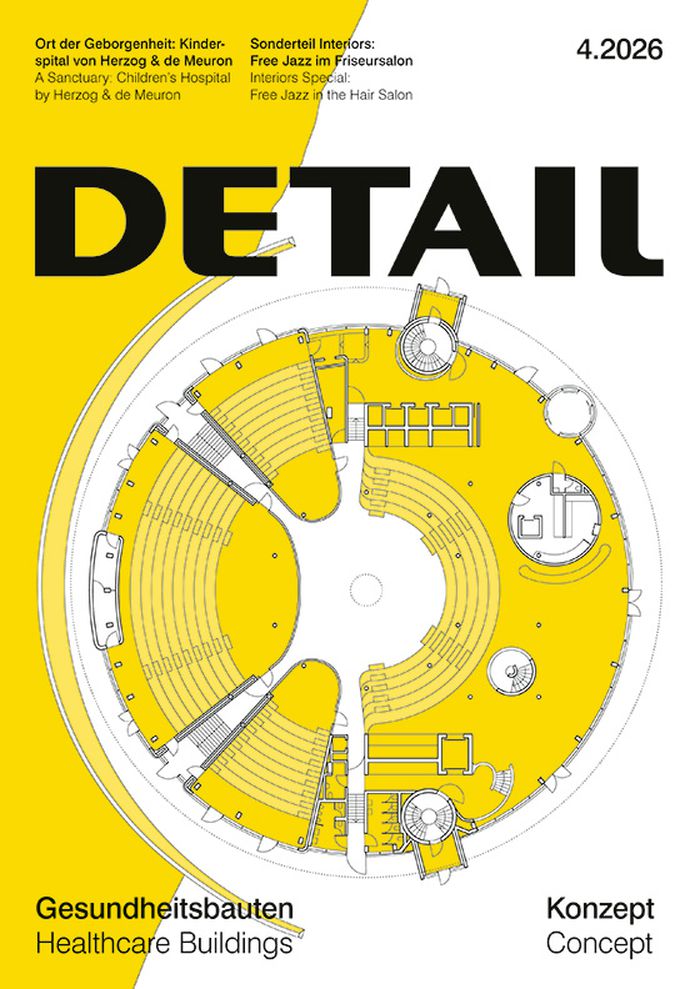
Good design has the power to influence and support the human healing process. Because recovery is a process rather than a static state, it requires transitional spaces that foster transformation and facilitate social interaction. In this context, space does not merely serve as a form of complementary medicine; it is an environment with an agency of its own. Often, it is only the absence of health that prompts us to truly examine it. This was the case for Charles Jencks, who, following his wife’s cancer diagnosis, laid the foundations for the therapy centres named after Maggie Keswick Jencks. Jencks described the first Maggie’s Centre, which opened 20 years ago in Edinburgh, as an “architecture of hope”. Similarly, Roger S. Ulrich, most recently a professor of architecture in Sweden, investigated the impact of nature on health in the mid-1980s while facing his own illness. His personal experience of nature’s restorative power led him to publish the seminal study that underpins all subsequent design approaches within the field of “healing architecture”. This issue presents exemplary special-purpose buildings from the healthcare sector that achieve exactly this. The mental health clinic by C. F. Møller in London, Dorte Mandrup Arkitekter’s healthcare centre in Copenhagen, and the Children’s Hospital in Zurich by Herzog & de Meuron are contrasted with smaller-scale pilot projects, such as the health kiosks designed by Pasel-K Architects as rural primary care infrastructure in Thüringen. Healing, it seems, knows no scale. The complex correlations between architecture and life are far from fully understood. As a young discipline, this field of architecture remains in constant flux.
Classification:
périodiques
périodiques
Publication:
avril 2026
avril 2026
Sujet:
Revues
Revues
Classification:
livres
livres
Actions:
Prix:
$49.50
(disponible sur commande)
Résumé:
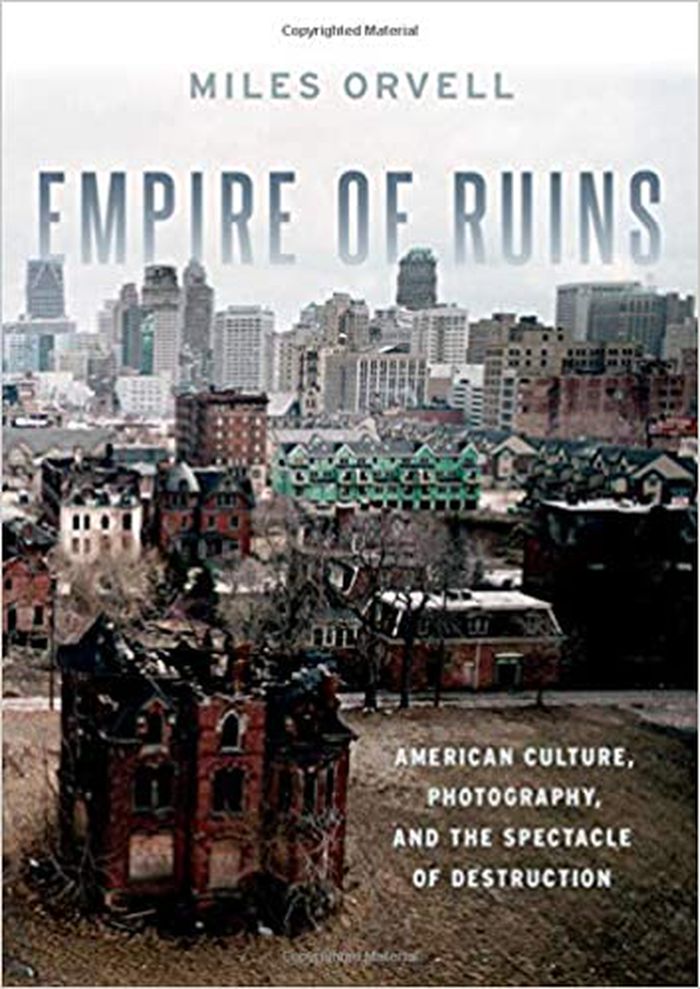
Once symbols of the past, ruins have become ubiquitous signs of our future. Americans today encounter ruins in the media on a daily basis - images of abandoned factories and malls, toxic landscapes, devastating fires, hurricanes, and floods. In this sweeping study, Miles Orvell offers a new understanding of the spectacle of ruins in US culture, exploring how(...)
Titre:
Empire of ruins: American culture, photography, and the spectacle of destruction
Actions:
Prix:
$49.50
(disponible sur commande)
Résumé:
Once symbols of the past, ruins have become ubiquitous signs of our future. Americans today encounter ruins in the media on a daily basis - images of abandoned factories and malls, toxic landscapes, devastating fires, hurricanes, and floods. In this sweeping study, Miles Orvell offers a new understanding of the spectacle of ruins in US culture, exploring how photographers, writers, painters, and filmmakers have responded to ruin and destruction, both real and imaginary, in an effort to make sense of the past and envision the future. ''Empire of ruins'' explains why Americans in the nineteenth century yearned for the ruins of Rome and Egypt and how they portrayed a past as ancient and mysterious in the remains of Native American cultures. As the romance of ruins gave way to twentieth-century capitalism, older structures were demolished to make way for grander ones, a process interpreted by artists as a symptom of America's "creative destruction." In the late twentieth century, Americans began to inhabit a perpetual state of ruins, made visible by photographs of decaying inner cities, derelict factories and malls, and the waste lands of the mining industry. This interdisciplinary work focuses on how visual media have transformed disaster and decay into spectacles that compel our moral attention even as they balance horror and beauty. Looking to the future, Orvell considers the visual portrayal of climate ruins as we face the political and ethical responsibilities of our changing world. A wide-ranging work by an acclaimed urban, cultural, and photography scholar, ''Empire of ruins'' offers a provocative and lavishly illustrated look at the American past, present, and future.
Classification:
livres
livres
Publication:
janvier 2021
janvier 2021
Sujet:
Théorie de la photographie
Théorie de la photographie
Classification:
livres
livres

Prix:
$34.95
(disponible sur commande)
Résumé:
A world-leading expert shares her amazing story of discovering the communication that exists between trees, and shares her own story of family and grief. Now, in her first book, Suzanne Simard brings us into her world, the intimate world of the trees, in which she brilliantly illuminates the fascinating and vital truths—that trees are not simply the source of timber(...)
Titre:
Finding the mother-tree: discovering the wisdom of the forest
Actions:
Prix:
$34.95
(disponible sur commande)
Résumé:
A world-leading expert shares her amazing story of discovering the communication that exists between trees, and shares her own story of family and grief. Now, in her first book, Suzanne Simard brings us into her world, the intimate world of the trees, in which she brilliantly illuminates the fascinating and vital truths—that trees are not simply the source of timber or pulp but are a complicated, interdependent circle of life; that forests are social, cooperative creatures connected through underground networks by which trees communicate their vitality and vulnerabilities with communal lives not that different from our own. Simard describes up close—in revealing and accessible ways—how trees, living side by side for hundreds of years, have evolved; how they perceive one another, learn and adapt their behaviors, recognize neighbors, and remember the past; how they have agency about their future; how they elicit warnings and mount defenses, compete and cooperate with one another with sophistication: characteristics previously ascribed to human intelligence, traits that are the essence of civil societies. And, at the center of it all, the Mother Trees: the mysterious, powerful forces that connect and sustain the others that surround them.Simard, born and raised in the rain forests of British Columbia, spent her days as a child cataloging the trees from the forest; she came to love and respect them and embarked on a journey of discovery and struggle. Her powerful story is one of love and loss, of observation and change, of risk and reward. And it is a testament to how deeply human scientific inquiry exists beyond data and technology: it’s about understanding who we are and our place in the world.
Classification:
livres
livres
Publication:
mai 2021
mai 2021
Sujet:
Théorie du paysage
Théorie du paysage
Classification:
livres
livres
Prix:
$27.00
(disponible sur commande)
Résumé:
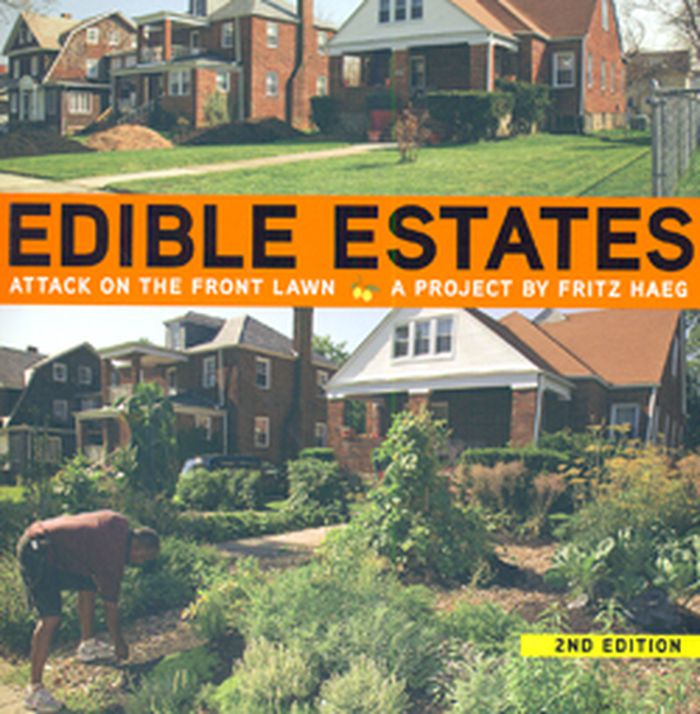
Since the first edition of "Edible Estates : Attack on the Front Lawn" was published in 2008, interest in edible gardening has exploded across the United States and abroad. This greatly expanded second edition of the book documents the eight Edible Estates regional prototype gardens that author Fritz Haeg has planted in California, Kansas, Texas, Maryland, New Jersey, New(...)
Titre:
Edible estates : attack on the front lawn, 2nd edition
Actions:
Prix:
$27.00
(disponible sur commande)
Résumé:
Since the first edition of "Edible Estates : Attack on the Front Lawn" was published in 2008, interest in edible gardening has exploded across the United States and abroad. This greatly expanded second edition of the book documents the eight Edible Estates regional prototype gardens that author Fritz Haeg has planted in California, Kansas, Texas, Maryland, New Jersey, New York and England, and includes personal accounts from the homeowner-gardeners about the pleasures and challenges of publicly growing food where they live. Ten "Reports from Coast to Coast" tell the stories of others who have planted their own edible front yards in towns and cities across the country. In addition to essays by landscape architect and scholar Diana Balmori, edible-landscaping pioneer Rosalind Creasy, bestselling author and sustainable-food advocate Michael Pollan and artist and writer Lesley Stern, this edition features updated text by Haeg (including his observations on the Obama White House vegetable garden); a contribution from Mannahatta author Eric W. Sanderson; and Growing Power founder, MacArthur Fellow and urban farmer Will Allen's never-before-published Declaration of the Good Food Revolution. This is not a comprehensive how-to book, nor a showcase of impossibly perfect gardens. The stories presented here are intended to reveal something about how we are living today and to inspire readers to plant their own versions of an Edible Estate. If we see that our neighbor's typical grassy lawn instead can be a beautiful food garden, perhaps we will begin to look at the city around us with new eyes. Our private land can be a public model for the world in which we would like to live.
Classification:
livres
livres
Publication:
avril 2010
avril 2010
Classification:
livres
livres

Titre:
The comfort of things
The comfort of things
Actions:
Prix:
$27.99
(disponible sur commande)
Résumé:
The diversity of contemporary London is extraordinary, and begs to be better understood. Never before have so many people from such diverse backgrounds been free to mix and not to mix in close proximity to each other. But increasingly people's lives take place behind the closed doors of private houses. How can we gain an insight into what those lives are like today? Not(...)
Titre:
The comfort of things
Actions:
Prix:
$27.99
(disponible sur commande)
Résumé:
The diversity of contemporary London is extraordinary, and begs to be better understood. Never before have so many people from such diverse backgrounds been free to mix and not to mix in close proximity to each other. But increasingly people's lives take place behind the closed doors of private houses. How can we gain an insight into what those lives are like today? Not television characters, not celebrities, but real people. How could one ever come to know perfect strangers? Danny Miller attempts to achieve this goal in this brilliant exposé of a street in modern London. He leads us behind closed doors to thirty people who live there, showing their intimate lives, their aspirations and frustrations, their tragedies and accomplishments. He places the focus upon the things that really matter to the people he meets, which quite often turn out to be material things, the house, the dog, the music, the Christmas decorations. He creates a gallery of portraits, some comic, some tragic, some cubist, some impressionist, some bleak and some exuberant. We find that a random street in modern London contains the most extraordinary stories. Mass murderers and saints, the most charmed Christmas since Fanny and Alexander and the story of how a CD collection helped someone overcome heroin. Through this sensitive reading of the ordinary lives of ordinary people, Miller uncovers the orders and forms through which people make sense of their lives today. He shows just how much is to be gained when we stop lamenting what we think we used to be, and instead concentrate on what we are becoming now. He reveals above all the sadness of lives and the comfort of things.
Classification:
livres
livres
Publication:
juillet 2008, Cambridge
juillet 2008, Cambridge
Sujet:
Théorie de l’art
Théorie de l’art
Classification:
livres
livres
Actions:
Prix:
$48.95
(disponible sur commande)
Résumé:
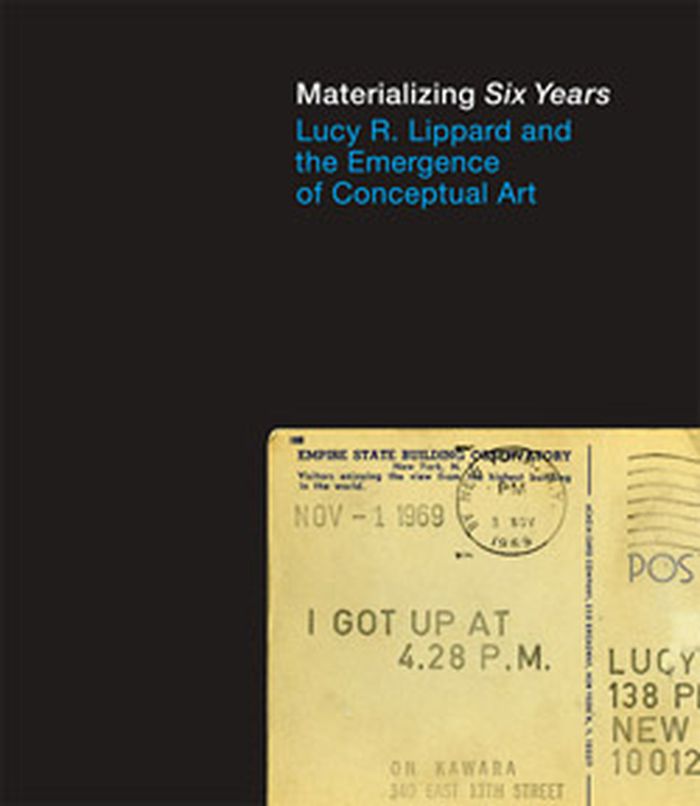
In 1973 the critic and curator Lucy R. Lippard published Six Years, a book with possibly the longest subtitle in the bibliography of art: The dematerialization of the art object from 1966 to 1972: a cross-reference book of information on some esthetic boundaries: consisting of a bibliography into which are inserted a fragmented text, art works, documents, interviews, and(...)
Titre:
Materializing Six Years : Lucy R. Lippard and the emergence of Conceptual Art
Actions:
Prix:
$48.95
(disponible sur commande)
Résumé:
In 1973 the critic and curator Lucy R. Lippard published Six Years, a book with possibly the longest subtitle in the bibliography of art: The dematerialization of the art object from 1966 to 1972: a cross-reference book of information on some esthetic boundaries: consisting of a bibliography into which are inserted a fragmented text, art works, documents, interviews, and symposia, arranged chronologically and focused on so-called conceptual or information or idea art with mentions of such vaguely designated areas as minimal, anti-form, systems, earth, or process art, occurring now in the Americas, Europe, England, Australia, and Asia (with occasional political overtones) edited and annotated by Lucy R. Lippard. Six Years, sometimes referred to as a conceptual art object itself, not only described and embodied the new type of art-making that Lippard was intent on identifying and cataloging, it also exemplified a new way of criticizing and curating art. Nearly forty years later, the Brooklyn Museum takes Lippard’s celebrated experiment in curated concatenation as a template, turning a book that resembled an exhibition into an exhibition materializing the ideas in her book. The artworks and essays featured in this publication recall the thrill that was tangible in Lippard's original documentation, reminding us that during the late sixties and early seventies all possible social and material parameters of art (making) were played with, worked over, inverted, reduced, expanded, and rejected. By tracing Lippard’s own activities in those years, the book also documents the early blurring of boundaries among critical, curatorial, and artistic practices. With more than 200 images of work by dozens of artists (printed in color throughout), this book brings Lippard’s curatorial experiment full circle.
Classification:
livres
livres
Publication:
septembre 2012
septembre 2012
Sujet:
Théorie de l’art
Théorie de l’art
Classification:
livres
livres
Actions:
Prix:
$21.50
(disponible sur commande)
Résumé:
Digital Ground is an architect's response to the design challenge posed by pervasive computing. One century into the electronic age, people have become accustomed to interacting indirectly, mediated through networks. But now as digital technology becomes invisibly embedded in everyday things, even more activities become mediated, and networks extend rather than replace(...)
Titre:
Digital ground : architecture, pervasive computing, and environmental knowing
Actions:
Prix:
$21.50
(disponible sur commande)
Résumé:
Digital Ground is an architect's response to the design challenge posed by pervasive computing. One century into the electronic age, people have become accustomed to interacting indirectly, mediated through networks. But now as digital technology becomes invisibly embedded in everyday things, even more activities become mediated, and networks extend rather than replace architecture. The young field of interaction design reflects not only how people deal with machine interfaces but also how people deal with each other in situations where interactivity has become ambient. It shifts previously utilitarian digital design concerns to a cultural level, adding notions of premise, appropriateness, and appreciation. Malcolm McCullough offers an account of the intersections of architecture and interaction design, arguing that the ubiquitous technology does not obviate the human need for place. His concept of "digital ground" expresses an alternative to anytime-anyplace sameness in computing; he shows that context not only shapes usability but ideally becomes the subject matter of interaction design and that "environmental knowing" is a process that technology may serve and not erode. Drawing on arguments from architecture, psychology, software engineering, and geography, writing for practicing interaction designers, pervasive computing researchers, architects, and the general reader on digital culture, McCullough gives us a theory of place for interaction design. Part I, "Expectations," explores our technological predispositions -- many of which ("situated interactions") arise from our embodiment in architectural settings. Part II, "Technologies," discusses hardware, software, and applications, including embedded technology ("bashing the desktop"), and building technology genres around life situations. Part III, "Practices," argues for design as a liberal art, seeing interactivity as a cultural -- not only technological -- challenge and a practical notion of place as essential. Part IV, "Epilogue," acknowledges the epochal changes occurring today, and argues for the role of "digital ground" in the necessary adaptation.
Classification:
livres
livres
Publication:
octobre 2005, Cambridge
octobre 2005, Cambridge
Sujet:
Théorie de l’architecture
Théorie de l’architecture


