


5088 Résultats
Classification:
périodiques
périodiques
Titre:
Revue de Qumrân.
Revue de Qumrân.
Actions:
Description:
1 online resource
Sujet:
Publication:
Paris : Éditions Letouzey et Ané, [1958]-
Paris : Éditions Letouzey et Ané, [1958]-
Classification:
périodiques
périodiques
Publication:
Paris : Éditions Letouzey et Ané, [1958]-
Paris : Éditions Letouzey et Ané, [1958]-
Sujet:
Classification:
livres
livres

Prix:
$85.00
(disponible sur commande)
Résumé:
Photographer Rinko Kawauchi (1972–), known for her expressive mastery of gentle color suffused with light, has revealed the mystery, radiance, frailty, and strength of life in all its forms since her earliest works. Her gaze falls equally on the fragile and delicate beings in her immediate vicinity, be they flora and fauna or family members, and the vast workings of the(...)
Titre:
Rinko Kawauchi: M/E On this sphere, Endlessly interlinking
Actions:
Prix:
$85.00
(disponible sur commande)
Résumé:
Photographer Rinko Kawauchi (1972–), known for her expressive mastery of gentle color suffused with light, has revealed the mystery, radiance, frailty, and strength of life in all its forms since her earliest works. Her gaze falls equally on the fragile and delicate beings in her immediate vicinity, be they flora and fauna or family members, and the vast workings of the earth, such as volcanoes and glaciers formed over long eons. The unique sensibility underlying her photography reveals the connections between these subjects, which all shimmer with the same vital glow. This will be her first major exhibition in Japan in six years, showcasing the essence of Kawauchi’s oeuvre through work from the past decade combined with never-before-seen images from her archives. M/E, the main subject of this exhibition and inspiration for its title, is a new series Kawauchi began shooting in 2019. The letters stand for ''Mother'' and ''Earth,'' combining to form both ''Mother Earth'' and ''Me.'' At a glance, the series’ images of Iceland’s volcanoes and ice floes and Hokkaido’s snowy landscapes may seem distant and unrelated to the everyday scenes from the COVID-19 pandemic that accompany them in the series. However, both types of image depict events now taking place on the planet we live on, and Kawauchi’s artistry alerts us to the connection between them. This exhibition invites the viewer to reconsider a range of questions about the workings of human life and our relationship with nature. In this exhibition catalog, Kawauchi herself has composed a sequence that allows visitors to relive the three-dimensional exhibition space, from the core series of the exhibition such as the new ''M/E,'' the yet unpublished ''4%,'' and ''An interlinking'' with new images, to her latest video work. The exhibition also includes a conversation with Haruo Saji, who was an influence on Kawauchi’s practice, and three essays, of which one is written by Masatake Shinohara, exploring the current state of Kawauchi’s work through both imagery and text. By changing the format and paper for each series, despite its simple binding, the book becomes a multilayered volume that embodies the depth of the exhibition.
Classification:
livres
livres
Publication:
janvier 2023
janvier 2023
Sujet:
Monographies photo
Monographies photo
Classification:
livres
livres

Titre:
Heidegger's hut
Heidegger's hut
Actions:
Prix:
$32.95
(disponible sur commande)
Résumé:
"This is the most thorough architectural 'crit' of a hut ever set down, the justification for which is that the hut was the setting in which Martin Heidegger wrote phenomenological texts that became touchstones for late-twentieth-century architectural theory." --from the foreword by Simon Sadler Beginning in the summer of 1922, philosopher Martin Heidegger(...)
Sujet:
Théorie de l’architecture
Théorie de l’architecture
Publication:
octobre 2006, Cambridge / London
octobre 2006, Cambridge / London
Titre:
Heidegger's hut
Actions:
Prix:
$32.95
(disponible sur commande)
Résumé:
"This is the most thorough architectural 'crit' of a hut ever set down, the justification for which is that the hut was the setting in which Martin Heidegger wrote phenomenological texts that became touchstones for late-twentieth-century architectural theory." --from the foreword by Simon Sadler Beginning in the summer of 1922, philosopher Martin Heidegger (1889-1976) occupied a small, three-room cabin in the Black Forest Mountains of southern Germany. He called it "die Hütte" ("the hut"). Over the years, Heidegger worked on many of his most famous writings in this cabin, from his early lectures to his last enigmatic texts. He claimed an intellectual and emotional intimacy with the building and its surroundings, and even suggested that the landscape expressed itself through him, almost without agency. In Heidegger's Hut, Adam Sharr explores this intense relationship of thought, place, and person. Heidegger's mountain hut has been an object of fascination for many, including architects interested in his writings about "dwelling" and "place." Sharr's account--the first substantive investigation of the building and Heidegger's life there--reminds us that, in approaching Heidegger's writings, it is important to consider the circumstances in which the philosopher, as he himself said, felt "transported" into the work's "own rhythm." Indeed, Heidegger's apparent abdication of agency and tendency toward romanticism seem especially significant in light of his troubling involvement with the Nazi regime in the early 1930s. Sharr draws on original research, including interviews with Heidegger's relatives, as well as on written accounts of the hut by Heidegger and his visitors. The book's evocative photographs include scenic and architectural views taken by the author and many remarkable images of a septuagenarian Heidegger in the hut taken by the photojournalist Digne Meller-Markovicz. There are many ways to interpret Heidegger's hut--as the site of heroic confrontation between philosopher and existence; as the petit bourgeois escape of a misguided romantic; as a place overshadowed by fascism; or as an entirely unremarkable little building. Heidegger's Hut does not argue for any one reading, but guides readers toward their own possible interpretations of the importance of "die Hütte."
Classification:
livres
livres
Publication:
octobre 2006, Cambridge / London
octobre 2006, Cambridge / London
Sujet:
Théorie de l’architecture
Théorie de l’architecture
Classification:
livres
livres
Titre:
Hiding
Hiding
Actions:
Prix:
$44.95
(disponible sur commande)
Résumé:
The age of information, media, and virtuality is transforming every aspect of human experience. Questions that have long haunted the philosophical imagination are becoming urgent practical concerns: Where does the natural end and the artificial begin? Is there a difference between the material and the immaterial? In his new work, Mark C. Taylor extends his ongoing(...)
Titre:
Hiding
Actions:
Prix:
$44.95
(disponible sur commande)
Résumé:
The age of information, media, and virtuality is transforming every aspect of human experience. Questions that have long haunted the philosophical imagination are becoming urgent practical concerns: Where does the natural end and the artificial begin? Is there a difference between the material and the immaterial? In his new work, Mark C. Taylor extends his ongoing investigation of postmodern worlds by critically examining a wide range of contemporary cultural practices. Nothing defines postmodernism so well as its refusal of depth, its emphasis on appearance and spectacle, its tendency to collapse a three-dimensional world in which image and reality are distinct into a two-dimensional world in which they merge. The postmodern world, Taylor argues, is a world of surfaces, and the postmodern condition is one of profound superficiality. For many cultural commentators, postmodernism's inescapable play of surfaces is cause for despair. Taylor, on the other hand, shows that the disappearance of depth in postmodern culture is actually a liberation repleat with creative possibilities. Taylor introduces readers to a popular culture in which detectives--the postmodern heroes of Paul Auster and Dennis Potter--lift surfaces only to find more surfaces, and in which fashion advertising plays transparency against hiding. Taylor looks at the contemporary preoccupation with body piercing and tattooing, and asks whether these practices actually reveal or conceal. Phrenology and skin diseases, the "religious" architecture of Las Vegas, the limitless spread of computer networks--all are brought within the scope of Taylor's brilliant analysis. Postmodernism, he shows, has given us a new sense of the superficial, one in which the issue is not the absence of meaning but its uncontrollable, ecstatic proliferation. Embodying the very tendencies it analyzes, Hiding is unique. Conceived and developed with well-known designers Michael Rock and Susan Sellars, this work transgresses the boundary that customarily separates graphic design from the story within a text. The product of nearly three decades of reflection and writing, Hiding opens a window on contemporary culture. To follow the remarkable course Taylor charts is to see both our present and past differently and to encounter a future as disorienting as it is alluring. Conceived and developed with designers Michael Rock and Susan Sellers.
Classification:
livres
livres
Publication:
octobre 1997, Chicago
octobre 1997, Chicago
Sujet:
Théorie de l’architecture
Théorie de l’architecture
Classification:
livres
livres
Titre:
Around
Around
Actions:
Prix:
$44.95
(disponible sur commande)
Résumé:
This book addresses the status of the periphery and of the peripheric -the state of being around something- as an antiquated space, a space fallen into disuse or discredit, where all defunct fashions are absorbed, and takes it as a starting point for revising the idea in which a recently acquired historical perspective plays an essential role. That as a common place, the(...)
Titre:
Around
Actions:
Prix:
$44.95
(disponible sur commande)
Résumé:
This book addresses the status of the periphery and of the peripheric -the state of being around something- as an antiquated space, a space fallen into disuse or discredit, where all defunct fashions are absorbed, and takes it as a starting point for revising the idea in which a recently acquired historical perspective plays an essential role. That as a common place, the periphery belongs to the past is an advantage which, along with the interventions making up this book, we intend to make good use of. The first part of this book, "Prepositions: A Journey to the Periphery", attempts to juxtapose examples of architectural and photographic interventions that have contributed, and contribute, to turning the periphery into an easily identifiable spatial signifier, and likewise to propose a rereading of these spaces which permits us to decipher their more or less diverse yearnings, utopias and social spaces. In all these interventions the periphery is always comparable to a concrete geographical reality to which one directs oneself, towards which one travels, with the aim of appropriating it, of defining it. This always involves the same preposition: around. The second part, "Propositions: The Journey of the Periphery", will be taken up with the rehabilitation or reutilization of the concept of the periphery. Once the concept of the periphery is considered as being obsolete, it is possible -and this is the chief theoretical contribution of this project- to recycle it, to convert the preposition "around" into a theoretical proposition that gives a number of new twists to the concept and explores its possibilities. The projects and photos included in this second part reflect a fundamental change in the perception of the periphery. The periphery escapes its geographical location and occupies the city's historic center, rural/natural surroundings, technological fantasies, the social utopias of postmodernity, etc. The periphery ceases to mean "around" as a physical location and becomes an invitation to reflection "around" the periphery as both concept and possibility. This doesn't so much mean a colonizing journey to the periphery, as in the first part, as a journey of the periphery to places where it was proscribed until quite recently. The periphery turns out to mean a mobile discourse that uses the common places of the classical periphery in order to dislodge and deterritorialize these.
Classification:
livres
livres
Publication:
avril 2003, Barcelona
avril 2003, Barcelona
Sujet:
Théorie de l’urbanisme
Théorie de l’urbanisme
Classification:
livres
livres
Prix:
$51.95
(disponible sur commande)
Résumé:
Trees capture our imagination because they are rooted solidly in the earth but point ethereally toward the sky. They occupy a dimension that has as much to do with time and patience as with place and landscape. They are vertical beings to whom we attribute qualities both divine and human. Since 1991, photographer Barbara Bosworth has been on a quest to photograph(...)
Sujet:
Monographies photo
Monographies photo
Publication:
septembre 2005, Cambridge
septembre 2005, Cambridge
Titre:
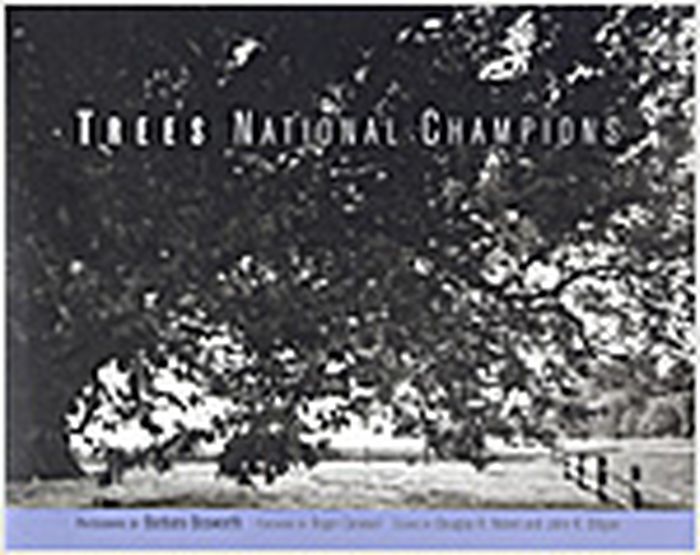
Trees : national champions / photographs by Barbara Bosworth
Actions:
Prix:
$51.95
(disponible sur commande)
Résumé:
Trees capture our imagination because they are rooted solidly in the earth but point ethereally toward the sky. They occupy a dimension that has as much to do with time and patience as with place and landscape. They are vertical beings to whom we attribute qualities both divine and human. Since 1991, photographer Barbara Bosworth has been on a quest to photograph America's "champion" trees - trees that are the biggest of their species, as recorded in the National Register of Big Trees, a list established and maintained by the nonprofit conservation organization American Forests. She has traveled down highways and up back roads, walked through forests and across clear-cut land, sometimes led by local tree enthusiasts, sometimes alone, to photograph trees that are remarkable not only for their size but for their endurance. Bosworth finds champion trees in backyards, fields, and forests, near roadways, power lines, and sidewalks. Her photographs document the trees' magnificence but also show how they are markers of a changing landscape. The yellow poplar, for example, stands on the fringes of a suburban housing development, in the center of a park for the enjoyment and relaxation of residents. The western red cedar stands alone in the middle of a clear-cut, saved from logging only because it is recorded in the Register as the biggest of its kind. The trees and their surroundings tell us about our relationship with nature and the land. Bosworth captures the ineffable grace and dignity of trees with clarity and directness: the green ash that shades a midwestern crossroads, the common pear that blooms in a Washington field, and the Florida strangler fig with its mass of entwining aerial roots. Her photographs, panoramic views taken with an 8 x 10 camera, show the immensity of the largest species and the hidden triumphs of the smallest. Some trees are dethroned each year because of sickness or destruction, but more often simpy because a new and bigger specimen is discovered; only three trees from the original Register in 1940 are still living today. Bosworth's 70 photographs of champion trees are not only a collection of tree portraits but the story of an American adventure as well. With a foreword by Roger Conover and essays by Douglas R. Nickel and John R. Stilgoe.
Classification:
livres
livres
Publication:
septembre 2005, Cambridge
septembre 2005, Cambridge
Sujet:
Monographies photo
Monographies photo
Classification:
livres
livres
Actions:
Prix:
$49.95
(disponible sur commande)
Résumé:
"The great purpose of landscape art is to make us at home in our own country" was the nationalist maxim motivating the Group of Seven's artistic project. The empty landscape paintings of the Group played a significant role in the nationalization of nature in Canada, particularly in the development of ideas about northernness, wilderness, and identity. In this book, John(...)
Sujet:
Architecture du Canada
Architecture du Canada
Publication:
septembre 2007, Montreal Kingston
septembre 2007, Montreal Kingston
Titre:
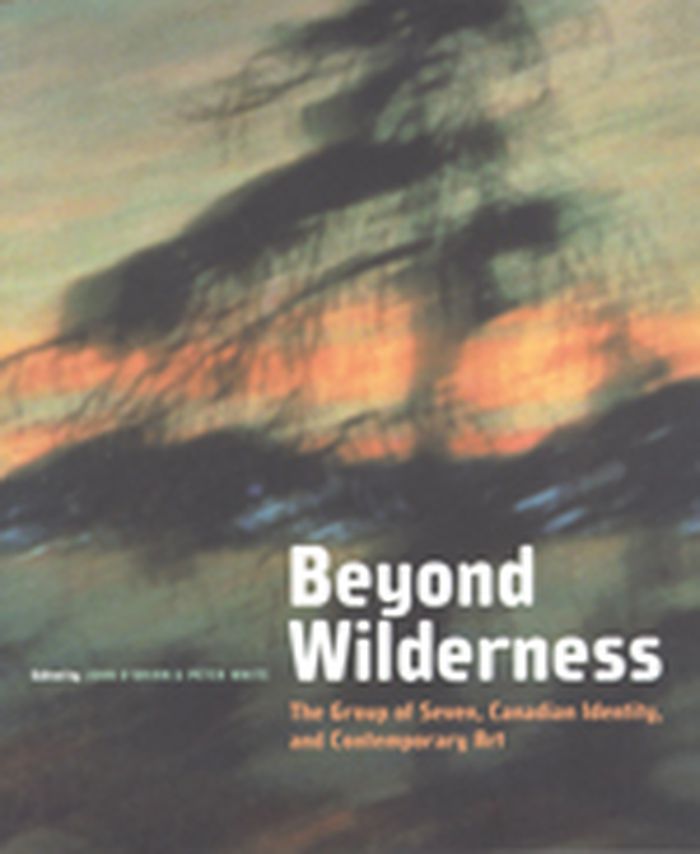
Beyond wilderness : The group of seven, Canadian identity, and contemporary art
Actions:
Prix:
$49.95
(disponible sur commande)
Résumé:
"The great purpose of landscape art is to make us at home in our own country" was the nationalist maxim motivating the Group of Seven's artistic project. The empty landscape paintings of the Group played a significant role in the nationalization of nature in Canada, particularly in the development of ideas about northernness, wilderness, and identity. In this book, John O'Brian and Peter White pick up where the Group of Seven left off. They demonstrate that since the 1960s a growing body of both art and critical writing has looked "beyond wilderness" to re-imagine landscape in a world of vastly altered political, technological, and environmental circumstances. By emphasizing social relationships, changing identity politics, and issues of colonial power and dispossession contemporary artists have produced landscape art that explores what was absent in the work of their predecessors. Beyond Wilderness expands the public understanding of Canadian landscape representation, tracing debates about the place of landscape in Canadian art and the national imagination through the twentieth century to the present. Critical writings from both contemporary and historically significant curators, historians, feminists, media theorists, and cultural critics and exactingly reproduced artworks by contemporary and historical artists are brought together in productive dialogue. Beyond Wilderness explains why landscape art in Canada had to be reinvented, and what forms the reinvention took. Contributors include Benedict Anderson (Cornell), Grant Arnold (Vancouver Art Gallery). Rebecca Belmore, Jody Berland (York), Eleanor Bond (Concordia), Jonathan Bordo (Trent), Douglas Cole, Marlene Creates, Marcia Crosby (Malaspina), Greg Curnoe, Ann Davis (Nickle Arts Museum), Leslie Dawn (Lethbridge), Shawna Dempsey, Christos Dikeakos, Peter Doig, Rosemary Donegan (OCAD), Stan Douglas, Paterson Ewen, Robert Fones, Northrop Frye, Robert Fulford, General Idea, Rodney Graham, Reesa Greenberg, Gu Xiong (British Columbia), Cole Harris (British Columbia), Richard William Hill (Middlesex), Robert Houle, Andrew Hunter (Waterloo), Lynda Jessup (Queen's), Zacharias Kunuk (Igloolik Isuma Productions), Johanne Lamoureux (Montréal), Robert Linsley (Waterloo), Barry Lord (Lord Cultural Resources), Marshall McLuhan, Mike MacDonald, Liz Magor (ECIAD), Lorri Millan, Gerta Moray (Guelph), Roald Nasgaard (Florida State), N.E. Thing Company, Carol Payne (Carleton), Edward Poitras, Dennis Reid (Art Gallery of Ontario), Michel Saulnier, Nancy Shaw (Simon Fraser), Johanne Sloan (Concordia), Michael Snow, Robert Stacey, David Thauberger, Loretta Todd, Esther Trépanier (Québec), Dot Tuer (OCAD), Christopher Varley, Jeff Wall, Paul H. Walton (McMaster), Mel Watkins (Toronto), Scott Watson (British Columbia), Anne Whitelaw (Alberta), Joyce Wieland, Jin-me Yoon (Simon Fraser), Lawrence Paul Yuxweluptun, and Joyce Zemans (York).
Classification:
livres
livres
Publication:
septembre 2007, Montreal Kingston
septembre 2007, Montreal Kingston
Sujet:
Architecture du Canada
Architecture du Canada
Classification:
périodiques
périodiques
Titre:
Arthuriana.
Arthuriana.
Actions:
Description:
1 online resource
Auteur:
Sujet:
Publication:
Dallas, TX : Southern Methodist University, 1994-, Dallas, TX : Scriptorium Press, West Lafayette, IN : Scriptorium Press
Dallas, TX : Southern Methodist University, 1994-, Dallas, TX : Scriptorium Press, West Lafayette, IN : Scriptorium Press
Classification:
périodiques
périodiques
Publication:
Dallas, TX : Southern Methodist University, 1994-, Dallas, TX : Scriptorium Press, West Lafayette, IN : Scriptorium Press
Dallas, TX : Southern Methodist University, 1994-, Dallas, TX : Scriptorium Press, West Lafayette, IN : Scriptorium Press
Auteur:
Sujet:
Classification:
périodiques
périodiques
Titre:
The Thomas Hardy journal.
The Thomas Hardy journal.
Actions:
Auteur:
Sujet:
Publication:
[Canterbury, Kent] : [Thomas Hardy Society], 1985-
[Canterbury, Kent] : [Thomas Hardy Society], 1985-
Classification:
périodiques
périodiques
Publication:
[Canterbury, Kent] : [Thomas Hardy Society], 1985-
[Canterbury, Kent] : [Thomas Hardy Society], 1985-
Auteur:
Sujet:
Classification:
périodiques
périodiques
Titre:
Scandinavian studies.
Scandinavian studies.
Actions:
Auteur:
Sujet:
Publication:
Menasha, Wis. : Society for the Advancement of Scandinavian Study, 1941-, Provo : UT : Brigham Young University, Champaign, IL : University of Illinois Press, Madison, WI : University of Wisconsin Press
Menasha, Wis. : Society for the Advancement of Scandinavian Study, 1941-, Provo : UT : Brigham Young University, Champaign, IL : University of Illinois Press, Madison, WI : University of Wisconsin Press
Classification:
périodiques
périodiques
Publication:
Menasha, Wis. : Society for the Advancement of Scandinavian Study, 1941-, Provo : UT : Brigham Young University, Champaign, IL : University of Illinois Press, Madison, WI : University of Wisconsin Press
Menasha, Wis. : Society for the Advancement of Scandinavian Study, 1941-, Provo : UT : Brigham Young University, Champaign, IL : University of Illinois Press, Madison, WI : University of Wisconsin Press
Auteur:
Sujet:


