


5194 Résultats
Classification:
livres
livres
Actions:
Prix:
$55.00
(disponible sur commande)
Résumé:
The modern poster dates back to around 1870, when color lithography had been sufficiently perfected to permit mass production. Artists such as Toulouse-Lautrec and Jules Chéret were quick to perceive and embrace the possibilities of the poster as a form, as means of disseminating their work and as a source of income. New movements in late nineteenth-century art, such as(...)
$55.00
(disponible sur commande)
Résumé:
The modern poster dates back to around 1870, when color lithography had been sufficiently perfected to permit mass production. Artists such as Toulouse-Lautrec and Jules Chéret were quick to perceive and embrace the possibilities of the poster as a form, as means of disseminating their work and as a source of income. New movements in late nineteenth-century art, such as(...)
Titre:
The European poster 1881-1938
Actions:
Prix:
$55.00
(disponible sur commande)
Résumé:
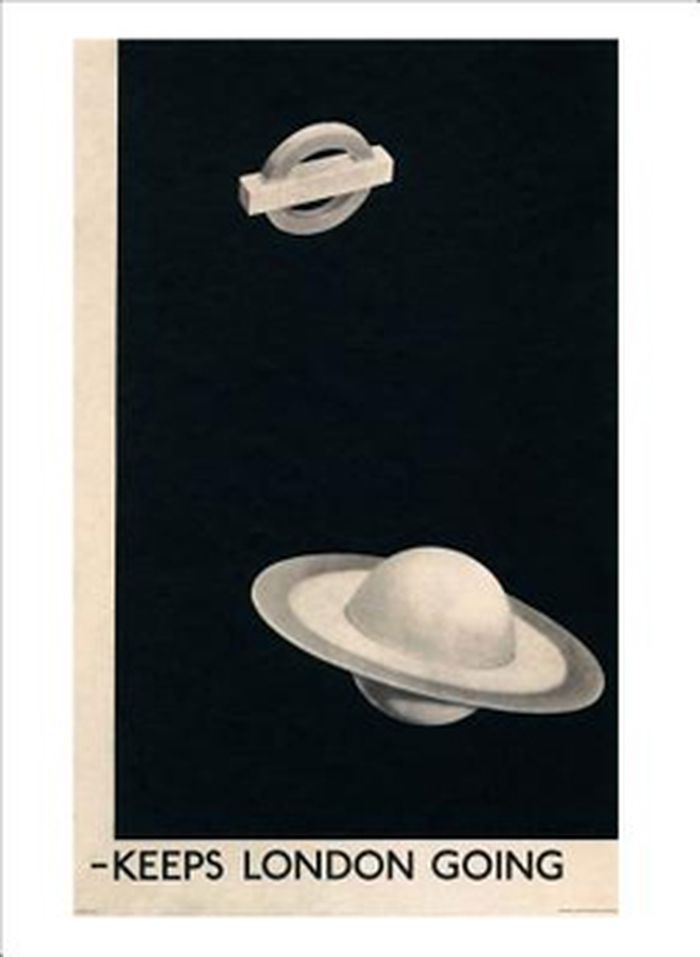
The modern poster dates back to around 1870, when color lithography had been sufficiently perfected to permit mass production. Artists such as Toulouse-Lautrec and Jules Chéret were quick to perceive and embrace the possibilities of the poster as a form, as means of disseminating their work and as a source of income. New movements in late nineteenth-century art, such as Art Nouveau and Symbolism, also adapted their respective styles to commercial demands, and their graphic power was such that major poster surveys were held as early as 1884. Later on, in the early days of the Soviet avant-garde, artists like Rodchenko and Klutsis were also to apply their graphic know-how to the poster form, in the service of a new communist Russia and its booming industries. This boxed volume reproduces 175 posters from the last decades of the nineteenth century to the early twentieth century, loose-leaf and in full color. The works have been gathered by expert Carlos Pérez from European museums and renowned international private collections. An accompanying paperback book, housed within the box, provides an historical overview. Among the 90-plus artists included here are Chéret, Ramón Casas, Toulouse-Lautrec, Pierre Bonnard, Alfons Mucha, Henri Matisse, Cassandre, Paul Colin, Jean Carlu, Giacomo Balla, Herbert Bayer, Otto Baumberger, John Heartfield, Vladimir Lebedev, Alexander Rodchenko, Man Ray, Kurt Schwitters, Oskar Schlemmer, Gustav Klutsis, Robert Béreny and Fortunato Depero.
The European poster 1881-1938
Actions:
Prix:
$55.00
(disponible sur commande)
Résumé:
The modern poster dates back to around 1870, when color lithography had been sufficiently perfected to permit mass production. Artists such as Toulouse-Lautrec and Jules Chéret were quick to perceive and embrace the possibilities of the poster as a form, as means of disseminating their work and as a source of income. New movements in late nineteenth-century art, such as Art Nouveau and Symbolism, also adapted their respective styles to commercial demands, and their graphic power was such that major poster surveys were held as early as 1884. Later on, in the early days of the Soviet avant-garde, artists like Rodchenko and Klutsis were also to apply their graphic know-how to the poster form, in the service of a new communist Russia and its booming industries. This boxed volume reproduces 175 posters from the last decades of the nineteenth century to the early twentieth century, loose-leaf and in full color. The works have been gathered by expert Carlos Pérez from European museums and renowned international private collections. An accompanying paperback book, housed within the box, provides an historical overview. Among the 90-plus artists included here are Chéret, Ramón Casas, Toulouse-Lautrec, Pierre Bonnard, Alfons Mucha, Henri Matisse, Cassandre, Paul Colin, Jean Carlu, Giacomo Balla, Herbert Bayer, Otto Baumberger, John Heartfield, Vladimir Lebedev, Alexander Rodchenko, Man Ray, Kurt Schwitters, Oskar Schlemmer, Gustav Klutsis, Robert Béreny and Fortunato Depero.
Classification:
livres
livres
Publication:
juillet 2012
juillet 2012
Sujet:
Arts graphiques imprimés
Arts graphiques imprimés
Classification:
livres
livres
Actions:
Prix:
$41.95
(disponible sur commande)
Résumé:
Propaganda art—whether a depiction of joyous workers in the style of socialist realism or a film directed by Steve Bannon—delivers a message. But, as Jonas Staal argues in this illuminating and timely book, propaganda does not merely make a political point; it aims to construct reality itself. Political regimes have shaped our world according to their interests and(...)
$41.95
(disponible sur commande)
Résumé:
Propaganda art—whether a depiction of joyous workers in the style of socialist realism or a film directed by Steve Bannon—delivers a message. But, as Jonas Staal argues in this illuminating and timely book, propaganda does not merely make a political point; it aims to construct reality itself. Political regimes have shaped our world according to their interests and(...)
Titre:
Propaganda art in the 21st century
Actions:
Prix:
$41.95
(disponible sur commande)
Résumé:
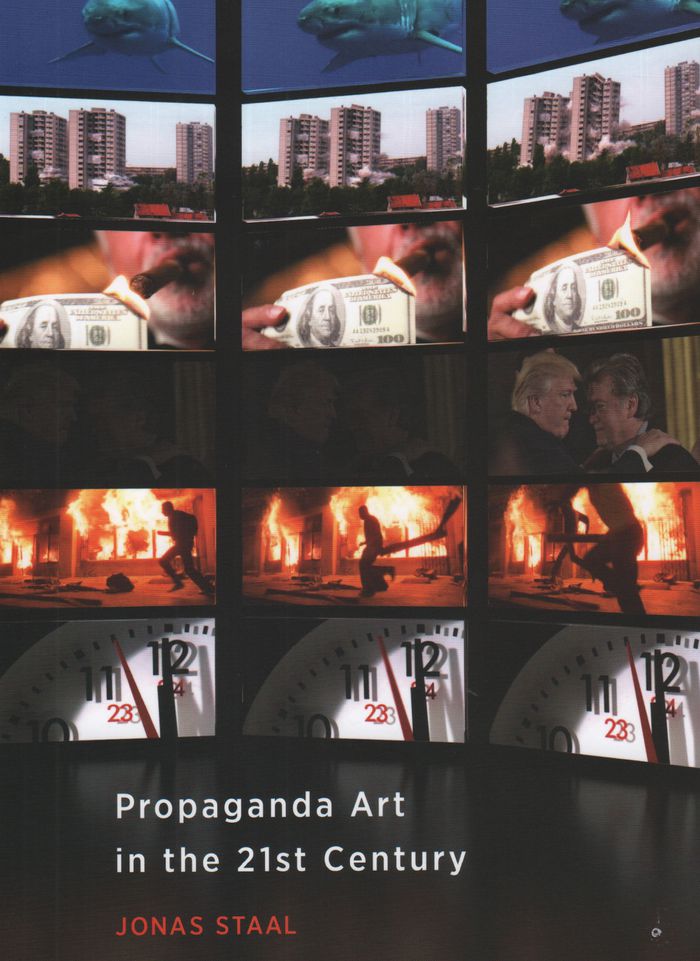
Propaganda art—whether a depiction of joyous workers in the style of socialist realism or a film directed by Steve Bannon—delivers a message. But, as Jonas Staal argues in this illuminating and timely book, propaganda does not merely make a political point; it aims to construct reality itself. Political regimes have shaped our world according to their interests and ideology; today, popular mass movements push back by constructing other worlds with their own propagandas. Staal shows that propaganda is not a relic of a totalitarian past but occurs today even in liberal democracies. He considers different historical forms of propaganda art, from avant-garde to totalitarian and modernist, and he investigates the us versus them dichotomy promoted in War on Terror propaganda art—describing, among other things, a fictional scenario from the Department of Homeland Security, acted out in real time, and military training via videogame. He discusses artistic and cultural productions developed by such popular mass movements of the twenty-first century as the Occupy, activism by and in support of undocumented migrants and refugees, and struggles for liberation in such countries as Mali and Syria. Staal, both a scholar of propaganda and a self-described propaganda artist, proposes a new model of emancipatory propaganda art—one that acknowledges the relation between art and power and takes both an aesthetic and a political position in the practice of world-making.
Propaganda art in the 21st century
Actions:
Prix:
$41.95
(disponible sur commande)
Résumé:
Propaganda art—whether a depiction of joyous workers in the style of socialist realism or a film directed by Steve Bannon—delivers a message. But, as Jonas Staal argues in this illuminating and timely book, propaganda does not merely make a political point; it aims to construct reality itself. Political regimes have shaped our world according to their interests and ideology; today, popular mass movements push back by constructing other worlds with their own propagandas. Staal shows that propaganda is not a relic of a totalitarian past but occurs today even in liberal democracies. He considers different historical forms of propaganda art, from avant-garde to totalitarian and modernist, and he investigates the us versus them dichotomy promoted in War on Terror propaganda art—describing, among other things, a fictional scenario from the Department of Homeland Security, acted out in real time, and military training via videogame. He discusses artistic and cultural productions developed by such popular mass movements of the twenty-first century as the Occupy, activism by and in support of undocumented migrants and refugees, and struggles for liberation in such countries as Mali and Syria. Staal, both a scholar of propaganda and a self-described propaganda artist, proposes a new model of emancipatory propaganda art—one that acknowledges the relation between art and power and takes both an aesthetic and a political position in the practice of world-making.
Classification:
livres
livres
Publication:
septembre 2019
septembre 2019
Sujet:
Théorie de l’art
Théorie de l’art
Classification:
livres
livres
Titre:
The architectural model: histories of the miniature and the prototype, the exemplar and the muse
The architectural model: histories of the miniature and the prototype, the exemplar and the muse
Actions:
Prix:
$60.00
(disponible sur commande)
Résumé:
For more than five hundred years, architects have employed three-dimensional models as tools to test, refine, and illustrate their ideas. But, as Matthew Mindrup shows, the uses of physical architectural models extend beyond mere representation. An architectural model can also simulate, instruct, inspire, and generate architectural designs. It can be, among other things,(...)
$60.00
(disponible sur commande)
Résumé:
For more than five hundred years, architects have employed three-dimensional models as tools to test, refine, and illustrate their ideas. But, as Matthew Mindrup shows, the uses of physical architectural models extend beyond mere representation. An architectural model can also simulate, instruct, inspire, and generate architectural designs. It can be, among other things,(...)
Titre:
The architectural model: histories of the miniature and the prototype, the exemplar and the muse
Actions:
Prix:
$60.00
(disponible sur commande)
Résumé:
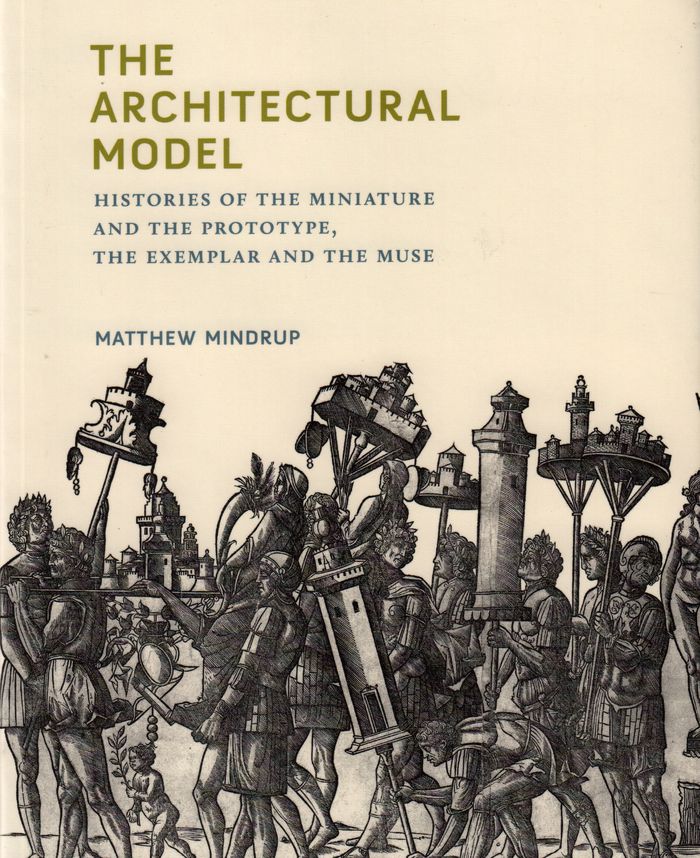
For more than five hundred years, architects have employed three-dimensional models as tools to test, refine, and illustrate their ideas. But, as Matthew Mindrup shows, the uses of physical architectural models extend beyond mere representation. An architectural model can also simulate, instruct, inspire, and generate architectural designs. It can be, among other things, sign, souvenir, toy, funerary object, didactic tool, medium, or muse. In this book, Mindrup surveys the history of architectural models by investigating their uses, both theoretical and practical. Tracing the architectural model's development from antiquity to the present, Mindrup also offers an interpretive framework for understanding each of its applications in the context of time and place. He first examines models meant to portray extant, fantastic, or proposed structures, describing their use in ancient funerary or dedicatory practices, in which models are endowed with magical power; as a medium for architectural reverie and inspiration; and as prototypes for twentieth-century experimental designs. Mindrup then considers models that exemplify certain architectural uses, exploring the influence of Leon Battista Alberti's dictum that models be simple, lest they distract from the architect's ideas; analyzing the model as a generative tool; and investigating allegorical, analogical, and anagogical interpretations of models. Mindrup's histories show how the model can be a surrogate for the architectural structure itself, or for the experience of its formal, tactile, and sensory complexity; and beyond that, that the manipulation, play, experimentation, and dreaming enabled by models allow us to imagine architecture in new ways.
The architectural model: histories of the miniature and the prototype, the exemplar and the muse
Actions:
Prix:
$60.00
(disponible sur commande)
Résumé:
For more than five hundred years, architects have employed three-dimensional models as tools to test, refine, and illustrate their ideas. But, as Matthew Mindrup shows, the uses of physical architectural models extend beyond mere representation. An architectural model can also simulate, instruct, inspire, and generate architectural designs. It can be, among other things, sign, souvenir, toy, funerary object, didactic tool, medium, or muse. In this book, Mindrup surveys the history of architectural models by investigating their uses, both theoretical and practical. Tracing the architectural model's development from antiquity to the present, Mindrup also offers an interpretive framework for understanding each of its applications in the context of time and place. He first examines models meant to portray extant, fantastic, or proposed structures, describing their use in ancient funerary or dedicatory practices, in which models are endowed with magical power; as a medium for architectural reverie and inspiration; and as prototypes for twentieth-century experimental designs. Mindrup then considers models that exemplify certain architectural uses, exploring the influence of Leon Battista Alberti's dictum that models be simple, lest they distract from the architect's ideas; analyzing the model as a generative tool; and investigating allegorical, analogical, and anagogical interpretations of models. Mindrup's histories show how the model can be a surrogate for the architectural structure itself, or for the experience of its formal, tactile, and sensory complexity; and beyond that, that the manipulation, play, experimentation, and dreaming enabled by models allow us to imagine architecture in new ways.
Classification:
livres
livres
Publication:
octobre 2019
octobre 2019
Sujet:
Théorie de l’architecture
Théorie de l’architecture
Classification:
livres
livres
Prix:
$75.00
(disponible sur commande)
Résumé:
The retro-futuristic epoch is one of the most visually spectacular in architecture's history. This book compiles radical ideas and visionary structures. The notion of utopia proves as diverse as it does universal. From exuberant master plans to singular architectural expressions, the rise of the utopian architectural movement in the 1960s and 1970s represents a critical(...)
$75.00
(disponible sur commande)
Résumé:
The retro-futuristic epoch is one of the most visually spectacular in architecture's history. This book compiles radical ideas and visionary structures. The notion of utopia proves as diverse as it does universal. From exuberant master plans to singular architectural expressions, the rise of the utopian architectural movement in the 1960s and 1970s represents a critical(...)
Titre:
The tale of tomorrow: utopian architecture in the modernist realm
Actions:
Prix:
$75.00
(disponible sur commande)
Résumé:
The retro-futuristic epoch is one of the most visually spectacular in architecture's history. This book compiles radical ideas and visionary structures. The notion of utopia proves as diverse as it does universal. From exuberant master plans to singular architectural expressions, the rise of the utopian architectural movement in the 1960s and 1970s represents a critical shift in ideology away from mid-century traditionalism. This period shakes off the conformity and conventions of the 1950s in favor of a more experimental post-war agenda. Marked by groundbreaking reinterpretations of both the single family house as well as more large scale developments, the embrace of utopian and generally progressive thinking mirrored the cultural revolution of the times. These daring, charming, futuristic, and hopeful designs were not isolated to a particular part of the world. Visionary voices longing for a fresh approach to architecture began appearing across France, Japan, the United States, and beyond. The Tale of Tomorrow documents this prolific era in architecture--a time when anything felt possible as architects began to think further and further outside the box. 'The Tale of Tomorrow' focuses exclusively on built manifestations of utopian ideas. Highlighting well-known projects as well as the more obscure, the collection of utopian approaches compiled here maintain their visual power and infectious optimism nearly half a century later. These experimental structures, both large and small, appear in everyday places in stark contrast to their far-from-utopian contexts.
The tale of tomorrow: utopian architecture in the modernist realm
Actions:
Prix:
$75.00
(disponible sur commande)
Résumé:
The retro-futuristic epoch is one of the most visually spectacular in architecture's history. This book compiles radical ideas and visionary structures. The notion of utopia proves as diverse as it does universal. From exuberant master plans to singular architectural expressions, the rise of the utopian architectural movement in the 1960s and 1970s represents a critical shift in ideology away from mid-century traditionalism. This period shakes off the conformity and conventions of the 1950s in favor of a more experimental post-war agenda. Marked by groundbreaking reinterpretations of both the single family house as well as more large scale developments, the embrace of utopian and generally progressive thinking mirrored the cultural revolution of the times. These daring, charming, futuristic, and hopeful designs were not isolated to a particular part of the world. Visionary voices longing for a fresh approach to architecture began appearing across France, Japan, the United States, and beyond. The Tale of Tomorrow documents this prolific era in architecture--a time when anything felt possible as architects began to think further and further outside the box. 'The Tale of Tomorrow' focuses exclusively on built manifestations of utopian ideas. Highlighting well-known projects as well as the more obscure, the collection of utopian approaches compiled here maintain their visual power and infectious optimism nearly half a century later. These experimental structures, both large and small, appear in everyday places in stark contrast to their far-from-utopian contexts.
Classification:
livres
livres
Publication:
avril 2015
avril 2015
Sujet:
Architecture expérimentale
Architecture expérimentale
Classification:
livres
livres
Actions:
Prix:
$39.99
(disponible sur commande)
Résumé:
We are living through a global catastrophe. Buildings affect how we feel, moment by moment, day by day. They have the power to lift us up and make us feel awestruck, playful, safe, and inspired, just as they can make us feel alienated and sad. But many of the places where we live, work, learn, and heal have become monotonous and disposable. We’re surrounded by cheap,(...)
$39.99
(disponible sur commande)
Résumé:
We are living through a global catastrophe. Buildings affect how we feel, moment by moment, day by day. They have the power to lift us up and make us feel awestruck, playful, safe, and inspired, just as they can make us feel alienated and sad. But many of the places where we live, work, learn, and heal have become monotonous and disposable. We’re surrounded by cheap,(...)
Titre:
Humanize: A maker's guide to designing our cities
Actions:
Prix:
$39.99
(disponible sur commande)
Résumé:
We are living through a global catastrophe. Buildings affect how we feel, moment by moment, day by day. They have the power to lift us up and make us feel awestruck, playful, safe, and inspired, just as they can make us feel alienated and sad. But many of the places where we live, work, learn, and heal have become monotonous and disposable. We’re surrounded by cheap, boring buildings that make people stressed, sick, and unhappy. In short, much of our world has been crafted in a way that is hostile to human experience. Now, drawing on his experience of the last thirty years in making bold, beautiful objects and buildings, Thomas Heatherwick offers both an informed critique of the inhumanity in most of today’s contemporary building design, and a rousing call for action. Looking through Heatherwick’s eyes, we see familiar landmarks and cityscapes around the world, from London, Paris, Barcelona, Singapore, New York, Vancouver, and beyond, both old and new, famous and obscure, to learn how places can either sap the life out of us—or nourish our senses and our psyche. The time has come, he says, to put emotion back at the heart of the design process, and the reasons to do so could not be more urgent. Design is not superficial: it has an impact upon economics, climate change, our mental and physical wellbeing—even the peace and cohesion of our societies.
Humanize: A maker's guide to designing our cities
Actions:
Prix:
$39.99
(disponible sur commande)
Résumé:
We are living through a global catastrophe. Buildings affect how we feel, moment by moment, day by day. They have the power to lift us up and make us feel awestruck, playful, safe, and inspired, just as they can make us feel alienated and sad. But many of the places where we live, work, learn, and heal have become monotonous and disposable. We’re surrounded by cheap, boring buildings that make people stressed, sick, and unhappy. In short, much of our world has been crafted in a way that is hostile to human experience. Now, drawing on his experience of the last thirty years in making bold, beautiful objects and buildings, Thomas Heatherwick offers both an informed critique of the inhumanity in most of today’s contemporary building design, and a rousing call for action. Looking through Heatherwick’s eyes, we see familiar landmarks and cityscapes around the world, from London, Paris, Barcelona, Singapore, New York, Vancouver, and beyond, both old and new, famous and obscure, to learn how places can either sap the life out of us—or nourish our senses and our psyche. The time has come, he says, to put emotion back at the heart of the design process, and the reasons to do so could not be more urgent. Design is not superficial: it has an impact upon economics, climate change, our mental and physical wellbeing—even the peace and cohesion of our societies.
Classification:
livres
livres
Publication:
novembre 2023
novembre 2023
Sujet:
Théorie de l’urbanisme
Théorie de l’urbanisme
Classification:
livres
livres
Actions:
Prix:
$39.95
(disponible sur commande)
Résumé:
When #BlackLivesMatter emerged in 2013, it animated the most consequential Black-led mobilization since the civil rights and Black power era. Today, the hashtag turned rallying cry is but one expression of a radical reorientation toward Black politics, protest, and political thought. To Build a Black Future examines the spirit and significance of this insurgency, offering(...)
$39.95
(disponible sur commande)
Résumé:
When #BlackLivesMatter emerged in 2013, it animated the most consequential Black-led mobilization since the civil rights and Black power era. Today, the hashtag turned rallying cry is but one expression of a radical reorientation toward Black politics, protest, and political thought. To Build a Black Future examines the spirit and significance of this insurgency, offering(...)
Titre:
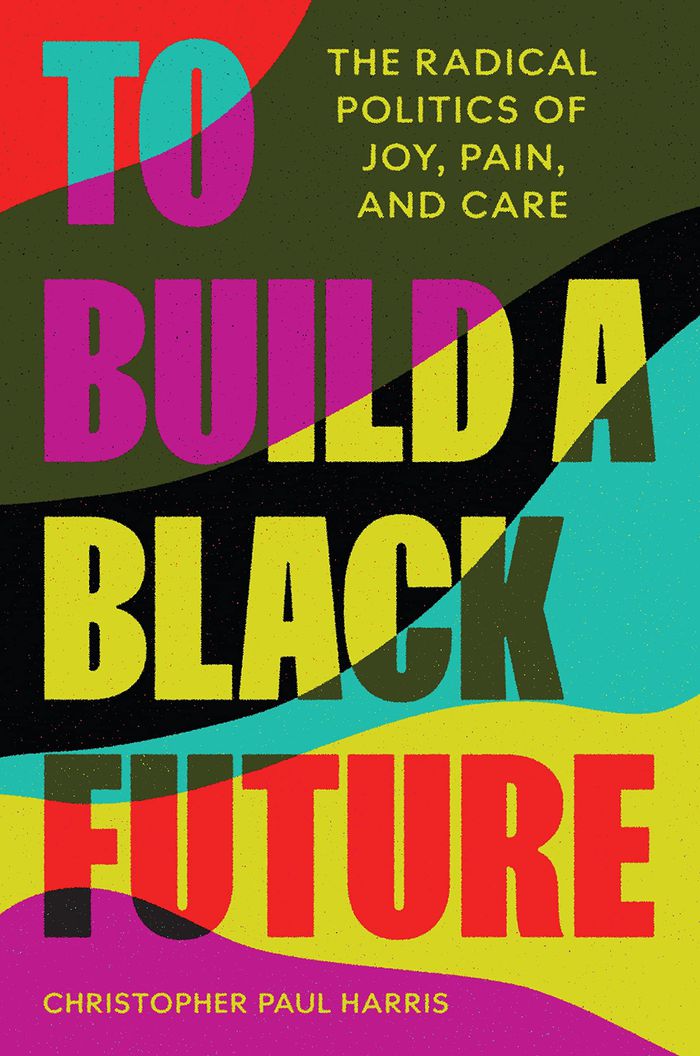
To build a black future: The radical politics of joy, pain and care
Actions:
Prix:
$39.95
(disponible sur commande)
Résumé:
When #BlackLivesMatter emerged in 2013, it animated the most consequential Black-led mobilization since the civil rights and Black power era. Today, the hashtag turned rallying cry is but one expression of a radical reorientation toward Black politics, protest, and political thought. To Build a Black Future examines the spirit and significance of this insurgency, offering a revelatory account of a new political culture?responsive to pain, suffused with joy, and premised on care?emerging from the centuries-long arc of Black rebellion, a tradition that traces back to the Black slave. Drawing on his own experiences as an activist and organizer, Christopher Paul Harris takes readers inside the Movement for Black Lives (M4BL) to chart the propulsive trajectory of Black politics and thought from the Middle Passage to the present historical moment. Carefully attending to the social forces that produce Black struggle and the contradictions that arise within it, Harris illustrates how M4BL gives voice to an abolitionist praxis that bridges the past, present, and future, outlining a political project at once directed inward to the Black community while issuing an outward challenge to the world. Essential reading for the age of #BlackLivesMatter, this visionary and provocative book reveals how the radical politics of joy, pain, and care, in sharp contrast to liberal political thought, can build a Black future that transcends ideology and pushes the boundaries of our political imagination.
To build a black future: The radical politics of joy, pain and care
Actions:
Prix:
$39.95
(disponible sur commande)
Résumé:
When #BlackLivesMatter emerged in 2013, it animated the most consequential Black-led mobilization since the civil rights and Black power era. Today, the hashtag turned rallying cry is but one expression of a radical reorientation toward Black politics, protest, and political thought. To Build a Black Future examines the spirit and significance of this insurgency, offering a revelatory account of a new political culture?responsive to pain, suffused with joy, and premised on care?emerging from the centuries-long arc of Black rebellion, a tradition that traces back to the Black slave. Drawing on his own experiences as an activist and organizer, Christopher Paul Harris takes readers inside the Movement for Black Lives (M4BL) to chart the propulsive trajectory of Black politics and thought from the Middle Passage to the present historical moment. Carefully attending to the social forces that produce Black struggle and the contradictions that arise within it, Harris illustrates how M4BL gives voice to an abolitionist praxis that bridges the past, present, and future, outlining a political project at once directed inward to the Black community while issuing an outward challenge to the world. Essential reading for the age of #BlackLivesMatter, this visionary and provocative book reveals how the radical politics of joy, pain, and care, in sharp contrast to liberal political thought, can build a Black future that transcends ideology and pushes the boundaries of our political imagination.
Classification:
livres
livres
Publication:
septembre 2023
septembre 2023
Sujet:
Social
Social
Classification:
livres
livres
Titre:
Roman Signer
Roman Signer
Actions:
Prix:
$59.95
(disponible sur commande)
Résumé:
Since the mid 1970s Roman Signer has examined the forces of the elements – air, fire, earth and water – in a combination of performance (documented by photography and video) and sculpture (the physical remains of his acts). With a Dadaist love for the absurd, his artworks include Race (1981), in which the artist races a rocket across a field (hopelessly behind from the(...)
$59.95
(disponible sur commande)
Résumé:
Since the mid 1970s Roman Signer has examined the forces of the elements – air, fire, earth and water – in a combination of performance (documented by photography and video) and sculpture (the physical remains of his acts). With a Dadaist love for the absurd, his artworks include Race (1981), in which the artist races a rocket across a field (hopelessly behind from the(...)
Publication:
juin 2006, London
juin 2006, London
Titre:
Roman Signer
Actions:
Prix:
$59.95
(disponible sur commande)
Résumé:
Since the mid 1970s Roman Signer has examined the forces of the elements – air, fire, earth and water – in a combination of performance (documented by photography and video) and sculpture (the physical remains of his acts). With a Dadaist love for the absurd, his artworks include Race (1981), in which the artist races a rocket across a field (hopelessly behind from the outset, the artist loses by nearly the entire length); Action at Hotel Weissbad (1992), in which an ordinary table is shot out a hotel window, the resulting photographs showing a table flying incongruously over a sleepy Swiss village; Power of Rain (1974), in which rainwater gathers slowly in a funnel until its force shatters a block of plaster; and Bicycle with Rockets (1991), the photographs of which show a fiery bicycle flying through the gallery like a demon comet. Often Signer will exhibit in the gallery the remains of an event not witnessed by the public, such as four empty barrels and a violently splattered wall, the remains of an explosion of paint in the gallery space (Portrait Gallery, 1993), or four sand piles with perfectly round craters on each, the neat result of four simultaneous explosions at their peaks (Cones of Sand, 1988). Roman Signer’s work has been exhibited at major venues across Europe and North America, as well as important international exhibitions such as Documenta 8 (1987), Skulptur Projekte in Munster (1997) and the 48th Venice Biennale (1999), in which he represented Switzerland.
Roman Signer
Actions:
Prix:
$59.95
(disponible sur commande)
Résumé:
Since the mid 1970s Roman Signer has examined the forces of the elements – air, fire, earth and water – in a combination of performance (documented by photography and video) and sculpture (the physical remains of his acts). With a Dadaist love for the absurd, his artworks include Race (1981), in which the artist races a rocket across a field (hopelessly behind from the outset, the artist loses by nearly the entire length); Action at Hotel Weissbad (1992), in which an ordinary table is shot out a hotel window, the resulting photographs showing a table flying incongruously over a sleepy Swiss village; Power of Rain (1974), in which rainwater gathers slowly in a funnel until its force shatters a block of plaster; and Bicycle with Rockets (1991), the photographs of which show a fiery bicycle flying through the gallery like a demon comet. Often Signer will exhibit in the gallery the remains of an event not witnessed by the public, such as four empty barrels and a violently splattered wall, the remains of an explosion of paint in the gallery space (Portrait Gallery, 1993), or four sand piles with perfectly round craters on each, the neat result of four simultaneous explosions at their peaks (Cones of Sand, 1988). Roman Signer’s work has been exhibited at major venues across Europe and North America, as well as important international exhibitions such as Documenta 8 (1987), Skulptur Projekte in Munster (1997) and the 48th Venice Biennale (1999), in which he represented Switzerland.
Classification:
livres
livres
Publication:
juin 2006, London
juin 2006, London
Classification:
livres
livres
Actions:
Prix:
$102.95
(disponible en magasin)
Résumé:
In the first major book on the beautiful and richly varied residential designs of John Russell Pope, "Mastering Tradition: The Residential Architecture of John Russell Pope" highlights the extraordinary houses of one of the 20th Century’s most prolific architects. John Russell Pope (1873–1937) was an architect of tradition and a master of pro-portion, massing, and(...)
$102.95
(disponible en magasin)
Résumé:
In the first major book on the beautiful and richly varied residential designs of John Russell Pope, "Mastering Tradition: The Residential Architecture of John Russell Pope" highlights the extraordinary houses of one of the 20th Century’s most prolific architects. John Russell Pope (1873–1937) was an architect of tradition and a master of pro-portion, massing, and(...)
Sujet:
Architecture, monographies
Architecture, monographies
Publication:
août 2004, New York
août 2004, New York
Titre:
Mastering tradition : the residential architecture of John Russell Pope
Actions:
Prix:
$102.95
(disponible en magasin)
Résumé:
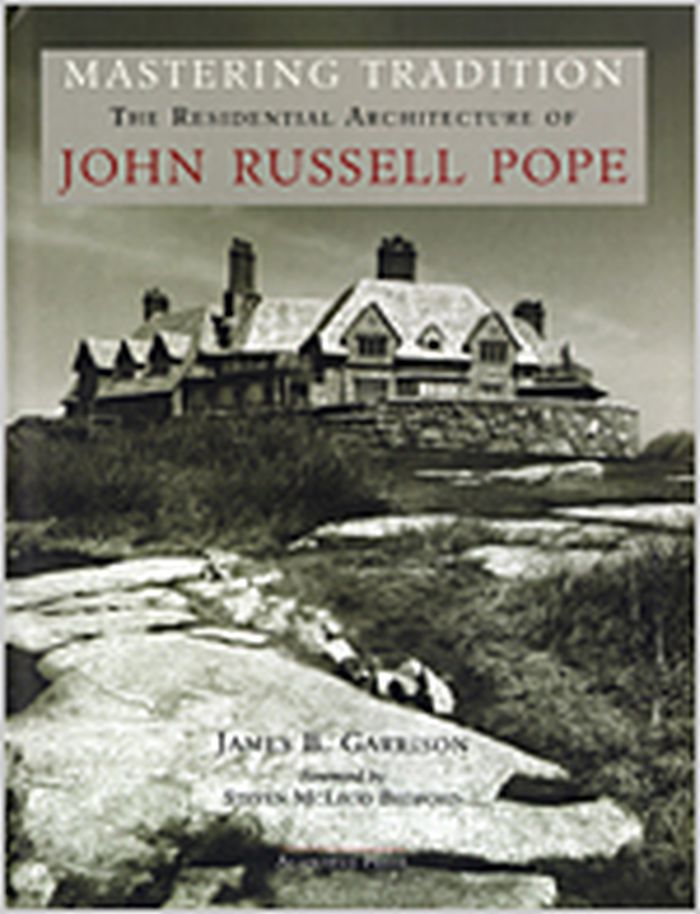
In the first major book on the beautiful and richly varied residential designs of John Russell Pope, "Mastering Tradition: The Residential Architecture of John Russell Pope" highlights the extraordinary houses of one of the 20th Century’s most prolific architects. John Russell Pope (1873–1937) was an architect of tradition and a master of pro-portion, massing, and scale. Drawing on a personal palette rich in historic precedents from ancient Greece to colonial America, Pope created original and refined designs that embodied the aspirations of the United States as an emerging world power. Both his private and public work - which includes the National Gallery of Art and the Thomas Jefferson Memorial - possess a poise and confidence that emanated from a disciplined approach to architectural design formed by his experiences at home and abroad. In the brief span of 35 years, Pope and his office designed several hundred buildings and monuments, including over 100 houses. His residential work spans a wide array of styles, and comprises vast estates - with integrated ensembles of living, work, and leisure buildings - town houses, country retreats, and a series of jewel-like mausoleums. The common thread running through all his work is a total mastery of the design vocabulary. In this first comprehensive and lavishly illustrated survey of his residential work, author James Garrison delves into Pope’s design sources and methods, and demonstrates how an apparently diverse body of work is related to the common theme of mastering tradition.
Mastering tradition : the residential architecture of John Russell Pope
Actions:
Prix:
$102.95
(disponible en magasin)
Résumé:
In the first major book on the beautiful and richly varied residential designs of John Russell Pope, "Mastering Tradition: The Residential Architecture of John Russell Pope" highlights the extraordinary houses of one of the 20th Century’s most prolific architects. John Russell Pope (1873–1937) was an architect of tradition and a master of pro-portion, massing, and scale. Drawing on a personal palette rich in historic precedents from ancient Greece to colonial America, Pope created original and refined designs that embodied the aspirations of the United States as an emerging world power. Both his private and public work - which includes the National Gallery of Art and the Thomas Jefferson Memorial - possess a poise and confidence that emanated from a disciplined approach to architectural design formed by his experiences at home and abroad. In the brief span of 35 years, Pope and his office designed several hundred buildings and monuments, including over 100 houses. His residential work spans a wide array of styles, and comprises vast estates - with integrated ensembles of living, work, and leisure buildings - town houses, country retreats, and a series of jewel-like mausoleums. The common thread running through all his work is a total mastery of the design vocabulary. In this first comprehensive and lavishly illustrated survey of his residential work, author James Garrison delves into Pope’s design sources and methods, and demonstrates how an apparently diverse body of work is related to the common theme of mastering tradition.
Classification:
livres
livres
Publication:
août 2004, New York
août 2004, New York
Sujet:
Architecture, monographies
Architecture, monographies
Classification:
livres
livres
Actions:
Prix:
$56.95
(disponible sur commande)
Résumé:
In Outlaw Territories, Felicity Scott traces the relation of architecture and urbanism to human unsettlement and territorial insecurity during the 1960s and 1970s. Investigating a set of responses to the growing urban unrest in the developed and developing worlds, Scott revisits an era when the discipline of architecture staked out a role in global environmental(...)
$56.95
(disponible sur commande)
Résumé:
In Outlaw Territories, Felicity Scott traces the relation of architecture and urbanism to human unsettlement and territorial insecurity during the 1960s and 1970s. Investigating a set of responses to the growing urban unrest in the developed and developing worlds, Scott revisits an era when the discipline of architecture staked out a role in global environmental(...)
Titre:
Outlaw Territories: Environments of Insecurity/ Architectures of Counterinsurgency
Actions:
Prix:
$56.95
(disponible sur commande)
Résumé:
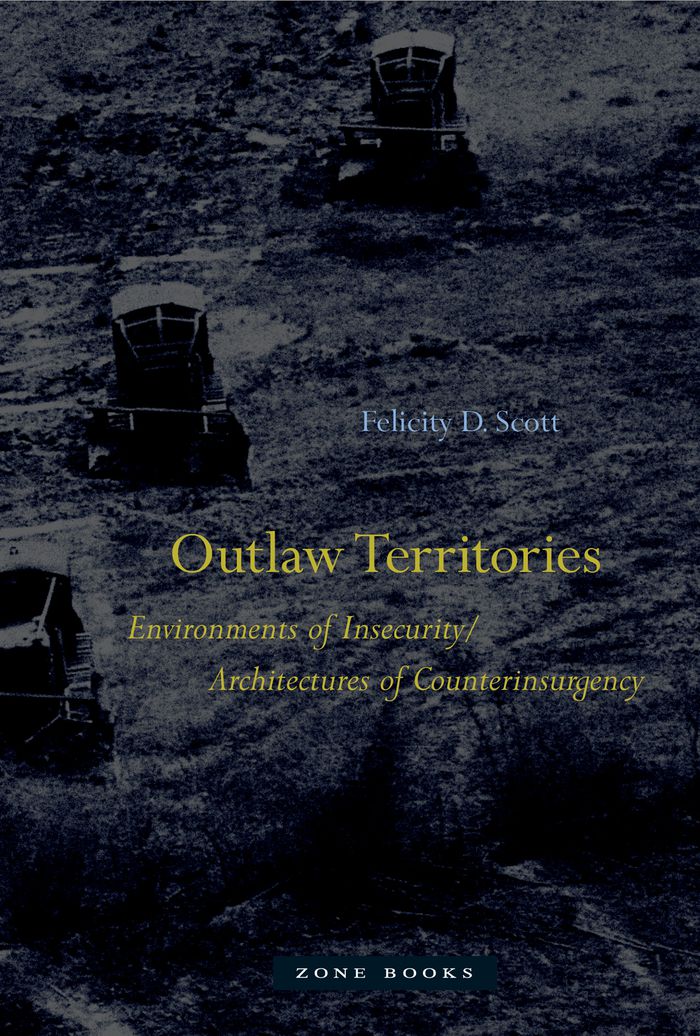
In Outlaw Territories, Felicity Scott traces the relation of architecture and urbanism to human unsettlement and territorial insecurity during the 1960s and 1970s. Investigating a set of responses to the growing urban unrest in the developed and developing worlds, Scott revisits an era when the discipline of architecture staked out a role in global environmental governance and the biopolitical management of populations. She describes architecture’s response to the displacement of persons brought on by migration, urbanization, environmental catastrophe, and warfare, and she traces architecture’s relationship to the material, environmental, psychological, and geopolitical transformations brought on by postindustrial technologies and neoliberal capitalism after World War II. At the height of the U.S.-led war in Vietnam and Cambodia, with ongoing decolonization struggles in many parts of the world, architecture not only emerged as a target of political agitation because of its inherent normativity but also became heavily enmeshed with military, legal, and humanitarian apparatuses, participating in scientific and technological research dedicated to questions of international management and security. Once architecture became aligned with a global matrix of forces concerned with the environment, economic development, migration, genocide, and war, its role shifted at times toward providing strategic expertise for institutions born of neoliberal capitalism. Scott investigates this nexus and questions how and to what ends architecture and the environment came to be intimately connected to the expanded exercise of power within the shifting geopolitical frameworks at this time.
Outlaw Territories: Environments of Insecurity/ Architectures of Counterinsurgency
Actions:
Prix:
$56.95
(disponible sur commande)
Résumé:
In Outlaw Territories, Felicity Scott traces the relation of architecture and urbanism to human unsettlement and territorial insecurity during the 1960s and 1970s. Investigating a set of responses to the growing urban unrest in the developed and developing worlds, Scott revisits an era when the discipline of architecture staked out a role in global environmental governance and the biopolitical management of populations. She describes architecture’s response to the displacement of persons brought on by migration, urbanization, environmental catastrophe, and warfare, and she traces architecture’s relationship to the material, environmental, psychological, and geopolitical transformations brought on by postindustrial technologies and neoliberal capitalism after World War II. At the height of the U.S.-led war in Vietnam and Cambodia, with ongoing decolonization struggles in many parts of the world, architecture not only emerged as a target of political agitation because of its inherent normativity but also became heavily enmeshed with military, legal, and humanitarian apparatuses, participating in scientific and technological research dedicated to questions of international management and security. Once architecture became aligned with a global matrix of forces concerned with the environment, economic development, migration, genocide, and war, its role shifted at times toward providing strategic expertise for institutions born of neoliberal capitalism. Scott investigates this nexus and questions how and to what ends architecture and the environment came to be intimately connected to the expanded exercise of power within the shifting geopolitical frameworks at this time.
Classification:
livres
livres
Publication:
février 2016
février 2016
Sujet:
Théorie de l’architecture
Théorie de l’architecture
Classification:
livres
livres

Titre:
Timber
Timber
Actions:
Prix:
$26.95
(disponible sur commande)
Résumé:
Timber is a vital resource that is all around us. It is the house that shelters us, the furniture we relax in, the books we read, the paper we print, the disposable diapers for our babies, and the boxes that contain our cereal, detergent, and new appliances. The way we produce and consume timber, however, is changing. With international timber companies and big box(...)
$26.95
(disponible sur commande)
Résumé:
Timber is a vital resource that is all around us. It is the house that shelters us, the furniture we relax in, the books we read, the paper we print, the disposable diapers for our babies, and the boxes that contain our cereal, detergent, and new appliances. The way we produce and consume timber, however, is changing. With international timber companies and big box(...)
Titre:
Timber
Actions:
Prix:
$26.95
(disponible sur commande)
Résumé:
Timber is a vital resource that is all around us. It is the house that shelters us, the furniture we relax in, the books we read, the paper we print, the disposable diapers for our babies, and the boxes that contain our cereal, detergent, and new appliances. The way we produce and consume timber, however, is changing. With international timber companies and big box discount retailers increasingly controlling through global commodity chains where and how much timber is traded, the world's remaining old-growth forests, particularly in the developing world, are under threat of disappearing - all for the price of a consumer bargain. This trailblazing book is the first to expose what's happening inside corporate commodity chains with conclusions that fundamentally challenge our understanding of how and why deforestation persists. Authors Peter Dauvergne and Jane Lister reveal how timber now moves through long and complex supply chains from the forests of the global South through the factories of emerging economies like China to the big box retail shelves of Europe and North America. Well-off consumers are getting unprecedented deals. But the social and environmental costs are extraordinarily high as corporations mine the world's poorest regions and most vulnerable ecosystems. The growing power of big retail within these commodity chains is further increasing South-North inequities and unsustainable global consumption. Yet, as this book's highly original analysis uncovers, it is also creating some intriguing opportunities to promote more responsible business practices and better global forest governance.
Timber
Actions:
Prix:
$26.95
(disponible sur commande)
Résumé:
Timber is a vital resource that is all around us. It is the house that shelters us, the furniture we relax in, the books we read, the paper we print, the disposable diapers for our babies, and the boxes that contain our cereal, detergent, and new appliances. The way we produce and consume timber, however, is changing. With international timber companies and big box discount retailers increasingly controlling through global commodity chains where and how much timber is traded, the world's remaining old-growth forests, particularly in the developing world, are under threat of disappearing - all for the price of a consumer bargain. This trailblazing book is the first to expose what's happening inside corporate commodity chains with conclusions that fundamentally challenge our understanding of how and why deforestation persists. Authors Peter Dauvergne and Jane Lister reveal how timber now moves through long and complex supply chains from the forests of the global South through the factories of emerging economies like China to the big box retail shelves of Europe and North America. Well-off consumers are getting unprecedented deals. But the social and environmental costs are extraordinarily high as corporations mine the world's poorest regions and most vulnerable ecosystems. The growing power of big retail within these commodity chains is further increasing South-North inequities and unsustainable global consumption. Yet, as this book's highly original analysis uncovers, it is also creating some intriguing opportunities to promote more responsible business practices and better global forest governance.
Classification:
livres
livres
Publication:
avril 2011
avril 2011
Sujet:
Expositions en cours
Expositions en cours


