


6146 Résultats
Classification:
expositions
expositions
Actions:
Description:
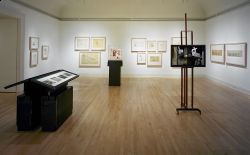
L’exposition se concentre sur un aspect déterminant et actuel de l’œuvre de Scarpa : l’approche originale qu’il utilisait pour composer avec les strates historiques qui forment le tissu d’une ville ou d’un bâtiment. En se concentrant sur l’habileté avec laquelle Scarpa pouvait développer une nouvelle œuvre à l’intérieur même, et souvent à partir, de fragments disparates(...)
L’exposition se concentre sur un aspect déterminant et actuel de l’œuvre de Scarpa : l’approche originale qu’il utilisait pour composer avec les strates historiques qui forment le tissu d’une ville ou d’un bâtiment. En se concentrant sur l’habileté avec laquelle Scarpa pouvait développer une nouvelle œuvre à l’intérieur même, et souvent à partir, de fragments disparates(...)
Localisation:
Salles principales
Salles principales
Date:
26 mai 1999 au 31 octobre 1999
26 mai 1999 au 31 octobre 1999
Titre:
Carlo Scarpa, architecte : composer avec l’histoire
Actions:
Description:
L’exposition se concentre sur un aspect déterminant et actuel de l’œuvre de Scarpa : l’approche originale qu’il utilisait pour composer avec les strates historiques qui forment le tissu d’une ville ou d’un bâtiment. En se concentrant sur l’habileté avec laquelle Scarpa pouvait développer une nouvelle œuvre à l’intérieur même, et souvent à partir, de fragments disparates(...)
Carlo Scarpa, architecte : composer avec l’histoire
Actions:
Description:
L’exposition se concentre sur un aspect déterminant et actuel de l’œuvre de Scarpa : l’approche originale qu’il utilisait pour composer avec les strates historiques qui forment le tissu d’une ville ou d’un bâtiment. En se concentrant sur l’habileté avec laquelle Scarpa pouvait développer une nouvelle œuvre à l’intérieur même, et souvent à partir, de fragments disparates(...)
Classification:
expositions
expositions
Date:
26 mai 1999 au
31 octobre 1999
26 mai 1999 au
31 octobre 1999
Localisation:
Salles principales
Salles principales
Classification:
expositions
expositions
Actions:
Description:
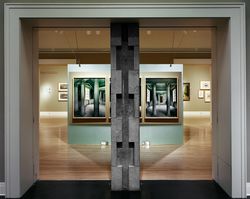
Tout comme la villa Rotonda d’Andrea Palladio a contribué à définir, pour les générations suivantes, l’architecture de la Renaissance en Italie, Chiswick est le locus classicus du renouveau palladien au XVIIIe siècle. L’exposition suit le déroulement de la pensée d’un grand architecte qui transforme successivement ses sources d’inspiration en projet architectural, puis(...)
Tout comme la villa Rotonda d’Andrea Palladio a contribué à définir, pour les générations suivantes, l’architecture de la Renaissance en Italie, Chiswick est le locus classicus du renouveau palladien au XVIIIe siècle. L’exposition suit le déroulement de la pensée d’un grand architecte qui transforme successivement ses sources d’inspiration en projet architectural, puis(...)
Localisation:
Salles principales
Salles principales
Date:
19 juillet 1994 au 25 septembre 1994
19 juillet 1994 au 25 septembre 1994
Titre:
Le renouveau palladien : la villa et les jardins de Lord Burlington à Chiswick
Actions:
Description:
Tout comme la villa Rotonda d’Andrea Palladio a contribué à définir, pour les générations suivantes, l’architecture de la Renaissance en Italie, Chiswick est le locus classicus du renouveau palladien au XVIIIe siècle. L’exposition suit le déroulement de la pensée d’un grand architecte qui transforme successivement ses sources d’inspiration en projet architectural, puis(...)
Le renouveau palladien : la villa et les jardins de Lord Burlington à Chiswick
Actions:
Description:
Tout comme la villa Rotonda d’Andrea Palladio a contribué à définir, pour les générations suivantes, l’architecture de la Renaissance en Italie, Chiswick est le locus classicus du renouveau palladien au XVIIIe siècle. L’exposition suit le déroulement de la pensée d’un grand architecte qui transforme successivement ses sources d’inspiration en projet architectural, puis(...)
Classification:
expositions
expositions
Date:
19 juillet 1994 au
25 septembre 1994
19 juillet 1994 au
25 septembre 1994
Localisation:
Salles principales
Salles principales
Classification:
expositions
expositions
Description:
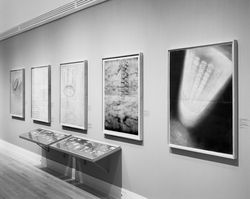
L’exposition explore certains des moments les plus intenses et les plus marquants de l’histoire de l’architecture : ceux qui ont constitué la période fertile et explosive qui a succédé à la Révolution d’Octobre. Le travail des architectes et graphistes de l’avant-garde était motivé aussi bien par le productivisme que par un souci esthétique. Pour eux, l’architecture et(...)
L’exposition explore certains des moments les plus intenses et les plus marquants de l’histoire de l’architecture : ceux qui ont constitué la période fertile et explosive qui a succédé à la Révolution d’Octobre. Le travail des architectes et graphistes de l’avant-garde était motivé aussi bien par le productivisme que par un souci esthétique. Pour eux, l’architecture et(...)
Localisation:
Salles principales
Salles principales
Date:
19 juin 1991 au 8 septembre 1991
19 juin 1991 au 8 septembre 1991
Titre:
Dessins d'architecture de l'avant-garde russe, 1917-1935
Actions:
Description:
L’exposition explore certains des moments les plus intenses et les plus marquants de l’histoire de l’architecture : ceux qui ont constitué la période fertile et explosive qui a succédé à la Révolution d’Octobre. Le travail des architectes et graphistes de l’avant-garde était motivé aussi bien par le productivisme que par un souci esthétique. Pour eux, l’architecture et(...)
Dessins d'architecture de l'avant-garde russe, 1917-1935
Actions:
Description:
L’exposition explore certains des moments les plus intenses et les plus marquants de l’histoire de l’architecture : ceux qui ont constitué la période fertile et explosive qui a succédé à la Révolution d’Octobre. Le travail des architectes et graphistes de l’avant-garde était motivé aussi bien par le productivisme que par un souci esthétique. Pour eux, l’architecture et(...)
Classification:
expositions
expositions
Date:
19 juin 1991 au
8 septembre 1991
19 juin 1991 au
8 septembre 1991
Localisation:
Salles principales
Salles principales
Classification:
expositions
expositions
Titre:
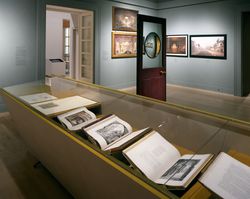
John Soane 1753-1837
John Soane 1753-1837
Actions:
Description:
Décrit par Henry James comme « l’une des choses les plus étonnantes de Londres », le Sir John Soane’s Museum a été conçu comme un lieu pittoresque et énigmatique, à la fois maison, cabinet de travail, galerie de collectionneur et vitrine personnelle de l’un des architectes les plus novateurs de l’histoire. L’exposition offre le premier réexamen majeur de la carrière de(...)
Décrit par Henry James comme « l’une des choses les plus étonnantes de Londres », le Sir John Soane’s Museum a été conçu comme un lieu pittoresque et énigmatique, à la fois maison, cabinet de travail, galerie de collectionneur et vitrine personnelle de l’un des architectes les plus novateurs de l’histoire. L’exposition offre le premier réexamen majeur de la carrière de(...)
Localisation:
Salles principales
Salles principales
Date:
16 mai 2001 au 3 septembre 2001
16 mai 2001 au 3 septembre 2001
Titre:
John Soane 1753-1837
Actions:
Description:
Décrit par Henry James comme « l’une des choses les plus étonnantes de Londres », le Sir John Soane’s Museum a été conçu comme un lieu pittoresque et énigmatique, à la fois maison, cabinet de travail, galerie de collectionneur et vitrine personnelle de l’un des architectes les plus novateurs de l’histoire. L’exposition offre le premier réexamen majeur de la carrière de(...)
John Soane 1753-1837
Actions:
Description:
Décrit par Henry James comme « l’une des choses les plus étonnantes de Londres », le Sir John Soane’s Museum a été conçu comme un lieu pittoresque et énigmatique, à la fois maison, cabinet de travail, galerie de collectionneur et vitrine personnelle de l’un des architectes les plus novateurs de l’histoire. L’exposition offre le premier réexamen majeur de la carrière de(...)
Classification:
expositions
expositions
Date:
16 mai 2001 au
3 septembre 2001
16 mai 2001 au
3 septembre 2001
Localisation:
Salles principales
Salles principales
Niveau de description archivistique:
Projet
Projet
Numéro de référence:
AP018.S1.1978.PR05
Description:
This project series documents the Ontario Congress and Trade Centre in Toronto from 1978-1980. The office identified the project number as 7807. This project consisted of the investigation of building a congress and trade centre on Front Street West. The project proposed a 519,500 square foot building with a 200,000 square foot exhibition hall that could be divided for smaller events. The building would also contain a multiuse hall, theatres, meeting rooms, offices, food and beverage facilities, and a 1300 car parking area. The project was proposed to cost around $73 million. The project is also referred to as the Toronto Convention Centre or Ontario Convention Centre. The majority of the textual documentation shows the controversial debate over whether the centre should be built, including numerous press clippings that highlight the issue. It should be noted that Congress Centre and Convention Centre are used interchangeably in the materials. Eventually, this project contract was given to another architectural firm and today is known as the Metropolitan Toronto Convention Centre. The project is recorded through drawings and textual records dating from 1976-1981. The drawings largely show designs for the proposed building and site plans. The textual records include correspondence, meeting minutes, interoffice memos, project proposals, feasibility reports, press clippings on the project and on other convention centres, research documentation on other convention centres, documentation on a proposed hotel to be built on the centre and promotional materials.
AP018.S1.1978.PR05
Description:
This project series documents the Ontario Congress and Trade Centre in Toronto from 1978-1980. The office identified the project number as 7807. This project consisted of the investigation of building a congress and trade centre on Front Street West. The project proposed a 519,500 square foot building with a 200,000 square foot exhibition hall that could be divided for smaller events. The building would also contain a multiuse hall, theatres, meeting rooms, offices, food and beverage facilities, and a 1300 car parking area. The project was proposed to cost around $73 million. The project is also referred to as the Toronto Convention Centre or Ontario Convention Centre. The majority of the textual documentation shows the controversial debate over whether the centre should be built, including numerous press clippings that highlight the issue. It should be noted that Congress Centre and Convention Centre are used interchangeably in the materials. Eventually, this project contract was given to another architectural firm and today is known as the Metropolitan Toronto Convention Centre. The project is recorded through drawings and textual records dating from 1976-1981. The drawings largely show designs for the proposed building and site plans. The textual records include correspondence, meeting minutes, interoffice memos, project proposals, feasibility reports, press clippings on the project and on other convention centres, research documentation on other convention centres, documentation on a proposed hotel to be built on the centre and promotional materials.
Personnes et institutions:
Date:
1976-1981
1976-1981
Titre:
Ontario Congress and Trade Centre, Toronto (1978-1981)
Actions:
AP018.S1.1978.PR05
Description:
This project series documents the Ontario Congress and Trade Centre in Toronto from 1978-1980. The office identified the project number as 7807. This project consisted of the investigation of building a congress and trade centre on Front Street West. The project proposed a 519,500 square foot building with a 200,000 square foot exhibition hall that could be divided for smaller events. The building would also contain a multiuse hall, theatres, meeting rooms, offices, food and beverage facilities, and a 1300 car parking area. The project was proposed to cost around $73 million. The project is also referred to as the Toronto Convention Centre or Ontario Convention Centre. The majority of the textual documentation shows the controversial debate over whether the centre should be built, including numerous press clippings that highlight the issue. It should be noted that Congress Centre and Convention Centre are used interchangeably in the materials. Eventually, this project contract was given to another architectural firm and today is known as the Metropolitan Toronto Convention Centre. The project is recorded through drawings and textual records dating from 1976-1981. The drawings largely show designs for the proposed building and site plans. The textual records include correspondence, meeting minutes, interoffice memos, project proposals, feasibility reports, press clippings on the project and on other convention centres, research documentation on other convention centres, documentation on a proposed hotel to be built on the centre and promotional materials.
Ontario Congress and Trade Centre, Toronto (1978-1981)
Actions:
AP018.S1.1978.PR05
Description:
This project series documents the Ontario Congress and Trade Centre in Toronto from 1978-1980. The office identified the project number as 7807. This project consisted of the investigation of building a congress and trade centre on Front Street West. The project proposed a 519,500 square foot building with a 200,000 square foot exhibition hall that could be divided for smaller events. The building would also contain a multiuse hall, theatres, meeting rooms, offices, food and beverage facilities, and a 1300 car parking area. The project was proposed to cost around $73 million. The project is also referred to as the Toronto Convention Centre or Ontario Convention Centre. The majority of the textual documentation shows the controversial debate over whether the centre should be built, including numerous press clippings that highlight the issue. It should be noted that Congress Centre and Convention Centre are used interchangeably in the materials. Eventually, this project contract was given to another architectural firm and today is known as the Metropolitan Toronto Convention Centre. The project is recorded through drawings and textual records dating from 1976-1981. The drawings largely show designs for the proposed building and site plans. The textual records include correspondence, meeting minutes, interoffice memos, project proposals, feasibility reports, press clippings on the project and on other convention centres, research documentation on other convention centres, documentation on a proposed hotel to be built on the centre and promotional materials.
Niveau de description archivistique:
Project
Project
Date:
1976-1981
1976-1981
Personnes et institutions:
Classification:
expositions
expositions
Actions:
Description:
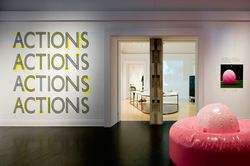
Des architectes, des artistes et des collectifs en provenance de plusieurs pays redéfinissent des activités en apparence anodines comme le jardinage, le recyclage, le jeu ou la marche. Confrontées aux normes de comportement urbain communément admises, leurs actions vont parfois jusqu’à défier les prescriptions de la loi. Les groupes ou les individus mis en scène dans(...)
Des architectes, des artistes et des collectifs en provenance de plusieurs pays redéfinissent des activités en apparence anodines comme le jardinage, le recyclage, le jeu ou la marche. Confrontées aux normes de comportement urbain communément admises, leurs actions vont parfois jusqu’à défier les prescriptions de la loi. Les groupes ou les individus mis en scène dans(...)
Localisation:
Salles principales
Salles principales
Date:
26 novembre 2008 au 19 avril 2009
26 novembre 2008 au 19 avril 2009
Titre:
Actions : comment s’approprier la ville
Actions:
Description:
Des architectes, des artistes et des collectifs en provenance de plusieurs pays redéfinissent des activités en apparence anodines comme le jardinage, le recyclage, le jeu ou la marche. Confrontées aux normes de comportement urbain communément admises, leurs actions vont parfois jusqu’à défier les prescriptions de la loi. Les groupes ou les individus mis en scène dans(...)
Actions : comment s’approprier la ville
Actions:
Description:
Des architectes, des artistes et des collectifs en provenance de plusieurs pays redéfinissent des activités en apparence anodines comme le jardinage, le recyclage, le jeu ou la marche. Confrontées aux normes de comportement urbain communément admises, leurs actions vont parfois jusqu’à défier les prescriptions de la loi. Les groupes ou les individus mis en scène dans(...)
Classification:
expositions
expositions
Date:
26 novembre 2008 au
19 avril 2009
26 novembre 2008 au
19 avril 2009
Localisation:
Salles principales
Salles principales
Niveau de description archivistique:
Sous-série
Sous-série
Numéro de référence:
AP178.S1.2002.PR05.SS1
Description:
This project subseries documents the Parque de Vidago Complexo Termal e Hotel Palace in Vidago, Portugal. While the records were held in the office’s archives this project was assigned the number 49/00. The office assigned the date 2002 to this project. The project consisted of major renovations to update and modernize the Vidago Palace Hotel, originally opened in 1910, and the addition of a new thermal spa. Architects José Pedro Lopes Vieira and Diogo Rosa Lã were responsible for the interior decoration of the Palace Hotel, while Siza designed the Spa. The full or partial demolition of some parts of the hotel and nearby buildings was necessary to maintain the original character of the resort. In contrast to the historic hotel, the new spa was contemporary and minimalist with marble interiors. It included pools, Turkish baths, treatment and relaxation rooms, a gym, bars and meditation area. This project subseries is documented through drawings, photographic materials, study models and textual records dating from 2002-2012. These materials primarily document the spa but documentation for the surrounding site, Palace Hotel, Fonte Salus (spring), gatehouse and Serralves exhibition space is also included. The drawings are largely reprographic copies of printed CAD drawings and include sketches, studies, plans, details, sections, elevations, demolition drawings and mechanical, electrical and structural drawings. The textual records include correspondence, meeting minutes, studies, building programs, furniture and spa equipment documentation, budgets and contracts. A large amount of documentation on various electrical, structural and mechanical systems is also included. The photographic materials are mostly printed digital photos showing buildings across the site, pre and post construction work and reference images. There are also a number of photos, postcards and brochures showing historical images of the hotel.
AP178.S1.2002.PR05.SS1
Description:
This project subseries documents the Parque de Vidago Complexo Termal e Hotel Palace in Vidago, Portugal. While the records were held in the office’s archives this project was assigned the number 49/00. The office assigned the date 2002 to this project. The project consisted of major renovations to update and modernize the Vidago Palace Hotel, originally opened in 1910, and the addition of a new thermal spa. Architects José Pedro Lopes Vieira and Diogo Rosa Lã were responsible for the interior decoration of the Palace Hotel, while Siza designed the Spa. The full or partial demolition of some parts of the hotel and nearby buildings was necessary to maintain the original character of the resort. In contrast to the historic hotel, the new spa was contemporary and minimalist with marble interiors. It included pools, Turkish baths, treatment and relaxation rooms, a gym, bars and meditation area. This project subseries is documented through drawings, photographic materials, study models and textual records dating from 2002-2012. These materials primarily document the spa but documentation for the surrounding site, Palace Hotel, Fonte Salus (spring), gatehouse and Serralves exhibition space is also included. The drawings are largely reprographic copies of printed CAD drawings and include sketches, studies, plans, details, sections, elevations, demolition drawings and mechanical, electrical and structural drawings. The textual records include correspondence, meeting minutes, studies, building programs, furniture and spa equipment documentation, budgets and contracts. A large amount of documentation on various electrical, structural and mechanical systems is also included. The photographic materials are mostly printed digital photos showing buildings across the site, pre and post construction work and reference images. There are also a number of photos, postcards and brochures showing historical images of the hotel.
Personnes et institutions:
Date:
2002-2012
2002-2012
Titre:
Parque de Vidago, Complexo Termal e Hotel Palace [Vidago Palace Hotel and Spa], Vidago, Portugal (2002)
Actions:
AP178.S1.2002.PR05.SS1
Description:
This project subseries documents the Parque de Vidago Complexo Termal e Hotel Palace in Vidago, Portugal. While the records were held in the office’s archives this project was assigned the number 49/00. The office assigned the date 2002 to this project. The project consisted of major renovations to update and modernize the Vidago Palace Hotel, originally opened in 1910, and the addition of a new thermal spa. Architects José Pedro Lopes Vieira and Diogo Rosa Lã were responsible for the interior decoration of the Palace Hotel, while Siza designed the Spa. The full or partial demolition of some parts of the hotel and nearby buildings was necessary to maintain the original character of the resort. In contrast to the historic hotel, the new spa was contemporary and minimalist with marble interiors. It included pools, Turkish baths, treatment and relaxation rooms, a gym, bars and meditation area. This project subseries is documented through drawings, photographic materials, study models and textual records dating from 2002-2012. These materials primarily document the spa but documentation for the surrounding site, Palace Hotel, Fonte Salus (spring), gatehouse and Serralves exhibition space is also included. The drawings are largely reprographic copies of printed CAD drawings and include sketches, studies, plans, details, sections, elevations, demolition drawings and mechanical, electrical and structural drawings. The textual records include correspondence, meeting minutes, studies, building programs, furniture and spa equipment documentation, budgets and contracts. A large amount of documentation on various electrical, structural and mechanical systems is also included. The photographic materials are mostly printed digital photos showing buildings across the site, pre and post construction work and reference images. There are also a number of photos, postcards and brochures showing historical images of the hotel.
Parque de Vidago, Complexo Termal e Hotel Palace [Vidago Palace Hotel and Spa], Vidago, Portugal (2002)
Actions:
AP178.S1.2002.PR05.SS1
Description:
This project subseries documents the Parque de Vidago Complexo Termal e Hotel Palace in Vidago, Portugal. While the records were held in the office’s archives this project was assigned the number 49/00. The office assigned the date 2002 to this project. The project consisted of major renovations to update and modernize the Vidago Palace Hotel, originally opened in 1910, and the addition of a new thermal spa. Architects José Pedro Lopes Vieira and Diogo Rosa Lã were responsible for the interior decoration of the Palace Hotel, while Siza designed the Spa. The full or partial demolition of some parts of the hotel and nearby buildings was necessary to maintain the original character of the resort. In contrast to the historic hotel, the new spa was contemporary and minimalist with marble interiors. It included pools, Turkish baths, treatment and relaxation rooms, a gym, bars and meditation area. This project subseries is documented through drawings, photographic materials, study models and textual records dating from 2002-2012. These materials primarily document the spa but documentation for the surrounding site, Palace Hotel, Fonte Salus (spring), gatehouse and Serralves exhibition space is also included. The drawings are largely reprographic copies of printed CAD drawings and include sketches, studies, plans, details, sections, elevations, demolition drawings and mechanical, electrical and structural drawings. The textual records include correspondence, meeting minutes, studies, building programs, furniture and spa equipment documentation, budgets and contracts. A large amount of documentation on various electrical, structural and mechanical systems is also included. The photographic materials are mostly printed digital photos showing buildings across the site, pre and post construction work and reference images. There are also a number of photos, postcards and brochures showing historical images of the hotel.
Niveau de description archivistique:
Project
Project
Date:
2002-2012
2002-2012
Personnes et institutions:
Classification:
événements
événements
Actions:
Description:
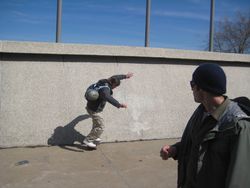
Le planchiste et architecte-paysagiste Mathieu Robichaud invite les participants à une visite guidée et analyse les opportunités qu’offrent les espaces urbains traversés pour la pratique de la planche à roulettes. Robichaud, de la firme Bloom Paysage, se spécialise dans la conception de parcs dédiés à la pratique de la planche à roulettes. En complément de l’exposition(...)
Le planchiste et architecte-paysagiste Mathieu Robichaud invite les participants à une visite guidée et analyse les opportunités qu’offrent les espaces urbains traversés pour la pratique de la planche à roulettes. Robichaud, de la firme Bloom Paysage, se spécialise dans la conception de parcs dédiés à la pratique de la planche à roulettes. En complément de l’exposition(...)
Date:
11 avril 2009
11 avril 2009
Titre:
Découvrir les lieux propices à la pratique de la planche à roulettes
Actions:
Description:
Le planchiste et architecte-paysagiste Mathieu Robichaud invite les participants à une visite guidée et analyse les opportunités qu’offrent les espaces urbains traversés pour la pratique de la planche à roulettes. Robichaud, de la firme Bloom Paysage, se spécialise dans la conception de parcs dédiés à la pratique de la planche à roulettes. En complément de l’exposition(...)
Découvrir les lieux propices à la pratique de la planche à roulettes
Actions:
Description:
Le planchiste et architecte-paysagiste Mathieu Robichaud invite les participants à une visite guidée et analyse les opportunités qu’offrent les espaces urbains traversés pour la pratique de la planche à roulettes. Robichaud, de la firme Bloom Paysage, se spécialise dans la conception de parcs dédiés à la pratique de la planche à roulettes. En complément de l’exposition(...)
Classification:
événements
événements
Date:
11 avril 2009
11 avril 2009
Classification:
expositions
expositions
Actions:
Description:
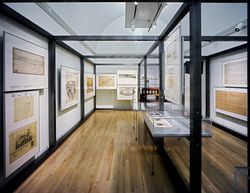
L’exposition Lidée de la grande ville s’intéresse au rôle de l’urbanisme dans tout l’Empire austro-hongrois, avant et après sa dissolution, et enrichit l’histoire de l’architecture en mettant en évidence la diversité des tendances modernistes de cette période. Autour de la Première Guerre mondiale, cette diversité était le reflet des nombreuses identités nationales et(...)
L’exposition Lidée de la grande ville s’intéresse au rôle de l’urbanisme dans tout l’Empire austro-hongrois, avant et après sa dissolution, et enrichit l’histoire de l’architecture en mettant en évidence la diversité des tendances modernistes de cette période. Autour de la Première Guerre mondiale, cette diversité était le reflet des nombreuses identités nationales et(...)
Localisation:
Salles principales et vitrines
Salles principales et vitrines
Date:
14 mai 2000 au 15 octobre 2000
14 mai 2000 au 15 octobre 2000
Titre:
L'idée de la grande ville : l'architecture moderne en Europe centrale, 1890–1937
Actions:
Description:
L’exposition Lidée de la grande ville s’intéresse au rôle de l’urbanisme dans tout l’Empire austro-hongrois, avant et après sa dissolution, et enrichit l’histoire de l’architecture en mettant en évidence la diversité des tendances modernistes de cette période. Autour de la Première Guerre mondiale, cette diversité était le reflet des nombreuses identités nationales et(...)
L'idée de la grande ville : l'architecture moderne en Europe centrale, 1890–1937
Actions:
Description:
L’exposition Lidée de la grande ville s’intéresse au rôle de l’urbanisme dans tout l’Empire austro-hongrois, avant et après sa dissolution, et enrichit l’histoire de l’architecture en mettant en évidence la diversité des tendances modernistes de cette période. Autour de la Première Guerre mondiale, cette diversité était le reflet des nombreuses identités nationales et(...)
Classification:
expositions
expositions
Date:
14 mai 2000 au
15 octobre 2000
14 mai 2000 au
15 octobre 2000
Localisation:
Salles principales et vitrines
Salles principales et vitrines
Classification:
archives
Niveau de description archivistique:
Fonds
archives
Niveau de description archivistique:
Fonds
Titre:
Fonds Kenneth Frampton
Fonds Kenneth Frampton
Numéro de référence:
AP197
Résumé:
The Kenneth Frampton fonds, 1958-2016, documents the professional career of Kenneth Frampton – British architect, historian, theorist, and Ware professor of Architecture at the Graduate School of Architecture, Planning and Preservation (GSAPP) at Columbia University. Materials in the fonds consist of approximately 28.37 l.m. of textual records, 3966 photographs and prints, 3168 postcards, 2733 slides, 824 drawings (including reprographic copies), 470 negatives, 151 35 mm negatives, 105 posters, 30 objects, 23 audio cassettes, 18 VHS tapes, 15 transparencies, 3 tape reels, 2 microfilms, and 2 vinyl records.
AP197
Résumé:
The Kenneth Frampton fonds, 1958-2016, documents the professional career of Kenneth Frampton – British architect, historian, theorist, and Ware professor of Architecture at the Graduate School of Architecture, Planning and Preservation (GSAPP) at Columbia University. Materials in the fonds consist of approximately 28.37 l.m. of textual records, 3966 photographs and prints, 3168 postcards, 2733 slides, 824 drawings (including reprographic copies), 470 negatives, 151 35 mm negatives, 105 posters, 30 objects, 23 audio cassettes, 18 VHS tapes, 15 transparencies, 3 tape reels, 2 microfilms, and 2 vinyl records.
Personnes et institutions:
Date:
1958-2016
1958-2016
Titre:
Fonds Kenneth Frampton
Actions:
AP197
Résumé:
The Kenneth Frampton fonds, 1958-2016, documents the professional career of Kenneth Frampton – British architect, historian, theorist, and Ware professor of Architecture at the Graduate School of Architecture, Planning and Preservation (GSAPP) at Columbia University. Materials in the fonds consist of approximately 28.37 l.m. of textual records, 3966 photographs and prints, 3168 postcards, 2733 slides, 824 drawings (including reprographic copies), 470 negatives, 151 35 mm negatives, 105 posters, 30 objects, 23 audio cassettes, 18 VHS tapes, 15 transparencies, 3 tape reels, 2 microfilms, and 2 vinyl records.
Fonds Kenneth Frampton
Actions:
AP197
Résumé:
The Kenneth Frampton fonds, 1958-2016, documents the professional career of Kenneth Frampton – British architect, historian, theorist, and Ware professor of Architecture at the Graduate School of Architecture, Planning and Preservation (GSAPP) at Columbia University. Materials in the fonds consist of approximately 28.37 l.m. of textual records, 3966 photographs and prints, 3168 postcards, 2733 slides, 824 drawings (including reprographic copies), 470 negatives, 151 35 mm negatives, 105 posters, 30 objects, 23 audio cassettes, 18 VHS tapes, 15 transparencies, 3 tape reels, 2 microfilms, and 2 vinyl records.
Classification:
archives
Niveau de description archivistique:
Fonds
archives
Niveau de description archivistique:
Fonds
Date:
1958-2016
1958-2016
Personnes et institutions:


