


5194 Résultats
Classification:
livres
livres
Actions:
Exemplaires:
Description:
xii, 204 pages : illustrations ; 24 cm
Description:
xii, 204 pages : illustrations ; 24 cm
Auteur:
Sujet:
Publication:
Waterloo, Ont., Canada : Wilfrid Laurier University Press, ©1988.
Waterloo, Ont., Canada : Wilfrid Laurier University Press, ©1988.
Titre:
Canada and the Métis, 1869-1885 / D.N. Sprague ; with a foreword by Thomas R. Berger.
Actions:
Exemplaires:
Description:
xii, 204 pages : illustrations ; 24 cm
Canada and the Métis, 1869-1885 / D.N. Sprague ; with a foreword by Thomas R. Berger.
Actions:
Exemplaires:
Description:
xii, 204 pages : illustrations ; 24 cm
Classification:
livres
livres
Publication:
Waterloo, Ont., Canada : Wilfrid Laurier University Press, ©1988.
Waterloo, Ont., Canada : Wilfrid Laurier University Press, ©1988.
Auteur:
Sujet:
Classification:
livres
livres

Actions:
Prix:
$32.00
(disponible sur commande)
Résumé:
In this brilliantly written, fast-paced book, based on three years of uncompromising reporting, a bewildering age of global change and inequality is made human. Annawadi is a makeshift settlement in the shadow of luxury hotels near the Mumbai airport, and as India starts to prosper, Annawadians are electric with hope. Abdul, a reflective and enterprising Muslim(...)
$32.00
(disponible sur commande)
Résumé:
In this brilliantly written, fast-paced book, based on three years of uncompromising reporting, a bewildering age of global change and inequality is made human. Annawadi is a makeshift settlement in the shadow of luxury hotels near the Mumbai airport, and as India starts to prosper, Annawadians are electric with hope. Abdul, a reflective and enterprising Muslim(...)
Titre:
Behind the beautiful forevers : life, death and hope in a Mumbai undercity
Actions:
Prix:
$32.00
(disponible sur commande)
Résumé:
In this brilliantly written, fast-paced book, based on three years of uncompromising reporting, a bewildering age of global change and inequality is made human. Annawadi is a makeshift settlement in the shadow of luxury hotels near the Mumbai airport, and as India starts to prosper, Annawadians are electric with hope. Abdul, a reflective and enterprising Muslim teenager, sees “a fortune beyond counting” in the recyclable garbage that richer people throw away. Asha, a woman of formidable wit and deep scars from a childhood in rural poverty, has identified an alternate route to the middle class: political corruption. With a little luck, her sensitive, beautiful daughter—Annawadi’s “most-everything girl”—will soon become its first female college graduate. And even the poorest Annawadians, like Kalu, a fifteen-year-old scrap-metal thief, believe themselves inching closer to the good lives and good times they call “the full enjoy.” But then Abdul the garbage sorter is falsely accused in a shocking tragedy; terror and a global recession rock the city; and suppressed tensions over religion, caste, sex, power and economic envy turn brutal. As the tenderest individual hopes intersect with the greatest global truths, the true contours of a competitive age are revealed. And so, too, are the imaginations and courage of the people of Annawadi. With intelligence, humor, and deep insight into what connects human beings to one another in an era of tumultuous change, Behind the Beautiful Forevers carries the reader headlong into one of the twenty-first century’s hidden worlds, and into the lives of people impossible to forget.
Behind the beautiful forevers : life, death and hope in a Mumbai undercity
Actions:
Prix:
$32.00
(disponible sur commande)
Résumé:
In this brilliantly written, fast-paced book, based on three years of uncompromising reporting, a bewildering age of global change and inequality is made human. Annawadi is a makeshift settlement in the shadow of luxury hotels near the Mumbai airport, and as India starts to prosper, Annawadians are electric with hope. Abdul, a reflective and enterprising Muslim teenager, sees “a fortune beyond counting” in the recyclable garbage that richer people throw away. Asha, a woman of formidable wit and deep scars from a childhood in rural poverty, has identified an alternate route to the middle class: political corruption. With a little luck, her sensitive, beautiful daughter—Annawadi’s “most-everything girl”—will soon become its first female college graduate. And even the poorest Annawadians, like Kalu, a fifteen-year-old scrap-metal thief, believe themselves inching closer to the good lives and good times they call “the full enjoy.” But then Abdul the garbage sorter is falsely accused in a shocking tragedy; terror and a global recession rock the city; and suppressed tensions over religion, caste, sex, power and economic envy turn brutal. As the tenderest individual hopes intersect with the greatest global truths, the true contours of a competitive age are revealed. And so, too, are the imaginations and courage of the people of Annawadi. With intelligence, humor, and deep insight into what connects human beings to one another in an era of tumultuous change, Behind the Beautiful Forevers carries the reader headlong into one of the twenty-first century’s hidden worlds, and into the lives of people impossible to forget.
Classification:
livres
livres
Publication:
février 2012
février 2012
Classification:
livres
livres
Prix:
$72.95
(disponible sur commande)
Résumé:
Landforms are a fast-developing art form that enjoy a wide following today, because of their multiple uses and their enveloping beauty. As formal landscapes that often arise from necessity - recycling a coal site for human use or making new use of excess earth - they are a pleasure to walk over and through. In this collection of his recent work, Charles Jencks explains(...)
$72.95
(disponible sur commande)
Résumé:
Landforms are a fast-developing art form that enjoy a wide following today, because of their multiple uses and their enveloping beauty. As formal landscapes that often arise from necessity - recycling a coal site for human use or making new use of excess earth - they are a pleasure to walk over and through. In this collection of his recent work, Charles Jencks explains(...)
Titre:
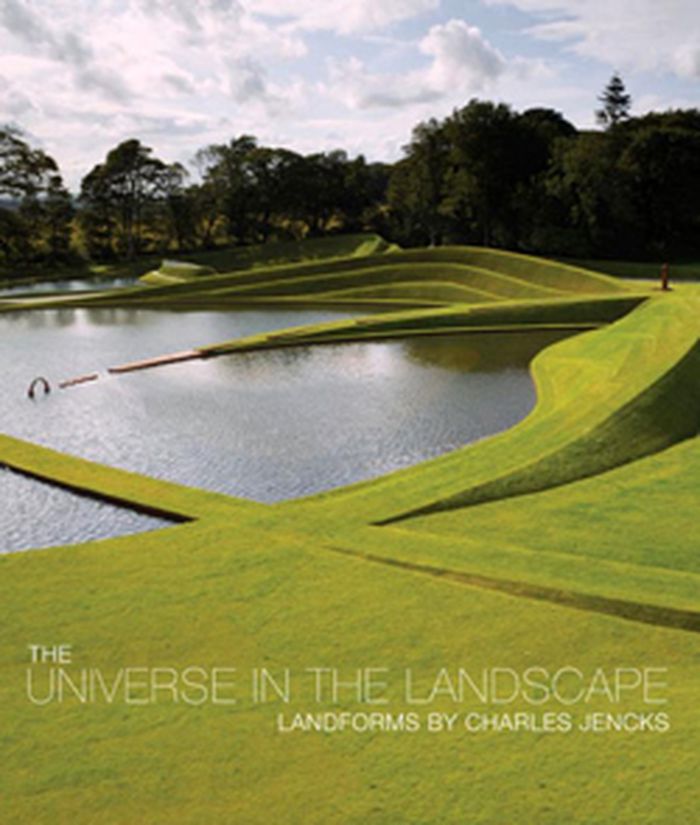
The universe in the landscape: landforms by Charles Jencks
Actions:
Prix:
$72.95
(disponible sur commande)
Résumé:
Landforms are a fast-developing art form that enjoy a wide following today, because of their multiple uses and their enveloping beauty. As formal landscapes that often arise from necessity - recycling a coal site for human use or making new use of excess earth - they are a pleasure to walk over and through. In this collection of his recent work, Charles Jencks explains his particular approach to the landform. Like the prehistoric earthworks of Britain that have been an inspiration, such as Stonehenge, his landforms contain cosmic symbolism, and they draw together sculpture, epigraphy, water, gardens, scrap metal and architecture. They address perennial themes - identity, patterns of nature, death and the power of life - but in a contemporary way, based on the insights of science. So Jencks portrays universal aspects of DNA, the spacetime warp of a black hole, the extraordinary way cells divide and unite and some basic forms of life. In this publication Jencks seeks to define a new landscape iconography based on forms and themes that may be eternal, in the sense that they crystallise nature's laws, some of which have been recently discovered. To see a world in a grain of sand was a poetic quest of William Blake and, in a different sense, to find the universe in a ritual landscape was a goal of prehistoric cultures. Jencks allies these spiritual affinities with the view of science that stresses the common patterns that underlie all parts of the cosmos, thus making them like our home planet, and the universe in a landscape.
The universe in the landscape: landforms by Charles Jencks
Actions:
Prix:
$72.95
(disponible sur commande)
Résumé:
Landforms are a fast-developing art form that enjoy a wide following today, because of their multiple uses and their enveloping beauty. As formal landscapes that often arise from necessity - recycling a coal site for human use or making new use of excess earth - they are a pleasure to walk over and through. In this collection of his recent work, Charles Jencks explains his particular approach to the landform. Like the prehistoric earthworks of Britain that have been an inspiration, such as Stonehenge, his landforms contain cosmic symbolism, and they draw together sculpture, epigraphy, water, gardens, scrap metal and architecture. They address perennial themes - identity, patterns of nature, death and the power of life - but in a contemporary way, based on the insights of science. So Jencks portrays universal aspects of DNA, the spacetime warp of a black hole, the extraordinary way cells divide and unite and some basic forms of life. In this publication Jencks seeks to define a new landscape iconography based on forms and themes that may be eternal, in the sense that they crystallise nature's laws, some of which have been recently discovered. To see a world in a grain of sand was a poetic quest of William Blake and, in a different sense, to find the universe in a ritual landscape was a goal of prehistoric cultures. Jencks allies these spiritual affinities with the view of science that stresses the common patterns that underlie all parts of the cosmos, thus making them like our home planet, and the universe in a landscape.
Classification:
livres
livres
Publication:
juin 2011
juin 2011
Classification:
livres
livres
Titre:
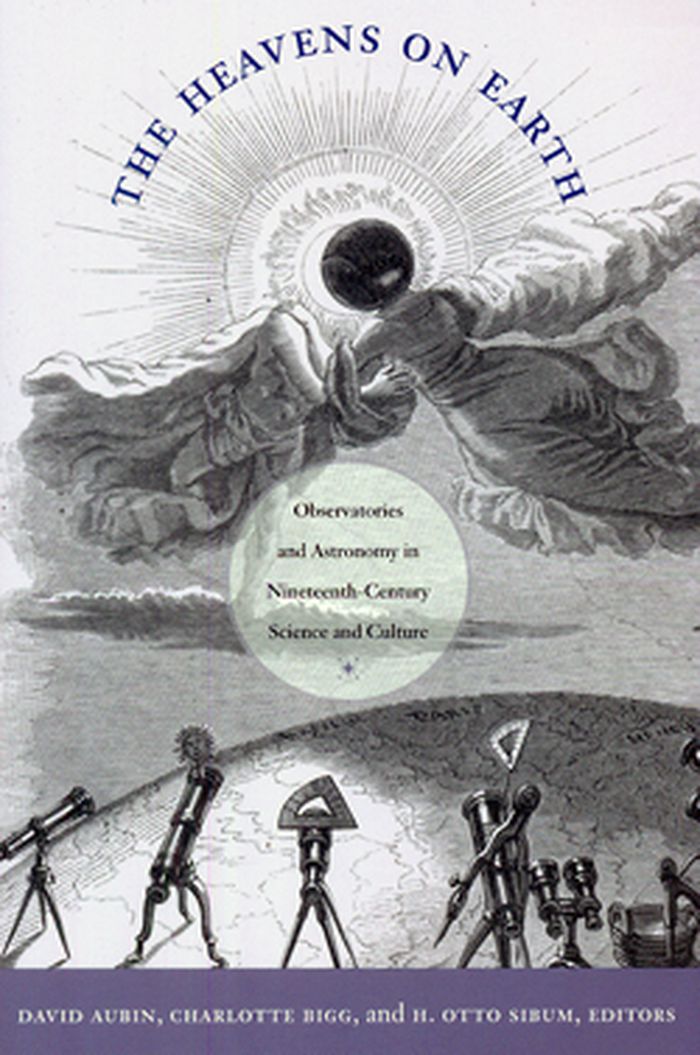
The heavens on earth : observatories and astronomies in nineteeth-century science and culture
The heavens on earth : observatories and astronomies in nineteeth-century science and culture
Actions:
Prix:
$41.50
(disponible sur commande)
Résumé:
This book explores the place of the observatory in nineteenth-century science and culture. Astronomy was a core pursuit for observatories, but usually not the only one. It belonged to a larger group of "observatory sciences" that also included geodesy, meteorology, geomagnetism, and even parts of physics and statistics. These pursuits coexisted in the nineteenth-century(...)
$41.50
(disponible sur commande)
Résumé:
This book explores the place of the observatory in nineteenth-century science and culture. Astronomy was a core pursuit for observatories, but usually not the only one. It belonged to a larger group of "observatory sciences" that also included geodesy, meteorology, geomagnetism, and even parts of physics and statistics. These pursuits coexisted in the nineteenth-century(...)
Sujet:
Théorie de l’architecture
Théorie de l’architecture
Publication:
avril 2010
avril 2010
Titre:
The heavens on earth : observatories and astronomies in nineteeth-century science and culture
Actions:
Prix:
$41.50
(disponible sur commande)
Résumé:
This book explores the place of the observatory in nineteenth-century science and culture. Astronomy was a core pursuit for observatories, but usually not the only one. It belonged to a larger group of "observatory sciences" that also included geodesy, meteorology, geomagnetism, and even parts of physics and statistics. These pursuits coexisted in the nineteenth-century observatory; this collection surveys them as a coherent whole. Broadening the focus beyond the solitary astronomer at his telescope, it illuminates the observatory’s importance to technological, military, political, and colonial undertakings, as well as in advancing and popularizing the mathematical, physical, and cosmological sciences. The contributors examine "observatory techniques" developed and used not only in connection with observatories but also by instrument makers in their workshops, navy officers on ships, civil engineers in the field, and many others. These techniques included the calibration and coordination of precision instruments for making observations and taking measurements; methods of data acquisition and tabulation; and the production of maps, drawings, and photographs, as well as numerical, textual, and visual representations of the heavens and the earth. They also encompassed the social management of personnel within observatories, the coordination of international scientific collaborations, and interactions with dignitaries and the public. The state observatory occupied a particularly privileged place in the life of the city. With their imposing architecture and ancient traditions, state observatories served representative purposes for their patrons, whether as symbols of a monarch’s enlightened power, a nation’s industrial and scientific excellence, or republican progressive values.
The heavens on earth : observatories and astronomies in nineteeth-century science and culture
Actions:
Prix:
$41.50
(disponible sur commande)
Résumé:
This book explores the place of the observatory in nineteenth-century science and culture. Astronomy was a core pursuit for observatories, but usually not the only one. It belonged to a larger group of "observatory sciences" that also included geodesy, meteorology, geomagnetism, and even parts of physics and statistics. These pursuits coexisted in the nineteenth-century observatory; this collection surveys them as a coherent whole. Broadening the focus beyond the solitary astronomer at his telescope, it illuminates the observatory’s importance to technological, military, political, and colonial undertakings, as well as in advancing and popularizing the mathematical, physical, and cosmological sciences. The contributors examine "observatory techniques" developed and used not only in connection with observatories but also by instrument makers in their workshops, navy officers on ships, civil engineers in the field, and many others. These techniques included the calibration and coordination of precision instruments for making observations and taking measurements; methods of data acquisition and tabulation; and the production of maps, drawings, and photographs, as well as numerical, textual, and visual representations of the heavens and the earth. They also encompassed the social management of personnel within observatories, the coordination of international scientific collaborations, and interactions with dignitaries and the public. The state observatory occupied a particularly privileged place in the life of the city. With their imposing architecture and ancient traditions, state observatories served representative purposes for their patrons, whether as symbols of a monarch’s enlightened power, a nation’s industrial and scientific excellence, or republican progressive values.
Classification:
livres
livres
Publication:
avril 2010
avril 2010
Sujet:
Théorie de l’architecture
Théorie de l’architecture
Classification:
livres
livres
Titre:
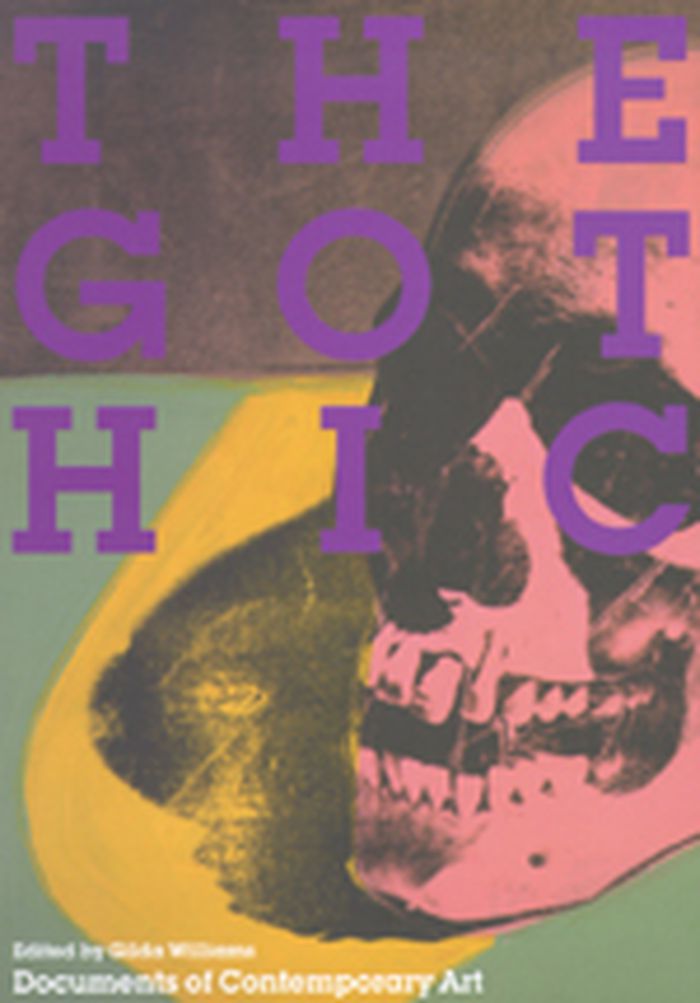
The gothic
The gothic
Actions:
Prix:
$23.95
(disponible sur commande)
Résumé:
This collection of writings examines the pervasive and influential role of "the Gothic" in contemporary visual culture. The contemporary Gothic in art is informed as much by the stock themes of the eighteenth- and nineteenth-century Gothic novel as it is by more recent permutations of the Gothic in horror film theory, Lacanian psychoanalysis, and Goth subcultures. This(...)
$23.95
(disponible sur commande)
Résumé:
This collection of writings examines the pervasive and influential role of "the Gothic" in contemporary visual culture. The contemporary Gothic in art is informed as much by the stock themes of the eighteenth- and nineteenth-century Gothic novel as it is by more recent permutations of the Gothic in horror film theory, Lacanian psychoanalysis, and Goth subcultures. This(...)
Sujet:
Théorie de l’art
Théorie de l’art
Publication:
octobre 2007, Whitechapel London Cambridge
octobre 2007, Whitechapel London Cambridge
Titre:
The gothic
Actions:
Prix:
$23.95
(disponible sur commande)
Résumé:
This collection of writings examines the pervasive and influential role of "the Gothic" in contemporary visual culture. The contemporary Gothic in art is informed as much by the stock themes of the eighteenth- and nineteenth-century Gothic novel as it is by more recent permutations of the Gothic in horror film theory, Lacanian psychoanalysis, and Goth subcultures. This reader from London's Whitechapel Gallery brings together artists as different as Matthew Barney, Gregor Schneider, Louise Bourgeois, and Douglas Gordon; its intent is not to use "the Gothic" to group together dissimilar artists but rather to shed light on a particular understanding of their practice. Anthony Vidler looks at ideas of the uncanny to explore Rachel Whiteread's House, and Jeff Wall uses the motif of vampirism to analyze fellow artist Dan Graham's Kammerspell; Hal Foster considers Robert Gober's recent work--laden with Christian symbolism, criticism of America as a nexus of power, and fragmented bodies--as an updated American Gothic, and Kobena Mercer examines the Gothic's depiction of the Other in relation to Michael Jackson's pop video Thriller. Texts by artists including Mike Kelley, Damien Hirst, Tacita Dean, Jonathan Meese, and Catherine Sullivan are complemented by extracts from Walpole's genre-establishing gothic novel The Castle of Otranto, William Gibson, Bret Easton Ellis, and Stephen King, among others, and theoretical writings by such key thinkers as Carol Clover, Beatriz Colomina, Julia Kristeva, Eve Kosofsky Sedgwick, Marina Warner, and Slavoj Zizek. The Gothic provides the first comprehensive overview of the uses of Gothic in contemporary visual culture.
The gothic
Actions:
Prix:
$23.95
(disponible sur commande)
Résumé:
This collection of writings examines the pervasive and influential role of "the Gothic" in contemporary visual culture. The contemporary Gothic in art is informed as much by the stock themes of the eighteenth- and nineteenth-century Gothic novel as it is by more recent permutations of the Gothic in horror film theory, Lacanian psychoanalysis, and Goth subcultures. This reader from London's Whitechapel Gallery brings together artists as different as Matthew Barney, Gregor Schneider, Louise Bourgeois, and Douglas Gordon; its intent is not to use "the Gothic" to group together dissimilar artists but rather to shed light on a particular understanding of their practice. Anthony Vidler looks at ideas of the uncanny to explore Rachel Whiteread's House, and Jeff Wall uses the motif of vampirism to analyze fellow artist Dan Graham's Kammerspell; Hal Foster considers Robert Gober's recent work--laden with Christian symbolism, criticism of America as a nexus of power, and fragmented bodies--as an updated American Gothic, and Kobena Mercer examines the Gothic's depiction of the Other in relation to Michael Jackson's pop video Thriller. Texts by artists including Mike Kelley, Damien Hirst, Tacita Dean, Jonathan Meese, and Catherine Sullivan are complemented by extracts from Walpole's genre-establishing gothic novel The Castle of Otranto, William Gibson, Bret Easton Ellis, and Stephen King, among others, and theoretical writings by such key thinkers as Carol Clover, Beatriz Colomina, Julia Kristeva, Eve Kosofsky Sedgwick, Marina Warner, and Slavoj Zizek. The Gothic provides the first comprehensive overview of the uses of Gothic in contemporary visual culture.
Classification:
livres
livres
Publication:
octobre 2007, Whitechapel London Cambridge
octobre 2007, Whitechapel London Cambridge
Sujet:
Théorie de l’art
Théorie de l’art
Classification:
livres
livres

Prix:
$31.50
(disponible sur commande)
Résumé:
In "Chaos and cosmos", Karen Lang addresses the power of art to resist the pressures of the transcendental vantage point-history. Uncovering the intellectual and cultural richness of the early years of academic art history in Germany -the period from the 1880s to 1940 - she explores various attempts within art history to transform aesthetic phenomena -chaos- into the(...)
$31.50
(disponible sur commande)
Résumé:
In "Chaos and cosmos", Karen Lang addresses the power of art to resist the pressures of the transcendental vantage point-history. Uncovering the intellectual and cultural richness of the early years of academic art history in Germany -the period from the 1880s to 1940 - she explores various attempts within art history to transform aesthetic phenomena -chaos- into the(...)
Titre:
Chaos in cosmos : on the image in aesthetics and art history
Actions:
Prix:
$31.50
(disponible sur commande)
Résumé:
In "Chaos and cosmos", Karen Lang addresses the power of art to resist the pressures of the transcendental vantage point-history. Uncovering the intellectual and cultural richness of the early years of academic art history in Germany -the period from the 1880s to 1940 - she explores various attempts within art history to transform aesthetic phenomena -chaos- into the cosmos of a systematic, unified field of inquiry. Lang starts by examining Panofsky's approach to aesthetic phenomena in his early theoretical essays alongside Ernst Cassirer's contemporaneous publications on the substance and function of scientific concepts (and on Einstein's theory of relativity). She then turns to the subject of aesthetic judgment through a rereading of Kantian subjectivity and Kant's uneasy legacy in art history. From here, Lang considers the different organizing theories of symbolic form proposed by Aby Warburg and Cassirer, as well as Goethe's inspiration for both; Alois Riegl's notion of age value and Walter Benjamin's conceptions of the aura; concluding with an extended examination of objectivity and the figure of the art connoisseur. Illustrated with works of art from the Enlightenment to the present day, this book illuminates an intellectual legacy that has profoundly shaped the study of the history of art in ways that have, until now, been largely unacknowledged. Addressing the interplay of chaos and cosmos in terms of history, art history, philosophy, and epistemology, Lang traces shifts in point of view in art history and the way these shifts change aesthetic objects into historical objects, and even objects of knowledge.
Chaos in cosmos : on the image in aesthetics and art history
Actions:
Prix:
$31.50
(disponible sur commande)
Résumé:
In "Chaos and cosmos", Karen Lang addresses the power of art to resist the pressures of the transcendental vantage point-history. Uncovering the intellectual and cultural richness of the early years of academic art history in Germany -the period from the 1880s to 1940 - she explores various attempts within art history to transform aesthetic phenomena -chaos- into the cosmos of a systematic, unified field of inquiry. Lang starts by examining Panofsky's approach to aesthetic phenomena in his early theoretical essays alongside Ernst Cassirer's contemporaneous publications on the substance and function of scientific concepts (and on Einstein's theory of relativity). She then turns to the subject of aesthetic judgment through a rereading of Kantian subjectivity and Kant's uneasy legacy in art history. From here, Lang considers the different organizing theories of symbolic form proposed by Aby Warburg and Cassirer, as well as Goethe's inspiration for both; Alois Riegl's notion of age value and Walter Benjamin's conceptions of the aura; concluding with an extended examination of objectivity and the figure of the art connoisseur. Illustrated with works of art from the Enlightenment to the present day, this book illuminates an intellectual legacy that has profoundly shaped the study of the history of art in ways that have, until now, been largely unacknowledged. Addressing the interplay of chaos and cosmos in terms of history, art history, philosophy, and epistemology, Lang traces shifts in point of view in art history and the way these shifts change aesthetic objects into historical objects, and even objects of knowledge.
Classification:
livres
livres
Publication:
septembre 2006, Ithaca, London
septembre 2006, Ithaca, London
Sujet:
Théorie de l’architecture
Théorie de l’architecture
Classification:
livres
livres

Prix:
$43.95
(disponible sur commande)
Résumé:
Why do we have such extraordinarily powerful responses toward the images and pictures we see in everyday life? Why do we behave as if pictures were alive, possessing the power to influence us, to demand things from us, to persuade us, seduce us, or even lead us astray? According to W. J. T. Mitchell, we need to reckon with images not just as inert objects that convey(...)
$43.95
(disponible sur commande)
Résumé:
Why do we have such extraordinarily powerful responses toward the images and pictures we see in everyday life? Why do we behave as if pictures were alive, possessing the power to influence us, to demand things from us, to persuade us, seduce us, or even lead us astray? According to W. J. T. Mitchell, we need to reckon with images not just as inert objects that convey(...)
Titre:
What do pictures want? : the lives and loves of images
Actions:
Prix:
$43.95
(disponible sur commande)
Résumé:
Why do we have such extraordinarily powerful responses toward the images and pictures we see in everyday life? Why do we behave as if pictures were alive, possessing the power to influence us, to demand things from us, to persuade us, seduce us, or even lead us astray? According to W. J. T. Mitchell, we need to reckon with images not just as inert objects that convey meaning but as animated beings with desires, needs, appetites, demands, and drives of their own. "What Do Pictures Want?" explores this idea and highlights Mitchell's innovative and profoundly influential thinking on picture theory and the lives and loves of images. Ranging across the visual arts, literature, and mass media, Mitchell applies characteristically brilliant and wry analyses to Byzantine icons and cyberpunk films, racial stereotypes and public monuments, ancient idols and modern clones, offensive images and found objects, American photography and aboriginal painting. Opening new vistas in iconology and the emergent field of visual culture, he also considers the importance of Dolly the Sheep - who, as a clone, fulfills the ancient dream of creating a living image - and the destruction of the World Trade Center on 9/11, which, among other things, signifies a new and virulent form of iconoclasm. "What Do Pictures Want?" offers an immensely rich and suggestive account of the interplay between the visible and the readable. A work by one of our leading theorists of visual representation, it will be a touchstone for art historians, literary critics, anthropologists, and philosophers alike.
What do pictures want? : the lives and loves of images
Actions:
Prix:
$43.95
(disponible sur commande)
Résumé:
Why do we have such extraordinarily powerful responses toward the images and pictures we see in everyday life? Why do we behave as if pictures were alive, possessing the power to influence us, to demand things from us, to persuade us, seduce us, or even lead us astray? According to W. J. T. Mitchell, we need to reckon with images not just as inert objects that convey meaning but as animated beings with desires, needs, appetites, demands, and drives of their own. "What Do Pictures Want?" explores this idea and highlights Mitchell's innovative and profoundly influential thinking on picture theory and the lives and loves of images. Ranging across the visual arts, literature, and mass media, Mitchell applies characteristically brilliant and wry analyses to Byzantine icons and cyberpunk films, racial stereotypes and public monuments, ancient idols and modern clones, offensive images and found objects, American photography and aboriginal painting. Opening new vistas in iconology and the emergent field of visual culture, he also considers the importance of Dolly the Sheep - who, as a clone, fulfills the ancient dream of creating a living image - and the destruction of the World Trade Center on 9/11, which, among other things, signifies a new and virulent form of iconoclasm. "What Do Pictures Want?" offers an immensely rich and suggestive account of the interplay between the visible and the readable. A work by one of our leading theorists of visual representation, it will be a touchstone for art historians, literary critics, anthropologists, and philosophers alike.
Classification:
livres
livres
Publication:
juin 2005, Chicago
juin 2005, Chicago
Sujet:
Théorie de l’architecture
Théorie de l’architecture
Classification:
périodiques
périodiques
Actions:
Prix:
$36.00
(disponible sur commande)
Résumé:
In our culture, in which the media play a predominant role, there is an increasing emphasis on achieving visibility and transparency. Openness and communication are subservient to that visibility, and even seem to coincide with it more and more emphatically. At the same time, both notions form the foundations for social order and political power. In our over-visualized(...)
$36.00
(disponible sur commande)
Résumé:
In our culture, in which the media play a predominant role, there is an increasing emphasis on achieving visibility and transparency. Openness and communication are subservient to that visibility, and even seem to coincide with it more and more emphatically. At the same time, both notions form the foundations for social order and political power. In our over-visualized(...)
Titre:
Open 8 : (in)visibility : beyond the image in art, culture and the public domain
Actions:
Prix:
$36.00
(disponible sur commande)
Résumé:
In our culture, in which the media play a predominant role, there is an increasing emphasis on achieving visibility and transparency. Openness and communication are subservient to that visibility, and even seem to coincide with it more and more emphatically. At the same time, both notions form the foundations for social order and political power. In our over-visualized culture, however, it seems as if every message or social agenda is being squeezed out in favour of styling, commerce and fashion. What position does art occupy in this, or what position should it occupy? In "Open" 8, guest editors Willem van Weelden and Jan van Grunsven write a general introduction, Brian Holmes explores (in)visibility as a tactic in art, and Jouke Kleerebezem asks who actually decides about (in)visibility in the public space; Camiel van Winkel writes over the visual deficit of contemporary culture; Dieter Lesage critically examines the proposals by OMA/AMO for a new iconography of Europe; Henk Oosterling investigates the FBI's prosecution of the Critical Art Ensemble; Jorinde Seijdel considers how media images are used as evidence for social and political events. "Open" 8 includes interviews with Arno van der Mark of DRFTWD, an Amsterdam-based multidisciplinary design bureau, and with the French research organization Bureau d'études, as well as an account of a roundtable discussion about a possible new legitimation for academic training in 'art and the public space'. The cahier also presents a column by the Belgian architect/author Wouter Davidts, photographic essays and book reviews.
Open 8 : (in)visibility : beyond the image in art, culture and the public domain
Actions:
Prix:
$36.00
(disponible sur commande)
Résumé:
In our culture, in which the media play a predominant role, there is an increasing emphasis on achieving visibility and transparency. Openness and communication are subservient to that visibility, and even seem to coincide with it more and more emphatically. At the same time, both notions form the foundations for social order and political power. In our over-visualized culture, however, it seems as if every message or social agenda is being squeezed out in favour of styling, commerce and fashion. What position does art occupy in this, or what position should it occupy? In "Open" 8, guest editors Willem van Weelden and Jan van Grunsven write a general introduction, Brian Holmes explores (in)visibility as a tactic in art, and Jouke Kleerebezem asks who actually decides about (in)visibility in the public space; Camiel van Winkel writes over the visual deficit of contemporary culture; Dieter Lesage critically examines the proposals by OMA/AMO for a new iconography of Europe; Henk Oosterling investigates the FBI's prosecution of the Critical Art Ensemble; Jorinde Seijdel considers how media images are used as evidence for social and political events. "Open" 8 includes interviews with Arno van der Mark of DRFTWD, an Amsterdam-based multidisciplinary design bureau, and with the French research organization Bureau d'études, as well as an account of a roundtable discussion about a possible new legitimation for academic training in 'art and the public space'. The cahier also presents a column by the Belgian architect/author Wouter Davidts, photographic essays and book reviews.
Classification:
périodiques
périodiques
Publication:
janvier 1900, Rotterdam
janvier 1900, Rotterdam
Sujet:
Revues
Revues
Classification:
livres
livres
Titre:
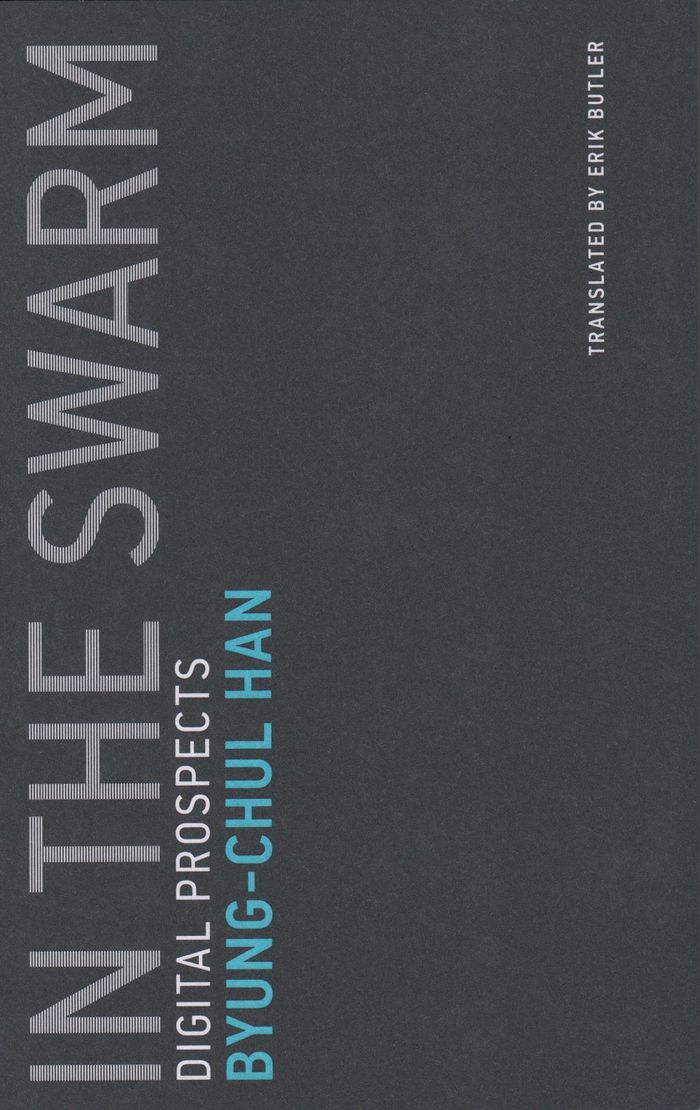
In the swarm
In the swarm
Actions:
Prix:
$18.95
(disponible sur commande)
Résumé:
Digital communication and social media have taken over our lives. In this contrarian reflection on digitized life, Byung-Chul Han counters the cheerleaders for Twitter revolutions and Facebook activism by arguing that digital communication is in fact responsible for the disintegration of community and public space and is slowly eroding any possibility for real political(...)
$18.95
(disponible sur commande)
Résumé:
Digital communication and social media have taken over our lives. In this contrarian reflection on digitized life, Byung-Chul Han counters the cheerleaders for Twitter revolutions and Facebook activism by arguing that digital communication is in fact responsible for the disintegration of community and public space and is slowly eroding any possibility for real political(...)
Titre:
In the swarm
Actions:
Prix:
$18.95
(disponible sur commande)
Résumé:
Digital communication and social media have taken over our lives. In this contrarian reflection on digitized life, Byung-Chul Han counters the cheerleaders for Twitter revolutions and Facebook activism by arguing that digital communication is in fact responsible for the disintegration of community and public space and is slowly eroding any possibility for real political action and meaningful political discourse. In the predigital, analog era, by the time an angry letter to the editor had been composed, mailed, and received, the immediate agitation had passed. Today, digital communication enables instantaneous, impulsive reaction, meant to express and stir up outrage on the spot. “The shitstorm,” writes Han, ”represents an authentic phenomenon of digital communication.” Meanwhile, the public, the senders and receivers of these communications have become a digital swarm—not a mass, or a crowd, or Negri and Hardt’s antiquated notion of a “multitude,” but a set of isolated individuals incapable of forming a “we,” incapable of calling dominant power relations into question, incapable of formulating a future because of an obsession with the present. The digital swarm is a fragmented entity that can focus on individual persons only in order to make them an object of scandal. Han, one of the most widely read philosophers in Europe today, describes a society in which information has overrun thought, in which the same algorithms are employed by Facebook, the stock market, and the intelligence services. Democracy is under threat because digital communication has made freedom and control indistinguishable. Big Brother has been succeeded by Big Data.
In the swarm
Actions:
Prix:
$18.95
(disponible sur commande)
Résumé:
Digital communication and social media have taken over our lives. In this contrarian reflection on digitized life, Byung-Chul Han counters the cheerleaders for Twitter revolutions and Facebook activism by arguing that digital communication is in fact responsible for the disintegration of community and public space and is slowly eroding any possibility for real political action and meaningful political discourse. In the predigital, analog era, by the time an angry letter to the editor had been composed, mailed, and received, the immediate agitation had passed. Today, digital communication enables instantaneous, impulsive reaction, meant to express and stir up outrage on the spot. “The shitstorm,” writes Han, ”represents an authentic phenomenon of digital communication.” Meanwhile, the public, the senders and receivers of these communications have become a digital swarm—not a mass, or a crowd, or Negri and Hardt’s antiquated notion of a “multitude,” but a set of isolated individuals incapable of forming a “we,” incapable of calling dominant power relations into question, incapable of formulating a future because of an obsession with the present. The digital swarm is a fragmented entity that can focus on individual persons only in order to make them an object of scandal. Han, one of the most widely read philosophers in Europe today, describes a society in which information has overrun thought, in which the same algorithms are employed by Facebook, the stock market, and the intelligence services. Democracy is under threat because digital communication has made freedom and control indistinguishable. Big Brother has been succeeded by Big Data.
Classification:
livres
livres
Publication:
avril 2017
avril 2017
Classification:
livres
livres

Titre:
The second digital turn
The second digital turn
Actions:
Prix:
$33.95
(disponible sur commande)
Résumé:
Almost a generation ago, the early software for computer aided design and manufacturing (CAD/CAM) spawned a style of smooth and curving lines and surfaces that gave visible form to the first digital age, and left an indelible mark on contemporary architecture. But today's digitally intelligent architecture no longer looks that way. In The Second Digital Turn, Mario Carpo(...)
$33.95
(disponible sur commande)
Résumé:
Almost a generation ago, the early software for computer aided design and manufacturing (CAD/CAM) spawned a style of smooth and curving lines and surfaces that gave visible form to the first digital age, and left an indelible mark on contemporary architecture. But today's digitally intelligent architecture no longer looks that way. In The Second Digital Turn, Mario Carpo(...)
Titre:
The second digital turn
Actions:
Prix:
$33.95
(disponible sur commande)
Résumé:
Almost a generation ago, the early software for computer aided design and manufacturing (CAD/CAM) spawned a style of smooth and curving lines and surfaces that gave visible form to the first digital age, and left an indelible mark on contemporary architecture. But today's digitally intelligent architecture no longer looks that way. In The Second Digital Turn, Mario Carpo explains that this is because the design professions are now coming to terms with a new kind of digital tools they have adopted—no longer tools for making but tools for thinking. In the early 1990s the design professions were the first to intuit and interpret the new technical logic of the digital age: digital mass-customization (the use of digital tools to mass-produce variations at no extra cost) has already changed the way we produce and consume almost everything, and the same technology applied to commerce at large is now heralding a new society without scale—a flat marginal cost society where bigger markets will not make anything cheaper. But today, the unprecedented power of computation also favors a new kind of science where prediction can be based on sheer information retrieval, and form finding by simulation and optimization can replace deduction from mathematical formulas. Designers have been toying with machine thinking and machine learning for some time, and the apparently unfathomable complexity of the physical shapes they are now creating already expresses a new form of artificial intelligence, outside the tradition of modern science and alien to the organic logic of our mind.
The second digital turn
Actions:
Prix:
$33.95
(disponible sur commande)
Résumé:
Almost a generation ago, the early software for computer aided design and manufacturing (CAD/CAM) spawned a style of smooth and curving lines and surfaces that gave visible form to the first digital age, and left an indelible mark on contemporary architecture. But today's digitally intelligent architecture no longer looks that way. In The Second Digital Turn, Mario Carpo explains that this is because the design professions are now coming to terms with a new kind of digital tools they have adopted—no longer tools for making but tools for thinking. In the early 1990s the design professions were the first to intuit and interpret the new technical logic of the digital age: digital mass-customization (the use of digital tools to mass-produce variations at no extra cost) has already changed the way we produce and consume almost everything, and the same technology applied to commerce at large is now heralding a new society without scale—a flat marginal cost society where bigger markets will not make anything cheaper. But today, the unprecedented power of computation also favors a new kind of science where prediction can be based on sheer information retrieval, and form finding by simulation and optimization can replace deduction from mathematical formulas. Designers have been toying with machine thinking and machine learning for some time, and the apparently unfathomable complexity of the physical shapes they are now creating already expresses a new form of artificial intelligence, outside the tradition of modern science and alien to the organic logic of our mind.
Classification:
livres
livres
Publication:
octobre 2017
octobre 2017
Sujet:
Architecture numérique
Architecture numérique


