


6146 Résultats
Classification:
expositions
expositions
Actions:
Description:
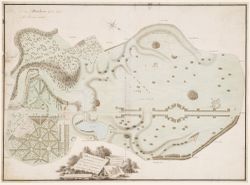
Les jardins de Grande-Bretagne et leurs bâtiments ont joué un rôle important dans l’art et la culture britanniques au cours des quatre derniers siècles, et ils ont influencé les architectes et architectes paysagistes d’Europe et d’Amérique du Nord. L’exposition Une Arcadie anglaise, 1600-1990 rassemble des documents sur l’histoire de ces jardins et bâtiments. Les 125(...)
Les jardins de Grande-Bretagne et leurs bâtiments ont joué un rôle important dans l’art et la culture britanniques au cours des quatre derniers siècles, et ils ont influencé les architectes et architectes paysagistes d’Europe et d’Amérique du Nord. L’exposition Une Arcadie anglaise, 1600-1990 rassemble des documents sur l’histoire de ces jardins et bâtiments. Les 125(...)
Localisation:
Salles principales
Salles principales
Date:
12 février 1992 au 19 avril 1992
12 février 1992 au 19 avril 1992
Titre:
Une arcadie anglaise, 1600-1990 : jardins et bâtiments sous la garde du National Trust avec des œuvres tirées des collections du CCA
Actions:
Description:
Les jardins de Grande-Bretagne et leurs bâtiments ont joué un rôle important dans l’art et la culture britanniques au cours des quatre derniers siècles, et ils ont influencé les architectes et architectes paysagistes d’Europe et d’Amérique du Nord. L’exposition Une Arcadie anglaise, 1600-1990 rassemble des documents sur l’histoire de ces jardins et bâtiments. Les 125(...)
Une arcadie anglaise, 1600-1990 : jardins et bâtiments sous la garde du National Trust avec des œuvres tirées des collections du CCA
Actions:
Description:
Les jardins de Grande-Bretagne et leurs bâtiments ont joué un rôle important dans l’art et la culture britanniques au cours des quatre derniers siècles, et ils ont influencé les architectes et architectes paysagistes d’Europe et d’Amérique du Nord. L’exposition Une Arcadie anglaise, 1600-1990 rassemble des documents sur l’histoire de ces jardins et bâtiments. Les 125(...)
Classification:
expositions
expositions
Date:
12 février 1992 au
19 avril 1992
12 février 1992 au
19 avril 1992
Localisation:
Salles principales
Salles principales
Classification:
archives
Niveau de description archivistique:
Fonds
archives
Niveau de description archivistique:
Fonds
Numéro de référence:
AP051
Résumé:
The Groupe de recherche sur Montréal fonds, 1975-1997, documents the Groupe de recherche sur Montréal’s (GRM) extensive research on the development of pre and post-industrial Montreal’s built environment. In addition to this extensive collection of research materials, the fonds also includes administrative files relating to the GRM’s everyday administration and management. Materials found in this fonds consist of approximately 40 l.m. of textual documentation, approximately 2000 maps and 1 model.
AP051
Résumé:
The Groupe de recherche sur Montréal fonds, 1975-1997, documents the Groupe de recherche sur Montréal’s (GRM) extensive research on the development of pre and post-industrial Montreal’s built environment. In addition to this extensive collection of research materials, the fonds also includes administrative files relating to the GRM’s everyday administration and management. Materials found in this fonds consist of approximately 40 l.m. of textual documentation, approximately 2000 maps and 1 model.
Personnes et institutions:
Date:
1975-1997
1975-1997
Titre:
Fonds Groupe de recherche sur Montréal
Actions:
AP051
Résumé:
The Groupe de recherche sur Montréal fonds, 1975-1997, documents the Groupe de recherche sur Montréal’s (GRM) extensive research on the development of pre and post-industrial Montreal’s built environment. In addition to this extensive collection of research materials, the fonds also includes administrative files relating to the GRM’s everyday administration and management. Materials found in this fonds consist of approximately 40 l.m. of textual documentation, approximately 2000 maps and 1 model.
Fonds Groupe de recherche sur Montréal
Actions:
AP051
Résumé:
The Groupe de recherche sur Montréal fonds, 1975-1997, documents the Groupe de recherche sur Montréal’s (GRM) extensive research on the development of pre and post-industrial Montreal’s built environment. In addition to this extensive collection of research materials, the fonds also includes administrative files relating to the GRM’s everyday administration and management. Materials found in this fonds consist of approximately 40 l.m. of textual documentation, approximately 2000 maps and 1 model.
Classification:
archives
Niveau de description archivistique:
Fonds
archives
Niveau de description archivistique:
Fonds
Date:
1975-1997
1975-1997
Personnes et institutions:
Classification:
expositions
expositions
Actions:
Description:
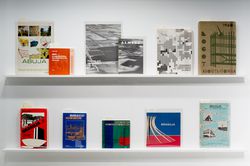
À la suite de la Seconde Guerre mondiale, le besoin urgent de reconstruire les villes, ainsi que la croissance soudaine de la population, conduit les instances publiques à assumer un rôle de plus en plus important dans la conception et la construction de l’environnement urbain. Sous différents régimes politiques, de grands aménagements urbains et même des villes entières(...)
À la suite de la Seconde Guerre mondiale, le besoin urgent de reconstruire les villes, ainsi que la croissance soudaine de la population, conduit les instances publiques à assumer un rôle de plus en plus important dans la conception et la construction de l’environnement urbain. Sous différents régimes politiques, de grands aménagements urbains et même des villes entières(...)
Localisation:
Vitrines
Vitrines
Date:
12 décembre 2013 au 15 juin 2014
12 décembre 2013 au 15 juin 2014
Titre:
Vieux livres nouvelles villes
Actions:
Description:
À la suite de la Seconde Guerre mondiale, le besoin urgent de reconstruire les villes, ainsi que la croissance soudaine de la population, conduit les instances publiques à assumer un rôle de plus en plus important dans la conception et la construction de l’environnement urbain. Sous différents régimes politiques, de grands aménagements urbains et même des villes entières(...)
Vieux livres nouvelles villes
Actions:
Description:
À la suite de la Seconde Guerre mondiale, le besoin urgent de reconstruire les villes, ainsi que la croissance soudaine de la population, conduit les instances publiques à assumer un rôle de plus en plus important dans la conception et la construction de l’environnement urbain. Sous différents régimes politiques, de grands aménagements urbains et même des villes entières(...)
Classification:
expositions
expositions
Date:
12 décembre 2013 au
15 juin 2014
12 décembre 2013 au
15 juin 2014
Localisation:
Vitrines
Vitrines
Classification:
expositions
expositions

Actions:
Description:
Au cours de la Seconde Guerre mondiale, expositions et publications ont joué un rôle de premier plan dans l’effort de guerre. Elles ont été organisées et diffusées partout dans le monde comme des moments de réflexion et de propagande, des productions d’une approche disciplinaire de l’architecture et de l’urbanisme. Le choix des objets exposés découle des recherches de(...)
Au cours de la Seconde Guerre mondiale, expositions et publications ont joué un rôle de premier plan dans l’effort de guerre. Elles ont été organisées et diffusées partout dans le monde comme des moments de réflexion et de propagande, des productions d’une approche disciplinaire de l’architecture et de l’urbanisme. Le choix des objets exposés découle des recherches de(...)
Localisation:
Vitrines
Vitrines
Date:
13 avril 2011 au 18 septembre 2011
13 avril 2011 au 18 septembre 2011
Titre:
Une guerre de papier: Images et mots, 1939-1945
Actions:
Description:
Au cours de la Seconde Guerre mondiale, expositions et publications ont joué un rôle de premier plan dans l’effort de guerre. Elles ont été organisées et diffusées partout dans le monde comme des moments de réflexion et de propagande, des productions d’une approche disciplinaire de l’architecture et de l’urbanisme. Le choix des objets exposés découle des recherches de(...)
Une guerre de papier: Images et mots, 1939-1945
Actions:
Description:
Au cours de la Seconde Guerre mondiale, expositions et publications ont joué un rôle de premier plan dans l’effort de guerre. Elles ont été organisées et diffusées partout dans le monde comme des moments de réflexion et de propagande, des productions d’une approche disciplinaire de l’architecture et de l’urbanisme. Le choix des objets exposés découle des recherches de(...)
Classification:
expositions
expositions
Date:
13 avril 2011 au
18 septembre 2011
13 avril 2011 au
18 septembre 2011
Localisation:
Vitrines
Vitrines
Classification:
expositions
expositions

Titre:
La preuve par l’architecture
La preuve par l’architecture
Actions:
Description:
La preuve par l’architecture présente une collection de pièces rassemblées dans le cadre d’une analyse technico-légale de l’architecture d’Auschwitz. L’exposition réunit des moulages en plâtre de bleus, de lettres, de factures d’entrepreneurs et de photographies, ainsi que deux reconstitutions de monuments (une colonne de gaz et une trappe étanche au gaz), qui, considérés(...)
La preuve par l’architecture présente une collection de pièces rassemblées dans le cadre d’une analyse technico-légale de l’architecture d’Auschwitz. L’exposition réunit des moulages en plâtre de bleus, de lettres, de factures d’entrepreneurs et de photographies, ainsi que deux reconstitutions de monuments (une colonne de gaz et une trappe étanche au gaz), qui, considérés(...)
Localisation:
Salle octogonale
Salle octogonale
Date:
16 juin 2016 au 11 septembre 2016
16 juin 2016 au 11 septembre 2016
Titre:
La preuve par l’architecture
Actions:
Description:
La preuve par l’architecture présente une collection de pièces rassemblées dans le cadre d’une analyse technico-légale de l’architecture d’Auschwitz. L’exposition réunit des moulages en plâtre de bleus, de lettres, de factures d’entrepreneurs et de photographies, ainsi que deux reconstitutions de monuments (une colonne de gaz et une trappe étanche au gaz), qui, considérés(...)
La preuve par l’architecture
Actions:
Description:
La preuve par l’architecture présente une collection de pièces rassemblées dans le cadre d’une analyse technico-légale de l’architecture d’Auschwitz. L’exposition réunit des moulages en plâtre de bleus, de lettres, de factures d’entrepreneurs et de photographies, ainsi que deux reconstitutions de monuments (une colonne de gaz et une trappe étanche au gaz), qui, considérés(...)
Classification:
expositions
expositions
Date:
16 juin 2016 au
11 septembre 2016
16 juin 2016 au
11 septembre 2016
Localisation:
Salle octogonale
Salle octogonale
Niveau de description archivistique:
Série(s)
Série(s)
Titre:
Hans and Wassili Luckhardt
Hans and Wassili Luckhardt
Numéro de référence:
AP162.S6
Description:
Series documents the contribution of architects Hans Luckhardt and Wasilli Luckhardt to the correspondence circle of Die gläserne Kette, with each writing under the pseudonyms Angkor and Zachen respectively. Born in Berlin in 1880, Hans Luckhardt studied architecture at the Technische Hochschule at Karlsruhe, Germany. In 1919, he joined the Novembergruppe, an exhibiting group of painters, sculptors, architects and musicians, and the Arbeitsrat für Kunst, lead by Bruno Taut. These two groups merged in November 1919. The same year, Luckhardt exhibitied his work at the Ausstellung für unbekannte Architekten and contributed to the organization of the Neues Bauen exhibition the next year. In 1921, Hans Luckhardt began his working collaboration with his brother Wassili. Born in Berlin in 1989, Wassili Luckhardt studied archictecture at the Technische Hochschule at Berlin-Charlottenburg and at the Technische Hochschule in Dresden. He undertook his military service from 1914 to 1918. Like his brother Hans, Wasilli joined the Novembergruppeand the Arbeitsrat für Kunst in 1919 and exhibited his work at the Ausstellung für unbekannte Architekten. During their collaboration, the Luckhardt brothers worked on designs for private commisions and competition schemes including some for Berlin and Hanover (1951-1952). Hans Luckhardt died in 1954 in Bad Wiessee. Wassili Luckhardt continued his work as an architect on various architectural projects. He died in 1972 in Berlin. (Source: Ian Boyd Whyte, Bruno Taut and the Architecture of Activism. Cambridge: Cambridge University Press, 1982) The series comprises part of the correspondence of Hans and Wasilli Luckhardt to the Die gläserne Kette circle, along with related drawings and photographs. The series also includes a photograph of a architectural model for a project by the Luckhart brothers.
AP162.S6
Description:
Series documents the contribution of architects Hans Luckhardt and Wasilli Luckhardt to the correspondence circle of Die gläserne Kette, with each writing under the pseudonyms Angkor and Zachen respectively. Born in Berlin in 1880, Hans Luckhardt studied architecture at the Technische Hochschule at Karlsruhe, Germany. In 1919, he joined the Novembergruppe, an exhibiting group of painters, sculptors, architects and musicians, and the Arbeitsrat für Kunst, lead by Bruno Taut. These two groups merged in November 1919. The same year, Luckhardt exhibitied his work at the Ausstellung für unbekannte Architekten and contributed to the organization of the Neues Bauen exhibition the next year. In 1921, Hans Luckhardt began his working collaboration with his brother Wassili. Born in Berlin in 1989, Wassili Luckhardt studied archictecture at the Technische Hochschule at Berlin-Charlottenburg and at the Technische Hochschule in Dresden. He undertook his military service from 1914 to 1918. Like his brother Hans, Wasilli joined the Novembergruppeand the Arbeitsrat für Kunst in 1919 and exhibited his work at the Ausstellung für unbekannte Architekten. During their collaboration, the Luckhardt brothers worked on designs for private commisions and competition schemes including some for Berlin and Hanover (1951-1952). Hans Luckhardt died in 1954 in Bad Wiessee. Wassili Luckhardt continued his work as an architect on various architectural projects. He died in 1972 in Berlin. (Source: Ian Boyd Whyte, Bruno Taut and the Architecture of Activism. Cambridge: Cambridge University Press, 1982) The series comprises part of the correspondence of Hans and Wasilli Luckhardt to the Die gläserne Kette circle, along with related drawings and photographs. The series also includes a photograph of a architectural model for a project by the Luckhart brothers.
Personnes et institutions:
Date:
1919-1920
1919-1920
Titre:
Hans and Wassili Luckhardt
Actions:
AP162.S6
Description:
Series documents the contribution of architects Hans Luckhardt and Wasilli Luckhardt to the correspondence circle of Die gläserne Kette, with each writing under the pseudonyms Angkor and Zachen respectively. Born in Berlin in 1880, Hans Luckhardt studied architecture at the Technische Hochschule at Karlsruhe, Germany. In 1919, he joined the Novembergruppe, an exhibiting group of painters, sculptors, architects and musicians, and the Arbeitsrat für Kunst, lead by Bruno Taut. These two groups merged in November 1919. The same year, Luckhardt exhibitied his work at the Ausstellung für unbekannte Architekten and contributed to the organization of the Neues Bauen exhibition the next year. In 1921, Hans Luckhardt began his working collaboration with his brother Wassili. Born in Berlin in 1989, Wassili Luckhardt studied archictecture at the Technische Hochschule at Berlin-Charlottenburg and at the Technische Hochschule in Dresden. He undertook his military service from 1914 to 1918. Like his brother Hans, Wasilli joined the Novembergruppeand the Arbeitsrat für Kunst in 1919 and exhibited his work at the Ausstellung für unbekannte Architekten. During their collaboration, the Luckhardt brothers worked on designs for private commisions and competition schemes including some for Berlin and Hanover (1951-1952). Hans Luckhardt died in 1954 in Bad Wiessee. Wassili Luckhardt continued his work as an architect on various architectural projects. He died in 1972 in Berlin. (Source: Ian Boyd Whyte, Bruno Taut and the Architecture of Activism. Cambridge: Cambridge University Press, 1982) The series comprises part of the correspondence of Hans and Wasilli Luckhardt to the Die gläserne Kette circle, along with related drawings and photographs. The series also includes a photograph of a architectural model for a project by the Luckhart brothers.
Hans and Wassili Luckhardt
Actions:
AP162.S6
Description:
Series documents the contribution of architects Hans Luckhardt and Wasilli Luckhardt to the correspondence circle of Die gläserne Kette, with each writing under the pseudonyms Angkor and Zachen respectively. Born in Berlin in 1880, Hans Luckhardt studied architecture at the Technische Hochschule at Karlsruhe, Germany. In 1919, he joined the Novembergruppe, an exhibiting group of painters, sculptors, architects and musicians, and the Arbeitsrat für Kunst, lead by Bruno Taut. These two groups merged in November 1919. The same year, Luckhardt exhibitied his work at the Ausstellung für unbekannte Architekten and contributed to the organization of the Neues Bauen exhibition the next year. In 1921, Hans Luckhardt began his working collaboration with his brother Wassili. Born in Berlin in 1989, Wassili Luckhardt studied archictecture at the Technische Hochschule at Berlin-Charlottenburg and at the Technische Hochschule in Dresden. He undertook his military service from 1914 to 1918. Like his brother Hans, Wasilli joined the Novembergruppeand the Arbeitsrat für Kunst in 1919 and exhibited his work at the Ausstellung für unbekannte Architekten. During their collaboration, the Luckhardt brothers worked on designs for private commisions and competition schemes including some for Berlin and Hanover (1951-1952). Hans Luckhardt died in 1954 in Bad Wiessee. Wassili Luckhardt continued his work as an architect on various architectural projects. He died in 1972 in Berlin. (Source: Ian Boyd Whyte, Bruno Taut and the Architecture of Activism. Cambridge: Cambridge University Press, 1982) The series comprises part of the correspondence of Hans and Wasilli Luckhardt to the Die gläserne Kette circle, along with related drawings and photographs. The series also includes a photograph of a architectural model for a project by the Luckhart brothers.
Niveau de description archivistique:
series
series
Date:
1919-1920
1919-1920
Personnes et institutions:
Niveau de description archivistique:
Projet
Projet
Numéro de référence:
AP178.S1.1984.PR02
Description:
The project series documents the Punt en Komma social housing project in The Hague, The Netherlands, with some materials related to the Urban plan for Deelgebied Zone 5, Schilderswijk-West. While the records were held in the office’s archives the urban plan for Deelgebied Zone 5 was assigned the number 30/80 and Punt en Komma was assigned the number 30/80 A/B (Punt (A) and Komma (B)). The office assigned the date 1984 for this project. In the mid to late1970s The Hague underwent an urban renewal program and in 1980 Adri Duivesteijn became the alderman responsible for this program. Dissatisfied with the results, in the early to mid-1980s Duivesteijn began a campaign to look at urban renewal as a cultural approach, and was interested in the participatory process that Siza incorporated for the Serviço Ambulatório de Apoio Local (SAAL) in Portugal and the Berlin projects submitted to the International Architectural Exhibition Berlin competition (International Bauaustellung, IBA, circa 1979-1987). After taking a trip to Portugal, Duivesteijn invited Siza to speak with residents of Schilderswijk. The urban plan for Schilderswijk was the first part of a redevelopment plan for the 19th century district and included two four story blocks of 106 apartments, named Punt en Komma. Schilderswijk is in the centre of The Hague and is nearby the Haag Spoor train station. The residents are made up of multi-ethnic communities and included immigrants from Turkey, Morocco, Tunisia, and Portugal. Similarly to the Berlin projects, Siza was faced with cultural tensions between the residents of the area. The urban plan was to take into account the preservation of the neighborhood's identity while accounting for the changes brought on by multi-ethnic communities. As with the SAAL and Berlin projects there was an element of participation from the residents and included the collaboration of a residents association. In the “Plan of Zone 5 of Schilderswijk Centrum…”, found in this project series [AP178.S1.1984.PR02.024.1, AP178.S1.1984.PR02.024.2], it is outlined that meetings were periodically held with technicians appointed by the Department of Urban Planning and Housing of The Hague, the Housing Cooperative, and each of the designers. Siza’s design for Punt en Komma incorporated elements prevalent in Dutch architecture such as the Haagse Portiek. However, he also included components in his design which accounted for the needs of residents living there at the time. One feature which gained much attention was the incorporation of sliding doors in the apartments. Siza included these doors in his design in consideration of the cultural practices of Muslim families. Documenting this project series are drawings, photographic materials, and textual documentation. Among the drawings are plans, elevations, sections, and details, as well as axonometric drawings, such as the proposed design for Deelgebied zone 5 (including Punt en Komma) and drawings of the Haagse Porteik. Photographic materials document both Duivesteijn’s trip to Portugal and Siza’s first trip to The Hague and include photographs, negatives, and slides of the built project, as well as slides of drawings. Note that the photographic materials include photographs related to the housing and shopping complex in Schilderswijk. Textual documentation includes brochures regarding rent increases, a copy of “Stadsvernieuwing als Kulturele Aktiviteit” by Duivesteijn, and information booklets for the residents. Also included are minutes of meeting and correspondence from the Woningbouwvereniging’s-Gravenhage. Among the correspondence are letters regarding construction costs, including a letter from Siza to the local architectural firm Architectengemeenschap Van den Broek en Bakema explaining that he does not wish to modify the detail he specified for the lintels of the Punt building. There is also correspondence from project architect Carlos Castenheira and Duivesteijn and a summary of the meeting between Siza and the Committee of the Corporation for Social Housing (17 April, 1985)[AP178.S1.1984.PR02.025.1] It is important to note that Siza also participated in other projects for this urban renewal program: the housing and shopping complex in Schilderswijk [AP178.S1.1984.PR03], the Van der Vennepark [AP178.S1.1985.PR01], and the residential settlement in Schilderswijk (Plano de Doedijnstraat [AP178.S1.1989.PR03]). All three of these projects are arranged in separate project series.
AP178.S1.1984.PR02
Description:
The project series documents the Punt en Komma social housing project in The Hague, The Netherlands, with some materials related to the Urban plan for Deelgebied Zone 5, Schilderswijk-West. While the records were held in the office’s archives the urban plan for Deelgebied Zone 5 was assigned the number 30/80 and Punt en Komma was assigned the number 30/80 A/B (Punt (A) and Komma (B)). The office assigned the date 1984 for this project. In the mid to late1970s The Hague underwent an urban renewal program and in 1980 Adri Duivesteijn became the alderman responsible for this program. Dissatisfied with the results, in the early to mid-1980s Duivesteijn began a campaign to look at urban renewal as a cultural approach, and was interested in the participatory process that Siza incorporated for the Serviço Ambulatório de Apoio Local (SAAL) in Portugal and the Berlin projects submitted to the International Architectural Exhibition Berlin competition (International Bauaustellung, IBA, circa 1979-1987). After taking a trip to Portugal, Duivesteijn invited Siza to speak with residents of Schilderswijk. The urban plan for Schilderswijk was the first part of a redevelopment plan for the 19th century district and included two four story blocks of 106 apartments, named Punt en Komma. Schilderswijk is in the centre of The Hague and is nearby the Haag Spoor train station. The residents are made up of multi-ethnic communities and included immigrants from Turkey, Morocco, Tunisia, and Portugal. Similarly to the Berlin projects, Siza was faced with cultural tensions between the residents of the area. The urban plan was to take into account the preservation of the neighborhood's identity while accounting for the changes brought on by multi-ethnic communities. As with the SAAL and Berlin projects there was an element of participation from the residents and included the collaboration of a residents association. In the “Plan of Zone 5 of Schilderswijk Centrum…”, found in this project series [AP178.S1.1984.PR02.024.1, AP178.S1.1984.PR02.024.2], it is outlined that meetings were periodically held with technicians appointed by the Department of Urban Planning and Housing of The Hague, the Housing Cooperative, and each of the designers. Siza’s design for Punt en Komma incorporated elements prevalent in Dutch architecture such as the Haagse Portiek. However, he also included components in his design which accounted for the needs of residents living there at the time. One feature which gained much attention was the incorporation of sliding doors in the apartments. Siza included these doors in his design in consideration of the cultural practices of Muslim families. Documenting this project series are drawings, photographic materials, and textual documentation. Among the drawings are plans, elevations, sections, and details, as well as axonometric drawings, such as the proposed design for Deelgebied zone 5 (including Punt en Komma) and drawings of the Haagse Porteik. Photographic materials document both Duivesteijn’s trip to Portugal and Siza’s first trip to The Hague and include photographs, negatives, and slides of the built project, as well as slides of drawings. Note that the photographic materials include photographs related to the housing and shopping complex in Schilderswijk. Textual documentation includes brochures regarding rent increases, a copy of “Stadsvernieuwing als Kulturele Aktiviteit” by Duivesteijn, and information booklets for the residents. Also included are minutes of meeting and correspondence from the Woningbouwvereniging’s-Gravenhage. Among the correspondence are letters regarding construction costs, including a letter from Siza to the local architectural firm Architectengemeenschap Van den Broek en Bakema explaining that he does not wish to modify the detail he specified for the lintels of the Punt building. There is also correspondence from project architect Carlos Castenheira and Duivesteijn and a summary of the meeting between Siza and the Committee of the Corporation for Social Housing (17 April, 1985)[AP178.S1.1984.PR02.025.1] It is important to note that Siza also participated in other projects for this urban renewal program: the housing and shopping complex in Schilderswijk [AP178.S1.1984.PR03], the Van der Vennepark [AP178.S1.1985.PR01], and the residential settlement in Schilderswijk (Plano de Doedijnstraat [AP178.S1.1989.PR03]). All three of these projects are arranged in separate project series.
Personnes et institutions:
Date:
circa 1981 - 1990
circa 1981 - 1990
Titre:
106 habitações, Punt en Komma [Punt en Komma social housing], Schilderswijk-West, The Hague, The Netherlands, (1981-1990)
Actions:
AP178.S1.1984.PR02
Description:
The project series documents the Punt en Komma social housing project in The Hague, The Netherlands, with some materials related to the Urban plan for Deelgebied Zone 5, Schilderswijk-West. While the records were held in the office’s archives the urban plan for Deelgebied Zone 5 was assigned the number 30/80 and Punt en Komma was assigned the number 30/80 A/B (Punt (A) and Komma (B)). The office assigned the date 1984 for this project. In the mid to late1970s The Hague underwent an urban renewal program and in 1980 Adri Duivesteijn became the alderman responsible for this program. Dissatisfied with the results, in the early to mid-1980s Duivesteijn began a campaign to look at urban renewal as a cultural approach, and was interested in the participatory process that Siza incorporated for the Serviço Ambulatório de Apoio Local (SAAL) in Portugal and the Berlin projects submitted to the International Architectural Exhibition Berlin competition (International Bauaustellung, IBA, circa 1979-1987). After taking a trip to Portugal, Duivesteijn invited Siza to speak with residents of Schilderswijk. The urban plan for Schilderswijk was the first part of a redevelopment plan for the 19th century district and included two four story blocks of 106 apartments, named Punt en Komma. Schilderswijk is in the centre of The Hague and is nearby the Haag Spoor train station. The residents are made up of multi-ethnic communities and included immigrants from Turkey, Morocco, Tunisia, and Portugal. Similarly to the Berlin projects, Siza was faced with cultural tensions between the residents of the area. The urban plan was to take into account the preservation of the neighborhood's identity while accounting for the changes brought on by multi-ethnic communities. As with the SAAL and Berlin projects there was an element of participation from the residents and included the collaboration of a residents association. In the “Plan of Zone 5 of Schilderswijk Centrum…”, found in this project series [AP178.S1.1984.PR02.024.1, AP178.S1.1984.PR02.024.2], it is outlined that meetings were periodically held with technicians appointed by the Department of Urban Planning and Housing of The Hague, the Housing Cooperative, and each of the designers. Siza’s design for Punt en Komma incorporated elements prevalent in Dutch architecture such as the Haagse Portiek. However, he also included components in his design which accounted for the needs of residents living there at the time. One feature which gained much attention was the incorporation of sliding doors in the apartments. Siza included these doors in his design in consideration of the cultural practices of Muslim families. Documenting this project series are drawings, photographic materials, and textual documentation. Among the drawings are plans, elevations, sections, and details, as well as axonometric drawings, such as the proposed design for Deelgebied zone 5 (including Punt en Komma) and drawings of the Haagse Porteik. Photographic materials document both Duivesteijn’s trip to Portugal and Siza’s first trip to The Hague and include photographs, negatives, and slides of the built project, as well as slides of drawings. Note that the photographic materials include photographs related to the housing and shopping complex in Schilderswijk. Textual documentation includes brochures regarding rent increases, a copy of “Stadsvernieuwing als Kulturele Aktiviteit” by Duivesteijn, and information booklets for the residents. Also included are minutes of meeting and correspondence from the Woningbouwvereniging’s-Gravenhage. Among the correspondence are letters regarding construction costs, including a letter from Siza to the local architectural firm Architectengemeenschap Van den Broek en Bakema explaining that he does not wish to modify the detail he specified for the lintels of the Punt building. There is also correspondence from project architect Carlos Castenheira and Duivesteijn and a summary of the meeting between Siza and the Committee of the Corporation for Social Housing (17 April, 1985)[AP178.S1.1984.PR02.025.1] It is important to note that Siza also participated in other projects for this urban renewal program: the housing and shopping complex in Schilderswijk [AP178.S1.1984.PR03], the Van der Vennepark [AP178.S1.1985.PR01], and the residential settlement in Schilderswijk (Plano de Doedijnstraat [AP178.S1.1989.PR03]). All three of these projects are arranged in separate project series.
106 habitações, Punt en Komma [Punt en Komma social housing], Schilderswijk-West, The Hague, The Netherlands, (1981-1990)
Actions:
AP178.S1.1984.PR02
Description:
The project series documents the Punt en Komma social housing project in The Hague, The Netherlands, with some materials related to the Urban plan for Deelgebied Zone 5, Schilderswijk-West. While the records were held in the office’s archives the urban plan for Deelgebied Zone 5 was assigned the number 30/80 and Punt en Komma was assigned the number 30/80 A/B (Punt (A) and Komma (B)). The office assigned the date 1984 for this project. In the mid to late1970s The Hague underwent an urban renewal program and in 1980 Adri Duivesteijn became the alderman responsible for this program. Dissatisfied with the results, in the early to mid-1980s Duivesteijn began a campaign to look at urban renewal as a cultural approach, and was interested in the participatory process that Siza incorporated for the Serviço Ambulatório de Apoio Local (SAAL) in Portugal and the Berlin projects submitted to the International Architectural Exhibition Berlin competition (International Bauaustellung, IBA, circa 1979-1987). After taking a trip to Portugal, Duivesteijn invited Siza to speak with residents of Schilderswijk. The urban plan for Schilderswijk was the first part of a redevelopment plan for the 19th century district and included two four story blocks of 106 apartments, named Punt en Komma. Schilderswijk is in the centre of The Hague and is nearby the Haag Spoor train station. The residents are made up of multi-ethnic communities and included immigrants from Turkey, Morocco, Tunisia, and Portugal. Similarly to the Berlin projects, Siza was faced with cultural tensions between the residents of the area. The urban plan was to take into account the preservation of the neighborhood's identity while accounting for the changes brought on by multi-ethnic communities. As with the SAAL and Berlin projects there was an element of participation from the residents and included the collaboration of a residents association. In the “Plan of Zone 5 of Schilderswijk Centrum…”, found in this project series [AP178.S1.1984.PR02.024.1, AP178.S1.1984.PR02.024.2], it is outlined that meetings were periodically held with technicians appointed by the Department of Urban Planning and Housing of The Hague, the Housing Cooperative, and each of the designers. Siza’s design for Punt en Komma incorporated elements prevalent in Dutch architecture such as the Haagse Portiek. However, he also included components in his design which accounted for the needs of residents living there at the time. One feature which gained much attention was the incorporation of sliding doors in the apartments. Siza included these doors in his design in consideration of the cultural practices of Muslim families. Documenting this project series are drawings, photographic materials, and textual documentation. Among the drawings are plans, elevations, sections, and details, as well as axonometric drawings, such as the proposed design for Deelgebied zone 5 (including Punt en Komma) and drawings of the Haagse Porteik. Photographic materials document both Duivesteijn’s trip to Portugal and Siza’s first trip to The Hague and include photographs, negatives, and slides of the built project, as well as slides of drawings. Note that the photographic materials include photographs related to the housing and shopping complex in Schilderswijk. Textual documentation includes brochures regarding rent increases, a copy of “Stadsvernieuwing als Kulturele Aktiviteit” by Duivesteijn, and information booklets for the residents. Also included are minutes of meeting and correspondence from the Woningbouwvereniging’s-Gravenhage. Among the correspondence are letters regarding construction costs, including a letter from Siza to the local architectural firm Architectengemeenschap Van den Broek en Bakema explaining that he does not wish to modify the detail he specified for the lintels of the Punt building. There is also correspondence from project architect Carlos Castenheira and Duivesteijn and a summary of the meeting between Siza and the Committee of the Corporation for Social Housing (17 April, 1985)[AP178.S1.1984.PR02.025.1] It is important to note that Siza also participated in other projects for this urban renewal program: the housing and shopping complex in Schilderswijk [AP178.S1.1984.PR03], the Van der Vennepark [AP178.S1.1985.PR01], and the residential settlement in Schilderswijk (Plano de Doedijnstraat [AP178.S1.1989.PR03]). All three of these projects are arranged in separate project series.
Niveau de description archivistique:
Project
Project
Date:
circa 1981 - 1990
circa 1981 - 1990
Personnes et institutions:
Classification:
expositions
expositions
Description:
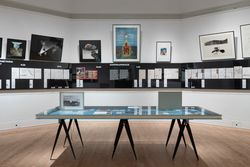
Alors que le cinéma décentralisé, expérimental et subversif gagne en importance à la fin des années 1960 et au début des années 1970, de nombreux groupes opérant dans le domaine de l’architecture, tels que Superstudio, Studio 9999 et Ant Farm explorent le médium du court métrage comme moyen d’élargir le discours architectural, d’intégrer à leurs projets des réflexions(...)
Alors que le cinéma décentralisé, expérimental et subversif gagne en importance à la fin des années 1960 et au début des années 1970, de nombreux groupes opérant dans le domaine de l’architecture, tels que Superstudio, Studio 9999 et Ant Farm explorent le médium du court métrage comme moyen d’élargir le discours architectural, d’intégrer à leurs projets des réflexions(...)
Localisation:
salle octogonale
salle octogonale
Date:
21 septembre 2018 au 19 mai 2019
21 septembre 2018 au 19 mai 2019
Titre:
Récits pour un monde nouveau
Actions:
Description:
Alors que le cinéma décentralisé, expérimental et subversif gagne en importance à la fin des années 1960 et au début des années 1970, de nombreux groupes opérant dans le domaine de l’architecture, tels que Superstudio, Studio 9999 et Ant Farm explorent le médium du court métrage comme moyen d’élargir le discours architectural, d’intégrer à leurs projets des réflexions(...)
Récits pour un monde nouveau
Actions:
Description:
Alors que le cinéma décentralisé, expérimental et subversif gagne en importance à la fin des années 1960 et au début des années 1970, de nombreux groupes opérant dans le domaine de l’architecture, tels que Superstudio, Studio 9999 et Ant Farm explorent le médium du court métrage comme moyen d’élargir le discours architectural, d’intégrer à leurs projets des réflexions(...)
Classification:
expositions
expositions
Date:
21 septembre 2018 au
19 mai 2019
21 septembre 2018 au
19 mai 2019
Localisation:
salle octogonale
salle octogonale
Classification:
événements
événements
Titre:
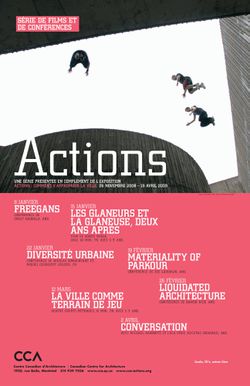
Liquidated Architecture
Liquidated Architecture
Actions:
Description:
Damon Rich, urbaniste et designer américain, analyse le lien entre la politique, l’architecture et l’histoire. Ses recherches concernent essentiellement l’analyse de l’évolution du marché immobilier à travers l’étude de cas de saisies, d’hypothèques, de construction et de zonage. Il est également impliqué au Center for Urban Pedagogy (CUP), une organisation basée à(...)
Damon Rich, urbaniste et designer américain, analyse le lien entre la politique, l’architecture et l’histoire. Ses recherches concernent essentiellement l’analyse de l’évolution du marché immobilier à travers l’étude de cas de saisies, d’hypothèques, de construction et de zonage. Il est également impliqué au Center for Urban Pedagogy (CUP), une organisation basée à(...)
Localisation:
Théâtre Paul-Desmarais
Théâtre Paul-Desmarais
Date:
26 février 2009
26 février 2009
Titre:
Liquidated Architecture
Actions:
Description:
Damon Rich, urbaniste et designer américain, analyse le lien entre la politique, l’architecture et l’histoire. Ses recherches concernent essentiellement l’analyse de l’évolution du marché immobilier à travers l’étude de cas de saisies, d’hypothèques, de construction et de zonage. Il est également impliqué au Center for Urban Pedagogy (CUP), une organisation basée à(...)
Liquidated Architecture
Actions:
Description:
Damon Rich, urbaniste et designer américain, analyse le lien entre la politique, l’architecture et l’histoire. Ses recherches concernent essentiellement l’analyse de l’évolution du marché immobilier à travers l’étude de cas de saisies, d’hypothèques, de construction et de zonage. Il est également impliqué au Center for Urban Pedagogy (CUP), une organisation basée à(...)
Classification:
événements
événements
Date:
26 février 2009
26 février 2009
Localisation:
Théâtre Paul-Desmarais
Théâtre Paul-Desmarais
Classification:
expositions
expositions

Description:
Dans les débuts de l’aviation, la plupart des avions n’avaient besoin que d’un champ gazonné de 1 500 pieds de long pour décoller et atterrir, et l’infrastructure se limitait à une grange servant à la fois de hangar et d’aérogare. La nécessité de véritables installations aéroportuaires n’apparaît qu’à la fin des années 1920, quelque vingt-cinq ans après le vol historique(...)
Dans les débuts de l’aviation, la plupart des avions n’avaient besoin que d’un champ gazonné de 1 500 pieds de long pour décoller et atterrir, et l’infrastructure se limitait à une grange servant à la fois de hangar et d’aérogare. La nécessité de véritables installations aéroportuaires n’apparaît qu’à la fin des années 1920, quelque vingt-cinq ans après le vol historique(...)
Localisation:
Vitrines
Vitrines
Date:
12 juin 1990 au 16 septembre 1990
12 juin 1990 au 16 septembre 1990
Titre:
Les aéroports à leurs débuts : trois projets de Lloyd Wright
Actions:
Description:
Dans les débuts de l’aviation, la plupart des avions n’avaient besoin que d’un champ gazonné de 1 500 pieds de long pour décoller et atterrir, et l’infrastructure se limitait à une grange servant à la fois de hangar et d’aérogare. La nécessité de véritables installations aéroportuaires n’apparaît qu’à la fin des années 1920, quelque vingt-cinq ans après le vol historique(...)
Les aéroports à leurs débuts : trois projets de Lloyd Wright
Actions:
Description:
Dans les débuts de l’aviation, la plupart des avions n’avaient besoin que d’un champ gazonné de 1 500 pieds de long pour décoller et atterrir, et l’infrastructure se limitait à une grange servant à la fois de hangar et d’aérogare. La nécessité de véritables installations aéroportuaires n’apparaît qu’à la fin des années 1920, quelque vingt-cinq ans après le vol historique(...)
Classification:
expositions
expositions
Date:
12 juin 1990 au
16 septembre 1990
12 juin 1990 au
16 septembre 1990
Localisation:
Vitrines
Vitrines


