


546 Résultats
Classification:
livres
livres
Titre:
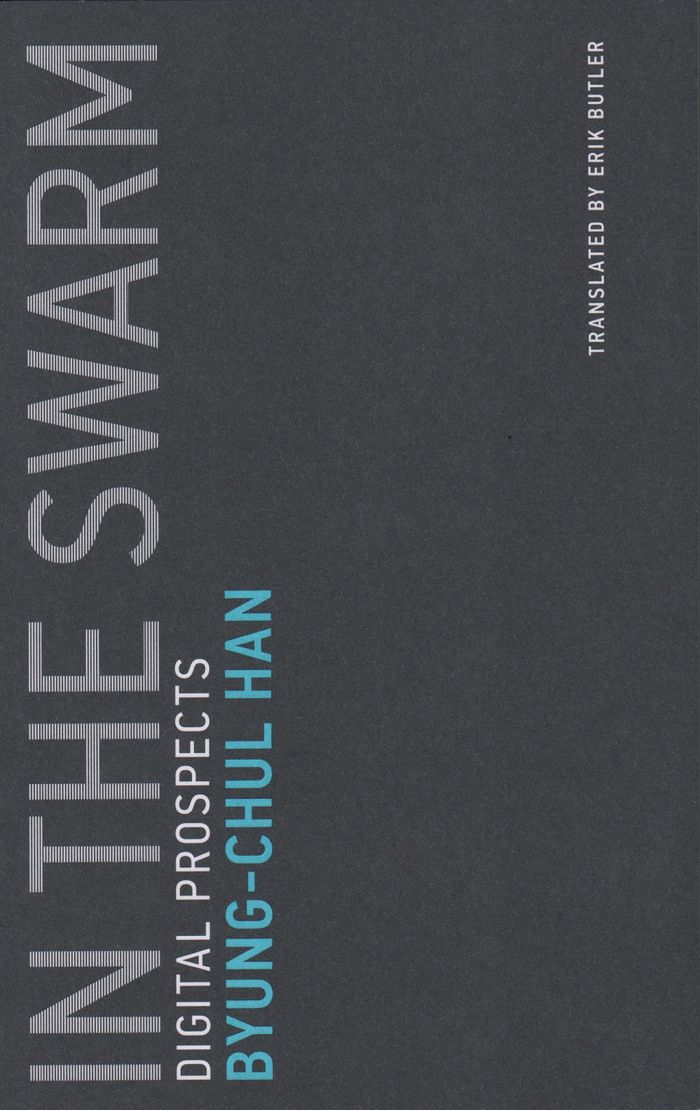
In the swarm
In the swarm
Actions:
Prix:
$18.95
(disponible sur commande)
Résumé:
Digital communication and social media have taken over our lives. In this contrarian reflection on digitized life, Byung-Chul Han counters the cheerleaders for Twitter revolutions and Facebook activism by arguing that digital communication is in fact responsible for the disintegration of community and public space and is slowly eroding any possibility for real political(...)
Titre:
In the swarm
Actions:
Prix:
$18.95
(disponible sur commande)
Résumé:
Digital communication and social media have taken over our lives. In this contrarian reflection on digitized life, Byung-Chul Han counters the cheerleaders for Twitter revolutions and Facebook activism by arguing that digital communication is in fact responsible for the disintegration of community and public space and is slowly eroding any possibility for real political action and meaningful political discourse. In the predigital, analog era, by the time an angry letter to the editor had been composed, mailed, and received, the immediate agitation had passed. Today, digital communication enables instantaneous, impulsive reaction, meant to express and stir up outrage on the spot. “The shitstorm,” writes Han, ”represents an authentic phenomenon of digital communication.” Meanwhile, the public, the senders and receivers of these communications have become a digital swarm—not a mass, or a crowd, or Negri and Hardt’s antiquated notion of a “multitude,” but a set of isolated individuals incapable of forming a “we,” incapable of calling dominant power relations into question, incapable of formulating a future because of an obsession with the present. The digital swarm is a fragmented entity that can focus on individual persons only in order to make them an object of scandal. Han, one of the most widely read philosophers in Europe today, describes a society in which information has overrun thought, in which the same algorithms are employed by Facebook, the stock market, and the intelligence services. Democracy is under threat because digital communication has made freedom and control indistinguishable. Big Brother has been succeeded by Big Data.
Classification:
livres
livres
Publication:
avril 2017
avril 2017
Classification:
livres
livres
Actions:
Prix:
$56.95
(disponible sur commande)
Résumé:
Utopia tends to generate a bad press - regarded as impracticable, perhaps nostalgic, or contradictory when visions of a perfect world cannot accommodate the change that is necessary to a free and self-organizing society. But people from diverse backgrounds are currently building a new society within the old, balancing literal and metaphorical utopianism, and demonstrating(...)
Titre:
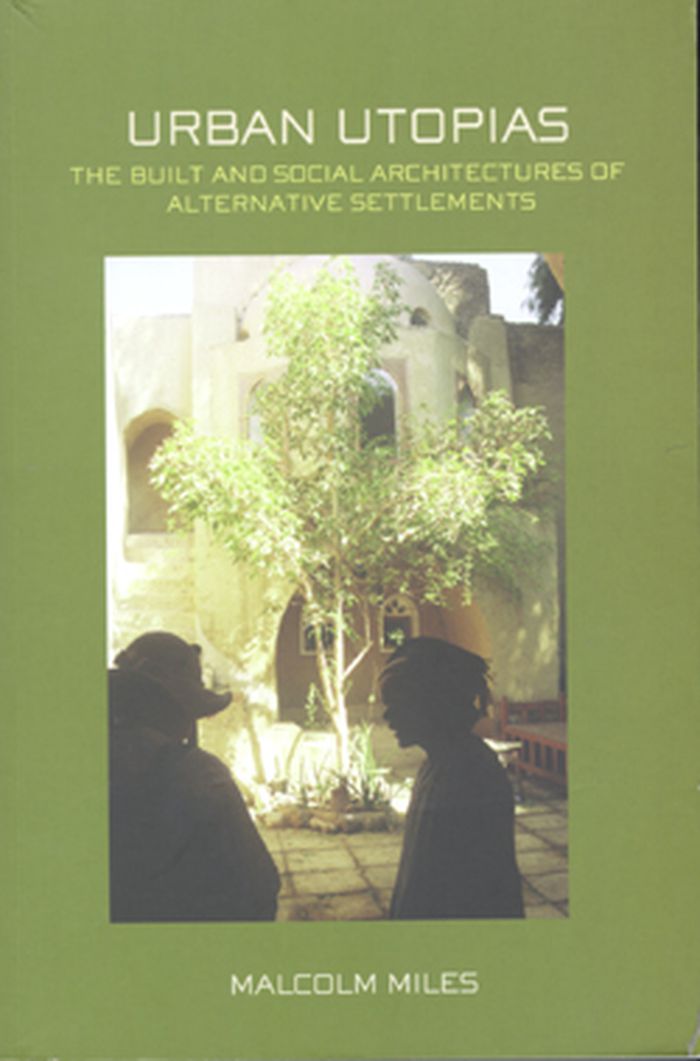
Urban utopias : the built and social architectures of alternative settlements
Actions:
Prix:
$56.95
(disponible sur commande)
Résumé:
Utopia tends to generate a bad press - regarded as impracticable, perhaps nostalgic, or contradictory when visions of a perfect world cannot accommodate the change that is necessary to a free and self-organizing society. But people from diverse backgrounds are currently building a new society within the old, balancing literal and metaphorical utopianism, and demonstrating plural possibilities for alternative futures and types of settlement. Thousands of such places exist around the world, including intentional communities, eco-villages, permaculture plots, religious and secular retreats, co-housing projects, self-build schemes, projects for low-impact housing, and activist squats in urban and rural sites. This experience suggests, however, that when planning and design are not integral to alternative social formations, the modern dream to engineer a new society cannot be realized. The book is structured in four parts. In part one, literary and theoretical utopias from the early modern period to the nineteenth-century are reconsidered. Part two investigates twentieth-century urban utopianism and contemporary alternative settlements focusing on social and environmental issues, activism and eco-village living. Part three looks to wider horizons in recent practices in the non-affluent world, and Part four reviews a range of cases from the author’s visits to specific sites. This is followed by a short conclusion in which a discussion of key issues is resumed. This book brings together insights from literary, theoretical and practical utopias, drawing out the characteristics of groups and places that are part of a new society. It links today’s utopian experiments to historical and literary utopias, and to theoretical problems in utopian thought.
Classification:
livres
livres
Publication:
décembre 2007, New York, London
décembre 2007, New York, London
Sujet:
Théorie de l’urbanisme
Théorie de l’urbanisme
Classification:
livres
livres
Prix:
$42.00
(disponible sur commande)
Résumé:
The past two decades have seen revolutionary shifts in our ability to navigate, inhabit, and define the spatial realm. The data flows that condition much of our lives now regularly include Global Positioning System (GPS) readings and satellite images of a quality once reserved for a few militaries and intelligence agencies, and powerful geographic information system (GIS)(...)
Titre:
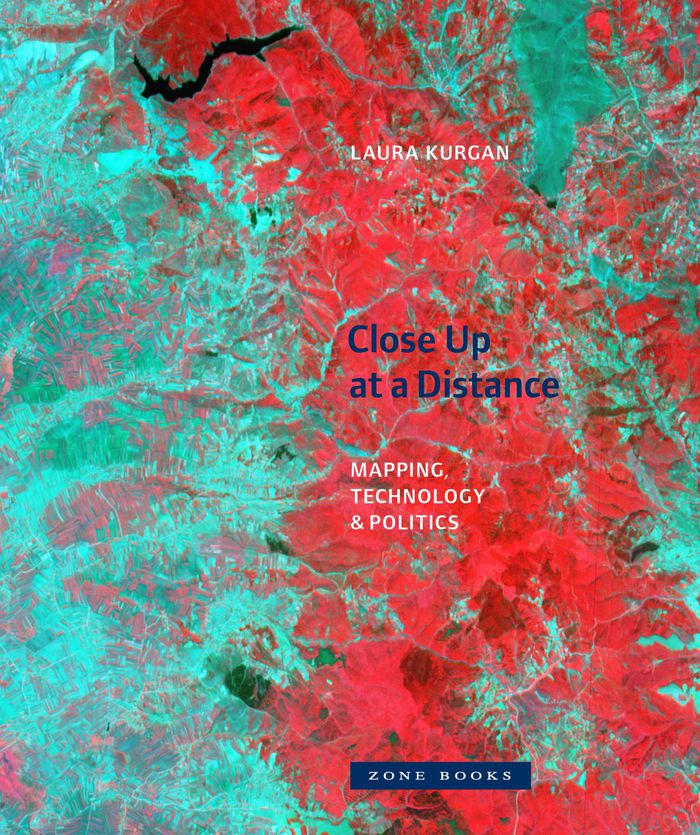
Close up at a distance: mapping, technology and politics
Actions:
Prix:
$42.00
(disponible sur commande)
Résumé:
The past two decades have seen revolutionary shifts in our ability to navigate, inhabit, and define the spatial realm. The data flows that condition much of our lives now regularly include Global Positioning System (GPS) readings and satellite images of a quality once reserved for a few militaries and intelligence agencies, and powerful geographic information system (GIS) software is now commonplace. These new technologies have raised fundamental questions about the intersection between physical space and its representation, virtual space and its realization. In ''Close up at a distance,'' Laura Kurgan offers a theoretical account of these new digital technologies of location and a series of practical experiments in making maps and images with spatial data. Neither simply useful tools nor objects of wonder or anxiety, the technologies of GPS, GIS, and satellite imagery become, in this book, the subject and the medium of a critical exploration. ''Close up at a distance'' records situations of intense conflict and struggle, on the one hand, and fundamental transformations in our ways of seeing and of experiencing space, on the other. Kurgan maps and theorizes mass graves, incarceration patterns, disappearing forests, and currency flows in a series of cases that range from Kuwait (1991) to Kosovo (1999), New York (2001) to Indonesia (2010). Using digital spatial hardware and software designed for military and governmental use in reconnaissance, secrecy, monitoring, ballistics, the census, and national security, Kurgan engages and confronts the politics and complexities of these technologies and their uses. At the intersection of art, architecture, activism, and geography, she uncovers, in her essays and projects, the opacities inherent in the recording of information and data and reimagines the spaces they have opened up.
Classification:
livres
livres
Publication:
octobre 2022
octobre 2022
Sujet:
Théorie de l’architecture
Théorie de l’architecture
Classification:
livres
livres
Actions:
Prix:
$37.50
(disponible sur commande)
Résumé:
Although the seemingly apocalyptic scale of the World Trade Center disaster continues to haunt people across the globe, it is only the most recent example of a city tragically wounded. Cities are, in fact, perpetually caught up in cycles of degeneration and renewal. As with the WTC, from time to time these cycles are severely ruptured by a sudden, unpredictable event.(...)
Titre:
Wounded cities : destruction and reconstruction in a globalized world
Actions:
Prix:
$37.50
(disponible sur commande)
Résumé:
Although the seemingly apocalyptic scale of the World Trade Center disaster continues to haunt people across the globe, it is only the most recent example of a city tragically wounded. Cities are, in fact, perpetually caught up in cycles of degeneration and renewal. As with the WTC, from time to time these cycles are severely ruptured by a sudden, unpredictable event. In the wake of recent terrorist activities, this timely book explores how urban populations are affected by "wounds" inflicted through violence, civil wars, overbuilding, drug trafficking, and the collapse of infrastructures, as well as "natural" disasters such as earthquakes. Mexico City, New York, Beirut, Belfast, Bangkok and Baghdad are just a few examples of cities riddled with problems that undermine, on a daily basis, the quality of urban life. What does it mean for urban dwellers when the infrastructure of a city collapses – transport, communication grids, heat, light, roads, water, and sanitation? What are the effects of foreign investment and huge construction projects on urban populations and how does this change the "look" and character of a city? How does drug trafficking intersect with class, race, and gender, and what impact does it have on vulnerable urban communities? How do political corruption and mafia networks distort the built environment? Drawing on in-depth case studies from across the globe, this book answers these intriguing questions through its rigorous consideration of changing global and national contexts, social movements, and corrosive urban events. Adopting a "grass roots up" approach, it places emphasis on people’s experiences of uneven development and inequality, their engagement with memory in the face of continual change, and the relevance of political activism to bettering their lives. It is especially attentive to the historical interaction of particular cities with wider political and economic forces, as these interactions have shaped local governance over time. Imagining each city as a "body politic", the authors consider its capacity both to mediate local conflict and to broach the healing of wounds.
Classification:
livres
livres
Publication:
août 2003, Oxford
août 2003, Oxford
Sujet:
Théorie de l’urbanisme
Théorie de l’urbanisme
Classification:
livres
livres
Actions:
Prix:
$24.95
(disponible sur commande)
Résumé:
Since the election of Mayor David Miller in November 2003, Toronto has experienced a wave of civic pride and enthusiasm not felt in decades. At long last, Torontonians see their city as a place of possibility and potential. Visions of a truly workable, liveable and world-class city are once again dancing in citizens’ heads. In the past two years, this spirit has, directly(...)
Titre:
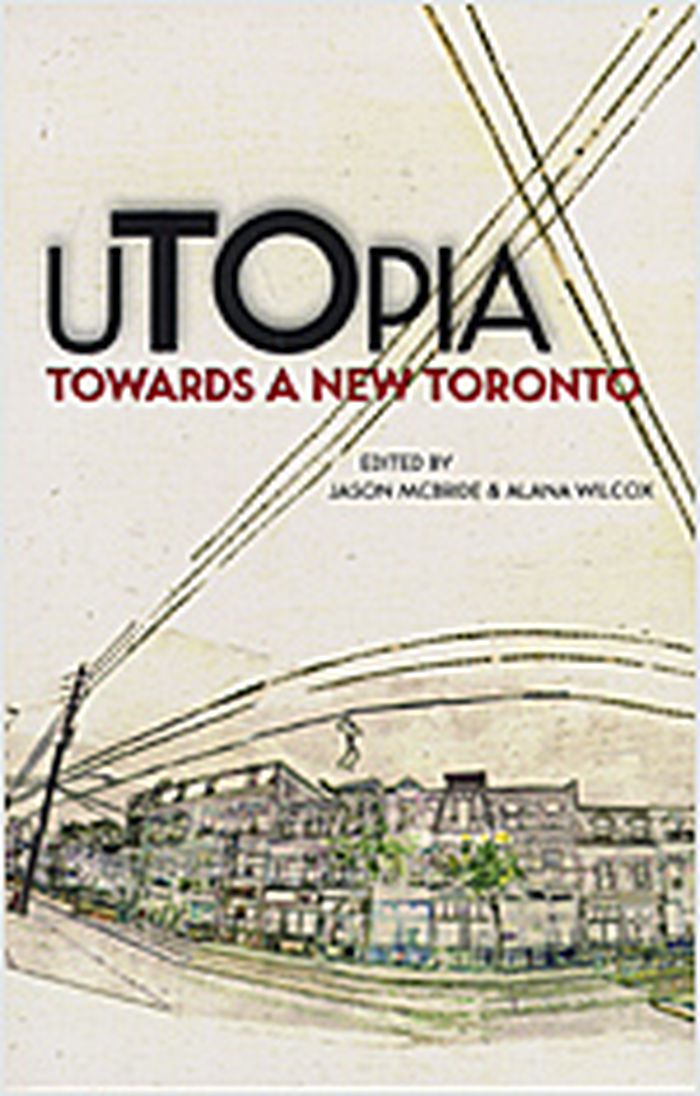
Utopia : towards a new Toronto
Actions:
Prix:
$24.95
(disponible sur commande)
Résumé:
Since the election of Mayor David Miller in November 2003, Toronto has experienced a wave of civic pride and enthusiasm not felt in decades. At long last, Torontonians see their city as a place of possibility and potential. Visions of a truly workable, liveable and world-class city are once again dancing in citizens’ heads. In the past two years, this spirit has, directly or indirectly, manifested itself in multifarious forms: in writer Sheila Heti’s sui generis lecture series, Trampoline Hall; in the transformation of derelict hotels such as the Drake and the Gladstone into cultural hotspots; in renewed interest in waterfront revitalization and public transportation; in exciting, controversial architectural developments such as the OCAD building, the expansion of the ROM and the AGO; in the [murmur] project, which catalogues stories about Toronto neighbourhoods and broadcasts them to people’s cell phones; in the explosion of the local independent music scene. "uTOpia" aims to capture and chronicle that spirit, collecting writing by many of the people inspired by and involved in these projects. Featuring passionate, visionary essays by thirty-four different journalists, artists, thinkers, architects and activists, "uTOpia" is a compendium of ideas, opinions and strategies. The anthology explores plans to redevelop the Island airport into a Ward’s Island-style community; how the Zeidler family is energizing artist-run centres; what a car-free Kensington Market might mean; the necessity and beauty of laneway housing; the way past efforts to combat devastating developments like the Spadina Expressway have shaped current activism; what a utopian Toronto might look like mapped out; and much, much more. "uTOpia" writes Toronto as it is shared and created by the people who live here. Though it is by no means a complete picture of what is happening in the city right now, it will hopefully show that what was once just a T-shirt slogan – I Heart T.O. – is now genuine, heartfelt sentiment.
Classification:
livres
livres
Publication:
octobre 2005, Toronto
octobre 2005, Toronto
Sujet:
Architecture du Canada
Architecture du Canada
Classification:
audio
audio
Description:
1 online resource.
Auteur:
Sujet:
Publication:
[Place of publication not identified] : Lateral Addition, 2018.
[Place of publication not identified] : Lateral Addition, 2018.
Titre:
June 21, 2018 : Listening for Southwest Key in San Diego.
Actions:
Description:
1 online resource.
June 21, 2018 : Listening for Southwest Key in San Diego.
Actions:
Description:
1 online resource.
Classification:
audio
audio
Publication:
[Place of publication not identified] : Lateral Addition, 2018.
[Place of publication not identified] : Lateral Addition, 2018.
Auteur:
Sujet:


