


12071 Résultats
Classification:
livres
livres
Actions:
Prix:
$43.95
(disponible sur commande)
Résumé:
Toronto-based practice Montgomery Sisam Architects has a commitment to design quality that is rooted in the belief that buildings and their environs must play a dignified and lasting role for their occupants and the surrounding community. Implicit in this approach is the desire to createplaces that make a positive contribution to the occupants physical and mental(...)
$43.95
(disponible sur commande)
Résumé:
Toronto-based practice Montgomery Sisam Architects has a commitment to design quality that is rooted in the belief that buildings and their environs must play a dignified and lasting role for their occupants and the surrounding community. Implicit in this approach is the desire to createplaces that make a positive contribution to the occupants physical and mental(...)
Publication:
février 2013
février 2013
Titre:
Place and occasion: Montgomery & Sisam architects
Actions:
Prix:
$43.95
(disponible sur commande)
Résumé:
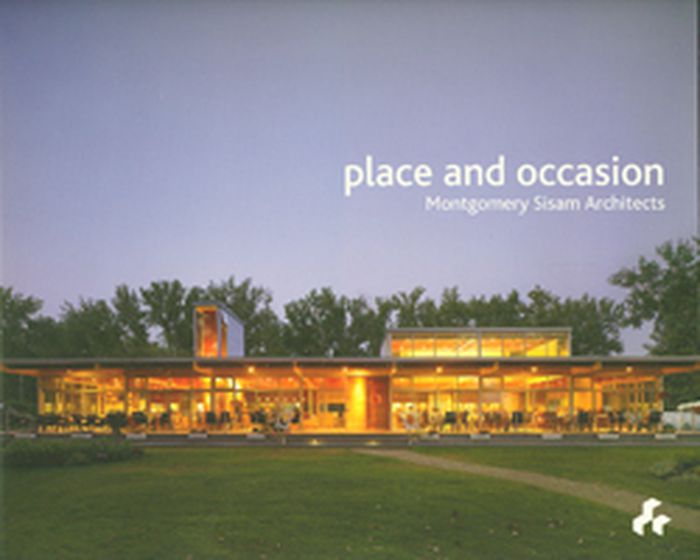
Toronto-based practice Montgomery Sisam Architects has a commitment to design quality that is rooted in the belief that buildings and their environs must play a dignified and lasting role for their occupants and the surrounding community. Implicit in this approach is the desire to createplaces that make a positive contribution to the occupants physical and mental wellbeing. The practice combines a considered, intellectual and highly collaborative approach to design and the composition of space with an intuitive understanding of daylight to produce buildings that engage with the outdoors and strengthen the beneficial relationship between design, health and wellbeing. Beautifully illustrated with full-colour photographs alongside drawings, plans and supporting texts, Place and Occasion is the first comprehensive examination of the work of this Canadian practice.
Place and occasion: Montgomery & Sisam architects
Actions:
Prix:
$43.95
(disponible sur commande)
Résumé:
Toronto-based practice Montgomery Sisam Architects has a commitment to design quality that is rooted in the belief that buildings and their environs must play a dignified and lasting role for their occupants and the surrounding community. Implicit in this approach is the desire to createplaces that make a positive contribution to the occupants physical and mental wellbeing. The practice combines a considered, intellectual and highly collaborative approach to design and the composition of space with an intuitive understanding of daylight to produce buildings that engage with the outdoors and strengthen the beneficial relationship between design, health and wellbeing. Beautifully illustrated with full-colour photographs alongside drawings, plans and supporting texts, Place and Occasion is the first comprehensive examination of the work of this Canadian practice.
Classification:
livres
livres
Publication:
février 2013
février 2013
Classification:
livres
livres

Actions:
Prix:
$15.95
(disponible sur commande)
Résumé:
First published in German in 1913 and widely considered to be Paul Scheerbart's masterpiece, Lesabéndio is an intergalactic utopian novel that describes life on the planetoid Pallas, where rubbery suction-footed life forms with telescopic eyes smoke bubble-weed in mushroom meadows under violet skies and green stars. A cosmic ecological fable, Scheerbart's novel was(...)
$15.95
(disponible sur commande)
Résumé:
First published in German in 1913 and widely considered to be Paul Scheerbart's masterpiece, Lesabéndio is an intergalactic utopian novel that describes life on the planetoid Pallas, where rubbery suction-footed life forms with telescopic eyes smoke bubble-weed in mushroom meadows under violet skies and green stars. A cosmic ecological fable, Scheerbart's novel was(...)
Publication:
mai 2013
mai 2013
Titre:
Lesabénio : an asteroid novel
Actions:
Prix:
$15.95
(disponible sur commande)
Résumé:
First published in German in 1913 and widely considered to be Paul Scheerbart's masterpiece, Lesabéndio is an intergalactic utopian novel that describes life on the planetoid Pallas, where rubbery suction-footed life forms with telescopic eyes smoke bubble-weed in mushroom meadows under violet skies and green stars. A cosmic ecological fable, Scheerbart's novel was admired by such architects as Bruno Taut and Walter Gropius, and such thinkers as Walter Benjamin and Gershom Scholem
Lesabénio : an asteroid novel
Actions:
Prix:
$15.95
(disponible sur commande)
Résumé:
First published in German in 1913 and widely considered to be Paul Scheerbart's masterpiece, Lesabéndio is an intergalactic utopian novel that describes life on the planetoid Pallas, where rubbery suction-footed life forms with telescopic eyes smoke bubble-weed in mushroom meadows under violet skies and green stars. A cosmic ecological fable, Scheerbart's novel was admired by such architects as Bruno Taut and Walter Gropius, and such thinkers as Walter Benjamin and Gershom Scholem
Classification:
livres
livres
Publication:
mai 2013
mai 2013
Classification:
livres
livres
Actions:
Prix:
$35.00
(disponible sur commande)
Résumé:
In the past, buildings and other constructions representing singular moments for the community were called monuments. Their origin was expression of power, celebration of ritual or collective affirmation. In the contemporary world, a project that aspires to be exceptionally expressive is commonly called an icon. This book claims that star-architects and their “iconic”(...)
$35.00
(disponible sur commande)
Résumé:
In the past, buildings and other constructions representing singular moments for the community were called monuments. Their origin was expression of power, celebration of ritual or collective affirmation. In the contemporary world, a project that aspires to be exceptionally expressive is commonly called an icon. This book claims that star-architects and their “iconic”(...)
Publication:
janvier 2010
janvier 2010
Titre:
Architectural Papers IV : iconoclastia, news from a post-iconic world
Actions:
Prix:
$35.00
(disponible sur commande)
Résumé:
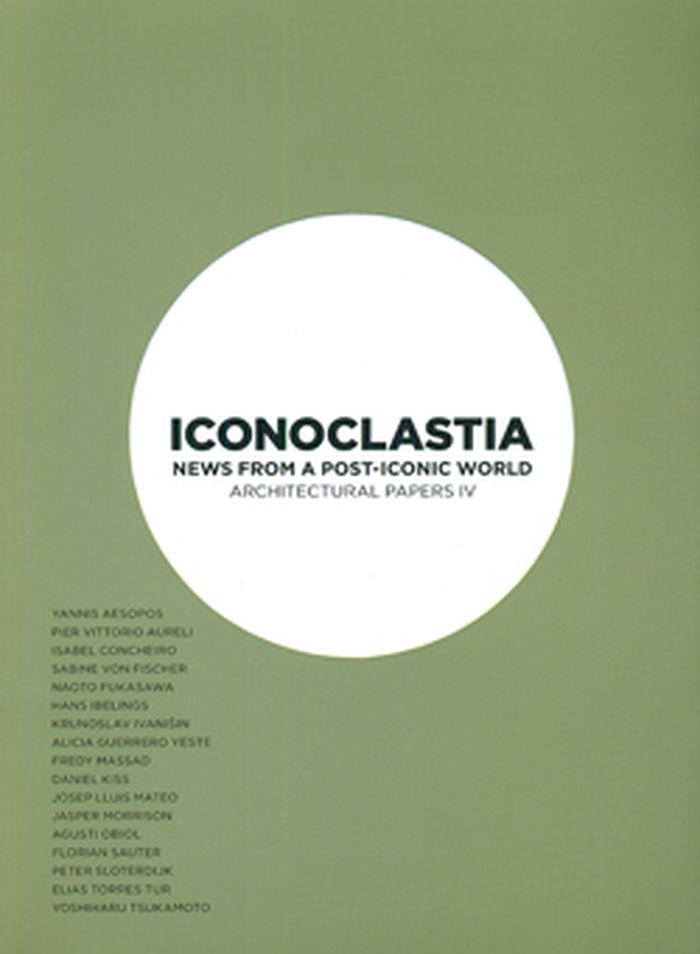
In the past, buildings and other constructions representing singular moments for the community were called monuments. Their origin was expression of power, celebration of ritual or collective affirmation. In the contemporary world, a project that aspires to be exceptionally expressive is commonly called an icon. This book claims that star-architects and their “iconic” architecture are no longer valid today, as these projects are all driven by marketing machineries. Architecture should re-emerge as a credible artefact and fulfill the transcendent demands of our time.The publication begins with a series of general texts on themes that vary but all share a common critical look at the role of the iconic on the recent architecture scene.
Architectural Papers IV : iconoclastia, news from a post-iconic world
Actions:
Prix:
$35.00
(disponible sur commande)
Résumé:
In the past, buildings and other constructions representing singular moments for the community were called monuments. Their origin was expression of power, celebration of ritual or collective affirmation. In the contemporary world, a project that aspires to be exceptionally expressive is commonly called an icon. This book claims that star-architects and their “iconic” architecture are no longer valid today, as these projects are all driven by marketing machineries. Architecture should re-emerge as a credible artefact and fulfill the transcendent demands of our time.The publication begins with a series of general texts on themes that vary but all share a common critical look at the role of the iconic on the recent architecture scene.
Classification:
livres
livres
Publication:
janvier 2010
janvier 2010
Classification:
livres
livres
Titre:
The building
The building
Actions:
Prix:
$54.00
(disponible sur commande)
Résumé:
For nearly fifty years “the building” has primarily been viewed as a means rather than an end within architectural history and theory. This volume presents an alternative to that trend by reconceiving it as a central discursive category in its own right. Contributors—including architects and academics from world-renowned institutions—offer insightful discussions of key(...)
$54.00
(disponible sur commande)
Résumé:
For nearly fifty years “the building” has primarily been viewed as a means rather than an end within architectural history and theory. This volume presents an alternative to that trend by reconceiving it as a central discursive category in its own right. Contributors—including architects and academics from world-renowned institutions—offer insightful discussions of key(...)
Publication:
octobre 2016
octobre 2016
Titre:
The building
Actions:
Prix:
$54.00
(disponible sur commande)
Résumé:
For nearly fifty years “the building” has primarily been viewed as a means rather than an end within architectural history and theory. This volume presents an alternative to that trend by reconceiving it as a central discursive category in its own right. Contributors—including architects and academics from world-renowned institutions—offer insightful discussions of key architectural structures conceived in Europe, Asia, and the U.S.A. over the last three decades. In doing so they propel architectural thinking’s importance as a domain of knowledge. Further, in exploring those structures through a number of questions both intra- and meta-disciplinary, this book suggests ways in which buildings can trigger conceptual frameworks whose influence extends well beyond architecture. A balanced text-to-image ratio caters to readers in both practice and academia.
The building
Actions:
Prix:
$54.00
(disponible sur commande)
Résumé:
For nearly fifty years “the building” has primarily been viewed as a means rather than an end within architectural history and theory. This volume presents an alternative to that trend by reconceiving it as a central discursive category in its own right. Contributors—including architects and academics from world-renowned institutions—offer insightful discussions of key architectural structures conceived in Europe, Asia, and the U.S.A. over the last three decades. In doing so they propel architectural thinking’s importance as a domain of knowledge. Further, in exploring those structures through a number of questions both intra- and meta-disciplinary, this book suggests ways in which buildings can trigger conceptual frameworks whose influence extends well beyond architecture. A balanced text-to-image ratio caters to readers in both practice and academia.
Classification:
livres
livres
Publication:
octobre 2016
octobre 2016
Classification:
livres
livres
Actions:
Prix:
$44.95
(disponible en magasin)
Résumé:
Une incursion dans la pensée et les réalisations d'un designer inclassable, hors norme, créateur d'espaces et inventeur patenté, récipiendaire de plusieurs prix qi fait sa marque entre biennales de prestige et recoins de chantiers.
$44.95
(disponible en magasin)
Résumé:
Une incursion dans la pensée et les réalisations d'un designer inclassable, hors norme, créateur d'espaces et inventeur patenté, récipiendaire de plusieurs prix qi fait sa marque entre biennales de prestige et recoins de chantiers.
Publication:
novembre 2008, Montréal
novembre 2008, Montréal
Titre:
Jacques Bilodeau: habiter/inhabited
Actions:
Prix:
$44.95
(disponible en magasin)
Résumé:
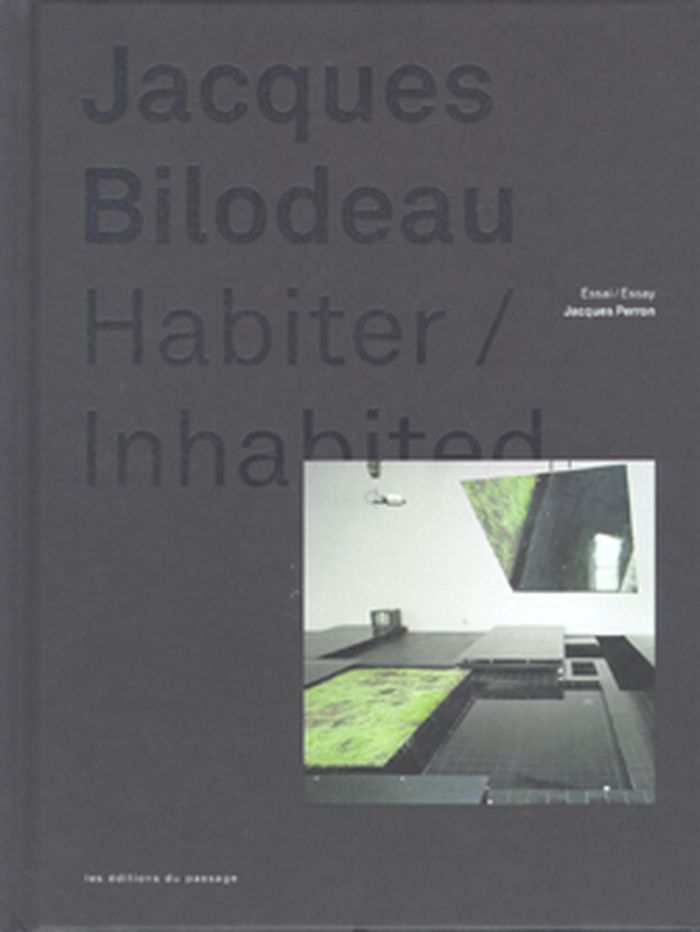
Une incursion dans la pensée et les réalisations d'un designer inclassable, hors norme, créateur d'espaces et inventeur patenté, récipiendaire de plusieurs prix qi fait sa marque entre biennales de prestige et recoins de chantiers.
Jacques Bilodeau: habiter/inhabited
Actions:
Prix:
$44.95
(disponible en magasin)
Résumé:
Une incursion dans la pensée et les réalisations d'un designer inclassable, hors norme, créateur d'espaces et inventeur patenté, récipiendaire de plusieurs prix qi fait sa marque entre biennales de prestige et recoins de chantiers.
Classification:
livres
livres
Publication:
novembre 2008, Montréal
novembre 2008, Montréal
Classification:
livres
livres

Prix:
$50.00
(disponible sur commande)
Résumé:
In autumn 2008 the transformed Art Gallery of Ontario (AGO), one of the most distinguished art museums in North America, opens its doors. The museum’s greatly expanded collections will be displayed in a magnificent new building designed by the world-renowned architect Frank Gehry. In this beautiful book Gehry’s innovative renovation of the AGO is captured through the lens(...)
$50.00
(disponible sur commande)
Résumé:
In autumn 2008 the transformed Art Gallery of Ontario (AGO), one of the most distinguished art museums in North America, opens its doors. The museum’s greatly expanded collections will be displayed in a magnificent new building designed by the world-renowned architect Frank Gehry. In this beautiful book Gehry’s innovative renovation of the AGO is captured through the lens(...)
Publication:
août 2009
août 2009
Titre:
Frank Gehry in Toronto, transforming the art gallery of Ontario
Actions:
Prix:
$50.00
(disponible sur commande)
Résumé:
In autumn 2008 the transformed Art Gallery of Ontario (AGO), one of the most distinguished art museums in North America, opens its doors. The museum’s greatly expanded collections will be displayed in a magnificent new building designed by the world-renowned architect Frank Gehry. In this beautiful book Gehry’s innovative renovation of the AGO is captured through the lens of acclaimed photographer Edward Burtynsky. Fifteen spectacular full-page colour photographs, specially commissioned for this project, document the building during important phases of construction.
Frank Gehry in Toronto, transforming the art gallery of Ontario
Actions:
Prix:
$50.00
(disponible sur commande)
Résumé:
In autumn 2008 the transformed Art Gallery of Ontario (AGO), one of the most distinguished art museums in North America, opens its doors. The museum’s greatly expanded collections will be displayed in a magnificent new building designed by the world-renowned architect Frank Gehry. In this beautiful book Gehry’s innovative renovation of the AGO is captured through the lens of acclaimed photographer Edward Burtynsky. Fifteen spectacular full-page colour photographs, specially commissioned for this project, document the building during important phases of construction.
Classification:
livres
livres
Publication:
août 2009
août 2009
Classification:
livres
livres
Titre:
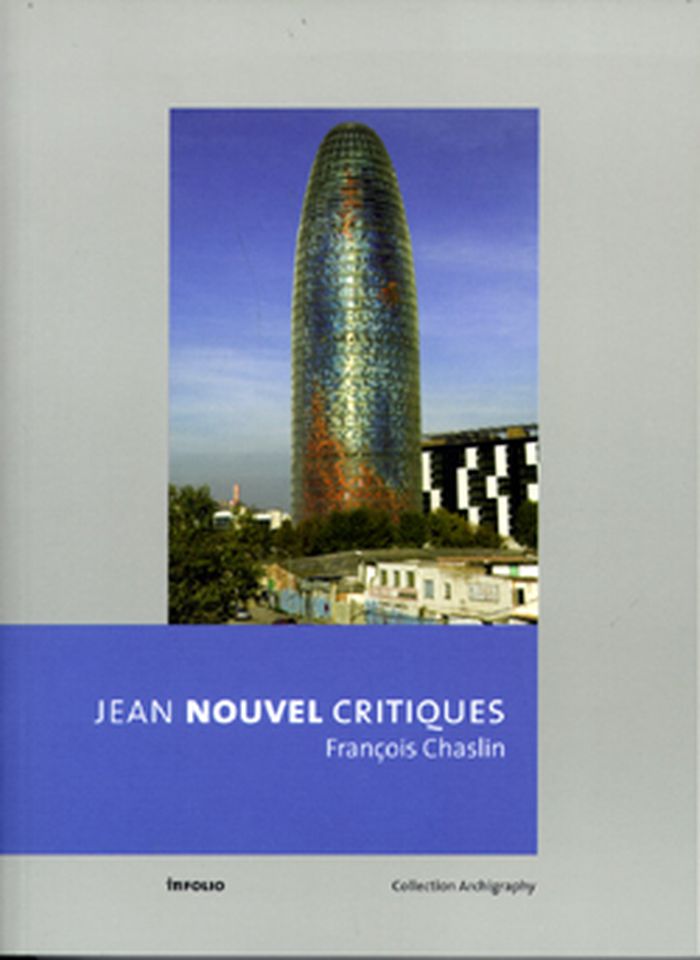
Jean Nouvel : critiques
Jean Nouvel : critiques
Actions:
Prix:
$45.95
(disponible en magasin)
Résumé:
L'architecte et son critique : Jean Nouvel et François Chaslin, nés en 1945 et en 1948, sont présents depuis plus de trente ans dans tous les débats sur l'architecture. Le prix Pritzker 2oo8 a récompensé l'architecte. II est temps de prendre une vue rétrospective sur son œuvre. François Chaslin lui a consacré de nombreux articles. Ses " papiers " sont ici rassemblés, dans(...)
$45.95
(disponible en magasin)
Résumé:
L'architecte et son critique : Jean Nouvel et François Chaslin, nés en 1945 et en 1948, sont présents depuis plus de trente ans dans tous les débats sur l'architecture. Le prix Pritzker 2oo8 a récompensé l'architecte. II est temps de prendre une vue rétrospective sur son œuvre. François Chaslin lui a consacré de nombreux articles. Ses " papiers " sont ici rassemblés, dans(...)
Publication:
novembre 2008, Gollion
novembre 2008, Gollion
Titre:
Jean Nouvel : critiques
Actions:
Prix:
$45.95
(disponible en magasin)
Résumé:
L'architecte et son critique : Jean Nouvel et François Chaslin, nés en 1945 et en 1948, sont présents depuis plus de trente ans dans tous les débats sur l'architecture. Le prix Pritzker 2oo8 a récompensé l'architecte. II est temps de prendre une vue rétrospective sur son œuvre. François Chaslin lui a consacré de nombreux articles. Ses " papiers " sont ici rassemblés, dans l'ordre de leur publication. Ils offrent un aperçu sur l'évolution de Nouvel, ouvrent une perspective sur les métamorphoses actuelles de l'architecture, et permettent de comprendre comment et pourquoi le regard d'un critique, de chaleureux, se fait sceptique, caustique, mordant.
Jean Nouvel : critiques
Actions:
Prix:
$45.95
(disponible en magasin)
Résumé:
L'architecte et son critique : Jean Nouvel et François Chaslin, nés en 1945 et en 1948, sont présents depuis plus de trente ans dans tous les débats sur l'architecture. Le prix Pritzker 2oo8 a récompensé l'architecte. II est temps de prendre une vue rétrospective sur son œuvre. François Chaslin lui a consacré de nombreux articles. Ses " papiers " sont ici rassemblés, dans l'ordre de leur publication. Ils offrent un aperçu sur l'évolution de Nouvel, ouvrent une perspective sur les métamorphoses actuelles de l'architecture, et permettent de comprendre comment et pourquoi le regard d'un critique, de chaleureux, se fait sceptique, caustique, mordant.
Classification:
livres
livres
Publication:
novembre 2008, Gollion
novembre 2008, Gollion
Classification:
livres
livres
Prix:
$31.95
(disponible en magasin)
Résumé:
In "The Emerald City", Dan Willis takes us on a flight of imagination that paradoxically never strays far from the most tangible, even intimate subjects. His essays range from the Tower of Babel to the Wizard of Oz, from Christo to Christmas trees, from the "lightness of(...)
$31.95
(disponible en magasin)
Résumé:
In "The Emerald City", Dan Willis takes us on a flight of imagination that paradoxically never strays far from the most tangible, even intimate subjects. His essays range from the Tower of Babel to the Wizard of Oz, from Christo to Christmas trees, from the "lightness of(...)
Publication:
juin 1999, New York
juin 1999, New York
Titre:
The emerald city and other essays on the architectural imagination
Actions:
Prix:
$31.95
(disponible en magasin)
Résumé:
In "The Emerald City", Dan Willis takes us on a flight of imagination that paradoxically never strays far from the most tangible, even intimate subjects. His essays range from the Tower of Babel to the Wizard of Oz, from Christo to Christmas trees, from the "lightness of being" to the "weight of architecture." This ultimately optimistic book suggests that architecture is as vital as ever. The texts draw equally from literary sources, architectural practice, philosophical analyses, pop culture, and everyday experiences. Willis's perspective as a writer, architect, artist, and teacher informs his work; his texts are at once reflective and proactive, as they challenge readers to rethink their participation in the built environment.
The emerald city and other essays on the architectural imagination
Actions:
Prix:
$31.95
(disponible en magasin)
Résumé:
In "The Emerald City", Dan Willis takes us on a flight of imagination that paradoxically never strays far from the most tangible, even intimate subjects. His essays range from the Tower of Babel to the Wizard of Oz, from Christo to Christmas trees, from the "lightness of being" to the "weight of architecture." This ultimately optimistic book suggests that architecture is as vital as ever. The texts draw equally from literary sources, architectural practice, philosophical analyses, pop culture, and everyday experiences. Willis's perspective as a writer, architect, artist, and teacher informs his work; his texts are at once reflective and proactive, as they challenge readers to rethink their participation in the built environment.
Classification:
livres
livres
Publication:
juin 1999, New York
juin 1999, New York
Classification:
livres
livres

Titre:
Cleaner, greener, healthier: a prescription for stronger Canadian environmental laws and policies
Cleaner, greener, healthier: a prescription for stronger Canadian environmental laws and policies
Actions:
Prix:
$34.95
(disponible sur commande)
Résumé:
In Cleaner, Greener, Healthier David Boyd sets out to remedy Canada's environmental health problems. He begins by assessing the environmental burden of disease, identifies its unequal distribution, and estimates the associated economic costs. He then compares Canada's environmental laws and policies with those in the US, Australia, and the EU, delivering a provocative(...)
$34.95
(disponible sur commande)
Résumé:
In Cleaner, Greener, Healthier David Boyd sets out to remedy Canada's environmental health problems. He begins by assessing the environmental burden of disease, identifies its unequal distribution, and estimates the associated economic costs. He then compares Canada's environmental laws and policies with those in the US, Australia, and the EU, delivering a provocative(...)
Publication:
décembre 2015
décembre 2015
Titre:
Cleaner, greener, healthier: a prescription for stronger Canadian environmental laws and policies
Actions:
Prix:
$34.95
(disponible sur commande)
Résumé:
In Cleaner, Greener, Healthier David Boyd sets out to remedy Canada's environmental health problems. He begins by assessing the environmental burden of disease, identifies its unequal distribution, and estimates the associated economic costs. He then compares Canada's environmental laws and policies with those in the US, Australia, and the EU, delivering a provocative diagnosis of the causes of Canada's second-rate standards. Finally, he prescribes legal remedies that will enable Canada to catch up with the world's environmental leaders while delivering substantial health and economic benefits.
Cleaner, greener, healthier: a prescription for stronger Canadian environmental laws and policies
Actions:
Prix:
$34.95
(disponible sur commande)
Résumé:
In Cleaner, Greener, Healthier David Boyd sets out to remedy Canada's environmental health problems. He begins by assessing the environmental burden of disease, identifies its unequal distribution, and estimates the associated economic costs. He then compares Canada's environmental laws and policies with those in the US, Australia, and the EU, delivering a provocative diagnosis of the causes of Canada's second-rate standards. Finally, he prescribes legal remedies that will enable Canada to catch up with the world's environmental leaders while delivering substantial health and economic benefits.
Classification:
livres
livres
Publication:
décembre 2015
décembre 2015
Classification:
livres
livres
Actions:
Prix:
$70.00
(disponible sur commande)
Résumé:
This book is a heterogeneous collection of writings, speeches, and interviews. Read together, they reveal the breadth of Mies’ deep engagement with architecture and education in Germany and the USA. By including both written and spoken words, the co-editors reveal how Mies was able to extend his influence well beyond the classroom-studio and the profession to reach a(...)
$70.00
(disponible sur commande)
Résumé:
This book is a heterogeneous collection of writings, speeches, and interviews. Read together, they reveal the breadth of Mies’ deep engagement with architecture and education in Germany and the USA. By including both written and spoken words, the co-editors reveal how Mies was able to extend his influence well beyond the classroom-studio and the profession to reach a(...)
Publication:
octobre 2024
octobre 2024
Titre:
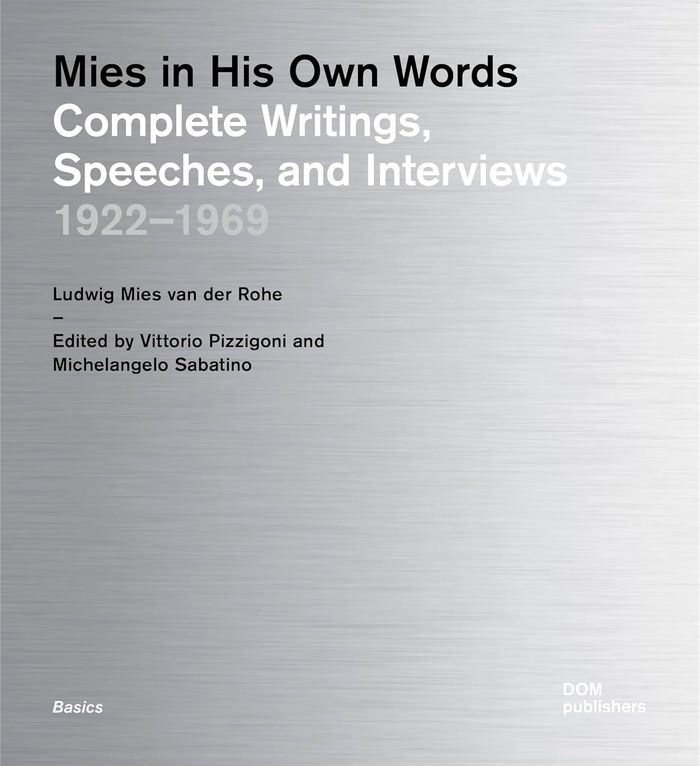
Mies in his own words: Complete writings,speeches and interviews 1922-1969
Actions:
Prix:
$70.00
(disponible sur commande)
Résumé:
This book is a heterogeneous collection of writings, speeches, and interviews. Read together, they reveal the breadth of Mies’ deep engagement with architecture and education in Germany and the USA. By including both written and spoken words, the co-editors reveal how Mies was able to extend his influence well beyond the classroom-studio and the profession to reach a general audience eager to learn more about his architectural philosophy during a time of great cultural and societal upheaval.
Mies in his own words: Complete writings,speeches and interviews 1922-1969
Actions:
Prix:
$70.00
(disponible sur commande)
Résumé:
This book is a heterogeneous collection of writings, speeches, and interviews. Read together, they reveal the breadth of Mies’ deep engagement with architecture and education in Germany and the USA. By including both written and spoken words, the co-editors reveal how Mies was able to extend his influence well beyond the classroom-studio and the profession to reach a general audience eager to learn more about his architectural philosophy during a time of great cultural and societal upheaval.
Classification:
livres
livres
Publication:
octobre 2024
octobre 2024


