


605 Résultats
Classification:
livres
livres
Prix:
$31.95
(disponible sur commande)
Résumé:
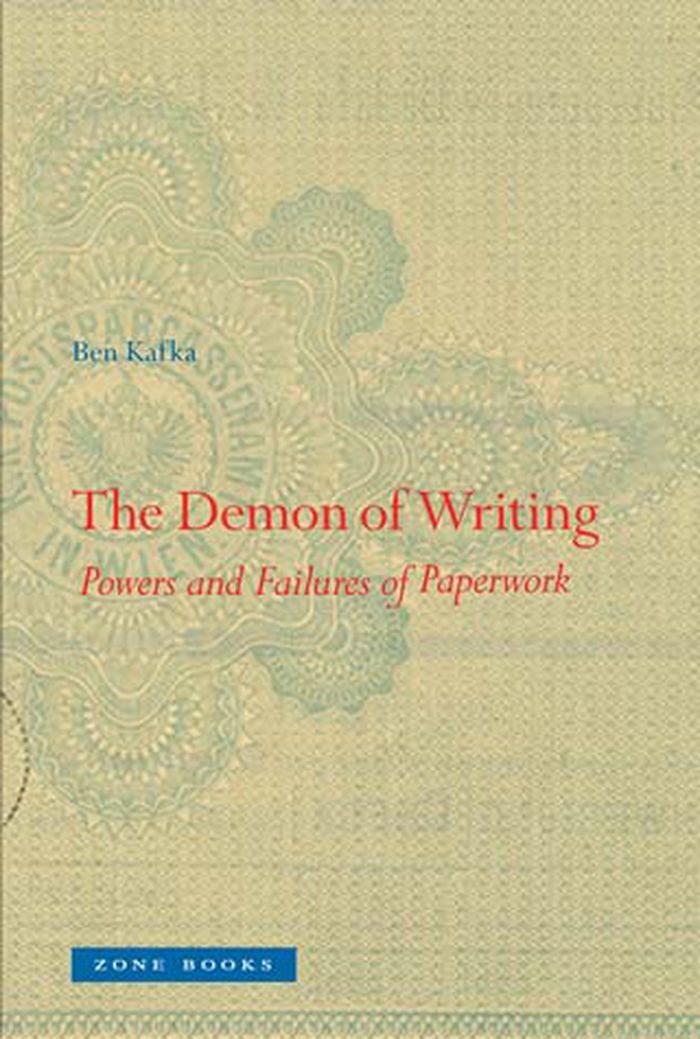
Since the middle of the eighteenth century, political thinkers of all kinds--radical and reactionary, professional and amateur--have been complaining about “bureaucracy.” But what, exactly, are they complaining about? In The Demon of Writing, Ben Kafka offers a critical history and theory of one of the most ubiquitous, least understood forms of media: paperwork.(...)
Titre:
The demon of writing: powers and failures of paperwork
Actions:
Prix:
$31.95
(disponible sur commande)
Résumé:
Since the middle of the eighteenth century, political thinkers of all kinds--radical and reactionary, professional and amateur--have been complaining about “bureaucracy.” But what, exactly, are they complaining about? In The Demon of Writing, Ben Kafka offers a critical history and theory of one of the most ubiquitous, least understood forms of media: paperwork. States rely on records to tax and spend, protect and serve, discipline and punish. But time and again, this paperwork proves to be unreliable. Examining episodes that range from the story of a clerk who lost his job and then his mind in the French Revolution to an account of Roland Barthes’s brief stint as a university administrator, Kafka reveals the powers, the failures, and even the pleasures of paperwork. Many of its complexities, he argues, have been obscured by the comic-paranoid style that characterizes much of our criticism of bureaucracy. Kafka proposes a new theory of what Karl Marx called the “bureaucratic medium.”
Classification:
livres
livres
Publication:
novembre 2012
novembre 2012
Sujet:
Théorie de l’architecture
Théorie de l’architecture
Classification:
livres
livres

Actions:
Prix:
$56.00
(disponible sur commande)
Résumé:
The French rust belt, the area that runs from Firminy through Saint-Etienne all the way to Lyon, was regarded for a long time as a thriving region. The industrial revolution in France began in the valleys between the Loire and Rhône rivers. This led to a process of exploitation and deformation of the landscape, signs of which are still visible today. For more than forty(...)
Sujet:
Monographies photo
Monographies photo
Publication:
avril 2024
avril 2024
Titre:
Nicolas Giraud & Bertrand Stofleth: The Valley, an archaeology in photographs
Actions:
Prix:
$56.00
(disponible sur commande)
Résumé:
The French rust belt, the area that runs from Firminy through Saint-Etienne all the way to Lyon, was regarded for a long time as a thriving region. The industrial revolution in France began in the valleys between the Loire and Rhône rivers. This led to a process of exploitation and deformation of the landscape, signs of which are still visible today. For more than forty years, the region, like other former industrial sites, has suffered from unemployment and a population exodus. Looking at the long-term photographic study by Nicolas Giraud and Bertrand Stofleth, it is evident that this is now the reality wherever neoliberalism has cut its swathe through industrial communities. Once industry has retreated, the landscapes that are left behind all look fairly similar. In visual terms, there is no great difference between Saint-Etienne and Suhl in Thuringia, for example. In ''La Vallée'', Giraud and Stofleth’s photographs enter into a dialogue with texts by authors from a variety of disciplines.
Classification:
livres
livres
Publication:
avril 2024
avril 2024
Sujet:
Monographies photo
Monographies photo
Classification:
livres
livres
Titre:
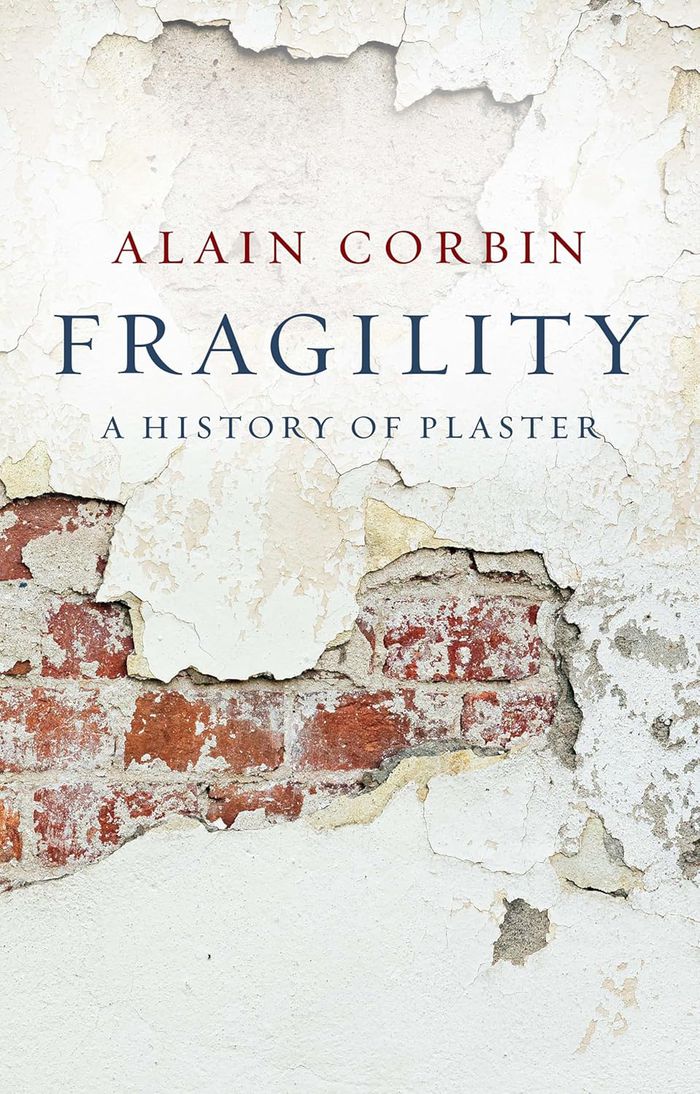
The fragility of plaster
The fragility of plaster
Actions:
Prix:
$17.95
(disponible sur commande)
Résumé:
The distant past is commonly characterized in terms of dominant materials of the time – the Stone Age, the Bronze Age, the Iron Age, etc. Since the dawn of writing, however, characterizing eras in terms of materials has fallen by the wayside, and yet materials have continued to exert a powerful influence on our collective imagination. Viewed from this perspective, France(...)
Titre:
The fragility of plaster
Actions:
Prix:
$17.95
(disponible sur commande)
Résumé:
The distant past is commonly characterized in terms of dominant materials of the time – the Stone Age, the Bronze Age, the Iron Age, etc. Since the dawn of writing, however, characterizing eras in terms of materials has fallen by the wayside, and yet materials have continued to exert a powerful influence on our collective imagination. Viewed from this perspective, France in the period from 1815 to 1855 could be seen as the half-century of plaster. After the French Revolution, plaster was used for a great variety of things: building, moulding, sculpting, decorating. Cheap and easy to use, plaster was everywhere, from Napoleon’s death mask to household ornaments, from walls to elaborate mouldings. Plaster was king – but a fragile king that easily crumbled and fell apart. The age of plaster was also the reign of the ephemeral and the transient, the vulgar and the eclectic, and the men and women of the time struggled to maintain stability and continuity with the past.
Classification:
livres
livres
Publication:
juillet 2025
juillet 2025
Sujet:
Théorie de l’art
Théorie de l’art
Classification:
livres
livres

Actions:
Prix:
$50.00
(disponible sur commande)
Résumé:
During the 18th century a remarkable group of women formed the Bluestocking Salon, where women and men met to debate contemporary ideas and promote the life of the mind. Together, these cultural innovators helped forge new roles for women as influential thinkers, writers, and artists, and their creative achievements were publicly celebrated. Richly illustrated(...)
Sujet:
Histoire jusqu’à 1900
Histoire jusqu’à 1900
Publication:
juin 2008, New Haven, London
juin 2008, New Haven, London
Titre:
Brilliant women : 18th-century bluestockings
Actions:
Prix:
$50.00
(disponible sur commande)
Résumé:
During the 18th century a remarkable group of women formed the Bluestocking Salon, where women and men met to debate contemporary ideas and promote the life of the mind. Together, these cultural innovators helped forge new roles for women as influential thinkers, writers, and artists, and their creative achievements were publicly celebrated. Richly illustrated with portraits, prints, and personal artifacts, "Brilliant women" tells the story of this fascinating group of women. The authors chart the changing fortunes of the female intellectual and explore how a number of bluestocking women, such as artist Angelica Kauffmann, historian Catharine Macaulay, and early feminist Mary Wollstonecraft, used portraiture to advance their work and their reputations in a period framed by the Enlightenment and the French Revolution. "Brilliant women" pays tribute to the friendships and achievements of these bluestocking women, presenting new information on the range of cultural activities in which they were engaged, as well as celebrating their legacy.
Classification:
livres
livres
Publication:
juin 2008, New Haven, London
juin 2008, New Haven, London
Sujet:
Histoire jusqu’à 1900
Histoire jusqu’à 1900
Classification:
livres
livres
Actions:
Prix:
$42.00
(disponible sur commande)
Résumé:
In ''The Terrible Children of Modernity'', Sloterdijk offers a magisterial and profound investigation into the vicissitudes of historical change and the nature of modernity. For Sloterdijk, modernity is defined by its need to break with the past. Moderns are perpetual rebels who seek to sever the ties of tradition and forms of inheritance that bind generations and eras(...)
Titre:
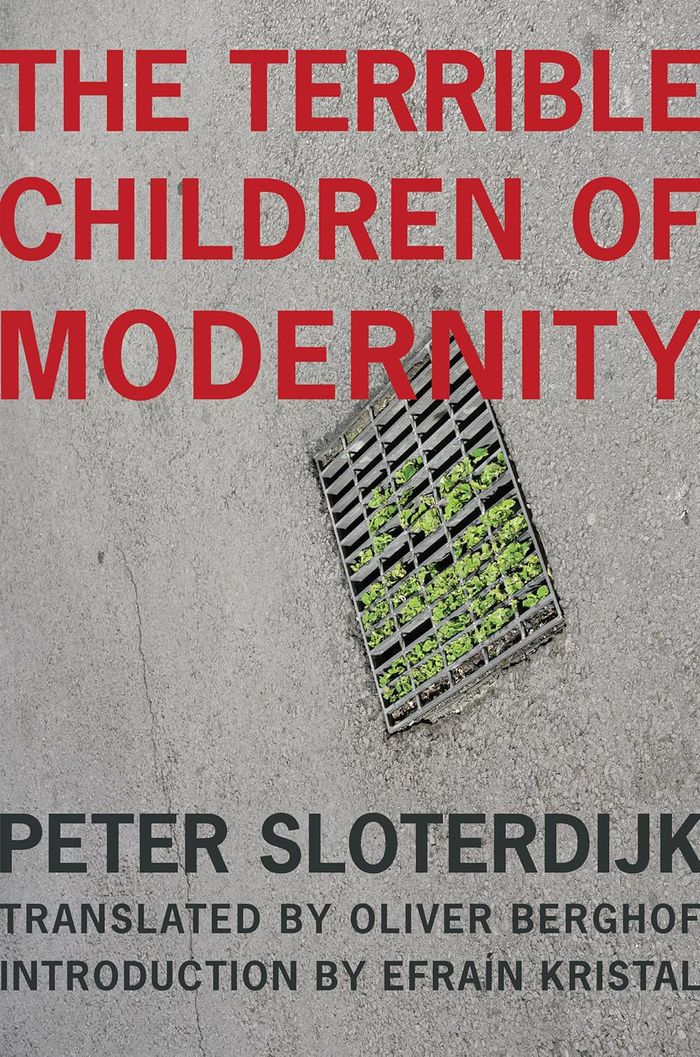
The terrible children of modernity
Actions:
Prix:
$42.00
(disponible sur commande)
Résumé:
In ''The Terrible Children of Modernity'', Sloterdijk offers a magisterial and profound investigation into the vicissitudes of historical change and the nature of modernity. For Sloterdijk, modernity is defined by its need to break with the past. Moderns are perpetual rebels who seek to sever the ties of tradition and forms of inheritance that bind generations and eras together. With deep philosophical, historical, and literary range, he traces this antigenealogical experiment from the French Revolution onward, from Madame de Pompadour and Napoleon through Nietzsche, Marx, Wagner, the Dadaists, and Deleuze. Acutely aware of the destructive potential of cultural discontinuities, Sloterdijk is no less critical of the “fathers” who condemn change than the “terrible children” who seek a drastic rupture with their predecessors. Equally concerned with the grand sweep of history and our current predicaments, he instead calls for new ways to live together in the intersubjectivity of the human condition. Incisive and daring, breathtaking in its scope, this account of youthful rebellion against tradition asks us to reimagine the ethics of genealogy.
Classification:
livres
livres
Publication:
octobre 2023
octobre 2023
Sujet:
Théorie/ philosophie
Théorie/ philosophie
Classification:
livres
livres
Actions:
Prix:
$74.00
(disponible en magasin)
Résumé:
Created between 1787 and 1823 by George IV, the ''Royal Pavilion in Brighton'' is perhaps the most daring and enchanting example of a building that expresses the European fascination with what in the early nineteenth century was considered the “Orient,” in particular China and India. The building, with its Indian-inspired exterior, was the work of the renowned architect(...)
Titre:
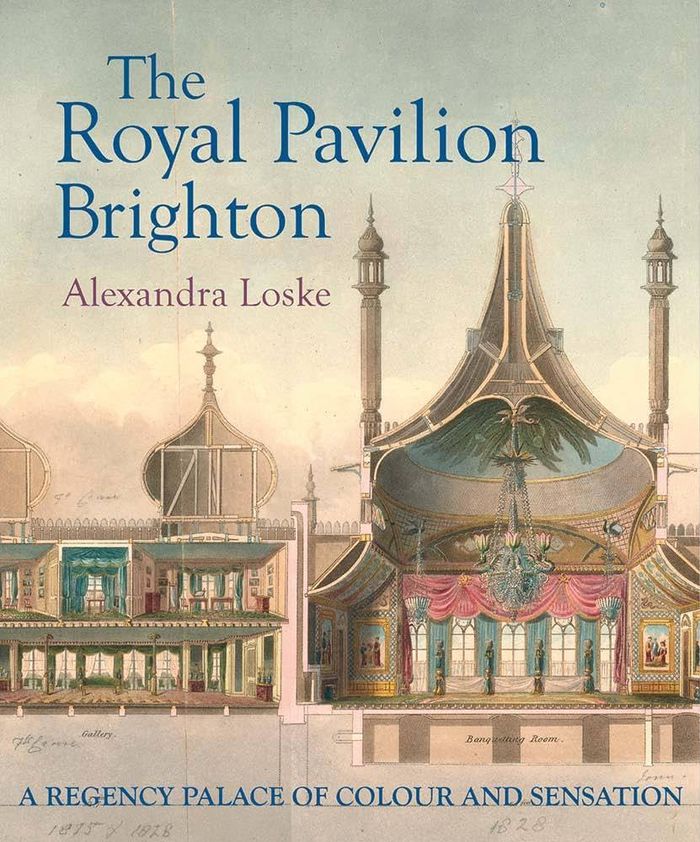
The Royal Pavilion, Brighton: A Regency palace of colour and sensation
Actions:
Prix:
$74.00
(disponible en magasin)
Résumé:
Created between 1787 and 1823 by George IV, the ''Royal Pavilion in Brighton'' is perhaps the most daring and enchanting example of a building that expresses the European fascination with what in the early nineteenth century was considered the “Orient,” in particular China and India. The building, with its Indian-inspired exterior, was the work of the renowned architect John Nash, who with the contributions of several other gifted and inventive architects, artists, and designers, created a building that draws you in, takes you on a journey, and plays with your senses. Featuring new photography, this lavishly illustrated book will provide a fresh look at the sumptuous Chinoiserie interiors of the Royal Pavilion and their enduring appeal. Drawing on recent research, conservation projects, and the unprecedented loan exhibition A Prince’s Treasure: From Buckingham Palace to the Royal Pavilion (2019–22), this book celebrates the colours and sensual beauty of these interiors while situating the Royal Pavilion in the context of the time of its creation and development under royal ownership, from its beginning in the wake of the French Revolution, through its transformation and extension during and just after the Napoleonic Wars, to its fate and legacy in the early Victorian era.
Classification:
livres
livres
Publication:
juillet 2025
juillet 2025
Classification:
livres
livres

Actions:
Prix:
$17.95
(disponible sur commande)
Résumé:
L'histoire romancée de la commune imaginaire de Clusy, de la fin de l'Antiquité à la Révolution. Le règne des évêques, les libertés communales, le développement de la bourgeoisie : comment l'histoire politique et sociale se reflète dans celle des bâtiments publics et de l'aménagement urbain. Première édition J. Hetzel et Cie éditeurs, Paris, 1878.
Titre:
Histoire d'un hôtel de ville et d'une cathédrale
Actions:
Prix:
$17.95
(disponible sur commande)
Résumé:
L'histoire romancée de la commune imaginaire de Clusy, de la fin de l'Antiquité à la Révolution. Le règne des évêques, les libertés communales, le développement de la bourgeoisie : comment l'histoire politique et sociale se reflète dans celle des bâtiments publics et de l'aménagement urbain. Première édition J. Hetzel et Cie éditeurs, Paris, 1878.
Classification:
livres
livres
Publication:
janvier 2013
janvier 2013
Classification:
livres
livres
Actions:
Prix:
$39.95
(disponible sur commande)
Résumé:
In postwar France, the aesthetics of appropriation and collage gave cultural form to a struggle over meaning. A new wave of avant-garde experimentation used - or stole, plagiarized, and expropriated - elements from advertising, journalism, literature, art, and other sources of common discourse (the ironically named "beautiful language" of this book's title, itself an(...)
Publication:
février 2007, Cambridge (MA)
février 2007, Cambridge (MA)
Titre:
The beautiful language of my century : reinventing the language of contestation in postwar France, 1945-1968
Actions:
Prix:
$39.95
(disponible sur commande)
Résumé:
In postwar France, the aesthetics of appropriation and collage gave cultural form to a struggle over meaning. A new wave of avant-garde experimentation used - or stole, plagiarized, and expropriated - elements from advertising, journalism, literature, art, and other sources of common discourse (the ironically named "beautiful language" of this book's title, itself an appropriation from Guy Debord's collaged Mémoires). Redeployed, often in startling or pointed juxtapositions, these elements took on newly oppositional meanings. A famous photograph taken inside the occupied Sorbonne in May 1968, for example, shows a massive academic painting altered by a clever cartoonish speech bubble that transforms the painting into a parody of itself and memorializes an event very different from the one captured by the original artist."The beautiful language of my century" describes the various forms of critical culture that culminated in the events of May 1968, and investigates the ways those forms have come down to us today. McDonough explores the montage practice developed by Guy Debord and his situationist colleagues under the name of détournement and its expression in the later fifties as a form of cultural theft. He addresses the influence of colonialism on these practices, examining a 1961 exhibit of torn posters of the Algerian War ("La France déchirée"), Godard's early film Le Petit Soldat, and Christo's Project for a Temporary Wall of Steel Drums. He discusses the French left's adoption in the mid-sixties of the "end of art" as a theoretical position and describes the leftist idea of the fête as a Rabelaisian and revolutionary upwelling of everything that is low. This influential conception, inspired equally by the American urban revolts of the sixties and the writings of theorists Marcel Mauss and Georges Bataille, coalesced into a new image of revolution, a new model of contestation, in the events of May 1968 - when the struggle over language and culture merged with a broader resistance to capitalist modernization.
Classification:
livres
livres
Publication:
février 2007, Cambridge (MA)
février 2007, Cambridge (MA)
Classification:
livres
livres

Actions:
Prix:
$37.95
(disponible sur commande)
Résumé:
L'auteur analyse sous l'angle du marxisme, les conditions économiques, politiques et historiques de la proclamation de la Commune et dresse le portrait du Paris insurgé : des femmes de Montmartre désarmant les soldats, prolétaires anonymes prenant la parole dans les quartiers et les clubs. Pour l'auteur, la Commune reste un moment unique de "révolution totale".
Publication:
octobre 2018
octobre 2018
Titre:
La proclamation de la Commune
Actions:
Prix:
$37.95
(disponible sur commande)
Résumé:
L'auteur analyse sous l'angle du marxisme, les conditions économiques, politiques et historiques de la proclamation de la Commune et dresse le portrait du Paris insurgé : des femmes de Montmartre désarmant les soldats, prolétaires anonymes prenant la parole dans les quartiers et les clubs. Pour l'auteur, la Commune reste un moment unique de "révolution totale".
Classification:
livres
livres
Publication:
octobre 2018
octobre 2018
Classification:
livres
livres

Actions:
Prix:
$64.95
(disponible sur commande)
Résumé:
Confrontée, ici comme ailleurs, dès l’été 1789, à la « révolution de l’égalité », la microsociété nobiliaire picarde allait-elle, au siècle suivant, se fondre dans le monde des notables ou garder son identité, s’isoler ou s’intégrer dans la société de son temps sans renier ses traditions et ses valeurs, « tenir son rang » et s’en donner les moyens? Cette étude, menée sur(...)
Titre:
La noblesse de la somme au dix-neuvième siècle
Actions:
Prix:
$64.95
(disponible sur commande)
Résumé:
Confrontée, ici comme ailleurs, dès l’été 1789, à la « révolution de l’égalité », la microsociété nobiliaire picarde allait-elle, au siècle suivant, se fondre dans le monde des notables ou garder son identité, s’isoler ou s’intégrer dans la société de son temps sans renier ses traditions et ses valeurs, « tenir son rang » et s’en donner les moyens? Cette étude, menée sur une période longue, du temps de la construction des « châteaux briques et pierre » sous Louis XV et Louis XVI, jusqu’aux combats politiques sous Jules Ferry, s’appuie sur nombre de papiers de famille et d’archives publiques, sur des documents iconographiques précis, sur les traces essentielles de la présence nobiliaire dans le patrimoine bâti de cette Picardie lourdement touchée par les destructions des invasions et des guerres.
Classification:
livres
livres
Publication:
février 2022
février 2022


