


6004 Résultats
Classification:
livres
livres
Titre:
Planning the twentieth-century American city / edited by Mary Corbin Sies and Christopher Silver.
Planning the twentieth-century American city / edited by Mary Corbin Sies and Christopher Silver.
Actions:
Exemplaires:
Description:
xiv, 594 pages : illustrations, maps ; 24 cm
Description:
xiv, 594 pages : illustrations, maps ; 24 cm
Auteur:
Sujet:
Publication:
Baltimore : Johns Hopkins University Press, 1996.
Baltimore : Johns Hopkins University Press, 1996.
Titre:
Planning the twentieth-century American city / edited by Mary Corbin Sies and Christopher Silver.
Actions:
Exemplaires:
Description:
xiv, 594 pages : illustrations, maps ; 24 cm
Planning the twentieth-century American city / edited by Mary Corbin Sies and Christopher Silver.
Actions:
Exemplaires:
Description:
xiv, 594 pages : illustrations, maps ; 24 cm
Classification:
livres
livres
Publication:
Baltimore : Johns Hopkins University Press, 1996.
Baltimore : Johns Hopkins University Press, 1996.
Auteur:
Sujet:
Classification:
livres
livres
Prix:
$39.95
(disponible sur commande)
Résumé:
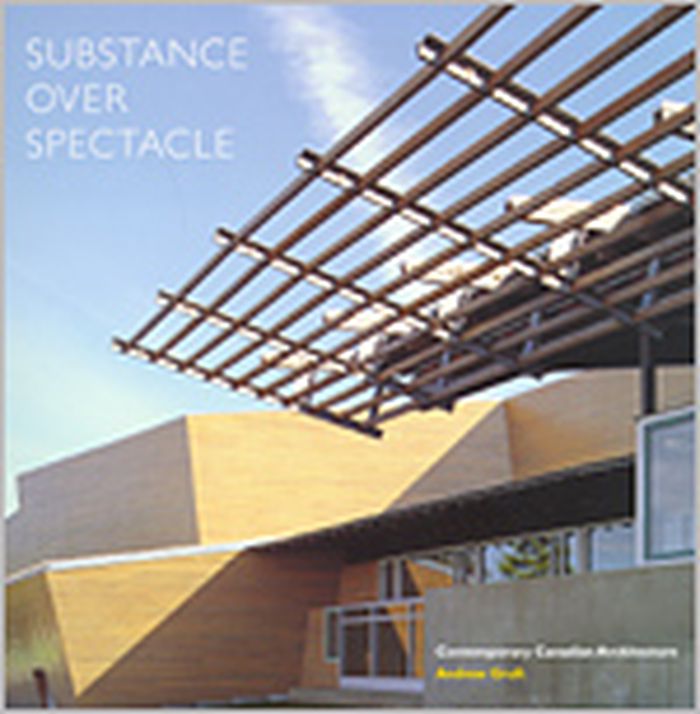
"Substance over Spectacle" presents the best and brightest architectural work in Canada in the last ten years, providing a representative sample of Canadian architectural practice since the early nineties, and demonstrating a specific Canadian sensibility that is unlike any architectural trend elsewhere in the world. The book also explores issues of viability,(...)
Titre:
Substance over spectacle : contemporary Canadian architecture
Actions:
Prix:
$39.95
(disponible sur commande)
Résumé:
"Substance over Spectacle" presents the best and brightest architectural work in Canada in the last ten years, providing a representative sample of Canadian architectural practice since the early nineties, and demonstrating a specific Canadian sensibility that is unlike any architectural trend elsewhere in the world. The book also explores issues of viability, sustainability, community, and utility as they relate to the Canadian architectural experience. Included is the work of twenty-five architects from every area of the country, each represented by an installation of their own design and construction. In addition to photographs of the finished projects, "Substance over Spectacle" also features images of models and architectural drawings, together with analytical/critical text demonstrating the architectural ideas embedded in the work. Five essays deal with different aspects of contemporary Canadian architecture, written by some of Canada’s leading thinkers on architecture: George Baird, Sherry McKay, Marco Polo, Georges Adamczyk, and Andrew Gruft. Publication of the book coincides with an exhibition of the same name mounted by the Morris and Helen Belkin Art Gallery at the University of British Columbia, in April 2005, during the international conference of the Society of Architectural Historians, which is taking place at UBC. "Substance over Spectacle", the first national critical overview of Canadian architecture in some eighteen years, offers fresh new perspectives on how our architecture defines us as we approach the first mid-decade of the new century.
Classification:
livres
livres
Publication:
mai 2005, Vancouver
mai 2005, Vancouver
Sujet:
Architecture du Canada
Architecture du Canada
Classification:
livres
livres
Actions:
Prix:
$43.95
(disponible sur commande)
Résumé:
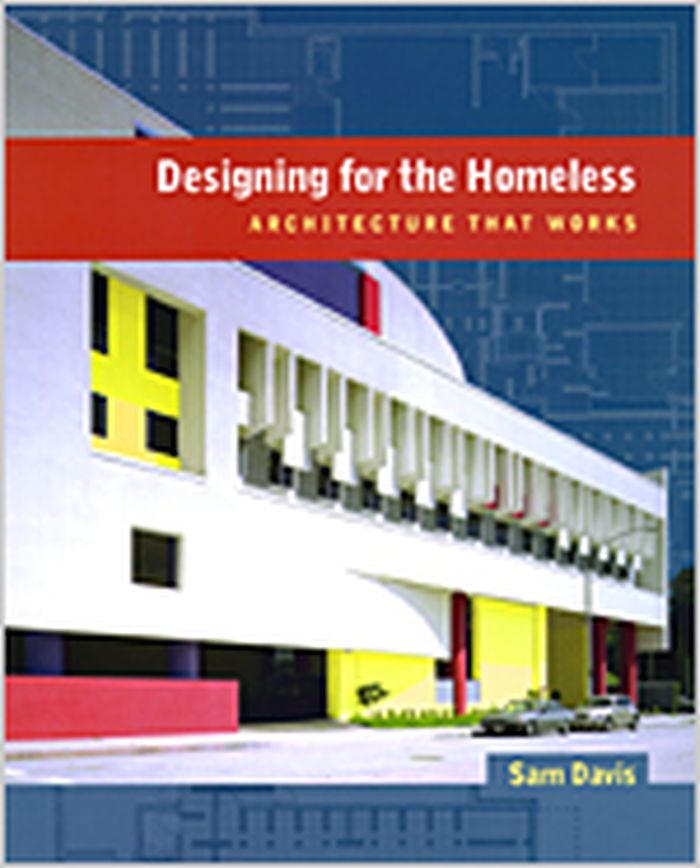
Written by an architect who has been designing and building affordable housing for thirty years, this well-illustrated book is both a call to create well-designed places for the homeless and a review of innovative and successful building designs that now serve diverse communities across the United States. Sam Davis argues for safe and functional architectural designs and(...)
Titre:
Designing for the homeless : architecture that works
Actions:
Prix:
$43.95
(disponible sur commande)
Résumé:
Written by an architect who has been designing and building affordable housing for thirty years, this well-illustrated book is both a call to create well-designed places for the homeless and a review of innovative and successful building designs that now serve diverse communities across the United States. Sam Davis argues for safe and functional architectural designs and programs that symbolically reintegrate the homeless into society in buildings that offer beauty, security, and hope to those most in need. Davis presents a new perspective, considering the personal concerns of the homeless, the social costs of homelessness, and organizational and design issues. He examines problems of community fit and site planning, building design and orga-nization, and interior layout and suggests how to weigh costs and optimize expenditures. He asks and answers a range of challenging questions: What is possible and desirable when designing a new facility for the homeless? Should it be elegant or unassuming? What types of spaces should be included? How should it look and what should it feel like? Should it be more like a house or more like a dormitory? What is the proper balance between function, quality of construction, and architectural delight? Designing for the Homeless recounts how various communities have addressed the problem of housing the homeless, beginning with one of the most ambitious plans, the St. Vincent de Paul Village in San Diego, which opened in 1987. Davis vividly recounts the plight of those who become homeless.
Classification:
livres
livres
Publication:
novembre 2004, Berkeley
novembre 2004, Berkeley
Sujet:
Logements collectifs
Logements collectifs
Classification:
livres
livres
Prix:
$38.95
(disponible sur commande)
Résumé:
In the middle of the night they quickly build houses and seize land before the police destroy their fragile homes. They're squatters, families that risk the wrath of governments and property owners by building dwellings on land they don't own, and they represent one out of every ten people on the planet. Investigative journalist Robert Neuwirth lived among squatter(...)
Titre:
Shadow cities: a billion squatters, a new urban world
Actions:
Prix:
$38.95
(disponible sur commande)
Résumé:
In the middle of the night they quickly build houses and seize land before the police destroy their fragile homes. They're squatters, families that risk the wrath of governments and property owners by building dwellings on land they don't own, and they represent one out of every ten people on the planet. Investigative journalist Robert Neuwirth lived among squatter communities from Rio to Bombay to Nairobi to Istanbul to give us an impassioned, inside view of squatter life and a glimpse into the urban future. He met people in Nairobi who built homes with their bare hands, Turkish families who plot land invasions, and children in Rio whose parents justify outfoxing the authorities as the only path to a better life. And he shows us that in cities like Rio, squatter settlements have become decent places to live for formerly landless people. Tracing the notion of private property from the enclosure movement in Europe to the settlement of the U.S., Neuwirth shows how squatting rights may actually be seen as more "natural" than the current laws practiced in the U.S. In almost every country of the developing world, the most active builders are squatters, creating complex local economies with high rises, shopping strips, banks, and self-government. As they invent new social structures, Neuwirth argues, squatters are at the forefront of the worldwide movement to develop new visions of what constitutes property and community.
Classification:
livres
livres
Publication:
décembre 2004, New York
décembre 2004, New York
Sujet:
Théorie de l’urbanisme
Théorie de l’urbanisme
Classification:
livres
livres
Actions:
Prix:
$49.00
(disponible sur commande)
Résumé:
Moshe Safdie achieved worldwide recognition as an architect when his very first building, Habitat 67, at Expo in Montreal, proved to be eminently livable. He was also enthusiastically praised as a writer on architectural and human values after the publication of his first book, Beyond Habitat (The MIT Press, 1970). He has since added to his luster a number of exciting(...)
Titre:
Moshe Safdie: For everyone a garden. Habitat 67
Actions:
Prix:
$49.00
(disponible sur commande)
Résumé:
Moshe Safdie achieved worldwide recognition as an architect when his very first building, Habitat 67, at Expo in Montreal, proved to be eminently livable. He was also enthusiastically praised as a writer on architectural and human values after the publication of his first book, Beyond Habitat (The MIT Press, 1970). He has since added to his luster a number of exciting architectural projects, and now this second book, For Everyone a Garden, goes beyond Beyond Habitat in several ways: it provides further detail and technical specificity of Safdie's experience with industrialized building methods for architects and engineers; it updates the status of ongoing projects; and, best of all, it throws off a cascade of sparkling new ideas about people, building, planning, sites, processes, and their interactions. The book is an integral synthesis of words and pictures. The greater part of its total net area is devoted to illustrations—about 125 drawings, 165 halftones, and 5 color photographs, supported by substantial captions—while the text proper puts these into perspective from four thematic points of view: the idea of the three-dimensional community; the requirements and possibilities of human habitation, ranging in amenity from the minimal to the luxurious; the techniques of building in the factory, with a case study that includes a typical plant layout and simplified flow diagrams; and the attributes of well-planned urban meeting places, whether in Jerusalem, Paris, or San Francisco.
Classification:
livres
livres
Publication:
octobre 2015
octobre 2015
Sujet:
Architecture, monographies
Architecture, monographies
Classification:
livres
livres

Actions:
Prix:
$50.00
(disponible sur commande)
Résumé:
With "Edens lost & found", filmmakers Harry Wiland and Dale Bell herald a sea change in the relationship between ordinary citizens, environmental groups, and government. From across America they gather evidence of a new spirit of cooperation among neighbors, planners, architects and builders, city officials, and government agencies. Indeed, as urban issues have become(...)
Sujet:
Paysages urbains
Paysages urbains
Publication:
mai 2006, White River Junction
mai 2006, White River Junction
Titre:
Edens lost and found : how ordinary citizens are restoring our great American cities
Actions:
Prix:
$50.00
(disponible sur commande)
Résumé:
With "Edens lost & found", filmmakers Harry Wiland and Dale Bell herald a sea change in the relationship between ordinary citizens, environmental groups, and government. From across America they gather evidence of a new spirit of cooperation among neighbors, planners, architects and builders, city officials, and government agencies. Indeed, as urban issues have become undeniably urgent problems that demand answers, people from disparate backgrounds and political leanings are joining forces to recast life in American cities. As citizens take action where government has failed, they are finding support, encouragement, and help from their neighbors. Conversely, as progressive-minded government agencies and organizations explore nontraditional solutions, an energized community rallies to the cause. Neither exclusively top-down, nor grass roots, we are in the midst of an unprecedented movement that unites efforts from every quarter in a common cause. Focusing on Chicago, Los Angeles, Philadelphia, and Seattle-four cities that face vastly different challenges-"Edens lost & found" highlights the remarkable power of hope, pride, ingenuity, and chutzpah that characterize this era of collaboration. Bioengineering concepts-now increasingly understood by many to offer the most effective, cost-efficient solutions-are playing a central role. Working with-rather than in opposition to-nature is leading to such innovations as rooftop and urban gardens, restored parks, transformed vacant lots, the re-greening of city streets, and eco-friendly watershed management. Edens Lost & Found shows how working to reshape the land also transforms the relationships people have to one another.
Classification:
livres
livres
Publication:
mai 2006, White River Junction
mai 2006, White River Junction
Sujet:
Paysages urbains
Paysages urbains
Classification:
livres
livres
Actions:
Prix:
$23.95
(disponible sur commande)
Résumé:
At the dawn of the twenty-first century, architecture is in a state of crisis. Numbed by an ugly and shoddily constructed built environment and outraged by the cost of high-profile design projects, the public has become disinterested in and contemptuous of architecture as both a profession and an art. At the same time, some of our most creative designers have isolated(...)
Titre:
In the scheme of things : alternative thinking on the practice of architecture
Actions:
Prix:
$23.95
(disponible sur commande)
Résumé:
At the dawn of the twenty-first century, architecture is in a state of crisis. Numbed by an ugly and shoddily constructed built environment and outraged by the cost of high-profile design projects, the public has become disinterested in and contemptuous of architecture as both a profession and an art. At the same time, some of our most creative designers have isolated themselves from the tastes and needs of mainstream society, reflecting a similar malaise found in design and architecture schools around the country. In this troubling climate, Thomas R. Fisher contends that the purpose and prospects of architectural practice must be reconsidered and reenergized. "In the Scheme of Things" looks at architecture's need to respond creatively and meaningfully to the extraordinary changes affecting the profession now, changes that include the global economy, the advent of computer-aided design, and the growing disconnection between design schools, architectural practice, and the public. In each of the twelve essays that comprise this timely volume, Fisher addresses issues of vital concern to architects and students, offering hard-hitting criticism and proposing innovative and practical ideas for reform at the level of both the individual practitioner and the profession as a whole. Through his thoughtful and nuanced consideration of architecture's ideological foundations and its relationship to ecology, politics, and technology, as well as his subtle understanding of the architect's interior life, Fisher challenges the demoralized design community to recapture its historical role as steward and visionary of the public realm.
Classification:
livres
livres
Publication:
février 2006, Minneapolis
février 2006, Minneapolis
Sujet:
Théorie de l’architecture
Théorie de l’architecture
Classification:
livres
livres
Prix:
$25.50
(disponible sur commande)
Résumé:
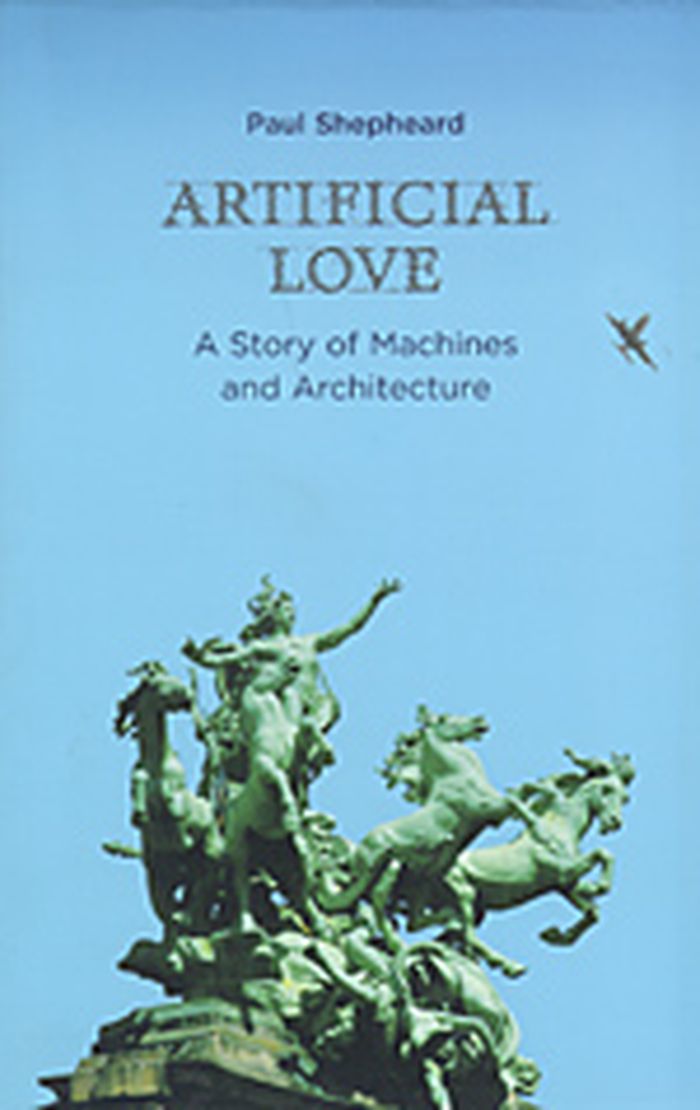
According to Paul Shepheard, architecture is the rearranging of the world for human purposes. Sculpture, machines, and landscapes are all architecture -- every bit as much as buildings are. In his writings, Shepheard examines old assumptions about architecture and replaces the critical theory of the academic with the active theory of the architect-citizen enamored of the(...)
Titre:
Artificial love : a story of machines and architecture
Actions:
Prix:
$25.50
(disponible sur commande)
Résumé:
According to Paul Shepheard, architecture is the rearranging of the world for human purposes. Sculpture, machines, and landscapes are all architecture -- every bit as much as buildings are. In his writings, Shepheard examines old assumptions about architecture and replaces the critical theory of the academic with the active theory of the architect-citizen enamored of the world around him. Artificial Love weaves together three stories about architecture into one. The first, about machines as architecture, leads to speculations about technology and the human condition and to the assertion that machines are the sculptures of today. The second story is about the ways that architecture reflects the tribal and personal desires of those who make it. In the West, ideas of community, multiculturalism, and globalization compete furiously, leaving architecture to exist as it always has, as the past in the present. The third story features individual people experiencing their lives in the context of architecture. Here, Shepheard borrows the rhetorical device of Shakespeare's seven ages of man to propose that each person's life imitates the accumulating history of the human species. Shepheard's version of the history of humans is a technological one, in which machines become sculpture and sculpture becomes architecture. For Shepheard, our machines do not separate us from nature. Rather, our technology is our nature, and we cannot but be in harmony with nature. The change that we have wrought in the world, he says, is a wonderful and powerful thing.
Classification:
livres
livres
Publication:
mai 2003, Cambridge, Mass.
mai 2003, Cambridge, Mass.
Sujet:
Théorie de l’architecture
Théorie de l’architecture
Classification:
livres
livres
Prix:
$67.25
(disponible sur commande)
Résumé:
According to Paul Shepheard, architecture is the rearranging of the world for human purposes. Sculpture, machines, and landscapes are all architecture -- every bit as much as buildings are. In his writings, Shepheard examines old assumptions about architecture and replaces the critical theory of the academic with the active theory of the architect-citizen enamored of the(...)
Titre:
Artificial love : a story of machines and architecture
Actions:
Prix:
$67.25
(disponible sur commande)
Résumé:
According to Paul Shepheard, architecture is the rearranging of the world for human purposes. Sculpture, machines, and landscapes are all architecture -- every bit as much as buildings are. In his writings, Shepheard examines old assumptions about architecture and replaces the critical theory of the academic with the active theory of the architect-citizen enamored of the world around him. Artificial Love weaves together three stories about architecture into one. The first, about machines as architecture, leads to speculations about technology and the human condition and to the assertion that machines are the sculptures of today. The second story is about the ways that architecture reflects the tribal and personal desires of those who make it. In the West, ideas of community, multiculturalism, and globalization compete furiously, leaving architecture to exist as it always has, as the past in the present. The third story features individual people experiencing their lives in the context of architecture. Here, Shepheard borrows the rhetorical device of Shakespeare's seven ages of man to propose that each person's life imitates the accumulating history of the human species. Shepheard's version of the history of humans is a technological one, in which machines become sculpture and sculpture becomes architecture. For Shepheard, our machines do not separate us from nature. Rather, our technology is our nature, and we cannot but be in harmony with nature. The change that we have wrought in the world, he says, is a wonderful and powerful thing.
Classification:
livres
livres
Publication:
juin 2003, Cambridge, Mass.
juin 2003, Cambridge, Mass.
Sujet:
Théorie de l’architecture
Théorie de l’architecture
Classification:
livres
livres
Actions:
Prix:
$39.95
(disponible sur commande)
Résumé:
When #BlackLivesMatter emerged in 2013, it animated the most consequential Black-led mobilization since the civil rights and Black power era. Today, the hashtag turned rallying cry is but one expression of a radical reorientation toward Black politics, protest, and political thought. To Build a Black Future examines the spirit and significance of this insurgency, offering(...)
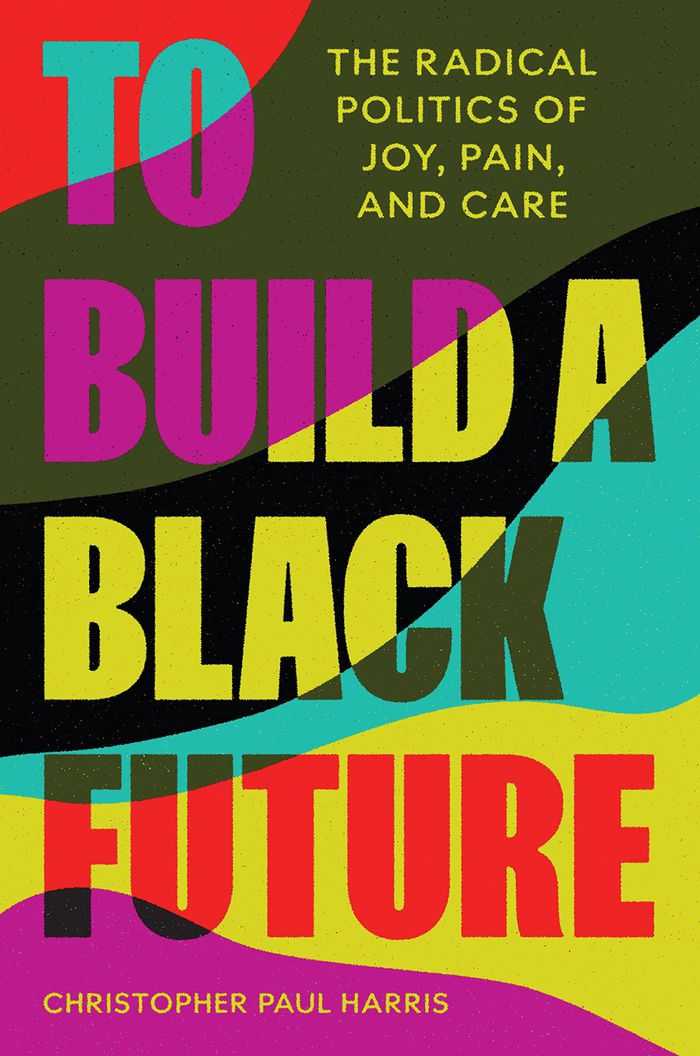
Titre:
To build a black future: The radical politics of joy, pain and care
Actions:
Prix:
$39.95
(disponible sur commande)
Résumé:
When #BlackLivesMatter emerged in 2013, it animated the most consequential Black-led mobilization since the civil rights and Black power era. Today, the hashtag turned rallying cry is but one expression of a radical reorientation toward Black politics, protest, and political thought. To Build a Black Future examines the spirit and significance of this insurgency, offering a revelatory account of a new political culture?responsive to pain, suffused with joy, and premised on care?emerging from the centuries-long arc of Black rebellion, a tradition that traces back to the Black slave. Drawing on his own experiences as an activist and organizer, Christopher Paul Harris takes readers inside the Movement for Black Lives (M4BL) to chart the propulsive trajectory of Black politics and thought from the Middle Passage to the present historical moment. Carefully attending to the social forces that produce Black struggle and the contradictions that arise within it, Harris illustrates how M4BL gives voice to an abolitionist praxis that bridges the past, present, and future, outlining a political project at once directed inward to the Black community while issuing an outward challenge to the world. Essential reading for the age of #BlackLivesMatter, this visionary and provocative book reveals how the radical politics of joy, pain, and care, in sharp contrast to liberal political thought, can build a Black future that transcends ideology and pushes the boundaries of our political imagination.
Classification:
livres
livres
Publication:
septembre 2023
septembre 2023
Sujet:
Social
Social


