


1256 Résultats
Classification:
né numérique
né numérique
Numéro de référence:
ARCH280967
Description:
Labelled "AutoCAD/NthView Digitizer drivers release 2.40 sample Zoomslide"
ARCH280967
Description:
Labelled "AutoCAD/NthView Digitizer drivers release 2.40 sample Zoomslide"
Personnes et institutions:
Date:
circa 1988-1989
circa 1988-1989
Titre:
Various drawings of the provincial government building, Thunder Bay, Ontario, 5.25" floppy disk, 360 KB
Actions:
ARCH280967
Description:
Labelled "AutoCAD/NthView Digitizer drivers release 2.40 sample Zoomslide"
Various drawings of the provincial government building, Thunder Bay, Ontario, 5.25" floppy disk, 360 KB
Actions:
ARCH280967
Description:
Labelled "AutoCAD/NthView Digitizer drivers release 2.40 sample Zoomslide"
Classification:
né numérique
né numérique
Date:
circa 1988-1989
circa 1988-1989
Personnes et institutions:
Classification:
recherche
recherche
Actions:
Description:
Le Programme virtuel de bourses de recherche CCA soutient notre investissement à long terme quant aux réflexions sur la manière dont le matériel de la collection du CCA déjà numérisé et accessible peut générer de nouvelles configurations historiques, des interprétations actuelles et une portée plus large dans le domaine de la recherche architecturale.
Le Programme virtuel de bourses de recherche CCA soutient notre investissement à long terme quant aux réflexions sur la manière dont le matériel de la collection du CCA déjà numérisé et accessible peut générer de nouvelles configurations historiques, des interprétations actuelles et une portée plus large dans le domaine de la recherche architecturale.
Mot(s)-clé(s):
Programme virtuel de bourses de recherche, Nokubekezela Mchunu, Wafa Ali, Papiers qui subsistent, post-custodial, Afrique
Programme virtuel de bourses de recherche, Nokubekezela Mchunu, Wafa Ali, Papiers qui subsistent, post-custodial, Afrique
Date:
1 mars 2022 au 23 décembre 2022
1 mars 2022 au 23 décembre 2022
Titre:
Programme virtuel de bourses de recherche CCA 2022
Actions:
Description:
Le Programme virtuel de bourses de recherche CCA soutient notre investissement à long terme quant aux réflexions sur la manière dont le matériel de la collection du CCA déjà numérisé et accessible peut générer de nouvelles configurations historiques, des interprétations actuelles et une portée plus large dans le domaine de la recherche architecturale.
Programme virtuel de bourses de recherche CCA 2022
Actions:
Description:
Le Programme virtuel de bourses de recherche CCA soutient notre investissement à long terme quant aux réflexions sur la manière dont le matériel de la collection du CCA déjà numérisé et accessible peut générer de nouvelles configurations historiques, des interprétations actuelles et une portée plus large dans le domaine de la recherche architecturale.
Classification:
recherche
recherche
Date:
1 mars 2022 au
23 décembre 2022
1 mars 2022 au
23 décembre 2022
Classification:
articles
articles
Actions:
Niveau de description archivistique:
Série(s)
Série(s)
Titre:
Presentation files
Presentation files
Numéro de référence:
AP195.S2
Description:
Series 2: Presentation files, 1999 – 2009, contains CAD files, 3D models, renderings, and photographs used for presentation of the Phaeno Science Centre, especially during the competition and design phases. Formats include chiefly images (EXIF, JPEG, TIFF) and CAD files (AutoCAD, plotter files, EPS). This series contains a wide variety of materials used by ZHA to present Phaeno Science Centre to clients, the press, and other stakeholders. This includes 3D models and CAD files, other drawings and diagrams, and photographs. Notably, this series includes concept animations used by ZHA to develop the shape and structure of Phaeno, as well as concept sketches possibly drawn by Zaha Hadid. Other materials of interest include a digitized copy of digital plans that had been printed and given a hand-painted rendering surface.
AP195.S2
Description:
Series 2: Presentation files, 1999 – 2009, contains CAD files, 3D models, renderings, and photographs used for presentation of the Phaeno Science Centre, especially during the competition and design phases. Formats include chiefly images (EXIF, JPEG, TIFF) and CAD files (AutoCAD, plotter files, EPS). This series contains a wide variety of materials used by ZHA to present Phaeno Science Centre to clients, the press, and other stakeholders. This includes 3D models and CAD files, other drawings and diagrams, and photographs. Notably, this series includes concept animations used by ZHA to develop the shape and structure of Phaeno, as well as concept sketches possibly drawn by Zaha Hadid. Other materials of interest include a digitized copy of digital plans that had been printed and given a hand-painted rendering surface.
Personnes et institutions:
Date:
1999 - 2009
1999 - 2009
Titre:
Presentation files
Actions:
AP195.S2
Description:
Series 2: Presentation files, 1999 – 2009, contains CAD files, 3D models, renderings, and photographs used for presentation of the Phaeno Science Centre, especially during the competition and design phases. Formats include chiefly images (EXIF, JPEG, TIFF) and CAD files (AutoCAD, plotter files, EPS). This series contains a wide variety of materials used by ZHA to present Phaeno Science Centre to clients, the press, and other stakeholders. This includes 3D models and CAD files, other drawings and diagrams, and photographs. Notably, this series includes concept animations used by ZHA to develop the shape and structure of Phaeno, as well as concept sketches possibly drawn by Zaha Hadid. Other materials of interest include a digitized copy of digital plans that had been printed and given a hand-painted rendering surface.
Presentation files
Actions:
AP195.S2
Description:
Series 2: Presentation files, 1999 – 2009, contains CAD files, 3D models, renderings, and photographs used for presentation of the Phaeno Science Centre, especially during the competition and design phases. Formats include chiefly images (EXIF, JPEG, TIFF) and CAD files (AutoCAD, plotter files, EPS). This series contains a wide variety of materials used by ZHA to present Phaeno Science Centre to clients, the press, and other stakeholders. This includes 3D models and CAD files, other drawings and diagrams, and photographs. Notably, this series includes concept animations used by ZHA to develop the shape and structure of Phaeno, as well as concept sketches possibly drawn by Zaha Hadid. Other materials of interest include a digitized copy of digital plans that had been printed and given a hand-painted rendering surface.
Niveau de description archivistique:
Series
Series
Date:
1999 - 2009
1999 - 2009
Personnes et institutions:
Niveau de description archivistique:
Projet
Projet
Numéro de référence:
AP198.S1.1997.PR01
Description:
Project records document OCEAN North’s design for their competition entry for the Töölö Football Stadium in Helsinki in 1997. The project was titled Open Arena by OCEAN North. The site for the football stadium was in the Töölö neighbourhood, between a park area including the Helsinki Olympic Stadium, and a residential area. OCEAN North’s entry was a building that would integrate with its natural surroundings while being able to accommodate a variety of activities and events. The structure for Open Arena has three topological surfaces. The first provides stadium access to the players and the public, and includes services such as restaurant, cafeteria, and bars. Its shape aims to integrate with the natural landscape. The second contains the audience seating areas, including VIP and press areas, and aimed to arrange the audience as if it was loosely dispersed on a hillside. The third topological surface consists of the roof. The Töölö Football Stadium marks the introduction of the Channelling Systems process, defining building’s integration to its surroundings and distributing functions across the structure. Records show different stages of the design process and include two digitized photographs of Plexiglas sections that were used to physically explore the design. Digital files are grouped under categories such as Board images, Board lay-out, Graft, Sections, Siteplans, digital model images, scanned plans and site images. This last directory contains digitized photographs of the grounds surrounding the Helsinki Olympic Stadium. All drawings are vector or raster images of the whole or parts of the structure, with some including the identifications of the structure’s parts. Project records also include preliminary or working plans. Most were drawn to scale on paper and some were printed from CAD drawings. They chiefly reflect the design work to define the surfaces and shapes of the stadium’s structure. Source: Ateljé Sotamaa. “Portfolio: Open Arena”. http://portfolio.sotamaa.net/Open-Arena accessed in February 2018.
AP198.S1.1997.PR01
Description:
Project records document OCEAN North’s design for their competition entry for the Töölö Football Stadium in Helsinki in 1997. The project was titled Open Arena by OCEAN North. The site for the football stadium was in the Töölö neighbourhood, between a park area including the Helsinki Olympic Stadium, and a residential area. OCEAN North’s entry was a building that would integrate with its natural surroundings while being able to accommodate a variety of activities and events. The structure for Open Arena has three topological surfaces. The first provides stadium access to the players and the public, and includes services such as restaurant, cafeteria, and bars. Its shape aims to integrate with the natural landscape. The second contains the audience seating areas, including VIP and press areas, and aimed to arrange the audience as if it was loosely dispersed on a hillside. The third topological surface consists of the roof. The Töölö Football Stadium marks the introduction of the Channelling Systems process, defining building’s integration to its surroundings and distributing functions across the structure. Records show different stages of the design process and include two digitized photographs of Plexiglas sections that were used to physically explore the design. Digital files are grouped under categories such as Board images, Board lay-out, Graft, Sections, Siteplans, digital model images, scanned plans and site images. This last directory contains digitized photographs of the grounds surrounding the Helsinki Olympic Stadium. All drawings are vector or raster images of the whole or parts of the structure, with some including the identifications of the structure’s parts. Project records also include preliminary or working plans. Most were drawn to scale on paper and some were printed from CAD drawings. They chiefly reflect the design work to define the surfaces and shapes of the stadium’s structure. Source: Ateljé Sotamaa. “Portfolio: Open Arena”. http://portfolio.sotamaa.net/Open-Arena accessed in February 2018.
Personnes et institutions:
Date:
1997
1997
Titre:
Open Arena – Töölö Football Stadium, international competition entry
Actions:
AP198.S1.1997.PR01
Description:
Project records document OCEAN North’s design for their competition entry for the Töölö Football Stadium in Helsinki in 1997. The project was titled Open Arena by OCEAN North. The site for the football stadium was in the Töölö neighbourhood, between a park area including the Helsinki Olympic Stadium, and a residential area. OCEAN North’s entry was a building that would integrate with its natural surroundings while being able to accommodate a variety of activities and events. The structure for Open Arena has three topological surfaces. The first provides stadium access to the players and the public, and includes services such as restaurant, cafeteria, and bars. Its shape aims to integrate with the natural landscape. The second contains the audience seating areas, including VIP and press areas, and aimed to arrange the audience as if it was loosely dispersed on a hillside. The third topological surface consists of the roof. The Töölö Football Stadium marks the introduction of the Channelling Systems process, defining building’s integration to its surroundings and distributing functions across the structure. Records show different stages of the design process and include two digitized photographs of Plexiglas sections that were used to physically explore the design. Digital files are grouped under categories such as Board images, Board lay-out, Graft, Sections, Siteplans, digital model images, scanned plans and site images. This last directory contains digitized photographs of the grounds surrounding the Helsinki Olympic Stadium. All drawings are vector or raster images of the whole or parts of the structure, with some including the identifications of the structure’s parts. Project records also include preliminary or working plans. Most were drawn to scale on paper and some were printed from CAD drawings. They chiefly reflect the design work to define the surfaces and shapes of the stadium’s structure. Source: Ateljé Sotamaa. “Portfolio: Open Arena”. http://portfolio.sotamaa.net/Open-Arena accessed in February 2018.
Open Arena – Töölö Football Stadium, international competition entry
Actions:
AP198.S1.1997.PR01
Description:
Project records document OCEAN North’s design for their competition entry for the Töölö Football Stadium in Helsinki in 1997. The project was titled Open Arena by OCEAN North. The site for the football stadium was in the Töölö neighbourhood, between a park area including the Helsinki Olympic Stadium, and a residential area. OCEAN North’s entry was a building that would integrate with its natural surroundings while being able to accommodate a variety of activities and events. The structure for Open Arena has three topological surfaces. The first provides stadium access to the players and the public, and includes services such as restaurant, cafeteria, and bars. Its shape aims to integrate with the natural landscape. The second contains the audience seating areas, including VIP and press areas, and aimed to arrange the audience as if it was loosely dispersed on a hillside. The third topological surface consists of the roof. The Töölö Football Stadium marks the introduction of the Channelling Systems process, defining building’s integration to its surroundings and distributing functions across the structure. Records show different stages of the design process and include two digitized photographs of Plexiglas sections that were used to physically explore the design. Digital files are grouped under categories such as Board images, Board lay-out, Graft, Sections, Siteplans, digital model images, scanned plans and site images. This last directory contains digitized photographs of the grounds surrounding the Helsinki Olympic Stadium. All drawings are vector or raster images of the whole or parts of the structure, with some including the identifications of the structure’s parts. Project records also include preliminary or working plans. Most were drawn to scale on paper and some were printed from CAD drawings. They chiefly reflect the design work to define the surfaces and shapes of the stadium’s structure. Source: Ateljé Sotamaa. “Portfolio: Open Arena”. http://portfolio.sotamaa.net/Open-Arena accessed in February 2018.
Niveau de description archivistique:
Project
Project
Date:
1997
1997
Personnes et institutions:
Niveau de description archivistique:
Série(s)
Série(s)
Titre:
Architectural projects
Architectural projects
Numéro de référence:
AP178.S1
Description:
Series AP178.S1 is the largest series of the Álvaro Siza fonds and documents over 200 of Siza’s built and unbuilt architectural projects. The series is divided into project series which are arranged chronologically by project year. Presently, materials in this series range from 1958-2012. The CCA will also receive materials documenting Siza’s more recent work in future additions. Documenting the projects are conceptual, design, presentation, and working drawings, as well as photographic materials, textual documentation, and models. Although the drawings for each project have been identified, Siza often sketches or doodles on textual documentation, such as minutes of meetings or notes. When possible, folders that include textual documents with sketches or doodles have been identified. Amounts and types of materials vary from project to project. Project documentation is usually in Portuguese, with some exceptions including French, English, German, and Dutch. Most project series include sketches, studies, and working drawings. Other drawings included are site plans, floor plans, topographic surveys, elevations, sections, as well as technical and mechanical details. Also documenting the projects are photographic materials and textual documentation, such as correspondence, building programs, contracts, notes, and other working details. Photographic materials found within this archive are slides, negatives, photomontages and photographs of project sites and models.The photomontages were often used to study the function of the project site. To fully understand Siza’s methodology, sketchbooks (Series AP178.S2) should be viewed alongside the project drawings, when possible. Each project series description highlights sketchbooks in series AP178.S2 which contain related sketches. It is important to note that not all projects are represented in the sketchbooks in Series AP178.S2. Moreover, project series descriptions only list related sketchbooks when sketches have been positively identified as related to the corresponding project. The Siza fonds will be processed in four phases. The materials processed in the first, second, and third phases are architectural projects from the 1950’s, 1960’s, and 1970’s; urban planning projects; Reconstrução do Chiado; Berlin projects submitted to the IBA competition; cultural institutions; individual houses; and the Plano de urbanização Deelgebied 5 Schilderswijk-West in The Hague. Among The Hague and the Berlin projects are the Punt en Komma social housing, Bonjour Tristesse, and the Residential settlement in Schilderswijk. This series is better understood in the context of how the records for architectural projects were arranged by Siza’s office. Earlier projects were initially numbered by Siza’s office and then received new project numbers by the office archivist, who joined the office in the 1990s. Project files have been kept in the order in which they were received by the CCA, which is how they were arranged by the office archivist. The project numbers and dates assigned by Siza’s office archivist are included in the descriptions for each project and form the basis for the arrangement of this series. The office archivist numbered projects consecutively by decade, for instance, 58/80 was the 58th project during the 1980s. Numbers which were included in square brackets, ex. [14]/75, show that the project was not a ‘full’ project and contains a small amount of documentation. When projects are followed by a letter (A, B, C) this signifies a project is connected to the first. When the project number is followed by a number (1, 2, 3) this signifies a separate building within a larger project. For the purposes of arrangement, project numbers that were assigned a letter or number are arranged as sub-series of the related project series. Exceptions to this numbering convention are projects 23/60, 25/60, 28/60, 33/60, 34/60 and 35/60. These projects were not in the office’s original project list and were not officially considered projects. The office archivist assembled documentation related to these projects and assigned them numbers. In the early 2000s a large number of photographic materials were gathered together by the office archivist from various correspondence files for a digitization project initiated by the office. These materials remained housed together as a photograph collection in the office. Not all of these materials were digitized by the office. Those that were digitized were assigned numbers which have been identified in the file descriptions. It is important to note that several photographic materials were left with the textual documentation or drawings. When this is the case they are identified in the file description. There are also several panoramic photomontages which were created by either gluing or taping several photographs together to make panoramas of project sites.
AP178.S1
Description:
Series AP178.S1 is the largest series of the Álvaro Siza fonds and documents over 200 of Siza’s built and unbuilt architectural projects. The series is divided into project series which are arranged chronologically by project year. Presently, materials in this series range from 1958-2012. The CCA will also receive materials documenting Siza’s more recent work in future additions. Documenting the projects are conceptual, design, presentation, and working drawings, as well as photographic materials, textual documentation, and models. Although the drawings for each project have been identified, Siza often sketches or doodles on textual documentation, such as minutes of meetings or notes. When possible, folders that include textual documents with sketches or doodles have been identified. Amounts and types of materials vary from project to project. Project documentation is usually in Portuguese, with some exceptions including French, English, German, and Dutch. Most project series include sketches, studies, and working drawings. Other drawings included are site plans, floor plans, topographic surveys, elevations, sections, as well as technical and mechanical details. Also documenting the projects are photographic materials and textual documentation, such as correspondence, building programs, contracts, notes, and other working details. Photographic materials found within this archive are slides, negatives, photomontages and photographs of project sites and models.The photomontages were often used to study the function of the project site. To fully understand Siza’s methodology, sketchbooks (Series AP178.S2) should be viewed alongside the project drawings, when possible. Each project series description highlights sketchbooks in series AP178.S2 which contain related sketches. It is important to note that not all projects are represented in the sketchbooks in Series AP178.S2. Moreover, project series descriptions only list related sketchbooks when sketches have been positively identified as related to the corresponding project. The Siza fonds will be processed in four phases. The materials processed in the first, second, and third phases are architectural projects from the 1950’s, 1960’s, and 1970’s; urban planning projects; Reconstrução do Chiado; Berlin projects submitted to the IBA competition; cultural institutions; individual houses; and the Plano de urbanização Deelgebied 5 Schilderswijk-West in The Hague. Among The Hague and the Berlin projects are the Punt en Komma social housing, Bonjour Tristesse, and the Residential settlement in Schilderswijk. This series is better understood in the context of how the records for architectural projects were arranged by Siza’s office. Earlier projects were initially numbered by Siza’s office and then received new project numbers by the office archivist, who joined the office in the 1990s. Project files have been kept in the order in which they were received by the CCA, which is how they were arranged by the office archivist. The project numbers and dates assigned by Siza’s office archivist are included in the descriptions for each project and form the basis for the arrangement of this series. The office archivist numbered projects consecutively by decade, for instance, 58/80 was the 58th project during the 1980s. Numbers which were included in square brackets, ex. [14]/75, show that the project was not a ‘full’ project and contains a small amount of documentation. When projects are followed by a letter (A, B, C) this signifies a project is connected to the first. When the project number is followed by a number (1, 2, 3) this signifies a separate building within a larger project. For the purposes of arrangement, project numbers that were assigned a letter or number are arranged as sub-series of the related project series. Exceptions to this numbering convention are projects 23/60, 25/60, 28/60, 33/60, 34/60 and 35/60. These projects were not in the office’s original project list and were not officially considered projects. The office archivist assembled documentation related to these projects and assigned them numbers. In the early 2000s a large number of photographic materials were gathered together by the office archivist from various correspondence files for a digitization project initiated by the office. These materials remained housed together as a photograph collection in the office. Not all of these materials were digitized by the office. Those that were digitized were assigned numbers which have been identified in the file descriptions. It is important to note that several photographic materials were left with the textual documentation or drawings. When this is the case they are identified in the file description. There are also several panoramic photomontages which were created by either gluing or taping several photographs together to make panoramas of project sites.
Personnes et institutions:
Date:
1948-2012
1948-2012
Titre:
Architectural projects
Actions:
AP178.S1
Description:
Series AP178.S1 is the largest series of the Álvaro Siza fonds and documents over 200 of Siza’s built and unbuilt architectural projects. The series is divided into project series which are arranged chronologically by project year. Presently, materials in this series range from 1958-2012. The CCA will also receive materials documenting Siza’s more recent work in future additions. Documenting the projects are conceptual, design, presentation, and working drawings, as well as photographic materials, textual documentation, and models. Although the drawings for each project have been identified, Siza often sketches or doodles on textual documentation, such as minutes of meetings or notes. When possible, folders that include textual documents with sketches or doodles have been identified. Amounts and types of materials vary from project to project. Project documentation is usually in Portuguese, with some exceptions including French, English, German, and Dutch. Most project series include sketches, studies, and working drawings. Other drawings included are site plans, floor plans, topographic surveys, elevations, sections, as well as technical and mechanical details. Also documenting the projects are photographic materials and textual documentation, such as correspondence, building programs, contracts, notes, and other working details. Photographic materials found within this archive are slides, negatives, photomontages and photographs of project sites and models.The photomontages were often used to study the function of the project site. To fully understand Siza’s methodology, sketchbooks (Series AP178.S2) should be viewed alongside the project drawings, when possible. Each project series description highlights sketchbooks in series AP178.S2 which contain related sketches. It is important to note that not all projects are represented in the sketchbooks in Series AP178.S2. Moreover, project series descriptions only list related sketchbooks when sketches have been positively identified as related to the corresponding project. The Siza fonds will be processed in four phases. The materials processed in the first, second, and third phases are architectural projects from the 1950’s, 1960’s, and 1970’s; urban planning projects; Reconstrução do Chiado; Berlin projects submitted to the IBA competition; cultural institutions; individual houses; and the Plano de urbanização Deelgebied 5 Schilderswijk-West in The Hague. Among The Hague and the Berlin projects are the Punt en Komma social housing, Bonjour Tristesse, and the Residential settlement in Schilderswijk. This series is better understood in the context of how the records for architectural projects were arranged by Siza’s office. Earlier projects were initially numbered by Siza’s office and then received new project numbers by the office archivist, who joined the office in the 1990s. Project files have been kept in the order in which they were received by the CCA, which is how they were arranged by the office archivist. The project numbers and dates assigned by Siza’s office archivist are included in the descriptions for each project and form the basis for the arrangement of this series. The office archivist numbered projects consecutively by decade, for instance, 58/80 was the 58th project during the 1980s. Numbers which were included in square brackets, ex. [14]/75, show that the project was not a ‘full’ project and contains a small amount of documentation. When projects are followed by a letter (A, B, C) this signifies a project is connected to the first. When the project number is followed by a number (1, 2, 3) this signifies a separate building within a larger project. For the purposes of arrangement, project numbers that were assigned a letter or number are arranged as sub-series of the related project series. Exceptions to this numbering convention are projects 23/60, 25/60, 28/60, 33/60, 34/60 and 35/60. These projects were not in the office’s original project list and were not officially considered projects. The office archivist assembled documentation related to these projects and assigned them numbers. In the early 2000s a large number of photographic materials were gathered together by the office archivist from various correspondence files for a digitization project initiated by the office. These materials remained housed together as a photograph collection in the office. Not all of these materials were digitized by the office. Those that were digitized were assigned numbers which have been identified in the file descriptions. It is important to note that several photographic materials were left with the textual documentation or drawings. When this is the case they are identified in the file description. There are also several panoramic photomontages which were created by either gluing or taping several photographs together to make panoramas of project sites.
Architectural projects
Actions:
AP178.S1
Description:
Series AP178.S1 is the largest series of the Álvaro Siza fonds and documents over 200 of Siza’s built and unbuilt architectural projects. The series is divided into project series which are arranged chronologically by project year. Presently, materials in this series range from 1958-2012. The CCA will also receive materials documenting Siza’s more recent work in future additions. Documenting the projects are conceptual, design, presentation, and working drawings, as well as photographic materials, textual documentation, and models. Although the drawings for each project have been identified, Siza often sketches or doodles on textual documentation, such as minutes of meetings or notes. When possible, folders that include textual documents with sketches or doodles have been identified. Amounts and types of materials vary from project to project. Project documentation is usually in Portuguese, with some exceptions including French, English, German, and Dutch. Most project series include sketches, studies, and working drawings. Other drawings included are site plans, floor plans, topographic surveys, elevations, sections, as well as technical and mechanical details. Also documenting the projects are photographic materials and textual documentation, such as correspondence, building programs, contracts, notes, and other working details. Photographic materials found within this archive are slides, negatives, photomontages and photographs of project sites and models.The photomontages were often used to study the function of the project site. To fully understand Siza’s methodology, sketchbooks (Series AP178.S2) should be viewed alongside the project drawings, when possible. Each project series description highlights sketchbooks in series AP178.S2 which contain related sketches. It is important to note that not all projects are represented in the sketchbooks in Series AP178.S2. Moreover, project series descriptions only list related sketchbooks when sketches have been positively identified as related to the corresponding project. The Siza fonds will be processed in four phases. The materials processed in the first, second, and third phases are architectural projects from the 1950’s, 1960’s, and 1970’s; urban planning projects; Reconstrução do Chiado; Berlin projects submitted to the IBA competition; cultural institutions; individual houses; and the Plano de urbanização Deelgebied 5 Schilderswijk-West in The Hague. Among The Hague and the Berlin projects are the Punt en Komma social housing, Bonjour Tristesse, and the Residential settlement in Schilderswijk. This series is better understood in the context of how the records for architectural projects were arranged by Siza’s office. Earlier projects were initially numbered by Siza’s office and then received new project numbers by the office archivist, who joined the office in the 1990s. Project files have been kept in the order in which they were received by the CCA, which is how they were arranged by the office archivist. The project numbers and dates assigned by Siza’s office archivist are included in the descriptions for each project and form the basis for the arrangement of this series. The office archivist numbered projects consecutively by decade, for instance, 58/80 was the 58th project during the 1980s. Numbers which were included in square brackets, ex. [14]/75, show that the project was not a ‘full’ project and contains a small amount of documentation. When projects are followed by a letter (A, B, C) this signifies a project is connected to the first. When the project number is followed by a number (1, 2, 3) this signifies a separate building within a larger project. For the purposes of arrangement, project numbers that were assigned a letter or number are arranged as sub-series of the related project series. Exceptions to this numbering convention are projects 23/60, 25/60, 28/60, 33/60, 34/60 and 35/60. These projects were not in the office’s original project list and were not officially considered projects. The office archivist assembled documentation related to these projects and assigned them numbers. In the early 2000s a large number of photographic materials were gathered together by the office archivist from various correspondence files for a digitization project initiated by the office. These materials remained housed together as a photograph collection in the office. Not all of these materials were digitized by the office. Those that were digitized were assigned numbers which have been identified in the file descriptions. It is important to note that several photographic materials were left with the textual documentation or drawings. When this is the case they are identified in the file description. There are also several panoramic photomontages which were created by either gluing or taping several photographs together to make panoramas of project sites.
Niveau de description archivistique:
Series
Series
Date:
1948-2012
1948-2012
Personnes et institutions:
Niveau de description archivistique:
Série(s)
Série(s)
Numéro de référence:
AP177.S2
Description:
This series contains additional CAD and 3D modeling work made by David Ruy for RUR Architecture in order to achieve the design of architectural elements of the Kansai-kan National Diet Library competition. Files are identified as parts or elements of the building such as “upper slab”, “pig” (term used for the theater), “topo[graphical] lines”, “spiral” (a part of the store), “diagram”, “catwalks”, “ramps”, etc. File names are similar to the ones found in AP177.S1, which could indicate that the files represent different versions of the digital drawings. Under the directory FINAL PLANS, file names suggest digital drawings presenting more substantial parts of the building such as “conference level”, “plan”, and “hanging volume”. Files were created using form*Z and Alias and were saved in FMZ, DXF and OBJ formats. Series also includes, in the “scans” directory, digitized images, in JPEG format, of manual drawings of the upper and lower slab with topographical lines, the spiral and the placing of support points.
AP177.S2
Description:
This series contains additional CAD and 3D modeling work made by David Ruy for RUR Architecture in order to achieve the design of architectural elements of the Kansai-kan National Diet Library competition. Files are identified as parts or elements of the building such as “upper slab”, “pig” (term used for the theater), “topo[graphical] lines”, “spiral” (a part of the store), “diagram”, “catwalks”, “ramps”, etc. File names are similar to the ones found in AP177.S1, which could indicate that the files represent different versions of the digital drawings. Under the directory FINAL PLANS, file names suggest digital drawings presenting more substantial parts of the building such as “conference level”, “plan”, and “hanging volume”. Files were created using form*Z and Alias and were saved in FMZ, DXF and OBJ formats. Series also includes, in the “scans” directory, digitized images, in JPEG format, of manual drawings of the upper and lower slab with topographical lines, the spiral and the placing of support points.
Personnes et institutions:
Date:
1996-2015
1996-2015
Titre:
David Ruy digital working files
Actions:
AP177.S2
Description:
This series contains additional CAD and 3D modeling work made by David Ruy for RUR Architecture in order to achieve the design of architectural elements of the Kansai-kan National Diet Library competition. Files are identified as parts or elements of the building such as “upper slab”, “pig” (term used for the theater), “topo[graphical] lines”, “spiral” (a part of the store), “diagram”, “catwalks”, “ramps”, etc. File names are similar to the ones found in AP177.S1, which could indicate that the files represent different versions of the digital drawings. Under the directory FINAL PLANS, file names suggest digital drawings presenting more substantial parts of the building such as “conference level”, “plan”, and “hanging volume”. Files were created using form*Z and Alias and were saved in FMZ, DXF and OBJ formats. Series also includes, in the “scans” directory, digitized images, in JPEG format, of manual drawings of the upper and lower slab with topographical lines, the spiral and the placing of support points.
David Ruy digital working files
Actions:
AP177.S2
Description:
This series contains additional CAD and 3D modeling work made by David Ruy for RUR Architecture in order to achieve the design of architectural elements of the Kansai-kan National Diet Library competition. Files are identified as parts or elements of the building such as “upper slab”, “pig” (term used for the theater), “topo[graphical] lines”, “spiral” (a part of the store), “diagram”, “catwalks”, “ramps”, etc. File names are similar to the ones found in AP177.S1, which could indicate that the files represent different versions of the digital drawings. Under the directory FINAL PLANS, file names suggest digital drawings presenting more substantial parts of the building such as “conference level”, “plan”, and “hanging volume”. Files were created using form*Z and Alias and were saved in FMZ, DXF and OBJ formats. Series also includes, in the “scans” directory, digitized images, in JPEG format, of manual drawings of the upper and lower slab with topographical lines, the spiral and the placing of support points.
Niveau de description archivistique:
Series
Series
Date:
1996-2015
1996-2015
Personnes et institutions:
Classification:
archives
Niveau de description archivistique:
Fonds
archives
Niveau de description archivistique:
Fonds
Titre:
Kaiman Lee fonds
Kaiman Lee fonds
Numéro de référence:
AP222
Résumé:
The Kaiman Lee fonds, circa 1965 – 2006, documents the professional and academic career of Dr. Kaiman Lee. The material in the fonds also represents the publishing activities of the Environmental Design and Research Center, and the Center for Environmental Research, both based in Boston. The fonds also covers Lee’s academic pursuits as a student and lecturer. The fonds also contains computer parts related to the ARK Two computer-aided design system which Lee worked on during his time at the Boston-based firm Perry, Dean and Stewart Architects. The records within the fonds largely consists of photographic materials, publications, and artefacts.
AP222
Résumé:
The Kaiman Lee fonds, circa 1965 – 2006, documents the professional and academic career of Dr. Kaiman Lee. The material in the fonds also represents the publishing activities of the Environmental Design and Research Center, and the Center for Environmental Research, both based in Boston. The fonds also covers Lee’s academic pursuits as a student and lecturer. The fonds also contains computer parts related to the ARK Two computer-aided design system which Lee worked on during his time at the Boston-based firm Perry, Dean and Stewart Architects. The records within the fonds largely consists of photographic materials, publications, and artefacts.
Personnes et institutions:
Date:
circa 1965 - 2006
circa 1965 - 2006
Titre:
Kaiman Lee fonds
Actions:
AP222
Résumé:
The Kaiman Lee fonds, circa 1965 – 2006, documents the professional and academic career of Dr. Kaiman Lee. The material in the fonds also represents the publishing activities of the Environmental Design and Research Center, and the Center for Environmental Research, both based in Boston. The fonds also covers Lee’s academic pursuits as a student and lecturer. The fonds also contains computer parts related to the ARK Two computer-aided design system which Lee worked on during his time at the Boston-based firm Perry, Dean and Stewart Architects. The records within the fonds largely consists of photographic materials, publications, and artefacts.
Kaiman Lee fonds
Actions:
AP222
Résumé:
The Kaiman Lee fonds, circa 1965 – 2006, documents the professional and academic career of Dr. Kaiman Lee. The material in the fonds also represents the publishing activities of the Environmental Design and Research Center, and the Center for Environmental Research, both based in Boston. The fonds also covers Lee’s academic pursuits as a student and lecturer. The fonds also contains computer parts related to the ARK Two computer-aided design system which Lee worked on during his time at the Boston-based firm Perry, Dean and Stewart Architects. The records within the fonds largely consists of photographic materials, publications, and artefacts.
Classification:
archives
Niveau de description archivistique:
Fonds
archives
Niveau de description archivistique:
Fonds
Date:
circa 1965 - 2006
circa 1965 - 2006
Personnes et institutions:
Classification:
né numérique, photographies
Quantité:
16 File
né numérique, photographies
Quantité:
16 File
Numéro de référence:
ARCH273393
Description:
Includes 1 CD-ROM containing digitized versions of the original photographs.
ARCH273393
Description:
Includes 1 CD-ROM containing digitized versions of the original photographs.
Personnes et institutions:
Date:
after 1958
after 1958
Titre:
Photographs of Arthur Erickson and others at the Filberg House in Comox, B.C..
Actions:
ARCH273393
Description:
Includes 1 CD-ROM containing digitized versions of the original photographs.
Photographs of Arthur Erickson and others at the Filberg House in Comox, B.C..
Actions:
ARCH273393
Description:
Includes 1 CD-ROM containing digitized versions of the original photographs.
Classification:
né numérique, photographies
Quantité:
16 File
né numérique, photographies
Quantité:
16 File
Date:
after 1958
after 1958
Personnes et institutions:
Classification:
expositions
expositions
Actions:
Description:
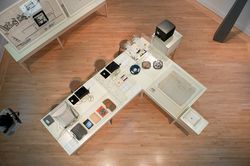
Littéralement fait de règles, Internet a été conçu comme la norme ultime. Le contenu en ligne respecte ces règles, intentionnelles ou non, et la texture, l’odeur, le poids, la saveur et le temps y sont compressés ensemble pour accommoder les deux dimensions de l’écran. En définitive, les ordinateurs représentent les objets sous forme d’images et transforment le sens en(...)
Littéralement fait de règles, Internet a été conçu comme la norme ultime. Le contenu en ligne respecte ces règles, intentionnelles ou non, et la texture, l’odeur, le poids, la saveur et le temps y sont compressés ensemble pour accommoder les deux dimensions de l’écran. En définitive, les ordinateurs représentent les objets sous forme d’images et transforment le sens en(...)
Localisation:
Salle octogonale
Salle octogonale
Date:
11 novembre 2010 au 6 février 2011
11 novembre 2010 au 6 février 2011
Titre:
ERREUR 404 : l’objet n’est pas en ligne
Actions:
Description:
Littéralement fait de règles, Internet a été conçu comme la norme ultime. Le contenu en ligne respecte ces règles, intentionnelles ou non, et la texture, l’odeur, le poids, la saveur et le temps y sont compressés ensemble pour accommoder les deux dimensions de l’écran. En définitive, les ordinateurs représentent les objets sous forme d’images et transforment le sens en(...)
ERREUR 404 : l’objet n’est pas en ligne
Actions:
Description:
Littéralement fait de règles, Internet a été conçu comme la norme ultime. Le contenu en ligne respecte ces règles, intentionnelles ou non, et la texture, l’odeur, le poids, la saveur et le temps y sont compressés ensemble pour accommoder les deux dimensions de l’écran. En définitive, les ordinateurs représentent les objets sous forme d’images et transforment le sens en(...)
Classification:
expositions
expositions
Date:
11 novembre 2010 au
6 février 2011
11 novembre 2010 au
6 février 2011
Localisation:
Salle octogonale
Salle octogonale


