


63 Résultats
Classification:
livres
livres
Actions:
Prix:
$45.00
(disponible sur commande)
Résumé:
This second volume in the "Future Cities Laboratory Indicia" series focuses on the tools, methods and approaches needed for urban research. In short, following Marshall McLuhan’s famous provocation, the editors focus less on the message and more on the medium of research. This involves retreating from research contents—the topics, themes, questions, hypotheses, insights,(...)
$45.00
(disponible sur commande)
Résumé:
This second volume in the "Future Cities Laboratory Indicia" series focuses on the tools, methods and approaches needed for urban research. In short, following Marshall McLuhan’s famous provocation, the editors focus less on the message and more on the medium of research. This involves retreating from research contents—the topics, themes, questions, hypotheses, insights,(...)
Titre:
Future cities laboratory: Indicia 02
Actions:
Prix:
$45.00
(disponible sur commande)
Résumé:
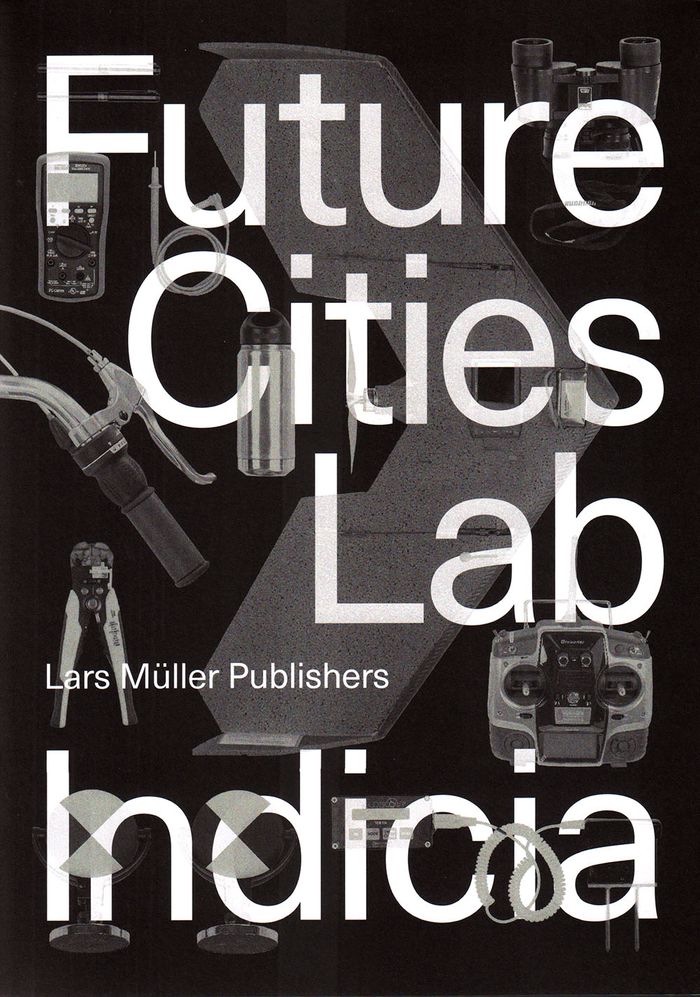
This second volume in the "Future Cities Laboratory Indicia" series focuses on the tools, methods and approaches needed for urban research. In short, following Marshall McLuhan’s famous provocation, the editors focus less on the message and more on the medium of research. This involves retreating from research contents—the topics, themes, questions, hypotheses, insights, ideas, concepts and thoughts—for the moment to consider the materials, methods, tools, techniques and approaches that support them. This change in perspective reveals a rich array of research approaches that include two- and three-dimensional mapping of vegetation, temperature and humidity, in conjunction with point cloud terrestrial and airborne laser-scanning technology; gathering data from sensors and geospatial data and the emergence of “solution spaces” and multi-dimensional complexity science; subject-oriented approaches to behavioral and cognitive decision making in city navigation.
Future cities laboratory: Indicia 02
Actions:
Prix:
$45.00
(disponible sur commande)
Résumé:
This second volume in the "Future Cities Laboratory Indicia" series focuses on the tools, methods and approaches needed for urban research. In short, following Marshall McLuhan’s famous provocation, the editors focus less on the message and more on the medium of research. This involves retreating from research contents—the topics, themes, questions, hypotheses, insights, ideas, concepts and thoughts—for the moment to consider the materials, methods, tools, techniques and approaches that support them. This change in perspective reveals a rich array of research approaches that include two- and three-dimensional mapping of vegetation, temperature and humidity, in conjunction with point cloud terrestrial and airborne laser-scanning technology; gathering data from sensors and geospatial data and the emergence of “solution spaces” and multi-dimensional complexity science; subject-oriented approaches to behavioral and cognitive decision making in city navigation.
Classification:
livres
livres
Publication:
avril 2019
avril 2019
Sujet:
Théorie de l’urbanisme
Théorie de l’urbanisme
Classification:
livres
livres
Prix:
$82.00
(disponible sur commande)
Résumé:
The renaissance of wood in architecture began in the early 1990s following the Earth Summit in Rio de Janeiro. A lively interest in sustainable materials made wood particularly attractive and it became an important feature in the developing global ecology. Wood as a building material for the home has become independent from the aesthetic designs of a well-known Swedish(...)
$82.00
(disponible sur commande)
Résumé:
The renaissance of wood in architecture began in the early 1990s following the Earth Summit in Rio de Janeiro. A lively interest in sustainable materials made wood particularly attractive and it became an important feature in the developing global ecology. Wood as a building material for the home has become independent from the aesthetic designs of a well-known Swedish(...)
Titre:
Wood houses : spaces for contemporary living and working
Actions:
Prix:
$82.00
(disponible sur commande)
Résumé:
The renaissance of wood in architecture began in the early 1990s following the Earth Summit in Rio de Janeiro. A lively interest in sustainable materials made wood particularly attractive and it became an important feature in the developing global ecology. Wood as a building material for the home has become independent from the aesthetic designs of a well-known Swedish furniture chain, and it now stands for a healthy interior environment, free of harmful toxic substances, with naturally balanced humidity and comfortable, regulated temperatures. This volume documents in full technical detail some 25 timber buildings in three main areas: residential buildings, holiday homes, and living and working. The individual projects cover a large range of sizes, budgets, and types of construction, and they also show wood in combination with such materials as stone, concrete, and steel. The featured work comes from Germany, Austria, Switzerland, France, Belgium, Finland, Ireland, USA, Canada, China, Australia and Brazil, and the architects include Philip Gumuchdjian, Mario Botta, Kengo Kuma and Baumschlager + Eberle.
Wood houses : spaces for contemporary living and working
Actions:
Prix:
$82.00
(disponible sur commande)
Résumé:
The renaissance of wood in architecture began in the early 1990s following the Earth Summit in Rio de Janeiro. A lively interest in sustainable materials made wood particularly attractive and it became an important feature in the developing global ecology. Wood as a building material for the home has become independent from the aesthetic designs of a well-known Swedish furniture chain, and it now stands for a healthy interior environment, free of harmful toxic substances, with naturally balanced humidity and comfortable, regulated temperatures. This volume documents in full technical detail some 25 timber buildings in three main areas: residential buildings, holiday homes, and living and working. The individual projects cover a large range of sizes, budgets, and types of construction, and they also show wood in combination with such materials as stone, concrete, and steel. The featured work comes from Germany, Austria, Switzerland, France, Belgium, Finland, Ireland, USA, Canada, China, Australia and Brazil, and the architects include Philip Gumuchdjian, Mario Botta, Kengo Kuma and Baumschlager + Eberle.
Classification:
livres
livres
Publication:
octobre 2004, Basel
octobre 2004, Basel
Sujet:
Constructions en bois
Constructions en bois
Classification:
livres
livres
Prix:
$31.95
(disponible sur commande)
Résumé:
The number one cause of global warming is architecture - the buildings. Buildings are responsible for 40% of the Co2 that is emitted into the atmosphere. The architects must take this responsibility and move from geopolitics towards biosphere politics. This publication is a real test of how this can be achieved. The context for the intervention is an existing historic(...)
$31.95
(disponible sur commande)
Résumé:
The number one cause of global warming is architecture - the buildings. Buildings are responsible for 40% of the Co2 that is emitted into the atmosphere. The architects must take this responsibility and move from geopolitics towards biosphere politics. This publication is a real test of how this can be achieved. The context for the intervention is an existing historic(...)
Titre:
Cloud 9: a green new deal, from geopolitics to biosphere politics
Actions:
Prix:
$31.95
(disponible sur commande)
Résumé:
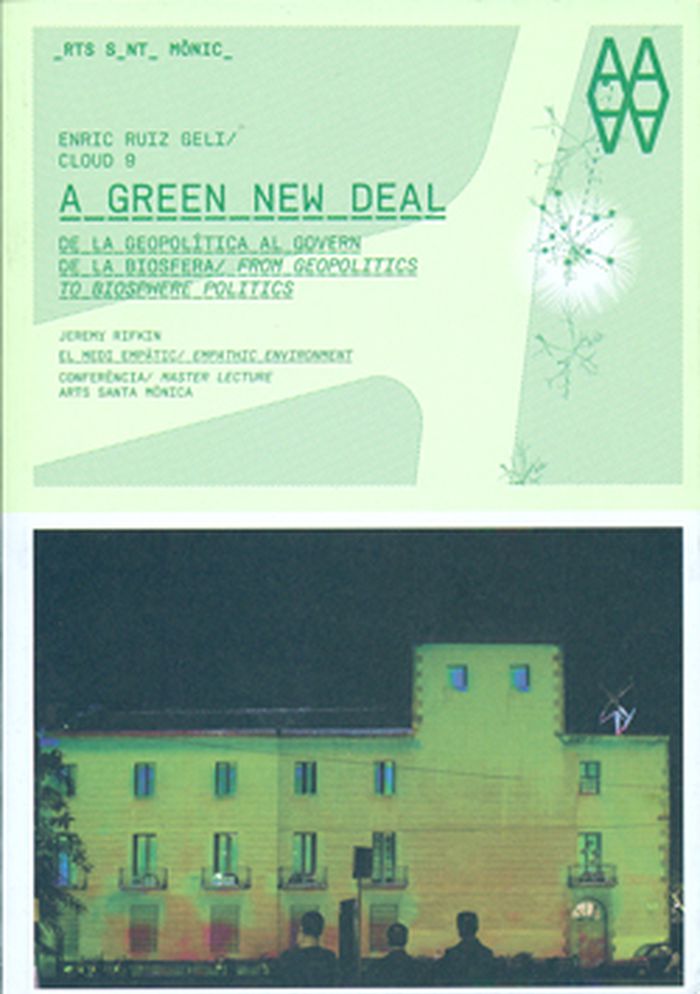
The number one cause of global warming is architecture - the buildings. Buildings are responsible for 40% of the Co2 that is emitted into the atmosphere. The architects must take this responsibility and move from geopolitics towards biosphere politics. This publication is a real test of how this can be achieved. The context for the intervention is an existing historic building in Barcelona, the Centre of Arts Santa Monica; a building to explore the Third Industrial Revolution as the potential of a transformation towards an empathic architecture. Nature should let us show the path. Cloud 9 equipped the trees in front of Arts Santa Monica with sensors that capture data on temperature, humidity and light energy to inform the building. The intervention is an installation on the facade that produces energy from the environment, like the sun and wind. It is an additional skin which allows control of natural light and regulates solar radiation.
Cloud 9: a green new deal, from geopolitics to biosphere politics
Actions:
Prix:
$31.95
(disponible sur commande)
Résumé:
The number one cause of global warming is architecture - the buildings. Buildings are responsible for 40% of the Co2 that is emitted into the atmosphere. The architects must take this responsibility and move from geopolitics towards biosphere politics. This publication is a real test of how this can be achieved. The context for the intervention is an existing historic building in Barcelona, the Centre of Arts Santa Monica; a building to explore the Third Industrial Revolution as the potential of a transformation towards an empathic architecture. Nature should let us show the path. Cloud 9 equipped the trees in front of Arts Santa Monica with sensors that capture data on temperature, humidity and light energy to inform the building. The intervention is an installation on the facade that produces energy from the environment, like the sun and wind. It is an additional skin which allows control of natural light and regulates solar radiation.
Classification:
livres
livres
Publication:
novembre 2010
novembre 2010
Sujet:
Architecture écologique
Architecture écologique


