


628 Résultats
Classification:
livres
livres
Actions:
Prix:
$39.95
(disponible sur commande)
Résumé:
Olivier Vallerand investigates how queer critiques, building on pioneering feminist work, question the relation between identity and architecture and highlight normative constructs underlying domestic spaces. He draws out a genealogy of queer space in theoretical discourse in architecture, studying projects by Mark Robbins, Joel Sanders, J Mayer H, Elmgreen & Dragset,(...)
$39.95
(disponible sur commande)
Résumé:
Olivier Vallerand investigates how queer critiques, building on pioneering feminist work, question the relation between identity and architecture and highlight normative constructs underlying domestic spaces. He draws out a genealogy of queer space in theoretical discourse in architecture, studying projects by Mark Robbins, Joel Sanders, J Mayer H, Elmgreen & Dragset,(...)
Titre:
Unplanned visitors: queering the ethics and aesthetics of domestic space
Actions:
Prix:
$39.95
(disponible sur commande)
Résumé:
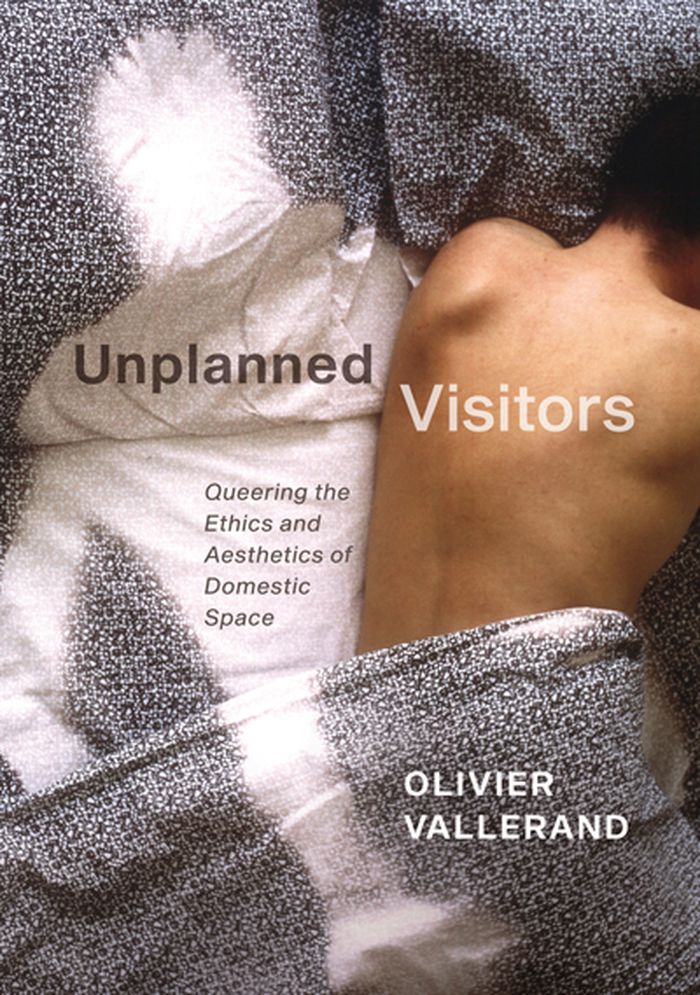
Olivier Vallerand investigates how queer critiques, building on pioneering feminist work, question the relation between identity and architecture and highlight normative constructs underlying domestic spaces. He draws out a genealogy of queer space in theoretical discourse in architecture, studying projects by Mark Robbins, Joel Sanders, J Mayer H, Elmgreen & Dragset, Andrés Jaque, and MYCKET, among others. These works blur the traditional borders between architecture and art to emphasize the tensions between private and public and their impact on assumptions about domestic space and family structure. Sexuality and gender have long been influential in understanding the construction of domestic space, its meanings, often revealing a binary division of private and public, female and male. By reconstructing the foundation of queer critiques of space and by analyzing the representation of domesticity in contemporary art and architecture, Unplanned Visitors shows the blurring of private and public that can occur in any domestic space and explores the potential of queer theory for understanding, and designing, the built environment.
Unplanned visitors: queering the ethics and aesthetics of domestic space
Actions:
Prix:
$39.95
(disponible sur commande)
Résumé:
Olivier Vallerand investigates how queer critiques, building on pioneering feminist work, question the relation between identity and architecture and highlight normative constructs underlying domestic spaces. He draws out a genealogy of queer space in theoretical discourse in architecture, studying projects by Mark Robbins, Joel Sanders, J Mayer H, Elmgreen & Dragset, Andrés Jaque, and MYCKET, among others. These works blur the traditional borders between architecture and art to emphasize the tensions between private and public and their impact on assumptions about domestic space and family structure. Sexuality and gender have long been influential in understanding the construction of domestic space, its meanings, often revealing a binary division of private and public, female and male. By reconstructing the foundation of queer critiques of space and by analyzing the representation of domesticity in contemporary art and architecture, Unplanned Visitors shows the blurring of private and public that can occur in any domestic space and explores the potential of queer theory for understanding, and designing, the built environment.
Classification:
livres
livres
Publication:
mai 2020
mai 2020
Sujet:
Théorie de l’architecture
Théorie de l’architecture
Classification:
livres
livres

Titre:
Cyberfeminism index
Cyberfeminism index
Actions:
Prix:
$62.00
(disponible sur commande)
Résumé:
When learning about internet history, we are taught to focus on engineering, the military-industrial complex and the grandfathers who created the architecture and protocol, but the internet is not only a network of cables, servers and computers. It is an environment that shapes and is shaped by its inhabitants and their use.The creation and use of this Index is a social(...)
$62.00
(disponible sur commande)
Résumé:
When learning about internet history, we are taught to focus on engineering, the military-industrial complex and the grandfathers who created the architecture and protocol, but the internet is not only a network of cables, servers and computers. It is an environment that shapes and is shaped by its inhabitants and their use.The creation and use of this Index is a social(...)
Titre:
Cyberfeminism index
Actions:
Prix:
$62.00
(disponible sur commande)
Résumé:
When learning about internet history, we are taught to focus on engineering, the military-industrial complex and the grandfathers who created the architecture and protocol, but the internet is not only a network of cables, servers and computers. It is an environment that shapes and is shaped by its inhabitants and their use.The creation and use of this Index is a social and political act. It takes the name cyberfeminism as an umbrella, complicates it and pushes it into plain sight. Edited by designer, professor and researcher Mindy Seu (who began the project during a fellowship at the Harvard Law School’s Berkman Klein Center for the Internet & Society, later presenting it at the New Museum), it includes more than 1,000 short entries of radical techno-critical activism in a variety of media, including excerpts from academic articles and scholarly texts; descriptions of hackerspaces, digital rights activist groups, bio-hacktivism; and depictions of feminist net art and new media art.
Cyberfeminism index
Actions:
Prix:
$62.00
(disponible sur commande)
Résumé:
When learning about internet history, we are taught to focus on engineering, the military-industrial complex and the grandfathers who created the architecture and protocol, but the internet is not only a network of cables, servers and computers. It is an environment that shapes and is shaped by its inhabitants and their use.The creation and use of this Index is a social and political act. It takes the name cyberfeminism as an umbrella, complicates it and pushes it into plain sight. Edited by designer, professor and researcher Mindy Seu (who began the project during a fellowship at the Harvard Law School’s Berkman Klein Center for the Internet & Society, later presenting it at the New Museum), it includes more than 1,000 short entries of radical techno-critical activism in a variety of media, including excerpts from academic articles and scholarly texts; descriptions of hackerspaces, digital rights activist groups, bio-hacktivism; and depictions of feminist net art and new media art.
Classification:
livres
livres
Publication:
octobre 2022
octobre 2022
Classification:
livres
livres

Actions:
Prix:
$28.95
(disponible sur commande)
Résumé:
At what point did the British develop their mania for interiors, wallpaper, furniture, and decoration? Why have the middle classes developed so passionate an attachment to the contents of their homes? This book offers surprising answers to these questions, uncovering the roots of today's consumer society and investigating the forces that shape consumer desires. Exploring(...)
$28.95
(disponible sur commande)
Résumé:
At what point did the British develop their mania for interiors, wallpaper, furniture, and decoration? Why have the middle classes developed so passionate an attachment to the contents of their homes? This book offers surprising answers to these questions, uncovering the roots of today's consumer society and investigating the forces that shape consumer desires. Exploring(...)
Titre:
Household gods; the British and their possessions
Actions:
Prix:
$28.95
(disponible sur commande)
Résumé:
At what point did the British develop their mania for interiors, wallpaper, furniture, and decoration? Why have the middle classes developed so passionate an attachment to the contents of their homes? This book offers surprising answers to these questions, uncovering the roots of today's consumer society and investigating the forces that shape consumer desires. Exploring a wealth of unusual records and archives, Deborah Cohen locates the source of modern consumerism and materialism in early nineteenth-century religious fervor. Over the course of the Victorian era, consumerism shed the taint of sin to become the pre-eminent means of expressing individuality. The book ranges from musty antique shops to luxurious emporia, from suburban semi-detached houses to elegant city villas, from husbands fretting about mantelpieces to women appropriating home decoration as a feminist cause. It uncovers a society of consumers whose identities have become entwined with the things they put in their houses.
Household gods; the British and their possessions
Actions:
Prix:
$28.95
(disponible sur commande)
Résumé:
At what point did the British develop their mania for interiors, wallpaper, furniture, and decoration? Why have the middle classes developed so passionate an attachment to the contents of their homes? This book offers surprising answers to these questions, uncovering the roots of today's consumer society and investigating the forces that shape consumer desires. Exploring a wealth of unusual records and archives, Deborah Cohen locates the source of modern consumerism and materialism in early nineteenth-century religious fervor. Over the course of the Victorian era, consumerism shed the taint of sin to become the pre-eminent means of expressing individuality. The book ranges from musty antique shops to luxurious emporia, from suburban semi-detached houses to elegant city villas, from husbands fretting about mantelpieces to women appropriating home decoration as a feminist cause. It uncovers a society of consumers whose identities have become entwined with the things they put in their houses.
Classification:
livres
livres
Publication:
octobre 2009
octobre 2009
Classification:
périodiques
périodiques
Actions:
Auteur:
Sujet:
Publication:
Boulder, Colo. : Women Studies Program, University of Colorado, 1975-
Boulder, Colo. : Women Studies Program, University of Colorado, 1975-
Classification:
périodiques
périodiques
Publication:
Boulder, Colo. : Women Studies Program, University of Colorado, 1975-
Boulder, Colo. : Women Studies Program, University of Colorado, 1975-
Auteur:
Sujet:
Classification:
livres
livres

Actions:
Prix:
$95.00
(disponible sur commande)
Résumé:
Penny Slinger is a Los Angeles–based artist whose work investigates the feminine, the magical and the erotic. While studying at Chelsea College of Art in the late 1960s, Slinger encountered Max Ernst’s Une semaine de bonté (1934), initiating an enduring involvement with both the Surrealist movement and the medium of collage. In her first publication, "50% The Visible(...)
$95.00
(disponible sur commande)
Résumé:
Penny Slinger is a Los Angeles–based artist whose work investigates the feminine, the magical and the erotic. While studying at Chelsea College of Art in the late 1960s, Slinger encountered Max Ernst’s Une semaine de bonté (1934), initiating an enduring involvement with both the Surrealist movement and the medium of collage. In her first publication, "50% The Visible(...)
Titre:
Penny Slinger: An exorcism. A photo romance
Actions:
Prix:
$95.00
(disponible sur commande)
Résumé:
Penny Slinger is a Los Angeles–based artist whose work investigates the feminine, the magical and the erotic. While studying at Chelsea College of Art in the late 1960s, Slinger encountered Max Ernst’s Une semaine de bonté (1934), initiating an enduring involvement with both the Surrealist movement and the medium of collage. In her first publication, "50% The Visible Woman" (1971), Slinger explored the image of woman through a series of often provocative photomontage self-portraits and poetic texts. Such themes resonated keenly with the emerging feminist movement, and in 1973 Rolling Stone noted: "this book will become as important on your bookshelf as Sgt. Pepper’s is on your record rack." With "An exorcism: A photo romance", Slinger explores the feminine psyche further. Developed from a visit to Lilford Hall in 1970 with her then-partner, the filmmaker Peter Whitehead, Slinger provides us with a series of haunting images that chart a process of self-discovery and awakening that was described by Sheldon Williams as "a cascade of photo-collage imagery which has all the emergent trepidation of Hesse’s Steppenwolf."
Penny Slinger: An exorcism. A photo romance
Actions:
Prix:
$95.00
(disponible sur commande)
Résumé:
Penny Slinger is a Los Angeles–based artist whose work investigates the feminine, the magical and the erotic. While studying at Chelsea College of Art in the late 1960s, Slinger encountered Max Ernst’s Une semaine de bonté (1934), initiating an enduring involvement with both the Surrealist movement and the medium of collage. In her first publication, "50% The Visible Woman" (1971), Slinger explored the image of woman through a series of often provocative photomontage self-portraits and poetic texts. Such themes resonated keenly with the emerging feminist movement, and in 1973 Rolling Stone noted: "this book will become as important on your bookshelf as Sgt. Pepper’s is on your record rack." With "An exorcism: A photo romance", Slinger explores the feminine psyche further. Developed from a visit to Lilford Hall in 1970 with her then-partner, the filmmaker Peter Whitehead, Slinger provides us with a series of haunting images that chart a process of self-discovery and awakening that was described by Sheldon Williams as "a cascade of photo-collage imagery which has all the emergent trepidation of Hesse’s Steppenwolf."
Classification:
livres
livres
Publication:
juin 2024
juin 2024
Sujet:
Monographies photo
Monographies photo
Classification:
livres
livres

Prix:
$32.95
(disponible en magasin)
Résumé:
There have been many things written about Canada’s violent siege of Kanehsatà:ke and Kahnawà:ke in the summer of 1990, but "When the pine needles fall: Indigenous acts of resistance" is the first book from the perspective of Katsi’tsakwas Ellen Gabriel, who was the Kanien’kehá:ka (Mohawk) spokesperson during the siege. "When the pine needles fall," written in a(...)
$32.95
(disponible en magasin)
Résumé:
There have been many things written about Canada’s violent siege of Kanehsatà:ke and Kahnawà:ke in the summer of 1990, but "When the pine needles fall: Indigenous acts of resistance" is the first book from the perspective of Katsi’tsakwas Ellen Gabriel, who was the Kanien’kehá:ka (Mohawk) spokesperson during the siege. "When the pine needles fall," written in a(...)
Titre:
When the pine needles fall: Indigenous acts of resistance
Actions:
Prix:
$32.95
(disponible en magasin)
Résumé:
There have been many things written about Canada’s violent siege of Kanehsatà:ke and Kahnawà:ke in the summer of 1990, but "When the pine needles fall: Indigenous acts of resistance" is the first book from the perspective of Katsi’tsakwas Ellen Gabriel, who was the Kanien’kehá:ka (Mohawk) spokesperson during the siege. "When the pine needles fall," written in a conversational style by Gabriel with historian Sean Carleton, offers an intimate look at Gabriel’s life leading up to the 1990 siege, her experiences as spokesperson for her community, and her work since then as an Indigenous land defender, human rights activist, and feminist leader. More than just the memoir of an extraordinary individual, "When the pine needles fall" offers insight into Indigenous language, history, and philosophy, reflections on our relationship with the land, and calls to action against both colonialism and capitalism as we face the climate crisis. Gabriel’s hopes for a decolonial future make clear why protecting Indigenous homelands is vital not only for the survival of Indigenous peoples, but for all who live on this planet.
When the pine needles fall: Indigenous acts of resistance
Actions:
Prix:
$32.95
(disponible en magasin)
Résumé:
There have been many things written about Canada’s violent siege of Kanehsatà:ke and Kahnawà:ke in the summer of 1990, but "When the pine needles fall: Indigenous acts of resistance" is the first book from the perspective of Katsi’tsakwas Ellen Gabriel, who was the Kanien’kehá:ka (Mohawk) spokesperson during the siege. "When the pine needles fall," written in a conversational style by Gabriel with historian Sean Carleton, offers an intimate look at Gabriel’s life leading up to the 1990 siege, her experiences as spokesperson for her community, and her work since then as an Indigenous land defender, human rights activist, and feminist leader. More than just the memoir of an extraordinary individual, "When the pine needles fall" offers insight into Indigenous language, history, and philosophy, reflections on our relationship with the land, and calls to action against both colonialism and capitalism as we face the climate crisis. Gabriel’s hopes for a decolonial future make clear why protecting Indigenous homelands is vital not only for the survival of Indigenous peoples, but for all who live on this planet.
Classification:
livres
livres
Publication:
septembre 2024
septembre 2024
Sujet:
Autochtone
Autochtone
Classification:
livres
livres
Actions:
Prix:
$49.95
(disponible sur commande)
Résumé:
''A Cookbook of Invisible Writing,'' by Dutch artist, designer and teacher Amy Wu, is an introduction to analog steganography—a type of secret writing that is hidden in plain sight. This book serves as a starter pack to run workshops with groups who are interested in alternative forms of communication. It contains invisible ink recipes and other invisible communication(...)
$49.95
(disponible sur commande)
Résumé:
''A Cookbook of Invisible Writing,'' by Dutch artist, designer and teacher Amy Wu, is an introduction to analog steganography—a type of secret writing that is hidden in plain sight. This book serves as a starter pack to run workshops with groups who are interested in alternative forms of communication. It contains invisible ink recipes and other invisible communication(...)
Titre:
Amy Wu: A cookbook of invisible writing
Actions:
Prix:
$49.95
(disponible sur commande)
Résumé:
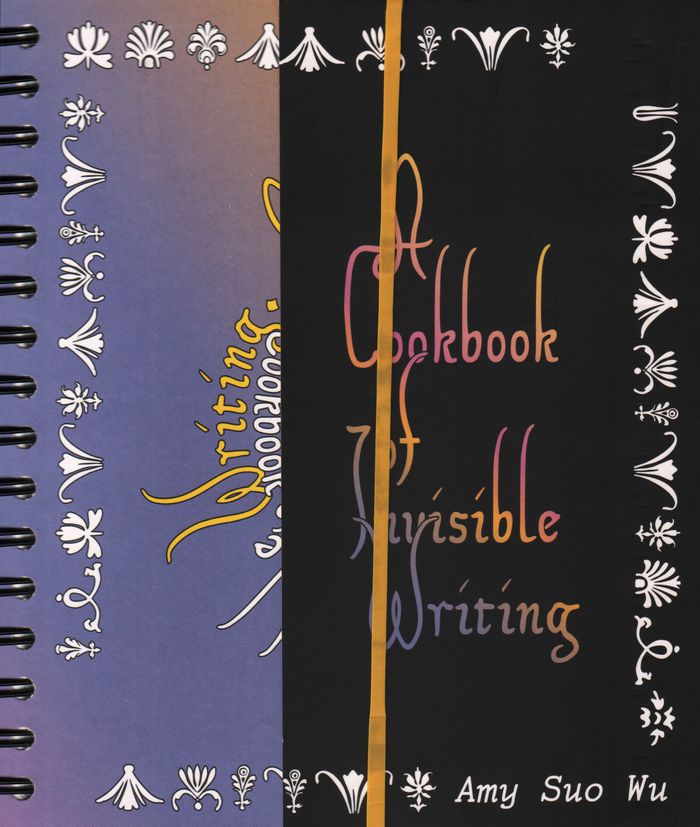
''A Cookbook of Invisible Writing,'' by Dutch artist, designer and teacher Amy Wu, is an introduction to analog steganography—a type of secret writing that is hidden in plain sight. This book serves as a starter pack to run workshops with groups who are interested in alternative forms of communication. It contains invisible ink recipes and other invisible communication techniques that may be used to subvert surveillance and bypass censorship, but also inspire your community to develop poetic and playful forms of communication to nurture social bonds. In the tradition of esoteric manuals published on secret writing, this cookbook also channels the spirit of everyday access and the easy distribution and sharing of practical knowledge. Following Giambattista della Porta’s 1558 popular science book Natural Magic—one of the first major publications that detailed simple but diverse recipes of invisible inks for public consumption—this cookbook aims to bring this obscure field to a wider audience. The publication includes a critical essay about the history of surveillance through a feminist and postcolonial lens.
Amy Wu: A cookbook of invisible writing
Actions:
Prix:
$49.95
(disponible sur commande)
Résumé:
''A Cookbook of Invisible Writing,'' by Dutch artist, designer and teacher Amy Wu, is an introduction to analog steganography—a type of secret writing that is hidden in plain sight. This book serves as a starter pack to run workshops with groups who are interested in alternative forms of communication. It contains invisible ink recipes and other invisible communication techniques that may be used to subvert surveillance and bypass censorship, but also inspire your community to develop poetic and playful forms of communication to nurture social bonds. In the tradition of esoteric manuals published on secret writing, this cookbook also channels the spirit of everyday access and the easy distribution and sharing of practical knowledge. Following Giambattista della Porta’s 1558 popular science book Natural Magic—one of the first major publications that detailed simple but diverse recipes of invisible inks for public consumption—this cookbook aims to bring this obscure field to a wider audience. The publication includes a critical essay about the history of surveillance through a feminist and postcolonial lens.
Classification:
livres
livres
Publication:
août 2019
août 2019
Classification:
livres
livres
Actions:
Prix:
$64.95
(disponible sur commande)
Résumé:
An exploration of the art and writing of Louise Bourgeois through the lens of her relationship with Freudian psychoanalysis. From 1952 to 1985, Louise Bourgeois (1911–2010) underwent extensive Freudian analysis that probed her family history, marriage, motherhood, and artistic ambition—and generated inspiration for her artwork. Examining the impact of psychoanalysis on(...)
$64.95
(disponible sur commande)
Résumé:
An exploration of the art and writing of Louise Bourgeois through the lens of her relationship with Freudian psychoanalysis. From 1952 to 1985, Louise Bourgeois (1911–2010) underwent extensive Freudian analysis that probed her family history, marriage, motherhood, and artistic ambition—and generated inspiration for her artwork. Examining the impact of psychoanalysis on(...)
Titre:
Louise Bourgeois: Freud's daughter
Actions:
Prix:
$64.95
(disponible sur commande)
Résumé:
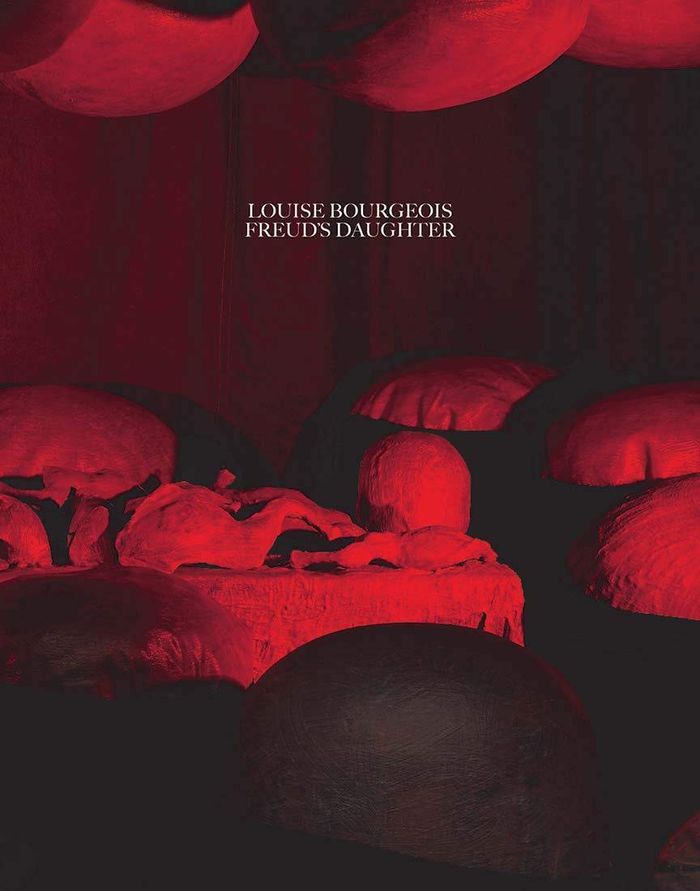
An exploration of the art and writing of Louise Bourgeois through the lens of her relationship with Freudian psychoanalysis. From 1952 to 1985, Louise Bourgeois (1911–2010) underwent extensive Freudian analysis that probed her family history, marriage, motherhood, and artistic ambition—and generated inspiration for her artwork. Examining the impact of psychoanalysis on Bourgeois’s work, this volume offers insight into her creative process. Philip Larratt-Smith, Bourgeois’s literary archivist, provides an overview of the artist’s life and work and the ways in which the psychoanalytic process informed her artistic practice. An essay by Juliet Mitchell offers a cutting-edge feminist psychoanalyst’s viewpoint on the artist’s long and complex relationship with therapy. In addition, a short text written by Bourgeois (first published in 1991) addresses Freud’s own relationship to art and artists. Featuring excerpts from Bourgeois’s copious diaries, rarely seen notebook pages, and archival family photographs, Louise Bourgeois, "Freud’s daughter" opens exciting new avenues for understanding an innovative, influential, and groundbreaking artist whose wide-ranging work includes not only renowned large-scale sculptures but also a plethora of paintings and prints.
Louise Bourgeois: Freud's daughter
Actions:
Prix:
$64.95
(disponible sur commande)
Résumé:
An exploration of the art and writing of Louise Bourgeois through the lens of her relationship with Freudian psychoanalysis. From 1952 to 1985, Louise Bourgeois (1911–2010) underwent extensive Freudian analysis that probed her family history, marriage, motherhood, and artistic ambition—and generated inspiration for her artwork. Examining the impact of psychoanalysis on Bourgeois’s work, this volume offers insight into her creative process. Philip Larratt-Smith, Bourgeois’s literary archivist, provides an overview of the artist’s life and work and the ways in which the psychoanalytic process informed her artistic practice. An essay by Juliet Mitchell offers a cutting-edge feminist psychoanalyst’s viewpoint on the artist’s long and complex relationship with therapy. In addition, a short text written by Bourgeois (first published in 1991) addresses Freud’s own relationship to art and artists. Featuring excerpts from Bourgeois’s copious diaries, rarely seen notebook pages, and archival family photographs, Louise Bourgeois, "Freud’s daughter" opens exciting new avenues for understanding an innovative, influential, and groundbreaking artist whose wide-ranging work includes not only renowned large-scale sculptures but also a plethora of paintings and prints.
Classification:
livres
livres
Publication:
juin 2021
juin 2021
Classification:
livres
livres
Actions:
Prix:
$23.95
(disponible sur commande)
Résumé:
First observed in 1950s London, and theorised by leading thinkers such as Ruth Glass, Jane Jacobs and Sharon Zukin, the devastating process of displacement now can be found in every city and most neighbourhoods and impacts the most vulnerable communities. Leslie Kern proposes an intersectional way at looking at the crisis that seek to reveal the violence based on class,(...)
$23.95
(disponible sur commande)
Résumé:
First observed in 1950s London, and theorised by leading thinkers such as Ruth Glass, Jane Jacobs and Sharon Zukin, the devastating process of displacement now can be found in every city and most neighbourhoods and impacts the most vulnerable communities. Leslie Kern proposes an intersectional way at looking at the crisis that seek to reveal the violence based on class,(...)
Titre:
Gentrification is inevitable, and other lies
Actions:
Prix:
$23.95
(disponible sur commande)
Résumé:
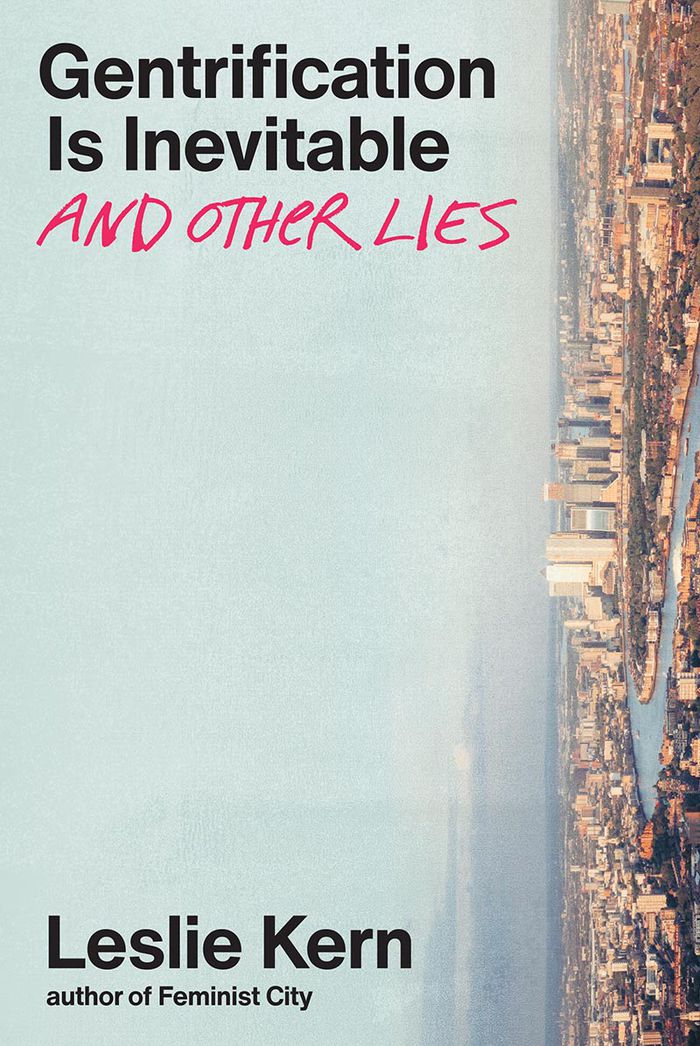
First observed in 1950s London, and theorised by leading thinkers such as Ruth Glass, Jane Jacobs and Sharon Zukin, the devastating process of displacement now can be found in every city and most neighbourhoods and impacts the most vulnerable communities. Leslie Kern proposes an intersectional way at looking at the crisis that seek to reveal the violence based on class, race, gender and sexuality. She argues that gentrification is not natural That it can not be understood in economics terms, or by class. That it is not a question of taste. That it can only be measured only by the physical displacement of certain people. Rather, she argues, it is an continuation of the setter colonial project that removed natives from their land. And it can be seen today is rising rents and evictions, transformed retail areas, increased policing and broken communities. Kern proposes a genuinely decolonial, feminist, queer, anti-gentrification. One that demands the right to the city for everyone and the return of land and reparations for those who have been displaced.
Gentrification is inevitable, and other lies
Actions:
Prix:
$23.95
(disponible sur commande)
Résumé:
First observed in 1950s London, and theorised by leading thinkers such as Ruth Glass, Jane Jacobs and Sharon Zukin, the devastating process of displacement now can be found in every city and most neighbourhoods and impacts the most vulnerable communities. Leslie Kern proposes an intersectional way at looking at the crisis that seek to reveal the violence based on class, race, gender and sexuality. She argues that gentrification is not natural That it can not be understood in economics terms, or by class. That it is not a question of taste. That it can only be measured only by the physical displacement of certain people. Rather, she argues, it is an continuation of the setter colonial project that removed natives from their land. And it can be seen today is rising rents and evictions, transformed retail areas, increased policing and broken communities. Kern proposes a genuinely decolonial, feminist, queer, anti-gentrification. One that demands the right to the city for everyone and the return of land and reparations for those who have been displaced.
Classification:
livres
livres
Publication:
octobre 2022
octobre 2022
Sujet:
L'humain et la ville
L'humain et la ville
Classification:
livres
livres
Actions:
Prix:
$80.00
(disponible sur commande)
Résumé:
In this radical rethinking of the art of Louise Nevelson (1899–1988), Julia Bryan-Wilson provides a long-overdue critical account of a signature figure in postwar sculpture. A Ukraine-born Jewish immigrant, Nevelson persevered in the male-dominated New York art world. Nonetheless, her careful procedures of construction—in which she assembled found pieces of wood into(...)
$80.00
(disponible sur commande)
Résumé:
In this radical rethinking of the art of Louise Nevelson (1899–1988), Julia Bryan-Wilson provides a long-overdue critical account of a signature figure in postwar sculpture. A Ukraine-born Jewish immigrant, Nevelson persevered in the male-dominated New York art world. Nonetheless, her careful procedures of construction—in which she assembled found pieces of wood into(...)
Titre:
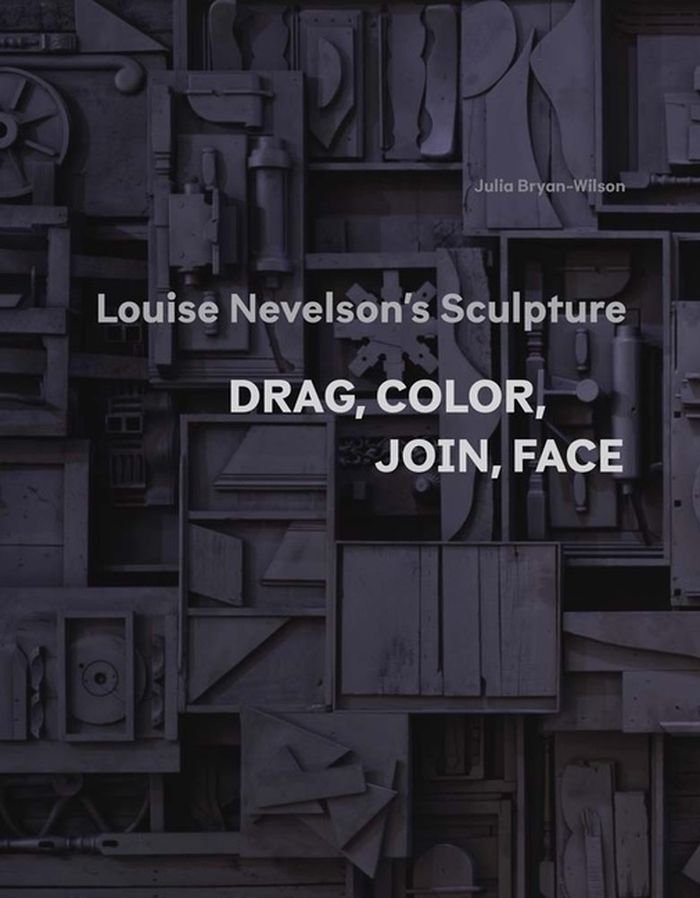
Louise Nevelson Sculpture: Drag, color, join, face
Actions:
Prix:
$80.00
(disponible sur commande)
Résumé:
In this radical rethinking of the art of Louise Nevelson (1899–1988), Julia Bryan-Wilson provides a long-overdue critical account of a signature figure in postwar sculpture. A Ukraine-born Jewish immigrant, Nevelson persevered in the male-dominated New York art world. Nonetheless, her careful procedures of construction—in which she assembled found pieces of wood into elaborate structures, usually painted black—have been little studied. Organized around a series of key operations in Nevelson’s own process (dragging, coloring, joining, and facing), the book comprises four slipcased, individually bound volumes that can be read in any order. Both form and content thus echo Nevelson’s own modular sculptures, the gridded boxes of which the artist herself rearranged. Exploring how Nevelson’s making relates to domesticity, racialized matter, gendered labor, and the environment, Bryan-Wilson offers a sustained examination of the social and political implications of Nevelson’s art. The author also approaches Nevelson’s sculptures from her own embodied subjectivity as a queer feminist scholar. She forges an expansive art history that places Nevelson’s assemblages in dialogue with a wide array of marginalized worldmaking and underlines the artist’s proclamation of allegiance to blackness.
Louise Nevelson Sculpture: Drag, color, join, face
Actions:
Prix:
$80.00
(disponible sur commande)
Résumé:
In this radical rethinking of the art of Louise Nevelson (1899–1988), Julia Bryan-Wilson provides a long-overdue critical account of a signature figure in postwar sculpture. A Ukraine-born Jewish immigrant, Nevelson persevered in the male-dominated New York art world. Nonetheless, her careful procedures of construction—in which she assembled found pieces of wood into elaborate structures, usually painted black—have been little studied. Organized around a series of key operations in Nevelson’s own process (dragging, coloring, joining, and facing), the book comprises four slipcased, individually bound volumes that can be read in any order. Both form and content thus echo Nevelson’s own modular sculptures, the gridded boxes of which the artist herself rearranged. Exploring how Nevelson’s making relates to domesticity, racialized matter, gendered labor, and the environment, Bryan-Wilson offers a sustained examination of the social and political implications of Nevelson’s art. The author also approaches Nevelson’s sculptures from her own embodied subjectivity as a queer feminist scholar. She forges an expansive art history that places Nevelson’s assemblages in dialogue with a wide array of marginalized worldmaking and underlines the artist’s proclamation of allegiance to blackness.
Classification:
livres
livres
Publication:
juin 2023
juin 2023


