


759 Résultats
Classification:
livres
livres
Actions:
Prix:
$31.50
(disponible sur commande)
Résumé:
This book examines how the United States became the world's most thoroughly motorized nation and why mass transit has been more displaced in the United States than in any other advanced industrial nation. The historical and international perspective provides a uniquely effective framework for understanding both the intensity of U.S. motorization and the difficulties the(...)
$31.50
(disponible sur commande)
Résumé:
This book examines how the United States became the world's most thoroughly motorized nation and why mass transit has been more displaced in the United States than in any other advanced industrial nation. The historical and international perspective provides a uniquely effective framework for understanding both the intensity of U.S. motorization and the difficulties the(...)
Titre:
Mass Motorization + Mass Transit: An American history and policy analysis
Actions:
Prix:
$31.50
(disponible sur commande)
Résumé:
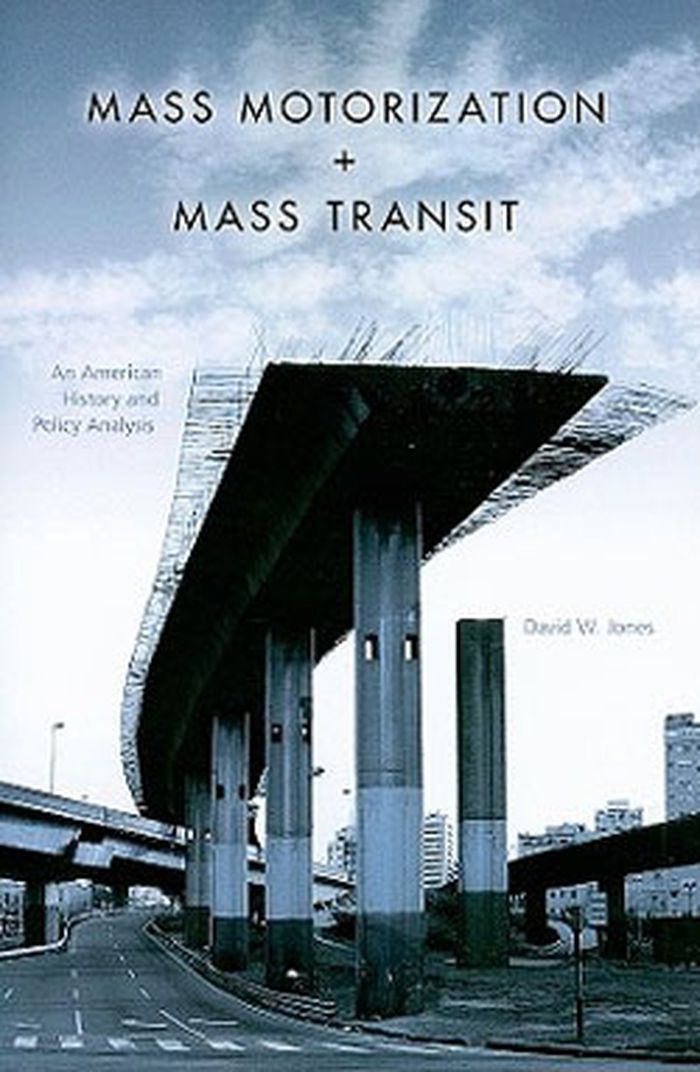
This book examines how the United States became the world's most thoroughly motorized nation and why mass transit has been more displaced in the United States than in any other advanced industrial nation. The historical and international perspective provides a uniquely effective framework for understanding both the intensity of U.S. motorization and the difficulties the country will face in moderating its demands on the world's oil supply and reducing the CO2 emissions generated by motor vehicles.
Mass Motorization + Mass Transit: An American history and policy analysis
Actions:
Prix:
$31.50
(disponible sur commande)
Résumé:
This book examines how the United States became the world's most thoroughly motorized nation and why mass transit has been more displaced in the United States than in any other advanced industrial nation. The historical and international perspective provides a uniquely effective framework for understanding both the intensity of U.S. motorization and the difficulties the country will face in moderating its demands on the world's oil supply and reducing the CO2 emissions generated by motor vehicles.
Classification:
livres
livres
Publication:
mars 2010
mars 2010
Classification:
livres
livres

Titre:
Bienvenue à bord !
Bienvenue à bord !
Actions:
Prix:
$77.95
(disponible sur commande)
Résumé:
Bienvenue à bord !est un hommage visuel à l’âge d’or du transport aérien du début des années 60 : une époque de nouvelles perspectives et de liberté. Bienvenue à bord ! puise dans une iconographie pour la plupart inédite issue de l’archive historique Boeing, du Museum of Flight de Seattle et de collections de multiples compagnies aériennes. "Bienvenue à bord !" renvoie le(...)
$77.95
(disponible sur commande)
Résumé:
Bienvenue à bord !est un hommage visuel à l’âge d’or du transport aérien du début des années 60 : une époque de nouvelles perspectives et de liberté. Bienvenue à bord ! puise dans une iconographie pour la plupart inédite issue de l’archive historique Boeing, du Museum of Flight de Seattle et de collections de multiples compagnies aériennes. "Bienvenue à bord !" renvoie le(...)
Titre:
Bienvenue à bord !
Actions:
Prix:
$77.95
(disponible sur commande)
Résumé:
Bienvenue à bord !est un hommage visuel à l’âge d’or du transport aérien du début des années 60 : une époque de nouvelles perspectives et de liberté. Bienvenue à bord ! puise dans une iconographie pour la plupart inédite issue de l’archive historique Boeing, du Museum of Flight de Seattle et de collections de multiples compagnies aériennes. "Bienvenue à bord !" renvoie le lecteur à l’ère au cours de laquelle prendre l’avion était nouveau, glamour, alors que la "jet set" venait d’apparaître. Aviez-vous oublié les célébrités embarquant dans des appareils révolutionnaires, le brouhaha dans les aéroports "modernes", les cabines spacieuses, les repas de gourmets, le charme et l’allure d’une nouvelle génération de jeunes et élégantes hôtesses de l’air ? Revivez ce commencement, cette promesse d’un monde dans lequel chacun allait pouvoir voler plus vite dans ces avions pressurisés et confortables, et vibrer plus haut, permettant de quitter New York le soir et arriver à Londres pour le déjeuner !
Bienvenue à bord !
Actions:
Prix:
$77.95
(disponible sur commande)
Résumé:
Bienvenue à bord !est un hommage visuel à l’âge d’or du transport aérien du début des années 60 : une époque de nouvelles perspectives et de liberté. Bienvenue à bord ! puise dans une iconographie pour la plupart inédite issue de l’archive historique Boeing, du Museum of Flight de Seattle et de collections de multiples compagnies aériennes. "Bienvenue à bord !" renvoie le lecteur à l’ère au cours de laquelle prendre l’avion était nouveau, glamour, alors que la "jet set" venait d’apparaître. Aviez-vous oublié les célébrités embarquant dans des appareils révolutionnaires, le brouhaha dans les aéroports "modernes", les cabines spacieuses, les repas de gourmets, le charme et l’allure d’une nouvelle génération de jeunes et élégantes hôtesses de l’air ? Revivez ce commencement, cette promesse d’un monde dans lequel chacun allait pouvoir voler plus vite dans ces avions pressurisés et confortables, et vibrer plus haut, permettant de quitter New York le soir et arriver à Londres pour le déjeuner !
Classification:
livres
livres
Publication:
janvier 2015
janvier 2015
Classification:
livres
livres
Actions:
Exemplaires:
Description:
281 pages : illustrations, maps, plans ; 27 cm.
Description:
281 pages : illustrations, maps, plans ; 27 cm.
Auteur:
Sujet:
Publication:
Austin : University of Texas Press, 2021.
Austin : University of Texas Press, 2021.
Titre:
Modernity for the masses : Antonio Bonet's dreams for Buenos Aires / Ana María León.
Actions:
Exemplaires:
Description:
281 pages : illustrations, maps, plans ; 27 cm.
Modernity for the masses : Antonio Bonet's dreams for Buenos Aires / Ana María León.
Actions:
Exemplaires:
Description:
281 pages : illustrations, maps, plans ; 27 cm.
Classification:
livres
livres
Publication:
Austin : University of Texas Press, 2021.
Austin : University of Texas Press, 2021.
Auteur:
Sujet:
Classification:
livres
livres
Actions:
Exemplaires:
Description:
335 pages : illustrations ; 22 cm.
Description:
335 pages : illustrations ; 22 cm.
Auteur:
Sujet:
Publication:
London : Reaktion Books, ©2013.
London : Reaktion Books, ©2013.
Titre:
Italy / Diane Yvonne Ghirardo.
Actions:
Exemplaires:
Description:
335 pages : illustrations ; 22 cm.
Italy / Diane Yvonne Ghirardo.
Actions:
Exemplaires:
Description:
335 pages : illustrations ; 22 cm.
Classification:
livres
livres
Publication:
London : Reaktion Books, ©2013.
London : Reaktion Books, ©2013.
Auteur:
Sujet:
Classification:
livres
livres
Titre:
City of comings and goings
City of comings and goings
Actions:
Prix:
$69.95
(disponible sur commande)
Résumé:
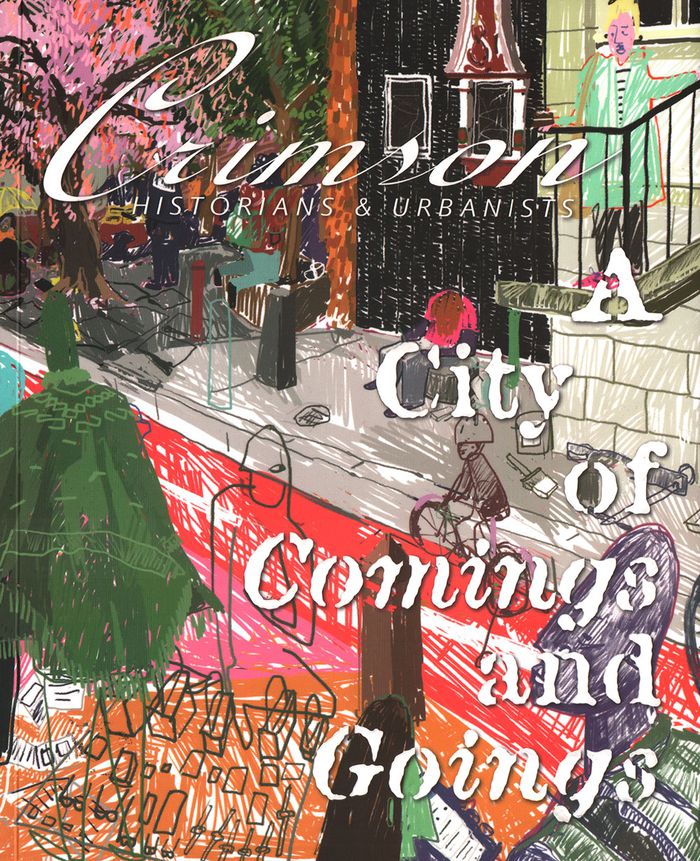
"City of Comings and Goings" explores how architectural design and planning play crucial roles in Western European cities marked by migration—such as London, Berlin or Vienna. The book collects essays by local scholars in these cities and presents 100 projects tackling the issue of migration on different scales.
$69.95
(disponible sur commande)
Résumé:
"City of Comings and Goings" explores how architectural design and planning play crucial roles in Western European cities marked by migration—such as London, Berlin or Vienna. The book collects essays by local scholars in these cities and presents 100 projects tackling the issue of migration on different scales.
Titre:
City of comings and goings
Actions:
Prix:
$69.95
(disponible sur commande)
Résumé:
"City of Comings and Goings" explores how architectural design and planning play crucial roles in Western European cities marked by migration—such as London, Berlin or Vienna. The book collects essays by local scholars in these cities and presents 100 projects tackling the issue of migration on different scales.
City of comings and goings
Actions:
Prix:
$69.95
(disponible sur commande)
Résumé:
"City of Comings and Goings" explores how architectural design and planning play crucial roles in Western European cities marked by migration—such as London, Berlin or Vienna. The book collects essays by local scholars in these cities and presents 100 projects tackling the issue of migration on different scales.
Classification:
livres
livres
Publication:
octobre 2019
octobre 2019
Sujet:
Théorie de l’urbanisme
Théorie de l’urbanisme
Classification:
livres
livres
Titre:
Qalqalah #2.
Qalqalah #2.
Actions:
Description:
1 online resource.
Auteur:
Sujet:
Publication:
[Place of publication not identified] : Bétonsalon, 2016., [Place of publication not identified] : Kadist, 2016.
[Place of publication not identified] : Bétonsalon, 2016., [Place of publication not identified] : Kadist, 2016.
Classification:
livres
livres
Publication:
[Place of publication not identified] : Bétonsalon, 2016., [Place of publication not identified] : Kadist, 2016.
[Place of publication not identified] : Bétonsalon, 2016., [Place of publication not identified] : Kadist, 2016.
Auteur:
Sujet:
Classification:
livres
livres

Titre:
Mukasonga : A book of my own
Mukasonga : A book of my own
Actions:
Prix:
$23.50
(disponible en magasin)
Résumé:
''For those who, despite everything, have decided to live, there will always be a home.'' A work on the experience of exile and migration, memory and selfhood, from legendary French-Rwandan storyteller Scholastique Mukasonga.
$23.50
(disponible en magasin)
Résumé:
''For those who, despite everything, have decided to live, there will always be a home.'' A work on the experience of exile and migration, memory and selfhood, from legendary French-Rwandan storyteller Scholastique Mukasonga.
Publication:
août 2023
août 2023
Titre:
Mukasonga : A book of my own
Actions:
Prix:
$23.50
(disponible en magasin)
Résumé:
''For those who, despite everything, have decided to live, there will always be a home.'' A work on the experience of exile and migration, memory and selfhood, from legendary French-Rwandan storyteller Scholastique Mukasonga.
Mukasonga : A book of my own
Actions:
Prix:
$23.50
(disponible en magasin)
Résumé:
''For those who, despite everything, have decided to live, there will always be a home.'' A work on the experience of exile and migration, memory and selfhood, from legendary French-Rwandan storyteller Scholastique Mukasonga.
Classification:
livres
livres
Publication:
août 2023
août 2023
Classification:
livres
livres
Actions:
Prix:
$59.00
(disponible sur commande)
Résumé:
Deeply divided, with ethnic French dominating the south and a large, vibrant North African community in the north, the city of Marseille typifies the tensions stemming from problematic governance, a constant influx of migrants, the widespread privatisation of services, and rapid, profit-driven, and destructive post-industrial urbanisation. Examining this complex city(...)
$59.00
(disponible sur commande)
Résumé:
Deeply divided, with ethnic French dominating the south and a large, vibrant North African community in the north, the city of Marseille typifies the tensions stemming from problematic governance, a constant influx of migrants, the widespread privatisation of services, and rapid, profit-driven, and destructive post-industrial urbanisation. Examining this complex city(...)
Titre:
Migrant Marseille: Architectures of social segregation and urban inclusivity
Actions:
Prix:
$59.00
(disponible sur commande)
Résumé:
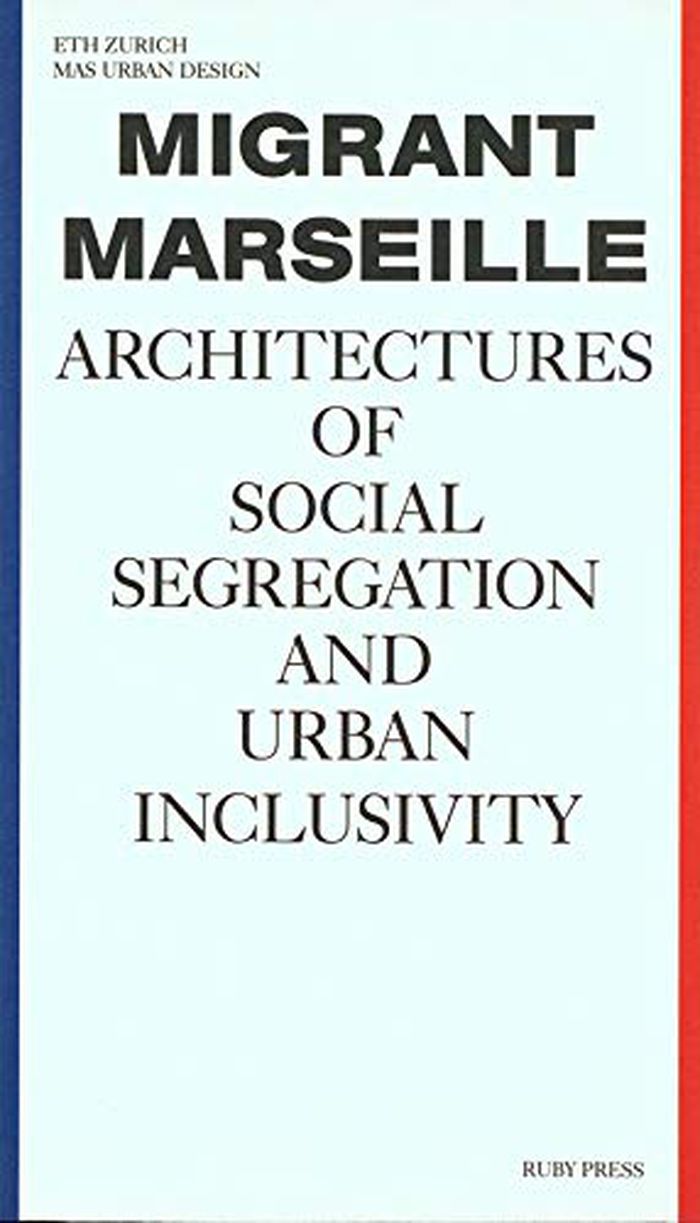
Deeply divided, with ethnic French dominating the south and a large, vibrant North African community in the north, the city of Marseille typifies the tensions stemming from problematic governance, a constant influx of migrants, the widespread privatisation of services, and rapid, profit-driven, and destructive post-industrial urbanisation. Examining this complex city through a series of case studies of its built environment, this book tells of an urban reality where migration is especially prevalent. Essays, photographs, and drawings illustrate the impact of migration on space, architecture, and territory. But it also offers strategies for development that can support social and spatial integration.
Migrant Marseille: Architectures of social segregation and urban inclusivity
Actions:
Prix:
$59.00
(disponible sur commande)
Résumé:
Deeply divided, with ethnic French dominating the south and a large, vibrant North African community in the north, the city of Marseille typifies the tensions stemming from problematic governance, a constant influx of migrants, the widespread privatisation of services, and rapid, profit-driven, and destructive post-industrial urbanisation. Examining this complex city through a series of case studies of its built environment, this book tells of an urban reality where migration is especially prevalent. Essays, photographs, and drawings illustrate the impact of migration on space, architecture, and territory. But it also offers strategies for development that can support social and spatial integration.
Classification:
livres
livres
Publication:
novembre 2020
novembre 2020
Sujet:
Théorie de l’urbanisme
Théorie de l’urbanisme
Classification:
livres
livres
Actions:
Prix:
$56.95
(disponible sur commande)
Résumé:
In Outlaw Territories, Felicity Scott traces the relation of architecture and urbanism to human unsettlement and territorial insecurity during the 1960s and 1970s. Investigating a set of responses to the growing urban unrest in the developed and developing worlds, Scott revisits an era when the discipline of architecture staked out a role in global environmental(...)
$56.95
(disponible sur commande)
Résumé:
In Outlaw Territories, Felicity Scott traces the relation of architecture and urbanism to human unsettlement and territorial insecurity during the 1960s and 1970s. Investigating a set of responses to the growing urban unrest in the developed and developing worlds, Scott revisits an era when the discipline of architecture staked out a role in global environmental(...)
Titre:
Outlaw Territories: Environments of Insecurity/ Architectures of Counterinsurgency
Actions:
Prix:
$56.95
(disponible sur commande)
Résumé:
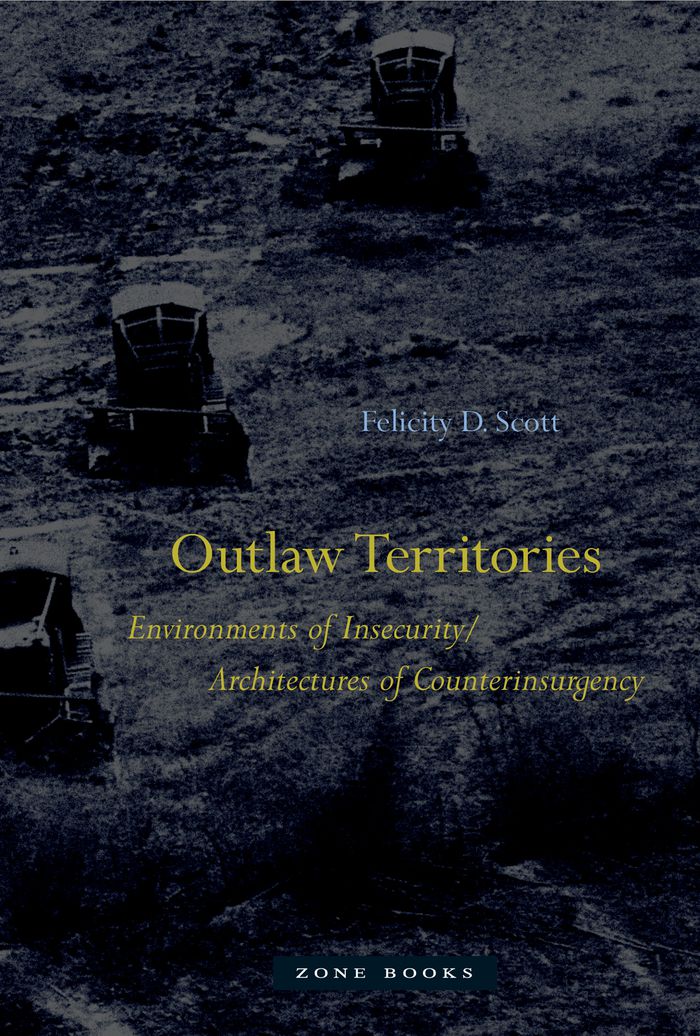
In Outlaw Territories, Felicity Scott traces the relation of architecture and urbanism to human unsettlement and territorial insecurity during the 1960s and 1970s. Investigating a set of responses to the growing urban unrest in the developed and developing worlds, Scott revisits an era when the discipline of architecture staked out a role in global environmental governance and the biopolitical management of populations. She describes architecture’s response to the displacement of persons brought on by migration, urbanization, environmental catastrophe, and warfare, and she traces architecture’s relationship to the material, environmental, psychological, and geopolitical transformations brought on by postindustrial technologies and neoliberal capitalism after World War II. At the height of the U.S.-led war in Vietnam and Cambodia, with ongoing decolonization struggles in many parts of the world, architecture not only emerged as a target of political agitation because of its inherent normativity but also became heavily enmeshed with military, legal, and humanitarian apparatuses, participating in scientific and technological research dedicated to questions of international management and security. Once architecture became aligned with a global matrix of forces concerned with the environment, economic development, migration, genocide, and war, its role shifted at times toward providing strategic expertise for institutions born of neoliberal capitalism. Scott investigates this nexus and questions how and to what ends architecture and the environment came to be intimately connected to the expanded exercise of power within the shifting geopolitical frameworks at this time.
Outlaw Territories: Environments of Insecurity/ Architectures of Counterinsurgency
Actions:
Prix:
$56.95
(disponible sur commande)
Résumé:
In Outlaw Territories, Felicity Scott traces the relation of architecture and urbanism to human unsettlement and territorial insecurity during the 1960s and 1970s. Investigating a set of responses to the growing urban unrest in the developed and developing worlds, Scott revisits an era when the discipline of architecture staked out a role in global environmental governance and the biopolitical management of populations. She describes architecture’s response to the displacement of persons brought on by migration, urbanization, environmental catastrophe, and warfare, and she traces architecture’s relationship to the material, environmental, psychological, and geopolitical transformations brought on by postindustrial technologies and neoliberal capitalism after World War II. At the height of the U.S.-led war in Vietnam and Cambodia, with ongoing decolonization struggles in many parts of the world, architecture not only emerged as a target of political agitation because of its inherent normativity but also became heavily enmeshed with military, legal, and humanitarian apparatuses, participating in scientific and technological research dedicated to questions of international management and security. Once architecture became aligned with a global matrix of forces concerned with the environment, economic development, migration, genocide, and war, its role shifted at times toward providing strategic expertise for institutions born of neoliberal capitalism. Scott investigates this nexus and questions how and to what ends architecture and the environment came to be intimately connected to the expanded exercise of power within the shifting geopolitical frameworks at this time.
Classification:
livres
livres
Publication:
février 2016
février 2016
Sujet:
Théorie de l’architecture
Théorie de l’architecture
Classification:
livres
livres
Actions:
Prix:
$39.95
(disponible sur commande)
Résumé:
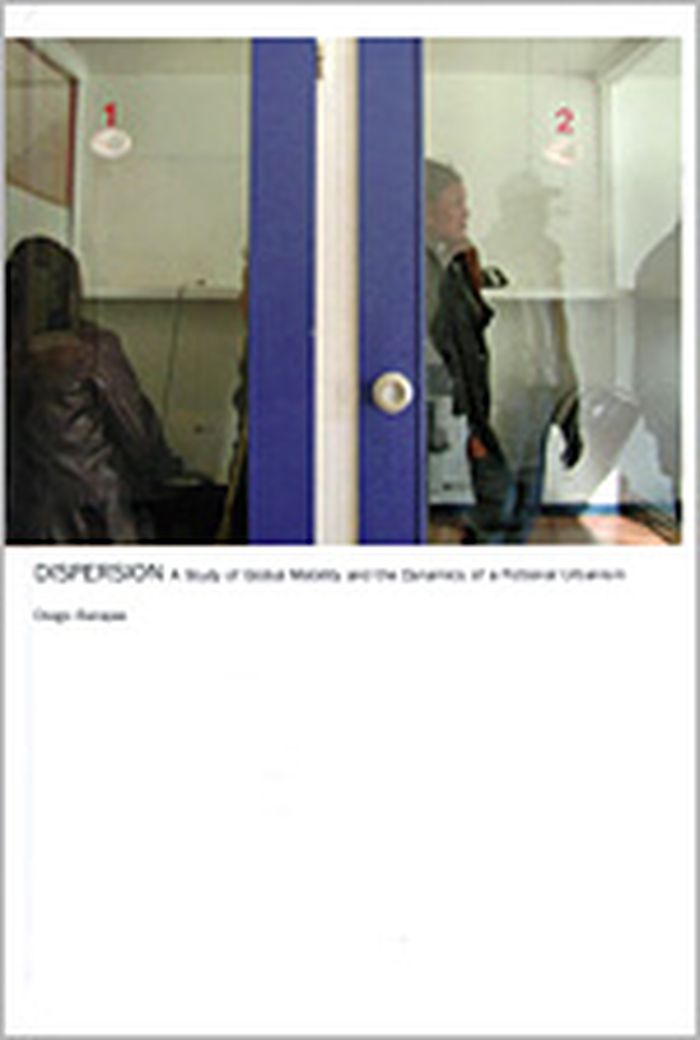
This publication is based on a thesis that studies global mobility and territories in dispersion. Based in Rotterdam, Diego Barajas concentrates his research on the urban dispersals shaped by migration, looking first at the Cape Verdean Diaspora and its territorial structure, and then focused on the case of the 'belhuis' - 'call-house'. By 'territories in dispersion',(...)
$39.95
(disponible sur commande)
Résumé:
This publication is based on a thesis that studies global mobility and territories in dispersion. Based in Rotterdam, Diego Barajas concentrates his research on the urban dispersals shaped by migration, looking first at the Cape Verdean Diaspora and its territorial structure, and then focused on the case of the 'belhuis' - 'call-house'. By 'territories in dispersion',(...)
Titre:
Dispersion : a study of global mobility and the dynamics of a fictional urbanism
Actions:
Prix:
$39.95
(disponible sur commande)
Résumé:
This publication is based on a thesis that studies global mobility and territories in dispersion. Based in Rotterdam, Diego Barajas concentrates his research on the urban dispersals shaped by migration, looking first at the Cape Verdean Diaspora and its territorial structure, and then focused on the case of the 'belhuis' - 'call-house'. By 'territories in dispersion', Barajas refers to social habitats that are no longer physically contained in geographically continuous areas, but have been spread out and re-articulated by artificial means. The de-territorialized condition created by increased mobility - particularly by migration - had led to an urbanism of artificial re-territorializaton. This is a functional urbanism - as based on mental constructions but tangible - that is manifested in the city as fragments, micro environments of global circuits, each of which establishes its own identity, time, rules and aesthetics - its own atmospheres. These fragments are globally connected and articulated by abstract infrastructures like telecommunication systems, as much as by physical places - ethnic shops, religious centers, et cetera - and by the imaginary and idealized realms through which dispersed societies operate. This is an urbanism ruled by traditional values, by intuitive and emotional forces, as much by efficiency and functionality. This research argues that as patterns of dispersion intensify, they generate not just fragmented societies, but a new territorial cohesion - a realm in which 'the collective' has gained a new dimension. Cultural identity is no longer necessarily linked to geographical place, or to traditional territorial structures like the nation-state, but has become a particular concept attached to individual imaginations though subjected to and conditioned by the contradictory pressures of self-determination and commoditization. This research is an attempt to trace the patterns of urban dispersals shaped by migration to the city of Rotterdam. A city whose harbour has made it one of the most concentrated points of settlement for Cape Verdean emigrants.
Dispersion : a study of global mobility and the dynamics of a fictional urbanism
Actions:
Prix:
$39.95
(disponible sur commande)
Résumé:
This publication is based on a thesis that studies global mobility and territories in dispersion. Based in Rotterdam, Diego Barajas concentrates his research on the urban dispersals shaped by migration, looking first at the Cape Verdean Diaspora and its territorial structure, and then focused on the case of the 'belhuis' - 'call-house'. By 'territories in dispersion', Barajas refers to social habitats that are no longer physically contained in geographically continuous areas, but have been spread out and re-articulated by artificial means. The de-territorialized condition created by increased mobility - particularly by migration - had led to an urbanism of artificial re-territorializaton. This is a functional urbanism - as based on mental constructions but tangible - that is manifested in the city as fragments, micro environments of global circuits, each of which establishes its own identity, time, rules and aesthetics - its own atmospheres. These fragments are globally connected and articulated by abstract infrastructures like telecommunication systems, as much as by physical places - ethnic shops, religious centers, et cetera - and by the imaginary and idealized realms through which dispersed societies operate. This is an urbanism ruled by traditional values, by intuitive and emotional forces, as much by efficiency and functionality. This research argues that as patterns of dispersion intensify, they generate not just fragmented societies, but a new territorial cohesion - a realm in which 'the collective' has gained a new dimension. Cultural identity is no longer necessarily linked to geographical place, or to traditional territorial structures like the nation-state, but has become a particular concept attached to individual imaginations though subjected to and conditioned by the contradictory pressures of self-determination and commoditization. This research is an attempt to trace the patterns of urban dispersals shaped by migration to the city of Rotterdam. A city whose harbour has made it one of the most concentrated points of settlement for Cape Verdean emigrants.
Classification:
livres
livres
Publication:
mai 2003, Rotterdam
mai 2003, Rotterdam
Sujet:
Théorie de l’urbanisme
Théorie de l’urbanisme


