


759 Résultats
Classification:
livres
livres
Actions:
Prix:
$48.95
(disponible sur commande)
Résumé:
Jan Lucassen provides an inclusive history of humanity’s busy labor throughout the ages. Spanning China, India, Africa, the Americas, and Europe, Lucassen looks at the ways in which humanity organizes work: in the household, the tribe, the city, and the state. He examines how labor is split between men, women, and children; the watershed moment of the invention of money;(...)
$48.95
(disponible sur commande)
Résumé:
Jan Lucassen provides an inclusive history of humanity’s busy labor throughout the ages. Spanning China, India, Africa, the Americas, and Europe, Lucassen looks at the ways in which humanity organizes work: in the household, the tribe, the city, and the state. He examines how labor is split between men, women, and children; the watershed moment of the invention of money;(...)
Titre:
The story of work: a new history of humanity
Actions:
Prix:
$48.95
(disponible sur commande)
Résumé:
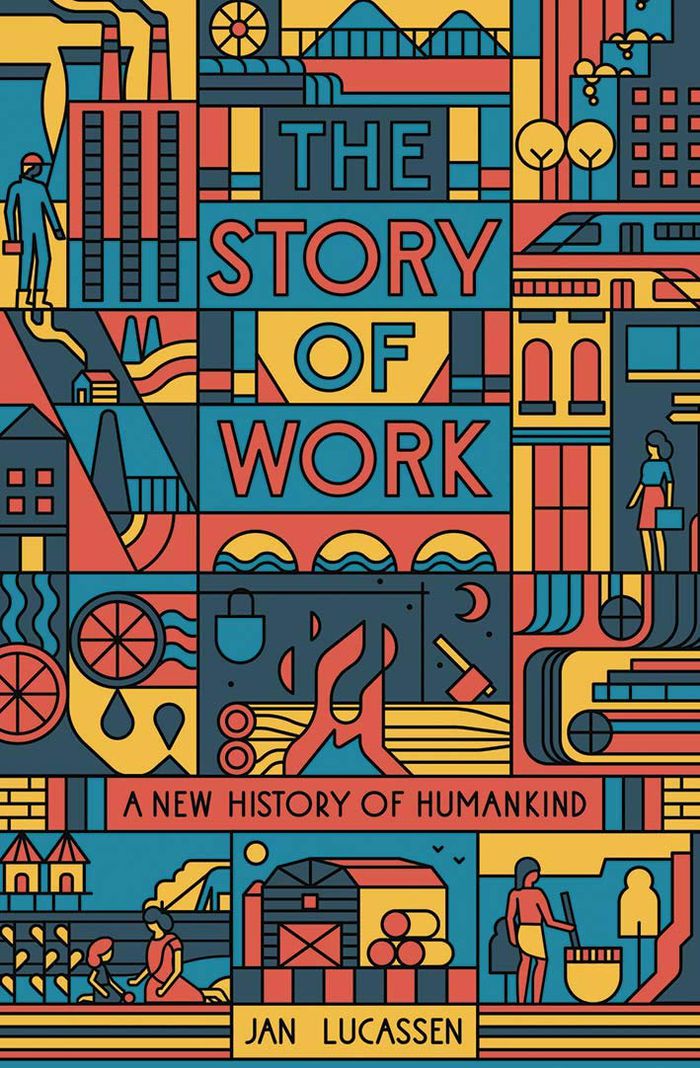
Jan Lucassen provides an inclusive history of humanity’s busy labor throughout the ages. Spanning China, India, Africa, the Americas, and Europe, Lucassen looks at the ways in which humanity organizes work: in the household, the tribe, the city, and the state. He examines how labor is split between men, women, and children; the watershed moment of the invention of money; the collective action of workers; and at the impact of migration, slavery, and the idea of leisure. From peasant farmers in the first agrarian societies to the precarious existence of today’s gig workers, this surprising account of both cooperation and subordination at work throws essential light on the opportunities we face today.
The story of work: a new history of humanity
Actions:
Prix:
$48.95
(disponible sur commande)
Résumé:
Jan Lucassen provides an inclusive history of humanity’s busy labor throughout the ages. Spanning China, India, Africa, the Americas, and Europe, Lucassen looks at the ways in which humanity organizes work: in the household, the tribe, the city, and the state. He examines how labor is split between men, women, and children; the watershed moment of the invention of money; the collective action of workers; and at the impact of migration, slavery, and the idea of leisure. From peasant farmers in the first agrarian societies to the precarious existence of today’s gig workers, this surprising account of both cooperation and subordination at work throws essential light on the opportunities we face today.
Classification:
livres
livres
Publication:
septembre 2021
septembre 2021
Sujet:
Social
Social
Classification:
livres
livres
Prix:
$103.00
(disponible sur commande)
Résumé:
Building for oneself has a special connotation under the conditions of migration and exile. Among the most prominent examples are the private homes of Rudolph Schindler in West Hollywood, Richard Neutra in Los Angeles, Walter Gropius in Lincoln, Massachusetts. What expression could voluntary migration or forced change of location find in these buildings? To what extent(...)
$103.00
(disponible sur commande)
Résumé:
Building for oneself has a special connotation under the conditions of migration and exile. Among the most prominent examples are the private homes of Rudolph Schindler in West Hollywood, Richard Neutra in Los Angeles, Walter Gropius in Lincoln, Massachusetts. What expression could voluntary migration or forced change of location find in these buildings? To what extent(...)
Titre:
A home of one's own: Émigré architects and their houses 1920-1960
Actions:
Prix:
$103.00
(disponible sur commande)
Résumé:
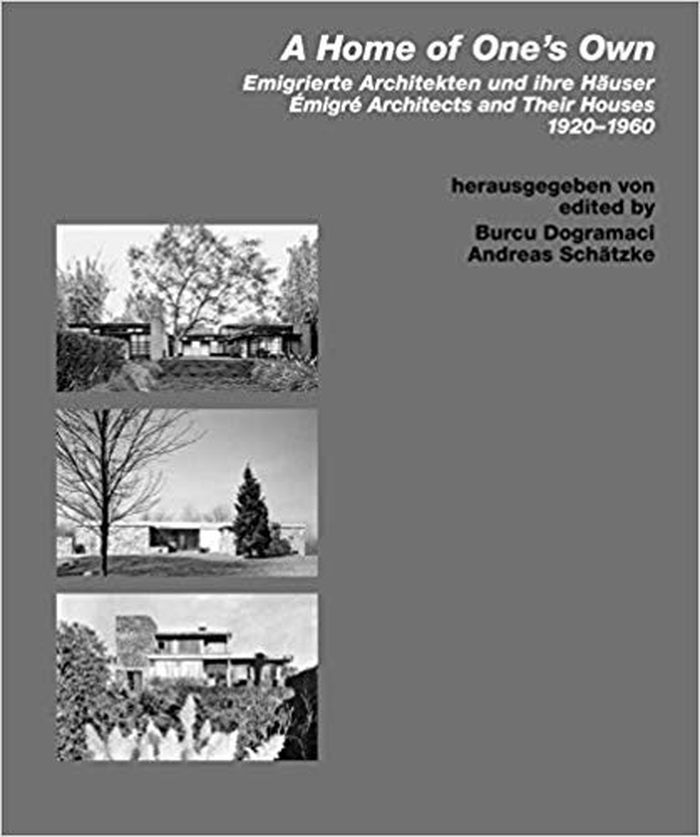
Building for oneself has a special connotation under the conditions of migration and exile. Among the most prominent examples are the private homes of Rudolph Schindler in West Hollywood, Richard Neutra in Los Angeles, Walter Gropius in Lincoln, Massachusetts. What expression could voluntary migration or forced change of location find in these buildings? To what extent do the architects’ other buildings differ from such 'homes of one’s own' in a foreign country, to use an expression borrowed and modified from Virginia Woolf?
A home of one's own: Émigré architects and their houses 1920-1960
Actions:
Prix:
$103.00
(disponible sur commande)
Résumé:
Building for oneself has a special connotation under the conditions of migration and exile. Among the most prominent examples are the private homes of Rudolph Schindler in West Hollywood, Richard Neutra in Los Angeles, Walter Gropius in Lincoln, Massachusetts. What expression could voluntary migration or forced change of location find in these buildings? To what extent do the architects’ other buildings differ from such 'homes of one’s own' in a foreign country, to use an expression borrowed and modified from Virginia Woolf?
Classification:
livres
livres
Publication:
juin 2018
juin 2018
Sujet:
Modernisme
Modernisme
Classification:
livres
livres
Actions:
Exemplaires:
Description:
278 pages : illustrations (some color) ; 24 cm
Description:
278 pages : illustrations (some color) ; 24 cm
Auteur:
Sujet:
Publication:
Paris : Parigramme, ©2011.
Paris : Parigramme, ©2011.
Titre:
Paris déplacé : du XVIIIe siècle à nos jours : architecture, fontaines, statues, décors / Ruth Fiori ; photographies actuelles, Gilles Fiori.
Actions:
Exemplaires:
Description:
278 pages : illustrations (some color) ; 24 cm
Paris déplacé : du XVIIIe siècle à nos jours : architecture, fontaines, statues, décors / Ruth Fiori ; photographies actuelles, Gilles Fiori.
Actions:
Exemplaires:
Description:
278 pages : illustrations (some color) ; 24 cm
Classification:
livres
livres
Publication:
Paris : Parigramme, ©2011.
Paris : Parigramme, ©2011.
Auteur:
Sujet:
Classification:
livres
livres
Actions:
Prix:
$54.95
(disponible sur commande)
Résumé:
This book is the first to tell the full and true story of Le Corbusier’s adventure in automobile design. Le Corbusier (with Pierre Jeanneret) entered an automobile design competition, submitting plans for "a minimalist vehicle for maximum functionality," the Voiture Minimum. Despite Le Corbusier’s energetic promotion of his design to several important automakers, the(...)
$54.95
(disponible sur commande)
Résumé:
This book is the first to tell the full and true story of Le Corbusier’s adventure in automobile design. Le Corbusier (with Pierre Jeanneret) entered an automobile design competition, submitting plans for "a minimalist vehicle for maximum functionality," the Voiture Minimum. Despite Le Corbusier’s energetic promotion of his design to several important automakers, the(...)
Publication:
mars 2011
mars 2011
Titre:
Voiture minimum: Le Corbusier and the automobile
Actions:
Prix:
$54.95
(disponible sur commande)
Résumé:
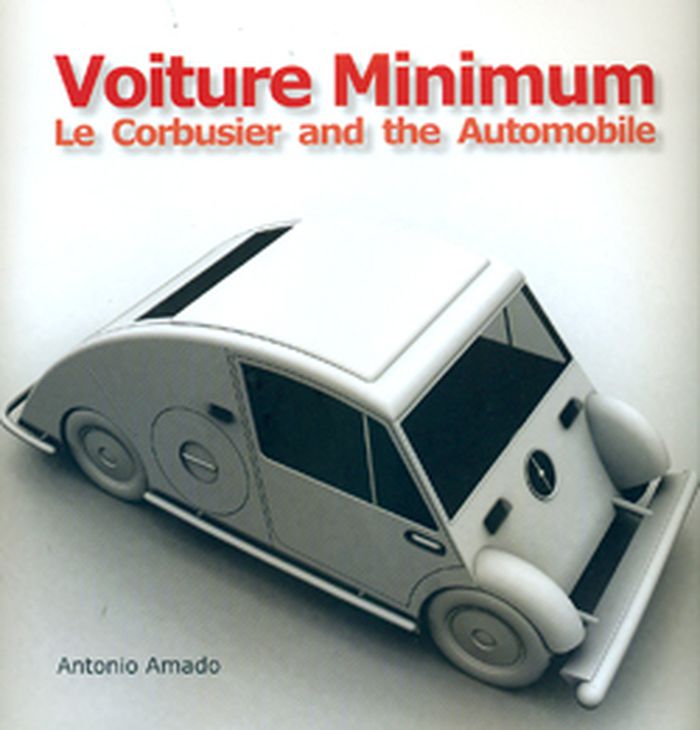
This book is the first to tell the full and true story of Le Corbusier’s adventure in automobile design. Le Corbusier (with Pierre Jeanneret) entered an automobile design competition, submitting plans for "a minimalist vehicle for maximum functionality," the Voiture Minimum. Despite Le Corbusier’s energetic promotion of his design to several important automakers, the Voiture Minimum was never mass-produced. Architect Antonio Amado describes the project in detail, linking it to Le Corbusier’s architectural work, to Modernist utopian urban visions, and to the automobile design projects of other architects including Walter Gropius and Frank Lloyd Wright.
Voiture minimum: Le Corbusier and the automobile
Actions:
Prix:
$54.95
(disponible sur commande)
Résumé:
This book is the first to tell the full and true story of Le Corbusier’s adventure in automobile design. Le Corbusier (with Pierre Jeanneret) entered an automobile design competition, submitting plans for "a minimalist vehicle for maximum functionality," the Voiture Minimum. Despite Le Corbusier’s energetic promotion of his design to several important automakers, the Voiture Minimum was never mass-produced. Architect Antonio Amado describes the project in detail, linking it to Le Corbusier’s architectural work, to Modernist utopian urban visions, and to the automobile design projects of other architects including Walter Gropius and Frank Lloyd Wright.
Classification:
livres
livres
Publication:
mars 2011
mars 2011
Classification:
livres
livres

Titre:
Mobile nation
Mobile nation
Actions:
Prix:
$35.95
(disponible sur commande)
Résumé:
Mobile Nation explores the emerging field of mobile experience design. The papers in this anthology include essays on design theories and methods for locative technologies, devices, experiences, and games, featuring international scholars, researchers and industry experts.
$35.95
(disponible sur commande)
Résumé:
Mobile Nation explores the emerging field of mobile experience design. The papers in this anthology include essays on design theories and methods for locative technologies, devices, experiences, and games, featuring international scholars, researchers and industry experts.
Publication:
septembre 2008, Waterloo
septembre 2008, Waterloo
Titre:
Mobile nation
Actions:
Prix:
$35.95
(disponible sur commande)
Résumé:
Mobile Nation explores the emerging field of mobile experience design. The papers in this anthology include essays on design theories and methods for locative technologies, devices, experiences, and games, featuring international scholars, researchers and industry experts.
Mobile nation
Actions:
Prix:
$35.95
(disponible sur commande)
Résumé:
Mobile Nation explores the emerging field of mobile experience design. The papers in this anthology include essays on design theories and methods for locative technologies, devices, experiences, and games, featuring international scholars, researchers and industry experts.
Classification:
livres
livres
Publication:
septembre 2008, Waterloo
septembre 2008, Waterloo
Classification:
livres
livres

Actions:
Prix:
$20.00
(disponible en magasin)
Résumé:
King Nosmo is Kasper Stromman and Tomas de Rita, two Helsinki-based artists/graphic designers. Over the years they have acquired an extensive collection of pictures from three continents. This book covesr the years 2000-2005 and is a guide book to cities around the world.
$20.00
(disponible en magasin)
Résumé:
King Nosmo is Kasper Stromman and Tomas de Rita, two Helsinki-based artists/graphic designers. Over the years they have acquired an extensive collection of pictures from three continents. This book covesr the years 2000-2005 and is a guide book to cities around the world.
Publication:
novembre 2010
novembre 2010
Titre:
Around the world with King Nosmo
Actions:
Prix:
$20.00
(disponible en magasin)
Résumé:
King Nosmo is Kasper Stromman and Tomas de Rita, two Helsinki-based artists/graphic designers. Over the years they have acquired an extensive collection of pictures from three continents. This book covesr the years 2000-2005 and is a guide book to cities around the world.
Around the world with King Nosmo
Actions:
Prix:
$20.00
(disponible en magasin)
Résumé:
King Nosmo is Kasper Stromman and Tomas de Rita, two Helsinki-based artists/graphic designers. Over the years they have acquired an extensive collection of pictures from three continents. This book covesr the years 2000-2005 and is a guide book to cities around the world.
Classification:
livres
livres
Publication:
novembre 2010
novembre 2010
Classification:
livres
livres
Actions:
Prix:
$15.50
(disponible sur commande)
Résumé:
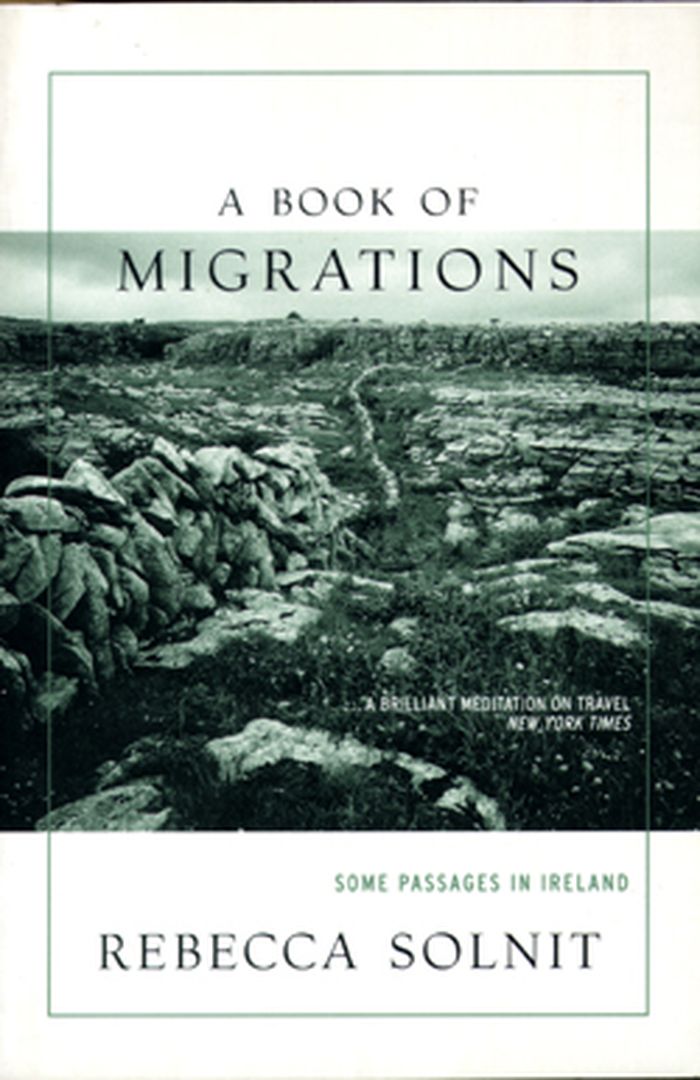
A Book of Migrations is a postcolonial revision of conventional travel literature. In her journey through Ireland, Rebecca Solnit portrays in microcosm a history made up of great tides of invasion, colonization, emigration, nomadism, and tourism. Her observations carve a new route through Ireland's history, literature and landscape.
$15.50
(disponible sur commande)
Résumé:
A Book of Migrations is a postcolonial revision of conventional travel literature. In her journey through Ireland, Rebecca Solnit portrays in microcosm a history made up of great tides of invasion, colonization, emigration, nomadism, and tourism. Her observations carve a new route through Ireland's history, literature and landscape.
Titre:
A book of migrations: some passages in Ireland
Actions:
Prix:
$15.50
(disponible sur commande)
Résumé:
A Book of Migrations is a postcolonial revision of conventional travel literature. In her journey through Ireland, Rebecca Solnit portrays in microcosm a history made up of great tides of invasion, colonization, emigration, nomadism, and tourism. Her observations carve a new route through Ireland's history, literature and landscape.
A book of migrations: some passages in Ireland
Actions:
Prix:
$15.50
(disponible sur commande)
Résumé:
A Book of Migrations is a postcolonial revision of conventional travel literature. In her journey through Ireland, Rebecca Solnit portrays in microcosm a history made up of great tides of invasion, colonization, emigration, nomadism, and tourism. Her observations carve a new route through Ireland's history, literature and landscape.
Classification:
livres
livres
Publication:
juin 1998, London, New York
juin 1998, London, New York
Sujet:
Théorie du paysage
Théorie du paysage
Classification:
livres
livres
Actions:
Prix:
$57.50
(disponible en magasin)
Résumé:
A city’s infrastructure—its tangle of streets, tunnels, routes and lines—can be much more than a mere functional necessity or an ad hoc constellation. Designed and constructed carefully and purposefully, "infratecture" can add significant sociological, cultural, ecological and economic value to a city. In this volume, Rotterdam-based traffic engineer, academic and(...)
$57.50
(disponible en magasin)
Résumé:
A city’s infrastructure—its tangle of streets, tunnels, routes and lines—can be much more than a mere functional necessity or an ad hoc constellation. Designed and constructed carefully and purposefully, "infratecture" can add significant sociological, cultural, ecological and economic value to a city. In this volume, Rotterdam-based traffic engineer, academic and(...)
Publication:
février 2016
février 2016
Titre:
Infratecture: Infrastructure by Design
Actions:
Prix:
$57.50
(disponible en magasin)
Résumé:
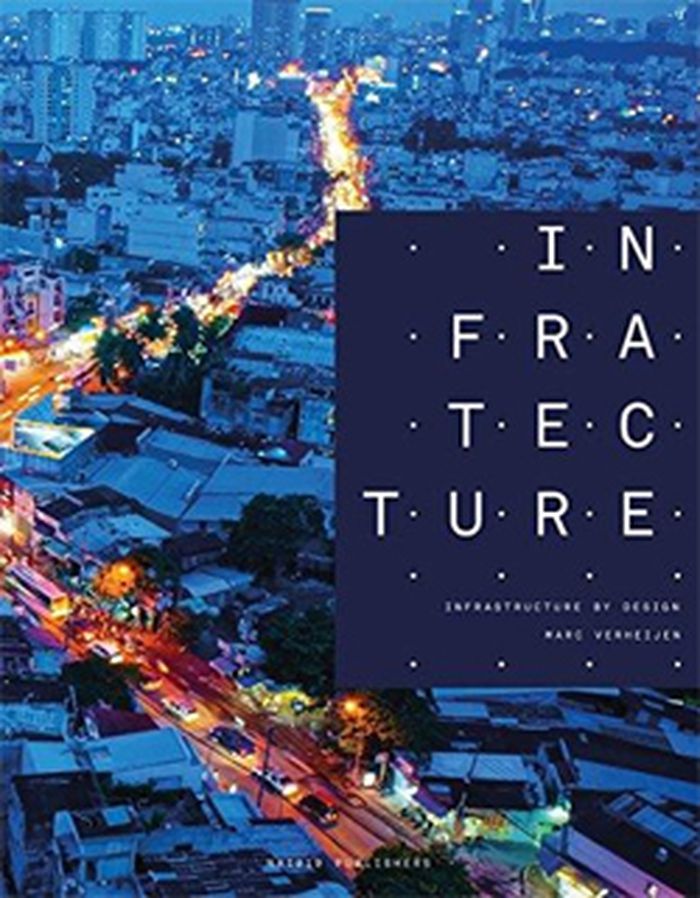
A city’s infrastructure—its tangle of streets, tunnels, routes and lines—can be much more than a mere functional necessity or an ad hoc constellation. Designed and constructed carefully and purposefully, "infratecture" can add significant sociological, cultural, ecological and economic value to a city. In this volume, Rotterdam-based traffic engineer, academic and architect Marc Verheijen discusses the infrastructure of cities from 15 different perspectives and features 30 examples of international best practices in infrastructure design. A practically oriented book about designing and building everything from roads and viaducts to environmental habitats and noise barriers, Infratecture is also an argument for these integrated design solutions, all the more urgent at a moment of accelerated global urbanization. Infratecture argues that, with the right mind set, genuine cooperation and sophisticated design, infrastructure can form a significant, and positive, part of the everyday environment.
Infratecture: Infrastructure by Design
Actions:
Prix:
$57.50
(disponible en magasin)
Résumé:
A city’s infrastructure—its tangle of streets, tunnels, routes and lines—can be much more than a mere functional necessity or an ad hoc constellation. Designed and constructed carefully and purposefully, "infratecture" can add significant sociological, cultural, ecological and economic value to a city. In this volume, Rotterdam-based traffic engineer, academic and architect Marc Verheijen discusses the infrastructure of cities from 15 different perspectives and features 30 examples of international best practices in infrastructure design. A practically oriented book about designing and building everything from roads and viaducts to environmental habitats and noise barriers, Infratecture is also an argument for these integrated design solutions, all the more urgent at a moment of accelerated global urbanization. Infratecture argues that, with the right mind set, genuine cooperation and sophisticated design, infrastructure can form a significant, and positive, part of the everyday environment.
Classification:
livres
livres
Publication:
février 2016
février 2016
Classification:
livres
livres
Titre:
The prospect of cities
The prospect of cities
Actions:
Prix:
$44.95
(disponible sur commande)
Résumé:
Beginning with an overview of global urbanization patterns, particularly the entropic forces that exacerbate poverty, increase violence, and discourage democratic life in peripheral areas, "The Prospect of Cities" goes on to address specific contemporary issues. These range in subject and scale from the impact of transnational migration on global cities whose populations(...)
$44.95
(disponible sur commande)
Résumé:
Beginning with an overview of global urbanization patterns, particularly the entropic forces that exacerbate poverty, increase violence, and discourage democratic life in peripheral areas, "The Prospect of Cities" goes on to address specific contemporary issues. These range in subject and scale from the impact of transnational migration on global cities whose populations(...)
Titre:
The prospect of cities
Actions:
Prix:
$44.95
(disponible sur commande)
Résumé:
Beginning with an overview of global urbanization patterns, particularly the entropic forces that exacerbate poverty, increase violence, and discourage democratic life in peripheral areas, "The Prospect of Cities" goes on to address specific contemporary issues. These range in subject and scale from the impact of transnational migration on global cities whose populations are at least 30 percent of foreign origin to the critical importance of everyday life, as it is experienced on the streets and in neighborhoods, for a full understanding of urban planning. The final chapter traces the author's evolution as a theorist of city-regional development and planning, deepening the perspective mapped out over the course of the volume and providing new insight into the study of the urban landscape in a global environment.
The prospect of cities
Actions:
Prix:
$44.95
(disponible sur commande)
Résumé:
Beginning with an overview of global urbanization patterns, particularly the entropic forces that exacerbate poverty, increase violence, and discourage democratic life in peripheral areas, "The Prospect of Cities" goes on to address specific contemporary issues. These range in subject and scale from the impact of transnational migration on global cities whose populations are at least 30 percent of foreign origin to the critical importance of everyday life, as it is experienced on the streets and in neighborhoods, for a full understanding of urban planning. The final chapter traces the author's evolution as a theorist of city-regional development and planning, deepening the perspective mapped out over the course of the volume and providing new insight into the study of the urban landscape in a global environment.
Classification:
livres
livres
Publication:
avril 2002, Minneapolis
avril 2002, Minneapolis
Sujet:
Théorie de l’urbanisme
Théorie de l’urbanisme
Classification:
livres
livres
Titre:
Art Deco: a mode of mobility
Art Deco: a mode of mobility
Actions:
Prix:
$40.00
(disponible sur commande)
Résumé:
This book argues that mobility is the central theme of the interwar mode of design known today as Art Deco. It is present on the very surfaces of Art Deco objects and architecture – in iconography and general formal qualities (whether the zigzag rectilinear forms ¬popular in the 1920s or curvilinear streamlining of the 1930s). By focussing on mobility as a means of tying(...)
$40.00
(disponible sur commande)
Résumé:
This book argues that mobility is the central theme of the interwar mode of design known today as Art Deco. It is present on the very surfaces of Art Deco objects and architecture – in iconography and general formal qualities (whether the zigzag rectilinear forms ¬popular in the 1920s or curvilinear streamlining of the 1930s). By focussing on mobility as a means of tying(...)
Titre:
Art Deco: a mode of mobility
Actions:
Prix:
$40.00
(disponible sur commande)
Résumé:
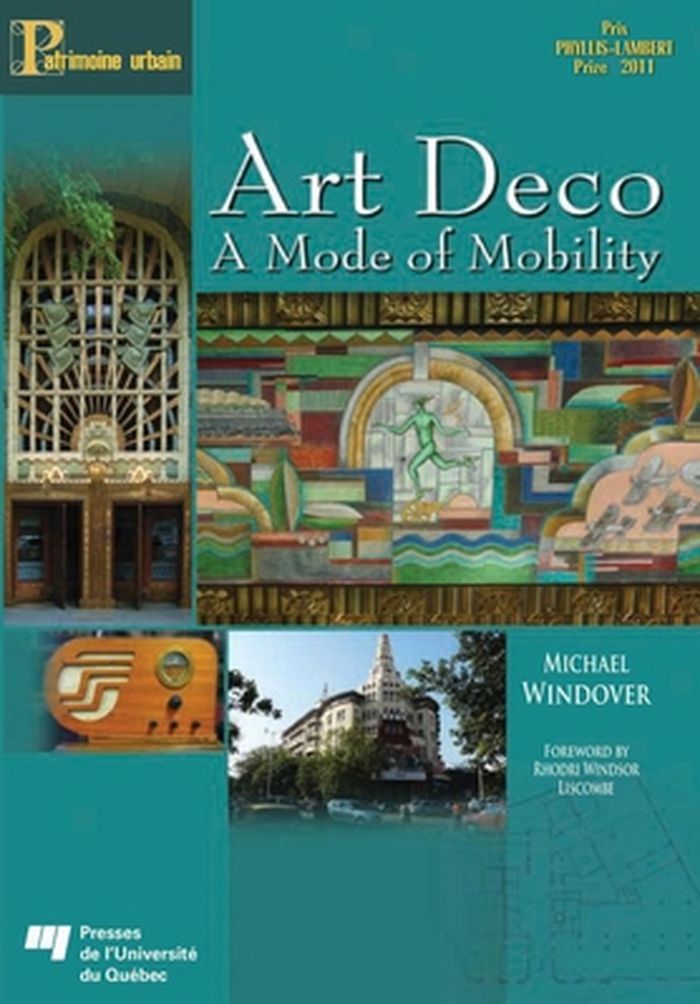
This book argues that mobility is the central theme of the interwar mode of design known today as Art Deco. It is present on the very surfaces of Art Deco objects and architecture – in iconography and general formal qualities (whether the zigzag rectilinear forms ¬popular in the 1920s or curvilinear streamlining of the 1930s). By focussing on mobility as a means of tying the seemingly disparate qualities of Art Deco together, Michael Windover shows how the surface-level expressions correspond as well with underpinning systems of mobility, including those associated with migration, transportation, commodity exchange, capital, and communication.
Art Deco: a mode of mobility
Actions:
Prix:
$40.00
(disponible sur commande)
Résumé:
This book argues that mobility is the central theme of the interwar mode of design known today as Art Deco. It is present on the very surfaces of Art Deco objects and architecture – in iconography and general formal qualities (whether the zigzag rectilinear forms ¬popular in the 1920s or curvilinear streamlining of the 1930s). By focussing on mobility as a means of tying the seemingly disparate qualities of Art Deco together, Michael Windover shows how the surface-level expressions correspond as well with underpinning systems of mobility, including those associated with migration, transportation, commodity exchange, capital, and communication.
Classification:
livres
livres
Publication:
novembre 2012
novembre 2012
Sujet:
Design, époques et styles
Design, époques et styles


