


9995 Résultats
Niveau de description archivistique:
Projet
Projet
Numéro de référence:
AP178.S1.2002.PR05
Description:
This project series documents the Parque de Vidago in Vidago, Portugal. While the records were held in the office’s archives this project was assigned the number 49/00. The office assigned the dates 2002-2010 to this project. This project consisted of extensive modifications to the spa resort Parque de Vidago Palace Hotel for owner VMPS - Águas & Turismo, S.A, part of Unicer (now Super Bock Group). The Palace Hotel and its surrounding nature park were originally proposed by King Carlos I at the beginning of the 20th century in order to create a luxurious resort around the famous Vidago mineral springs. In 2006, the resort was temporarily closed for the work to begin. For Siza, this primarily consisted of the construction of a new thermal spa, the conversion of rural buildings into vacation homes, and the building of a new clubhouse for the golf course. These three aspects of the project were divided as three subprojects by the office and have been arranged under AP178.S1.2002.PR05.SS1, AP178.S1.2002.PR05.SS2 and AP178.S1.2002.PR05.SS3, respectively. While the spa and clubhouse were both built, the vacation homes were not realized. The resort reopened in 2010. Several smaller buildings were also realized as part of this project including the Fonte Salus (spring), the Fonte de Vidago (spring) and the Portaria (gatehouse). Materials for these three building are arranged in AP178.S1.2002.PR05.SS1. Also included were several buildings that were not realized such as the Academia de golfe and the Edifício da manutenção (arranged in AP178.S1.2002.PR05.SS3), and the Espaço Serralves (arranged in AP178.S1.2002.PR05.SS1). This project was realized in tandem with another similar project by Siza, the Parque de Pedras Salgadas (AP178.S1.2002.PR06), also owned by Unicer. For this reason, the materials for both projects are mixed together. Files in this project series that contain materials for the Pedras Salgadas project have been identified at the file level.
AP178.S1.2002.PR05
Description:
This project series documents the Parque de Vidago in Vidago, Portugal. While the records were held in the office’s archives this project was assigned the number 49/00. The office assigned the dates 2002-2010 to this project. This project consisted of extensive modifications to the spa resort Parque de Vidago Palace Hotel for owner VMPS - Águas & Turismo, S.A, part of Unicer (now Super Bock Group). The Palace Hotel and its surrounding nature park were originally proposed by King Carlos I at the beginning of the 20th century in order to create a luxurious resort around the famous Vidago mineral springs. In 2006, the resort was temporarily closed for the work to begin. For Siza, this primarily consisted of the construction of a new thermal spa, the conversion of rural buildings into vacation homes, and the building of a new clubhouse for the golf course. These three aspects of the project were divided as three subprojects by the office and have been arranged under AP178.S1.2002.PR05.SS1, AP178.S1.2002.PR05.SS2 and AP178.S1.2002.PR05.SS3, respectively. While the spa and clubhouse were both built, the vacation homes were not realized. The resort reopened in 2010. Several smaller buildings were also realized as part of this project including the Fonte Salus (spring), the Fonte de Vidago (spring) and the Portaria (gatehouse). Materials for these three building are arranged in AP178.S1.2002.PR05.SS1. Also included were several buildings that were not realized such as the Academia de golfe and the Edifício da manutenção (arranged in AP178.S1.2002.PR05.SS3), and the Espaço Serralves (arranged in AP178.S1.2002.PR05.SS1). This project was realized in tandem with another similar project by Siza, the Parque de Pedras Salgadas (AP178.S1.2002.PR06), also owned by Unicer. For this reason, the materials for both projects are mixed together. Files in this project series that contain materials for the Pedras Salgadas project have been identified at the file level.
Personnes et institutions:
Date:
2002-2012
2002-2012
Titre:
Parque de Vidago [Vidago Palace], Vidago, Portugal (2002-2010)
Actions:
AP178.S1.2002.PR05
Description:
This project series documents the Parque de Vidago in Vidago, Portugal. While the records were held in the office’s archives this project was assigned the number 49/00. The office assigned the dates 2002-2010 to this project. This project consisted of extensive modifications to the spa resort Parque de Vidago Palace Hotel for owner VMPS - Águas & Turismo, S.A, part of Unicer (now Super Bock Group). The Palace Hotel and its surrounding nature park were originally proposed by King Carlos I at the beginning of the 20th century in order to create a luxurious resort around the famous Vidago mineral springs. In 2006, the resort was temporarily closed for the work to begin. For Siza, this primarily consisted of the construction of a new thermal spa, the conversion of rural buildings into vacation homes, and the building of a new clubhouse for the golf course. These three aspects of the project were divided as three subprojects by the office and have been arranged under AP178.S1.2002.PR05.SS1, AP178.S1.2002.PR05.SS2 and AP178.S1.2002.PR05.SS3, respectively. While the spa and clubhouse were both built, the vacation homes were not realized. The resort reopened in 2010. Several smaller buildings were also realized as part of this project including the Fonte Salus (spring), the Fonte de Vidago (spring) and the Portaria (gatehouse). Materials for these three building are arranged in AP178.S1.2002.PR05.SS1. Also included were several buildings that were not realized such as the Academia de golfe and the Edifício da manutenção (arranged in AP178.S1.2002.PR05.SS3), and the Espaço Serralves (arranged in AP178.S1.2002.PR05.SS1). This project was realized in tandem with another similar project by Siza, the Parque de Pedras Salgadas (AP178.S1.2002.PR06), also owned by Unicer. For this reason, the materials for both projects are mixed together. Files in this project series that contain materials for the Pedras Salgadas project have been identified at the file level.
Parque de Vidago [Vidago Palace], Vidago, Portugal (2002-2010)
Actions:
AP178.S1.2002.PR05
Description:
This project series documents the Parque de Vidago in Vidago, Portugal. While the records were held in the office’s archives this project was assigned the number 49/00. The office assigned the dates 2002-2010 to this project. This project consisted of extensive modifications to the spa resort Parque de Vidago Palace Hotel for owner VMPS - Águas & Turismo, S.A, part of Unicer (now Super Bock Group). The Palace Hotel and its surrounding nature park were originally proposed by King Carlos I at the beginning of the 20th century in order to create a luxurious resort around the famous Vidago mineral springs. In 2006, the resort was temporarily closed for the work to begin. For Siza, this primarily consisted of the construction of a new thermal spa, the conversion of rural buildings into vacation homes, and the building of a new clubhouse for the golf course. These three aspects of the project were divided as three subprojects by the office and have been arranged under AP178.S1.2002.PR05.SS1, AP178.S1.2002.PR05.SS2 and AP178.S1.2002.PR05.SS3, respectively. While the spa and clubhouse were both built, the vacation homes were not realized. The resort reopened in 2010. Several smaller buildings were also realized as part of this project including the Fonte Salus (spring), the Fonte de Vidago (spring) and the Portaria (gatehouse). Materials for these three building are arranged in AP178.S1.2002.PR05.SS1. Also included were several buildings that were not realized such as the Academia de golfe and the Edifício da manutenção (arranged in AP178.S1.2002.PR05.SS3), and the Espaço Serralves (arranged in AP178.S1.2002.PR05.SS1). This project was realized in tandem with another similar project by Siza, the Parque de Pedras Salgadas (AP178.S1.2002.PR06), also owned by Unicer. For this reason, the materials for both projects are mixed together. Files in this project series that contain materials for the Pedras Salgadas project have been identified at the file level.
Niveau de description archivistique:
Project
Project
Date:
2002-2012
2002-2012
Personnes et institutions:
Classification:
photographies
Quantité:
10 photograph(s)
photographies
Quantité:
10 photograph(s)
Titre:
Photographs of Chandigarh
Photographs of Chandigarh
Numéro de référence:
ARCH269671
Description:
Group consists of photographs of Chandigarh, India, including: - Model makers at work (2 photographs) - Portrait of Pierre Jeanneret - Pierre Jeanneret and Jawaharlal Nehru at Gandhi Bhawan inauguration - Le Corbusier, Pierre Jeanneret and Parmeshwari Lal Varma discussing in front of the Chandigarh general layout model - Pierre Jeanneret sitting on the branch of a tree with three unidentified men - Sketches by Le Corbusier - Woman standing near a rural home - Two women walking away with baskets in their hands - A man and a child plowing the ground with two oxen
ARCH269671
Description:
Group consists of photographs of Chandigarh, India, including: - Model makers at work (2 photographs) - Portrait of Pierre Jeanneret - Pierre Jeanneret and Jawaharlal Nehru at Gandhi Bhawan inauguration - Le Corbusier, Pierre Jeanneret and Parmeshwari Lal Varma discussing in front of the Chandigarh general layout model - Pierre Jeanneret sitting on the branch of a tree with three unidentified men - Sketches by Le Corbusier - Woman standing near a rural home - Two women walking away with baskets in their hands - A man and a child plowing the ground with two oxen
Personnes et institutions:
Date:
between 1951 and 1965
between 1951 and 1965
Titre:
Photographs of Chandigarh
Actions:
ARCH269671
Description:
Group consists of photographs of Chandigarh, India, including: - Model makers at work (2 photographs) - Portrait of Pierre Jeanneret - Pierre Jeanneret and Jawaharlal Nehru at Gandhi Bhawan inauguration - Le Corbusier, Pierre Jeanneret and Parmeshwari Lal Varma discussing in front of the Chandigarh general layout model - Pierre Jeanneret sitting on the branch of a tree with three unidentified men - Sketches by Le Corbusier - Woman standing near a rural home - Two women walking away with baskets in their hands - A man and a child plowing the ground with two oxen
Photographs of Chandigarh
Actions:
ARCH269671
Description:
Group consists of photographs of Chandigarh, India, including: - Model makers at work (2 photographs) - Portrait of Pierre Jeanneret - Pierre Jeanneret and Jawaharlal Nehru at Gandhi Bhawan inauguration - Le Corbusier, Pierre Jeanneret and Parmeshwari Lal Varma discussing in front of the Chandigarh general layout model - Pierre Jeanneret sitting on the branch of a tree with three unidentified men - Sketches by Le Corbusier - Woman standing near a rural home - Two women walking away with baskets in their hands - A man and a child plowing the ground with two oxen
Classification:
photographies
Quantité:
10 photograph(s)
photographies
Quantité:
10 photograph(s)
Date:
between 1951 and 1965
between 1951 and 1965
Personnes et institutions:
Classification:
documents textuels
documents textuels
Numéro de référence:
ARCH104414
Description:
specifications for Tyrocrete Homes, facts and various documentation about the Tyrocrete House, brochures, clippings, photostats of construction plans, construction photographs
ARCH104414
Description:
specifications for Tyrocrete Homes, facts and various documentation about the Tyrocrete House, brochures, clippings, photostats of construction plans, construction photographs
Personnes et institutions:
Date:
1944-1947
1944-1947
Titre:
Tyrocrete System
Actions:
ARCH104414
Description:
specifications for Tyrocrete Homes, facts and various documentation about the Tyrocrete House, brochures, clippings, photostats of construction plans, construction photographs
Tyrocrete System
Actions:
ARCH104414
Description:
specifications for Tyrocrete Homes, facts and various documentation about the Tyrocrete House, brochures, clippings, photostats of construction plans, construction photographs
Classification:
documents textuels
documents textuels
Date:
1944-1947
1944-1947
Personnes et institutions:
Niveau de description archivistique:
Série(s)
Série(s)
Titre:
Audiovisual material
Audiovisual material
Numéro de référence:
AP165.S5
Description:
The Audiovisual material series, 1990 – 2002, consists of 175 video recordings that document various aspects of Hoberman’s work in transformable design, as well as the operations of his company Hoberman Associates, Inc. This includes broadcast footage featuring Hoberman, media coverage of installations and exhibitions, interviews with Hoberman, promotional material produced by Hoberman Associates Inc., documentary footage of toy and business-related activities, and home videos. Material consists of analog and digital recording techniques on a variety of formats including MiniDV cassettes, Betacam SP cassettes, DVCAM cassettes, U-matic cassettes, Hi-8 cassettes, Betacam cassettes and Digital Betacam cassettes. The majority of the records date from the mid to late 90’s to early 2000’s. Video recordings in this series are about Hoberman and/or were produced by his company, Hoberman Associates, Inc. It includes television programs featuring Hoberman, media coverage relating to specific projects such as the Iris Dome and other expanding geodesic spheres, promotional videos for toy products, documentary footage of international business operations, and media coverage of notable events such as the installation and inauguration of the Hoberman Arch at the 2002 Olympics in Salt Lake City and footage of Bill Clinton with the Hoberman sphere. While there are some completed broadcast productions in the series, the majority of the material is comprised of audio-visual production elements including raw footage, rushes, cuts, rough edits, masters, and compilations.
AP165.S5
Description:
The Audiovisual material series, 1990 – 2002, consists of 175 video recordings that document various aspects of Hoberman’s work in transformable design, as well as the operations of his company Hoberman Associates, Inc. This includes broadcast footage featuring Hoberman, media coverage of installations and exhibitions, interviews with Hoberman, promotional material produced by Hoberman Associates Inc., documentary footage of toy and business-related activities, and home videos. Material consists of analog and digital recording techniques on a variety of formats including MiniDV cassettes, Betacam SP cassettes, DVCAM cassettes, U-matic cassettes, Hi-8 cassettes, Betacam cassettes and Digital Betacam cassettes. The majority of the records date from the mid to late 90’s to early 2000’s. Video recordings in this series are about Hoberman and/or were produced by his company, Hoberman Associates, Inc. It includes television programs featuring Hoberman, media coverage relating to specific projects such as the Iris Dome and other expanding geodesic spheres, promotional videos for toy products, documentary footage of international business operations, and media coverage of notable events such as the installation and inauguration of the Hoberman Arch at the 2002 Olympics in Salt Lake City and footage of Bill Clinton with the Hoberman sphere. While there are some completed broadcast productions in the series, the majority of the material is comprised of audio-visual production elements including raw footage, rushes, cuts, rough edits, masters, and compilations.
Personnes et institutions:
Date:
1990-2002
1990-2002
Titre:
Audiovisual material
Actions:
AP165.S5
Description:
The Audiovisual material series, 1990 – 2002, consists of 175 video recordings that document various aspects of Hoberman’s work in transformable design, as well as the operations of his company Hoberman Associates, Inc. This includes broadcast footage featuring Hoberman, media coverage of installations and exhibitions, interviews with Hoberman, promotional material produced by Hoberman Associates Inc., documentary footage of toy and business-related activities, and home videos. Material consists of analog and digital recording techniques on a variety of formats including MiniDV cassettes, Betacam SP cassettes, DVCAM cassettes, U-matic cassettes, Hi-8 cassettes, Betacam cassettes and Digital Betacam cassettes. The majority of the records date from the mid to late 90’s to early 2000’s. Video recordings in this series are about Hoberman and/or were produced by his company, Hoberman Associates, Inc. It includes television programs featuring Hoberman, media coverage relating to specific projects such as the Iris Dome and other expanding geodesic spheres, promotional videos for toy products, documentary footage of international business operations, and media coverage of notable events such as the installation and inauguration of the Hoberman Arch at the 2002 Olympics in Salt Lake City and footage of Bill Clinton with the Hoberman sphere. While there are some completed broadcast productions in the series, the majority of the material is comprised of audio-visual production elements including raw footage, rushes, cuts, rough edits, masters, and compilations.
Audiovisual material
Actions:
AP165.S5
Description:
The Audiovisual material series, 1990 – 2002, consists of 175 video recordings that document various aspects of Hoberman’s work in transformable design, as well as the operations of his company Hoberman Associates, Inc. This includes broadcast footage featuring Hoberman, media coverage of installations and exhibitions, interviews with Hoberman, promotional material produced by Hoberman Associates Inc., documentary footage of toy and business-related activities, and home videos. Material consists of analog and digital recording techniques on a variety of formats including MiniDV cassettes, Betacam SP cassettes, DVCAM cassettes, U-matic cassettes, Hi-8 cassettes, Betacam cassettes and Digital Betacam cassettes. The majority of the records date from the mid to late 90’s to early 2000’s. Video recordings in this series are about Hoberman and/or were produced by his company, Hoberman Associates, Inc. It includes television programs featuring Hoberman, media coverage relating to specific projects such as the Iris Dome and other expanding geodesic spheres, promotional videos for toy products, documentary footage of international business operations, and media coverage of notable events such as the installation and inauguration of the Hoberman Arch at the 2002 Olympics in Salt Lake City and footage of Bill Clinton with the Hoberman sphere. While there are some completed broadcast productions in the series, the majority of the material is comprised of audio-visual production elements including raw footage, rushes, cuts, rough edits, masters, and compilations.
Niveau de description archivistique:
Series 5
Series 5
Date:
1990-2002
1990-2002
Personnes et institutions:
Classification:
événements
événements
Classification:
événements
événements
Date:
26 mai 2019
11h
26 mai 2019
11h
Localisation:
Maison Shaughnessy
Maison Shaughnessy
Classification:
documents textuels
documents textuels
Numéro de référence:
AP206.S2.056
Description:
File was originally housed in a binder along with content arranged in AP206.S2.057, AP206.S2.058 and AP206.S2.059. This file includes the following papers: "The Courtyard," 1982 "The Cantilever," 1982 "Some Home Truths," 1982 "Czech Graphics," newspaper article, 1982 "City Garbageful," newspaper article, 1982 "Space? Sea? and Surrealism," 1982 "A Report on the Visits by the Visiting Boards of the Commonwealth Association of Architects" "54th Annual All India Art Exhibition 1982 of the All India Fine Arts and Crafts Society, New Delhi comes to Chandigarh in the Govt. Museum," 1982
AP206.S2.056
Description:
File was originally housed in a binder along with content arranged in AP206.S2.057, AP206.S2.058 and AP206.S2.059. This file includes the following papers: "The Courtyard," 1982 "The Cantilever," 1982 "Some Home Truths," 1982 "Czech Graphics," newspaper article, 1982 "City Garbageful," newspaper article, 1982 "Space? Sea? and Surrealism," 1982 "A Report on the Visits by the Visiting Boards of the Commonwealth Association of Architects" "54th Annual All India Art Exhibition 1982 of the All India Fine Arts and Crafts Society, New Delhi comes to Chandigarh in the Govt. Museum," 1982
Personnes et institutions:
Date:
1982-1985
1982-1985
Titre:
Published and unpublished papers (folder 1 of 4)
Actions:
AP206.S2.056
Description:
File was originally housed in a binder along with content arranged in AP206.S2.057, AP206.S2.058 and AP206.S2.059. This file includes the following papers: "The Courtyard," 1982 "The Cantilever," 1982 "Some Home Truths," 1982 "Czech Graphics," newspaper article, 1982 "City Garbageful," newspaper article, 1982 "Space? Sea? and Surrealism," 1982 "A Report on the Visits by the Visiting Boards of the Commonwealth Association of Architects" "54th Annual All India Art Exhibition 1982 of the All India Fine Arts and Crafts Society, New Delhi comes to Chandigarh in the Govt. Museum," 1982
Published and unpublished papers (folder 1 of 4)
Actions:
AP206.S2.056
Description:
File was originally housed in a binder along with content arranged in AP206.S2.057, AP206.S2.058 and AP206.S2.059. This file includes the following papers: "The Courtyard," 1982 "The Cantilever," 1982 "Some Home Truths," 1982 "Czech Graphics," newspaper article, 1982 "City Garbageful," newspaper article, 1982 "Space? Sea? and Surrealism," 1982 "A Report on the Visits by the Visiting Boards of the Commonwealth Association of Architects" "54th Annual All India Art Exhibition 1982 of the All India Fine Arts and Crafts Society, New Delhi comes to Chandigarh in the Govt. Museum," 1982
Classification:
documents textuels
documents textuels
Date:
1982-1985
1982-1985
Personnes et institutions:
Niveau de description archivistique:
Projet
Projet
Numéro de référence:
AP178.S1.1998.PR03
Description:
This project series documents the Edifício Zaida Habitação e Comércio in Granada, Spain. While the records were held in the office’s archives this project was assigned the number 98/90. The office assigned the dates 1998-2006 to this project. The project was divided in three components, each represented in the following project subseries: the Zaida building (AP178.S1.1998.PR03.SS1), the Caja Rural de Granada (AP178.S1.1998.PR03.SS2) and the Casa Pátio (AP178.S1.1998.PR03.SS3). The project, realized with local architect Juan Domingo Santos, redeveloped three ajacent parcels of land that faced the Plaza Puerta Real. This included the demolition of the nineteenth century Zaida Hotel that existed on the site and the incorporation of an existing nineteenth century courtyard style home (Casa Pátio). The project was built in two phases, beginning with the Zaida building in phase 1 and continuing with the Casa Pátio in phase 2. The Zaida building was six-storeys with commerical and office spaces on the first three levels and residential dwellings on the upper three. The two bottom floors of the building's exterior were constructed from grey stone, while the top four storeys were white stucco. The bank branch Caja Rural de Granada was located on the ground level of the building. While the architect sought to save and preserve the Casa Pátio, eventually it had to be reinterpretted and attached to the main volume. It was integrated with the main building using the same white stucco exterior.
AP178.S1.1998.PR03
Description:
This project series documents the Edifício Zaida Habitação e Comércio in Granada, Spain. While the records were held in the office’s archives this project was assigned the number 98/90. The office assigned the dates 1998-2006 to this project. The project was divided in three components, each represented in the following project subseries: the Zaida building (AP178.S1.1998.PR03.SS1), the Caja Rural de Granada (AP178.S1.1998.PR03.SS2) and the Casa Pátio (AP178.S1.1998.PR03.SS3). The project, realized with local architect Juan Domingo Santos, redeveloped three ajacent parcels of land that faced the Plaza Puerta Real. This included the demolition of the nineteenth century Zaida Hotel that existed on the site and the incorporation of an existing nineteenth century courtyard style home (Casa Pátio). The project was built in two phases, beginning with the Zaida building in phase 1 and continuing with the Casa Pátio in phase 2. The Zaida building was six-storeys with commerical and office spaces on the first three levels and residential dwellings on the upper three. The two bottom floors of the building's exterior were constructed from grey stone, while the top four storeys were white stucco. The bank branch Caja Rural de Granada was located on the ground level of the building. While the architect sought to save and preserve the Casa Pátio, eventually it had to be reinterpretted and attached to the main volume. It was integrated with the main building using the same white stucco exterior.
Personnes et institutions:
Date:
1989-2006
1989-2006
Titre:
Edifício Zaida [Zaida Building and Courtyard House], Granada, Spain (1998-2006)
Actions:
AP178.S1.1998.PR03
Description:
This project series documents the Edifício Zaida Habitação e Comércio in Granada, Spain. While the records were held in the office’s archives this project was assigned the number 98/90. The office assigned the dates 1998-2006 to this project. The project was divided in three components, each represented in the following project subseries: the Zaida building (AP178.S1.1998.PR03.SS1), the Caja Rural de Granada (AP178.S1.1998.PR03.SS2) and the Casa Pátio (AP178.S1.1998.PR03.SS3). The project, realized with local architect Juan Domingo Santos, redeveloped three ajacent parcels of land that faced the Plaza Puerta Real. This included the demolition of the nineteenth century Zaida Hotel that existed on the site and the incorporation of an existing nineteenth century courtyard style home (Casa Pátio). The project was built in two phases, beginning with the Zaida building in phase 1 and continuing with the Casa Pátio in phase 2. The Zaida building was six-storeys with commerical and office spaces on the first three levels and residential dwellings on the upper three. The two bottom floors of the building's exterior were constructed from grey stone, while the top four storeys were white stucco. The bank branch Caja Rural de Granada was located on the ground level of the building. While the architect sought to save and preserve the Casa Pátio, eventually it had to be reinterpretted and attached to the main volume. It was integrated with the main building using the same white stucco exterior.
Edifício Zaida [Zaida Building and Courtyard House], Granada, Spain (1998-2006)
Actions:
AP178.S1.1998.PR03
Description:
This project series documents the Edifício Zaida Habitação e Comércio in Granada, Spain. While the records were held in the office’s archives this project was assigned the number 98/90. The office assigned the dates 1998-2006 to this project. The project was divided in three components, each represented in the following project subseries: the Zaida building (AP178.S1.1998.PR03.SS1), the Caja Rural de Granada (AP178.S1.1998.PR03.SS2) and the Casa Pátio (AP178.S1.1998.PR03.SS3). The project, realized with local architect Juan Domingo Santos, redeveloped three ajacent parcels of land that faced the Plaza Puerta Real. This included the demolition of the nineteenth century Zaida Hotel that existed on the site and the incorporation of an existing nineteenth century courtyard style home (Casa Pátio). The project was built in two phases, beginning with the Zaida building in phase 1 and continuing with the Casa Pátio in phase 2. The Zaida building was six-storeys with commerical and office spaces on the first three levels and residential dwellings on the upper three. The two bottom floors of the building's exterior were constructed from grey stone, while the top four storeys were white stucco. The bank branch Caja Rural de Granada was located on the ground level of the building. While the architect sought to save and preserve the Casa Pátio, eventually it had to be reinterpretted and attached to the main volume. It was integrated with the main building using the same white stucco exterior.
Niveau de description archivistique:
Project
Project
Date:
1989-2006
1989-2006
Personnes et institutions:
Classification:
articles
articles
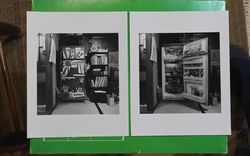
Titre:
Observations familières
Observations familières
Actions:
Tokuko Ushioda en conversation avec Stefano Graziani et Bas Princen
Mot(s)-clé(s):
La vie des documents, la photographie en tant que projet, Stefano Graziani, Bas Princen, Tokuko Ushioda, Ice Box, My Husband
La vie des documents, la photographie en tant que projet, Stefano Graziani, Bas Princen, Tokuko Ushioda, Ice Box, My Husband
Publié:
17 juillet 2023
17 juillet 2023
Titre:
Observations familières
Tokuko Ushioda en conversation avec Stefano Graziani et Bas Princen
Actions:
Observations familières
Tokuko Ushioda en conversation avec Stefano Graziani et Bas Princen
Actions:
Classification:
photographies
photographies
![Promotion panel [?] for the documentary film "Where do the aged live ?", Frankfurt am Main, Germany](/img-collection/3RsUYx5PU7jVdVxEoQT-fTVymcs=/500x375/5186.jpg)
Titre:
Promotion panel [?] for the documentary film "Where do the aged live ?", Frankfurt am Main, Germany
Promotion panel [?] for the documentary film "Where do the aged live ?", Frankfurt am Main, Germany
Actions:
Numéro de référence:
PH1987:1223:005
Description:
- This object comprises four elements which apparently promote the film "Where do the Aged Live ?" by Ella Bergmann-Michel concerning the Home for the Aged of the Budge Foundation, Frankfurt, Germany. At the left, two cut-outs numbered 58 and 59 each comprise 2 bands of stills from the film. A text in German, English and French at the top of one of the cut-outs describes how to rent the film. Two larger gelatin silver prints are mounted at the center and right of the board. The center photograph and the band of stills at the extreme left are the same image.
PH1987:1223:005
Description:
- This object comprises four elements which apparently promote the film "Where do the Aged Live ?" by Ella Bergmann-Michel concerning the Home for the Aged of the Budge Foundation, Frankfurt, Germany. At the left, two cut-outs numbered 58 and 59 each comprise 2 bands of stills from the film. A text in German, English and French at the top of one of the cut-outs describes how to rent the film. Two larger gelatin silver prints are mounted at the center and right of the board. The center photograph and the band of stills at the extreme left are the same image.
Personnes et institutions:
Sujet:
architecture, design d'intérieur
architecture, design d'intérieur
Date:
after 1930
after 1930
Titre:
Promotion panel [?] for the documentary film "Where do the aged live ?", Frankfurt am Main, Germany
Actions:
PH1987:1223:005
Description:
- This object comprises four elements which apparently promote the film "Where do the Aged Live ?" by Ella Bergmann-Michel concerning the Home for the Aged of the Budge Foundation, Frankfurt, Germany. At the left, two cut-outs numbered 58 and 59 each comprise 2 bands of stills from the film. A text in German, English and French at the top of one of the cut-outs describes how to rent the film. Two larger gelatin silver prints are mounted at the center and right of the board. The center photograph and the band of stills at the extreme left are the same image.
Promotion panel [?] for the documentary film "Where do the aged live ?", Frankfurt am Main, Germany
Actions:
PH1987:1223:005
Description:
- This object comprises four elements which apparently promote the film "Where do the Aged Live ?" by Ella Bergmann-Michel concerning the Home for the Aged of the Budge Foundation, Frankfurt, Germany. At the left, two cut-outs numbered 58 and 59 each comprise 2 bands of stills from the film. A text in German, English and French at the top of one of the cut-outs describes how to rent the film. Two larger gelatin silver prints are mounted at the center and right of the board. The center photograph and the band of stills at the extreme left are the same image.
Classification:
photographies
photographies
Date:
after 1930
after 1930
Personnes et institutions:
Sujet:
architecture, design d'intérieur
architecture, design d'intérieur
Classification:
documents textuels
Quantité:
279 sheet(s)
documents textuels
Quantité:
279 sheet(s)
Numéro de référence:
ARCH193536
Description:
Notes on sayings and teachings of Mies van der Rohe and others; small sketch and accompanying notes by Mies van der Rohe; sketches of still-life and model compositions; plans, perspectives, elevations, axonometric views and structural details including some for identified projects such as Home Federal Savings and Loan, Des Moines, Iowa (1959-62); Federal Center, Chicago (1959-73); Ron Bacardi y Compañia Administration Building, Mexico City (1958-61); Office Building for United States Consulate, Sao Paulo, Brazil (1957-62); New National Gallery, Berlin (1962-68). Accompanied by notes added by Phyllis Lambert (November 2000).
ARCH193536
Description:
Notes on sayings and teachings of Mies van der Rohe and others; small sketch and accompanying notes by Mies van der Rohe; sketches of still-life and model compositions; plans, perspectives, elevations, axonometric views and structural details including some for identified projects such as Home Federal Savings and Loan, Des Moines, Iowa (1959-62); Federal Center, Chicago (1959-73); Ron Bacardi y Compañia Administration Building, Mexico City (1958-61); Office Building for United States Consulate, Sao Paulo, Brazil (1957-62); New National Gallery, Berlin (1962-68). Accompanied by notes added by Phyllis Lambert (November 2000).
Personnes et institutions:
Date:
circa 1959 - 2000
circa 1959 - 2000
Titre:
Notes on sayings and teachings of Mies van der Rohe and others
Actions:
ARCH193536
Description:
Notes on sayings and teachings of Mies van der Rohe and others; small sketch and accompanying notes by Mies van der Rohe; sketches of still-life and model compositions; plans, perspectives, elevations, axonometric views and structural details including some for identified projects such as Home Federal Savings and Loan, Des Moines, Iowa (1959-62); Federal Center, Chicago (1959-73); Ron Bacardi y Compañia Administration Building, Mexico City (1958-61); Office Building for United States Consulate, Sao Paulo, Brazil (1957-62); New National Gallery, Berlin (1962-68). Accompanied by notes added by Phyllis Lambert (November 2000).
Notes on sayings and teachings of Mies van der Rohe and others
Actions:
ARCH193536
Description:
Notes on sayings and teachings of Mies van der Rohe and others; small sketch and accompanying notes by Mies van der Rohe; sketches of still-life and model compositions; plans, perspectives, elevations, axonometric views and structural details including some for identified projects such as Home Federal Savings and Loan, Des Moines, Iowa (1959-62); Federal Center, Chicago (1959-73); Ron Bacardi y Compañia Administration Building, Mexico City (1958-61); Office Building for United States Consulate, Sao Paulo, Brazil (1957-62); New National Gallery, Berlin (1962-68). Accompanied by notes added by Phyllis Lambert (November 2000).
Classification:
documents textuels
Quantité:
279 sheet(s)
documents textuels
Quantité:
279 sheet(s)
Date:
circa 1959 - 2000
circa 1959 - 2000
Personnes et institutions:


