


678 Résultats
Classification:
livres
livres
Actions:
Exemplaires:
Description:
xvii, 382 pages : illustrations, maps ; 24 cm
Description:
xvii, 382 pages : illustrations, maps ; 24 cm
Auteur:
Sujet:
- Urbanization Philosophy.,
- City planning Philosophy.,
- Urban geography.,
- Political geography.,
- Political ecology.,
- Urbanisation Philosophie.,
- Géographie urbaine.,
- Géographie politique.,
- Écologie politique.,
- human geography.,
- Stadtforschung,
- Stadtgeografie,
- Stadtplanung,
- Verstädterung,
- Städtebau.,
- Stadtgeographie.
Publication:
London ; New York : Routledge, ©2012.
London ; New York : Routledge, ©2012.
Titre:
Urban theory beyond the West : a world of cities / edited by Tim Edensor and Mark Jayne.
Actions:
Exemplaires:
Description:
xvii, 382 pages : illustrations, maps ; 24 cm
Urban theory beyond the West : a world of cities / edited by Tim Edensor and Mark Jayne.
Actions:
Exemplaires:
Description:
xvii, 382 pages : illustrations, maps ; 24 cm
Classification:
livres
livres
Publication:
London ; New York : Routledge, ©2012.
London ; New York : Routledge, ©2012.
Auteur:
Sujet:
- Urbanization Philosophy.,
- City planning Philosophy.,
- Urban geography.,
- Political geography.,
- Political ecology.,
- Urbanisation Philosophie.,
- Géographie urbaine.,
- Géographie politique.,
- Écologie politique.,
- human geography.,
- Stadtforschung,
- Stadtgeografie,
- Stadtplanung,
- Verstädterung,
- Städtebau.,
- Stadtgeographie.
Classification:
livres
livres
Titre:
Kyle Cooper
Kyle Cooper
Actions:
Prix:
$29.95
(disponible sur commande)
Résumé:
Kyle Cooper is acclaimed as one of the most innovative and important designer of film titles since Saul Bass. This attractive and informative book offers the first critical and historical assessment of Cooper's impressive design achievements. In this book, Andrea Codrington relates that Cooper's work first garnered major attention in 1995 with his creation of the(...)
$29.95
(disponible sur commande)
Résumé:
Kyle Cooper is acclaimed as one of the most innovative and important designer of film titles since Saul Bass. This attractive and informative book offers the first critical and historical assessment of Cooper's impressive design achievements. In this book, Andrea Codrington relates that Cooper's work first garnered major attention in 1995 with his creation of the(...)
Publication:
septembre 2003, New Haven
septembre 2003, New Haven
Titre:
Kyle Cooper
Actions:
Prix:
$29.95
(disponible sur commande)
Résumé:
Kyle Cooper is acclaimed as one of the most innovative and important designer of film titles since Saul Bass. This attractive and informative book offers the first critical and historical assessment of Cooper's impressive design achievements. In this book, Andrea Codrington relates that Cooper's work first garnered major attention in 1995 with his creation of the extraordinary title sequence for the horror thriller "Seven", which is credited with bringing about a renaissance in innovative film title design. Seven's titles were touted as short films in their own right-not merely a "design solution" but a metaphorical representation of the film as a whole. Codrington also discusses Cooper's work at the titles specialist R.Greenberg before he founded in 1996 his own Los Angeles based company, Imaginary Forces. As creative director there, Cooper now oversees a ninety-person team and has designed a stunning succession of highly regarded titles for such films as "Eraser", "Mission impossible", "Twister", "The mummy", "The horse whisperer", "The negotiator", and "Arlington road".
Kyle Cooper
Actions:
Prix:
$29.95
(disponible sur commande)
Résumé:
Kyle Cooper is acclaimed as one of the most innovative and important designer of film titles since Saul Bass. This attractive and informative book offers the first critical and historical assessment of Cooper's impressive design achievements. In this book, Andrea Codrington relates that Cooper's work first garnered major attention in 1995 with his creation of the extraordinary title sequence for the horror thriller "Seven", which is credited with bringing about a renaissance in innovative film title design. Seven's titles were touted as short films in their own right-not merely a "design solution" but a metaphorical representation of the film as a whole. Codrington also discusses Cooper's work at the titles specialist R.Greenberg before he founded in 1996 his own Los Angeles based company, Imaginary Forces. As creative director there, Cooper now oversees a ninety-person team and has designed a stunning succession of highly regarded titles for such films as "Eraser", "Mission impossible", "Twister", "The mummy", "The horse whisperer", "The negotiator", and "Arlington road".
Classification:
livres
livres
Publication:
septembre 2003, New Haven
septembre 2003, New Haven
Classification:
livres
livres
Prix:
$90.00
(disponible sur commande)
Résumé:
This vast panorama spans more than two millennia of Western attempts to invent the perfect city, cradle of the ideal society. Embracing not only architecture and town planning but also art, literature, philosophy, and politics, the book takes us through the imaginary environments of a wide variety of fascinating and often controversial movements and figures, including(...)
$90.00
(disponible sur commande)
Résumé:
This vast panorama spans more than two millennia of Western attempts to invent the perfect city, cradle of the ideal society. Embracing not only architecture and town planning but also art, literature, philosophy, and politics, the book takes us through the imaginary environments of a wide variety of fascinating and often controversial movements and figures, including(...)
Titre:
Ideal cities : utopianism and the (un)built environment
Actions:
Prix:
$90.00
(disponible sur commande)
Résumé:
This vast panorama spans more than two millennia of Western attempts to invent the perfect city, cradle of the ideal society. Embracing not only architecture and town planning but also art, literature, philosophy, and politics, the book takes us through the imaginary environments of a wide variety of fascinating and often controversial movements and figures, including Plato, Filarete, Leonardo da Vinci, Thomas More, Thomas Jefferson, Claude-Nicolas Ledoux, Charles Fourier, Etienne Cabet, Robert Owen, William Morris, Ebenezer Howard, Bruno Taut, Le Corbusier, Frank Lloyd Wright, the European Situationalists, the Japanese Metabolists, Archigram, Superstudio, and many more. The ideal cities in this richly illustrated book exist for the most part in the domain of ideas. Ruth Eaton explores the ability of ideal cities to stimulate reflection and change, and she suggests under what conditions they might continue to exercise their vital function in relation to the urban environment of the future. The book is generously illustrated with 300 imagess, 250 in colour.
Ideal cities : utopianism and the (un)built environment
Actions:
Prix:
$90.00
(disponible sur commande)
Résumé:
This vast panorama spans more than two millennia of Western attempts to invent the perfect city, cradle of the ideal society. Embracing not only architecture and town planning but also art, literature, philosophy, and politics, the book takes us through the imaginary environments of a wide variety of fascinating and often controversial movements and figures, including Plato, Filarete, Leonardo da Vinci, Thomas More, Thomas Jefferson, Claude-Nicolas Ledoux, Charles Fourier, Etienne Cabet, Robert Owen, William Morris, Ebenezer Howard, Bruno Taut, Le Corbusier, Frank Lloyd Wright, the European Situationalists, the Japanese Metabolists, Archigram, Superstudio, and many more. The ideal cities in this richly illustrated book exist for the most part in the domain of ideas. Ruth Eaton explores the ability of ideal cities to stimulate reflection and change, and she suggests under what conditions they might continue to exercise their vital function in relation to the urban environment of the future. The book is generously illustrated with 300 imagess, 250 in colour.
Classification:
livres
livres
Publication:
septembre 2002, London
septembre 2002, London
Sujet:
Théorie de l’urbanisme
Théorie de l’urbanisme
Classification:
périodiques
périodiques
Actions:
Prix:
$16.95
(disponible en magasin)
Résumé:
For this 63rd issue, The Funambulist teamed-up with Tunisian anthropologist and visual artist Myriam Amri and invites you to "Follow the money." In it, the issue enters the crevices of a capitalist system and trace it back to its central nodes: property, land, capital, and class. It reads how money is central to colonial and imperial projects, but also how sovereignty and(...)
$16.95
(disponible en magasin)
Résumé:
For this 63rd issue, The Funambulist teamed-up with Tunisian anthropologist and visual artist Myriam Amri and invites you to "Follow the money." In it, the issue enters the crevices of a capitalist system and trace it back to its central nodes: property, land, capital, and class. It reads how money is central to colonial and imperial projects, but also how sovereignty and(...)
Titre:
The Funambulist n.63 : follow the money
Actions:
Prix:
$16.95
(disponible en magasin)
Résumé:
For this 63rd issue, The Funambulist teamed-up with Tunisian anthropologist and visual artist Myriam Amri and invites you to "Follow the money." In it, the issue enters the crevices of a capitalist system and trace it back to its central nodes: property, land, capital, and class. It reads how money is central to colonial and imperial projects, but also how sovereignty and the liberation of our monetary imaginary can be tools of emancipation. From the CFA franc (Ndongo Samba Sylla, Moses März) to the US dollar (Lily H. Chumley) or the Palestinian Pound (Hicham Safieddine), The Funambulist navigates monetary politics around the world, and more specifically in Sudan (Nisrin Elamin & Laleh Khalili), Puerto Rico (Roque Salas Rivera) or Brazil (Cho). The issue also contains a board game entitled "You’ve Got Yourselves a Revolution, Now What?" imagined by the issue editors Myriam Amri and Léopold Lambert and designed by Aude Abou Nasr. As for the cover, it features an artwork by Adriana Martínez Barón.
The Funambulist n.63 : follow the money
Actions:
Prix:
$16.95
(disponible en magasin)
Résumé:
For this 63rd issue, The Funambulist teamed-up with Tunisian anthropologist and visual artist Myriam Amri and invites you to "Follow the money." In it, the issue enters the crevices of a capitalist system and trace it back to its central nodes: property, land, capital, and class. It reads how money is central to colonial and imperial projects, but also how sovereignty and the liberation of our monetary imaginary can be tools of emancipation. From the CFA franc (Ndongo Samba Sylla, Moses März) to the US dollar (Lily H. Chumley) or the Palestinian Pound (Hicham Safieddine), The Funambulist navigates monetary politics around the world, and more specifically in Sudan (Nisrin Elamin & Laleh Khalili), Puerto Rico (Roque Salas Rivera) or Brazil (Cho). The issue also contains a board game entitled "You’ve Got Yourselves a Revolution, Now What?" imagined by the issue editors Myriam Amri and Léopold Lambert and designed by Aude Abou Nasr. As for the cover, it features an artwork by Adriana Martínez Barón.
Classification:
périodiques
périodiques
Publication:
janvier 2026
janvier 2026
Sujet:
Revues
Revues
Classification:
livres
livres
Prix:
$44.00
(disponible sur commande)
Résumé:
The design of imaginary, conceptual, or radical buildings is as old as the practice of architecture itself. For centuries, architects such as Piranesi, Ledoux, and Sant'Elia have drawn on their creative abilities to produce breathtaking works of imagination. Since World War II, technology has caught up with our imagination: there are few buildings that can be envisioned(...)
$44.00
(disponible sur commande)
Résumé:
The design of imaginary, conceptual, or radical buildings is as old as the practice of architecture itself. For centuries, architects such as Piranesi, Ledoux, and Sant'Elia have drawn on their creative abilities to produce breathtaking works of imagination. Since World War II, technology has caught up with our imagination: there are few buildings that can be envisioned(...)
Titre:
Visionary Architecture: Blueprints of the modern imagination
Actions:
Prix:
$44.00
(disponible sur commande)
Résumé:
The design of imaginary, conceptual, or radical buildings is as old as the practice of architecture itself. For centuries, architects such as Piranesi, Ledoux, and Sant'Elia have drawn on their creative abilities to produce breathtaking works of imagination. Since World War II, technology has caught up with our imagination: there are few buildings that can be envisioned but not built. For the past six decades, architects have created an astonishing range of constructs and urban utopias that have influenced generations of practitioners. Architects such as Libeskind, Koolhaas, Eisenman, Hadid, and many others, whose works were once considered too experimental or controversial to construct, are creating cultural icons the world over. This definitive history of experimental architecture since 1945 provides a thematic overview of the most important and far-reaching work produced in the last sixty years; a survey of contemporary experimental practices, shown through case studies; and an illustrated glossary of ideas, movements, people, and terms. 450+ illustrations, 250 in color.
Visionary Architecture: Blueprints of the modern imagination
Actions:
Prix:
$44.00
(disponible sur commande)
Résumé:
The design of imaginary, conceptual, or radical buildings is as old as the practice of architecture itself. For centuries, architects such as Piranesi, Ledoux, and Sant'Elia have drawn on their creative abilities to produce breathtaking works of imagination. Since World War II, technology has caught up with our imagination: there are few buildings that can be envisioned but not built. For the past six decades, architects have created an astonishing range of constructs and urban utopias that have influenced generations of practitioners. Architects such as Libeskind, Koolhaas, Eisenman, Hadid, and many others, whose works were once considered too experimental or controversial to construct, are creating cultural icons the world over. This definitive history of experimental architecture since 1945 provides a thematic overview of the most important and far-reaching work produced in the last sixty years; a survey of contemporary experimental practices, shown through case studies; and an illustrated glossary of ideas, movements, people, and terms. 450+ illustrations, 250 in color.
Classification:
livres
livres
Publication:
novembre 2007, New York
novembre 2007, New York
Sujet:
Modernisme
Modernisme
Classification:
livres
livres
Titre:
Michael Reish
Michael Reish
Actions:
Prix:
$60.00
(disponible sur commande)
Résumé:
This is the first volume to provide a concentrated perspective of the work by this Düsseldorf photographer. “I see real landscape through the stencil of virtual landscape and vice-versa,” says Michael Reisch (*1964) about his disturbing works, which cannot be clearly defined as either reality or simulation. Reisch, who studied at the Gerrit Rietveld Academie in(...)
$60.00
(disponible sur commande)
Résumé:
This is the first volume to provide a concentrated perspective of the work by this Düsseldorf photographer. “I see real landscape through the stencil of virtual landscape and vice-versa,” says Michael Reisch (*1964) about his disturbing works, which cannot be clearly defined as either reality or simulation. Reisch, who studied at the Gerrit Rietveld Academie in(...)
Titre:
Michael Reish
Actions:
Prix:
$60.00
(disponible sur commande)
Résumé:
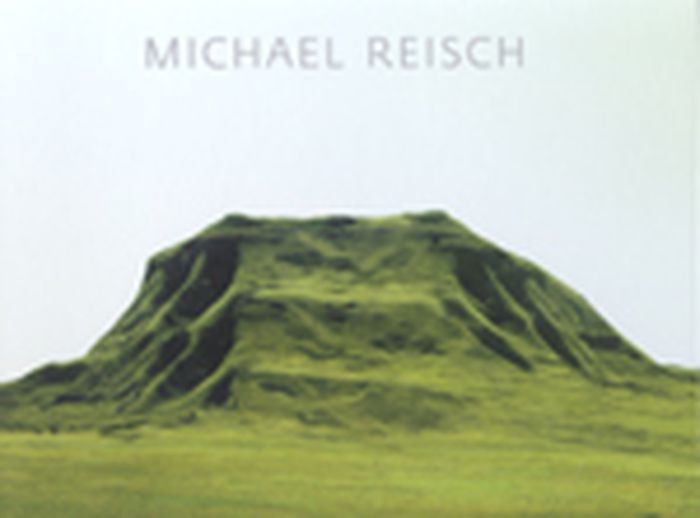
This is the first volume to provide a concentrated perspective of the work by this Düsseldorf photographer. “I see real landscape through the stencil of virtual landscape and vice-versa,” says Michael Reisch (*1964) about his disturbing works, which cannot be clearly defined as either reality or simulation. Reisch, who studied at the Gerrit Rietveld Academie in Amsterdam and with Bernd Becher at the Kunstakademie Düsseldorf, photographs landscapes as well as industrial complexes and buildings with a large-format camera. He then digitizes the images and manipulates them subtly, erasing all allusions to a specific place and time, as well as all signs of human presence. By modifying the composition in other ways such as correcting the colors, he creates a fictional landscape, an “image” of landscape. This invented landscape can seem unbelievably real, while the real, existing landscape, on the other hand, appears unreal, removed, or imaginary. This is the first book to offer a concentrated look at the work of the Düsseldorf-based artist.
Michael Reish
Actions:
Prix:
$60.00
(disponible sur commande)
Résumé:
This is the first volume to provide a concentrated perspective of the work by this Düsseldorf photographer. “I see real landscape through the stencil of virtual landscape and vice-versa,” says Michael Reisch (*1964) about his disturbing works, which cannot be clearly defined as either reality or simulation. Reisch, who studied at the Gerrit Rietveld Academie in Amsterdam and with Bernd Becher at the Kunstakademie Düsseldorf, photographs landscapes as well as industrial complexes and buildings with a large-format camera. He then digitizes the images and manipulates them subtly, erasing all allusions to a specific place and time, as well as all signs of human presence. By modifying the composition in other ways such as correcting the colors, he creates a fictional landscape, an “image” of landscape. This invented landscape can seem unbelievably real, while the real, existing landscape, on the other hand, appears unreal, removed, or imaginary. This is the first book to offer a concentrated look at the work of the Düsseldorf-based artist.
Classification:
livres
livres
Publication:
octobre 2006, Ostfildern
octobre 2006, Ostfildern
Sujet:
Monographies photo
Monographies photo
Classification:
livres
livres
Actions:
Prix:
$24.95
(disponible en magasin)
Résumé:
"Le point de départ du masque Lancaster / Hanover est l'espace, dans le sens le plus large du mot, d'une Communauté Fermière et le fait de conjurer (comme la danse rituelle) cet espace à l'aide d'un nombre de 'sujets' et de leurs 'objets' respectifs qui dénotent ce 'lieu d'habitation' imaginaire. C'est l'espace-habitation d'une communauté, conjuré dans l'autonomie d'un(...)
$24.95
(disponible en magasin)
Résumé:
"Le point de départ du masque Lancaster / Hanover est l'espace, dans le sens le plus large du mot, d'une Communauté Fermière et le fait de conjurer (comme la danse rituelle) cet espace à l'aide d'un nombre de 'sujets' et de leurs 'objets' respectifs qui dénotent ce 'lieu d'habitation' imaginaire. C'est l'espace-habitation d'une communauté, conjuré dans l'autonomie d'un(...)
Titre:
John Hejduk: The Lancaster/Hanover Masque, le Masque Lancaster/Hanover
Actions:
Prix:
$24.95
(disponible en magasin)
Résumé:
"Le point de départ du masque Lancaster / Hanover est l'espace, dans le sens le plus large du mot, d'une Communauté Fermière et le fait de conjurer (comme la danse rituelle) cet espace à l'aide d'un nombre de 'sujets' et de leurs 'objets' respectifs qui dénotent ce 'lieu d'habitation' imaginaire. C'est l'espace-habitation d'une communauté, conjuré dans l'autonomie d'un jeu théâtrale et architectonique." Avec une préface de Phyllis Lambert et un essai de Wim van der Bergh. "The point of departure for the Lancaster/Hanover Masque is the space of a Rural Farm Community and the process of 'spell-binding' the space (as in a ritual dance) by means of a number of 'subjects' and corresponding 'objects' which denote this imaginary habitat. It is the simulated living-dwelling space of a community spell-bound in the autonomy of a theatrical/architectural play." With a preface by Phyllis Lambert and an essay by Wim van der Bergh.
John Hejduk: The Lancaster/Hanover Masque, le Masque Lancaster/Hanover
Actions:
Prix:
$24.95
(disponible en magasin)
Résumé:
"Le point de départ du masque Lancaster / Hanover est l'espace, dans le sens le plus large du mot, d'une Communauté Fermière et le fait de conjurer (comme la danse rituelle) cet espace à l'aide d'un nombre de 'sujets' et de leurs 'objets' respectifs qui dénotent ce 'lieu d'habitation' imaginaire. C'est l'espace-habitation d'une communauté, conjuré dans l'autonomie d'un jeu théâtrale et architectonique." Avec une préface de Phyllis Lambert et un essai de Wim van der Bergh. "The point of departure for the Lancaster/Hanover Masque is the space of a Rural Farm Community and the process of 'spell-binding' the space (as in a ritual dance) by means of a number of 'subjects' and corresponding 'objects' which denote this imaginary habitat. It is the simulated living-dwelling space of a community spell-bound in the autonomy of a theatrical/architectural play." With a preface by Phyllis Lambert and an essay by Wim van der Bergh.
Classification:
livres
livres
Publication:
mars 1992, Montréal / London / New York
mars 1992, Montréal / London / New York
Sujet:
Publications du CCA
Publications du CCA
Classification:
livres
livres
Actions:
Prix:
$25.00
(disponible sur commande)
Résumé:
Perhaps the only postwar classical composer to invest avant-garde music with overt eroticism, Luc Ferrari (1929-2005) was one of France's leading composers of the twentieth century, relentlessly experimental while always preserving his keen sense of humor. Ferrari was a first-generation exponent of musique concrète, and made brilliant use of field recordings to develop(...)
$25.00
(disponible sur commande)
Résumé:
Perhaps the only postwar classical composer to invest avant-garde music with overt eroticism, Luc Ferrari (1929-2005) was one of France's leading composers of the twentieth century, relentlessly experimental while always preserving his keen sense of humor. Ferrari was a first-generation exponent of musique concrète, and made brilliant use of field recordings to develop(...)
Titre:
Almost nothing with Luc Ferrari
Actions:
Prix:
$25.00
(disponible sur commande)
Résumé:
Perhaps the only postwar classical composer to invest avant-garde music with overt eroticism, Luc Ferrari (1929-2005) was one of France's leading composers of the twentieth century, relentlessly experimental while always preserving his keen sense of humor. Ferrari was a first-generation exponent of musique concrète, and made brilliant use of field recordings to develop sensual, proto-ambient narrative that he termed "anecdotal music" or "cinema for the ear." Perhaps the most notorious instance of this approach was Danses Organiques (1973), for which Ferrari recorded the meeting and sexual encounter of two young women, cut with other ambient and music sound. In his final decades Ferrari was championed by David Grubbs (of Gastr del Sol), who brought his music to a postrock audience. Almost Nothing is the first publication on this composer. It alternates Jacqueline Caux's interviews with 14 "imaginary autobiographies" by the composer, offering a lively account of new music's most revolutionary era.
Almost nothing with Luc Ferrari
Actions:
Prix:
$25.00
(disponible sur commande)
Résumé:
Perhaps the only postwar classical composer to invest avant-garde music with overt eroticism, Luc Ferrari (1929-2005) was one of France's leading composers of the twentieth century, relentlessly experimental while always preserving his keen sense of humor. Ferrari was a first-generation exponent of musique concrète, and made brilliant use of field recordings to develop sensual, proto-ambient narrative that he termed "anecdotal music" or "cinema for the ear." Perhaps the most notorious instance of this approach was Danses Organiques (1973), for which Ferrari recorded the meeting and sexual encounter of two young women, cut with other ambient and music sound. In his final decades Ferrari was championed by David Grubbs (of Gastr del Sol), who brought his music to a postrock audience. Almost Nothing is the first publication on this composer. It alternates Jacqueline Caux's interviews with 14 "imaginary autobiographies" by the composer, offering a lively account of new music's most revolutionary era.
Classification:
livres
livres
Publication:
mars 2012
mars 2012
Sujet:
Acoustique
Acoustique
Classification:
livres
livres
Actions:
Exemplaires:
Description:
367 pages, 17 unnumbered pages : illustrations (some color), maps (some color), plans (some color), portraits (some color) ; 21 cm.
Description:
367 pages, 17 unnumbered pages : illustrations (some color), maps (some color), plans (some color), portraits (some color) ; 21 cm.
Auteur:
- Samia Henni -- Desert Futures Collective -- Menna Agha -- Danika Cooper -- Ariella Aïsha Azoulay -- Paulo Tavares -- XqSu -- Dalal Musaed Alsayer -- Alla Vronskaya -- Timothy Hyde --,
- Henni, Samia, 1980-,
- Abu Al-Maati, Saphiya,,
- Agha, Menna,,
- Saeed, Asaiel Al,,
- AlYaqoub, Aseel,,
- Hussein, Yousef Awaad,,
- Azoulay, Ariella,,
- Cooper, Danika,,
- Guabli, Brahim El,,
- Hyde, Timothy,,
- Jarvis, Jill, 1979-,
- Kona, Bongani,,
- Alsayer, Dalal Musaed,,
- Robles, Francisco E.,,
- Tavares, Paulo (Architect),,
- Vronskaya, Alla,,
- XqSu,,
- Coombs, Laura,,
- Observatoire des armements,
Sujet:
- Deserts Political aspects 21st century.,
- Deserts Economic aspects 21st century.,
- Desert ecology Political aspects 21st century.,
- Arid regions Political aspects 21st century.,
- Architecture Arid regions.,
- Arid regions Government policy 21st century.,
- Desert gardening Social aspects 21st century.,
- Land use, Rural Political aspects 21st century.,
- Desertification Economic aspects 21st century.,
- Deserts in art.,
- Deserts in literature.,
- Decolonization Developing countries.,
- Deserts Political aspects.,
- Arid regions Political aspects.,
- Imperialism and architecture.,
- Architecture and society.,
- Arid regions Government policy.,
- Land use, Rural Political aspects.,
- Decolonization in literature.,
- Decolonization in art.,
- History.,
- Attitude change.,
- Exploitation.,
- Contempt (Attitude),
- Decolonization.,
- Déserts Aspect politique.,
- Régions arides Aspect politique.,
- Architecture Régions arides.,
- Impérialisme et architecture.,
- Architecture et société.,
- Régions arides Politique gouvernementale.,
- Utilisation agricole du sol Aspect politique.,
- Déserts dans l'art.,
- Déserts dans la littérature.,
- Décolonisation dans la littérature.,
- Décolonisation dans l'art.,
- Histoire.,
- Changement d'attitude.,
- Exploitation (Morale),
- Mépris.,
- Décolonisation.,
- Déserts Aspect politique 21e siècle.,
- Déserts Aspect économique 21e siècle.,
- Écologie des déserts Aspect politique 21e siècle.,
- Régions arides Aspect politique 21e siècle.,
- Régions arides Politique gouvernementale 21e siècle.,
- Jardinage en région désertique Aspect social 21e siècle.,
- Utilisation agricole du sol Aspect politique 21e siècle.,
- Désertification Aspect économique 21e siècle.,
- history (discipline),
- ARCHITECTURE / Criticism.,
- ARCHITECTURE / History / Contemporary (1945-),
- POLITICAL SCIENCE / Colonialism & Post-Colonialism.,
- POLITICAL SCIENCE / Geopolitics.,
- SOCIAL SCIENCE / Activism & Social Justice.,
- Deserts,
- Arid regions
Publication:
New York, NY : Columbia Books on Architecture and the City, an imprint of the Graduate School of Architecture, Planning, and Preservation, Columbia University, [2022], ©2022
New York, NY : Columbia Books on Architecture and the City, an imprint of the Graduate School of Architecture, Planning, and Preservation, Columbia University, [2022], ©2022
Titre:
Deserts are not empty / editor, Samia Henni ; contributors, Saphiya Abu Al-Maati, Menna Agha, Asaiel Al Saeed, Aseel AlYaqoub, Yousef Awaad Hussein, Ariella Aïsha Azoulay, Danika Cooper, Brahim El Guabli, Timothy Hyde, Jill Jarvis, Bongani Kona, Dalal Musaed Alsayer, Observatoire des armements, Francisco E. Robles, Paulo Tavares, Alla Vronskaya, and XqSu.
Actions:
Exemplaires:
Description:
367 pages, 17 unnumbered pages : illustrations (some color), maps (some color), plans (some color), portraits (some color) ; 21 cm.
Deserts are not empty / editor, Samia Henni ; contributors, Saphiya Abu Al-Maati, Menna Agha, Asaiel Al Saeed, Aseel AlYaqoub, Yousef Awaad Hussein, Ariella Aïsha Azoulay, Danika Cooper, Brahim El Guabli, Timothy Hyde, Jill Jarvis, Bongani Kona, Dalal Musaed Alsayer, Observatoire des armements, Francisco E. Robles, Paulo Tavares, Alla Vronskaya, and XqSu.
Actions:
Exemplaires:
Description:
367 pages, 17 unnumbered pages : illustrations (some color), maps (some color), plans (some color), portraits (some color) ; 21 cm.
Classification:
livres
livres
Publication:
New York, NY : Columbia Books on Architecture and the City, an imprint of the Graduate School of Architecture, Planning, and Preservation, Columbia University, [2022], ©2022
New York, NY : Columbia Books on Architecture and the City, an imprint of the Graduate School of Architecture, Planning, and Preservation, Columbia University, [2022], ©2022
Auteur:
- Samia Henni -- Desert Futures Collective -- Menna Agha -- Danika Cooper -- Ariella Aïsha Azoulay -- Paulo Tavares -- XqSu -- Dalal Musaed Alsayer -- Alla Vronskaya -- Timothy Hyde --,
- Henni, Samia, 1980-,
- Abu Al-Maati, Saphiya,,
- Agha, Menna,,
- Saeed, Asaiel Al,,
- AlYaqoub, Aseel,,
- Hussein, Yousef Awaad,,
- Azoulay, Ariella,,
- Cooper, Danika,,
- Guabli, Brahim El,,
- Hyde, Timothy,,
- Jarvis, Jill, 1979-,
- Kona, Bongani,,
- Alsayer, Dalal Musaed,,
- Robles, Francisco E.,,
- Tavares, Paulo (Architect),,
- Vronskaya, Alla,,
- XqSu,,
- Coombs, Laura,,
- Observatoire des armements,
Sujet:
- Deserts Political aspects 21st century.,
- Deserts Economic aspects 21st century.,
- Desert ecology Political aspects 21st century.,
- Arid regions Political aspects 21st century.,
- Architecture Arid regions.,
- Arid regions Government policy 21st century.,
- Desert gardening Social aspects 21st century.,
- Land use, Rural Political aspects 21st century.,
- Desertification Economic aspects 21st century.,
- Deserts in art.,
- Deserts in literature.,
- Decolonization Developing countries.,
- Deserts Political aspects.,
- Arid regions Political aspects.,
- Imperialism and architecture.,
- Architecture and society.,
- Arid regions Government policy.,
- Land use, Rural Political aspects.,
- Decolonization in literature.,
- Decolonization in art.,
- History.,
- Attitude change.,
- Exploitation.,
- Contempt (Attitude),
- Decolonization.,
- Déserts Aspect politique.,
- Régions arides Aspect politique.,
- Architecture Régions arides.,
- Impérialisme et architecture.,
- Architecture et société.,
- Régions arides Politique gouvernementale.,
- Utilisation agricole du sol Aspect politique.,
- Déserts dans l'art.,
- Déserts dans la littérature.,
- Décolonisation dans la littérature.,
- Décolonisation dans l'art.,
- Histoire.,
- Changement d'attitude.,
- Exploitation (Morale),
- Mépris.,
- Décolonisation.,
- Déserts Aspect politique 21e siècle.,
- Déserts Aspect économique 21e siècle.,
- Écologie des déserts Aspect politique 21e siècle.,
- Régions arides Aspect politique 21e siècle.,
- Régions arides Politique gouvernementale 21e siècle.,
- Jardinage en région désertique Aspect social 21e siècle.,
- Utilisation agricole du sol Aspect politique 21e siècle.,
- Désertification Aspect économique 21e siècle.,
- history (discipline),
- ARCHITECTURE / Criticism.,
- ARCHITECTURE / History / Contemporary (1945-),
- POLITICAL SCIENCE / Colonialism & Post-Colonialism.,
- POLITICAL SCIENCE / Geopolitics.,
- SOCIAL SCIENCE / Activism & Social Justice.,
- Deserts,
- Arid regions
Classification:
livres
livres
Titre:
AD In praise of penumbra
AD In praise of penumbra
Actions:
Prix:
$54.00
(disponible en magasin)
Résumé:
Penumbra, from the Latin paene (almost) and umbra (shadow), can be defined as an intermediate zone of transition between light and shadow. Penumbra is therefore that space, both physical and imaginary, where everything is possible: it is the place of the uncanny, where presence and/or absence can produce wonder or horror. This AD positions the presence of this(...)
$54.00
(disponible en magasin)
Résumé:
Penumbra, from the Latin paene (almost) and umbra (shadow), can be defined as an intermediate zone of transition between light and shadow. Penumbra is therefore that space, both physical and imaginary, where everything is possible: it is the place of the uncanny, where presence and/or absence can produce wonder or horror. This AD positions the presence of this(...)
Titre:
AD In praise of penumbra
Actions:
Prix:
$54.00
(disponible en magasin)
Résumé:
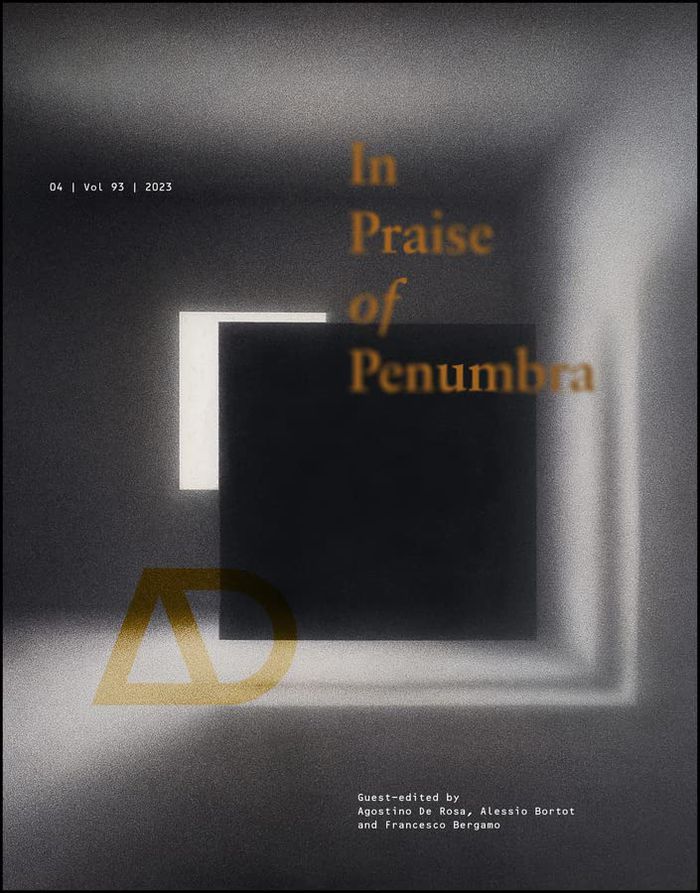
Penumbra, from the Latin paene (almost) and umbra (shadow), can be defined as an intermediate zone of transition between light and shadow. Penumbra is therefore that space, both physical and imaginary, where everything is possible: it is the place of the uncanny, where presence and/or absence can produce wonder or horror. This AD positions the presence of this archetype in the contemporary world of architecture, investigating the ways it permeates different expressive forms – from critical theory to architectural drawing, from design and planning to photography. The contributors illustrate and discuss how penumbra has shaped their creativity and modified their approach to the design process. As a physical phenomenon, penumbra has supra-historical and global connotations; nonetheless, different cultures elaborate its symbolism in different ways. Its wide semantic spectrum powerfully inspires creative forms that hover between fullness and emptiness, presence and absence, past and future. The critical perspectives in this issue offer a wide analysis of penumbra’s expressive potential and the key to an in-depth understanding of this elusive layer of reality.
AD In praise of penumbra
Actions:
Prix:
$54.00
(disponible en magasin)
Résumé:
Penumbra, from the Latin paene (almost) and umbra (shadow), can be defined as an intermediate zone of transition between light and shadow. Penumbra is therefore that space, both physical and imaginary, where everything is possible: it is the place of the uncanny, where presence and/or absence can produce wonder or horror. This AD positions the presence of this archetype in the contemporary world of architecture, investigating the ways it permeates different expressive forms – from critical theory to architectural drawing, from design and planning to photography. The contributors illustrate and discuss how penumbra has shaped their creativity and modified their approach to the design process. As a physical phenomenon, penumbra has supra-historical and global connotations; nonetheless, different cultures elaborate its symbolism in different ways. Its wide semantic spectrum powerfully inspires creative forms that hover between fullness and emptiness, presence and absence, past and future. The critical perspectives in this issue offer a wide analysis of penumbra’s expressive potential and the key to an in-depth understanding of this elusive layer of reality.
Classification:
livres
livres
Publication:
juillet 2023
juillet 2023
Sujet:
Revues
Revues


