


6673 Résultats
Classification:
livres
livres
Actions:
Prix:
$26.95
(disponible sur commande)
Résumé:
Forget makeover culture, forget slavishly following fashion diva dictates, forget your insecurities—forget everything you’ve ever read in fashion magazines! This guide shows you that the secret to finding your inherent natural style is to have fun and be inspired. Kira Jolliffe and Bay Garnett, clothing aficionados and editors of Britain’s hit Cheap Date magazine, show(...)
$26.95
(disponible sur commande)
Résumé:
Forget makeover culture, forget slavishly following fashion diva dictates, forget your insecurities—forget everything you’ve ever read in fashion magazines! This guide shows you that the secret to finding your inherent natural style is to have fun and be inspired. Kira Jolliffe and Bay Garnett, clothing aficionados and editors of Britain’s hit Cheap Date magazine, show(...)
Titre:
The cheap date guide to style
Actions:
Prix:
$26.95
(disponible sur commande)
Résumé:
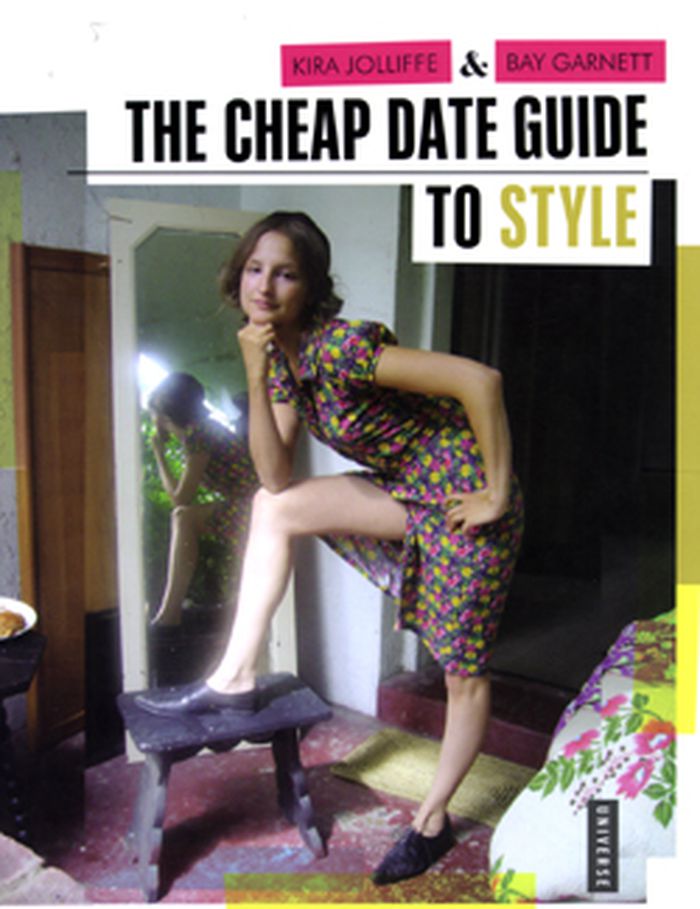
Forget makeover culture, forget slavishly following fashion diva dictates, forget your insecurities—forget everything you’ve ever read in fashion magazines! This guide shows you that the secret to finding your inherent natural style is to have fun and be inspired. Kira Jolliffe and Bay Garnett, clothing aficionados and editors of Britain’s hit Cheap Date magazine, show you how to build your style without going broke, going mad, or coming out looking like everyone else. Included are chapters on developing your own sense of style, the art of accessorizing, and crafting a cool wardrobe from a mix of cheap basics and chic secondhand finds. Because "to be stylish, you need to be into clothes, and if you’re into clothes, you’re into finding them," the CD girls share their time-tested strategies for thrifting, including how to identify prized finds. For further inspiration, throughout the book there are interviews with some of the world’s most stylish women, including Mischa Barton, Rachel Weisz, and Chloë Sevigny. Following the age-old mantra "the rules are—there are no rules," this sophisticated yet scrappy guide will refresh and reinvigorate both you and your wardrobe.
The cheap date guide to style
Actions:
Prix:
$26.95
(disponible sur commande)
Résumé:
Forget makeover culture, forget slavishly following fashion diva dictates, forget your insecurities—forget everything you’ve ever read in fashion magazines! This guide shows you that the secret to finding your inherent natural style is to have fun and be inspired. Kira Jolliffe and Bay Garnett, clothing aficionados and editors of Britain’s hit Cheap Date magazine, show you how to build your style without going broke, going mad, or coming out looking like everyone else. Included are chapters on developing your own sense of style, the art of accessorizing, and crafting a cool wardrobe from a mix of cheap basics and chic secondhand finds. Because "to be stylish, you need to be into clothes, and if you’re into clothes, you’re into finding them," the CD girls share their time-tested strategies for thrifting, including how to identify prized finds. For further inspiration, throughout the book there are interviews with some of the world’s most stylish women, including Mischa Barton, Rachel Weisz, and Chloë Sevigny. Following the age-old mantra "the rules are—there are no rules," this sophisticated yet scrappy guide will refresh and reinvigorate both you and your wardrobe.
Classification:
livres
livres
Publication:
avril 2008, London
avril 2008, London
Sujet:
Création de mode
Création de mode
Classification:
livres
livres
Actions:
Prix:
$135.00
(disponible sur commande)
Résumé:
Quality living in old age is one of the important topics of our time. Architects and builders can contribute innovative types of housing, intelligent concepts for barrier-free buildings, and advanced systems of care for people who are fragile or suffering from dementia. Intelligent design solutions can push back the limits on housing and care, on residential architecture(...)
$135.00
(disponible sur commande)
Résumé:
Quality living in old age is one of the important topics of our time. Architects and builders can contribute innovative types of housing, intelligent concepts for barrier-free buildings, and advanced systems of care for people who are fragile or suffering from dementia. Intelligent design solutions can push back the limits on housing and care, on residential architecture(...)
Titre:
Living for the elderly : a design manual
Actions:
Prix:
$135.00
(disponible sur commande)
Résumé:
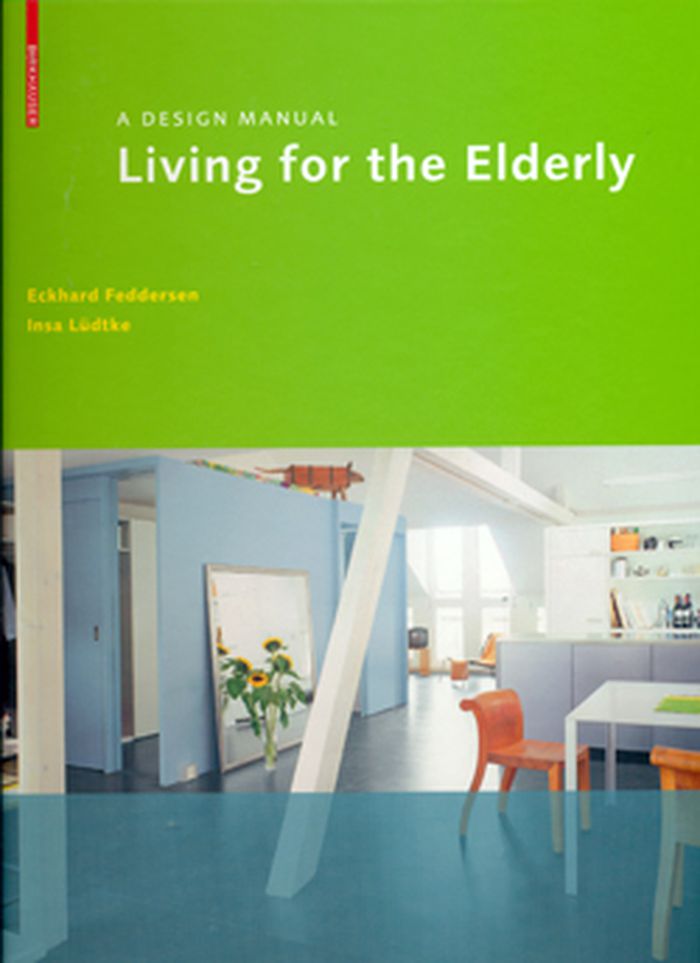
Quality living in old age is one of the important topics of our time. Architects and builders can contribute innovative types of housing, intelligent concepts for barrier-free buildings, and advanced systems of care for people who are fragile or suffering from dementia. Intelligent design solutions can push back the limits on housing and care, on residential architecture and care facilities, on individual, collective, and assisted forms of housing, and even on the various phases of life in favor of a comprehensive trend toward integrated forms of housing. This volume in the series Design Manuals optimizes the concept, content, and presentation of the series to improve its use by the customer. A third of the volume provides detailed expert information from around fifteen contributors, including general questions of energy management and sustainability, open space, and product design. A section of examples provides a building typology, presenting approximately forty international buildings in analyses of up to eight pages that offer exemplary solutions for multigenerational buildings, assisted living, housing for people with dementia and other special target groups, old persons’ homes, nursing homes, and integrated projects.
Living for the elderly : a design manual
Actions:
Prix:
$135.00
(disponible sur commande)
Résumé:
Quality living in old age is one of the important topics of our time. Architects and builders can contribute innovative types of housing, intelligent concepts for barrier-free buildings, and advanced systems of care for people who are fragile or suffering from dementia. Intelligent design solutions can push back the limits on housing and care, on residential architecture and care facilities, on individual, collective, and assisted forms of housing, and even on the various phases of life in favor of a comprehensive trend toward integrated forms of housing. This volume in the series Design Manuals optimizes the concept, content, and presentation of the series to improve its use by the customer. A third of the volume provides detailed expert information from around fifteen contributors, including general questions of energy management and sustainability, open space, and product design. A section of examples provides a building typology, presenting approximately forty international buildings in analyses of up to eight pages that offer exemplary solutions for multigenerational buildings, assisted living, housing for people with dementia and other special target groups, old persons’ homes, nursing homes, and integrated projects.
Classification:
livres
livres
Publication:
mai 2009
mai 2009
Classification:
livres
livres
Actions:
Prix:
$45.95
(disponible sur commande)
Résumé:
''Since 1839...'' offers a selection of essays by the renowned photography historian Clément Chéroux. Appointed Joel and Anne Ehrenkranz Chief Curator of Photography at the Museum of Modern Art (MoMA) in New York in 2020,Chéroux takes on a variety of topics, from the history of vernacular photography to the influence of documentary photography on Surrealism. These texts,(...)
$45.95
(disponible sur commande)
Résumé:
''Since 1839...'' offers a selection of essays by the renowned photography historian Clément Chéroux. Appointed Joel and Anne Ehrenkranz Chief Curator of Photography at the Museum of Modern Art (MoMA) in New York in 2020,Chéroux takes on a variety of topics, from the history of vernacular photography to the influence of documentary photography on Surrealism. These texts,(...)
Titre:
Since 1839...: Eleven essays on photography
Actions:
Prix:
$45.95
(disponible sur commande)
Résumé:
''Since 1839...'' offers a selection of essays by the renowned photography historian Clément Chéroux. Appointed Joel and Anne Ehrenkranz Chief Curator of Photography at the Museum of Modern Art (MoMA) in New York in 2020,Chéroux takes on a variety of topics, from the history of vernacular photography to the influence of documentary photography on Surrealism. These texts, newly translated into English and published together in one volume for the first time, reflect the breadth of Chéroux’s thinking, the rigor of his approach, and his endless curiosity about photographs. In this volume, Chéroux presents unique case studies and untold stories. He discusses ways of sharing images, from the nineteenth century to the digital age; considers the utopian ideals of early photography; and analyzes the duality of amateur photography. Among other things, he describes the appeal of photographs snapped from a speeding train and explains historical value of first-generation prints of photographs. Through an analysis of key photographs taken on 9/11, Chéroux shows that the same six images were seen again and again in the press. Widely ranging, erudite, and engaging, these essays present Chéroux's innovative investigations of the histories of photography.
Since 1839...: Eleven essays on photography
Actions:
Prix:
$45.95
(disponible sur commande)
Résumé:
''Since 1839...'' offers a selection of essays by the renowned photography historian Clément Chéroux. Appointed Joel and Anne Ehrenkranz Chief Curator of Photography at the Museum of Modern Art (MoMA) in New York in 2020,Chéroux takes on a variety of topics, from the history of vernacular photography to the influence of documentary photography on Surrealism. These texts, newly translated into English and published together in one volume for the first time, reflect the breadth of Chéroux’s thinking, the rigor of his approach, and his endless curiosity about photographs. In this volume, Chéroux presents unique case studies and untold stories. He discusses ways of sharing images, from the nineteenth century to the digital age; considers the utopian ideals of early photography; and analyzes the duality of amateur photography. Among other things, he describes the appeal of photographs snapped from a speeding train and explains historical value of first-generation prints of photographs. Through an analysis of key photographs taken on 9/11, Chéroux shows that the same six images were seen again and again in the press. Widely ranging, erudite, and engaging, these essays present Chéroux's innovative investigations of the histories of photography.
Classification:
livres
livres
Publication:
novembre 2021
novembre 2021
Sujet:
Théorie de la photographie
Théorie de la photographie
Classification:
livres
livres
Actions:
Exemplaires:
Description:
361 pages : illustrations, maps ; 28 cm.
Description:
361 pages : illustrations, maps ; 28 cm.
Auteur:
Sujet:
Publication:
Rennes : Presses universitaires de Rennes, 2008.
Rennes : Presses universitaires de Rennes, 2008.
Titre:
La rue dans l'antiquité : définition, aménagement et devenir de l'orient méditerranéen à la Gaule : actes du colloque de Poitiers, 7-9 septembre 2006 organisé par l'Equipe d'accueil EA 3811, HeRMA, Université de Poitiers / sous la direction de Pascale Ballet, Nadine Dieudonné-Glad et Catherine Saliou ; avec la collaboration de M. Evina.
Actions:
Exemplaires:
Description:
361 pages : illustrations, maps ; 28 cm.
La rue dans l'antiquité : définition, aménagement et devenir de l'orient méditerranéen à la Gaule : actes du colloque de Poitiers, 7-9 septembre 2006 organisé par l'Equipe d'accueil EA 3811, HeRMA, Université de Poitiers / sous la direction de Pascale Ballet, Nadine Dieudonné-Glad et Catherine Saliou ; avec la collaboration de M. Evina.
Actions:
Exemplaires:
Description:
361 pages : illustrations, maps ; 28 cm.
Classification:
livres
livres
Publication:
Rennes : Presses universitaires de Rennes, 2008.
Rennes : Presses universitaires de Rennes, 2008.
Auteur:
Sujet:
Classification:
vidéo
vidéo
Actions:
Description:
1 online resource.
Auteur:
Sujet:
Publication:
[Place of publication not identified] : Center for Experimental Lectures, 2016.
[Place of publication not identified] : Center for Experimental Lectures, 2016.
Titre:
Andrianna Campbell, Taraneh Fazeli, Sb Fuller, Sara Magenheimer, and Em Rooney.
Actions:
Description:
1 online resource.
Andrianna Campbell, Taraneh Fazeli, Sb Fuller, Sara Magenheimer, and Em Rooney.
Actions:
Description:
1 online resource.
Classification:
vidéo
vidéo
Publication:
[Place of publication not identified] : Center for Experimental Lectures, 2016.
[Place of publication not identified] : Center for Experimental Lectures, 2016.
Auteur:
Sujet:
Classification:
livres
livres
Exemplaires:
Description:
60 pages : illustrations (some color) ; 30 cm.
Description:
60 pages : illustrations (some color) ; 30 cm.
Auteur:
Sujet:
Publication:
London : Phaidon Press, 1994.
London : Phaidon Press, 1994.
Titre:
Lloyd's building : Richard Rogers Partnership / Kenneth Powell.
Actions:
Exemplaires:
Description:
60 pages : illustrations (some color) ; 30 cm.
Lloyd's building : Richard Rogers Partnership / Kenneth Powell.
Actions:
Exemplaires:
Description:
60 pages : illustrations (some color) ; 30 cm.
Classification:
livres
livres
Publication:
London : Phaidon Press, 1994.
London : Phaidon Press, 1994.
Auteur:
Sujet:
Classification:
livres
livres
Titre:
In praise of copying
In praise of copying
Actions:
Prix:
$29.95
(disponible sur commande)
Résumé:
This book is devoted to a deceptively simple but original argument: that copying is an essential part of being human, that the ability to copy is worthy of celebration, and that, without recognizing how integral copying is to being human, we cannot understand ourselves or the world we live in. In spite of the laws, stigmas, and anxieties attached to it, the word(...)
$29.95
(disponible sur commande)
Résumé:
This book is devoted to a deceptively simple but original argument: that copying is an essential part of being human, that the ability to copy is worthy of celebration, and that, without recognizing how integral copying is to being human, we cannot understand ourselves or the world we live in. In spite of the laws, stigmas, and anxieties attached to it, the word(...)
Titre:
In praise of copying
Actions:
Prix:
$29.95
(disponible sur commande)
Résumé:
This book is devoted to a deceptively simple but original argument: that copying is an essential part of being human, that the ability to copy is worthy of celebration, and that, without recognizing how integral copying is to being human, we cannot understand ourselves or the world we live in. In spite of the laws, stigmas, and anxieties attached to it, the word “copying” permeates contemporary culture, shaping discourse on issues from hip hop to digitization to gender reassignment, and is particularly crucial in legal debates concerning intellectual property and copyright. Yet as a philosophical concept, copying remains poorly understood. Working comparatively across cultures and times, Marcus Boon undertakes an examination of what this word means—historically, culturally, philosophically—and why it fills us with fear and fascination. He argues that the dominant legal-political structures that define copying today obscure much broader processes of imitation that have constituted human communities for ages and continue to shape various subcultures today. Drawing on contemporary art, music and film, the history of aesthetics, critical theory, and Buddhist philosophy and practice, In Praise of Copying seeks to show how and why copying works, what the sources of its power are, and the political stakes of renegotiating the way we value copying in the age of globalization.
In praise of copying
Actions:
Prix:
$29.95
(disponible sur commande)
Résumé:
This book is devoted to a deceptively simple but original argument: that copying is an essential part of being human, that the ability to copy is worthy of celebration, and that, without recognizing how integral copying is to being human, we cannot understand ourselves or the world we live in. In spite of the laws, stigmas, and anxieties attached to it, the word “copying” permeates contemporary culture, shaping discourse on issues from hip hop to digitization to gender reassignment, and is particularly crucial in legal debates concerning intellectual property and copyright. Yet as a philosophical concept, copying remains poorly understood. Working comparatively across cultures and times, Marcus Boon undertakes an examination of what this word means—historically, culturally, philosophically—and why it fills us with fear and fascination. He argues that the dominant legal-political structures that define copying today obscure much broader processes of imitation that have constituted human communities for ages and continue to shape various subcultures today. Drawing on contemporary art, music and film, the history of aesthetics, critical theory, and Buddhist philosophy and practice, In Praise of Copying seeks to show how and why copying works, what the sources of its power are, and the political stakes of renegotiating the way we value copying in the age of globalization.
Classification:
livres
livres
Publication:
octobre 2010
octobre 2010
Sujet:
Théorie/ philosophie
Théorie/ philosophie
Classification:
livres
livres
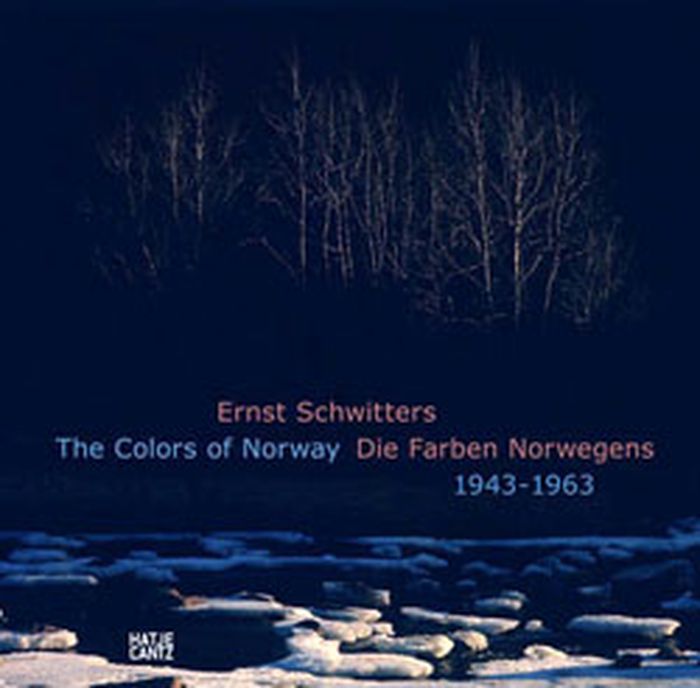
Actions:
Prix:
$61.00
(disponible sur commande)
Résumé:
Ernst Schwitters (1918-1996) began his career in photography in his teens, converting the family bathroom into a darkroom with the consent of his parents, Kurt and Helma Schwitters, at the age of 15 - by which time Ernst was already experimenting with photograms, following a visit from family friend Man Ray. His father encouraged him to undergo formal training in(...)
$61.00
(disponible sur commande)
Résumé:
Ernst Schwitters (1918-1996) began his career in photography in his teens, converting the family bathroom into a darkroom with the consent of his parents, Kurt and Helma Schwitters, at the age of 15 - by which time Ernst was already experimenting with photograms, following a visit from family friend Man Ray. His father encouraged him to undergo formal training in(...)
Titre:
The colors of Norway, 1943-1963
Actions:
Prix:
$61.00
(disponible sur commande)
Résumé:
Ernst Schwitters (1918-1996) began his career in photography in his teens, converting the family bathroom into a darkroom with the consent of his parents, Kurt and Helma Schwitters, at the age of 15 - by which time Ernst was already experimenting with photograms, following a visit from family friend Man Ray. His father encouraged him to undergo formal training in photography, but Ernst declined, preferring to teach himself, and by 1930 he was already participating in international exhibitions, having found his preferred subject matter in the landscapes of Norway and England. Having led the Schwitters family's migration from Nazi Germany to Norway, Ernst was to receive great acclaim there for both his landscape and architectural photography, and was also able to establish financial security through assignments for the Norwegian advertising agency SS-UNU-Foto. It is little known that Schwitters is one of color photography's pioneers: he began working with color film in 1943, and within two decades, he had created more than 10,000 slides, many of which have been digitally restored for this new volume. The only monograph on the photographer currently in print, the publication debuts Schwitters' vast oeuvre of color landscape photography, and also includes a fascinating account of the digital restoration process that allowed for their publication here.
The colors of Norway, 1943-1963
Actions:
Prix:
$61.00
(disponible sur commande)
Résumé:
Ernst Schwitters (1918-1996) began his career in photography in his teens, converting the family bathroom into a darkroom with the consent of his parents, Kurt and Helma Schwitters, at the age of 15 - by which time Ernst was already experimenting with photograms, following a visit from family friend Man Ray. His father encouraged him to undergo formal training in photography, but Ernst declined, preferring to teach himself, and by 1930 he was already participating in international exhibitions, having found his preferred subject matter in the landscapes of Norway and England. Having led the Schwitters family's migration from Nazi Germany to Norway, Ernst was to receive great acclaim there for both his landscape and architectural photography, and was also able to establish financial security through assignments for the Norwegian advertising agency SS-UNU-Foto. It is little known that Schwitters is one of color photography's pioneers: he began working with color film in 1943, and within two decades, he had created more than 10,000 slides, many of which have been digitally restored for this new volume. The only monograph on the photographer currently in print, the publication debuts Schwitters' vast oeuvre of color landscape photography, and also includes a fascinating account of the digital restoration process that allowed for their publication here.
Classification:
livres
livres
Publication:
août 2011
août 2011
Sujet:
Monographies photo
Monographies photo
Classification:
livres
livres

Actions:
Prix:
$19.95
(disponible sur commande)
Résumé:
Japan today protects one-seventh of its land surface in parks, which are visited by well over a billion people each year. Parkscapes analyzes the origins, development, and distinctive features of these public spaces. Green zones were created by the government beginning in the late nineteenth century for state purposes but eventually evolved into sites of negotiation(...)
$19.95
(disponible sur commande)
Résumé:
Japan today protects one-seventh of its land surface in parks, which are visited by well over a billion people each year. Parkscapes analyzes the origins, development, and distinctive features of these public spaces. Green zones were created by the government beginning in the late nineteenth century for state purposes but eventually evolved into sites of negotiation(...)
Titre:
Parkscapes: green spaces in modern Japan
Actions:
Prix:
$19.95
(disponible sur commande)
Résumé:
Japan today protects one-seventh of its land surface in parks, which are visited by well over a billion people each year. Parkscapes analyzes the origins, development, and distinctive features of these public spaces. Green zones were created by the government beginning in the late nineteenth century for state purposes but eventually evolved into sites of negotiation between bureaucrats and ordinary citizens who use them for demonstrations, riots, and shelters, as well as recreation. Thomas Havens shows how revolutionary officials in the 1870s seized private properties and converted them into public parks for educating and managing citizens in the new emperor-sanctioned state. Rebuilding Tokyo and Yokohama after the earthquake and fires of 1923 spurred the spread of urban parklands both in the capital and other cities. According to Havens, the growth of suburbs, the national mobilization of World War II, and the post-1945 American occupation helped speed the creation of more urban parks, setting the stage for vast increases in public green spaces during Japan’s golden age of affluence from the 1960s through the 1980s. Since the 1990s the Japanese public has embraced a heightened ecological consciousness and become deeply involved in the design and management of both city and natural parks—realms once monopolized by government bureaucrats.
Parkscapes: green spaces in modern Japan
Actions:
Prix:
$19.95
(disponible sur commande)
Résumé:
Japan today protects one-seventh of its land surface in parks, which are visited by well over a billion people each year. Parkscapes analyzes the origins, development, and distinctive features of these public spaces. Green zones were created by the government beginning in the late nineteenth century for state purposes but eventually evolved into sites of negotiation between bureaucrats and ordinary citizens who use them for demonstrations, riots, and shelters, as well as recreation. Thomas Havens shows how revolutionary officials in the 1870s seized private properties and converted them into public parks for educating and managing citizens in the new emperor-sanctioned state. Rebuilding Tokyo and Yokohama after the earthquake and fires of 1923 spurred the spread of urban parklands both in the capital and other cities. According to Havens, the growth of suburbs, the national mobilization of World War II, and the post-1945 American occupation helped speed the creation of more urban parks, setting the stage for vast increases in public green spaces during Japan’s golden age of affluence from the 1960s through the 1980s. Since the 1990s the Japanese public has embraced a heightened ecological consciousness and become deeply involved in the design and management of both city and natural parks—realms once monopolized by government bureaucrats.
Classification:
livres
livres
Publication:
avril 2011
avril 2011
Sujet:
Théorie du paysage
Théorie du paysage
Classification:
livres
livres
Actions:
Prix:
$28.95
(disponible sur commande)
Résumé:
American ruins have become increasingly prominent, whether in discussions of “urban blight” and home foreclosures, in commemorations of 9/11, or in postapocalyptic movies. In this book, Nick Yablon argues that the association between American cities and ruins dates back to a much earlier period in the nation’s history. Recovering numerous scenes of urban desolation—from(...)
$28.95
(disponible sur commande)
Résumé:
American ruins have become increasingly prominent, whether in discussions of “urban blight” and home foreclosures, in commemorations of 9/11, or in postapocalyptic movies. In this book, Nick Yablon argues that the association between American cities and ruins dates back to a much earlier period in the nation’s history. Recovering numerous scenes of urban desolation—from(...)
Titre:
Untimely ruins : an archaeology of American urban modernity, 1819-1919
Actions:
Prix:
$28.95
(disponible sur commande)
Résumé:
American ruins have become increasingly prominent, whether in discussions of “urban blight” and home foreclosures, in commemorations of 9/11, or in postapocalyptic movies. In this book, Nick Yablon argues that the association between American cities and ruins dates back to a much earlier period in the nation’s history. Recovering numerous scenes of urban desolation—from failed banks, abandoned towns, and dilapidated tenements to the crumbling skyscrapers and bridges envisioned in science fiction and cartoons—this publication challenges the myth that ruins were absent or insignificant objects in nineteenth-century America. The first book to document an American cult of the ruin, it traces its deviations as well as derivations from European conventions. Unlike classical and Gothic ruins, which decayed gracefully over centuries and inspired philosophical meditations about the fate of civilizations, America’s ruins were often “untimely,” appearing unpredictably and disappearing before they could accrue an aura of age. As modern ruins of steel and iron, they stimulated critical reflections about contemporary cities, and the unfamiliar kinds of experience they enabled. Unearthing evocative sources everywhere from the archives of amateur photographers to the contents of time-capsules, this title exposes crucial debates about the economic, technological, and cultural transformations known as urban modernity.
Untimely ruins : an archaeology of American urban modernity, 1819-1919
Actions:
Prix:
$28.95
(disponible sur commande)
Résumé:
American ruins have become increasingly prominent, whether in discussions of “urban blight” and home foreclosures, in commemorations of 9/11, or in postapocalyptic movies. In this book, Nick Yablon argues that the association between American cities and ruins dates back to a much earlier period in the nation’s history. Recovering numerous scenes of urban desolation—from failed banks, abandoned towns, and dilapidated tenements to the crumbling skyscrapers and bridges envisioned in science fiction and cartoons—this publication challenges the myth that ruins were absent or insignificant objects in nineteenth-century America. The first book to document an American cult of the ruin, it traces its deviations as well as derivations from European conventions. Unlike classical and Gothic ruins, which decayed gracefully over centuries and inspired philosophical meditations about the fate of civilizations, America’s ruins were often “untimely,” appearing unpredictably and disappearing before they could accrue an aura of age. As modern ruins of steel and iron, they stimulated critical reflections about contemporary cities, and the unfamiliar kinds of experience they enabled. Unearthing evocative sources everywhere from the archives of amateur photographers to the contents of time-capsules, this title exposes crucial debates about the economic, technological, and cultural transformations known as urban modernity.
Classification:
livres
livres
Publication:
février 2010, Chicago
février 2010, Chicago
Sujet:
Théorie de l’urbanisme
Théorie de l’urbanisme


